
of the experimental process in many schools in many different provinces, we evaluate the effectiveness of the lessons in the experimental class is always higher than the control class. That affirms that the measures proposed by the author in the thesis are scientific and practical, contributing to improving the quality of history teaching in high schools today.
* *
*
Using the knowledge mapping method in teaching history plays an important role in promoting students' positivity, initiative, and creativity, forming qualities, developing abilities, educating ideology, and creating interest in learning for students. From there, it contributes to improving the efficiency, quality, and completing the goal of teaching the Vietnamese history subject from 1919 to 1975. However, to effectively use the knowledge mapping method, teachers must ensure the principled requirements of the subject's teaching theory such as: ensuring rationality, appropriateness, and flexibility. In particular, it is necessary to pay attention to promoting students' positivity, initiative, and creativity when applying measures to use knowledge mapping in the process of teaching history.
Maybe you are interested!
-
 Knowledge mapping method in teaching Vietnamese history 1919 - 1975 at Experimental Pedagogical High School in the Northwest region - 1
 -
 Using Knowledge Mapping to Organize Knowledge Formation Activities for Students in Teaching Vietnamese History (1919-1975) in High Schools
 -
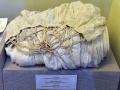 Innovation in the method of using artifacts in teaching Vietnamese History from 1946 to 1954 in high schools - 16
 -
 Types of Literary Materials That Can Be Used in Teaching Vietnamese History Grade 10 in High Schools
 -
 Basic Knowledge Content That Can Be Applied Storymap When Teaching About World Civilizations Of The General Education Program High School History Subject
From the results of theoretical and practical research, we have proposed measures to use the knowledge mapping method in teaching Vietnamese history from 1919 to 1975. The measures we propose, implemented in internal lessons, are arranged in a logic suitable to the characteristics of the historical cognition process and the lesson progress to ensure the flexibility and suppleness of the lesson structure.
The proposed measures were carried out and perfected by us through the process of organizing partial and full experiments in high schools. The experimental results showed a clear difference in the quality of lessons between experimental classes and control classes. We affirm that the measures we proposed are completely feasible. At the same time, we affirm the correctness of the hypotheses that the thesis topic has set out. This is the basis for us to draw scientific conclusions of the thesis topic.
CONCLUSION AND RECOMMENDATIONS
Education innovation in general, and innovation in the content and methods of teaching history in particular, is the core content of the strategy for fundamental and comprehensive innovation of Vietnamese education. The goal of innovation is to promote positivity, initiative, creativity, form qualities, develop capacity, educate ideology, and create interest in learning for students. To achieve that goal, promoting theoretical research and practice of teaching history in high schools to build scientific arguments for implementing the above innovation strategy is the top priority of history educators today. From the research results of the thesis topic, we draw the following scientific conclusions:
1. In general teaching, history teaching in particular, diagrams are not only a teaching tool but also an active teaching method. In fact, knowledge diagramming has transformed into a teaching method, this method is influenced by the following factors: goals, content and teaching objects. The effective use of knowledge diagramming method in the teaching process is important in fostering knowledge, training skills, educating ideology and contributing to the formation and development of students' capacity and qualities. However, when using the diagramming method, teachers should rely on the characteristics of historical knowledge, the requirements of the lesson, and the cognitive needs of students. In particular, it is necessary to pay attention to the characteristics of each type of knowledge diagramming to effectively apply each specific situation in the teaching process. If the above requirements are met, the use of knowledge diagramming will optimize teaching activities in the direction of activating students' cognitive activities. This is an important measure to innovate teaching methods, meeting the urgent requirements of educational innovation in our country today.
2. The practice of teaching history in high schools still has many shortcomings, posing requirements for innovation in the content and methods of teaching the subject. Through investigation and survey, we found that the quality of the subject is not high, the learning results of students are still low, and the learning attitude of students towards the subject is not positive. One of the important reasons leading to the situation of students not liking to study History is that the teaching methods of teachers are not flexible and creative, not promoting the active learning of students and not creating interest for students. With the advantages of the knowledge diagramming method, we boldly design a knowledge diagram system to teach Vietnamese history (1919 - 1975) and propose some measures to use knowledge diagramming to initially improve theoretical awareness and skills in using diagramming.
knowledge for teachers and students in teaching history in high schools, contributing to innovation in current teaching methods in high schools.
3. The Vietnamese history course (1919-1975) includes basic knowledge through many periods of national history, thereby educating the young generation about the heroic fighting spirit of the entire Vietnamese nation. The purpose of using knowledge maps in history teaching is for students to deeply perceive the basic historical knowledge content, educate students to have national spirit, respect for historical values, and responsibility for historical values and national traditions. With the importance and special significance of the knowledge mapping method, we design a knowledge map system to apply in the process of teaching Vietnamese history (1919-1975) in high schools. The knowledge map system is designed to ensure the principles: accurate in content, rich in form, diverse in types and highly aesthetic. In particular, ensuring the amount of knowledge to design, consistency between objectives, content, teaching methods, ensuring scientific nature, appropriateness to students' perception and ensuring the consistency of symbols, colors, shapes specified on the diagram. Based on the above principles and requirements, we have designed a system of diagrams of Vietnamese history knowledge through 4 periods (including 39 typical diagrams). The designed diagram system is the basis for us to propose measures to effectively organize teaching activities, improve lesson effectiveness. At the same time, contributing to improving the quality of history teaching in high schools.
4. The knowledge diagramming method is a modern teaching method that aims to promote students' positivity, initiative, and creativity in teaching history in high schools. However, in the process of using it, teachers should not absolutize it, apply it rigidly and inflexibly, but should combine different teaching methods and forms of organization smoothly and flexibly and apply this method to specific teaching situations. Through theoretical and practical research, we have proposed measures to use the knowledge diagramming method in teaching Vietnamese history from 1919 to 1975. Based on the structure of the lesson, we identify the following measures: using knowledge diagrams to effectively organize warm-up activities; using knowledge diagrams to effectively organize knowledge-forming activities for students; using diagrams to organize consolidation and review activities for students; using diagrams to test and evaluate students' learning outcomes; Using diagrams to develop students' self-study history skills. The proposed measures are carried out and evaluated through partial and full pedagogical experiments. The results of the pedagogical experiments confirm the feasibility of the measures.
The measures we have proposed are important evidence to prove the correctness of the hypotheses of the thesis topic.
5. With a complete and accurate theoretical system and a practical basis proven through investigation, survey and pedagogical experiments, the diagramming method has contributed to enriching the system of history teaching methods. At the same time, this method is the basis for innovating methods, improving the quality of history teaching in general schools, meeting the requirements of current educational innovation. However, to do that, teachers must constantly strive to improve their understanding and renew their methods through each lesson and lesson.
Through the process of implementing the thesis topic, we make some specific recommendations as follows:
- Firstly , history educators need to change in editing the content of the History program. Diversify knowledge sources, use document sources, use a variety of visual aids (especially tools, diagrams, charts, pictures) with the support of IT to help students approach reality, explore and discover to improve their awareness and ability to act. There needs to be investment in synchronous technical equipment for general schools to meet the current requirements of history teaching in the trend of global integration to help students have creative experiences in the learning process.
- Second, organize regular and periodic training and refresher courses to improve theoretical level, general teaching capacity, capacity to build and use visual aids with IT support for teachers of general schools to keep up with new developments in subject teaching theory and methods.
- Third, building a scientific and rich knowledge map system helps teachers and students have the means to carry out teaching and learning activities proactively and creatively. This work needs to be prioritized for high schools in mountainous areas, where economic conditions and communication are still difficult and resources are lacking.
- Fourth, the effectiveness of the history lesson depends on many factors of the teaching process, including the process of organizing learning activities of teachers for students. Using the method of knowledge diagramming in teaching history in high schools is an important measure to improve the quality of the subject. To meet the current teaching requirements, teachers must constantly improve their capacity, expertise, and profession, and must train themselves to have the necessary qualities and abilities, and to organize and control the learning process of students.
LIST OF SCIENTIFIC WORKS OF THE AUTHOR RELATED TO THE THESIS
1. Chu Thi Mai Huong (2014), Building a Wibsite for Teaching Materials on Local History in High Schools, Education Magazine , special issue, pp. 121-122 and 116.
2. Chu Thi Mai Huong (2014), Guide for high school students to self-study History,
Journal of Education , special issue, pp. 125-126 and 120.
3. Nguyen Manh Huong, Chu Thi Mai Huong (2016), Using Graph in innovating teaching methods of History in high schools, Journal of Education , special issue, pp. 154-158.
4. Nguyen Quoc Phap, Chu Thi Mai Huong (2016), Designing and using knowledge maps with the support of information technology to develop students' capacity in teaching history at high schools in Son La province , Basic level scientific research project , code TB 2016-02, Tay Bac University.
5. Chu Thi Mai Huong (2017), Diagramming method in teaching history in high schools, Journal of Education and Society , special issue, pp. 64-68 and 73.
6. Chu Thi Mai Huong (2017), History teaching methods towards capacity development for history pedagogical students, Scientific conference , Ho Chi Minh City University of Education, pp. 300-313.
7. Chu Thi Mai Huong (2018), Using knowledge mapping method to organize students to solve problems according to competency approach in teaching history in high school, Science Journal , Hanoi National University of Education, No. 63, pp. 3-12.
8. Chu Thi Mai Huong (2018), Using diagrams in teaching history in high schools, Education Magazine , No. 428, pp. 39-44.
9. Chu Thi Mai Huong (2018), Applying the knowledge diagram method to organize testing and evaluation in history teaching in high schools, Journal of Educational Science , No. 3, pp. 62 - 66.
10. Chu Thi Mai Huong (2018), Using knowledge mapping to organize warm-up activities in history teaching in high schools, Journal of Educational Science , No. 9, pp. 77 - 82.
11. Chu Thi Mai Huong (2019), Applying the knowledge diagramming method in teaching Vietnamese history (1954 - 1975) in high schools, Journal of Educational Equipment , No. 186, pp. 46 - 49.
REFERENCES
A. Vietnamese reference documents
1. SIAckhanghenski (1976) Lectures on university teaching theory , Publishing House, Pedagogical University, Hanoi.
2. Bach Thi Lan Anh (2013), Introducing the diagram teaching method , Website of the Central University of Art Education. http://www.spnttw.edu.vn/ArticleDetail.aspx?articleid=2290&sitepageid=666.
3. Hoang Viet Anh (1991), Experimental diagramming method in teaching elementary school Geography , Educational Research , No. 9, pp. 22-23.
4. Nguyen Nhu An (1990), Teaching methods in education , University of Education Publishing House, Hanoi.
5. Central Executive Committee, 11th term (2013), Resolution of the 8th Conference , (Resolution No. 29-NQ/TW).
6. Central Propaganda Department (2013), Research document on Resolution of the 8th Conference of the Central Executive Committee of the Communist Party of Vietnam, 11th tenure , National Political Publishing House, Hanoi.
7. Dinh Quang Bao (1991), Using simple, cheap but effective visual aids in Biology and agricultural engineering in high schools , Journal of Educational Sciences , No. 25, pp. 48, 49.
8. Le Khanh Bang (1993), Some issues to improve the quality and effectiveness of the teaching and learning process at universities , Institute of University Research and Vocational Education , Hanoi.
9. Le Khanh Bang (1989), Characteristics of teaching methods , University of Education, Hanoi.
10. Bernd Meire – Nguyen Van Cuong (2014). Modern teaching theory – Basis for innovation in goals, content, and teaching methods , Hanoi National University of Education Publishing House.
11. BPêxiop (1971), Theoretical foundations of teaching (volume 1), (translated by Nguyen Ngoc Quang), Education Publishing House, Hanoi.
12. Nguyen Thi Bich (2016), On process assessment techniques in history teaching in high schools , Science Journal , No. 6, pp. 111-118.
13. Bobbi Deporter, Mike Hernacki (2008), The Super Speed Recording Method
(Translator: Le Thanh Dung, Do Phuong Linh), Tri Thuc Publishing House, Hanoi.
14. Bobbi Deporter, Mike Hernacki (2015), The Super Accelerated Learning Method
(Translator: Nguyen Thi Yen, Hien Thu), Labor - Social Publishing House, Hanoi.
15. Nguyen Van Cuong - Potsdam University (2004), Modern teaching theory , Hanoi Pedagogical University Publishing House, Hanoi.
16. Nguyen Lang Binh (2010), Active teaching and learning - Some teaching methods and techniques , University of Education Publishing House, Hanoi.
17. Nguyen Thi The Binh (2011), Creating interest in learning History for students , Education Magazine , No. 258, pp. 36-38.
18. Nguyen Thi The Binh (2012), Developing self-study skills with textbooks for students in teaching history in high schools , Education Magazine , No. 292, pp. 34-37.
19. Phung Van Bo (1999), Theory of teaching Civic Education , National University Publishing House, Hanoi.
20. Ministry of Education and Training (2006), Guidelines for knowledge and skills standards in History subject for grade 12 , Education Publishing House, Hanoi.
21. Ministry of Education and Training (2007), General education program for History , Education Publishing House, Hanoi.
22. Ministry of Education and Training (2011), History Textbook Grade 12 , Education Publishing House, Hanoi.
23. Ministry of Education and Training (2015), Training materials on Integrated Teaching in Secondary and High Schools (For managers and teachers of secondary and high schools), Hanoi National University of Education Publishing House.
24. Ministry of Education and Training (2017), General education program, comprehensive program (draft).
25. Vo Chap (1979), Some initial experiences in using teaching aids to promote students' positivity, independence and initiative in the learning process , Report at the scientific conference on teaching equipment, Institute of Educational Sciences , Hanoi.
26. Tran Dinh Chau (2009), Using Mind Maps - An effective measure to support students in learning math , Education Magazine No. 222, pp. 44-46.