
False Summary: Introduction to Mind Maps; create a Mind Map; be more successful in life with Mind Maps; unleash your creative spirit with Mind Maps; draw your ideal future with Mind Maps
Correct summary: Introduction to mind maps, how to create a mind map. The role of mind maps in life.
- The beginning of the summary still uses a sentence with the subject as the subject performing the work in the summary. For example: The author presents..., The book introduces...
Example 01: Scientific commentary on Competition Law / Le Hoang Oanh
Incorrect summary : The book comments on the content of each law, reveals the objectives of the law; analyzes and explains the content of each law and compares it with related laws, giving illustrative examples of international experience for regulations that are still new to the reality in Vietnam.
Maybe you are interested!
-
 Current Status of Organizing and Preserving Document Capital at the Information Center - Library of the University of Transport
 -
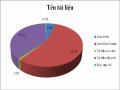 Statistics of Traditional Information Resources of the Center
 -
 Marketing activities of James Hardiman Library, National University of Ireland, Galway and the possibility of application at the Information Center - Library of Vietnam National University, Hanoi - 1
 -
 Some Achievements in Information Technology Application at the Information Center - Banking Academy Library
 -
 Improving the efficiency of organizing and preserving document capital at the Library Information Center of the University of Transport - Hanoi - 8
Correct summary : Comment on the content of each law, clarify the purpose of the law; analyze and explain the content of each law and compare it with related laws. Give examples of international experience for regulations that are still new to the reality in Vietnam.
- The source of information is not clearly identified and leaked, leading to incorrect or missing information in the summary.
For example: Macroeconomics / David Begg, Stanley Fischer, Rudiger Dornbusch; Translated by Faculty of Economics, National Economics University; edited by Tran Phu Thuyet.
Summary : Presents the basic issues of market economy.
Correct summary : General presentation of economics, macroeconomics. Introduce specific issues of macroeconomics: aggregate supply - aggregate demand, national accounting, banking currency, inflation, financial policy, economic growth and development.
The source for the summary of this book is the preface, which says: The book presents the basic issues of market economics in a systematic, concise, and easy-to-understand manner. However, when looking further in the table of contents, the exact, specific issues of the document are presented as shown in the Correct Summary section .
- In addition, for some documents with many topics or long topics, the processing officer only presents the general content of the document or states some representative topics and then uses
ellipsis (…), so the completeness of the content compared to the original document is not guaranteed.
Example 01: Comrade Do Muoi - Imprints through historical stages. - H. : National Politics - Truth, 2012.
Summary : Introducing comrade Do Muoi through different historical stages.
Correct summary : Includes more than 80 articles and interviews (in the form of memoirs, reminiscences, and impressions) by Party and State leaders of different periods, by leaders of Ministries, Branches, localities, and associates who lived and worked directly with Comrade Do Muoi.
Example 02: Insurance business administration textbook / National Economics University
Summary : Overview of insurance business management, insurance market and companies, insurance product management,...
Correct summary : Overview of insurance business management, insurance market and enterprises, insurance product management. Introduction to insurance product distribution channels, customer management, finance and human resources in enterprises.
The content of the abstract is presented in field 520 $a, where the first and second indicators are both # of the MARC21 Machine-Readable Cataloging Format.
2.3.3 Keyword definition
Although classification symbols have the advantage of concentrating documents according to each scientific field, they are not able to collect documents according to each research object. Therefore, keyword language or topic language will be the second information retrieval language that coexists with and supports overcoming the disadvantages of KHPL.
Since the implementation of IT applications in document processing and searching, in addition to classifying documents to build a language system for searching information according to classification symbols and organizing open warehouses, the Center has paid great attention to building a language system for searching information using keywords.
The Center's keyword definition process is in compliance with regulations and
controlled by the Dictionary, Science and Technology keywords of the National Center for Science and Technology Information, refer to the Keyword Set of the National Library. However, because the keyword language is built on natural language and there is no prior combination, it is easy to cause information interference during the search process. This has caused difficulties for users when searching for documents, the information obtained is inaccurate, lacking and scattered. Therefore, since 2010, the Center has initially researched and switched to defining topics for documents.
2.3.4 Document topic definition
In the trend of integration and development of the network of information and library agencies in Vietnam, the Center has also made great strides in information and library activities in general and document content processing in particular. Along with being equipped with ILIB software with many superior features, supporting the application of standards in cataloging work such as MARC21, AACR2, many processes have changed, many new work stages have been deployed, including thematic work. In 2010, after conducting research, visiting a number of large libraries in the country as well as sending staff to attend a training course on using the DMCD organized by the Information and Communications Association, the Center has made great strides in using the ILIB software.At the Vietnam Science and Technology Documentation Conference , the Center decided to start implementing the document topic assignment instead of the previous keyword assignment. Initially, the topic assignment was only applied to English documents downloaded via the Z39.50 portal through the copy cataloging method. After a period of research and experience accumulation from 2013 to present, the Center has implemented the topic assignment for all types of documents through both copy cataloging and original cataloging.
2.3.4.1 Control tools
The difficulty in the process of document thematization at the Center is that currently, in Vietnam, there has not been a widely applied Subject Heading Table. Although the National Library of Vietnam has translated the Subject Heading Table of the US Library of Congress, it has only translated the subject names and not fully translated the references and subtitles. Therefore, while waiting for a Vietnamese Subject Heading Table, the Center has built a control DMC using the Word Set.
Keywords. Currently, there are some of the most popular Keyword Sets such as the Keyword Set of the National Library of Vietnam, the Science and Technology Keyword Dictionary published by the National Center for Science and Technology Information. However, these Keyword Sets all have certain advantages and disadvantages: (Keyword Set Vocabulary, Vocabulary of the Ministry of Science and Technology)
Advantages: Keyword sets/keyword dictionaries have two main advantages:
Firstly: The tools have been compiled quite elaborately, initially meeting the needs set forth in the keyword definition work. The National Library of Vietnam, the National Center for Science and Technology Information (now the National Agency for Science and Technology Information) have paid certain attention to expressing conventions to control vocabulary when describing concepts.
Second: The National Library of Vietnam and the National Center for Science and Technology Information have made additional revisions through each publication to update and shorten the gap between the terms in the keyword set/keyword dictionary and the concepts mentioned in the content of the library's documents, which are constantly expanding and developing.
Existing:
New keyword sets/keyword dictionaries pay attention to the specific characteristics of their libraries/information centers, but have not paid attention to creating a common tool for libraries. Regulations on spelling and presentation of keywords are still local and not unified according to a common regulation. For example: In the Keyword Set of the National Library, the letter i is used in the words: physics, process, technique... Meanwhile, the Science and Technology Keyword Dictionary of the Center for Science and Technology Information uses y: physics, process, technique... The way of expressing people's names and place names is also not completely unified. This has caused many difficulties for libraries that want to use keyword sets and keyword dictionaries in parallel for indexing. [20, pp.10-13]
After researching, studying, evaluating the advantages and disadvantages as well as basing on the suitability with the existing documents, the Center decided to choose the "Science & Technology Keyword Dictionary" as a control tool for the following specific reasons:
- Banking Academy is a school that mainly trains in finance, banking, accounting, management... so the documents at the Center reflect the experts.
training fields of the School. Documents on Social Sciences (Economics - Finance - Banking, ...) and Science and Technology (Accounting, Business Administration, ...) account for a large proportion (77.96%) in the document capital structure at the Center.
- The vocabulary in the Keyword Dictionary is collected from regularly updated scientific and technological databases, reflecting the content of the latest news sources. In addition, the vocabulary is also selected and supplemented from the latest reference documents on issues of interest .
The set of "Dictionary of Science and Technology Keywords" published by the National Center for Science and Technology Information in 2001 includes 2 volumes:
Episode 1: Main lookup table
- Part 1: Science and Technology Keywords
- Part 2: Special types of keywords
* Place names (Vietnamese place names and foreign place names)
* Name of organizations (Full name - abbreviation,
abbreviation - full name)
* Organism names (Vietnamese - Latin and Latin - Vietnamese lookup tables) Volume 2: Permutation keyword lookup table
An auxiliary table to the main table, in which the keywords are arranged alphabetically for each meaningful element contained in the keyword. This presentation allows to find keywords according to each such element with the purpose of further assisting in finding the most suitable keyword to accurately and completely represent the concepts of interest. In this table, non-priority keywords are printed in italics. To find the priority keywords representing them, it is necessary to look up again in the main Table.
2.3.4.2 Document topic determination process
The procedure for document topic determination at the Center is as follows:
For documents loaded with bibliographic records from other libraries:
With the support of ILIB 4.0 software in XLTL activities, the Center has been able to directly download bibliographic records from other libraries in the country and around the world. This automation has reduced the effort of staff in defining document topics. All downloaded bibliographic records have been defined according to the Topic Table.
Library of Congress Subject Headings (LCSH). The cataloger's task is to translate the subject into Vietnamese and check it against the "Science & Technology Keyword Dictionary".
Figure 2.3: ILIB interface with field 650 download record For documents not found in the databases of other libraries:
These documents are strictly processed by the Center's subject-matter staff following the steps of the document subject-matter process:
Step 1: Analyze the content of the document, identify the main topic and research aspects (subtitles) of the document.
Step 2: Control the subject concepts according to the science and technology keyword dictionary system. Step 3: Present the subject headings.
The specific work of each step is as follows:
Step 1:
Analyze the content of the document to grasp the main issues that the document deals with. To determine the main topic of the document as well as the research aspects, the following tasks must be carried out:
Reading documents: Is to study the following elements in the document to obtain the necessary information:
Document title: Is an important factor, often expressing most of the document content (especially with documents such as Thesis, dissertation, theses, etc.).
Example 01: Developing card payment activities at Joint Stock Commercial Bank for Foreign Trade of Vietnam : Master's thesis in Economics / Pham Thi Phuong Mai; Nguyen Thu Hien as supervisor
Main topic: Bank cards Aspect: Payment
Location: Vietnam Joint Stock Commercial Bank for Industry and Trade Document type: Master's thesis
Example 02: Mathematical economic model exercises / Bui Duy Phu,… Main topic: Mathematical economics
Aspect: Model
Document type: Exercises
However, there are many cases (especially with literary genres) where the title of a document represents concepts that are completely different from the content. Therefore, the title of a document is considered the first element, not the only element, when determining the content of a document.
Example 01: Mindfulness / Nguyen Thanh Kim Main topics: Memoirs, essays, poetry commentary
Example 02: The general who started the great wind / Nguyen Dai,... Main topic: General Nguyen Chi Thanh
Aspect: Life, career
Other important elements when determining the subject matter of a document: abstract, introduction, foreword, table of contents, subtitles, bibliography, etc.
When you have considered all the above factors but still cannot determine the topic, you must read the main text. However, we use the skimming method, read with focus, pay attention to the italicized sentences, the conclusion of each section, chapter to find the main topic of the document.
At the end of the reading section, the staff will have to answer questions to determine the research aspect of the document:
- What is the document about, are the issues presented independently or are they related to each other?
- In what form is the document presented? Textbook, dictionary, encyclopedia, handbook, etc.
- What aspect of the problem is it referring to?
- Time of occurrence, related to the problem?
- Where did it happen, related to the problem?
Step 2: Translate to topic headings (Vocabulary processing, word control)
Lexical processing is the operation of transforming ordinary words into vocabulary of the material language that satisfies the following requirements:
- Suitable for document content
- The document is accurate in scientific content, ensures ideological validity and reflects different research aspects of the document.
- The terms used must be common, correct, concise, short, accurate, modern, unambiguous, stable and objective.
- Reflect specific topics and concepts, avoiding being too broad or too general. After processing vocabulary, topics will be controlled by the Keyword Dictionary.
Science and Technology. The purpose of the control is to create unambiguous and uniform terminology throughout the database.
Example: Solutions to improve the management of mobilizing and using foreign capital in the cause of industrialization and modernization in Vietnam/ Le Van Chau
Main topic: Foreign capital
Aspect: Mobilization and utilization management
After processing vocabulary and controlling words with the Science and Technology Keyword Dictionary, the main topic is determined to be: Foreign capital, Mobilization, Use, Vietnam.
Step 3: Presentation
Once defined, topics are presented in 6XX fields to provide subject-specific access points to bibliographic records. The MARC21 subject heading access fields used by the Center include:
600 Subject headings are personal names 610 Subject headings are collective names 650 Subject headings are content