
Therefore, maternity benefits are mainly applied to female workers during pregnancy and miscarriage .pregnancy, childbirth
Accordingly, when pregnant, female workers are allowed to take 3 days off to go for prenatal check-ups, one day each time. In case the medical facility is far away or the pregnant worker has a medical condition, she is allowed to take 2 days off for each prenatal check-up.
Maybe you are interested!
-
 Car body electrical practice - 8
zt2i3t4l5ee
zt2a3gs
zt2a3ge
zc2o3n4t5e6n7ts
If the voltage is out of specification, replace the wire or connector.
If the voltage is within specification, install the front fog light relay and follow step 5.
Step 5 Check the front fog light switch
- Remove the D4 connector of the fog light switch
- Use a multimeter to measure the resistance of the front fog light switch.
Measurement location
Condition
Standard
D4-3 (BFG) -D4-4 (LFG)
Light switchFront Fog OFF
>10kΩ
D4-3 (BFG) -D4-4 (LFG)
Front fog light switchON
<1 Ω
- Standard resistor
D4 connector is located on the combination switch assembly.
If the resistance is out of specification, replace the combination switch (the fog light switch is located in the combination switch).
If the resistance is within specification, follow step 6.
Step 6 Check wiring and connectors (front fog light relay-light selector switch)
- Disconnect connector D4 of the combination switch assembly
- Use a voltmeter to measure the voltage value of jack D4 on the wire side.
Measurement location
Control modecontrol
Standard
D4-3 (BFG) - (-) AQ
TAIL
11 to 14 V
D4 connector for the wiring of the combination switch assembly
If the voltage does not meet the standard, replace the wire or connector.
If the voltage is within standard, there may have been an error in the previous measurements.
Step 7 Check the front fog lights
- Remove the front fog light electrical connector.
- Supply battery voltage to the fog lamp terminals
Jack 8, B9 of front fog lamp on the electrical side
blind first.
Power supply location
Terms and Conditions
Battery positive terminal - Terminal 2Battery negative terminal - Terminal 1
Fog lightsbefore morning
- If the light does not come on, replace the bulb.
If the light is on, re-plug the jack and continue to step 8.
Step 8 Check wiring and connectors (relay and front fog lights)
- Disconnect the B8 and B9 connectors of the front fog lights.
- Use a voltmeter to measure voltage at the following locations:
Measurement location
Switch location
Terms and Conditions
B8-2 - (-) AQ
Electric lock ON TAIL size switchFog switch ON
11 to 14 V
B9-2 - (-) AQ
Electric lock ONTAIL size switch Fog switch ON
11 to 14 V
B8 and B9 connectors on the front fog lamp wiring side
Voltage is not up to standard, repair or replace the jack. If up to standard, there may have been an error in the measurement process.
2.2.4. Procedure for removing, installing and adjusting fog lights 1. Procedure for removing
- Remove the front inner ear pads
Use a screwdriver to remove the 3 screws and remove the front part of the front inner ear liner
-Remove the fog light assembly
+ Disconnect the connector.
+ Use a screwdriver to remove 3 screws to remove the fog light cover
2. Installation sequence
-Rotate the fog lamp bulb in the direction indicated by the arrow as shown in the figure and remove the fog lamp from the fog lamp assembly.
-Rotate the fog light bulb in the direction indicated by the arrow as shown in the figure and install the light into the fog light assembly.
- Use a screwdriver to install the fog light cover
-Install the electrical connector
Attention: Be careful not to damage the plastic thread on the lamp assembly.
- Install the front inner ear pads
Use a screwdriver to install the front inner bumper with 3 screws.
3. Prepare the vehicle to adjust the fog light convergence. Prepare the vehicle:
- Make sure there is no damage or deformation to the vehicle body around the fog lights.
- Add fuel to the fuel tank
- Add oil to standard level.
- Add engine coolant to standard level.
- Inflate the tire to standard pressure.
- Place spare tire, tools and jack in original design position
- Do not leave any load in the luggage compartment.
- Let a person weighing about 75 kg sit in the driver's seat.
4. Prepare to check the fog light convergence
a/ Prepare the vehicle status as follows:
- Place the car in a dark enough place to see the lines. The lines are the dividing line, below which the light from the fog lights can be seen but above which it cannot.
- Place the car perpendicular to the wall.
- Keep a distance of 7.62 m between the center of the fog lamp and the wall.
- Park the car on level ground.
- Press the car down a few times to stabilize the suspension.
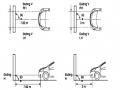
Note: A distance of approximately 7.62 m is required between the vehicle (fog lamp center) and the wall to adjust the convergence correctly. If the distance of 7.62 m cannot be achieved, set the correct distance of 3 m to check and adjust the fog lamp convergence. (Since the target area varies with the distance, please follow the instructions as shown in the figure.)
b/ Prepare a piece of thick white paper about 2 m high and 4 m wide to use as a screen.
c/ Draw a vertical line through the center of the screen (line V).
d/ Set the screen as shown in the picture. Note:
- Keep the screen perpendicular to the ground.
- Align the V line on the screen with the center of the vehicle.
e/Draw the reference lines (H, V LH and V RH lines) on the screen as shown in the figure.HINT:
Mark the center of the fog lamp on the screen. If the center mark cannot be seen on the fog lamp, use the center of the fog lamp or the manufacturer's name mark on the fog lamp as the center mark.
H line (fog light height):
Draw a line across the screen so that it passes through the center mark. Line H should be at the same height as the center mark of the fog light bulb.
Line V LH, V RH (center mark position of left fog lamp LH and right fog lamp RH):
Draw two lines so that they intersect line H at the center marks.
5. Check the fog light convergence
a/ Cover the fog lamp or remove the connector of the other side fog lamp to prevent light from the unchecked fog lamp from affecting the fog lamp convergence test.
b/ Start the engine.
c/ Turn on the fog lights and make sure that the dividing line is outside the standard area as shown in the drawing.
6. Adjust the fog light convergence
Use a screwdriver to adjust the fog light to the standard area by turning the toe adjustment screw.
Note: If the screw is adjusted too far, loosen it and then tighten it again, so that the last rotation of the light adjustment screw is clockwise.
3. Self-study questions
1. Describe the operating principle of the lighting system with automatic headlight function
2. Describe the operating principle of the lighting system with the function of rotating headlights when turning
3. Draw diagram and connect lighting system on Hyundai Porter car
4. Draw diagram and connect lighting system on Honda Accord 1992
5. Draw the lighting circuit on a 1993 Toyota Lexus
LESSON 3 MAINTENANCE AND REPAIR OF SIGNAL SYSTEM
I. IMPLEMENTATION GOAL
After completing this lesson, students will be able to:
- Distinguish between types of signals on cars
- Correctly describe common symptoms and suspected areas causing damage.
- Connecting signal circuits ensures technical requirements
- Disassemble, install, check, maintain and repair the signal system to ensure technical requirements.
- Ensure safety in work and industrial hygiene
II. LESSON CONTENT
1. General description
The signal system equipped on cars aims to create signals to notify other vehicles participating in traffic about the vehicle's operating status such as: stopping, parking, braking, reversing, turning...
Signals are used either by light such as headlamps, brake lights, turn signals….. or by sound such as horns, reverse music….
Just like the lighting system. A signal system circuit usually consists of: battery, fuse, wire, relay, electrical load and control switch. Only some switches of the signal system are on the combination switch. The switches of other signals are usually located in different locations such as in the gearbox or brake pedal……
2. Maintenance and repair
2.1. Turn signals and hazard lights
The installation location of the turn signal is shown in Figure 3.1. The turn signal control switch is located in the combination switch under the steering wheel. Turning this switch to the right or left will make the turn signal turn right or left.
The hazard light switch is used when the vehicle has a problem while participating in traffic. When the hazard light switch is turned on, all the turn signals on the vehicle will light up at a certain frequency. The hazard light switch is usually placed separately from the turn signal switch (some old cars integrate the hazard and turn signal switches on the same combination switch cluster).
Figure 3.1 Turn signal switch Figure 3.2 Hazard switch
The part that generates the flashing frequency for the lights is called a turn signal relay. The turn signal relay usually has 3 terminals: B (positive power supply); E (negative power supply); L (providing the turn signal switch to distribute to the
lamp)
2.1.1. Circuit diagram
To generate the frequency for the turn signal, a turn signal relay is used in the turn signal circuit. The current from the turn signal relay will be sent to the turn signal switch assembly to distribute the current to the turn signal lights for the driver's purpose.
Figure 3.3. Schematic diagram of a turn signal circuit without a hazard switch
1. Battery; 2. Electric lock; 3. Turn signal relay; 4. Turn signal switch; 5. Turn signal lamp; 6. Turn signal lamp; 7. Hazard switch
Figure 3.4 Schematic diagram of turn signal circuit with hazard switch
1. Battery; 2. Combination switch cluster; 3. Turn signal;
4. Turn signal light; 5. Turn signal relay
Today's cars no longer use three-pin turn signal relays (B, L, E) but use eight-pin turn signal relays (figure 3.5) (pin number 8 is used for hazard lights).
For this type, the current supplying the turn signal lights is supplied directly from the turn signal relay to the lights.
div.maincontent .p { color: black; font-family:"Times New Roman", serif; font-style: normal; font-weight: normal; text-decoration: none; font-size: 14pt; margin:0pt; } div.maincontent p { color: black; font-family:"Times New Roman", serif; font-style: normal; font-weight: normal; text-decoration: none; font-size: 14pt; margin:0pt; } div.maincontent .s1 { color: black; font-family:"Times New Roman", serif; font-style: normal; font-weight: normal; text-decoration: none; font-size: 13pt; } div.maincontent .s2 { color: black; font-family:"Times New Roman", serif; font-style: italic; font-weight: normal; text-decoration: none; font-size: 14pt; } div.maincontent .s3 { color: black; font-family:"Times New Roman", serif; font-style: normal; font-weight: normal; text-decoration: none; font-size: 14pt; } div.maincontent .s4 { color: black; font-family:"Times New Roman", serif; font-style: normal; font-weight: normal; text-decoration: none; font-size: 13pt; } div.maincontent .s5 { color: black; font-family:"Times New Roman", serif; font-style: normal; font-weight: normal; text-decoration: none; font-size: 13pt; vertical-align: 1pt; } div.maincontent .s6 { color: black; font-family:"Times New Roman", serif; font-style: normal; font-weight: normal; text-decoration: none; font-size: 11pt; } div.maincontent .s7 { color: black; font-family:"Times New Roman", serif; font-style: normal; font-weight: normal; text-decoration: none; font-size: 14pt; vertical-align: -9pt; } div.maincontent .s8 { color: black; font-family:"Times New Roman", serif; font-style: normal; font-weight: normal; text-decoration: none; font-size: 11pt; } div.maincontent .s9 { color: #008000; font-family:"Times New Roman", serif; font-style: normal; font-weight: normal; text-decoration: none; font-size: 14pt; } div.maincontent .s10 { color: black; font-family:"Times New Roman", serif; font-style: italic; font-weight: normal; te
Car body electrical practice - 8
zt2i3t4l5ee
zt2a3gs
zt2a3ge
zc2o3n4t5e6n7ts
If the voltage is out of specification, replace the wire or connector.
If the voltage is within specification, install the front fog light relay and follow step 5.
Step 5 Check the front fog light switch
- Remove the D4 connector of the fog light switch
- Use a multimeter to measure the resistance of the front fog light switch.
Measurement location
Condition
Standard
D4-3 (BFG) -D4-4 (LFG)
Light switchFront Fog OFF
>10kΩ
D4-3 (BFG) -D4-4 (LFG)
Front fog light switchON
<1 Ω
- Standard resistor
D4 connector is located on the combination switch assembly.
If the resistance is out of specification, replace the combination switch (the fog light switch is located in the combination switch).
If the resistance is within specification, follow step 6.
Step 6 Check wiring and connectors (front fog light relay-light selector switch)
- Disconnect connector D4 of the combination switch assembly
- Use a voltmeter to measure the voltage value of jack D4 on the wire side.
Measurement location
Control modecontrol
Standard
D4-3 (BFG) - (-) AQ
TAIL
11 to 14 V
D4 connector for the wiring of the combination switch assembly
If the voltage does not meet the standard, replace the wire or connector.
If the voltage is within standard, there may have been an error in the previous measurements.
Step 7 Check the front fog lights
- Remove the front fog light electrical connector.
- Supply battery voltage to the fog lamp terminals
Jack 8, B9 of front fog lamp on the electrical side
blind first.
Power supply location
Terms and Conditions
Battery positive terminal - Terminal 2Battery negative terminal - Terminal 1
Fog lightsbefore morning
- If the light does not come on, replace the bulb.
If the light is on, re-plug the jack and continue to step 8.
Step 8 Check wiring and connectors (relay and front fog lights)
- Disconnect the B8 and B9 connectors of the front fog lights.
- Use a voltmeter to measure voltage at the following locations:
Measurement location
Switch location
Terms and Conditions
B8-2 - (-) AQ
Electric lock ON TAIL size switchFog switch ON
11 to 14 V
B9-2 - (-) AQ
Electric lock ONTAIL size switch Fog switch ON
11 to 14 V
B8 and B9 connectors on the front fog lamp wiring side
Voltage is not up to standard, repair or replace the jack. If up to standard, there may have been an error in the measurement process.
2.2.4. Procedure for removing, installing and adjusting fog lights 1. Procedure for removing
- Remove the front inner ear pads
Use a screwdriver to remove the 3 screws and remove the front part of the front inner ear liner
-Remove the fog light assembly
+ Disconnect the connector.
+ Use a screwdriver to remove 3 screws to remove the fog light cover
2. Installation sequence
-Rotate the fog lamp bulb in the direction indicated by the arrow as shown in the figure and remove the fog lamp from the fog lamp assembly.
-Rotate the fog light bulb in the direction indicated by the arrow as shown in the figure and install the light into the fog light assembly.
- Use a screwdriver to install the fog light cover
-Install the electrical connector
Attention: Be careful not to damage the plastic thread on the lamp assembly.
- Install the front inner ear pads
Use a screwdriver to install the front inner bumper with 3 screws.
3. Prepare the vehicle to adjust the fog light convergence. Prepare the vehicle:
- Make sure there is no damage or deformation to the vehicle body around the fog lights.
- Add fuel to the fuel tank
- Add oil to standard level.
- Add engine coolant to standard level.
- Inflate the tire to standard pressure.
- Place spare tire, tools and jack in original design position
- Do not leave any load in the luggage compartment.
- Let a person weighing about 75 kg sit in the driver's seat.
4. Prepare to check the fog light convergence
a/ Prepare the vehicle status as follows:
- Place the car in a dark enough place to see the lines. The lines are the dividing line, below which the light from the fog lights can be seen but above which it cannot.
- Place the car perpendicular to the wall.
- Keep a distance of 7.62 m between the center of the fog lamp and the wall.
- Park the car on level ground.
- Press the car down a few times to stabilize the suspension.
Note: A distance of approximately 7.62 m is required between the vehicle (fog lamp center) and the wall to adjust the convergence correctly. If the distance of 7.62 m cannot be achieved, set the correct distance of 3 m to check and adjust the fog lamp convergence. (Since the target area varies with the distance, please follow the instructions as shown in the figure.)
b/ Prepare a piece of thick white paper about 2 m high and 4 m wide to use as a screen.
c/ Draw a vertical line through the center of the screen (line V).
d/ Set the screen as shown in the picture. Note:
- Keep the screen perpendicular to the ground.
- Align the V line on the screen with the center of the vehicle.
e/Draw the reference lines (H, V LH and V RH lines) on the screen as shown in the figure.HINT:
Mark the center of the fog lamp on the screen. If the center mark cannot be seen on the fog lamp, use the center of the fog lamp or the manufacturer's name mark on the fog lamp as the center mark.
H line (fog light height):
Draw a line across the screen so that it passes through the center mark. Line H should be at the same height as the center mark of the fog light bulb.
Line V LH, V RH (center mark position of left fog lamp LH and right fog lamp RH):
Draw two lines so that they intersect line H at the center marks.
5. Check the fog light convergence
a/ Cover the fog lamp or remove the connector of the other side fog lamp to prevent light from the unchecked fog lamp from affecting the fog lamp convergence test.
b/ Start the engine.
c/ Turn on the fog lights and make sure that the dividing line is outside the standard area as shown in the drawing.
6. Adjust the fog light convergence
Use a screwdriver to adjust the fog light to the standard area by turning the toe adjustment screw.
Note: If the screw is adjusted too far, loosen it and then tighten it again, so that the last rotation of the light adjustment screw is clockwise.
3. Self-study questions
1. Describe the operating principle of the lighting system with automatic headlight function
2. Describe the operating principle of the lighting system with the function of rotating headlights when turning
3. Draw diagram and connect lighting system on Hyundai Porter car
4. Draw diagram and connect lighting system on Honda Accord 1992
5. Draw the lighting circuit on a 1993 Toyota Lexus
LESSON 3 MAINTENANCE AND REPAIR OF SIGNAL SYSTEM
I. IMPLEMENTATION GOAL
After completing this lesson, students will be able to:
- Distinguish between types of signals on cars
- Correctly describe common symptoms and suspected areas causing damage.
- Connecting signal circuits ensures technical requirements
- Disassemble, install, check, maintain and repair the signal system to ensure technical requirements.
- Ensure safety in work and industrial hygiene
II. LESSON CONTENT
1. General description
The signal system equipped on cars aims to create signals to notify other vehicles participating in traffic about the vehicle's operating status such as: stopping, parking, braking, reversing, turning...
Signals are used either by light such as headlamps, brake lights, turn signals….. or by sound such as horns, reverse music….
Just like the lighting system. A signal system circuit usually consists of: battery, fuse, wire, relay, electrical load and control switch. Only some switches of the signal system are on the combination switch. The switches of other signals are usually located in different locations such as in the gearbox or brake pedal……
2. Maintenance and repair
2.1. Turn signals and hazard lights
The installation location of the turn signal is shown in Figure 3.1. The turn signal control switch is located in the combination switch under the steering wheel. Turning this switch to the right or left will make the turn signal turn right or left.
The hazard light switch is used when the vehicle has a problem while participating in traffic. When the hazard light switch is turned on, all the turn signals on the vehicle will light up at a certain frequency. The hazard light switch is usually placed separately from the turn signal switch (some old cars integrate the hazard and turn signal switches on the same combination switch cluster).
Figure 3.1 Turn signal switch Figure 3.2 Hazard switch
The part that generates the flashing frequency for the lights is called a turn signal relay. The turn signal relay usually has 3 terminals: B (positive power supply); E (negative power supply); L (providing the turn signal switch to distribute to the
lamp)
2.1.1. Circuit diagram
To generate the frequency for the turn signal, a turn signal relay is used in the turn signal circuit. The current from the turn signal relay will be sent to the turn signal switch assembly to distribute the current to the turn signal lights for the driver's purpose.
Figure 3.3. Schematic diagram of a turn signal circuit without a hazard switch
1. Battery; 2. Electric lock; 3. Turn signal relay; 4. Turn signal switch; 5. Turn signal lamp; 6. Turn signal lamp; 7. Hazard switch
Figure 3.4 Schematic diagram of turn signal circuit with hazard switch
1. Battery; 2. Combination switch cluster; 3. Turn signal;
4. Turn signal light; 5. Turn signal relay
Today's cars no longer use three-pin turn signal relays (B, L, E) but use eight-pin turn signal relays (figure 3.5) (pin number 8 is used for hazard lights).
For this type, the current supplying the turn signal lights is supplied directly from the turn signal relay to the lights.
div.maincontent .p { color: black; font-family:"Times New Roman", serif; font-style: normal; font-weight: normal; text-decoration: none; font-size: 14pt; margin:0pt; } div.maincontent p { color: black; font-family:"Times New Roman", serif; font-style: normal; font-weight: normal; text-decoration: none; font-size: 14pt; margin:0pt; } div.maincontent .s1 { color: black; font-family:"Times New Roman", serif; font-style: normal; font-weight: normal; text-decoration: none; font-size: 13pt; } div.maincontent .s2 { color: black; font-family:"Times New Roman", serif; font-style: italic; font-weight: normal; text-decoration: none; font-size: 14pt; } div.maincontent .s3 { color: black; font-family:"Times New Roman", serif; font-style: normal; font-weight: normal; text-decoration: none; font-size: 14pt; } div.maincontent .s4 { color: black; font-family:"Times New Roman", serif; font-style: normal; font-weight: normal; text-decoration: none; font-size: 13pt; } div.maincontent .s5 { color: black; font-family:"Times New Roman", serif; font-style: normal; font-weight: normal; text-decoration: none; font-size: 13pt; vertical-align: 1pt; } div.maincontent .s6 { color: black; font-family:"Times New Roman", serif; font-style: normal; font-weight: normal; text-decoration: none; font-size: 11pt; } div.maincontent .s7 { color: black; font-family:"Times New Roman", serif; font-style: normal; font-weight: normal; text-decoration: none; font-size: 14pt; vertical-align: -9pt; } div.maincontent .s8 { color: black; font-family:"Times New Roman", serif; font-style: normal; font-weight: normal; text-decoration: none; font-size: 11pt; } div.maincontent .s9 { color: #008000; font-family:"Times New Roman", serif; font-style: normal; font-weight: normal; text-decoration: none; font-size: 14pt; } div.maincontent .s10 { color: black; font-family:"Times New Roman", serif; font-style: italic; font-weight: normal; te -
 Organizing physical education teaching activities at People's Security College I in the current reform period - 14
 -
 Details of the General P&I Premium Increase of the Associations
 -
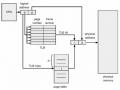 Valid (V) and Invalid (I) Bits in a Page Table
 -
 Maternity Allowance, In addition to 100% of the Salary As Mentioned Above, When Giving Birth, You Will Also Receive a One-Time Allowance Equal to 1 Month of Social Insurance Contribution Salary.

In case of miscarriagePregnant women are entitled to 20 days off if their pregnancy is under 3 months old, and 30 days off if their pregnancy is 3 months or older.
DependsDepending on working conditions and living environment, when giving birth, female workers are entitled to four to six months of leave . If giving birth
If the employee has twins or more, from the second child onwards, the mother is entitled to an additional 30 days of leave for each child. In case the employee wants to return to work earlier than the deadline, she must notify the employer at least one week in advance, but must take leave for sixty days from the date of birth and must have a doctor's certificate stating that returning to work early is not harmful to her health. In this case, in addition to her salary, the employee is still entitled to insurance until the end of the leave period as prescribed by law.
In case the child dies after giving birth before 60 days of age, the female worker
75 days off from the date of birth. In case a child over 60 days old dies, the mother is entitled to 15 days off from the date of death, but not exceeding the general regulations. If a female employee adopts a newborn child, she is also
are allowed to take time off work to care for their child until the child is four months old. The maternity allowance is calculated at 100% of the salary used as the basis for paying social insurance before taking time off work. In addition, when giving birth, female workers are also entitled to a one-time allowance equal to one month's salary.
3. The maternity allowance regime, especially the time off work to receive maternity allowance as prescribed at this stage, is assessed by experts of international organizations as generous and preferential for countries in the region. In Singapore, the time off work for female workers to receive maternity allowance is eight weeks,
Thailand is three months, Philippines is sixty days. [55; p. 50] Especially
There has been a separation between population planning policy and maternity allowance (if in the previous period, labor law only allowed female workers).
entitled to maternity benefits for the first birth, and for the second birth at the time of revision
Amendments to the social insurance regulations Decree 01/2003/ND - CP does not limit the number of births that are eligible for social insurance.
3. 1.4.3 Period 2006 to present
Along with the implementation of other social insurance regimes, the maternity insurance regime has been specifically regulated in labor law documents since the government was established. It has been amended and supplemented many times, so the maternity policy is increasingly complete, perfected and more suitable to reality.
life, meeting legitimate rights as well as demonstrating special preferential policies for workers in general and female workers in particular, creating conditions to help them stabilize their lives, health, effectively promote their professional capacity, and harmoniously combine family life and social life. On the basis of Vietnam's commitments in joining the WTO on social security policies along with the maturity of awareness of the country's socio-economic conditions, the need
social life... On June 29, 2006, the 11th National Assembly passed the Law on Social Insurance, effective from January 1, 2007. For voluntary social insurance, the effective date is January 1, 2008, and for unemployment insurance, it will be effective from January 1, 2009. This is the first time in Vietnam that the very basic needs for social security of people have been institutionalized at the highest level. The Law on Social Insurance includes Compulsory Insurance, Voluntary Insurance, Unemployment Insurance and other regulations. The trend of legalizing social security needs is a very important step forward and in the direction of innovation of the social policy system in our country to serve the goal of sustainable development .
Formatted: Indent: First line: 0 cm
The country enters global integration, Vietnam Social Security with the roleThe role of the management agency to implement the goals of the Party and State is Insurance.social for all workers, opportunities as well as challenges lie ahead,But with the results achieved, practical experience, Social InsuranceVietnam will affirm its position in the cause of socio-economic development.of the country. Social Insurance policies including maternity leaveThe product will be increasingly improved to meet the requirements of suitable participants.in accordance with the standards of the International Labor OrganizationSatisfiedrecommendation
.
Chapter 2 :
Current legal regulations on maternity insurance
2.1 I. Subjects and conditions for enjoying Maternity Insurance benefits
According to the provisions of Article 27 of the Law on Social Insurance, subjects who are entitled to maternity leave must be subject to compulsory social insurance. These are workers working under labor contracts of three months or more, cadres, civil servants, public employees; national defense workers, people's police; officers, professional soldiers, people's army; officers, professional non-commissioned officers, officers, technical non-commissioned officers of people's police; people working in secret service receiving salaries as for people's army, people's police. These subjects have time to pay social insurance premiums when they are in one of the following cases: Female workers who are pregnant, give birth, workers
Employees (regardless of gender) who adopt a newborn child or take contraceptive measures are entitled to leave work to receive benefits.
Inheriting the superiority of maternity regime stipulated in previous legal documents on Social Insurance , legal documents on Social InsurancePreviously , the Social Insurance Law did not control the number of children who were entitled to maternity benefits, but in two cases: female workers giving birth and workers in general adopting children under four months old had to pay social insurance premiums for at least six months within the twelve months before giving birth or adopting children to be entitled to maternity benefits . The regulation of the time conditions for participating in Social Insurance is a progress that has not only helped workers
Winter is not only a time to fulfill motherhood but also focuses on protection.
p
financial security and development of the social insurance fund. As a social insurance subsidy regime, maternity allowance must still ensure the principle on the basis of
contribution of workers themselves.
ë Countries around the world have regulations on the time to pay Social Insurance before enjoying maternity benefits: Japan requires 12 months of previous work, Thailand requires 7 months of contribution in the 15 months before giving birth, Singapore requires at least 6 months of work. Regulations on the time to pay Social Insurance before enjoying benefits are completely reasonable to avoid abuse affecting the fund's finances.
Regarding procedures, to enjoy maternity benefits, employees must have a social insurance book and a certificate from a competent medical facility in cases where female employees go for prenatal check-ups, have miscarriages, abortions or stillbirths. When giving birth, female employees must have a copy of the birth certificate or a copy of the child's birth certificate or a death certificate in cases where the child or mother dies after the child dies. For employees doing heavy, toxic or dangerous work , working in three shifts, working regularly in places with a regional subsidy coefficient of 0.7 or higher, or female employees who are disabled, they must have a certificate from the employer. In cases where employees adopt children under four months old, they must have a certificate from a competent authority for adoption. The full and strict regulation of procedures not only creates a legal basis for employees to receive benefits during maternity leave,
ensure that employees receive timely and appropriate benefits
At the same time, it enhances the responsibility of insurance agencies in payment and fund management.
2.2 II. Regime and benefits
2.2.1 1. Maternity leave time
Maternity leave is prescribed at different levels for many cases: leave for prenatal check-ups, leave due to miscarriage , abortion or stillbirth.
Leave due to premature birth, maternity leave, leave by agreement, leave when a newborn child dies, leave to raise an adopted child under four months old, leave when taking contraceptive measures, leave to recuperate and restore health after maternity leave... Regulations on leave time for each case are always changing.
change and are increasingly calculated based on many scientific bases to be more suitable in protecting the health of workers and newborns, more suitable to the reality of social life and the payment capacity of the insurance fund. The Law on Social Insurance 2006 stipulates the leave time for the following cases:
2.2.1.1 1.1 Time off for prenatal check-ups
Pregnant women to perform the role of motherhood is an important stage and full of risks, so they need to go to medical facilities for prenatal examination, need a specialist to monitor the development of the fetus as well as prevent and promptly treat diseases that may occur during pregnancy. To monitor the development of the fetus, regular prenatal examinations are needed to help the mother and fetus to be safe.
Taking care of the health of pregnant mothers is in accordance with international law, so the law on Social Insurance of our country stipulates that during pregnancy, employees are allowed to take five days off work to have prenatal check-ups, one day each time. In case the pregnant employee works far from a medical facility or the pregnant woman has a medical condition or an abnormal pregnancy, she is allowed to take two days off work with benefits for each prenatal check-up.
Time off work to enjoy maternity benefits when going for prenatal check-ups is calculated in working days, excluding holidays, Tet holidays, and weekly days off.
Setting time off based on working days helps limit the employer's arbitrariness, which is often due to work requirements and not
Ensure timely periodic pregnancy check-ups for female workers.
2.2.1.2 1.2 Time off for miscarriage , abortion, or suction curettage
There are many causes leading to miscarriage , abortion, and stillbirth, but basically it greatly affects the spirit and physical health of women. To help female workers quickly recover their health and stabilize their body's biological rhythm, current law stipulates that in this case, female workers are entitled to 10 days off with benefits if the pregnancy is less than 1 month, 20 days if the pregnancy is from 1 month to less than 3 months, 40 days if the pregnancy is from 3 months to less than 6 months, and 50 days if the pregnancy is 60 months or more. The time off with maternity benefits for miscarriage , abortion, abortion, or stillbirth includes holidays, New Year's Day, and weekly leave (Article 30 of the Law on Social Insurance).
Previously, in the temporary regulations on Social Insurance regimes (1961), there were regulations on the time off for miscarriage : (7 to 15 days off if the miscarriage is 3 months or less; 15 to 30 days off if the pregnancy is over 3 months; if the person is doing a particularly heavy job and has a miscarriage )Pregnant women are entitled to 3 to 10 more days off than those working in normal conditions and the number of days off due to miscarriage is prescribed by the doctor). In the social insurance regulations issued under Decree 12/CP dated January 26, 1995, 20 days off are prescribed if the pregnancy is under 3 months; 30 days off if the pregnancy is 3 months or more. Thus, in previous legal documents, the time off due to miscarriage was prescribed shorter and only divided into two time levels for pregnancy under 3 months and from 3 months or more. That has significantly affected the health of female workers, thus not properly protecting their rights. With the new regulations of the Social Insurance Law, the need to protect the health of female workers when they are at risk during pregnancy has been met. Longer leave time for each case will protect the health of workers.
better female
2.2.1.3 1.3 Maternity leave
Near the date of birth, women need to rest to prepare for childbirth and after giving birth, they need to rest to recover their health and take care of their children, that's why ILO Conventions as well as our country's laws stipulate.
Determining the maternity leave period including before and after birth in a reasonable manner. Article 31 of the Law on Social Insurance stipulates that female employees giving birth are entitled to leave.
entitled to 4 months of maternity leave if working in a profession or job under normal working conditions. In case of female workers working in a heavy, toxic, or dangerous profession or job; working in a three-shift regime; working regularly in a place with a regional allowance coefficient of 0.7 or higher, or female soldiers , female police officers , or female soldiers, female police officersare entitled to 5 months of maternity leave. Female workers who are disabled and have a working capacity reduction of 21% or more are entitled to 6 months of maternity leave . In case of giving birth to two or more children at once, in addition to the above-mentioned leave period, from the second child onwards, the female worker is entitled to an additional 30 days of leave for each child. In the case of giving birth, if the child under 60 days old dies, the mother is entitled to 90 days of leave from the date of birth; if the child 60 days old or older dies, the mother is entitled to 30 days of leave from the date of death, but the total time off from work does not exceed the prescribed time of maternity leave as mentioned above and is not counted as annual personal leave according to the provisions of labor law. In addition, the law also stipulates that if the mother dies after giving birth and only the mother participates in Social Insurance, the father or the person directly raising the child is entitled to maternity benefits until the child is 4 months old. In case the mother dies after giving birth and both the father and mother
If both parents participate in social insurance or only the father participates in social insurance, the father will take time off to take care of the child or the person directly raising the child will receive benefits.
maternity leave until the child is 4 months old. It can be said that over a long period of time in the legal regulations onlaw on maternity leave, no document yetlegalWhat legal document deals with this issue? So, here is the regulation.
The new provisions in the Law on Social Insurance are very suitable to the actual conditions in Vietnam, ensuring that newborns enjoy the right to care and nurture, including