
In free trade agreements (FTAs), which require traditional manufacturing enterprises or pure e-commerce enterprises to comply, on the basis of undertaking to well implement the four pillars related to CSR, which are:
Responsibility for the environment (ISO 14000, ISO 26000…)
Responsibility to employees and workers (SA 8000...)
Responsibility to customers (such as food safety,...)
Responsibility to local communities (ISO sets…)
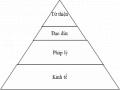
Implementing the contents of corporate social responsibility on the basis of implementation through four aspects (obligations) from mandatory to voluntary levels to ensure sustainable development for enterprises and create innovation to contribute to the sustainable development of enterprises and society.
Economic obligations
Legal obligations
Ethical obligations
Humanistic duty
Corporate Social Responsibility in Business is the commitment of enterprises to contribute to the sustainable development of themselves and society through environmental protection, workers' rights, responsibility to the market and community, to limit negative impacts and enhance positive impacts on society through the implementation of four obligations.
2.2. Factors affecting corporate social responsibility
2.2.1. Internal factors within the enterprise.
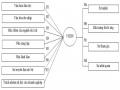
According to the theory of cause and effect, the fishbone map (Ishikawa Kaoru, 1960), applied in the implementation of CSR of enterprises, will show that CSR is affected by many factors, (Duong Thi Lieu, 2009). Factors affecting CSR can be divided into internal factors of enterprises (micro factors) and external, macro factors (Nguyen Manh Quan, 2007).
Internal (internal) factors of the enterprise include:
- Culture, style, ethics of leaders and managers (LD & QL): Nguyen Thi Thanh Huong (2015) also said that "leaders are the key factor that has a significant impact on the implementation of CSR or business ethics of a company".
DN. The leader is a mirror for employees to follow". The responsible behavior of the leader, the ethical and humane spirit of the leader will greatly affect the actions of the employees. "From there, it will impact and influence the level of implementation of social responsibility of the enterprise. The leader is the one who builds the strategy, regulations, and operating principles of the enterprise. If the leader integrates social responsibilities into the business strategy of his enterprise, the implementation of CSR of the enterprise will be more favorable, more effective, and achieve higher results".
- Ethics, culture, and character of employees in the enterprise: This is the subject of social responsibility implementation, so it has a great impact on the effectiveness and quality of CSR implementation of the enterprise. If employees in the enterprise are well equipped with business ethics, corporate culture and awareness of the role of CSR in the business development of the enterprise, clearly understand the CSR implementation process as well as the increasingly strict decisions on CSR in today's trade agreements, then the implementation of CSR in the enterprise will also be more favorable and more proactive.
Besides the above factors, internal factors of enterprises that will affect the implementation of social responsibility are:
- The development process of the enterprise, the traditional history of development of the enterprise
- Industry, field of business activities
- Other factors: These are issues of capital, technology and product industry of the enterprise, which are also important aspects affecting the CSR of the enterprise. Empirical studies (Lepoutre & Heene, 2006) show that especially small and medium enterprises have limited financial resources and the leadership apparatus has many limitations in expertise and skills. They reduce the motivation to implement CSR integration in business strategy. Empirical studies also found that internal stakeholders such as employees, learning culture environment, and industry also greatly affect the CSR of enterprises.
Among the internal factors, the enterprise leadership factor is found to be the factor that has the strongest impact on the CSR action program of the enterprise, because for all enterprises, large or small, in Vietnam today, the authority and responsibility of the leadership is very large, and often covers all areas of the enterprise's activities. In small and medium enterprises, the decision-making power depends on the senior leaders of the enterprise. Middle and grassroots managers also have a role in participating in the implementation. Jenkins (2006) also believes that the CSR issue in an enterprise is strongly influenced by the labor force, because they are the ones who make the decisions.
decisions and role models for employees. So the leader's vision of the future of the enterprise and the potential of the enterprise will affect the commitment to implementation as well as the level of effectiveness of CSR in each enterprise.
Results of the analysis of the issue of leaders influencing the awareness and implementation of CSR in enterprises. The research results with the criteria for evaluating the impact of senior leaders on CSR, show that the rate of agreement is quite high, from the level of agreement to complete agreement as shown in the following descriptive statistics table, level (1) completely disagree; level (2) disagree; level (3) is normal, level (4) is agree, level (5) is completely agree. Through the table, we can see that the level of agreement is 27.9% and the level of complete agreement is 53.5%, the total of these two levels is 81.4%. This data shows that the level of impact of leaders on the issue of CSR implementation in general business and in particular in enterprises is quite high.
Table 2.1. At my company, senior management plays an important role in guiding and implementing CSR in the company.
Frequency | Percent | Percentage effect force | Percent Accumulate | product | |
3.00 | 30 | 18.6 | 18.6 | 18.6 | |
Levels | 4.00 | 45 | 27.9 | 27.9 | 46.5 |
degree | 5.00 | 86 | 53.5 | 53.5 | 100.0 |
Total | 161 | 100.0 | 100.0 |
Maybe you are interested!
-
 Corporate Social Responsibility (Csr) Has Positive Impact on Building and Developing Corporate Culture
 -
 The relationship between social responsibility, green marketing strategy, corporate reputation and business performance - Research on tourism and travel businesses in Ho Chi Minh City - 24
 -
 Corporate Social Responsibility Content of Travel Agencies
 -
 Current Status of Corporate Social Responsibility Activities at Vib International Bank
 -
 The relationship between social responsibility, green marketing strategy, corporate reputation and business performance: a study of tourism and travel businesses in Ho Chi Minh City - 20
2.2.2. External factors, macro factors
Besides internal factors affecting CSR of enterprises in general and commercial business activities in particular, external factors (macro factors) also greatly affect CSR, such factors include:
(1) Regulations on CSR in international trade agreements: In trade agreements such as CPTPP, EVFTA, ... and many current trade agreements, there are very clear regulations (QD) related to social responsibility, issues related to sustainable development are increasingly emphasized, especially in new generation FTAs. That plays a role in creating sustainable development for mankind, and also acts as a technical barrier to protect the domestic production of each country. These regulations force businesses to want to
Exporting goods (XK HH) to international markets, exporting to different territories, expanding international markets, an important issue is that enterprises must fulfill their social responsibility well. Reality has proven that, multinational enterprises operating in Vietnam have done very well and have a lot of experience in implementing CSR (Honda, Toyota, Samsung, Intel, Unilever, ...), which contributes significantly to creating brand reputation of products and goods in the market, always trusted by domestic and international customers. Such enterprises always stand firm in the trust of customers and society. Constantly innovating and being responsible, aiming at people as the center of service, thereby contributing to the company's continuous development. Those enterprises always promote environmental issues, comply with the laws of the host country, respect customers, always bring customers experiences, always pay attention to bringing profits to investors and always ensure fairness.
(2) Social institutional system, Law: This is also an important factor that greatly affects CSR. The Government always cares about and promotes sustainable development, creating a good living environment for people, protecting the health of the community, .... From there, building and issuing decisions, sanctions as well as strict enforcement of laws will force enterprises to comply with and implement discipline and law. At that time, the implementation of CSR in Vietnam will be increasingly improved. But currently, the implementation of CSR by enterprises is being violated quite commonly, especially small and medium enterprises, Vietnamese SMEs are limited in capital and human resources as well as limitations in understanding the role of CSR in business.
(3) National and regional culture: When the level of education and social awareness is high, the standard requirements related to the social responsibility of enterprises from members of society, responsibility for the environment, food safety, regime for workers, etc. are also raised. This creates pressure for enterprises. Requiring enterprises that want to develop their business to constantly improve their social responsibility.
(4) The process of cultural exchange and globalization: This is also an extremely important factor, in the context of a global economy, a flat world. FTAs all mention the social responsibility of enterprises to people related to the environment, public health, poverty, resource use, etc. On the other hand, with the presence of international corporations with large, professional production scale, with a systematic process of implementing CSR according to international standards. Those factors TD
It is very important for Vietnamese enterprises and production and trading corporations to change their CSR to integrate into domestic and international markets to meet domestic, regional and international competitive environments.
(5) Customers, partners of enterprises and the awareness of the social community about social responsibility: Competitive environment (Porter and Kramer, 2006) then this will be an external factor, with a wide scope. Competitive environment factors represent the pressures from key and important stakeholders on enterprises. In particular, the two external stakeholders are customers and suppliers. Nowadays, due to the increasing level of education, customers have more and more choices and demand higher satisfaction, the value they have paid for enterprises, requiring enterprises to be responsible for the environment that they have expected when using the enterprise's products, the production and consumption process, and the use of that product must be environmentally friendly. Customers always pay attention to the confirmation mark of energy saving symbols on electrical and electronic products. Corporations often have many opportunities to develop production and business methods to meet global business conditions, including meeting the CSR provisions of free trade agreements. In the global value chain, all members in the production chain of a certain product must comply with CSR. If only one stage is not fully implemented, the chain will be "broken", the enterprise will be eliminated from the members of the global supply chain that complies with CSR. This has created cross-monitoring between enterprises in the chain, which is also a good condition for enterprises to implement CSR. Social responsibility is a huge pressure on enterprises, because compliance with CSR is considered a passport for all business sectors to enter the international market.
Through the analysis of theoretical basis as well as through practice, it shows that there are many factors belonging to the external and internal environment of the enterprise, affecting the implementation of CSR. These factors will have different levels of influence. However, the leader factor, the customer factor, the new regulations (QD) in the trade agreements are strong influencing factors, which any enterprise needs to pay attention to in the process of improving social responsibility in its production and business activities to create a good premise for commercial business activities, consumption of products and services to achieve high results.
2.3. International experience and lessons for Vietnam
2.3.1. Experience of corporate social responsibility in Japan
2.3.1.1. General perceptions of corporate social responsibility in Japan
Japan is the third largest country in the world, one of the great powers in high-tech economy. Japanese leaders define the spirit of social responsibility to each citizen, of each enterprise that the whole world must recognize as a spirit of NB. NB always promotes international practices, taking them as the basis for standards. Importantly, Japanese enterprises all believe that implementing CSR is both the responsibility and obligation of each enterprise and an opportunity to improve production and business capacity, creating strengths for each enterprise and the country.
Japanese enterprises believe that if CSR business activities impact society, enterprises need to understand the impact on relevant parties such as the Government, employees, investors, communities, etc. Enterprises always link business activities with solving social problems, such as poverty, environmental issues and epidemics, etc. Enterprises always seek to limit the negative impact of their business activities on the social environment, and limit negative impacts on relevant parties.
Currently, in Japanese corporations, CSR is implemented both mandatory and voluntary to create a better and more sustainable society. Social responsibility to customers also reflects in part, any product, whether small or large, low or high value, the quality and safety of the product brings peace of mind to customers. The content of CSR, this is recognized uniformly from the Government (CP) to enterprises. Reality proves that enterprises with high economic results and efficiency are often in the group of enterprises that are well evaluated for CSR, such as Toyota, Honda, Hitachi, Sony... these corporations implement CSR very professionally in Japan and in the host countries where they participate in production and business.
2.3.1.2. Criteria for implementing social responsibility of Japanese enterprises
In the CSR implementation model, Japanese enterprises almost take international practices as the foundation and absolute basis for implementation, always in accordance with the regulations in FTAs, thereby making it very convenient for exporting goods and services to dominate the international market.
The international and domestic standards applied in Japan are.
Japan is one of the countries that is always a pioneer in researching and developing practical science in life. Japan is also very active in implementing CSR. Corporations always approach and consult to learn about CSR information very early. Always update and implement synchronously, seriously implement at all levels from senior managers to employees. Some organizations that the Japanese Government and enterprises use as a basis to develop CSR content are:
Organization for Economic Cooperation and Development (OECD): Japan updates and supplements to apply CSR from OECD, helping to improve the production and business investment environment with sustainable development.
United Nations Global Compact (UNGC): Commitments related to the environment, workers, human rights, etc. have been joined by Japan since 2013 and are very interested in implementing them effectively. Nearly 200 Japanese companies have participated in this activity.
ISO 26000: Through the important issue of ensuring the environment; complying with the law and standards of international principles of conduct. In 2012, it was included in the Japanese standard set applicable to issues such as labor rights, environment, business, consumer benefits, and community.
Global Reporting Initiative: (Global Reporting Initiative; GRI) is concerned with urgent sustainable development issues, providing criteria and guidelines for developing sustainable development reports of countries. Annually and periodically, there are reports on sustainable development. The organization always has complete reports with the contents of sustainable development that businesses need to implement.
Economic criteria: Orientation towards economic performance and production and consumption methods that are environmentally friendly and green.
Environmental criteria: Evaluate the use of raw materials, inputs for production, environmental issues, and environmental impact.
Social criteria, including the following component criteria:
o Criteria for employees: Issues between management and employees, enterprises and employees, contracts, and related policies.
o Human rights criteria: No child labor, forced labor, indigenous rights, supplier assessment of people.
o Social criteria: related to local community, public policy.
o Criteria for product responsibility: Ensuring the safety of products and services to consumers. This is a criterion that Japanese enterprises emphasize to gain prestige with customers.
Other international standards or commitments: Code of Conduct (CoC) in business, ensuring labor conditions of the International Labor Organization (ILO).
In addition, Japan also builds many other additional standard systems.
(1) Producing and providing beneficial and safe goods and services to consumers to ensure consumer rights and demonstrate social responsibility to customers.
(2) Create a fair competitive market.
(3) Enterprises and shareholders have fair and equal relationships.
(4) Respecting employees creates a safe corporate culture for workers.
(5) Actively participate in environmental protection.
(6) Strengthen community activities to create value for society.
(7) Along with globalization, participating in the production and business chain contributes to global sustainable development, bringing a peaceful life to society.
(8) Senior leaders and managers must be pioneers in implementation.
(9) Employers and managers must promptly and responsibly resolve any problems that arise.
2.3.1.3. The Role of the State and Civil Society Organizations in Japan on CSR
The role of the State and government agencies
In Japan, private enterprise activities play a pivotal role as the foundation for CSR (such as Toyota, Honda, etc.). The government has the effect of encouraging and creating a favorable environment for implementation.
- Government agencies :