
achieve accessibility. That is related to the general feeling of visitors about the destination after experiencing the destination. According to experts, the convenience of accessing the destination is one of the factors that evaluate the attractiveness of a tourist destination; it is an important factor in deciding to choose a destination of tourists, especially in the trend of wanting to visit many tourist destinations in one trip and having many options for similar tourist destinations, with destinations having similar products and services, tourists will choose a closer destination than a far destination. The ability to access a tourist destination also depends on the national and local transportation infrastructure system. Especially the legal permission of the state management agency of tourism for tourists.
- Safety of tourist destinations: Tourism activities are very sensitive to security and safety factors. Because this is a factor that affects the overall and comprehensive development of tourism business activities in general as well as the development of tourism products. National political stability is a favorable basis to ensure security and safety for tourists to choose products at tourist destinations. This is very meaningful for international visitors. Usually, political factors affect economic development in general, including tourism through policies and guidelines. In countries with war, terrorism or many problems with social order and safety, the environment such as theft, robbery, quarrels, especially epidemics... will greatly affect the needs and motivations of tourists, and directly affect the value of tourism products. According to experts, safety is an important factor determining the competitiveness of tourist destinations and the perception of destination image; it is the main concern of tourists when choosing a destination, especially in the current volatile international context. In the era of globalization, international crimes that harm tourists are affecting and can destroy tourist destinations in a short time, the tourism industry and tourists are very sensitive to crises. Tourist destination safety is the measures taken to ensure that tourists stay away from all dangerous factors to protect their lives and property during their travel to the destination. The legal system is a management tool of the State, directly related to the rights and obligations as well as the interests of tourism businesses in developing tourism products. It directly or indirectly affects each tourist in the process of consuming/using tourism products. Therefore, the legal factor
greatly affects tourism development, it can promote or hinder the development of tourism on both supply and demand sides. To truly promote the ability to develop tourism products, the legal system needs to be stable, synchronous, consistent and focused on the pressing issues arising in the development process.
Maybe you are interested!
-
 Identify Rating Levels and Rating Scales
zt2i3t4l5ee
zt2a3gstourism,quan lan,quang ninh,ecology,ecotourism,minh chau,van don,geography,geographical basis,tourism development,science
zt2a3ge
zc2o3n4t5e6n7ts
of the islanders. Therefore, this indicator will be divided into two sub-indicators:
a1. Natural tourism attractiveness a2. Cultural tourism attractiveness
b. Tourist capacity
The two island communes in Quan Lan have different capacities to receive tourists. Minh Chau Commune is home to many standard hotels and resorts, attracting high-income domestic and international tourists. Meanwhile, Quan Lan Commune has many motels mainly built and operated by local people, so the scale and quality are not high, and will be suitable for ordinary tourists such as students.
c. Time of exploitation of Quan Lan Island Commune:
Quan Lan tourism is seasonal due to weather and climate conditions and festivals only take place on certain days of the year, specifically in spring. In Quan Lan commune, the period from April to June and from September to November is considered the best time to visit Quan Lan because the cultural tourism activities are mainly associated with festivals taking place during this time.
Minh Chau island commune:
Tourism exploitation time is all year round, because this is a place with a number of tourist attractions with diverse ecosystems such as Bai Tu Long National Park Research Center, Tram forest, Turtle Laying Beach, so besides coming to the beach for tourism and vacation in the summer, Minh Chau will attract research groups to come for tourism combined with research at other times of the year.
d. Sustainability
The sustainability of ecotourism sites in Quan Lan and Minh Chau communes depends on the sensitivity of the ecosystems to climate changes.
landscape. In general, these tourist destinations have a fairly high level of sustainability, because they are natural ecosystems, planned and protected. However, if a large number of tourists gather at certain times, it can exceed the carrying capacity and affect the sustainability of the environment (polluted beaches, damaged trees, animals moving away from their habitats, etc.), then the sustainability of the above ecosystems (natural ecosystems, human ecosystems) will also be affected and become less sustainable.
e. Location and accessibility
Both island communes have ports to take tourists to visit from Van Don wharf:
- Quan Lan – Van Don traffic route:
Phuc Thinh – Viet Anh high-speed boat and Quang Minh high-speed boat, depart at 8am and 2pm from Van Don to Quan Lan, and at 7am and 1pm from Quan Lan to Van Don. There are also wooden boats departing at 7am and 1pm.
- Van Don - Minh Chau traffic route:
Chung Huong high-speed train, Minh Chau train, morning 7:30 and afternoon 13:30 from Van Don to Minh Chau, morning 6:30 and afternoon 13:00 from Minh Chau to Van Don.
f. Infrastructure
Despite receiving investment attention, the issue of infrastructure and technical facilities for tourism on Quan Lan Island is still an issue that needs to be resolved because it has a direct impact on the implementation of ecotourism activities. The minimum conditions for serving tourists such as accommodation, electricity, water, communication, especially medical services, and security work need to be given top priority. Ecotourism spots in Minh Chau commune are assessed to have better infrastructure and technical facilities for tourism because there are quite complete and synchronous conditions for serving tourists, meeting many needs of domestic and foreign tourists.
3.2.1.4. Determine assessment levels and assessment scales
Corresponding to the levels of each criterion, the index is the score of those levels in the order of 4, 3, 2, 1 decreasing according to the standard of each level: very attractive (4), attractive (3), average (2), less attractive (1).
3.2.1.5. Determining the coefficients of the criteria
For the assessment of DLST in the two communes of Quan Lan and Minh Chau islands, the students added evaluation coefficients to show the importance of the criteria and indicators as follows:
Coefficient 3 with criteria: Attractiveness, Exploitation time. These are the 2 most important criteria for attracting tourists to tourism in general and eco-tourism in particular, so they have the highest coefficient.
Coefficient 2 with criteria: Capacity, Infrastructure, Location and accessibility . Because the assessment area is an island commune of Van Don district, the above criteria are selected by the author with appropriate coefficients at the average level.
Coefficient 1 with criteria: Sustainability. Quan Lan has natural and human-made ecotourism sites, with high biodiversity and little impact from local human factors. Most of the ecotourism sites are still wild, so they are highly sustainable.
3.2.1.6. Results of DLST assessment on Quan Lan island
a. Assessment of the potential for natural tourism development
For Minh Chau commune:
+ Natural tourism attractiveness is determined to be very attractive (4 points) and the most important coefficient (coefficient 3), so the score of the Attractiveness criterion is 4 x 3 = 12.
+ Capacity is determined as average (2 points) and the coefficient is quite important (coefficient 2), then the score of Capacity criterion is 2 x 2 = 4.
+ Exploitation time is long (4 points), the most important coefficient (coefficient 3) so the score of the Exploitation time criterion is 4 x 3 = 12.
+ Sustainability is determined as sustainable (4 points), the important coefficient is the average coefficient (coefficient 1), so the score of the Sustainability criterion is 4 x 1 = 4 points
+ Location and accessibility are determined to be quite favorable (2 points), the coefficient is quite important (coefficient 2), the criterion score is 2 x 2 = 4 points.
+ Infrastructure is assessed as good (3 points), the coefficient is quite important (coefficient 2), then the score of the Infrastructure criterion is 3 x 2 = 6 points.
The total score for evaluating DLST in Minh Chau commune according to 6 evaluation criteria is determined as: 12 + 4 + 12 + 4 + 4 + 6 = 42 points
Similar assessment for Quan Lan commune, we have the following table:
Table 3.3: Assessment of the potential for natural ecotourism development in Quan Lan and Minh Chau communes
Attractiveness of self-tourismof course
Capacity
Mining time
Sustainability
Location and accessibility
Infrastructure
Result
Point
DarkMulti
Point
DarkMulti
Point
DarkMulti
Point
DarkMulti
Point
DarkMulti
Point
DarkMulti
CommuneMinh Chau
12
12
4
8
12
12
4
4
4
8
6
8
42/52
Quan CommuneLan
6
12
6
8
9
12
4
4
4
8
4
8
33/52
b. Assessment of the potential for humanistic tourism development
For Quan Lan commune:
+ The attractiveness of human tourism is determined to be very attractive (4 points) and the most important coefficient (coefficient 3), so the score of the Attractiveness criterion is 4 x 3 = 12.
+ Capacity is determined to be large (3 points) and the coefficient is quite important (coefficient 2), then the score of the Capacity criterion is 3 x 2 = 6.
+ Mining time is average (3 points), the most important coefficient (coefficient 3) so the score of the Mining time criterion is 3 x 3 = 9.
+ Sustainability is determined as sustainable (4 points), the important coefficient is the average coefficient (coefficient 1), so the score of the Sustainability criterion is 4 x 1 = 4 points.
+ Location and accessibility are determined to be quite favorable (2 points), the coefficient is quite important (coefficient 2), the criterion score is 2 x 2 = 4 points.
+ Infrastructure is rated as average (2 points), the coefficient is quite important (coefficient 2), then the score of the Infrastructure criterion is 2 x 2 = 4 points.
The total score for evaluating DLST in Quan Lan commune according to 6 evaluation criteria is determined as: 12 + 6 + 6 + 4 + 4 + 4 = 36 points.
Similar assessment with Minh Chau commune we have the following table:
Table 3.4: Assessment of the potential for developing humanistic eco-tourism in Quan Lan and Minh Chau communes
Attractiveness of human tourismliterature
Capacity
Mining time
Sustainability
Location and accessibility
Infrastructure
Result
Point
DarkMulti
Point
DarkMulti
Point
DarkMulti
Point
DarkMulti
Point
DarkMulti
Point
DarkMulti
Quan CommuneLan
12
12
6
8
9
12
4
4
4
8
4
8
39/52
Minh CommuneChau
6
12
4
8
12
12
4
4
4
8
6
8
36/52
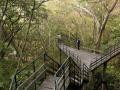
Basically, both Minh Chau and Quan Lan localities have quite favorable conditions for developing ecotourism. However, Quan Lan commune has more advantages to develop ecotourism in a humanistic direction, because this is an area with many famous historical relics such as Quan Lan Communal House, Quan Lan Pagoda, Temple worshiping the hero Tran Khanh Du, ... along with local festivals held annually such as the wind praying ceremony (March 15), Quan Lan festival (June 10-19); due to its location near the port and long exploitation time, the beaches in Quan Lan commune (especially Quan Lan beach) are no longer hygienic and clean to ensure the needs of tourists coming to relax and swim; this is also an area with many beautiful landscapes such as Got Beo wind pass, Ong Phong head, Voi Voi cave, but the ability to access these places is still very limited (dirt hill road, lots of gravel and rocks), especially during rainy and windy times; In addition, other natural resources such as mangrove forests and sea worms have not been really exploited for tourism purposes and ecotourism development. On the contrary, Minh Chau commune has more advantages in developing ecotourism in the direction of natural tourism, this is an area with diverse ecosystems such as at Rua De Beach, Bai Tu Long National Park Conservation Center...; Minh Chau beach is highly appreciated for its natural beauty and cleanliness, ranked in the top ten most beautiful beaches in Vietnam; Minh Chau commune is also home to Tram forest with a large area and a purity of up to 90%, suitable for building bridges through the forest (a very effective type of natural ecotourism currently applied by many countries) for tourists to sightsee, as well as for the purpose of studying and researching.
Figure 3.1: Thenmala Forest Bridge (India) Source: https://www.thenmalaecotourism.com/(August 21, 2019)
3.2.2. Using SWOT matrix to evaluate Quan Lan island tourism
General assessment of current tourism activities of Quan Lan island is shown through the following SWOT matrix:
Table 3.5: SWOT matrix evaluating tourism activities on Quan Lan island
Internal agent
Strengths- There is a lot of potential for tourism development, especially natural ecotourism and humanistic ecotourism.- The unskilled labor force is relatively abundant.- resource environmentunpolluted, still
Weaknesses- Poorly developed infrastructure, especially traffic routes to tourist destinations on the island.- The team of professional staff is still weak.- Tourism products in general
quite wild, originalintact
general and DLST in particularalone is monotonous.
External agents
Opportunity- Tourism is a key industry in the socio-economic development strategy of the province and Van Don economic zone.- Quan Lan was selected as a pilot area for eco-tourism development within the framework of the green growth project between Quang Ninh province and the Japanese organization JICA.- The flow of tourists and especially ecotourism in the world tends toincreasing
Challenge- Weather and climate change abnormally.- Competition in tourism products is increasingly fierce, especially with other localities in the province such as Ha Long, Mong Cai...- Awareness of tourists, especially domestic tourists, about ecotourism and nature conservation is not high.
Through summary analysis using SWOT matrix we see that:
To exploit strengths and take advantage of opportunities, it is necessary to:
- Diversify products and service types (build more tourism routes aimed at specific needs of tourists: experiential tourism immersed in nature, spiritual cultural tourism...)
- Effective exploitation of resources and differentiated products (natural resources and human resources)
div.maincontent .p { color: black; font-family:"Times New Roman", serif; font-style: normal; font-weight: normal; text-decoration: none; font-size: 14pt; margin:0pt; } div.maincontent p { color: black; font-family:"Times New Roman", serif; font-style: normal; font-weight: normal; text-decoration: none; font-size: 14pt; margin:0pt; } div.maincontent .s1 { color: black; font-family:"Times New Roman", serif; font-style: normal; font-weight: normal; text-decoration: none; font-size: 13pt; } div.maincontent .s2 { color: black; font-family:"Times New Roman", serif; font-style: normal; font-weight: normal; text-decoration: none; font-size: 13pt; } div.maincontent .s3 { color: #0D0D0D; font-family:"Times New Roman", serif; font-style: normal; font-weight: bold; text-decoration: none; font-size: 14pt; } div.maincontent .s4 { color: black; font-family:"Times New Roman", serif; font-style: italic; font-weight: normal; text-decoration: none; font-size: 14pt; } div.maincontent .s5 { color: black; font-family:"Times New Roman", serif; font-style: italic; font-weight: bold; text-decoration: none; font-size: 14pt; } div.maincontent .s6 { color: black; font-family:"Times New Roman", serif; font-style: italic; font-weight: normal; text-decoration: none; font-size: 14pt; vertical-align: -3pt; } div.maincontent .s7 { color: black; font-family:"Times New Roman", serif; font-style: italic; font-weight: normal; text-decoration: none; font-size: 14pt; vertical-align: -2pt; } div.maincontent .s8 { color: black; font-family:"Times New Roman", serif; font-style: italic; font-weight: normal; text-decoration: none; font-size: 14pt; vertical-align: -1pt; } div.maincontent .s9 { color: black; font-family:"Times New Roman", serif; font-style: normal; font-weight: normal; text-decoration: none; font-size: 14pt; } div.maincontent .s10 { color: black; font-family:"Times New Roman", serif; font-style: normal; font-weight: bold; text-decoration: none; font-size: 14pt; } div.maincontent .s11 { color: black; font-family:"Times New Roman", serif; font-style: normal; font-weight: normal; text-decoration: none; font-size: 14pt; } div.maincontent .s12 { color: black; font-family:Symbol, serif; font-style: normal; font-weight: normal; text-decoration: none; font-size: 14pt; } div.maincontent .s13 { color: black; font-family:Wingdings; font-style: normal; font-weight: normal; text-decoration: none; font-size: 14pt; } div.maincontent .s14 { color: black; font-family:"Times New Roman", serif; font-style: normal; font-weight: normal; text-decoration: none; font-size: 9pt; vertical-align: 5pt; } div.maincontent .s15 { color: black; font-family:"Times New Roman", serif; font-style: normal; font-weight: normal; text-decoration: none; font-size: 9pt; vertical-align: 5pt; } div.maincontent .s16 { color: black; font-family:Cambria, serif; font-style: italic; font-weight: normal; text-decoration: none; font-size: 14pt; } div.maincontent .s17 { color: #080808; font-family:"Times New Roman", serif; font-style: normal; font-weight: bold; text-decoration: none; font-size: 14pt; } div.maincontent .s18 { color: #080808; font-family:"Times New Roman", serif; font-style: normal; font-weight: normal; text-decoration: none; font-size: 14pt; } div.maincontent .s19 { color: black; font-family:"Times New Roman", serif; font-style: normal; font-weight: normal; text-decoration: none; font-size: 11pt; } div.maincontent .s20 { color: black; font-family:"Times New Roman", serif; font-style: normal; font-weight: normal; text-decoration: none; font-size: 10pt; } div.maincontent .s21 { color: black; font-family:"Times New Roman", serif; font-style: normal; font-weight: bold; text-decoration: none; font-size: 11pt; } div.maincontent .s22 { color: black; font-family:"Times New Roman", serif; font-style: normal; font-weight: normal; text-decoration: none; font-size: 11pt; } div.maincontent .s23 { color: black; font-family:"Times New Roman", serif; font-style: italic; font-weight: normal; text-decoration: none; font-size: 14pt; } div.maincontent .s24 { color: #212121; font-family:"Times New Roman", serif; font-style: normal; font-weight: normal; tex
Identify Rating Levels and Rating Scales
zt2i3t4l5ee
zt2a3gstourism,quan lan,quang ninh,ecology,ecotourism,minh chau,van don,geography,geographical basis,tourism development,science
zt2a3ge
zc2o3n4t5e6n7ts
of the islanders. Therefore, this indicator will be divided into two sub-indicators:
a1. Natural tourism attractiveness a2. Cultural tourism attractiveness
b. Tourist capacity
The two island communes in Quan Lan have different capacities to receive tourists. Minh Chau Commune is home to many standard hotels and resorts, attracting high-income domestic and international tourists. Meanwhile, Quan Lan Commune has many motels mainly built and operated by local people, so the scale and quality are not high, and will be suitable for ordinary tourists such as students.
c. Time of exploitation of Quan Lan Island Commune:
Quan Lan tourism is seasonal due to weather and climate conditions and festivals only take place on certain days of the year, specifically in spring. In Quan Lan commune, the period from April to June and from September to November is considered the best time to visit Quan Lan because the cultural tourism activities are mainly associated with festivals taking place during this time.
Minh Chau island commune:
Tourism exploitation time is all year round, because this is a place with a number of tourist attractions with diverse ecosystems such as Bai Tu Long National Park Research Center, Tram forest, Turtle Laying Beach, so besides coming to the beach for tourism and vacation in the summer, Minh Chau will attract research groups to come for tourism combined with research at other times of the year.
d. Sustainability
The sustainability of ecotourism sites in Quan Lan and Minh Chau communes depends on the sensitivity of the ecosystems to climate changes.
landscape. In general, these tourist destinations have a fairly high level of sustainability, because they are natural ecosystems, planned and protected. However, if a large number of tourists gather at certain times, it can exceed the carrying capacity and affect the sustainability of the environment (polluted beaches, damaged trees, animals moving away from their habitats, etc.), then the sustainability of the above ecosystems (natural ecosystems, human ecosystems) will also be affected and become less sustainable.
e. Location and accessibility
Both island communes have ports to take tourists to visit from Van Don wharf:
- Quan Lan – Van Don traffic route:
Phuc Thinh – Viet Anh high-speed boat and Quang Minh high-speed boat, depart at 8am and 2pm from Van Don to Quan Lan, and at 7am and 1pm from Quan Lan to Van Don. There are also wooden boats departing at 7am and 1pm.
- Van Don - Minh Chau traffic route:
Chung Huong high-speed train, Minh Chau train, morning 7:30 and afternoon 13:30 from Van Don to Minh Chau, morning 6:30 and afternoon 13:00 from Minh Chau to Van Don.
f. Infrastructure
Despite receiving investment attention, the issue of infrastructure and technical facilities for tourism on Quan Lan Island is still an issue that needs to be resolved because it has a direct impact on the implementation of ecotourism activities. The minimum conditions for serving tourists such as accommodation, electricity, water, communication, especially medical services, and security work need to be given top priority. Ecotourism spots in Minh Chau commune are assessed to have better infrastructure and technical facilities for tourism because there are quite complete and synchronous conditions for serving tourists, meeting many needs of domestic and foreign tourists.
3.2.1.4. Determine assessment levels and assessment scales
Corresponding to the levels of each criterion, the index is the score of those levels in the order of 4, 3, 2, 1 decreasing according to the standard of each level: very attractive (4), attractive (3), average (2), less attractive (1).
3.2.1.5. Determining the coefficients of the criteria
For the assessment of DLST in the two communes of Quan Lan and Minh Chau islands, the students added evaluation coefficients to show the importance of the criteria and indicators as follows:
Coefficient 3 with criteria: Attractiveness, Exploitation time. These are the 2 most important criteria for attracting tourists to tourism in general and eco-tourism in particular, so they have the highest coefficient.
Coefficient 2 with criteria: Capacity, Infrastructure, Location and accessibility . Because the assessment area is an island commune of Van Don district, the above criteria are selected by the author with appropriate coefficients at the average level.
Coefficient 1 with criteria: Sustainability. Quan Lan has natural and human-made ecotourism sites, with high biodiversity and little impact from local human factors. Most of the ecotourism sites are still wild, so they are highly sustainable.
3.2.1.6. Results of DLST assessment on Quan Lan island
a. Assessment of the potential for natural tourism development
For Minh Chau commune:
+ Natural tourism attractiveness is determined to be very attractive (4 points) and the most important coefficient (coefficient 3), so the score of the Attractiveness criterion is 4 x 3 = 12.
+ Capacity is determined as average (2 points) and the coefficient is quite important (coefficient 2), then the score of Capacity criterion is 2 x 2 = 4.
+ Exploitation time is long (4 points), the most important coefficient (coefficient 3) so the score of the Exploitation time criterion is 4 x 3 = 12.
+ Sustainability is determined as sustainable (4 points), the important coefficient is the average coefficient (coefficient 1), so the score of the Sustainability criterion is 4 x 1 = 4 points
+ Location and accessibility are determined to be quite favorable (2 points), the coefficient is quite important (coefficient 2), the criterion score is 2 x 2 = 4 points.
+ Infrastructure is assessed as good (3 points), the coefficient is quite important (coefficient 2), then the score of the Infrastructure criterion is 3 x 2 = 6 points.
The total score for evaluating DLST in Minh Chau commune according to 6 evaluation criteria is determined as: 12 + 4 + 12 + 4 + 4 + 6 = 42 points
Similar assessment for Quan Lan commune, we have the following table:
Table 3.3: Assessment of the potential for natural ecotourism development in Quan Lan and Minh Chau communes
Attractiveness of self-tourismof course
Capacity
Mining time
Sustainability
Location and accessibility
Infrastructure
Result
Point
DarkMulti
Point
DarkMulti
Point
DarkMulti
Point
DarkMulti
Point
DarkMulti
Point
DarkMulti
CommuneMinh Chau
12
12
4
8
12
12
4
4
4
8
6
8
42/52
Quan CommuneLan
6
12
6
8
9
12
4
4
4
8
4
8
33/52
b. Assessment of the potential for humanistic tourism development
For Quan Lan commune:
+ The attractiveness of human tourism is determined to be very attractive (4 points) and the most important coefficient (coefficient 3), so the score of the Attractiveness criterion is 4 x 3 = 12.
+ Capacity is determined to be large (3 points) and the coefficient is quite important (coefficient 2), then the score of the Capacity criterion is 3 x 2 = 6.
+ Mining time is average (3 points), the most important coefficient (coefficient 3) so the score of the Mining time criterion is 3 x 3 = 9.
+ Sustainability is determined as sustainable (4 points), the important coefficient is the average coefficient (coefficient 1), so the score of the Sustainability criterion is 4 x 1 = 4 points.
+ Location and accessibility are determined to be quite favorable (2 points), the coefficient is quite important (coefficient 2), the criterion score is 2 x 2 = 4 points.
+ Infrastructure is rated as average (2 points), the coefficient is quite important (coefficient 2), then the score of the Infrastructure criterion is 2 x 2 = 4 points.
The total score for evaluating DLST in Quan Lan commune according to 6 evaluation criteria is determined as: 12 + 6 + 6 + 4 + 4 + 4 = 36 points.
Similar assessment with Minh Chau commune we have the following table:
Table 3.4: Assessment of the potential for developing humanistic eco-tourism in Quan Lan and Minh Chau communes
Attractiveness of human tourismliterature
Capacity
Mining time
Sustainability
Location and accessibility
Infrastructure
Result
Point
DarkMulti
Point
DarkMulti
Point
DarkMulti
Point
DarkMulti
Point
DarkMulti
Point
DarkMulti
Quan CommuneLan
12
12
6
8
9
12
4
4
4
8
4
8
39/52
Minh CommuneChau
6
12
4
8
12
12
4
4
4
8
6
8
36/52
Basically, both Minh Chau and Quan Lan localities have quite favorable conditions for developing ecotourism. However, Quan Lan commune has more advantages to develop ecotourism in a humanistic direction, because this is an area with many famous historical relics such as Quan Lan Communal House, Quan Lan Pagoda, Temple worshiping the hero Tran Khanh Du, ... along with local festivals held annually such as the wind praying ceremony (March 15), Quan Lan festival (June 10-19); due to its location near the port and long exploitation time, the beaches in Quan Lan commune (especially Quan Lan beach) are no longer hygienic and clean to ensure the needs of tourists coming to relax and swim; this is also an area with many beautiful landscapes such as Got Beo wind pass, Ong Phong head, Voi Voi cave, but the ability to access these places is still very limited (dirt hill road, lots of gravel and rocks), especially during rainy and windy times; In addition, other natural resources such as mangrove forests and sea worms have not been really exploited for tourism purposes and ecotourism development. On the contrary, Minh Chau commune has more advantages in developing ecotourism in the direction of natural tourism, this is an area with diverse ecosystems such as at Rua De Beach, Bai Tu Long National Park Conservation Center...; Minh Chau beach is highly appreciated for its natural beauty and cleanliness, ranked in the top ten most beautiful beaches in Vietnam; Minh Chau commune is also home to Tram forest with a large area and a purity of up to 90%, suitable for building bridges through the forest (a very effective type of natural ecotourism currently applied by many countries) for tourists to sightsee, as well as for the purpose of studying and researching.
Figure 3.1: Thenmala Forest Bridge (India) Source: https://www.thenmalaecotourism.com/(August 21, 2019)
3.2.2. Using SWOT matrix to evaluate Quan Lan island tourism
General assessment of current tourism activities of Quan Lan island is shown through the following SWOT matrix:
Table 3.5: SWOT matrix evaluating tourism activities on Quan Lan island
Internal agent
Strengths- There is a lot of potential for tourism development, especially natural ecotourism and humanistic ecotourism.- The unskilled labor force is relatively abundant.- resource environmentunpolluted, still
Weaknesses- Poorly developed infrastructure, especially traffic routes to tourist destinations on the island.- The team of professional staff is still weak.- Tourism products in general
quite wild, originalintact
general and DLST in particularalone is monotonous.
External agents
Opportunity- Tourism is a key industry in the socio-economic development strategy of the province and Van Don economic zone.- Quan Lan was selected as a pilot area for eco-tourism development within the framework of the green growth project between Quang Ninh province and the Japanese organization JICA.- The flow of tourists and especially ecotourism in the world tends toincreasing
Challenge- Weather and climate change abnormally.- Competition in tourism products is increasingly fierce, especially with other localities in the province such as Ha Long, Mong Cai...- Awareness of tourists, especially domestic tourists, about ecotourism and nature conservation is not high.
Through summary analysis using SWOT matrix we see that:
To exploit strengths and take advantage of opportunities, it is necessary to:
- Diversify products and service types (build more tourism routes aimed at specific needs of tourists: experiential tourism immersed in nature, spiritual cultural tourism...)
- Effective exploitation of resources and differentiated products (natural resources and human resources)
div.maincontent .p { color: black; font-family:"Times New Roman", serif; font-style: normal; font-weight: normal; text-decoration: none; font-size: 14pt; margin:0pt; } div.maincontent p { color: black; font-family:"Times New Roman", serif; font-style: normal; font-weight: normal; text-decoration: none; font-size: 14pt; margin:0pt; } div.maincontent .s1 { color: black; font-family:"Times New Roman", serif; font-style: normal; font-weight: normal; text-decoration: none; font-size: 13pt; } div.maincontent .s2 { color: black; font-family:"Times New Roman", serif; font-style: normal; font-weight: normal; text-decoration: none; font-size: 13pt; } div.maincontent .s3 { color: #0D0D0D; font-family:"Times New Roman", serif; font-style: normal; font-weight: bold; text-decoration: none; font-size: 14pt; } div.maincontent .s4 { color: black; font-family:"Times New Roman", serif; font-style: italic; font-weight: normal; text-decoration: none; font-size: 14pt; } div.maincontent .s5 { color: black; font-family:"Times New Roman", serif; font-style: italic; font-weight: bold; text-decoration: none; font-size: 14pt; } div.maincontent .s6 { color: black; font-family:"Times New Roman", serif; font-style: italic; font-weight: normal; text-decoration: none; font-size: 14pt; vertical-align: -3pt; } div.maincontent .s7 { color: black; font-family:"Times New Roman", serif; font-style: italic; font-weight: normal; text-decoration: none; font-size: 14pt; vertical-align: -2pt; } div.maincontent .s8 { color: black; font-family:"Times New Roman", serif; font-style: italic; font-weight: normal; text-decoration: none; font-size: 14pt; vertical-align: -1pt; } div.maincontent .s9 { color: black; font-family:"Times New Roman", serif; font-style: normal; font-weight: normal; text-decoration: none; font-size: 14pt; } div.maincontent .s10 { color: black; font-family:"Times New Roman", serif; font-style: normal; font-weight: bold; text-decoration: none; font-size: 14pt; } div.maincontent .s11 { color: black; font-family:"Times New Roman", serif; font-style: normal; font-weight: normal; text-decoration: none; font-size: 14pt; } div.maincontent .s12 { color: black; font-family:Symbol, serif; font-style: normal; font-weight: normal; text-decoration: none; font-size: 14pt; } div.maincontent .s13 { color: black; font-family:Wingdings; font-style: normal; font-weight: normal; text-decoration: none; font-size: 14pt; } div.maincontent .s14 { color: black; font-family:"Times New Roman", serif; font-style: normal; font-weight: normal; text-decoration: none; font-size: 9pt; vertical-align: 5pt; } div.maincontent .s15 { color: black; font-family:"Times New Roman", serif; font-style: normal; font-weight: normal; text-decoration: none; font-size: 9pt; vertical-align: 5pt; } div.maincontent .s16 { color: black; font-family:Cambria, serif; font-style: italic; font-weight: normal; text-decoration: none; font-size: 14pt; } div.maincontent .s17 { color: #080808; font-family:"Times New Roman", serif; font-style: normal; font-weight: bold; text-decoration: none; font-size: 14pt; } div.maincontent .s18 { color: #080808; font-family:"Times New Roman", serif; font-style: normal; font-weight: normal; text-decoration: none; font-size: 14pt; } div.maincontent .s19 { color: black; font-family:"Times New Roman", serif; font-style: normal; font-weight: normal; text-decoration: none; font-size: 11pt; } div.maincontent .s20 { color: black; font-family:"Times New Roman", serif; font-style: normal; font-weight: normal; text-decoration: none; font-size: 10pt; } div.maincontent .s21 { color: black; font-family:"Times New Roman", serif; font-style: normal; font-weight: bold; text-decoration: none; font-size: 11pt; } div.maincontent .s22 { color: black; font-family:"Times New Roman", serif; font-style: normal; font-weight: normal; text-decoration: none; font-size: 11pt; } div.maincontent .s23 { color: black; font-family:"Times New Roman", serif; font-style: italic; font-weight: normal; text-decoration: none; font-size: 14pt; } div.maincontent .s24 { color: #212121; font-family:"Times New Roman", serif; font-style: normal; font-weight: normal; tex -
 Proposing a Model for Developing Community-Based Tourism in Quan Lan Commune, Van Don, Quang Ninh.
 -
 Developing eco-tourism in Co To Island, Quang Ninh in a sustainable direction - 9
 -
 Social work services for men in reducing domestic violence from the practice of Quang Ninh province - 26
 -
 Developing tourism economy in Ha Long city, Quang Ninh province - 11
- Tourism human resources: Tourism human resources are those who are working or looking for jobs in the tourism sector, including direct and indirect human resources. Indirect tourism human resources include the workforce working in other fields related to tourism activities. To have a good tourist destination, it requires human resources that ensure quantity, structure and quality; have good knowledge, capacity and attitude to meet regional and world vocational skills standards. Workers in enterprises directly providing tourism services as well as communities participating in tourism activities need to meet requirements on health, knowledge, management skills, vocational skills; foreign language proficiency towards standards; style and ethics reaching a level of sophistication and sensitivity in service and communication. In the 4.0 industrial revolution, when automation replaces humans in most service activities. However, for tourism services, the service quality of human resources is a factor that contributes to the value of tourism destination products.
- Tourism development policy: Tourism development policy clearly defines the position of tourism in the overall socio-economic sectors and has the right orientation and measures for tourism development. This is the resource - the prerequisite for developing tourism destination products. A destination rich in tourism resources and other resources needs to have guidelines and policies that are oriented, supportive, and create timely conditions for development. Tourism activities are interdisciplinary in nature, so they can only develop sustainably if tourism development policies are integrated into the overall socio-economic development policies of the country and locality. In addition to mechanisms and policies to create a favorable environment for tourism development, community participation as well as support from the government and non-governmental organizations in terms of human resources, financial resources, experience in managing and developing tourist destinations, and promoting and attracting tourists, there needs to be a policy of peace and cooperation with countries around the world. Allowing the expansion of economic, political and cultural relations between nations; removing barriers and state intervention through favorable immigration regulations are conditions for tourism development.
- Friendliness of residents at tourist destinations: The friendliness of local people is a social factor of the destination, which affects tourists' satisfaction with their trip; on the contrary, if tourists are welcomed with hostility, they will not want to return to the destination again . The friendliness of local people is shown through their respect for tourists, their ability to help tourists and their willingness to support tourists in tourism events. Local people, as owners of tourism resources, participate in providing services. Their lifestyle contributes to consolidating and promoting the values of the destination's human resources. With the increasing trend of tourists wanting to explore the local culture at the destination, it is increasingly necessary for people to proactively coordinate, support and participate in providing services for tourists. Most tourists feel secure and comfortable when they receive support from the local community in activities at the destination and communicate easily in their language. To do that, first of all, people must have the right awareness of tourism development as creating jobs, generating income and improving infrastructure. They need to be equipped with knowledge related to local tourism resources, characteristics of the tourist market and foreign language skills, communication skills, and use of public service systems. People's support for tourism development can increase the competitiveness of the destination; making an important contribution to the long-term success of the tourism industry at a destination.
- Socio-economic development of tourist destinations: This is one of the factors that has a great impact on tourism development, including both internal and external influences on tourist destinations. In the group of economic factors, the direct impact on the development of tourism product strategies is the economic growth rate, which leads to the income of the population and ultimately impacts tourism demand. When the economic growth rate is high, leading to increased income of the population, essential needs are satisfied, the high-income class will be more interested in satisfying the need to travel. The influence of social factors is often slow and difficult to recognize, but no less important. The social aspects that need attention are: 1) Income level of the population: when people's income increases, essential needs are satisfied, then higher-level needs appear, including the need to travel;
2) Traditional customs and practices are related to the attractiveness and uniqueness of tourism resources, and also enrich the types of tourism; 3) Presentation
Education level, cultural level of the community: this factor is related to people's awareness of tourism activities, environmental protection awareness; 4) Other factors such as: population structure, leisure time, social evils... also more or less affect tourism product development activities in each locality.
- Seasonality of tourist destinations: Tourism is a service industry with characteristics that are different from other economic sectors. Seasonality is a prominent feature that greatly affects the business activities of tourist destinations. Tourism seasonality is understood as the annual repeated fluctuations in supply and demand of tourism services and goods under the influence of a number of determining factors. In theory, if a tourist destination operates many types of tourism and ensures a steady intensity of activities throughout the months of the year (always maintaining a certain number of visitors and revenue), then seasonality does not exist in that area. However, this possibility is very difficult to realize because there are many factors affecting tourism business activities, making it difficult for those activities to ensure a steady intensity of activities throughout the year and therefore seasonality exists in tourism. Seasonality in tourism has a mutual relationship with the tourism products of the destination. A destination that develops only one type of tourism mainly such as beach or mountain vacations has only one tourist season in summer or winter. However, if at a tourist destination there are many types of tourism products that complement each other in different seasons, it is still possible to develop tourism activities in different seasons. The time when the intensity is greatest is defined as the main season (main season), and the period with lower intensity right before the main season is called pre-season, right after the main season is called post-season. The remaining time of the year is also called off-season. In some tourist destinations that can only operate at one time, the off-season is called " dead season ". In the same tourism product business, with relatively similar tourism resource conditions, in more developed tourist destinations with better business experience, the tourism season is often longer and the intensity of the tourism season is weaker. In contrast, newly developed tourist destinations with little business experience often have shorter tourist seasons and stronger main tourist season intensity [ 10 ].
- Competition of tourist destinations: Competition is an inevitable rule in a market economy. For the tourism market, the competitiveness of tourism products
Tourism is vital to ensure the attraction, attention and closest approach to tourists. Because the needs of tourists are easily replaceable, creating attraction for tourists is a basic factor for competition. Thanks to tourism promotion activities, it is one of the important factors affecting the competitive effectiveness of tourism products. Each tourist destination that develops tourism products takes advantage of mixed promotion tools to create competitive advantages for itself. Doing business in the same tourism product, with relatively similar conditions of tourism resources, tourist destinations with more developed tourism promotion activities will attract more tourists and have better business results. On the contrary, newly developed tourist destinations that do not have much experience in tourism promotion activities will have a lower ability to attract tourists and business results.
- Tourist demand: When considering the factor of tourist demand affecting the products of tourist destinations, experts often pay attention to the following criteria:
1) Number of international tourist arrivals per year: In addition to the number of domestic tourists, the number of international tourists per year is one of the important criteria to affirm the brand of a tourist destination. A destination that converges attractive, convenient, safe, friendly, and impressive factors must be chosen and experienced by many international tourists. Regulate the number of international visitors appropriately at each time of the year to ensure the sustainability of the destination.
2) Average number of days of stay of tourists: Affirming the brand of a tourist destination is not only by its attractiveness, safety, friendliness, and convenience to attract international visitors, but importantly, because the destination has competitive services to retain international visitors, stay for many days and use many services, making the average number of days of stay and average spending of international visitors increase. An attractive tourist destination gives visitors interesting experiences, thus retaining visitors for a long time to use more tourism.
3) Average tourist expenditure: Tourist expenditure includes expenditures on transportation, accommodation, food and beverage, shopping, cultural activities, entertainment, sports and other expenses. Increased expenditure shows that the tourist destination is attractive to tourists in terms of scale, quantity and quality of services. Through assessing the number of tourists, the number of
Based on the average length of stay and average spending of tourists, tourist destinations will decide to maintain, eliminate or develop new tourism products to supply the market appropriately.
2.3. Experience in developing domestic and foreign tourism destination products and lessons applied to Quang Ninh tourism destination - Vietnam
2.3.1. Experience in Vietnam
2.3.1.1. Experience of Thua Thien Hue
Located on a narrow strip of land in the Central region and with diverse and rich natural conditions and terrain, with the charming Huong River and Ngu Mountain and containing two world cultural heritages, Thua Thien Hue is a locality with a relatively early development of tourism and is known as one of the famous tourist destinations in our country. From the early 2000s until now, Thua Thien Hue's tourism has really had remarkable developments. The number of tourists and tourism revenue has continuously increased, despite the instability of regional and world political security, as well as the consequences of the world economic crisis. In the period 2010-2015, the number of visitors to Hue increased by an average of 12.77%/year (of which the growth rate of international visitors was 13.95%/year); tourism revenue also increased, an average of 22.89%/year. Thua Thien Hue has been gradually positioning its image as a destination as a Festival City - Festival City of Vietnam and the ASEAN region.
In 2000, the Festival was first held in Hue city on a large scale. The idea of organizing Hue Festival was born from the results of the Vietnam - France Festival jointly organized by the Hue City People's Committee and the Codev Association (Republic of France) in 1992. As of 2016, after nine times of organizing the Festival, Hue city has emerged as a cultural and festival tourism destination of Vietnam in particular and ASEAN in general. In addition to the unique local tourism products such as " Hue Food Festival ", " Traditional Craft Village Festival ", " Contemporary Art Exhibition ", the Hue Festival event has become one of the typical tourism products in the development strategy of Thua Thien Hue Tourism. In recent times, Hue Festival has contributed to affirming its position in politics, culture and tourism, actively contributing to expanding diplomatic relations and international cooperation, and being the driving force for comprehensive socio-economic development of Thua Thien Hue province. Through Festivals, gradually acquire technology and accumulate experience in organizing Festivals, building foundations.
infrastructure, creating a solid foundation to build Hue into a typical Festival city of Vietnam. Hue Festival contributes to accelerating the integration and development process of a land rich in cultural traditions and rich in economic and tourism potential. Festivals create opportunities to promote cultural values, restore economic development, and create a close connection between economy and culture.
2.3.1.2. Experience of Da Nang
In recent years, Da Nang has been considered a " bright spot " in socio-economic development in general and tourism in particular in Vietnam. In addition to the natural advantages of Da Nang, the city is also surrounded by three world cultural heritages: Hue, Hoi An, My Son. The city has a convenient geographical location for traveling from major cities in and outside the country. Located in the middle of the country, bordering Thua Thien - Hue province to the north, Quang Nam province to the west and south, and the East Sea to the east, Da Nang has an extremely favorable geographical location, being both the center of road, rail and air traffic of Vietnam, and an extremely important international gateway with deep-water seaports, international airports and especially the East-West Economic Corridor route passing through Laos-Thailand-Myanmar and other Southeast Asian countries. Not only that, Da Nang is also the connecting point of famous world cultural heritages: Phong Nha - Ke Bang - Hue Ancient Capital - Hoi An Ancient Town - My Son Relics.
To achieve this result, Da Nang has a policy of developing tourist destination products to attract tourists. In particular, Da Nang builds the image of the city as the annual " International Fireworks Festival ". Da Nang's tourism development strategy sets out goals, defines tasks, orients the tourist market and develops tourism products. Based on the general goals, Da Nang sets out specific directions for developing tourism products in 3 main directions: 1) Developing marine tourism, resort and eco-tourism products; 2) Developing cultural, historical, scenic, rural and craft village tourism products; 3) Developing official tourism products for shopping, conferences and seminars.
In the period of 2010-2015, the development of Da Nang tourism destination products was implemented through the following steps: 1) Identifying the target market; 2) Developing specific tourism destination products; 3) Selecting types of goods and services suitable to the product supply capacity of the tourism destination; 4) Positioning and developing product brands; 5) Promoting products.
New tourism to target markets; 6) Developing high-quality human resources to meet development requirements.
2.3.2. Experience abroad
2.3.2.1. Experience of Phuket and Chiang Mai (Thailand)
Phuket and Chiang Mai are world-famous tourist destinations of Thailand in Southeast Asia. These two tourist destinations have good experiences in product development through national promotion campaigns to reach and attract tourists.
The results of Thai tourism in recent times, of which Phuket and Chiang Mai are typical, are drawn from the following experiences: 1) Focus on building and developing tourism products. That helps the Thai tourism industry adapt promptly to developments and changes in the international tourism market. 2) Planning high-end, high-quality, large-scale integrated resorts aimed at the high-paying beach resort market. Typically, Phuket's Laguna resort is Asia's first integrated resort that has brought visitors a unique experience in the green, clean and attractive environment of a large resort, attracting the environmentally conscious resort market. 3) Creating strong brands in the tourism industry worldwide, that is the Amanpuri resort of the Amanresorts brand, which is the perfect blend of a resort with local heritage, culture and history. 4) Developing tourism infrastructure, especially focusing on modernizing road and air transport infrastructure; establishing a logistics center for tourism. 5) Boldly investing in renovating abandoned projects and works into attractive tourist attractions. Typical examples are the Laguna Phuket resort from a tin mine that is no longer exploitable and the tourist city of Pattaya built on the foundation of a muddy fishing village. 6) Paying attention to environmental protection, biodiversity conservation and sustainable development. Thailand has strict policies and regulations on environmental protection, a legal framework to guide and manage the development of eco-tourism products, sea and island tourism, medical tourism, and rural tourism. The government invests a lot of money in projects to restore animal species, maintain marine ecosystems and increase destination value. 7) Focusing on the team that designs tourism products that are suitable for market demand, in accordance with the State's policies and mechanisms and with the capabilities of businesses.