
137. People's Committee of Pho Yen district, Thai Nguyen - Vietnam Historical Science Association (2013), Proceedings of the scientific conference "Some issues about the Pre-Ly dynasty and the homeland of King Ly Nam De" , Social Sciences Publishing House, Hanoi.
138. People's Committee of Tam Nong district, Phu Tho - Vietnam Historical Science Association (2013), Proceedings of the Scientific Conference "King Ly Nam De with Khuat Lao cave base, Van Luong commune, Tam Nong district, Phu Tho province", Tam Nong, October 2013.
139. People's Committee of Hoai Duc district, Hanoi (2012), Hoai Duc - a folk culture region, Culture and Information Publishing House, Hanoi.
140. Institute of Cultural Studies (2012), Some issues on beliefs and festivals in current cultural life (in Northern Vietnam) , Ministry-level Scientific Research Project, Hanoi.
141. Vietnam Institute of Culture and Arts (2012), Preserving and promoting traditional festivals in contemporary Vietnamese society (the case of the Gióng festival), Culture and Information Publishing House, Hanoi.
142. Institute of Culture and Information, Contemporary Culture Department (2004), Giang Xa Village Festival, Tram Troi Town, Hoai Duc, Ha Tay , Scientific Report, Hanoi.
143. Hoang Vinh (1995), "Organizing and building cultural life at the grassroots level" , book Cultural and artistic guidelines of the Communist Party of Vietnam , Culture and Information Publishing House, Hanoi.
144. Hoang Vinh (1998), Some theoretical and practical issues of cultural construction in our country today , Culture and Information Publishing House, Hanoi.
145. Ho Si Vinh, Phuong Vu (1995), Traditional festivals of Ha Tay , Department of Culture, Sports and Tourism, Ha Tay.
146. Le Trung Vu, Thach Phuong (1995), 60 traditional Vietnamese festivals , Social Sciences Publishing House, Hanoi.
147. Le Trung Vu (1992), Traditional festivals , Social Sciences Publishing House, Hanoi.
148. Tran Quoc Vuong and Ha Van Tan (1963), History of Vietnamese feudal regime , Volume 1, Education Publishing House, Hanoi.
149. Tran Quoc Vuong (1998), Vietnamese Cultural Foundations , Education Publishing House, Hanoi.
150. Nguyen Thanh Xuan (2015), Religion and religious policy in Vietnam,
Religion Publishing House, Hanoi.
151. Ly Te Xuyen (1972), Vietnamese Ghost Stories , Literature Publishing House, Hanoi.
152. Nguyen Nhu Y, editor-in-chief (1999), Great Vietnamese Dictionary, Culture and Information Publishing House, Hanoi.
English Documents
153. Pham Quynh Phuong (2005), Hero and Deity: Empoverment and Contestation in the Veneration of Tran Hung Dao in contemporary Vietnam, PhD thesis, La Trobe University.
Articles from websites
154. Duong Phu Hiep (2009), Concept of the relationship between preserving and developing the traditional Vietnamese cultural value system and absorbing the quintessence of human culture , website www.vssr.org.vn.
155. Communist Party of Vietnam (2015), Resolution of the 5th Conference of the 8th Party Central Committee on Building and developing an advanced Vietnamese culture imbued with national identity, website www.dangcongsan.vn
MINISTRY OF CULTURE, SPORTS AND TOURISM MINISTRY OF EDUCATION AND TRAINING HANOI UNIVERSITY OF CULTURE
********
NGUYEN THI THANH MAI
LY NAM DE IN THE CULTURAL LIFE OF THE RESIDENTS OF THE NORTHERN DELTA
THESIS APPENDIX
HANOI, 2017
TABLE OF CONTENTS APPENDIX
Appendix content | Page | ||
Appendix 1 | : | Map of distribution of Ly Nam De worship relics in the delta region North | 170 |
Appendix 2 | : | Legend/miracle about Ly Nam De | 172 |
Appendix 3 | : | Survey form for collecting thesis information | 201 |
Appendix 4 | : | Summary of information from the referendum | 206 |
Appendix 5 | : | In-depth interview sources cited in the thesis | 214 |
Appendix 6 | : | List of correspondents providing information for the thesis | 246 |
Appendix 7 | : | Illustration | 248 |
Maybe you are interested!
-
 Types of Ly Nam De Worshiping Monuments in Thai Binh
 -
 Identify Rating Levels and Rating Scales
zt2i3t4l5ee
zt2a3gstourism,quan lan,quang ninh,ecology,ecotourism,minh chau,van don,geography,geographical basis,tourism development,science
zt2a3ge
zc2o3n4t5e6n7ts
of the islanders. Therefore, this indicator will be divided into two sub-indicators:
a1. Natural tourism attractiveness a2. Cultural tourism attractiveness
b. Tourist capacity
The two island communes in Quan Lan have different capacities to receive tourists. Minh Chau Commune is home to many standard hotels and resorts, attracting high-income domestic and international tourists. Meanwhile, Quan Lan Commune has many motels mainly built and operated by local people, so the scale and quality are not high, and will be suitable for ordinary tourists such as students.
c. Time of exploitation of Quan Lan Island Commune:
Quan Lan tourism is seasonal due to weather and climate conditions and festivals only take place on certain days of the year, specifically in spring. In Quan Lan commune, the period from April to June and from September to November is considered the best time to visit Quan Lan because the cultural tourism activities are mainly associated with festivals taking place during this time.
Minh Chau island commune:
Tourism exploitation time is all year round, because this is a place with a number of tourist attractions with diverse ecosystems such as Bai Tu Long National Park Research Center, Tram forest, Turtle Laying Beach, so besides coming to the beach for tourism and vacation in the summer, Minh Chau will attract research groups to come for tourism combined with research at other times of the year.
d. Sustainability
The sustainability of ecotourism sites in Quan Lan and Minh Chau communes depends on the sensitivity of the ecosystems to climate changes.
landscape. In general, these tourist destinations have a fairly high level of sustainability, because they are natural ecosystems, planned and protected. However, if a large number of tourists gather at certain times, it can exceed the carrying capacity and affect the sustainability of the environment (polluted beaches, damaged trees, animals moving away from their habitats, etc.), then the sustainability of the above ecosystems (natural ecosystems, human ecosystems) will also be affected and become less sustainable.
e. Location and accessibility
Both island communes have ports to take tourists to visit from Van Don wharf:
- Quan Lan – Van Don traffic route:
Phuc Thinh – Viet Anh high-speed boat and Quang Minh high-speed boat, depart at 8am and 2pm from Van Don to Quan Lan, and at 7am and 1pm from Quan Lan to Van Don. There are also wooden boats departing at 7am and 1pm.
- Van Don - Minh Chau traffic route:
Chung Huong high-speed train, Minh Chau train, morning 7:30 and afternoon 13:30 from Van Don to Minh Chau, morning 6:30 and afternoon 13:00 from Minh Chau to Van Don.
f. Infrastructure
Despite receiving investment attention, the issue of infrastructure and technical facilities for tourism on Quan Lan Island is still an issue that needs to be resolved because it has a direct impact on the implementation of ecotourism activities. The minimum conditions for serving tourists such as accommodation, electricity, water, communication, especially medical services, and security work need to be given top priority. Ecotourism spots in Minh Chau commune are assessed to have better infrastructure and technical facilities for tourism because there are quite complete and synchronous conditions for serving tourists, meeting many needs of domestic and foreign tourists.
3.2.1.4. Determine assessment levels and assessment scales
Corresponding to the levels of each criterion, the index is the score of those levels in the order of 4, 3, 2, 1 decreasing according to the standard of each level: very attractive (4), attractive (3), average (2), less attractive (1).
3.2.1.5. Determining the coefficients of the criteria
For the assessment of DLST in the two communes of Quan Lan and Minh Chau islands, the students added evaluation coefficients to show the importance of the criteria and indicators as follows:
Coefficient 3 with criteria: Attractiveness, Exploitation time. These are the 2 most important criteria for attracting tourists to tourism in general and eco-tourism in particular, so they have the highest coefficient.
Coefficient 2 with criteria: Capacity, Infrastructure, Location and accessibility . Because the assessment area is an island commune of Van Don district, the above criteria are selected by the author with appropriate coefficients at the average level.
Coefficient 1 with criteria: Sustainability. Quan Lan has natural and human-made ecotourism sites, with high biodiversity and little impact from local human factors. Most of the ecotourism sites are still wild, so they are highly sustainable.
3.2.1.6. Results of DLST assessment on Quan Lan island
a. Assessment of the potential for natural tourism development
For Minh Chau commune:
+ Natural tourism attractiveness is determined to be very attractive (4 points) and the most important coefficient (coefficient 3), so the score of the Attractiveness criterion is 4 x 3 = 12.
+ Capacity is determined as average (2 points) and the coefficient is quite important (coefficient 2), then the score of Capacity criterion is 2 x 2 = 4.
+ Exploitation time is long (4 points), the most important coefficient (coefficient 3) so the score of the Exploitation time criterion is 4 x 3 = 12.
+ Sustainability is determined as sustainable (4 points), the important coefficient is the average coefficient (coefficient 1), so the score of the Sustainability criterion is 4 x 1 = 4 points
+ Location and accessibility are determined to be quite favorable (2 points), the coefficient is quite important (coefficient 2), the criterion score is 2 x 2 = 4 points.
+ Infrastructure is assessed as good (3 points), the coefficient is quite important (coefficient 2), then the score of the Infrastructure criterion is 3 x 2 = 6 points.
The total score for evaluating DLST in Minh Chau commune according to 6 evaluation criteria is determined as: 12 + 4 + 12 + 4 + 4 + 6 = 42 points
Similar assessment for Quan Lan commune, we have the following table:
Table 3.3: Assessment of the potential for natural ecotourism development in Quan Lan and Minh Chau communes
Attractiveness of self-tourismof course
Capacity
Mining time
Sustainability
Location and accessibility
Infrastructure
Result
Point
DarkMulti
Point
DarkMulti
Point
DarkMulti
Point
DarkMulti
Point
DarkMulti
Point
DarkMulti
CommuneMinh Chau
12
12
4
8
12
12
4
4
4
8
6
8
42/52
Quan CommuneLan
6
12
6
8
9
12
4
4
4
8
4
8
33/52
b. Assessment of the potential for humanistic tourism development
For Quan Lan commune:
+ The attractiveness of human tourism is determined to be very attractive (4 points) and the most important coefficient (coefficient 3), so the score of the Attractiveness criterion is 4 x 3 = 12.
+ Capacity is determined to be large (3 points) and the coefficient is quite important (coefficient 2), then the score of the Capacity criterion is 3 x 2 = 6.
+ Mining time is average (3 points), the most important coefficient (coefficient 3) so the score of the Mining time criterion is 3 x 3 = 9.
+ Sustainability is determined as sustainable (4 points), the important coefficient is the average coefficient (coefficient 1), so the score of the Sustainability criterion is 4 x 1 = 4 points.
+ Location and accessibility are determined to be quite favorable (2 points), the coefficient is quite important (coefficient 2), the criterion score is 2 x 2 = 4 points.
+ Infrastructure is rated as average (2 points), the coefficient is quite important (coefficient 2), then the score of the Infrastructure criterion is 2 x 2 = 4 points.
The total score for evaluating DLST in Quan Lan commune according to 6 evaluation criteria is determined as: 12 + 6 + 6 + 4 + 4 + 4 = 36 points.
Similar assessment with Minh Chau commune we have the following table:
Table 3.4: Assessment of the potential for developing humanistic eco-tourism in Quan Lan and Minh Chau communes
Attractiveness of human tourismliterature
Capacity
Mining time
Sustainability
Location and accessibility
Infrastructure
Result
Point
DarkMulti
Point
DarkMulti
Point
DarkMulti
Point
DarkMulti
Point
DarkMulti
Point
DarkMulti
Quan CommuneLan
12
12
6
8
9
12
4
4
4
8
4
8
39/52
Minh CommuneChau
6
12
4
8
12
12
4
4
4
8
6
8
36/52
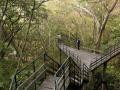
Basically, both Minh Chau and Quan Lan localities have quite favorable conditions for developing ecotourism. However, Quan Lan commune has more advantages to develop ecotourism in a humanistic direction, because this is an area with many famous historical relics such as Quan Lan Communal House, Quan Lan Pagoda, Temple worshiping the hero Tran Khanh Du, ... along with local festivals held annually such as the wind praying ceremony (March 15), Quan Lan festival (June 10-19); due to its location near the port and long exploitation time, the beaches in Quan Lan commune (especially Quan Lan beach) are no longer hygienic and clean to ensure the needs of tourists coming to relax and swim; this is also an area with many beautiful landscapes such as Got Beo wind pass, Ong Phong head, Voi Voi cave, but the ability to access these places is still very limited (dirt hill road, lots of gravel and rocks), especially during rainy and windy times; In addition, other natural resources such as mangrove forests and sea worms have not been really exploited for tourism purposes and ecotourism development. On the contrary, Minh Chau commune has more advantages in developing ecotourism in the direction of natural tourism, this is an area with diverse ecosystems such as at Rua De Beach, Bai Tu Long National Park Conservation Center...; Minh Chau beach is highly appreciated for its natural beauty and cleanliness, ranked in the top ten most beautiful beaches in Vietnam; Minh Chau commune is also home to Tram forest with a large area and a purity of up to 90%, suitable for building bridges through the forest (a very effective type of natural ecotourism currently applied by many countries) for tourists to sightsee, as well as for the purpose of studying and researching.
Figure 3.1: Thenmala Forest Bridge (India) Source: https://www.thenmalaecotourism.com/(August 21, 2019)
3.2.2. Using SWOT matrix to evaluate Quan Lan island tourism
General assessment of current tourism activities of Quan Lan island is shown through the following SWOT matrix:
Table 3.5: SWOT matrix evaluating tourism activities on Quan Lan island
Internal agent
Strengths- There is a lot of potential for tourism development, especially natural ecotourism and humanistic ecotourism.- The unskilled labor force is relatively abundant.- resource environmentunpolluted, still
Weaknesses- Poorly developed infrastructure, especially traffic routes to tourist destinations on the island.- The team of professional staff is still weak.- Tourism products in general
quite wild, originalintact
general and DLST in particularalone is monotonous.
External agents
Opportunity- Tourism is a key industry in the socio-economic development strategy of the province and Van Don economic zone.- Quan Lan was selected as a pilot area for eco-tourism development within the framework of the green growth project between Quang Ninh province and the Japanese organization JICA.- The flow of tourists and especially ecotourism in the world tends toincreasing
Challenge- Weather and climate change abnormally.- Competition in tourism products is increasingly fierce, especially with other localities in the province such as Ha Long, Mong Cai...- Awareness of tourists, especially domestic tourists, about ecotourism and nature conservation is not high.
Through summary analysis using SWOT matrix we see that:
To exploit strengths and take advantage of opportunities, it is necessary to:
- Diversify products and service types (build more tourism routes aimed at specific needs of tourists: experiential tourism immersed in nature, spiritual cultural tourism...)
- Effective exploitation of resources and differentiated products (natural resources and human resources)
div.maincontent .p { color: black; font-family:"Times New Roman", serif; font-style: normal; font-weight: normal; text-decoration: none; font-size: 14pt; margin:0pt; } div.maincontent p { color: black; font-family:"Times New Roman", serif; font-style: normal; font-weight: normal; text-decoration: none; font-size: 14pt; margin:0pt; } div.maincontent .s1 { color: black; font-family:"Times New Roman", serif; font-style: normal; font-weight: normal; text-decoration: none; font-size: 13pt; } div.maincontent .s2 { color: black; font-family:"Times New Roman", serif; font-style: normal; font-weight: normal; text-decoration: none; font-size: 13pt; } div.maincontent .s3 { color: #0D0D0D; font-family:"Times New Roman", serif; font-style: normal; font-weight: bold; text-decoration: none; font-size: 14pt; } div.maincontent .s4 { color: black; font-family:"Times New Roman", serif; font-style: italic; font-weight: normal; text-decoration: none; font-size: 14pt; } div.maincontent .s5 { color: black; font-family:"Times New Roman", serif; font-style: italic; font-weight: bold; text-decoration: none; font-size: 14pt; } div.maincontent .s6 { color: black; font-family:"Times New Roman", serif; font-style: italic; font-weight: normal; text-decoration: none; font-size: 14pt; vertical-align: -3pt; } div.maincontent .s7 { color: black; font-family:"Times New Roman", serif; font-style: italic; font-weight: normal; text-decoration: none; font-size: 14pt; vertical-align: -2pt; } div.maincontent .s8 { color: black; font-family:"Times New Roman", serif; font-style: italic; font-weight: normal; text-decoration: none; font-size: 14pt; vertical-align: -1pt; } div.maincontent .s9 { color: black; font-family:"Times New Roman", serif; font-style: normal; font-weight: normal; text-decoration: none; font-size: 14pt; } div.maincontent .s10 { color: black; font-family:"Times New Roman", serif; font-style: normal; font-weight: bold; text-decoration: none; font-size: 14pt; } div.maincontent .s11 { color: black; font-family:"Times New Roman", serif; font-style: normal; font-weight: normal; text-decoration: none; font-size: 14pt; } div.maincontent .s12 { color: black; font-family:Symbol, serif; font-style: normal; font-weight: normal; text-decoration: none; font-size: 14pt; } div.maincontent .s13 { color: black; font-family:Wingdings; font-style: normal; font-weight: normal; text-decoration: none; font-size: 14pt; } div.maincontent .s14 { color: black; font-family:"Times New Roman", serif; font-style: normal; font-weight: normal; text-decoration: none; font-size: 9pt; vertical-align: 5pt; } div.maincontent .s15 { color: black; font-family:"Times New Roman", serif; font-style: normal; font-weight: normal; text-decoration: none; font-size: 9pt; vertical-align: 5pt; } div.maincontent .s16 { color: black; font-family:Cambria, serif; font-style: italic; font-weight: normal; text-decoration: none; font-size: 14pt; } div.maincontent .s17 { color: #080808; font-family:"Times New Roman", serif; font-style: normal; font-weight: bold; text-decoration: none; font-size: 14pt; } div.maincontent .s18 { color: #080808; font-family:"Times New Roman", serif; font-style: normal; font-weight: normal; text-decoration: none; font-size: 14pt; } div.maincontent .s19 { color: black; font-family:"Times New Roman", serif; font-style: normal; font-weight: normal; text-decoration: none; font-size: 11pt; } div.maincontent .s20 { color: black; font-family:"Times New Roman", serif; font-style: normal; font-weight: normal; text-decoration: none; font-size: 10pt; } div.maincontent .s21 { color: black; font-family:"Times New Roman", serif; font-style: normal; font-weight: bold; text-decoration: none; font-size: 11pt; } div.maincontent .s22 { color: black; font-family:"Times New Roman", serif; font-style: normal; font-weight: normal; text-decoration: none; font-size: 11pt; } div.maincontent .s23 { color: black; font-family:"Times New Roman", serif; font-style: italic; font-weight: normal; text-decoration: none; font-size: 14pt; } div.maincontent .s24 { color: #212121; font-family:"Times New Roman", serif; font-style: normal; font-weight: normal; tex
Identify Rating Levels and Rating Scales
zt2i3t4l5ee
zt2a3gstourism,quan lan,quang ninh,ecology,ecotourism,minh chau,van don,geography,geographical basis,tourism development,science
zt2a3ge
zc2o3n4t5e6n7ts
of the islanders. Therefore, this indicator will be divided into two sub-indicators:
a1. Natural tourism attractiveness a2. Cultural tourism attractiveness
b. Tourist capacity
The two island communes in Quan Lan have different capacities to receive tourists. Minh Chau Commune is home to many standard hotels and resorts, attracting high-income domestic and international tourists. Meanwhile, Quan Lan Commune has many motels mainly built and operated by local people, so the scale and quality are not high, and will be suitable for ordinary tourists such as students.
c. Time of exploitation of Quan Lan Island Commune:
Quan Lan tourism is seasonal due to weather and climate conditions and festivals only take place on certain days of the year, specifically in spring. In Quan Lan commune, the period from April to June and from September to November is considered the best time to visit Quan Lan because the cultural tourism activities are mainly associated with festivals taking place during this time.
Minh Chau island commune:
Tourism exploitation time is all year round, because this is a place with a number of tourist attractions with diverse ecosystems such as Bai Tu Long National Park Research Center, Tram forest, Turtle Laying Beach, so besides coming to the beach for tourism and vacation in the summer, Minh Chau will attract research groups to come for tourism combined with research at other times of the year.
d. Sustainability
The sustainability of ecotourism sites in Quan Lan and Minh Chau communes depends on the sensitivity of the ecosystems to climate changes.
landscape. In general, these tourist destinations have a fairly high level of sustainability, because they are natural ecosystems, planned and protected. However, if a large number of tourists gather at certain times, it can exceed the carrying capacity and affect the sustainability of the environment (polluted beaches, damaged trees, animals moving away from their habitats, etc.), then the sustainability of the above ecosystems (natural ecosystems, human ecosystems) will also be affected and become less sustainable.
e. Location and accessibility
Both island communes have ports to take tourists to visit from Van Don wharf:
- Quan Lan – Van Don traffic route:
Phuc Thinh – Viet Anh high-speed boat and Quang Minh high-speed boat, depart at 8am and 2pm from Van Don to Quan Lan, and at 7am and 1pm from Quan Lan to Van Don. There are also wooden boats departing at 7am and 1pm.
- Van Don - Minh Chau traffic route:
Chung Huong high-speed train, Minh Chau train, morning 7:30 and afternoon 13:30 from Van Don to Minh Chau, morning 6:30 and afternoon 13:00 from Minh Chau to Van Don.
f. Infrastructure
Despite receiving investment attention, the issue of infrastructure and technical facilities for tourism on Quan Lan Island is still an issue that needs to be resolved because it has a direct impact on the implementation of ecotourism activities. The minimum conditions for serving tourists such as accommodation, electricity, water, communication, especially medical services, and security work need to be given top priority. Ecotourism spots in Minh Chau commune are assessed to have better infrastructure and technical facilities for tourism because there are quite complete and synchronous conditions for serving tourists, meeting many needs of domestic and foreign tourists.
3.2.1.4. Determine assessment levels and assessment scales
Corresponding to the levels of each criterion, the index is the score of those levels in the order of 4, 3, 2, 1 decreasing according to the standard of each level: very attractive (4), attractive (3), average (2), less attractive (1).
3.2.1.5. Determining the coefficients of the criteria
For the assessment of DLST in the two communes of Quan Lan and Minh Chau islands, the students added evaluation coefficients to show the importance of the criteria and indicators as follows:
Coefficient 3 with criteria: Attractiveness, Exploitation time. These are the 2 most important criteria for attracting tourists to tourism in general and eco-tourism in particular, so they have the highest coefficient.
Coefficient 2 with criteria: Capacity, Infrastructure, Location and accessibility . Because the assessment area is an island commune of Van Don district, the above criteria are selected by the author with appropriate coefficients at the average level.
Coefficient 1 with criteria: Sustainability. Quan Lan has natural and human-made ecotourism sites, with high biodiversity and little impact from local human factors. Most of the ecotourism sites are still wild, so they are highly sustainable.
3.2.1.6. Results of DLST assessment on Quan Lan island
a. Assessment of the potential for natural tourism development
For Minh Chau commune:
+ Natural tourism attractiveness is determined to be very attractive (4 points) and the most important coefficient (coefficient 3), so the score of the Attractiveness criterion is 4 x 3 = 12.
+ Capacity is determined as average (2 points) and the coefficient is quite important (coefficient 2), then the score of Capacity criterion is 2 x 2 = 4.
+ Exploitation time is long (4 points), the most important coefficient (coefficient 3) so the score of the Exploitation time criterion is 4 x 3 = 12.
+ Sustainability is determined as sustainable (4 points), the important coefficient is the average coefficient (coefficient 1), so the score of the Sustainability criterion is 4 x 1 = 4 points
+ Location and accessibility are determined to be quite favorable (2 points), the coefficient is quite important (coefficient 2), the criterion score is 2 x 2 = 4 points.
+ Infrastructure is assessed as good (3 points), the coefficient is quite important (coefficient 2), then the score of the Infrastructure criterion is 3 x 2 = 6 points.
The total score for evaluating DLST in Minh Chau commune according to 6 evaluation criteria is determined as: 12 + 4 + 12 + 4 + 4 + 6 = 42 points
Similar assessment for Quan Lan commune, we have the following table:
Table 3.3: Assessment of the potential for natural ecotourism development in Quan Lan and Minh Chau communes
Attractiveness of self-tourismof course
Capacity
Mining time
Sustainability
Location and accessibility
Infrastructure
Result
Point
DarkMulti
Point
DarkMulti
Point
DarkMulti
Point
DarkMulti
Point
DarkMulti
Point
DarkMulti
CommuneMinh Chau
12
12
4
8
12
12
4
4
4
8
6
8
42/52
Quan CommuneLan
6
12
6
8
9
12
4
4
4
8
4
8
33/52
b. Assessment of the potential for humanistic tourism development
For Quan Lan commune:
+ The attractiveness of human tourism is determined to be very attractive (4 points) and the most important coefficient (coefficient 3), so the score of the Attractiveness criterion is 4 x 3 = 12.
+ Capacity is determined to be large (3 points) and the coefficient is quite important (coefficient 2), then the score of the Capacity criterion is 3 x 2 = 6.
+ Mining time is average (3 points), the most important coefficient (coefficient 3) so the score of the Mining time criterion is 3 x 3 = 9.
+ Sustainability is determined as sustainable (4 points), the important coefficient is the average coefficient (coefficient 1), so the score of the Sustainability criterion is 4 x 1 = 4 points.
+ Location and accessibility are determined to be quite favorable (2 points), the coefficient is quite important (coefficient 2), the criterion score is 2 x 2 = 4 points.
+ Infrastructure is rated as average (2 points), the coefficient is quite important (coefficient 2), then the score of the Infrastructure criterion is 2 x 2 = 4 points.
The total score for evaluating DLST in Quan Lan commune according to 6 evaluation criteria is determined as: 12 + 6 + 6 + 4 + 4 + 4 = 36 points.
Similar assessment with Minh Chau commune we have the following table:
Table 3.4: Assessment of the potential for developing humanistic eco-tourism in Quan Lan and Minh Chau communes
Attractiveness of human tourismliterature
Capacity
Mining time
Sustainability
Location and accessibility
Infrastructure
Result
Point
DarkMulti
Point
DarkMulti
Point
DarkMulti
Point
DarkMulti
Point
DarkMulti
Point
DarkMulti
Quan CommuneLan
12
12
6
8
9
12
4
4
4
8
4
8
39/52
Minh CommuneChau
6
12
4
8
12
12
4
4
4
8
6
8
36/52
Basically, both Minh Chau and Quan Lan localities have quite favorable conditions for developing ecotourism. However, Quan Lan commune has more advantages to develop ecotourism in a humanistic direction, because this is an area with many famous historical relics such as Quan Lan Communal House, Quan Lan Pagoda, Temple worshiping the hero Tran Khanh Du, ... along with local festivals held annually such as the wind praying ceremony (March 15), Quan Lan festival (June 10-19); due to its location near the port and long exploitation time, the beaches in Quan Lan commune (especially Quan Lan beach) are no longer hygienic and clean to ensure the needs of tourists coming to relax and swim; this is also an area with many beautiful landscapes such as Got Beo wind pass, Ong Phong head, Voi Voi cave, but the ability to access these places is still very limited (dirt hill road, lots of gravel and rocks), especially during rainy and windy times; In addition, other natural resources such as mangrove forests and sea worms have not been really exploited for tourism purposes and ecotourism development. On the contrary, Minh Chau commune has more advantages in developing ecotourism in the direction of natural tourism, this is an area with diverse ecosystems such as at Rua De Beach, Bai Tu Long National Park Conservation Center...; Minh Chau beach is highly appreciated for its natural beauty and cleanliness, ranked in the top ten most beautiful beaches in Vietnam; Minh Chau commune is also home to Tram forest with a large area and a purity of up to 90%, suitable for building bridges through the forest (a very effective type of natural ecotourism currently applied by many countries) for tourists to sightsee, as well as for the purpose of studying and researching.
Figure 3.1: Thenmala Forest Bridge (India) Source: https://www.thenmalaecotourism.com/(August 21, 2019)
3.2.2. Using SWOT matrix to evaluate Quan Lan island tourism
General assessment of current tourism activities of Quan Lan island is shown through the following SWOT matrix:
Table 3.5: SWOT matrix evaluating tourism activities on Quan Lan island
Internal agent
Strengths- There is a lot of potential for tourism development, especially natural ecotourism and humanistic ecotourism.- The unskilled labor force is relatively abundant.- resource environmentunpolluted, still
Weaknesses- Poorly developed infrastructure, especially traffic routes to tourist destinations on the island.- The team of professional staff is still weak.- Tourism products in general
quite wild, originalintact
general and DLST in particularalone is monotonous.
External agents
Opportunity- Tourism is a key industry in the socio-economic development strategy of the province and Van Don economic zone.- Quan Lan was selected as a pilot area for eco-tourism development within the framework of the green growth project between Quang Ninh province and the Japanese organization JICA.- The flow of tourists and especially ecotourism in the world tends toincreasing
Challenge- Weather and climate change abnormally.- Competition in tourism products is increasingly fierce, especially with other localities in the province such as Ha Long, Mong Cai...- Awareness of tourists, especially domestic tourists, about ecotourism and nature conservation is not high.
Through summary analysis using SWOT matrix we see that:
To exploit strengths and take advantage of opportunities, it is necessary to:
- Diversify products and service types (build more tourism routes aimed at specific needs of tourists: experiential tourism immersed in nature, spiritual cultural tourism...)
- Effective exploitation of resources and differentiated products (natural resources and human resources)
div.maincontent .p { color: black; font-family:"Times New Roman", serif; font-style: normal; font-weight: normal; text-decoration: none; font-size: 14pt; margin:0pt; } div.maincontent p { color: black; font-family:"Times New Roman", serif; font-style: normal; font-weight: normal; text-decoration: none; font-size: 14pt; margin:0pt; } div.maincontent .s1 { color: black; font-family:"Times New Roman", serif; font-style: normal; font-weight: normal; text-decoration: none; font-size: 13pt; } div.maincontent .s2 { color: black; font-family:"Times New Roman", serif; font-style: normal; font-weight: normal; text-decoration: none; font-size: 13pt; } div.maincontent .s3 { color: #0D0D0D; font-family:"Times New Roman", serif; font-style: normal; font-weight: bold; text-decoration: none; font-size: 14pt; } div.maincontent .s4 { color: black; font-family:"Times New Roman", serif; font-style: italic; font-weight: normal; text-decoration: none; font-size: 14pt; } div.maincontent .s5 { color: black; font-family:"Times New Roman", serif; font-style: italic; font-weight: bold; text-decoration: none; font-size: 14pt; } div.maincontent .s6 { color: black; font-family:"Times New Roman", serif; font-style: italic; font-weight: normal; text-decoration: none; font-size: 14pt; vertical-align: -3pt; } div.maincontent .s7 { color: black; font-family:"Times New Roman", serif; font-style: italic; font-weight: normal; text-decoration: none; font-size: 14pt; vertical-align: -2pt; } div.maincontent .s8 { color: black; font-family:"Times New Roman", serif; font-style: italic; font-weight: normal; text-decoration: none; font-size: 14pt; vertical-align: -1pt; } div.maincontent .s9 { color: black; font-family:"Times New Roman", serif; font-style: normal; font-weight: normal; text-decoration: none; font-size: 14pt; } div.maincontent .s10 { color: black; font-family:"Times New Roman", serif; font-style: normal; font-weight: bold; text-decoration: none; font-size: 14pt; } div.maincontent .s11 { color: black; font-family:"Times New Roman", serif; font-style: normal; font-weight: normal; text-decoration: none; font-size: 14pt; } div.maincontent .s12 { color: black; font-family:Symbol, serif; font-style: normal; font-weight: normal; text-decoration: none; font-size: 14pt; } div.maincontent .s13 { color: black; font-family:Wingdings; font-style: normal; font-weight: normal; text-decoration: none; font-size: 14pt; } div.maincontent .s14 { color: black; font-family:"Times New Roman", serif; font-style: normal; font-weight: normal; text-decoration: none; font-size: 9pt; vertical-align: 5pt; } div.maincontent .s15 { color: black; font-family:"Times New Roman", serif; font-style: normal; font-weight: normal; text-decoration: none; font-size: 9pt; vertical-align: 5pt; } div.maincontent .s16 { color: black; font-family:Cambria, serif; font-style: italic; font-weight: normal; text-decoration: none; font-size: 14pt; } div.maincontent .s17 { color: #080808; font-family:"Times New Roman", serif; font-style: normal; font-weight: bold; text-decoration: none; font-size: 14pt; } div.maincontent .s18 { color: #080808; font-family:"Times New Roman", serif; font-style: normal; font-weight: normal; text-decoration: none; font-size: 14pt; } div.maincontent .s19 { color: black; font-family:"Times New Roman", serif; font-style: normal; font-weight: normal; text-decoration: none; font-size: 11pt; } div.maincontent .s20 { color: black; font-family:"Times New Roman", serif; font-style: normal; font-weight: normal; text-decoration: none; font-size: 10pt; } div.maincontent .s21 { color: black; font-family:"Times New Roman", serif; font-style: normal; font-weight: bold; text-decoration: none; font-size: 11pt; } div.maincontent .s22 { color: black; font-family:"Times New Roman", serif; font-style: normal; font-weight: normal; text-decoration: none; font-size: 11pt; } div.maincontent .s23 { color: black; font-family:"Times New Roman", serif; font-style: italic; font-weight: normal; text-decoration: none; font-size: 14pt; } div.maincontent .s24 { color: #212121; font-family:"Times New Roman", serif; font-style: normal; font-weight: normal; tex -
 The Role of Tam Dao National Park in Biodiversity Conservation and Environmental Protection in the Northern Delta Region and Vietnam
 -
 Initial research on Dong Ky wooden village in tourism development in the Northern Delta - 6
 -
 Initial research on Dong Ky wooden village in tourism development in the Northern Delta - 10
4 4
0 1
4 4 4
2 3 4
4
6
1 1 1
5 6 7
4
5
1
3
3 3
8 9
1 1
0 15
2
1
4
2 3 4
6 7 8 9
1
9
1
1 1
8
APPENDIX 1: DISTRIBUTION MAP OF NAM DE WORSHIPING SITES IN THE NORTHERN DELTA REGION
2 2 | 3 | 3 | 3 | ||
7 8 2 9 | 5 3 6 3 | 2 3 | 3 | 4 3 | |
2 0 | 0 1 | 5 | 6 | 7 | |
1 2 | 2 | ||||
2 2 | 3 | ||||
4 | |||||


3
NOTES (in order on the map)
Hanoi:
1. Giang Xa Communal House, Duc Giang Commune, Hoai Duc District, Hanoi
2. Giang Xa Temple, Duc Giang Commune, Hoai Duc District, Hanoi
3. Bao Phuc Pagoda, Duc Giang Commune, Hoai Duc District, Hanoi
4. Luu Xa Communal House, Duc Giang Commune, Hoai Duc District, Hanoi
5. Dai Tu Communal House, Kim Chung Commune, Hoai Duc District, Hanoi
6. Di Trach Temple, Di Trach Commune, Hoai Duc District, Hanoi
7. Mieu Nha Communal House, Tay Mo Commune, Tu Liem District, Hanoi
8. Mieu Nha Temple, Tay Mo Commune, Tu Liem District, Hanoi
9. Tu Hoang Communal House, Xuan Phuong Commune, Tu Liem, Hanoi
10. Ngoc Than Communal House, Ngoc My Commune, Quoc Oai District, Hanoi
11. Phu Lac Communal House, Cao Vien Commune, Thanh Oai District, Hanoi
12. Le Duong Communal House, Tam Hung Commune, Quoc Oai District, Hanoi
13. Tuan Le Communal House, Tien Duong Commune, Dong Anh District, Hanoi
14. Co Duong Temple, Tien Duong Commune, Dong Anh District, Hanoi
15. Ly Nam De Temple, Bac Son Commune, Soc Son District, Hanoi
16. Quan My Communal House, Tan Dan Commune, Soc Son District, Hanoi
17. Phu Xa Dong Communal House, Phu Minh Commune, Soc Son District, Hanoi
18. Dinh Giang, Vien Noi commune, Thuong Tin district, Hanoi
19. Tinh Quang Communal House, Giang Bien Ward, Long Bien District, Hanoi
Peace:
20. Hai Thon Temple, Xuan Hoa Commune, Vu Thu District, Thai Binh
21. Huong Temple, Xuan Hoa Commune, Vu Thu District, Thai Binh
22. Huu Loc Temple, Xuan Hoa Commune, Vu Thu District, Thai Binh
23. Gia Lac Communal House, Hong Ly Commune, Vu Thu District, Thai Binh
24. Thuong Ho Communal House, Hong Ly Commune, Vu Thu District, Thai Binh
25. An Dien Communal House, Dong Thanh Commune, Dong Hung District, Thai Binh
26. Dong Dai Communal House, Dong Thanh Commune, Dong Hung District, Thai Binh
27. Co Trai Communal House, Hong Minh Commune, Hung Ha District, Thai Binh
28. Co Trai Temple, Hong Minh Commune, Hung Ha District, Thai Binh
29. Tinh Xuyen Communal House, Hong Minh Commune, Hung Ha District, Thai Binh
30. Hau Trung Temple, Bach Dang Commune, Dong Hung District, Thai Binh
31. Hau Thuong Temple, Bach Dang Commune, Dong Hung District, Thai Binh
32. Tu Cac Temple, Thai Hoa Commune, Thai Thuy District, Thai Binh
33. Dong Cac Communal House, Thai Thuong Commune, Thai Thuy District, Thai Binh
34. Dinh Chieu, My Loc commune, Thai Thuy district, Thai Binh
35. Don Temple, Thai Hoa Commune, Thai Thuy District, Thai Binh
36. Ba Thon Temple, Thuy Hai Commune, Thai Thuy District, Thai Binh
37. Hung Quoc Pagoda, Thuy Hai Commune, Thai Thuy District, Thai Binh
Bac Ninh:
38. Van Kham Temple, Hien Van Commune, Tien Du District, Bac Ninh
39. Trung village communal house, Canh Hung commune, Tien Du district, Bac Ninh
Thai Nguyen:
40. Huong Pagoda, Tien Phuong Commune, Pho Yen District, Thai Nguyen
41. Muc Temple, Tien Phong Commune, Pho Yen District, Thai Nguyen
Vinh Phuc:
42. Mo Dao Communal House, Dao Duc Commune, Binh Xuyen District, Vinh Phuc
43. Bao Duc Communal House, Dao Duc Commune, Binh Xuyen District, Vinh Phuc
44. Dai Phuc Communal House, Dao Duc Commune, Binh Xuyen District, Vinh Phuc
45. Dien Tao Pagoda, Tien Thang Commune, Me Linh District, Hanoi
Phu Tho:
46. Temple and tomb of Ly Nam De, Van Luong commune, Tam Nong district, Phu Tho
APPENDIX 2: LEGEND/MIRACLE ABOUT LY NAM DE
Appendix 2.1. Legends/miracles in literature
2.1.1. The traditional genealogy of Duc Tien Ly Nam De, belonging to the Viet Thuong family (Preserved at Giang Xa communal house - Hoai Duc district, Hanoi . Translator: Associate Professor, Dr. Nguyen Minh Tuong - Institute of History)
In the past, our country of Viet was passed down from generation to generation, when the country belonged to the Liang Dynasty, in the Dai Dong era (535-545), [King Liang] appointed Marquis Vu Lam Tieu Tu as the Governor of Giao Chau. The Governor of our country (Tieu Tu) was harsh and cruel, greedy for wine, women, money and material things, so he lost the hearts of the people. All the heroes and great men in the country did not obey his orders.
At that time, in the land of Da Nang, Kinh Bac, there was a family of a Chief (family name Ly, given name Toan), who married a woman from Ai Chau (later changed to Thanh Hoa) (family name Le, given name Oanh). This Ly man belonged to a family that had accumulated good karma and charity for generations, doing things like casting temple bells and carving Buddha statues with all their heart. He also often helped the weak, saved the poor, and took care of the elderly, with a heart as generous as the ocean.
At that time, the husband was over 40 years old, the wife was over 30. One day, the wife was lying in the yard, playing, and fell asleep. Suddenly, the sky and earth darkened, so she looked up at the clouds. She saw a colorful cloud floating up in the sky, in which were two dragons: one white, one yellow. The two were fighting over the sun. Suddenly, the sun fell down, falling right into her mouth. The yellow dragon flew down and landed right on her stomach. Then, suddenly, she woke up, knowing that it was a dream. She told her husband the whole story in the dream.
Mr. Ly Toan then told his wife: “If the dream is true, then our family will be very blessed! Heaven has sent down talented people. Earth has given birth to talented people. It must be so! It must be so!”
The husband had just finished speaking. The wife suddenly felt moved and became pregnant. At the hour of Thin (around 7am to 9am), on the 12th day of the 9th month of the year Quy Mui, she gave birth to a son. The child had a majestic demeanor and a remarkable appearance.
strange: "Eyebrows like the eyebrows of King Nghieu, eyes like the eyes of King Thuan, back like the back of King Vu, shoulders like the shoulders of King Thang". The child must not be an ordinary person! Furthermore, while she was giving birth, thunder and lightning rumbled, dark clouds gathered,
The sky was dark, heavy rain was pouring down, and the fragrance from the sky filled the living room. A fresh air wafted throughout her room.
Time passed quickly, the child was 3 years old. He understood all the musical notes. The grandparents named their child Bi.
When the king was five years old, he was extremely intelligent, his spirit was superior to everyone else, his language was mature, he often revealed his high plans and told strange stories to the villagers. Although the king was still young, his intelligence and generosity were superior to others. The king's nature was tolerant, gentle, filial to his parents, and respectful to his brothers. His appearance was truly solemn and heroic.
That same year (when Ly Bi was 5 years old), the King's father suddenly passed away without any illness (February 20). The King's mother held a funeral for her husband in their hometown. When the King was only 7 years old, his mother also passed away (January 10).
The king had an older brother named Ly Bao . At that time, Ly Bao was also 13 years old.
The two brothers finished burying their mother. From then on, the sacrifices were very thoughtful, but the family's situation became increasingly poor. The King and his brothers had to live with their uncle's family.
At that time, in the village of a monk, whose dharma name was Phap To Thien Su, he said to the King's uncle: "Your family is blessed. These two nephews will surely be helped by heaven to complete great tasks in the future! Moreover, the word " Bi " is the younger brother's name, doesn't it mean that he respectfully seeks Buddhism and relies on the door of Compassion to receive salvation? His reputation will last for a long time, so he doesn't necessarily have to become an official!"
The King's uncle heard the Zen Master's teachings and believed them very much. He sold the King to the Zen Master as his adopted son and followed the Zen Master to practice Buddhism. He practiced for about 3 or 4 years, until the King was about 13 years old. At that time, the Zen Master returned to Dan Phuong district, Quoc Oai prefecture. At that time, in Giang Xa commune, there were 3 people with the last names: Le, Nguyen,