
According to Russian psychologist VA Cruchetxki [10]: "Competence is understood as a complex of individual psychological characteristics of a person that meets the requirements of a certain series of actions and is a condition for the success of that activity".
Xavier Roegiers asserts: Competence is the integration of skills that naturally impact the content in a given type of situation to solve the problems posed by these situations [30].
According to Pham Minh Hac [12]: "Ability is a combination of psychological characteristics of a person (also known as a combination of psychological attributes of a personality), this combination of characteristics operates according to a certain purpose to create the result of a certain activity ".
Thus, there are many different views on capacity but they all have the following common characteristics:
Competence is the ability to successfully perform and solve problems in specific situations. Competence is influenced by factors such as genetics, environment and personal activities.
The necessary conditions for forming and developing capacity are knowledge and skills. Because, "each person's capacity is based on their natural qualities, but the main thing is the capacity to form, develop and manifest in active human activities under the influence of training, teaching and education" [18].
1.2.2. Mathematical ability
Mathematical competence is a form of professional competence, associated with the subject of mathematics. There are many different concepts of mathematical competence.
According to Blohm & Jensen (2007): “Mathematical competence is the ability to act in response to mathematical challenges in given situations”.
According to Niss Mogens (1999): “Mathematical competence is the individual's ability to use mathematical concepts in a variety of mathematically related situations, including those within or outside of mathematics (to understand, decide and explain)”.
Niss Mogens also identified eight components of mathematical ability and divided them into two
Cluster 1 includes: mathematical thinking ability; mathematical problem solving ability
learning; mathematical modeling ability; mathematical reasoning ability. The second cluster includes: representation ability, ability to use language and formal symbols; mathematical communication ability; ability to use tools and means of learning mathematics.
These eight competencies are closely related to each other and are necessary for individuals to be able to learn and apply mathematics.
According to author Tran Kieu (2014): "The competencies that need to be formed and developed for learners through teaching Mathematics in Vietnamese high schools are: thinking ability; problem solving ability; mathematical modeling ability; communication ability; ability to use mathematical tools and means; independent and collaborative learning ability" [26].
One of the general objectives of the General Education Program for Mathematics (Issued with Circular No. 32/2018/TT-BGDDT dated December 26, 2018 of the Minister of Education and Training) is to form and develop mathematical competencies including core elements: mathematical thinking and reasoning skills; mathematical modeling skills; mathematical problem solving skills; mathematical communication skills; skills in using mathematical learning tools and means.
1.3 Inference
1.3.1 Concept
According to the logic of author Nguyen Nhu Hai, inference is a logical form of thinking in which judgments are linked together to draw new judgments.
Each inference is represented as an entailment whose premise is a proposition or union of propositions: A 1 , A 2 ,… A n B (the A i are the premises, B is the conclusion). [15]
Any reasoning consists of premises, arguments, and conclusion. [14]
Premise: is one or several judgments that have been accepted by practice or proven by science to be correct. Based on the correct value of the premises, new judgments can be drawn, containing new knowledge that each premise alone cannot have.
Argumentation: is a logical method of drawing conclusions from premises. These logical methods not only show the order of judgments belonging to the premises but also include
including the rules of logic that govern the order in which new judgments are necessarily made.
Conclusion: is a new judgment obtained from the premises through reasoning. Conclusions come in many different forms, some are consistent with objective reality, some are random, some are inevitable from the logical reasoning of the premises.
In Vietnamese, the predicate comes before the words “nên”, “cho như”, “do đó”, “vư đó”, “sư rồi”… and after the words “vì”, “đữ nhân”,… is the premise. Conversely, the predicate comes after the words “nên”, “cho như”, “do đó”, “vư đó”,… and before the words “vì”, “đữ nhân”,… is the conclusion. Mastering this expression helps us quickly recognize the premise and conclusion when analyzing any reasoning.
Based on the method of reasoning, reasoning is divided into deductive reasoning, inductive reasoning and extrapolative reasoning.
1.3.2 Types of reasoning
Peirce (1994) suggested that there are three basic types of reasoning: deduction, induction, and extrapolation.
We illustrate the types of inference through the following examples [24][25]:
Interpretation
Rule : If a rhombus has a right angle, then it is a square.
Case : Rhombus ABCD has a right angle
Conclusion : Rhombus ABCD is a square.
Induction
Case : Rhombus ABCD has a right angle
Conclusion : Rhombus ABCD is a square.
Rule : If a rhombus has a right angle, then it is a square.
Extrapolate
Rule : If a rhombus has a right angle, then it is a square.
Conclusion : Rhombus ABCD is a square.
Case : Rhombus ABCD has a right angle
This example shows that, while deductive reasoning seeks conclusions from given true results, inductive reasoning seeks general results for true results of particular cases, and inferential reasoning seeks the best explanation for given results.
Extrapolation as in the example above is not analytically correct or formally logical because other cases can be considered such as rhombus ABCD with two equal diagonals or two equal adjacent angles. However, this form of reasoning contains the way that people explain when making discoveries and surveys. Extrapolation seeks or forms hypotheses and theories that can explain an event (which is surprising) or an observation (which is surprising). Thus, extrapolation creates new ideas and helps expand knowledge [25].
1.3.3 Distinguishing between deductive, extrapolative and inductive reasoning in mathematics
Based on the general theoretical foundations of deduction, induction, and extrapolation presented above, we can distinguish the three types of reasoning above according to the following factors [14]:
a) Conditions for occurrence and results of three types of inference
If we have a rule “ If P then Q” , an Event P and a Consequence Q then: Given information about the relationship between P and Q , induction implies the Rule: “ If P then Q”.
Given information about P and the Rule : “If P then Q ”, deduction leads to Consequence Q. Given the Rule : “ If P then Q” and Consequence Q , extrapolation leads to Hypothesis: “ maybe P”.
Note that with extrapolation, one of the following can occur:
Case 1 : In addition to the rule "If P then Q " , if in the learner's existing knowledge there are some more rules: "If K then Q ", "If H then Q " ... then extrapolation has the task of choosing the most reasonable hypothesis among the hypotheses "could be P ", "could be H ", "could be K " . Extrapolation in this case is classified as selective extrapolation .
Example 1.3 This is an example used by Reid (2003) to illustrate deductive reasoning occurring in a mathematics classroom. In this example a teacher in France is instructing a class of
Level 4 students (13-14 year olds) proved the Pythagorean theorem. They concluded that ABCD is a rhombus because it has 4 equal sides. The following is a discussion between the teacher and students [25]:
Teacher: ABCD is a rhombus, we have enough elements to conclude, we don’t need anything more. But that’s not what I want you to prove. I want you to prove that it is…
HS: Square.
Teacher: That's right, a square. So under what other conditions is ABCD a square?
Under what conditions is rhombus ABCD a square?
Many students: If it has a right angle. Teacher: If it has…?
Many students: 1 right angle.
Teacher: 1 right angle, that's enough.
Here we have the following extrapolation diagram:
Conclusion : ABCD is a rhombus, ABCD is a square.
Rule : If a rhombus has one right angle, then it is a square.
Case : ABCD has a right angle.
In this situation, first, there are two conclusions: one that is already available from the problem hypothesis and one that is suggested based on the observation of the drawing and the teacher's request. This is part of the " didactic contract " that the conclusion that the teacher wants the student to prove is correct. Second, there are many different Rules that the student can choose from, such as "if a rhombus has two equal diagonals, then it is a square", or "if a rhombus has two equal adjacent angles, then it is a square". Using one of these Rules may or may not be useful for the student's proof. In other words, the student needs to choose the "best" hypothesis based on the available elements of the problem. According to Eco, the extrapolation that the student uses in this case is selective extrapolation [25].
Case 2 : If the rule “If P then Q ” has the opposite direction “If Q then P ”, then the extrapolation hypothesis is not only a reasonable hypothesis, but it is also the correct and only hypothesis: “Certainly P ”. Extrapolation in this case is a direct extrapolation.
according to Eco's classification (1983) [25] [35].
Case 3 : If the Rule “If P then Q ” does not exist in the learner's knowledge, then simultaneously deducing the Rule “If P then Q ” and the Hypothesis: “maybe P ” is the result of creative extrapolation [25].
Table 1.2. Model comparing three types of reasoning
Interpretation
Induction | Extrapolate | |
Rule: i : C ( x i) R ( x i) Case: C ( x 0 ) Conclusion: R ( x 0 ) | Case: C ( x 0 ) Conclusion: R ( x 0 ) Rule: i : C ( x i) R ( x i) | Conclusion: R ( x 0 ) Rule: i : C ( x i) R ( x i) Case: C ( x 0 ) |
Maybe you are interested!
-

 Analysis of financial capacity and some solutions to improve financial capacity at Vietnam Telecommunications Technology Investment and Development Joint Stock Company - 5
 -
 Reliability of Managers' and English Teachers' Ratings of the Benefits of Capacity Building and Development Activities
 -
 Current Status of Directing the Implementation of School Psychological Counseling Capacity Development Activities for Teachers in Secondary Schools in Mong Cai City, Province
 -
 Criteria and Scale for Assessing Student Capacity Development
 -
 Assessing the capacity of civil servants at Quang Binh Development Bank Branch - 17
b) Purpose of conducting each type of reasoning
Deductive reasoning uses known rules of mathematical logic and axioms to assert the correctness of a result and is often used in mathematical proof.
Inductive reasoning helps generalize a result from similar specific cases, in order to expand the scope of application of a property/mathematical knowledge to a larger group of objects. Induction is often used in discovering general results. Induction is also used to support problem solving, solving a simpler problem by limiting the number of cases to consider and then using inductive reasoning to generalize the result to the main problem.
Extrapolation is used to come up with an acceptable hypothesis to explain a surprising phenomenon or observation in the process of discovering mathematical knowledge. Extrapolation is also used to guide the proof process by reasoning backwards from what needs to be proven (the conclusions ) to the given hypothesis (the cases ) [24] [25].
c) Mathematical discovery and certainty of results
The certainty of the conclusions produced by these types of reasoning decreases from deduction to induction and finally extrapolation. The “truth-making” nature of
Deduction always produces a well-founded conclusion because true premises always lead to true conclusions. The deduced conclusion is not a generalization and therefore does not require empirical verification. In contrast, extrapolation and induction produce conclusions based on empirical evidence and may be false [25].
However, in terms of discovering new knowledge, knowledge obtained from deductive reasoning can be viewed as logical consequences derived from known correct axioms, so they cannot expand the available human knowledge. With induction, new knowledge is obtained in the form of generalization, which is to expand the scope of known knowledge in predictable trends. With extrapolation, when available knowledge cannot explain observations, new knowledge is formed. [25][42].
1.3.4. Some basic rules of inference
Types of syllogisms:
- Affirmative syllogism: X Y , X
Y
- Negative syllogism: ( X Y ) Y
X
- Syllogism of choice: X Y , X
Y
- Transitive syllogism: X Y , Y Z
X Z
Common clause rules:
x , P x , ( a is x ) or ( x , P x Q ( x )) , ( a is x )
P(a) P a Q ( a )
Inductive rule
To conclude that P(n) is true for all natural numbers n n 0 , people use induction as follows:
P ( n o ) 1 , (if P k 1, k n 0 , then
P(k+1)=1 ) P(n) is true for all natural numbers n n 0
1.4 Toulmin model
1.4.1 Structure of the Toulmin model
Aristotle's syllogism was the first theory to describe the structural model of an argument. This structure consists of: major axioms, minor axioms, and conclusion. According to Plato, syllogisms do not discover new knowledge because their conclusion is contained in the axioms.
Toulmin (1958) believes that rigorous reasoning is a basic skill for people living in the 21st century. Therefore, he spent a lot of time researching the nature of the reasoning process, especially mathematical reasoning. Toulmin considers an argument to consist of three basic elements: argument, conclusion and proof. Argument (also known as premise) is one or more facts that serve as the basis for the argument, from which to deduce the conclusion, it answers the question "prove by what?". Conclusion is an assertion based on the given argument, it answers the question "prove what?". Proof is the rules, principles, theorems, ... by which we deduce the conclusion from the premise, it answers the question "prove by what?". In addition to the three basic elements above, Toulmin also added three additional elements: additional arguments used in cases where the initial argument is not convincing enough, a refutation domain that considers in which cases the argument is no longer correct, and the level of credibility of the argument such as: definitely true, probably true, impossible [22] [49].
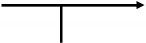
D (Data): Argument C (Claim): Conclusion
W (Warrant): Warrant
Figure 1.4 Basic form of the Toulmin model
Example 1.4 To demonstrate the process of proving that ABC is right-angled at vertex A , we use the following model:
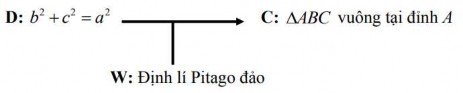
Figure 1.5 Toulmin model proves that ABC is a right triangle