
ACKNOWLEDGEMENTS
For a final year student, doing a graduation thesis is a great honor. However, completing the thesis requires great effort and hard work from the individual and more importantly, the guidance of the instructors, the encouragement of family and friends.
I would like to thank the teachers in and outside the Department of Culture and Tourism - Hai Phong Private University for enthusiastically teaching us throughout the course. Thank you to the brothers and sisters in the Department of Culture, Sports and Tourism of Bac Ninh; the uncles and aunts in the Department of Culture and Information of Thuan Thanh district, Tien Du district, Que Vo district, Tu Son town for providing the necessary documents for me to complete my thesis.
In particular, I would like to express my deep gratitude to Ms. Pham Thi Hoang Diep. She has helped me from the orientation of the topic, wholeheartedly taught me the necessary knowledge, always cared for and encouraged me throughout the process of implementing the topic. Finally, I would like to send my most sincere gratitude to my family members and friends for always being there to help me achieve the results I have today.
Maybe you are interested!
-
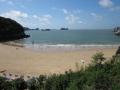
 Current status, potential and solutions for developing team building tourism in Hai Phong - 13
 -
 Current status and solutions for tourism development in Kim Bang district, Ha Nam province - 6
 -
 Hoang Thanh Phuc (2009), "Research on Current Status and Solutions for Developing Scattered Forestry Planting in Thai Nguyen Province", Master's Thesis,
 -
 Current status and solutions for tourism development in Kim Bang district, Ha Nam province - 2
 -
 Meditation tourism – current status and development solutions in Quang Ninh - 6
This is my first research, so it is inevitable that there are limitations and shortcomings. I look forward to receiving comments from teachers to improve my thesis.
Thank you very much!
Hai Phong June 25, 2011
Student
Tran Thi Van
ACKNOWLEDGEMENTS
INDEX
INTRODUCTION 1
1. Reasons for choosing topic 6
2. History of research on issue 7
3. Purpose and significance of topic 8
4. Research object and scope 9
5. Research methods 9
6. Thesis layout 9
CHAPTER 1: GENERAL THEORETICAL BASIS AND OVERVIEW OF THE MATHEMATICS
CULTURAL TOURISM IN BAC NINH 10
1.1. Some basic concepts 10
1.1.1. Culture 10
1.1.1.1. Concept of culture 10
1.1.1.2. Characteristics and functions of culture 11
1.1.1.3. Classification of cultural types 13
1.1.2. Travel 16
1.1.3. Tourism resources 18
1.1.4. Cultural tourism 19
1.2. Introduction to Bac Ninh Cultural Tourism Resources 21
1.2.1. Historical and cultural relics 21
1.2.1.1. Dau Pagoda 23
1.2.1.2. But Thap Pagoda 25
1.2.1.3. Phat Tich Pagoda 26
1.2.1.4. Dinh Dinh Bang 28
1.2.1.5. Do Temple 24
1.2.1.6. Temple of Lady Kho 30
1.2.1.7. Bac Ninh Temple of Literature 30
1.2.2. Festival tourism resources 31
1.2.2.1. Lim Festival 31
1.2.2.2. Council of Cavalry 32
1.2.2.3. The 34th Fringing Association
1.2.3. Folklore 34
1.2.3.1. Rowing boat 34
1.2.3.2. Drum set 35
1.2.3.3. Quan Ho 36
1.2.4. Traditional craft villages 37
1.2.4.1. Dong Ky Fine Arts Wood Village 37
1.2.4.2. Phu Lang Pottery Village 39
1.2.4.3. Dong Ho folk painting village 41
1.2.5. Quan Ho cuisine 42
1.2.5.1. Phu The Cake 42
1.2.5.2. Banh te of Cho village 43
1.2.5.3. Nem Bui 44
1.3. Summary of chapter 1 45
CHAPTER 2: CURRENT STATUS OF EXPLOITATION OF CULTURAL TOURISM IN BAC NINH 46
2.1. Current status of tourism exploitation at historical and cultural relics in Bac Ninh 46
2.1.1. Exploitation at the relics of Pagoda 47
2.1.1.1. Dau Pagoda 47
2.1.1.2. But Thap Pagoda 50
2.1.1.3 Phat Tich Pagoda 53
2.1.2. Exploitation at Temple 54 relics
2.1.2.1. Do Temple 54
2.1.2.2. Temple of Lady Kho 58
2.1.3. Exploitation at Dinh Bang Communal House and Bac Ninh Temple of Literature 61
2.1.3.1. Dinh Dinh Bang 61
2.1.3.2. Bac Ninh Temple of Literature 61
2.2. Current status of exploitation of festival tourism resources 62
2.2.1. Lim Festival 62
2.2.2. Council of Cavalry 65
2.2.3. The 66th Festival
2.3. Current status of exploitation in traditional craft villages 67
2.3.1. Dong Ky 67 Fine Arts Wood Village
2.3.2. Phu Lang Pottery Village 70
2.3.3. Dong Ho folk painting village 72
2.4. Current status of exploiting folk art 74
2.4.1. Rowing boat he 74
2.4.2. Drum set 76
2.4.3. Quan Ho 77
2.5. Current status of exploiting Bac Ninh cuisine in tourism 80
2.6. General assessment of the current status of cultural tourism exploitation in Bac Ninh 82
2.6.1. About tourists 82
2.6.2. About tourism revenue 83
2.6.3. On labor in tourism 83
2.6.4. Regarding technical facilities serving tourism 84
2.6.5. On the management, restoration and embellishment of relics 85
2.6.6. On propaganda and promotion activities 86
2.6.7. General comments 87
2.7. Summary of Chapter 2 88
CHAPTER 3: SOME SOLUTIONS TO DEVELOP CULTURAL TOURISM IN BAC NINH 90
3.1. Restoring and promoting traditional cultural values of Bac Ninh 90
3.1.1. Preservation and restoration of historical and cultural relics 90
3.1.1.1. Orientation for conservation and restoration of historical and cultural relics 90
3.1.1.2. Conservation and restoration measures 92
3.1.2. Restoring the traditional cultural identity of festivals 94
3.1.3. Restoring and expanding traditional craft villages 98
3.1.4. Restoring, preserving and developing folk arts 102
3.2. Solutions for developing cultural tourism in Bac Ninh 105
3.2.1. Diversifying cultural tourism products 105
3.2.2. Linking cultural tourism routes in Bac Ninh 109
3.2.3. Linking cultural tourism with other types of tourism in Bac Ninh 111
3.2.4. Strengthening propaganda and promotion work 112
3.3. Summary of chapter 3 114
CONCLUSION 115
LIST OF REFERENCES 116
APPENDIX
1. Reason for choosing the topic
INTRODUCTION
Vietnam is a multi-ethnic country, with a long-standing, rich, unified and diverse culture. With a population of more than 80 million people of 54 ethnic groups living together in solidarity in one territory, through many generations, each ethnic group has contributed, built and created achievements in many fields: economy - culture - society. Throughout the history of the formation and development of the country, the traditional cultural values of the Vietnamese people in general and the 54 ethnic groups in particular are an extremely precious heritage, which needs to be preserved, developed and promoted.
The rich culture, imbued with the national identity of Vietnam, is a valuable tourism resource that has been exploited to develop tourism. No economic sector is as closely linked to national culture as tourism. The tour programs that attract the most tourists are often those that bear the mark of national culture. An official from the Department of International Cooperation under the General Department of Tourism said at the East Asia - Pacific Tourism Ministers' Conference: "Cultural tourism is a trend in many countries. This type of tourism is very suitable for the context of Vietnam, very good for national poverty reduction activities, so it must be considered a development direction for Vietnam's tourism industry" [19].
Among the provinces with potential for tourism development, Bac Ninh is a land with a tradition of mandarin examinations, a tradition of culture, a tradition of indomitable history against foreign invaders, the birthplace of many famous people and national heroes. Therefore, to this day, Bac Ninh still preserves many rich and unique cultural heritages of value such as architectural works of art, historical and cultural relics, traditional festivals, traditional craft villages, quan ho folk songs imbued with the charm of the countryside...
All of these heritages have created for Bac Ninh a great potential for developing cultural tourism, a tourism development trend in the world and the current and future tourism development orientation in our country. However, Bac Ninh tourism
Ninh Ninh's development has not really been commensurate with its available potential, and at the same time, in the current state of exploitation, there are still many shortcomings and ineffective exploitation... Therefore, the author has chosen the topic: "Current situation and solutions for developing cultural tourism in Bac Ninh" as the main content of his graduation thesis with the desire to contribute a small part to the development of tourism in general and cultural tourism in particular of Bac Ninh province.
2. History of research on the problem
Bac Ninh - the land of "thousand years of civilization" - which from ancient times until today has always been a solid border in the North of the capital Thang Long - Dong Do - Hanoi, can also be considered a land full of historical and cultural relics of the Vietnamese people. Besides Bac Ninh Quan Ho folk songs - Representative intangible cultural heritage of humanity, Bac Ninh also has a rich and unique treasure of historical and cultural relics, which are important resources to promote the development of cultural tourism. With a long history and great potential, Bac Ninh tourism resources and cultural tourism in Bac Ninh have attracted the attention, research and study of many scholars. Some books written about cultural resources in Bac Ninh can be mentioned as follows:
- " Traditional and modern Lim Festival " published by the Department of Culture and Information of Bac Ninh province in 2004, mainly presents the origin of Lim Festival and Quan Ho singing custom, and initially mentions the differences between the old and new Lim Festival.
- “Bac Ninh historical and cultural relics” by author Le Viet Nga published by Bac Ninh museum in 2005. The content of the book mainly lists historical relics in Bac Ninh province and the typical and unique features of each relic. This book does not mention promoting the values of relics for tourism development.
In 2006, the Institute of Culture and Sports - Department of Culture and Information of Bac Ninh , Hanoi published the book: "Bac Ninh Quan Ho Cultural Space - Preservation and Promotion ". This book also presents and introduces the origin, characteristics and values of ancient Quan Ho and at the same time raises some inadequacies in the exploitation of Quan Ho today.
now and propose some solutions.
In 2010, the Department of Culture, Sports and Tourism of Bac Ninh published the book: " Management, preservation and promotion of the value of historical and cultural relics of Bac Ninh province associated with tourism activities ". This book mentioned the issue of tourism development in Bac Ninh but only focused on exploiting valuable historical and cultural relics in the province, not paying attention to other potential intangible cultural resources.
In general, the above books only talk about the current situation of a festival, an art form or specifically about historical and cultural relics, and have not specifically and comprehensively mentioned the exploitation of cultural tourism and the current situation of exploiting this type of tourism in Bac Ninh province.
3. Purpose and significance of the topic
The first purpose of the topic is to introduce an overview of the most unique tangible and intangible cultural resources of Bac Ninh that can be exploited to serve the development of cultural tourism. The second purpose of the topic is to study, evaluate and analyze the current status of exploiting this type of tourism in Bac Ninh, on that basis finding the reasons why this type of tourism has not developed or has not developed appropriately. The final purpose is to propose some feasible solutions to further develop cultural tourism in Bac Ninh. Personally, after this research, the author hopes to be able to consolidate the knowledge learned at school, be more proficient in scientific research methods, consolidate and equip himself with practical knowledge about cultural tourism in Bac Ninh in particular and tourism activities of the whole country in general.
Regarding the significance of the topic, not only stopping at the scope of a certain type of human resources, but in addition to the general theoretical basis, the author will focus on researching the current status of tourism development in some typical historical relics such as communal houses, pagodas, temples of literature; some traditional craft villages, typical festivals and some types of folk culture and arts that are being exploited for tourism development and have the potential to develop tourism. On that basis, it will propose solutions