
3.4. DATA PROCESSING METHOD
Experimental data were processed and statistically analyzed using SPSS Statistics 20 software, ANOVA analysis with 95% confidence level, mean values were compared using Duncan test, experiments were repeated 3 times.
3.5. RESEARCH OUTLINE
The general layout of the experiment is shown in Figure 3.4.
Plant Parts
Culture/ TYEG agar
P. acnes bacteria
Reflux Ethanol 96% for 3
hours at 70 o C Extract
Evaporate on a double boiler
Extract
Identification
Antibacterial
Qualitative resistance part
highest bacteria
Figure 3.4. General layout of the experiment
3.6. ERROR CORRECTION MEASURES
- Provide sampling criteria.
- Calibrate equipment before use
- Use high precision equipment
- The experiments were repeated 3 times and the average results were taken.
CHAPTER 4: RESULTS AND DISCUSSION
4.1. RESULTS
4.1.1. Extraction
Using the hot reflux extraction method and 96% ethanol solvent, the following extracts were obtained:
Table 4.1. High humidity results of Eggplant
Extract
Humidity (%) | High humidity (%) | |
Leaves Bark Ripe fruit Young fruit | 12.8 13.0 - - | 17.38 15.00 19.05 18.82 |
Maybe you are interested!
-

 Managing cultural activities at the Center for Culture, Sports and Tourism of Phu Ninh district, Phu Tho province - 1
 -
 Isolation and Identification of Bacteria (Frerichs and Millar (1983, 1993))
 -
 Some Pictures of the Transformation of Traditional Culture of Thai People in Mai Chau
 -
 Comparison of Geographical Conditions, Structure of Culture and Tourism Activities
 -
 Culture and Cultural Identity of Cao Bang Province
Comment : The moisture content of the dry leaves and bark of the Ca ca tree is below 13%, meeting the description of medicinal moisture according to DĐVN IV. The average moisture content of the extract in all parts is not more than 20%, the extract is obtained in the form of a concentrated extract according to PL1.1 DĐVN IV. The moisture content of the ripe fruit extract is the highest among the four types of extracts surveyed (19.05%).
Table 4.2. Results of high extraction efficiency from Eggplant
Extract
Dry weight (g) | Fresh weight (g) | Total high mass (g) | Extraction efficiency (%) | |
Leaves Bark Ripe fruit Young fruit | 207.75 212.65 - - | - - 300 300 | 90.04 70.74 102.16 74.45 | 43.34 33.27 34.05 24.82 |
Comments : The highest mass of extract obtained was from ripe fruit (102.16 g). The extraction efficiency of leaves, bark, young fruit and ripe fruit with 96% ethanol solvent by reflux method was 43.34%; 33.27%; 34.05% and 24.82% respectively (compared to dry mass). The extraction efficiency of extract from Eggfish leaves was the highest among the four types of extract (43.34%).
4.1.2. Culture and identification of Propionibacterium acnes
4.1.2.1. Results of morphological characteristics of cultured bacterial strains
Colony characteristics
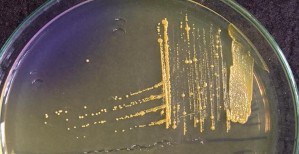
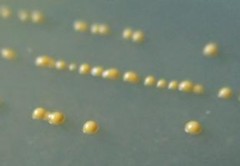
Observation of bacterial colonies of strain 134N on TYEG agar medium supplemented with 0.002% bromocresol purple showed that: the bacterial strain grows slowly, colonies appear clearly after 5 - 7 days of culture, and the colony size is small. Bacteria strain 134N is dark yellow, round, completely high on the surface of the medium, and intact.
Colony shape: round, completely raised above the surface of the medium, intact cover. Colony color: colonies of bacterial strain 134N on TYEG agar medium supplemented with bromocresol purple are all light yellow to dark yellow.
Colony size: The colony diameter of bacterial strain 134N ranges from 0.8 - 1.3 mm after 5 - 7 days of culture.
 a
a
Figure 4.1. Bacterial colonies isolated on TYEG agar medium supplemented with 0.002% bromocresol purple.
a. Dark yellow 134N bacteria strain
b. Bacterial strain 134N tilted
Characteristics of bacterial cells
Observation of the morphology of bacterial cells under an optical microscope at 100X objective (1000 times magnification) shows that the bacterial strain has the shape of a short rod.
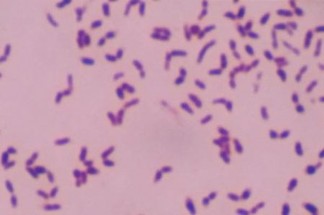
Figure 4.2. Morphology of P. acnes bacteria cells under microscope
4.1.2.2. Results of biochemical characteristics of cultured bacterial strains
Bacterial strain 134N is Gram-positive (crystal violet staining ), catalase positive (colony foams with 3% H 2 O 2 )
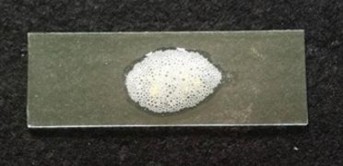
Figure 4.3. Catalase test on isolated bacterial strain
Bacterial strain 134N was cultured in a test tube containing trypticase soy borth medium for 24 hours at 37 o C, then tested for indole production using Kovac's reagent. The experimental results showed that the bacterial strain produced indole from the culture medium containing tryptophan because it changed the color of Kovac's reagent from yellow to red. While the control strain Staphylococcus aureus did not have this ability.
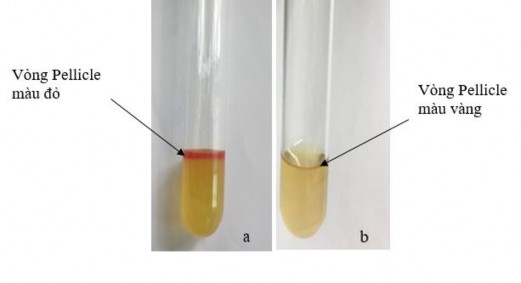
Figure 4.4. Testing the ability to produce indole on bacterial strains
a. Bacterial strain 134N produces indole
b. Non-indole control
Bacterial strain 134N was grown in a test tube containing peptone and KNO 3 medium at 37 o C, then tested for denitrification ability. Experimental results showed that the isolated bacterial strain was capable of reducing NO 3 - NH 3 gas production environment and still grew normally .
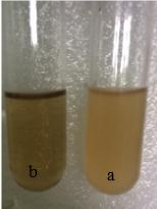
Figure 4.5. Denitrification ability test on isolated bacterial strain
a. Bacterial strain 134N creates a denitrification reaction
b. Negative control
Observe the ability to liquefy gelatin at room temperature of 20 o C or below. Bacterial strain 134N causes a part of the surface of the liquefied gelatin medium to sink, a positive reaction, the negative control is the gelatin medium without bacteria strain 134N.
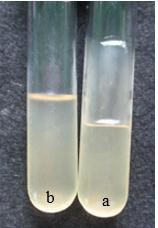
Figure 4.6. Testing the ability to liquefy gelatin on bacterial strain 134N
a. Bacterial strain 134N liquefies gelatin
b. Negative control
4.1.3. Investigation of the ability to inhibit Propionibacterium acnes bacteria of the extract of the plant Eggplant.
The antibacterial ability of ethanol extracts of leaves, bark, ripe fruit and young fruit of the Ca Ca tree extracted with ethanol solvent was determined based on the ability to inhibit bacterial growth, shown through the size of the sterile area presented in Table 4.3. The antibacterial effectiveness of the extracts was examined at concentrations of 200 mg/ml; 100 mg/ml; 50 mg/ml by the agar well diffusion method. The results showed that the extracts of leaves, bark, ripe fruit and young fruit of the Ca Ca tree were capable of inhibiting the P. acnes bacteria strain .
High type
Diameter of sterile ring (mm)
High concentration of ethanol extract (mg/ml)
Control
positive
Table 4.3. Inhibitory ability of P. acnes bacteria of different types of eggplant extracts by the agar diffusion method.
50 | 100 | 200 DMSO | Levofloxacin | ||
Body shell | 10.33 ± 0.577a | 11.67 ± 1.155a | 16.67 ± 2.309a | 0 | 0 |
Ripe fruit | 11 ± 0.000 a | 13.33 ± 1.528 a | 20 ± 1,000 a | 0 | 0 |
Young fruit | 11.67 ± 0.577 b | 18 ± 1,000 b | 20.67 ± 1.155 b | 0 | 8.67 ± 0.577 b |
Leaf | 16.33 ± 2.082 c | 19 ± 0.000 b | 23 ± 1.732 b | 0 | 8.67 ± 0.577 b |
p | 0.032 | 0.000 | 0.010 | 0.000 |
Note: The sterile diameter data are the average of 3 replicates. In the same column, data followed by at least 1 letter that is the same are not significantly different at 5%. Control (-): DMSO gives a sterile diameter of 0.
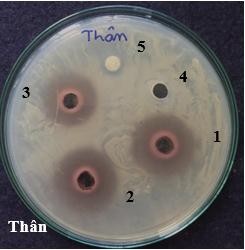
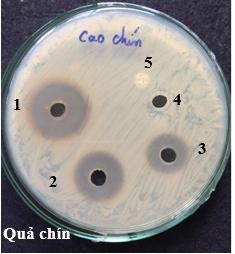
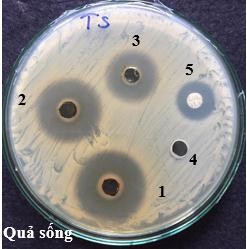
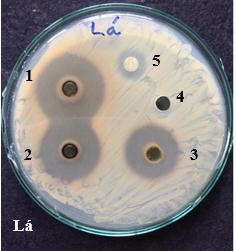
Figure 4.7. Inhibitory ability of P. acnes bacteria of ethanol extracts of plant parts of Eggfish at concentrations of 200 mg/ml; 100 mg/ml; and 50 mg/ml.
Note: (1) concentration 200 mg/ml; (2) concentration 100 mg/ml; (3) concentration 50 mg/ml;
(4) negative control DMSO; (5) positive control levofloxacin
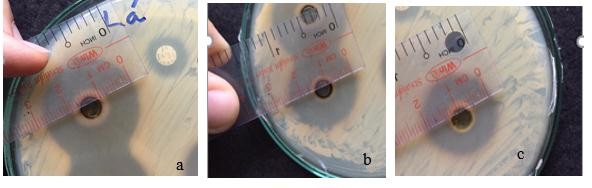
Figure 4.8. Sterile zone of ethanol extract of leaves of Ca Ca inhibits P. acnes bacteria at concentrations of 200 mg/ml; 100 mg/ml and 50 mg/ml
a. High concentration extract from Eggplant leaves 200 mg/ml
b. High concentration extract from Eggplant leaves 100 mg/ml
c. High concentration of extract from Eggplant leaves 50 mg/ml
Comments: The experimental results in Table 4.3 show that the extract of Caviar extracted with 96% ethanol solvent at concentrations of 200 mg/ml; 100 mg/ml and 50 mg/ml all have the ability to inhibit the 134N bacterial strain with sterile space size ranging from 10.33 mm to 23 mm. High concentrations of Fish Eggs all had larger sterile ranges than the control antibiotic levofloxacin, showing that the ability to inhibit the 134N bacterial strain of Fish Eggs extracted with 96% ethanol solvent was higher than the control antibiotic. When comparing the concentrations, at a concentration of 200 mg/ml, the highest sterile range was created among the 3 concentrations tested, reaching values of 16.67 ± 2.309 mm in the bark, 20 ± 1.000 mm in ripe fruit, 20.67 ± 1.155 mm in young fruit and 23 ± 1.732 mm in leaves (significance level p = 0.032). At a concentration of 200 mg/ml, the extract of Ca Ca leaves with 96% ethanol solvent created a sterile interval on the P. acnes 134N strain from 16.67 mm to 23 mm, of which the strongest inhibition was in the leaf extract (sterile interval 23 mm), followed by the young fruit, ripe fruit and stem bark. At a concentration of 100 mg/ml, the leaf extract gave the largest sterile interval of 19 ± 0.000 mm. At a concentration of 50 mg/ml, the leaf extract gave the largest sterile interval of 16.33 ± 2.082 mm. The analytical results showed that Ca Ca leaves extract at concentrations of 200 mg/ml; 100 mg/ml; 50 mg/ml had the highest inhibitory effect on the 134N bacterial strain, the average sterile interval size at each concentration of 200 mg/ml; 100 mg/ml; 50 mg/ml leaf extract is 23 ± 1.732 mm; 19 ± 0.000 mm; 16.33 ± 2.082 mm respectively. From there, the leaf extract is used for the following experiments to find MIC and qualitatively identify some biologically active natural compounds in the Eggfish leaf extract.
4.1.4 Determination of minimum inhibitory concentration of Eggplant leaf extract on bacteria
Propionibacterium acnes
Based on the above experimental results, the extract from the leaves of the Eggplant was selected to determine the minimum inhibitory concentration (MIC) of P. acnes bacteria and the concentrations tested were 40 mg/ml; 20 mg/ml; 10 mg/ml and 5 mg/ml, respectively. Control used: negative control