
living and tourism activities in the long term. Therefore, the long-term positive impacts that social enterprises in the field of community tourism bring to local residents at the destination will bring sustainable effects on all three pillars of economy, society and environment. And so, it can be seen that social enterprises are a completely suitable model for organizing business in the field of community tourism.
1.3.2. Criteria for evaluating the development of social enterprises in the field of community tourism
Criteria for assessing the level of development of social enterprises is still a topic of debate in many forums and countries around the world. Currently, there is no unified system of criteria for assessing the level of development of social enterprises. However, according to the concept of social enterprise development in the field of community-based tourism above, the development of social enterprises in the field of community-based tourism must be assessed in both depth and breadth. In particular, social enterprises must increase in both quantity and quality. Accordingly, the criteria used to assess the development of social enterprises include criteria for assessing development in breadth and criteria for assessing development in depth.
In particular, the criteria used to evaluate the development of social enterprises in the field of community-based tourism in terms of breadth include:
Maybe you are interested!
-

 Criteria for Evaluating the Development of Commercial Bank's Banking Services
 -
 Identify Rating Levels and Rating Scales
zt2i3t4l5ee
zt2a3gstourism,quan lan,quang ninh,ecology,ecotourism,minh chau,van don,geography,geographical basis,tourism development,science
zt2a3ge
zc2o3n4t5e6n7ts
of the islanders. Therefore, this indicator will be divided into two sub-indicators:
a1. Natural tourism attractiveness a2. Cultural tourism attractiveness
b. Tourist capacity
The two island communes in Quan Lan have different capacities to receive tourists. Minh Chau Commune is home to many standard hotels and resorts, attracting high-income domestic and international tourists. Meanwhile, Quan Lan Commune has many motels mainly built and operated by local people, so the scale and quality are not high, and will be suitable for ordinary tourists such as students.
c. Time of exploitation of Quan Lan Island Commune:
Quan Lan tourism is seasonal due to weather and climate conditions and festivals only take place on certain days of the year, specifically in spring. In Quan Lan commune, the period from April to June and from September to November is considered the best time to visit Quan Lan because the cultural tourism activities are mainly associated with festivals taking place during this time.
Minh Chau island commune:
Tourism exploitation time is all year round, because this is a place with a number of tourist attractions with diverse ecosystems such as Bai Tu Long National Park Research Center, Tram forest, Turtle Laying Beach, so besides coming to the beach for tourism and vacation in the summer, Minh Chau will attract research groups to come for tourism combined with research at other times of the year.
d. Sustainability
The sustainability of ecotourism sites in Quan Lan and Minh Chau communes depends on the sensitivity of the ecosystems to climate changes.
landscape. In general, these tourist destinations have a fairly high level of sustainability, because they are natural ecosystems, planned and protected. However, if a large number of tourists gather at certain times, it can exceed the carrying capacity and affect the sustainability of the environment (polluted beaches, damaged trees, animals moving away from their habitats, etc.), then the sustainability of the above ecosystems (natural ecosystems, human ecosystems) will also be affected and become less sustainable.
e. Location and accessibility
Both island communes have ports to take tourists to visit from Van Don wharf:
- Quan Lan – Van Don traffic route:
Phuc Thinh – Viet Anh high-speed boat and Quang Minh high-speed boat, depart at 8am and 2pm from Van Don to Quan Lan, and at 7am and 1pm from Quan Lan to Van Don. There are also wooden boats departing at 7am and 1pm.
- Van Don - Minh Chau traffic route:
Chung Huong high-speed train, Minh Chau train, morning 7:30 and afternoon 13:30 from Van Don to Minh Chau, morning 6:30 and afternoon 13:00 from Minh Chau to Van Don.
f. Infrastructure
Despite receiving investment attention, the issue of infrastructure and technical facilities for tourism on Quan Lan Island is still an issue that needs to be resolved because it has a direct impact on the implementation of ecotourism activities. The minimum conditions for serving tourists such as accommodation, electricity, water, communication, especially medical services, and security work need to be given top priority. Ecotourism spots in Minh Chau commune are assessed to have better infrastructure and technical facilities for tourism because there are quite complete and synchronous conditions for serving tourists, meeting many needs of domestic and foreign tourists.
3.2.1.4. Determine assessment levels and assessment scales
Corresponding to the levels of each criterion, the index is the score of those levels in the order of 4, 3, 2, 1 decreasing according to the standard of each level: very attractive (4), attractive (3), average (2), less attractive (1).
3.2.1.5. Determining the coefficients of the criteria
For the assessment of DLST in the two communes of Quan Lan and Minh Chau islands, the students added evaluation coefficients to show the importance of the criteria and indicators as follows:
Coefficient 3 with criteria: Attractiveness, Exploitation time. These are the 2 most important criteria for attracting tourists to tourism in general and eco-tourism in particular, so they have the highest coefficient.
Coefficient 2 with criteria: Capacity, Infrastructure, Location and accessibility . Because the assessment area is an island commune of Van Don district, the above criteria are selected by the author with appropriate coefficients at the average level.
Coefficient 1 with criteria: Sustainability. Quan Lan has natural and human-made ecotourism sites, with high biodiversity and little impact from local human factors. Most of the ecotourism sites are still wild, so they are highly sustainable.
3.2.1.6. Results of DLST assessment on Quan Lan island
a. Assessment of the potential for natural tourism development
For Minh Chau commune:
+ Natural tourism attractiveness is determined to be very attractive (4 points) and the most important coefficient (coefficient 3), so the score of the Attractiveness criterion is 4 x 3 = 12.
+ Capacity is determined as average (2 points) and the coefficient is quite important (coefficient 2), then the score of Capacity criterion is 2 x 2 = 4.
+ Exploitation time is long (4 points), the most important coefficient (coefficient 3) so the score of the Exploitation time criterion is 4 x 3 = 12.
+ Sustainability is determined as sustainable (4 points), the important coefficient is the average coefficient (coefficient 1), so the score of the Sustainability criterion is 4 x 1 = 4 points
+ Location and accessibility are determined to be quite favorable (2 points), the coefficient is quite important (coefficient 2), the criterion score is 2 x 2 = 4 points.
+ Infrastructure is assessed as good (3 points), the coefficient is quite important (coefficient 2), then the score of the Infrastructure criterion is 3 x 2 = 6 points.
The total score for evaluating DLST in Minh Chau commune according to 6 evaluation criteria is determined as: 12 + 4 + 12 + 4 + 4 + 6 = 42 points
Similar assessment for Quan Lan commune, we have the following table:
Table 3.3: Assessment of the potential for natural ecotourism development in Quan Lan and Minh Chau communes
Attractiveness of self-tourismof course
Capacity
Mining time
Sustainability
Location and accessibility
Infrastructure
Result
Point
DarkMulti
Point
DarkMulti
Point
DarkMulti
Point
DarkMulti
Point
DarkMulti
Point
DarkMulti
CommuneMinh Chau
12
12
4
8
12
12
4
4
4
8
6
8
42/52
Quan CommuneLan
6
12
6
8
9
12
4
4
4
8
4
8
33/52
b. Assessment of the potential for humanistic tourism development
For Quan Lan commune:
+ The attractiveness of human tourism is determined to be very attractive (4 points) and the most important coefficient (coefficient 3), so the score of the Attractiveness criterion is 4 x 3 = 12.
+ Capacity is determined to be large (3 points) and the coefficient is quite important (coefficient 2), then the score of the Capacity criterion is 3 x 2 = 6.
+ Mining time is average (3 points), the most important coefficient (coefficient 3) so the score of the Mining time criterion is 3 x 3 = 9.
+ Sustainability is determined as sustainable (4 points), the important coefficient is the average coefficient (coefficient 1), so the score of the Sustainability criterion is 4 x 1 = 4 points.
+ Location and accessibility are determined to be quite favorable (2 points), the coefficient is quite important (coefficient 2), the criterion score is 2 x 2 = 4 points.
+ Infrastructure is rated as average (2 points), the coefficient is quite important (coefficient 2), then the score of the Infrastructure criterion is 2 x 2 = 4 points.
The total score for evaluating DLST in Quan Lan commune according to 6 evaluation criteria is determined as: 12 + 6 + 6 + 4 + 4 + 4 = 36 points.
Similar assessment with Minh Chau commune we have the following table:
Table 3.4: Assessment of the potential for developing humanistic eco-tourism in Quan Lan and Minh Chau communes
Attractiveness of human tourismliterature
Capacity
Mining time
Sustainability
Location and accessibility
Infrastructure
Result
Point
DarkMulti
Point
DarkMulti
Point
DarkMulti
Point
DarkMulti
Point
DarkMulti
Point
DarkMulti
Quan CommuneLan
12
12
6
8
9
12
4
4
4
8
4
8
39/52
Minh CommuneChau
6
12
4
8
12
12
4
4
4
8
6
8
36/52
Basically, both Minh Chau and Quan Lan localities have quite favorable conditions for developing ecotourism. However, Quan Lan commune has more advantages to develop ecotourism in a humanistic direction, because this is an area with many famous historical relics such as Quan Lan Communal House, Quan Lan Pagoda, Temple worshiping the hero Tran Khanh Du, ... along with local festivals held annually such as the wind praying ceremony (March 15), Quan Lan festival (June 10-19); due to its location near the port and long exploitation time, the beaches in Quan Lan commune (especially Quan Lan beach) are no longer hygienic and clean to ensure the needs of tourists coming to relax and swim; this is also an area with many beautiful landscapes such as Got Beo wind pass, Ong Phong head, Voi Voi cave, but the ability to access these places is still very limited (dirt hill road, lots of gravel and rocks), especially during rainy and windy times; In addition, other natural resources such as mangrove forests and sea worms have not been really exploited for tourism purposes and ecotourism development. On the contrary, Minh Chau commune has more advantages in developing ecotourism in the direction of natural tourism, this is an area with diverse ecosystems such as at Rua De Beach, Bai Tu Long National Park Conservation Center...; Minh Chau beach is highly appreciated for its natural beauty and cleanliness, ranked in the top ten most beautiful beaches in Vietnam; Minh Chau commune is also home to Tram forest with a large area and a purity of up to 90%, suitable for building bridges through the forest (a very effective type of natural ecotourism currently applied by many countries) for tourists to sightsee, as well as for the purpose of studying and researching.
Figure 3.1: Thenmala Forest Bridge (India) Source: https://www.thenmalaecotourism.com/(August 21, 2019)
3.2.2. Using SWOT matrix to evaluate Quan Lan island tourism
General assessment of current tourism activities of Quan Lan island is shown through the following SWOT matrix:
Table 3.5: SWOT matrix evaluating tourism activities on Quan Lan island
Internal agent
Strengths- There is a lot of potential for tourism development, especially natural ecotourism and humanistic ecotourism.- The unskilled labor force is relatively abundant.- resource environmentunpolluted, still
Weaknesses- Poorly developed infrastructure, especially traffic routes to tourist destinations on the island.- The team of professional staff is still weak.- Tourism products in general
quite wild, originalintact
general and DLST in particularalone is monotonous.
External agents
Opportunity- Tourism is a key industry in the socio-economic development strategy of the province and Van Don economic zone.- Quan Lan was selected as a pilot area for eco-tourism development within the framework of the green growth project between Quang Ninh province and the Japanese organization JICA.- The flow of tourists and especially ecotourism in the world tends toincreasing
Challenge- Weather and climate change abnormally.- Competition in tourism products is increasingly fierce, especially with other localities in the province such as Ha Long, Mong Cai...- Awareness of tourists, especially domestic tourists, about ecotourism and nature conservation is not high.
Through summary analysis using SWOT matrix we see that:
To exploit strengths and take advantage of opportunities, it is necessary to:
- Diversify products and service types (build more tourism routes aimed at specific needs of tourists: experiential tourism immersed in nature, spiritual cultural tourism...)
- Effective exploitation of resources and differentiated products (natural resources and human resources)
div.maincontent .p { color: black; font-family:"Times New Roman", serif; font-style: normal; font-weight: normal; text-decoration: none; font-size: 14pt; margin:0pt; } div.maincontent p { color: black; font-family:"Times New Roman", serif; font-style: normal; font-weight: normal; text-decoration: none; font-size: 14pt; margin:0pt; } div.maincontent .s1 { color: black; font-family:"Times New Roman", serif; font-style: normal; font-weight: normal; text-decoration: none; font-size: 13pt; } div.maincontent .s2 { color: black; font-family:"Times New Roman", serif; font-style: normal; font-weight: normal; text-decoration: none; font-size: 13pt; } div.maincontent .s3 { color: #0D0D0D; font-family:"Times New Roman", serif; font-style: normal; font-weight: bold; text-decoration: none; font-size: 14pt; } div.maincontent .s4 { color: black; font-family:"Times New Roman", serif; font-style: italic; font-weight: normal; text-decoration: none; font-size: 14pt; } div.maincontent .s5 { color: black; font-family:"Times New Roman", serif; font-style: italic; font-weight: bold; text-decoration: none; font-size: 14pt; } div.maincontent .s6 { color: black; font-family:"Times New Roman", serif; font-style: italic; font-weight: normal; text-decoration: none; font-size: 14pt; vertical-align: -3pt; } div.maincontent .s7 { color: black; font-family:"Times New Roman", serif; font-style: italic; font-weight: normal; text-decoration: none; font-size: 14pt; vertical-align: -2pt; } div.maincontent .s8 { color: black; font-family:"Times New Roman", serif; font-style: italic; font-weight: normal; text-decoration: none; font-size: 14pt; vertical-align: -1pt; } div.maincontent .s9 { color: black; font-family:"Times New Roman", serif; font-style: normal; font-weight: normal; text-decoration: none; font-size: 14pt; } div.maincontent .s10 { color: black; font-family:"Times New Roman", serif; font-style: normal; font-weight: bold; text-decoration: none; font-size: 14pt; } div.maincontent .s11 { color: black; font-family:"Times New Roman", serif; font-style: normal; font-weight: normal; text-decoration: none; font-size: 14pt; } div.maincontent .s12 { color: black; font-family:Symbol, serif; font-style: normal; font-weight: normal; text-decoration: none; font-size: 14pt; } div.maincontent .s13 { color: black; font-family:Wingdings; font-style: normal; font-weight: normal; text-decoration: none; font-size: 14pt; } div.maincontent .s14 { color: black; font-family:"Times New Roman", serif; font-style: normal; font-weight: normal; text-decoration: none; font-size: 9pt; vertical-align: 5pt; } div.maincontent .s15 { color: black; font-family:"Times New Roman", serif; font-style: normal; font-weight: normal; text-decoration: none; font-size: 9pt; vertical-align: 5pt; } div.maincontent .s16 { color: black; font-family:Cambria, serif; font-style: italic; font-weight: normal; text-decoration: none; font-size: 14pt; } div.maincontent .s17 { color: #080808; font-family:"Times New Roman", serif; font-style: normal; font-weight: bold; text-decoration: none; font-size: 14pt; } div.maincontent .s18 { color: #080808; font-family:"Times New Roman", serif; font-style: normal; font-weight: normal; text-decoration: none; font-size: 14pt; } div.maincontent .s19 { color: black; font-family:"Times New Roman", serif; font-style: normal; font-weight: normal; text-decoration: none; font-size: 11pt; } div.maincontent .s20 { color: black; font-family:"Times New Roman", serif; font-style: normal; font-weight: normal; text-decoration: none; font-size: 10pt; } div.maincontent .s21 { color: black; font-family:"Times New Roman", serif; font-style: normal; font-weight: bold; text-decoration: none; font-size: 11pt; } div.maincontent .s22 { color: black; font-family:"Times New Roman", serif; font-style: normal; font-weight: normal; text-decoration: none; font-size: 11pt; } div.maincontent .s23 { color: black; font-family:"Times New Roman", serif; font-style: italic; font-weight: normal; text-decoration: none; font-size: 14pt; } div.maincontent .s24 { color: #212121; font-family:"Times New Roman", serif; font-style: normal; font-weight: normal; tex
Identify Rating Levels and Rating Scales
zt2i3t4l5ee
zt2a3gstourism,quan lan,quang ninh,ecology,ecotourism,minh chau,van don,geography,geographical basis,tourism development,science
zt2a3ge
zc2o3n4t5e6n7ts
of the islanders. Therefore, this indicator will be divided into two sub-indicators:
a1. Natural tourism attractiveness a2. Cultural tourism attractiveness
b. Tourist capacity
The two island communes in Quan Lan have different capacities to receive tourists. Minh Chau Commune is home to many standard hotels and resorts, attracting high-income domestic and international tourists. Meanwhile, Quan Lan Commune has many motels mainly built and operated by local people, so the scale and quality are not high, and will be suitable for ordinary tourists such as students.
c. Time of exploitation of Quan Lan Island Commune:
Quan Lan tourism is seasonal due to weather and climate conditions and festivals only take place on certain days of the year, specifically in spring. In Quan Lan commune, the period from April to June and from September to November is considered the best time to visit Quan Lan because the cultural tourism activities are mainly associated with festivals taking place during this time.
Minh Chau island commune:
Tourism exploitation time is all year round, because this is a place with a number of tourist attractions with diverse ecosystems such as Bai Tu Long National Park Research Center, Tram forest, Turtle Laying Beach, so besides coming to the beach for tourism and vacation in the summer, Minh Chau will attract research groups to come for tourism combined with research at other times of the year.
d. Sustainability
The sustainability of ecotourism sites in Quan Lan and Minh Chau communes depends on the sensitivity of the ecosystems to climate changes.
landscape. In general, these tourist destinations have a fairly high level of sustainability, because they are natural ecosystems, planned and protected. However, if a large number of tourists gather at certain times, it can exceed the carrying capacity and affect the sustainability of the environment (polluted beaches, damaged trees, animals moving away from their habitats, etc.), then the sustainability of the above ecosystems (natural ecosystems, human ecosystems) will also be affected and become less sustainable.
e. Location and accessibility
Both island communes have ports to take tourists to visit from Van Don wharf:
- Quan Lan – Van Don traffic route:
Phuc Thinh – Viet Anh high-speed boat and Quang Minh high-speed boat, depart at 8am and 2pm from Van Don to Quan Lan, and at 7am and 1pm from Quan Lan to Van Don. There are also wooden boats departing at 7am and 1pm.
- Van Don - Minh Chau traffic route:
Chung Huong high-speed train, Minh Chau train, morning 7:30 and afternoon 13:30 from Van Don to Minh Chau, morning 6:30 and afternoon 13:00 from Minh Chau to Van Don.
f. Infrastructure
Despite receiving investment attention, the issue of infrastructure and technical facilities for tourism on Quan Lan Island is still an issue that needs to be resolved because it has a direct impact on the implementation of ecotourism activities. The minimum conditions for serving tourists such as accommodation, electricity, water, communication, especially medical services, and security work need to be given top priority. Ecotourism spots in Minh Chau commune are assessed to have better infrastructure and technical facilities for tourism because there are quite complete and synchronous conditions for serving tourists, meeting many needs of domestic and foreign tourists.
3.2.1.4. Determine assessment levels and assessment scales
Corresponding to the levels of each criterion, the index is the score of those levels in the order of 4, 3, 2, 1 decreasing according to the standard of each level: very attractive (4), attractive (3), average (2), less attractive (1).
3.2.1.5. Determining the coefficients of the criteria
For the assessment of DLST in the two communes of Quan Lan and Minh Chau islands, the students added evaluation coefficients to show the importance of the criteria and indicators as follows:
Coefficient 3 with criteria: Attractiveness, Exploitation time. These are the 2 most important criteria for attracting tourists to tourism in general and eco-tourism in particular, so they have the highest coefficient.
Coefficient 2 with criteria: Capacity, Infrastructure, Location and accessibility . Because the assessment area is an island commune of Van Don district, the above criteria are selected by the author with appropriate coefficients at the average level.
Coefficient 1 with criteria: Sustainability. Quan Lan has natural and human-made ecotourism sites, with high biodiversity and little impact from local human factors. Most of the ecotourism sites are still wild, so they are highly sustainable.
3.2.1.6. Results of DLST assessment on Quan Lan island
a. Assessment of the potential for natural tourism development
For Minh Chau commune:
+ Natural tourism attractiveness is determined to be very attractive (4 points) and the most important coefficient (coefficient 3), so the score of the Attractiveness criterion is 4 x 3 = 12.
+ Capacity is determined as average (2 points) and the coefficient is quite important (coefficient 2), then the score of Capacity criterion is 2 x 2 = 4.
+ Exploitation time is long (4 points), the most important coefficient (coefficient 3) so the score of the Exploitation time criterion is 4 x 3 = 12.
+ Sustainability is determined as sustainable (4 points), the important coefficient is the average coefficient (coefficient 1), so the score of the Sustainability criterion is 4 x 1 = 4 points
+ Location and accessibility are determined to be quite favorable (2 points), the coefficient is quite important (coefficient 2), the criterion score is 2 x 2 = 4 points.
+ Infrastructure is assessed as good (3 points), the coefficient is quite important (coefficient 2), then the score of the Infrastructure criterion is 3 x 2 = 6 points.
The total score for evaluating DLST in Minh Chau commune according to 6 evaluation criteria is determined as: 12 + 4 + 12 + 4 + 4 + 6 = 42 points
Similar assessment for Quan Lan commune, we have the following table:
Table 3.3: Assessment of the potential for natural ecotourism development in Quan Lan and Minh Chau communes
Attractiveness of self-tourismof course
Capacity
Mining time
Sustainability
Location and accessibility
Infrastructure
Result
Point
DarkMulti
Point
DarkMulti
Point
DarkMulti
Point
DarkMulti
Point
DarkMulti
Point
DarkMulti
CommuneMinh Chau
12
12
4
8
12
12
4
4
4
8
6
8
42/52
Quan CommuneLan
6
12
6
8
9
12
4
4
4
8
4
8
33/52
b. Assessment of the potential for humanistic tourism development
For Quan Lan commune:
+ The attractiveness of human tourism is determined to be very attractive (4 points) and the most important coefficient (coefficient 3), so the score of the Attractiveness criterion is 4 x 3 = 12.
+ Capacity is determined to be large (3 points) and the coefficient is quite important (coefficient 2), then the score of the Capacity criterion is 3 x 2 = 6.
+ Mining time is average (3 points), the most important coefficient (coefficient 3) so the score of the Mining time criterion is 3 x 3 = 9.
+ Sustainability is determined as sustainable (4 points), the important coefficient is the average coefficient (coefficient 1), so the score of the Sustainability criterion is 4 x 1 = 4 points.
+ Location and accessibility are determined to be quite favorable (2 points), the coefficient is quite important (coefficient 2), the criterion score is 2 x 2 = 4 points.
+ Infrastructure is rated as average (2 points), the coefficient is quite important (coefficient 2), then the score of the Infrastructure criterion is 2 x 2 = 4 points.
The total score for evaluating DLST in Quan Lan commune according to 6 evaluation criteria is determined as: 12 + 6 + 6 + 4 + 4 + 4 = 36 points.
Similar assessment with Minh Chau commune we have the following table:
Table 3.4: Assessment of the potential for developing humanistic eco-tourism in Quan Lan and Minh Chau communes
Attractiveness of human tourismliterature
Capacity
Mining time
Sustainability
Location and accessibility
Infrastructure
Result
Point
DarkMulti
Point
DarkMulti
Point
DarkMulti
Point
DarkMulti
Point
DarkMulti
Point
DarkMulti
Quan CommuneLan
12
12
6
8
9
12
4
4
4
8
4
8
39/52
Minh CommuneChau
6
12
4
8
12
12
4
4
4
8
6
8
36/52
Basically, both Minh Chau and Quan Lan localities have quite favorable conditions for developing ecotourism. However, Quan Lan commune has more advantages to develop ecotourism in a humanistic direction, because this is an area with many famous historical relics such as Quan Lan Communal House, Quan Lan Pagoda, Temple worshiping the hero Tran Khanh Du, ... along with local festivals held annually such as the wind praying ceremony (March 15), Quan Lan festival (June 10-19); due to its location near the port and long exploitation time, the beaches in Quan Lan commune (especially Quan Lan beach) are no longer hygienic and clean to ensure the needs of tourists coming to relax and swim; this is also an area with many beautiful landscapes such as Got Beo wind pass, Ong Phong head, Voi Voi cave, but the ability to access these places is still very limited (dirt hill road, lots of gravel and rocks), especially during rainy and windy times; In addition, other natural resources such as mangrove forests and sea worms have not been really exploited for tourism purposes and ecotourism development. On the contrary, Minh Chau commune has more advantages in developing ecotourism in the direction of natural tourism, this is an area with diverse ecosystems such as at Rua De Beach, Bai Tu Long National Park Conservation Center...; Minh Chau beach is highly appreciated for its natural beauty and cleanliness, ranked in the top ten most beautiful beaches in Vietnam; Minh Chau commune is also home to Tram forest with a large area and a purity of up to 90%, suitable for building bridges through the forest (a very effective type of natural ecotourism currently applied by many countries) for tourists to sightsee, as well as for the purpose of studying and researching.
Figure 3.1: Thenmala Forest Bridge (India) Source: https://www.thenmalaecotourism.com/(August 21, 2019)
3.2.2. Using SWOT matrix to evaluate Quan Lan island tourism
General assessment of current tourism activities of Quan Lan island is shown through the following SWOT matrix:
Table 3.5: SWOT matrix evaluating tourism activities on Quan Lan island
Internal agent
Strengths- There is a lot of potential for tourism development, especially natural ecotourism and humanistic ecotourism.- The unskilled labor force is relatively abundant.- resource environmentunpolluted, still
Weaknesses- Poorly developed infrastructure, especially traffic routes to tourist destinations on the island.- The team of professional staff is still weak.- Tourism products in general
quite wild, originalintact
general and DLST in particularalone is monotonous.
External agents
Opportunity- Tourism is a key industry in the socio-economic development strategy of the province and Van Don economic zone.- Quan Lan was selected as a pilot area for eco-tourism development within the framework of the green growth project between Quang Ninh province and the Japanese organization JICA.- The flow of tourists and especially ecotourism in the world tends toincreasing
Challenge- Weather and climate change abnormally.- Competition in tourism products is increasingly fierce, especially with other localities in the province such as Ha Long, Mong Cai...- Awareness of tourists, especially domestic tourists, about ecotourism and nature conservation is not high.
Through summary analysis using SWOT matrix we see that:
To exploit strengths and take advantage of opportunities, it is necessary to:
- Diversify products and service types (build more tourism routes aimed at specific needs of tourists: experiential tourism immersed in nature, spiritual cultural tourism...)
- Effective exploitation of resources and differentiated products (natural resources and human resources)
div.maincontent .p { color: black; font-family:"Times New Roman", serif; font-style: normal; font-weight: normal; text-decoration: none; font-size: 14pt; margin:0pt; } div.maincontent p { color: black; font-family:"Times New Roman", serif; font-style: normal; font-weight: normal; text-decoration: none; font-size: 14pt; margin:0pt; } div.maincontent .s1 { color: black; font-family:"Times New Roman", serif; font-style: normal; font-weight: normal; text-decoration: none; font-size: 13pt; } div.maincontent .s2 { color: black; font-family:"Times New Roman", serif; font-style: normal; font-weight: normal; text-decoration: none; font-size: 13pt; } div.maincontent .s3 { color: #0D0D0D; font-family:"Times New Roman", serif; font-style: normal; font-weight: bold; text-decoration: none; font-size: 14pt; } div.maincontent .s4 { color: black; font-family:"Times New Roman", serif; font-style: italic; font-weight: normal; text-decoration: none; font-size: 14pt; } div.maincontent .s5 { color: black; font-family:"Times New Roman", serif; font-style: italic; font-weight: bold; text-decoration: none; font-size: 14pt; } div.maincontent .s6 { color: black; font-family:"Times New Roman", serif; font-style: italic; font-weight: normal; text-decoration: none; font-size: 14pt; vertical-align: -3pt; } div.maincontent .s7 { color: black; font-family:"Times New Roman", serif; font-style: italic; font-weight: normal; text-decoration: none; font-size: 14pt; vertical-align: -2pt; } div.maincontent .s8 { color: black; font-family:"Times New Roman", serif; font-style: italic; font-weight: normal; text-decoration: none; font-size: 14pt; vertical-align: -1pt; } div.maincontent .s9 { color: black; font-family:"Times New Roman", serif; font-style: normal; font-weight: normal; text-decoration: none; font-size: 14pt; } div.maincontent .s10 { color: black; font-family:"Times New Roman", serif; font-style: normal; font-weight: bold; text-decoration: none; font-size: 14pt; } div.maincontent .s11 { color: black; font-family:"Times New Roman", serif; font-style: normal; font-weight: normal; text-decoration: none; font-size: 14pt; } div.maincontent .s12 { color: black; font-family:Symbol, serif; font-style: normal; font-weight: normal; text-decoration: none; font-size: 14pt; } div.maincontent .s13 { color: black; font-family:Wingdings; font-style: normal; font-weight: normal; text-decoration: none; font-size: 14pt; } div.maincontent .s14 { color: black; font-family:"Times New Roman", serif; font-style: normal; font-weight: normal; text-decoration: none; font-size: 9pt; vertical-align: 5pt; } div.maincontent .s15 { color: black; font-family:"Times New Roman", serif; font-style: normal; font-weight: normal; text-decoration: none; font-size: 9pt; vertical-align: 5pt; } div.maincontent .s16 { color: black; font-family:Cambria, serif; font-style: italic; font-weight: normal; text-decoration: none; font-size: 14pt; } div.maincontent .s17 { color: #080808; font-family:"Times New Roman", serif; font-style: normal; font-weight: bold; text-decoration: none; font-size: 14pt; } div.maincontent .s18 { color: #080808; font-family:"Times New Roman", serif; font-style: normal; font-weight: normal; text-decoration: none; font-size: 14pt; } div.maincontent .s19 { color: black; font-family:"Times New Roman", serif; font-style: normal; font-weight: normal; text-decoration: none; font-size: 11pt; } div.maincontent .s20 { color: black; font-family:"Times New Roman", serif; font-style: normal; font-weight: normal; text-decoration: none; font-size: 10pt; } div.maincontent .s21 { color: black; font-family:"Times New Roman", serif; font-style: normal; font-weight: bold; text-decoration: none; font-size: 11pt; } div.maincontent .s22 { color: black; font-family:"Times New Roman", serif; font-style: normal; font-weight: normal; text-decoration: none; font-size: 11pt; } div.maincontent .s23 { color: black; font-family:"Times New Roman", serif; font-style: italic; font-weight: normal; text-decoration: none; font-size: 14pt; } div.maincontent .s24 { color: #212121; font-family:"Times New Roman", serif; font-style: normal; font-weight: normal; tex -
 The impact of financial market development on the capital structure of listed enterprises in the ASEAN Economic Community - 28
 -
 Criteria for Evaluating the Efficiency of Deposit Mobilization Activities of Commercial Banks
 -
 The impact of financial market development on the capital structure of listed enterprises in the ASEAN Economic Community - 2
Growth rate of the number of social enterprises in the field of community-based tourism:
The top priority indicator for developing social enterprises in the field of community-based tourism is to increase the number of these enterprises. Only when the number of social enterprises in the field of community-based tourism increases will the level of contribution to solving social problems be expanded. However, social enterprises in the field of community-based tourism are a special type of enterprise, in order to encourage newly established enterprises or organizations to convert their operations to the social enterprise model, it is necessary to have development orientations and support and incentive policies from the Government. Only when organizations realize that operating under the social enterprise model brings more advantages than other types of organizations, will they consider registering to operate under the form of social enterprises. Therefore, in the process of developing social enterprises, it is necessary to develop specific support and incentive policies to encourage organizations to register to operate under the form of social enterprises, contributing directly to increasing the number of this type of enterprise in the economy.
Structural growth rate of social enterprises:
Market share growth is also considered a criterion to assess the development level of social enterprises because, like traditional enterprises, in order to survive and develop their business activities, social enterprises must expand the market for their products, goods and services. A business grows more when the market
Its part is increasingly expanded. Therefore, developing social enterprises needs to pay more attention to the issue of market development to ensure that business activities are increasingly developing and bringing more profits. For social enterprises, expanding the market and bringing more profits means that the level of sharing with the community and society is also increased.
The criteria used to evaluate the development of social enterprises in the field of community-based tourism in depth are the operational efficiency of these enterprises. It can be seen that the purpose of social enterprises in general and social enterprises in the field of community-based tourism in particular is to solve social and environmental problems for the benefit of the community through business activities. Therefore, the operational efficiency of these enterprises is not only assessed through economic efficiency but also through the social impacts it creates for the community and environment at the community-based tourism destination.
Growth rate of social enterprises (including business capital and labor scale of disadvantaged groups):
Enterprise scale is one of the criteria that affects the competitiveness of enterprises in the market. The development of social enterprises is not only assessed by the scale of investment capital but also by the scale of labor, which is a disadvantaged group. If the scale of investment capital determines the competitiveness of enterprises, the scale of labor, which is a disadvantaged group in enterprises, helps measure the level of contribution of enterprises in implementing social goals, bringing many benefits to the community. Therefore, these are two criteria that need to be analyzed in the process of assessing the level of development of social enterprises in the field of community-based tourism.
In addition, the criteria used to evaluate the development of social enterprises in the field of community-based tourism in depth include:
Business efficiency:
For businesses, business efficiency is not only a measure of quality reflecting the level of business management and organization, but also a matter of survival for the business. In the context of an increasingly expanding market economy, businesses that want to survive and develop require businesses to operate effectively. The higher the business efficiency, the more conditions the business has to expand and develop. For social enterprises, economic efficiency is the springboard to realize the social goals that they are committed to pursuing... However, after all, business activities take place on the basis of the exchange of goods, products, and services between businesses and customers. Therefore, to achieve economic efficiency, the most important thing is that businesses must satisfy customers' needs for products and services in the best way by bringing them
highest satisfaction with the products and services provided by the enterprise. Therefore, one of the criteria for assessing the in-depth development of social enterprises in the field of community tourism is customer satisfaction with the quality of community tourism products and services that these enterprises provide to tourists.
Social efficiency:
The evaluation of the social efficiency achieved by a social enterprise must be based on the social goals that the enterprise has determined from the beginning when it was established. For a social enterprise, the criteria for evaluating social efficiency are shown in the following contents:
Economic impact on the lives of local communities:
- Number of direct and indirect jobs in social enterprises;
- Ratio of traditional local employment to employment in social enterprises;
- Direct and indirect income from social enterprises;
- Revenue, profit and loss of local social enterprises.
Social impact on the lives of local community people:
- Number of community members participating in social activities of social enterprises;
- Proportion of women working in the workforce at social enterprises in localities (including seniority, salary, allowances compared to male colleagues);
- Number of female managers in local social enterprises;
- Number and types of cultural-social-environmental events protected and upgraded;
- Volume of positive and negative feedback from partners on social enterprise activities.
Local environmental impact:
- Number and types of environmental conservation projects implemented related to the activities of social enterprises;
- Level of pollution in the community and environment;
- The level of destruction of the local natural environment caused by the production and business activities of social enterprises;
- Number of community members attending environmental training courses organized by social enterprises (including type, level and duration of course);
- Resource usage/resource availability (water, land, electricity).
Above are some criteria to evaluate the growth of social enterprises in the field of community-based tourism that policy-making organizations can rely on to consider when developing appropriate policies to develop this type of enterprise.
1.3.3. Factors affecting the existence and development of social enterprises in the field of community tourism
Social enterprises in the field of community tourism are first and foremost businesses that operate for profit, however, at least 51% of these profits are committed to be used for social, environmental and community benefits at the tourist destination. And so, as a business enterprise, social enterprises in the field of community tourism will be affected by factors from the external and internal environment like a traditional business enterprise. The following are some of the impacts of factors from the external and internal environment on the existence and development of a social enterprise in the field of community tourism.
1.3.3.1. Group of factors in the external environment of the enterprise
Macro environmental factors:
Social enterprises in the field of community-based tourism will be affected by macro-environmental factors (PEST). These factors include: i) Political - legal factors; ii) Economic factors; iii) Social factors; and iv) Technological factors.
These are four factors that have a direct impact on the economic sector. These factors are beyond the control of businesses and industries, so the industry must be affected by them as an objective factor. Businesses also rely on these impacts to develop the most appropriate business development strategies.
Political and legal factors:
Political and legal factors are factors that have an impact on all business sectors in a territory. They can affect the ability to survive and develop any industry. When doing business in an administrative unit, enterprises will be forced to comply with the political and legal institutional factors in that area. Political and legal factors show their impact on the following aspects:
Stability: For the tourism industry, political and diplomatic stability is a prerequisite to attract tourists to a destination. A tourist destination can only attract tourists when tourists are assured of safety during their stay there. A destination with a lot of political instability will not be a destination of interest in the process of deciding on a destination for tourists. Especially for community-based tourism products, tourist destinations are often in remote areas with very low living standards of local people, so political stability should be of great concern to ensure the success of tourists' trips.
Policy: State policies will have a great influence on the existence and development of a business. In particular, for a social enterprise, achieving economic goals is already a very difficult task in a fiercely competitive business environment. Using those profits to achieve social goals, protect the environment, improve the quality of life of people and local communities at the destination is much more difficult without support policies and specific action programs to promote the activities of these social enterprises. These policies include trade policies, industry development policies, economic development, taxes, competition regulation policies, etc. Moreover, the implementation of social goals, although it is the operating principle that social enterprises aim for, has helped a lot in perfecting welfare regimes for the bottom group of society that the State cannot fully solve. Therefore, policies to support and promote social enterprises in general and policies to support social enterprises in the field of community-based tourism in particular play a very important role in promoting the development of this type of enterprise in both breadth and depth.
Related laws: The activities of social enterprises in the field of community tourism are affected by many related laws, directly and indirectly, including: Enterprise Law, Tourism Law, Investment Law, etc. The provisions of the law have a great impact on the formation, existence and development of various types of enterprises. For social enterprises in the field of community tourism, if the establishment of enterprises must comply with current enterprise laws, then in the process of operating and doing business, community tourism programs must be bound by the provisions of the Law on Tourism. In addition to doing business to make a profit, tourism enterprises must also carry out the social goals they have committed to... Therefore, to ensure that social goals are achieved, during the entire business process, in addition to paying attention to operating the enterprise to make a profit, social enterprises in the field of community tourism need to call for the attention and aid of individuals and organizations interested in volunteer fields and implementing social goals. In fact, many organizations operate under the mechanism of social enterprises with social goals as the top priority but do not establish social enterprises, so calling for aid and receiving aid from domestic and foreign organizations is also different from businesses registered as social enterprises.
It can be seen that a social enterprise in the tourism sector, like a simple business enterprise, during its operation will be influenced by many political factors such as stability, policies and related laws. These impacts are beyond the control of the industry and the enterprise itself. Therefore, during the process
In the process of operation, businesses need to regularly grasp and analyze to find the most reasonable and effective direction for their business.
Economic factors:
The business activities of any enterprise are greatly affected by economic factors, both in the short and long term. Therefore, enterprises often rely on analysis of economic factors to make decisions on investment as well as development strategies. These factors include: the state of the economy, factors affecting the economy, economic policies of the Government and future economic prospects. In particular, for social enterprises, when their operating goal is not economic benefits but based on economic profits to solve social and environmental problems, for the benefit of the community, the Government's incentive and support policies are more meaningful and play a more important role. It has the effect of creating conditions for social enterprises to easily access capital, receive tax incentives or expand regulations on receiving support, aid... from individuals and organizations with the desire and action towards social goals... In this way, the business activities of social enterprises in general and social enterprises in the field of community-based tourism in particular will have favorable developments.
Cultural and social factors:
Each country and territory has its own cultural values and social factors, and these factors are the characteristics of consumers in those areas. Cultural values are the values that make up a community, which can foster the existence and development of that community. Therefore, cultural factors usually influence and are closely related to any activity of individuals and organizations in that community. Among them, spiritual culture has the strongest influence.
Technological factors:
With the increasingly strong and widespread development of modern science and technology, the operations of enterprises depend on and are greatly influenced by technological factors. The influence of technological factors on the operations of enterprises in general and social enterprises in the field of community-based tourism in particular is reflected in aspects such as the influence of information technology and the internet on business operations; investment by the Government and enterprises in research and development; speed, technology cycle, rate of outdated technology, etc.
Factors of the operating environment (industry environment)
The working environment for social enterprises in the field of community tourism is defined as the tourism business environment, for all businesses in the tourism industry.
influenced by this operating environment. The operating environment includes factors within the industry and are external factors to the business, determining the nature and level of competition in that industry. According to Michael E Porter (2014), there are 5 basic factors in the business environment that affect the development of the business: competitors, buyers, suppliers, potential new competitors and substitute products.
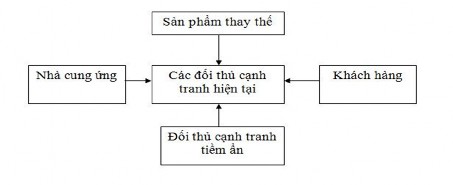
Figure 1.2. Michael Porter's five forces model
(Source: Translated from " Michael E Porter, Competitive Strategy :Techniques Analyzing
Industries and Competitors, 2014, Free Press")
Current competitors
Social enterprises are first and foremost profit-making businesses, but the way they use those profits is different from traditional businesses, which is to reinvest in achieving social goals. As business enterprises, social enterprises also operate and are affected by many components of the business environment, including the impact of competitors. Understanding competitors is important for businesses in general and social enterprises in the field of community-based tourism because competitors determine the nature and level of competition or strategies for gaining advantage in the industry.
Customers (tourists)
Customer issues are an integral part of the competitive environment. Customer trust can be the most valuable asset of a business. For services such as tourism, the most important factor to be competitive is the trust and reputation of the business with customers. Because service quality can only be verified after consumption, the most important factor for tourists to choose is the reputation of the service provider. Social enterprises in the field of community tourism therefore need to pay more attention to their customers in order to classify current and potential customers, thereby planning business development strategies.
Supplier
Enterprises need to expand their relationships with organizations that provide various sources of goods to ensure the operation of the enterprise. Suppliers in the tourism sector in general and in the community-based tourism sector in particular include: Service providers, capital providers, labor sources, etc. In which, labor sources are also a key factor in the competitive environment of enterprises. Social enterprises are a special type of enterprise, so the ability to attract and retain competent employees is a prerequisite for ensuring the success of the enterprise. However, doing this is not easy. The main factors that need to be evaluated are the general workforce including: their level of training and expertise, the relative attractiveness of the enterprise as an employer and the common wage level. In addition, community-based tourism is a type of tourism that uses a lot of labor from the local community at the destination. The quality of service depends 90% on the human factor. Therefore, to ensure the quality of tourism services provided to tourists during tourism activities, social enterprises in the field of community-based tourism need to pay more attention to the quality of tourism services provided by tourism workers in the local community. This is also a fundamental factor to help improve the quality of community-based tourism services provided to tourists.
Potential competitors
Potential competitors are businesses that have not yet appeared in the industry or have just appeared in the industry but have not yet provided products or services. Identifying new competitors that may enter the industry is important because they can threaten the market share of existing businesses in the industry. A high risk of entry by potential competitors represents a threat to the profitability of existing businesses. Conversely, if the risk of entry is low, current social enterprises in the community tourism sector will take advantage of this opportunity to increase prices and receive higher profits. Therefore, identifying and planning to deal with potential competitors is something that social enterprises in the community tourism sector need to pay attention to.
Substitute products
Substitute products are different products that can satisfy the same consumer needs compared to the products of the current enterprise. These products are often more dominant than the products of the enterprise in terms of specific characteristics. For tourism enterprises in general and social enterprises in the field of community tourism in particular, the products of enterprises compete with each other through the creation of new values, added values, and perceived values rather than useful values.