
Branding and the ability to outline directions and branding strategies for businesses are really rare. Whatever you want to do, it all has to start with people, but even with human issues, SMEs still face many difficulties and obstacles, while other issues such as branding are still just a distant goal.
In summary: Most Vietnamese small and medium enterprises do not have a brand and are facing great competition from domestic and foreign enterprises.
In the process of international integration, businesses that want to survive and compete in the market must quickly build a strong brand for their products. Vietnamese small and medium enterprises today have poor market access because they do not have a strong brand and competitiveness. Currently, Vietnam is experiencing a situation where many products and services of companies have good quality and low prices but are difficult to compete with similar products and services in both foreign and domestic markets. Indeed, that is true. Brands play a particularly important role in promoting business development and trade promotion, creating opportunities for businesses to penetrate and expand the market. To become outstanding, of course, in any field is very difficult, even more difficult when businesses participate in the service business field and with limited capital and experience.
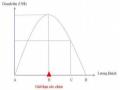
Every brand from the time of establishment to existence, development, expansion and affirmation of its name and position goes through 5 stages as mentioned above. However, to perform well in each stage and build the brand image depends on many factors.
According to 2006-2007 data, small and medium enterprises currently account for 95% of the total number of production and business establishments in the country. In 2008, according to data from the Ministry of Planning and Investment, our country had about 350,000 enterprises, of which 95% were SMEs. When Vietnam joined the World Trade Organization (WTO), many barriers were removed, and the world market opened up for products of small and medium enterprises. Therefore, in recent years, the number of small and medium enterprises has been increasing rapidly. Although the number has increased rapidly, the capital scale of small and medium enterprises in recent years has been very low, only at an average of over 2 billion VND/enterprise. In addition, small and medium enterprises mainly focus on the trade, engine and motorbike repair industries (accounting for 40.6% of enterprises nationwide), followed by the processing industry (20.9%), construction (13.2%) and the remaining industries such as property trading, consulting, hotels and restaurants (25.3%).
Maybe you are interested!
-

 Completing Legal Documents, Regulations Related to Brands, and Brand Building and Protection Issues
 -
 Conservation Management, Tourism Resource Exploitation and Environmental Protection
 -
 Evaluation of the effectiveness of the Forest Environmental Services Payment Policy on forest management and protection, improving people's lives in the Cua Dat Hydropower Plant Basin in Thanh Hoa province, period from 2012-2016 - 13
 -
 Customs and Beliefs Related to Forest Resource Management and Protection
 -
 Brand management of Vietnamese commercial banks - 22
However, small and medium enterprises are little known because they do not have a strong brand. These enterprises can provide very good products and services, the product packages offered are not inferior to those of large enterprises, but they have not attracted many customers because they do not have a brand. Customers who experience it for the first time are worried about whether the service quality meets their needs and makes them satisfied, while customers who have used it before lack trust and are curious to experience the products of another enterprise.
Take for example, two companies that provide transportation services are Mai Linh Joint Stock Company and Thang Long Taxi Joint Stock Company. Both companies are located in Hanoi, and they provide transportation and travel services to passengers. The service price is the same, 10,000 VND for the first km and 8,000 VND for the next 20 km. The longer the distance, the lower the price for a small 4-seat car. However, according to the survey, 100 people asked
90% of people choose Mai Linh. Simply because the name Mai Linh is too familiar to them, the service they provide is thoughtful and dedicated. When they need to call a taxi, they immediately remember Mai Linh and even remember the phone number. That does not mean that Thang Long taxi company provides bad service, but simply because they have not really built a strong brand. The remaining 10% choose Thang Long maybe because they are curious, or it doesn't matter which company they use as long as they get to their destination, or they want to try a new company.
Therefore, especially in providing services, goods that are often experienced through customers' feelings, if trust and brand are not built, it will be very difficult for businesses to compete with domestic businesses, not to mention joint ventures and foreign businesses.
According to WTO regulations, Vietnam has opened 11/12 sectors in the service sector and over 160 sub-sectors to foreign distributors. Therefore, with large scale, global distribution network and high professionalism, foreign companies will be big competitors, threatening the existence of many small and medium enterprises in the commercial sector of Vietnam. Financial and insurance companies are racing to enter the Vietnamese market. 100% foreign-owned banks have also been officially established, and immediately there are ANZ, HSBC banks... tourism and transportation companies also want to find a foothold in this lucrative market. This has made large Vietnamese companies and enterprises struggle, not to mention enterprises that are already small in both potential and economy. In addition, the world economic crisis and global recession have had a great impact on Vietnamese SMEs.
According to statistics from the Department of Small and Medium Enterprise Development (Ministry of Planning and Investment), in 2008 there were about 65.3 thousand small and medium enterprises.
In the first quarter of 2009, on average, about 7,700 SMEs ceased operations. In the first quarter of 2009, on average, about 2,500 SMEs ceased operations. The majority of the reasons were that they did not have enough competitiveness, did not have enough capital, and did not have business opportunities.
In 2008, the Association of Small and Medium Enterprises warned that 20% of businesses were at risk of bankruptcy, 60% were struggling and stagnant, and only 20% of businesses were adapting to inflation, even finding opportunities to develop during inflation.
Among the five basic factors affecting the competitiveness of enterprises, brand is considered more important than financial capacity when 90% of opinions choose it, along with factors such as product quality, financial capacity, leadership capacity and PR/Marketing policies and strategies. However, a similar number shows a disappointing result. The two reasons identified as the most limiting factors in competitiveness are the lack of brand development strategy and lack of attention to PR activities (both identified by over 98% of opinions).
3. Brand protection
Building a brand, for small and medium enterprises when they are limited by capital, human resources and many other limitations, is a long and extremely difficult journey. However, after completing that arduous journey, building a brand for themselves, managing, maintaining and protecting it is a thousand times more difficult. Particularly for small and medium enterprises participating in the service sector, protecting the brand is even more difficult because the nature of the goods they provide does not have a specific shape, there is no standard measurement, and even the legal corridor of Vietnam is very loose, so it is much more difficult.
3.1. Intellectual property protection
Trademark protection includes the aspects of establishing intellectual property (IP) rights and enforcing IP rights. The establishment of IP rights is carried out in accordance with the Law on IP 2005 and its implementing guidelines. As stipulated in Article 6 of the Law on Intellectual Property 2005, trademarks are protected on the basis of a Certificate of Registration issued by the Department of IP, while trade names are protected on the basis of legal use of that trade name.
By registering for intellectual property, businesses will be protected by the state for their rights such as exclusive rights to ideas, designs, trademarks, types, product patent information, etc. Businesses can even avoid unfair competition. In fact, many businesses have successfully applied intellectual property rights to combat unfair competition from business rivals.
The benefits of participating in intellectual property registration are clear, but up to now, many businesses have not paid attention to this issue, especially small and medium enterprises. Currently, nearly 20% of small and medium enterprises in operation nationwide participate in intellectual property registration. The reason is that the awareness of business owners is still limited; human resources and finance are still lacking, and especially the enforcement of intellectual property rights by both businesses and the state is still weak19 .
By not registering intellectual property rights, businesses put themselves at risk of losing their trademarks, patents, industrial designs, layout designs, geographical indications, trade secrets, and especially unfair competition.
Most SMEs have a trade name or one or more trademarks and should consider protecting them. Most SMEs have
19 www.trangtin.wincolaw.com.vn
Valuable confidential business information, from customer lists to sales strategies, can be protected. A large number of businesses have developed unique creative designs. Many businesses have created, or assisted in the publication, dissemination or retailing of, protected works. Some businesses may create or improve products or services.
The value of intellectual property (IP) is often not fully appreciated and its potential to create opportunities for future profits is not fully appreciated by SMEs. However, when IP is legally protected and there is a demand for IP-protected products and/or services in the market, IP becomes a valuable business asset.
Intellectual property can generate income for SMEs through licensing, selling or commercializing IP-protected products or services which can significantly increase market share or increase profits for the business. Intellectual property can increase the value and worth of the business in the eyes of investors and financial institutions. In the event of a sale, merger or acquisition, intellectual property can significantly increase the value of the business and sometimes, it is the first and truly valuable asset.
Therefore, a strategic use of intellectual property can fundamentally enhance the competitiveness of SMEs. SMEs must ensure that they are ready to face the challenge and adopt measures to exploit intellectual property and protect it wherever possible. Like physical assets, intellectual property must be acquired and maintained, measured, valued, closely monitored and carefully managed to extract the most value from it. However, before this can be done, SMEs must first recognize the value of intellectual property and begin to see it as a valuable business asset.
Another particularly important issue with legal protection of intellectual property rights is that they turn intangible assets into exclusive assets, even if only for a limited period of time. These rights allow SMEs to gain ownership of intangible assets and exploit them to their fullest extent. In short, intellectual property protection makes intangible assets “tangible” by turning them into valuable exclusive assets that can be traded in the market.
If SME’s innovative ideas, creative designs and strong brands are not legally protected by intellectual property rights, they can be freely and widely used by other businesses without any restrictions. However, when they are protected by intellectual property, they will create a certain value for the business because they become property rights that cannot be commercialized or used without the permission of the company.
Gradually, investors, stockbrokers and financial advisors have become aware of this fact and have begun to value intellectual property. Businesses around the world are also increasingly aware of the value of their intellectual property and have sometimes included it in their balance sheets. Many businesses, including SMEs, have begun to conduct regular technology and intellectual property audits. In some cases, businesses have found that their intellectual property is actually more valuable than their physical assets. This is often seen in companies operating in highly knowledge-intensive and innovative sectors, or in companies with well-known brands.
It can be said that the brand is the name and soul of the enterprise. However, in reality, there are still many enterprises that are indifferent to protecting their brand, especially small and medium enterprises. Building
Building, developing and protecting a brand requires the vision and heart of business leaders, so that Vietnamese brands can survive over time.
3.2. Brand management, maintenance and protection
Registering for intellectual property protection is essentially to protect the brand from a legal perspective, to ensure that the intellectual property elements of the brand protected by law will not be infringed or “stolen” by any other organization or individual. However, from a market perspective, whether a business’s brand is sustainable and long-lasting or not depends on the brand management and protection strategy originating from the business itself.
However, building a brand is a long and difficult journey, but when the brand and brand awareness have been temporarily defined, small and medium-sized enterprises often neglect brand management and long-term brand protection. Brand protection needs special attention when the brand has passed the first and second stages of the brand life cycle, entering the third and subsequent stages. Brand protection is not only protecting intellectual property from infringement by competitors but also protecting customer awareness, experience with the brand, protecting customer loyalty to the brand so that the brand can last long, bringing many benefits to the business.
For small and medium-sized enterprises, brands often face the risk of becoming outdated, not maintaining their intended personality, not maintaining the ability to satisfy customers, being surpassed by other brands... Therefore, small and medium-sized enterprises need to: always innovate to avoid becoming outdated and forgotten through "reminder" communication measures, must maintain a unique personality that creates a special impression on consumers, and must not be subjective when making decisions with