
+ Quality is "the potential of a product or service to satisfy user needs" (Vietnam Standard 8402, 1994)
Thus, according to the researcher, "Quality is over-rated in terms of matching goals" and "Quality is the response to set goals" are widely used in the world.
In the past, people understood CL in a "static" concept, meaning "Quality depends on the target", today people understand CL in a "dynamic" concept, meaning "quality is a journey, not a final stop but a way forward".
Thus, quality is a relative, dynamic, multidimensional concept. When approached from different positions and angles, it gives different perceptions and views on quality. However, the definitions of the concept of quality all show that "quality is fitness for purpose", and when the product meets the requirements of the beneficiaries: students, parents, users, teachers, schools, the state and the community.
Maybe you are interested!
-

 Current Perception of Management Board and Teachers on the Meaning and Role of Education Quality Assessment Activities in Secondary Schools
 -
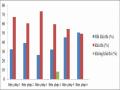 Measure 5: Establish an Advisory Group for Education Quality Assessment to Help Secondary Schools Carry Out Quality Assessment
 -
 Managing educational quality assessment activities at Ho Chi Minh City University of Law - 1
 -
 Self-Assessment Activities in the Quality Assurance of Education of Ho Chi Minh City University of Law.
 -
 Managing educational quality assessment activities at Ho Chi Minh City University of Law - 19
Quality of education:
Researchers have put forward a number of viewpoints on evaluating the quality of education by "Input", "Output", "Added Value", "Academic Value", "Audit",... or evaluated according to prescribed standards and criteria or achieving set goals; suitability for purpose,... In which, there are a number of prominent concepts:
- In a famous study by Harvey and Green (1993) to summarize the common views of educators, educational quality is defined as a set of different attributes (Nguyen Kim Dung, Pham Xuan Thanh, 2003).
+ Excellence
+ Perfection (perfect result, no errors)
+ Fit for purpose (meeting customer needs)
+ Value for money (in terms of investment evaluation)
+ Transition (transition from one state to another) According to Bui Minh Hien, educational quality is conformity with the goal
Education is the quality of learners formed from educational activities according to predetermined goals (Bui Minh Hien, 2006).
Nguyen Duc Chinh (2000) gave the following definition of the quality of Vietnamese education: "The quality of education is assessed through the level of conformity with predetermined goals" (Nguyen Duc Chinh, 2000).
Lam Quang Thiep and Vu Van Tao also believe that educational quality is the conformity of goals (Ministry of Education and Training, 2010).
Thus, educational quality is conformity with the goal. This is a widely accepted definition and is similar to the concept of educational quality of most quality assurance organizations in the world [8]. Conformity with the goal can include meeting the requirements of interested parties such as managers, teachers or educational researchers, meeting or surpassing the standards set in education, requirements for output perfection, investment efficiency, etc. [23].
The Ministry of Education and Training has also determined: " The quality of university education is the fulfillment of the set goals, ensuring the requirements of university education goals of the Education Law, in accordance with the requirements of human resource training for the socio-economic development of the locality and the industry " [3].
In this study, the researcher uses the definition: educational quality is considered as "fit for purpose" - meeting the set of educational quality assessment standards issued by the Ministry of Education and Training.
1.2.3. Education quality assessment
Education quality assessment is a quality assessment activity conducted from two perspectives including assessment of educational output products and assessment of the system of conditions to ensure educational quality.
According to the definition of the Southeast Asian Ministers of Education Organization (SEAMEO, 2003): Educational accreditation is defined as "an external assessment process to make a decision to recognize a university or a training program of the school as meeting the prescribed standards";
The Council for Higher Education Accreditation (CHEA) of the United States states that: “Accreditation is an external quality review process used by higher education to ensure and improve quality” (Charles Wankel, 2013).
According to UNESCO (2007), educational quality accreditation is defined as a process that includes self-assessment, external assessment and recognition of the quality level of an educational institution based on standards issued by educational management agencies.
According to Circular 62/2012/TT - Ministry of Education and Training definition (Circular No. 62/2012/TT-BGDĐ, 2012).
The above Circular also stipulates the process of educational quality assessment including the following steps:
a) Educational institutions conduct self-assessment;
b) Educational institutions register for external assessment with an educational quality assessment organization and request consideration for recognition of meeting educational quality standards;
c) Education quality assessment organizations conduct external assessments;
d) Educational quality assessment organizations assess, recognize or not recognize educational institutions that meet educational quality standards.
1.2.4. Assessment - Self-assessment in educational quality assessment Assessment
According to Tran Ba Hoanh: "Evaluation is understood as the process of forming opinions and judgments about work results, based on the analysis of collected information compared with the set goals and standards, in order to propose appropriate decisions to improve the current situation, adjust, enhance the quality and efficiency of work (Tran Ba Hoanh, 1991).
According to Tran Khanh Duc: “Evaluation is the process of collecting information and evidence about the evaluation object and making judgments and assessments about the level of achievement according to the criteria set out in the standards. Evaluation can be quantitative based on numbers or qualitative based on opinions and values” (Tran Khanh Duc, 2009).
According to Pham Ngoc Hoa, assessment is a form of diagnosis of the quality and effectiveness of teaching, learning and reviewing training programs based on detailed examination of the curriculum, structure and effectiveness of a training institution, internal review and quality control mechanisms of that institution (Pham Ngoc Hoa, 2013).
Thus, evaluation is the process of collecting, processing, and analyzing information about the evaluated object to make judgments and predictions about the results achieved compared to the goals. From there, make decisions to improve the situation, enhance the quality and efficiency of work.
Self-assessment in Education Quality Assurance
Self-evaluation is the obligation and responsibility of training institutions in the process of formation and development and is carried out in the process of organizing the evaluation of university training institutions according to the policies and implementation plans of competent authorities.
Self-assessment is the first step in the overall training activities of higher education institutions. First of all, self-assessment is a concrete demonstration of the autonomy and self-responsibility of the school in all training, research and social service activities according to the assigned functions and tasks of the higher education institution and in accordance with the school's objectives and missions, creating the basis for the next step of external evaluation (External-Evaluation).
Thus, self-assessment in educational quality assurance has been defined by the Ministry of Education and Training as follows: "It is the process by which educational institutions self-review and research based on educational quality assessment standards issued by the Ministry of Education and Training."
"To report on the status of education quality, effectiveness of training activities, scientific research, human resources, facilities and other related issues so that educational institutions can adjust resources and implementation processes to meet education quality standards" (Circular No. 62/2012/TT-BGDDT, 2012).
1.3. Theory of Self-assessment activities in Quality Assurance of Higher Education Institutions
1.3.1. The importance of quality assurance in higher education institutions
Educational quality assessment (EQA) helps educational managers systematically review all school activities in order to adjust the school's educational activities according to a certain standard. Through educational quality assessment activities, including self-assessment and external assessment, university leaders will determine the level of meeting educational goals according to educational quality assessment standards in each stage. The results of educational quality assessment reflect the training quality of the school, thereby helping school leaders grasp the strengths and weaknesses of their unit, as a basis for developing a plan to improve educational quality, enhance the quality of educational activities, and ensure educational quality.
Education quality assessment helps universities orient and determine certain quality standards. Decision No. 06/VBHN-BGDĐT dated March 4, 2014 of the Ministry of Education and Training stipulates standards for assessing education quality and Circular 62/2012/TT - Ministry of Education and Training stipulates the process and cycle of education quality assessment, universities are accredited and comprehensively assessed in all aspects of their activities with 10 standards and 61 criteria. Each standard includes many specific criteria, these standards are the minimum regulations that schools need to achieve to ensure training quality, from which each university will gradually determine standards for each educational activity to ensure output quality.
Quality assurance of education creates a flexible and rigorous quality assurance mechanism including self-assessment, external assessment and appraisal, recognition or non-recognition of educational institutions meeting educational quality standards. In which self-assessment and external assessment are two activities that have a dialectical relationship with each other, there is always feedback between internal quality assurance and external quality assurance, helping higher education institutions promptly improve weaknesses and promote strengths. The results of quality assurance of higher education institutions, whether they meet or not the standards set by the Ministry of Education and Training, will contribute to orienting the following activities of society:
- Help parents and students have a basis for choosing a university to study at;
- Serve as a basis for employers to select human resources
- Development orientation for higher education institutions to enhance competitiveness in all areas of education.
-In the process of quality assurance, the first and most important step is quality control.
1.3.2. The role of Self-assessment activities in quality assurance of higher education institutions
Self-assessment is an important step in university quality assessment activities. It is a process in which the university itself, based on quality assessment standards (issued by the Ministry of Education and Training), conducts self-review and reports on the quality and effectiveness of training and scientific research activities, pointing out strengths and weaknesses, thereby taking measures to adjust resources and implementation processes to achieve the training goals set out.
Self-assessment not only creates the basis for external assessment but also demonstrates the autonomy and responsibility of the school in all training, research and social service activities according to assigned functions and tasks and in accordance with the school's mission and goals.
During the evaluation process, based on each standard/criteria, the school focuses on ensuring the following requirements:
a/- Describe and clarify the current situation of the school;
b/- Analyze, explain, compare and make comments; point out strengths, weaknesses/shortcomings and remedies;
c/- Develop an action plan to improve and enhance the quality of education. The purpose of the school's self-assessment activities is to improve and enhance the quality and to register for quality accreditation. Self-assessment is a continuous process, requiring a lot of time and effort, and the participation of many units and individuals throughout the school. This activity requires objectivity, honesty and transparency. Explanations, comments and conclusions made during the self-assessment process must be based on specific and clear evidence, ensuring reliability and covering all criteria in the Quality Accreditation Standards.
number of universities
Self-assessment is an important step in planning to improve the quality of the school (illustrated in Diagram 2). Self-assessment helps the university review and consider the current situation of the school, thereby redefining the goals for the next stage, making plans and acting according to the plan. Then continue to review and consider the current situation and adjust the goals...
Self-inflicted
price

Onion
dynamic
Mission,

Target

Plan

plan
Diagram 1.2. The position of Self-assessment in the plan to improve university quality
1.3.3. Self-assessment process in higher education quality assurance
Based on Circular 62/2012/TT - Ministry of Education and Training regulating the process and cycle of Education Quality Assessment, the Self-Assessment Process includes the following steps:
- Determine the purpose and scope of self-assessment
- Establish a Self-Assessment Council
- Build a self-assessment plan
- Collect information and evidence. Process and analyze the information and evidence obtained.
- Write a self-assessment report
- Publish self-assessment reports within educational institutions
- Implement activities after completing the self-assessment report
1.4. Management of quality assurance activities in higher education institutions
Managing quality assurance in higher education quality assurance activities is the continuous, purposeful, and planned impact of managers to effectively mobilize, organize, coordinate, adjust, and monitor quality assurance activities to meet the requirements of quality assessment for universities and propose measures to improve the quality of higher education.
Based on the steps of the quality assurance process and the functions of educational management, the author proposes the following contents for managing quality assurance in university education quality assurance:
Develop a training plan to ensure training objectives are achieved.
Self-assessment aims to help schools continuously improve and enhance the quality of training and scientific research, and at the same time provide a basis for registering for quality accreditation.
The scope of self-assessment covers all school activities according to 10 quality assessment standards issued by the Ministry of Education and Training. Each standard