
Education towards the comprehensive development of children, suitable for practical conditions" (CBQL= 2.15; GV=2.26); "Participate in developing the school education program; support colleagues in developing plans for comprehensive care and education of children, suitable for practical conditions" (CBQL= 2.25; GV=2.52) are only assessed at the "satisfactory" level. In addition to ensuring compliance with the preschool education program and practical conditions, developing a plan for nurturing, caring for and educating children requires teachers to be proactive and creative in terms of content, form and propose measures for caring for and educating children suitable for the developmental needs of children in groups and classes, suitable for practical conditions of schools, classes and local culture. In addition, in the process of implementing the plan, teachers can proactively adjust and update new content, suitable for the reality of educating children. Always share and support colleagues in building children's education plans. This result is an important suggestion for schools in encouraging and creating conditions for teachers to be proactive and creative in building and implementing children's education plans.
* Child care and health care : According to the preschool education program, child care and health care activities are carried out with 4 contents: (1) Child health care and safety; (2) Child hygiene care; (3) Child sleep care; (4) Child nutrition care. The assessment results show that the index "Implementing the child care and health care plan for groups and classes... according to the preschool education program" is assessed at the "fair" level (CBQL=2.95; GV=3.06). To effectively carry out child care and health care activities, it is necessary that the child care and health care plan clearly shows the goals, content, requirements, and methods of child care and health care for children in groups and classes, ensuring the living regime, nutrition, hygiene, safety, and disease prevention for children according to the preschool education program approved by the professional group/professional team/school board. However, the assessment results show that teachers are not bold and proactive in innovating the content, form, and methods of child care and nurturing, and are not ready to share and discuss with colleagues about initiatives and experiences in child care for colleagues. Therefore, the two indicators "Proactively and flexibly in innovating child care and health care activities suitable to practical conditions"
of the school, class" (CBQL=2.30; GV=2.18) and "Sharing experiences, supporting colleagues in implementing child care and nurturing activities" (CBQL=2.20; GV=2.18) were only rated at "satisfactory". Caring for and nurturing preschool children will encounter many difficulties because children are in a complex stage of psychological development, in addition to the expectations of parents for the safety and development of children. Therefore, teachers need to proactively update and adjust content and methods suitable for each class and group of children to ensure the comprehensive development of children.
* Comprehensive education for children: Comprehensive education for children is conducted with the following contents: Physical development education, cognitive development education, language development education, emotional development education, social skills and aesthetics. The results show that teachers have implemented the plan according to each educational content, this index is rated at "quite good" (CBQL=2.80; GV=3.56). Regarding proactively innovating educational forms and methods to suit the reality of the school, the development characteristics of children and supporting colleagues in educational activities to improve the quality of comprehensive development of children, it is only rated at "satisfactory". The standard deviation in this criterion is quite low, ranging from 0.299 to 0.497, which partly shows that the assessments converge around the average value, the average score shows that the assessments mainly fluctuate at the "satisfactory" level. The ANOVA comparison results showed that the sig value <0.05 allowed the conclusion that there was a significant difference in the average assessment scores of managers and teachers, the overall average score showed a fairly large difference (Manager = 2.33; Teacher = 2.57).
* Observing and assessing children's development: The purpose of assessing children's development is to monitor children's progress and development daily, by stage, by age; thereby identifying difficulties and specific causes in children's development as a basis for preschool teachers to make appropriate educational impacts on children, promptly adjusting daily child care and education plans. The assessment results show that teachers know how to use methods to observe and assess children, this index is assessed at the "fair" level (CBQL = 2.90; GV = 2.70). Knowing how to use a variety of methods in assessing children such as: observation, conversation, analysis of activity products, multiple choice tests... helps teachers to comprehensively assess children's development. However, for the index "Proactive, flexible application of
The index of "methods, forms, and tools for objectively assessing children's development" was only rated at "satisfactory" (CBQL= 2.15; GV=2.40), showing that GVMN has not flexibly applied assessment forms and methods. Therefore, the index related to sharing and supporting colleagues in assessment and participating in external assessment activities was only rated at "satisfactory" with a very low GPA (CBQL= 1.90; GV=1.90), which we think is reasonable. To effectively carry out assessment activities, teachers must have a deep understanding of knowledge about the preschool education program, assessment techniques and tools. This assessment result is an important suggestion for schools to strengthen activities to foster the ability to observe and assess children in preschool education. The ANOVA comparison results show the differences between the indexes, with 2 indexes showing differences in the assessment of CBQL and GV. While the index related to sharing and supporting colleagues in the assessment had no difference, the sig value>0.05, the average score of the two subjects was the same (CBQL= 1.90; GV=1.90).
* Group and class management: The assessment results for this criterion show a difference in the average score (GPA), while managers rate it as "satisfactory" (GPA=2.31), teachers rate it at a higher level of "fair" (GPA=2.72). The assessment results for each indicator show that the indicator "Correctly implementing the requirements for child management, facilities and records of groups and classes according to regulations" is rated at "fairly good" (Managers=2.85; Teachers=3.42). Thus, teachers have done a good job of managing and operating the classroom as well as the resources serving the classroom. However, the assessment results show that teachers are not creative and flexible in managing groups and classes to suit the psychological characteristics of children, and do not have many initiatives in innovating classroom management and handling problems arising during the management process. At the same time, teachers have not boldly shared issues and experiences in classroom management in professional meetings, conferences, and seminars. These two indicators are only rated at the "satisfactory" level. The standard deviation of the indicators shows very low scores, from 0.433 to 0.499. This shows that the assessments are concentrated around the average value, mainly at the "satisfactory" level. The comprehensive assessment of 6 criteria in the professional development standards of primary school teachers shows that only the criterion on personal professional development is rated at the "satisfactory" level (CBQL= 2.63; GV= 2.90). Criterion 8 on "Group and class management"
There is a difference in assessment, managers rate it as "satisfactory" (average score = 2.31), teachers rate it as "fair" (average score = 2.72). The remaining criteria are only rated at "satisfactory".
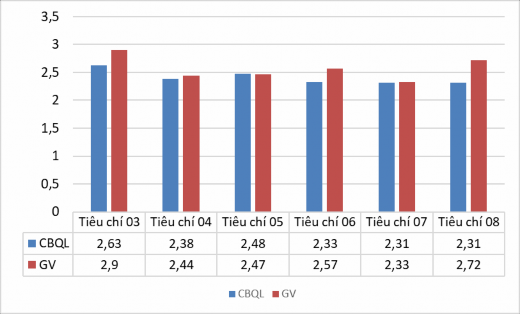
Figure 2.1. General assessment chart of professional development standards
The analysis results show that the professional capacity of preschool teachers in the Central region currently only meets the "satisfactory" level compared to CNN, and has not reached the higher levels of "fair" and "good" compared to CNN. The interview results with a number of preschool managers and teachers all have the same opinion about the limitations in the professional development capacity of preschool teachers according to CNN: Teachers have not boldly applied active teaching methods, experiential activities in the direction of focusing on children ( Manager 13 ); Teachers have not focused on updating professional knowledge according to the requirements of modern education, have not boldly researched, created and innovated methods and forms of organizing child care and education ( Manager 14, Teacher 2 ); Teachers have not boldly contributed to the development of the school's educational program, so they have not created a vibrant professional atmosphere ( Manager 16, Teacher 2 ); Some teachers have limited creativity in their expertise and pedagogical skills; they are not really flexible in planning and organizing child care and education activities; they are not really effective in developing a set of child assessment tools; some teachers do not have good supervision of children; they are not careful in managing facilities and records of the group... ( CBQL 17, 18, GV1 )... Therefore, in the quality management of the preschool teacher team, the management levels
Education (Departments, Divisions, Kindergartens) need to pay special attention to recruitment, as well as training and fostering to improve professional capacity for teachers.
2.3.3. Building an educational environment
The educational environment includes the necessary physical environment and psychological-social environment, affecting the activities of caring for and educating children. The assessment of the capacity to build the educational environment of preschool teachers is carried out with 2 criteria: Building a safe, healthy, friendly educational environment and implementing democratic rights in schools. The results are shown in Table 2.7.
Table 2.7. Assessment of GVMN's capacity to build an educational environment
Status
Content | CBQL | Teacher | Sig | |||||
Average | DLC | TH | Average | DLC | TH | |||
1 | Building an educational environment safe, healthy, friendly | 2.35 | 3.10 | |||||
1.1 | Implement environmental regulations safe, healthy, non-violent education for children | 3.00 | ,000 | 1 | 3.66 | ,474 | 1 | ,000 |
1.2 | Proactively detect, promptly report, propose and implement measures to prevent risks of insecurity, and prevent and combat school violence… | 2.25 | ,433 | 2 | 3.10 | ,299 | 2 | ,000 |
1.3 | Share and support colleagues in the organization to build a safe and healthy environment. child friendly | 1.80 | ,400 | 3 | 2.56 | ,497 | 3 | ,000 |
2 | exercise democracy in school | 2.46 | 3.12 | |||||
2.1 | Implementing regulations on children's rights children; democratic rights | 3.05 | ,218 | 1 | 3.64 | ,480 | 1 | ,000 |
Maybe you are interested!
-

 Identify Rating Levels and Rating Scales
zt2i3t4l5ee
zt2a3gstourism,quan lan,quang ninh,ecology,ecotourism,minh chau,van don,geography,geographical basis,tourism development,science
zt2a3ge
zc2o3n4t5e6n7ts
of the islanders. Therefore, this indicator will be divided into two sub-indicators:
a1. Natural tourism attractiveness a2. Cultural tourism attractiveness
b. Tourist capacity
The two island communes in Quan Lan have different capacities to receive tourists. Minh Chau Commune is home to many standard hotels and resorts, attracting high-income domestic and international tourists. Meanwhile, Quan Lan Commune has many motels mainly built and operated by local people, so the scale and quality are not high, and will be suitable for ordinary tourists such as students.
c. Time of exploitation of Quan Lan Island Commune:
Quan Lan tourism is seasonal due to weather and climate conditions and festivals only take place on certain days of the year, specifically in spring. In Quan Lan commune, the period from April to June and from September to November is considered the best time to visit Quan Lan because the cultural tourism activities are mainly associated with festivals taking place during this time.
Minh Chau island commune:
Tourism exploitation time is all year round, because this is a place with a number of tourist attractions with diverse ecosystems such as Bai Tu Long National Park Research Center, Tram forest, Turtle Laying Beach, so besides coming to the beach for tourism and vacation in the summer, Minh Chau will attract research groups to come for tourism combined with research at other times of the year.
d. Sustainability
The sustainability of ecotourism sites in Quan Lan and Minh Chau communes depends on the sensitivity of the ecosystems to climate changes.
landscape. In general, these tourist destinations have a fairly high level of sustainability, because they are natural ecosystems, planned and protected. However, if a large number of tourists gather at certain times, it can exceed the carrying capacity and affect the sustainability of the environment (polluted beaches, damaged trees, animals moving away from their habitats, etc.), then the sustainability of the above ecosystems (natural ecosystems, human ecosystems) will also be affected and become less sustainable.
e. Location and accessibility
Both island communes have ports to take tourists to visit from Van Don wharf:
- Quan Lan – Van Don traffic route:
Phuc Thinh – Viet Anh high-speed boat and Quang Minh high-speed boat, depart at 8am and 2pm from Van Don to Quan Lan, and at 7am and 1pm from Quan Lan to Van Don. There are also wooden boats departing at 7am and 1pm.
- Van Don - Minh Chau traffic route:
Chung Huong high-speed train, Minh Chau train, morning 7:30 and afternoon 13:30 from Van Don to Minh Chau, morning 6:30 and afternoon 13:00 from Minh Chau to Van Don.
f. Infrastructure
Despite receiving investment attention, the issue of infrastructure and technical facilities for tourism on Quan Lan Island is still an issue that needs to be resolved because it has a direct impact on the implementation of ecotourism activities. The minimum conditions for serving tourists such as accommodation, electricity, water, communication, especially medical services, and security work need to be given top priority. Ecotourism spots in Minh Chau commune are assessed to have better infrastructure and technical facilities for tourism because there are quite complete and synchronous conditions for serving tourists, meeting many needs of domestic and foreign tourists.
3.2.1.4. Determine assessment levels and assessment scales
Corresponding to the levels of each criterion, the index is the score of those levels in the order of 4, 3, 2, 1 decreasing according to the standard of each level: very attractive (4), attractive (3), average (2), less attractive (1).
3.2.1.5. Determining the coefficients of the criteria
For the assessment of DLST in the two communes of Quan Lan and Minh Chau islands, the students added evaluation coefficients to show the importance of the criteria and indicators as follows:
Coefficient 3 with criteria: Attractiveness, Exploitation time. These are the 2 most important criteria for attracting tourists to tourism in general and eco-tourism in particular, so they have the highest coefficient.
Coefficient 2 with criteria: Capacity, Infrastructure, Location and accessibility . Because the assessment area is an island commune of Van Don district, the above criteria are selected by the author with appropriate coefficients at the average level.
Coefficient 1 with criteria: Sustainability. Quan Lan has natural and human-made ecotourism sites, with high biodiversity and little impact from local human factors. Most of the ecotourism sites are still wild, so they are highly sustainable.
3.2.1.6. Results of DLST assessment on Quan Lan island
a. Assessment of the potential for natural tourism development
For Minh Chau commune:
+ Natural tourism attractiveness is determined to be very attractive (4 points) and the most important coefficient (coefficient 3), so the score of the Attractiveness criterion is 4 x 3 = 12.
+ Capacity is determined as average (2 points) and the coefficient is quite important (coefficient 2), then the score of Capacity criterion is 2 x 2 = 4.
+ Exploitation time is long (4 points), the most important coefficient (coefficient 3) so the score of the Exploitation time criterion is 4 x 3 = 12.
+ Sustainability is determined as sustainable (4 points), the important coefficient is the average coefficient (coefficient 1), so the score of the Sustainability criterion is 4 x 1 = 4 points
+ Location and accessibility are determined to be quite favorable (2 points), the coefficient is quite important (coefficient 2), the criterion score is 2 x 2 = 4 points.
+ Infrastructure is assessed as good (3 points), the coefficient is quite important (coefficient 2), then the score of the Infrastructure criterion is 3 x 2 = 6 points.
The total score for evaluating DLST in Minh Chau commune according to 6 evaluation criteria is determined as: 12 + 4 + 12 + 4 + 4 + 6 = 42 points
Similar assessment for Quan Lan commune, we have the following table:
Table 3.3: Assessment of the potential for natural ecotourism development in Quan Lan and Minh Chau communes
Attractiveness of self-tourismof course
Capacity
Mining time
Sustainability
Location and accessibility
Infrastructure
Result
Point
DarkMulti
Point
DarkMulti
Point
DarkMulti
Point
DarkMulti
Point
DarkMulti
Point
DarkMulti
CommuneMinh Chau
12
12
4
8
12
12
4
4
4
8
6
8
42/52
Quan CommuneLan
6
12
6
8
9
12
4
4
4
8
4
8
33/52
b. Assessment of the potential for humanistic tourism development
For Quan Lan commune:
+ The attractiveness of human tourism is determined to be very attractive (4 points) and the most important coefficient (coefficient 3), so the score of the Attractiveness criterion is 4 x 3 = 12.
+ Capacity is determined to be large (3 points) and the coefficient is quite important (coefficient 2), then the score of the Capacity criterion is 3 x 2 = 6.
+ Mining time is average (3 points), the most important coefficient (coefficient 3) so the score of the Mining time criterion is 3 x 3 = 9.
+ Sustainability is determined as sustainable (4 points), the important coefficient is the average coefficient (coefficient 1), so the score of the Sustainability criterion is 4 x 1 = 4 points.
+ Location and accessibility are determined to be quite favorable (2 points), the coefficient is quite important (coefficient 2), the criterion score is 2 x 2 = 4 points.
+ Infrastructure is rated as average (2 points), the coefficient is quite important (coefficient 2), then the score of the Infrastructure criterion is 2 x 2 = 4 points.
The total score for evaluating DLST in Quan Lan commune according to 6 evaluation criteria is determined as: 12 + 6 + 6 + 4 + 4 + 4 = 36 points.
Similar assessment with Minh Chau commune we have the following table:
Table 3.4: Assessment of the potential for developing humanistic eco-tourism in Quan Lan and Minh Chau communes
Attractiveness of human tourismliterature
Capacity
Mining time
Sustainability
Location and accessibility
Infrastructure
Result
Point
DarkMulti
Point
DarkMulti
Point
DarkMulti
Point
DarkMulti
Point
DarkMulti
Point
DarkMulti
Quan CommuneLan
12
12
6
8
9
12
4
4
4
8
4
8
39/52
Minh CommuneChau
6
12
4
8
12
12
4
4
4
8
6
8
36/52
Basically, both Minh Chau and Quan Lan localities have quite favorable conditions for developing ecotourism. However, Quan Lan commune has more advantages to develop ecotourism in a humanistic direction, because this is an area with many famous historical relics such as Quan Lan Communal House, Quan Lan Pagoda, Temple worshiping the hero Tran Khanh Du, ... along with local festivals held annually such as the wind praying ceremony (March 15), Quan Lan festival (June 10-19); due to its location near the port and long exploitation time, the beaches in Quan Lan commune (especially Quan Lan beach) are no longer hygienic and clean to ensure the needs of tourists coming to relax and swim; this is also an area with many beautiful landscapes such as Got Beo wind pass, Ong Phong head, Voi Voi cave, but the ability to access these places is still very limited (dirt hill road, lots of gravel and rocks), especially during rainy and windy times; In addition, other natural resources such as mangrove forests and sea worms have not been really exploited for tourism purposes and ecotourism development. On the contrary, Minh Chau commune has more advantages in developing ecotourism in the direction of natural tourism, this is an area with diverse ecosystems such as at Rua De Beach, Bai Tu Long National Park Conservation Center...; Minh Chau beach is highly appreciated for its natural beauty and cleanliness, ranked in the top ten most beautiful beaches in Vietnam; Minh Chau commune is also home to Tram forest with a large area and a purity of up to 90%, suitable for building bridges through the forest (a very effective type of natural ecotourism currently applied by many countries) for tourists to sightsee, as well as for the purpose of studying and researching.
Figure 3.1: Thenmala Forest Bridge (India) Source: https://www.thenmalaecotourism.com/(August 21, 2019)
3.2.2. Using SWOT matrix to evaluate Quan Lan island tourism
General assessment of current tourism activities of Quan Lan island is shown through the following SWOT matrix:
Table 3.5: SWOT matrix evaluating tourism activities on Quan Lan island
Internal agent
Strengths- There is a lot of potential for tourism development, especially natural ecotourism and humanistic ecotourism.- The unskilled labor force is relatively abundant.- resource environmentunpolluted, still
Weaknesses- Poorly developed infrastructure, especially traffic routes to tourist destinations on the island.- The team of professional staff is still weak.- Tourism products in general
quite wild, originalintact
general and DLST in particularalone is monotonous.
External agents
Opportunity- Tourism is a key industry in the socio-economic development strategy of the province and Van Don economic zone.- Quan Lan was selected as a pilot area for eco-tourism development within the framework of the green growth project between Quang Ninh province and the Japanese organization JICA.- The flow of tourists and especially ecotourism in the world tends toincreasing
Challenge- Weather and climate change abnormally.- Competition in tourism products is increasingly fierce, especially with other localities in the province such as Ha Long, Mong Cai...- Awareness of tourists, especially domestic tourists, about ecotourism and nature conservation is not high.
Through summary analysis using SWOT matrix we see that:
To exploit strengths and take advantage of opportunities, it is necessary to:
- Diversify products and service types (build more tourism routes aimed at specific needs of tourists: experiential tourism immersed in nature, spiritual cultural tourism...)
- Effective exploitation of resources and differentiated products (natural resources and human resources)
div.maincontent .p { color: black; font-family:"Times New Roman", serif; font-style: normal; font-weight: normal; text-decoration: none; font-size: 14pt; margin:0pt; } div.maincontent p { color: black; font-family:"Times New Roman", serif; font-style: normal; font-weight: normal; text-decoration: none; font-size: 14pt; margin:0pt; } div.maincontent .s1 { color: black; font-family:"Times New Roman", serif; font-style: normal; font-weight: normal; text-decoration: none; font-size: 13pt; } div.maincontent .s2 { color: black; font-family:"Times New Roman", serif; font-style: normal; font-weight: normal; text-decoration: none; font-size: 13pt; } div.maincontent .s3 { color: #0D0D0D; font-family:"Times New Roman", serif; font-style: normal; font-weight: bold; text-decoration: none; font-size: 14pt; } div.maincontent .s4 { color: black; font-family:"Times New Roman", serif; font-style: italic; font-weight: normal; text-decoration: none; font-size: 14pt; } div.maincontent .s5 { color: black; font-family:"Times New Roman", serif; font-style: italic; font-weight: bold; text-decoration: none; font-size: 14pt; } div.maincontent .s6 { color: black; font-family:"Times New Roman", serif; font-style: italic; font-weight: normal; text-decoration: none; font-size: 14pt; vertical-align: -3pt; } div.maincontent .s7 { color: black; font-family:"Times New Roman", serif; font-style: italic; font-weight: normal; text-decoration: none; font-size: 14pt; vertical-align: -2pt; } div.maincontent .s8 { color: black; font-family:"Times New Roman", serif; font-style: italic; font-weight: normal; text-decoration: none; font-size: 14pt; vertical-align: -1pt; } div.maincontent .s9 { color: black; font-family:"Times New Roman", serif; font-style: normal; font-weight: normal; text-decoration: none; font-size: 14pt; } div.maincontent .s10 { color: black; font-family:"Times New Roman", serif; font-style: normal; font-weight: bold; text-decoration: none; font-size: 14pt; } div.maincontent .s11 { color: black; font-family:"Times New Roman", serif; font-style: normal; font-weight: normal; text-decoration: none; font-size: 14pt; } div.maincontent .s12 { color: black; font-family:Symbol, serif; font-style: normal; font-weight: normal; text-decoration: none; font-size: 14pt; } div.maincontent .s13 { color: black; font-family:Wingdings; font-style: normal; font-weight: normal; text-decoration: none; font-size: 14pt; } div.maincontent .s14 { color: black; font-family:"Times New Roman", serif; font-style: normal; font-weight: normal; text-decoration: none; font-size: 9pt; vertical-align: 5pt; } div.maincontent .s15 { color: black; font-family:"Times New Roman", serif; font-style: normal; font-weight: normal; text-decoration: none; font-size: 9pt; vertical-align: 5pt; } div.maincontent .s16 { color: black; font-family:Cambria, serif; font-style: italic; font-weight: normal; text-decoration: none; font-size: 14pt; } div.maincontent .s17 { color: #080808; font-family:"Times New Roman", serif; font-style: normal; font-weight: bold; text-decoration: none; font-size: 14pt; } div.maincontent .s18 { color: #080808; font-family:"Times New Roman", serif; font-style: normal; font-weight: normal; text-decoration: none; font-size: 14pt; } div.maincontent .s19 { color: black; font-family:"Times New Roman", serif; font-style: normal; font-weight: normal; text-decoration: none; font-size: 11pt; } div.maincontent .s20 { color: black; font-family:"Times New Roman", serif; font-style: normal; font-weight: normal; text-decoration: none; font-size: 10pt; } div.maincontent .s21 { color: black; font-family:"Times New Roman", serif; font-style: normal; font-weight: bold; text-decoration: none; font-size: 11pt; } div.maincontent .s22 { color: black; font-family:"Times New Roman", serif; font-style: normal; font-weight: normal; text-decoration: none; font-size: 11pt; } div.maincontent .s23 { color: black; font-family:"Times New Roman", serif; font-style: italic; font-weight: normal; text-decoration: none; font-size: 14pt; } div.maincontent .s24 { color: #212121; font-family:"Times New Roman", serif; font-style: normal; font-weight: normal; tex
Identify Rating Levels and Rating Scales
zt2i3t4l5ee
zt2a3gstourism,quan lan,quang ninh,ecology,ecotourism,minh chau,van don,geography,geographical basis,tourism development,science
zt2a3ge
zc2o3n4t5e6n7ts
of the islanders. Therefore, this indicator will be divided into two sub-indicators:
a1. Natural tourism attractiveness a2. Cultural tourism attractiveness
b. Tourist capacity
The two island communes in Quan Lan have different capacities to receive tourists. Minh Chau Commune is home to many standard hotels and resorts, attracting high-income domestic and international tourists. Meanwhile, Quan Lan Commune has many motels mainly built and operated by local people, so the scale and quality are not high, and will be suitable for ordinary tourists such as students.
c. Time of exploitation of Quan Lan Island Commune:
Quan Lan tourism is seasonal due to weather and climate conditions and festivals only take place on certain days of the year, specifically in spring. In Quan Lan commune, the period from April to June and from September to November is considered the best time to visit Quan Lan because the cultural tourism activities are mainly associated with festivals taking place during this time.
Minh Chau island commune:
Tourism exploitation time is all year round, because this is a place with a number of tourist attractions with diverse ecosystems such as Bai Tu Long National Park Research Center, Tram forest, Turtle Laying Beach, so besides coming to the beach for tourism and vacation in the summer, Minh Chau will attract research groups to come for tourism combined with research at other times of the year.
d. Sustainability
The sustainability of ecotourism sites in Quan Lan and Minh Chau communes depends on the sensitivity of the ecosystems to climate changes.
landscape. In general, these tourist destinations have a fairly high level of sustainability, because they are natural ecosystems, planned and protected. However, if a large number of tourists gather at certain times, it can exceed the carrying capacity and affect the sustainability of the environment (polluted beaches, damaged trees, animals moving away from their habitats, etc.), then the sustainability of the above ecosystems (natural ecosystems, human ecosystems) will also be affected and become less sustainable.
e. Location and accessibility
Both island communes have ports to take tourists to visit from Van Don wharf:
- Quan Lan – Van Don traffic route:
Phuc Thinh – Viet Anh high-speed boat and Quang Minh high-speed boat, depart at 8am and 2pm from Van Don to Quan Lan, and at 7am and 1pm from Quan Lan to Van Don. There are also wooden boats departing at 7am and 1pm.
- Van Don - Minh Chau traffic route:
Chung Huong high-speed train, Minh Chau train, morning 7:30 and afternoon 13:30 from Van Don to Minh Chau, morning 6:30 and afternoon 13:00 from Minh Chau to Van Don.
f. Infrastructure
Despite receiving investment attention, the issue of infrastructure and technical facilities for tourism on Quan Lan Island is still an issue that needs to be resolved because it has a direct impact on the implementation of ecotourism activities. The minimum conditions for serving tourists such as accommodation, electricity, water, communication, especially medical services, and security work need to be given top priority. Ecotourism spots in Minh Chau commune are assessed to have better infrastructure and technical facilities for tourism because there are quite complete and synchronous conditions for serving tourists, meeting many needs of domestic and foreign tourists.
3.2.1.4. Determine assessment levels and assessment scales
Corresponding to the levels of each criterion, the index is the score of those levels in the order of 4, 3, 2, 1 decreasing according to the standard of each level: very attractive (4), attractive (3), average (2), less attractive (1).
3.2.1.5. Determining the coefficients of the criteria
For the assessment of DLST in the two communes of Quan Lan and Minh Chau islands, the students added evaluation coefficients to show the importance of the criteria and indicators as follows:
Coefficient 3 with criteria: Attractiveness, Exploitation time. These are the 2 most important criteria for attracting tourists to tourism in general and eco-tourism in particular, so they have the highest coefficient.
Coefficient 2 with criteria: Capacity, Infrastructure, Location and accessibility . Because the assessment area is an island commune of Van Don district, the above criteria are selected by the author with appropriate coefficients at the average level.
Coefficient 1 with criteria: Sustainability. Quan Lan has natural and human-made ecotourism sites, with high biodiversity and little impact from local human factors. Most of the ecotourism sites are still wild, so they are highly sustainable.
3.2.1.6. Results of DLST assessment on Quan Lan island
a. Assessment of the potential for natural tourism development
For Minh Chau commune:
+ Natural tourism attractiveness is determined to be very attractive (4 points) and the most important coefficient (coefficient 3), so the score of the Attractiveness criterion is 4 x 3 = 12.
+ Capacity is determined as average (2 points) and the coefficient is quite important (coefficient 2), then the score of Capacity criterion is 2 x 2 = 4.
+ Exploitation time is long (4 points), the most important coefficient (coefficient 3) so the score of the Exploitation time criterion is 4 x 3 = 12.
+ Sustainability is determined as sustainable (4 points), the important coefficient is the average coefficient (coefficient 1), so the score of the Sustainability criterion is 4 x 1 = 4 points
+ Location and accessibility are determined to be quite favorable (2 points), the coefficient is quite important (coefficient 2), the criterion score is 2 x 2 = 4 points.
+ Infrastructure is assessed as good (3 points), the coefficient is quite important (coefficient 2), then the score of the Infrastructure criterion is 3 x 2 = 6 points.
The total score for evaluating DLST in Minh Chau commune according to 6 evaluation criteria is determined as: 12 + 4 + 12 + 4 + 4 + 6 = 42 points
Similar assessment for Quan Lan commune, we have the following table:
Table 3.3: Assessment of the potential for natural ecotourism development in Quan Lan and Minh Chau communes
Attractiveness of self-tourismof course
Capacity
Mining time
Sustainability
Location and accessibility
Infrastructure
Result
Point
DarkMulti
Point
DarkMulti
Point
DarkMulti
Point
DarkMulti
Point
DarkMulti
Point
DarkMulti
CommuneMinh Chau
12
12
4
8
12
12
4
4
4
8
6
8
42/52
Quan CommuneLan
6
12
6
8
9
12
4
4
4
8
4
8
33/52
b. Assessment of the potential for humanistic tourism development
For Quan Lan commune:
+ The attractiveness of human tourism is determined to be very attractive (4 points) and the most important coefficient (coefficient 3), so the score of the Attractiveness criterion is 4 x 3 = 12.
+ Capacity is determined to be large (3 points) and the coefficient is quite important (coefficient 2), then the score of the Capacity criterion is 3 x 2 = 6.
+ Mining time is average (3 points), the most important coefficient (coefficient 3) so the score of the Mining time criterion is 3 x 3 = 9.
+ Sustainability is determined as sustainable (4 points), the important coefficient is the average coefficient (coefficient 1), so the score of the Sustainability criterion is 4 x 1 = 4 points.
+ Location and accessibility are determined to be quite favorable (2 points), the coefficient is quite important (coefficient 2), the criterion score is 2 x 2 = 4 points.
+ Infrastructure is rated as average (2 points), the coefficient is quite important (coefficient 2), then the score of the Infrastructure criterion is 2 x 2 = 4 points.
The total score for evaluating DLST in Quan Lan commune according to 6 evaluation criteria is determined as: 12 + 6 + 6 + 4 + 4 + 4 = 36 points.
Similar assessment with Minh Chau commune we have the following table:
Table 3.4: Assessment of the potential for developing humanistic eco-tourism in Quan Lan and Minh Chau communes
Attractiveness of human tourismliterature
Capacity
Mining time
Sustainability
Location and accessibility
Infrastructure
Result
Point
DarkMulti
Point
DarkMulti
Point
DarkMulti
Point
DarkMulti
Point
DarkMulti
Point
DarkMulti
Quan CommuneLan
12
12
6
8
9
12
4
4
4
8
4
8
39/52
Minh CommuneChau
6
12
4
8
12
12
4
4
4
8
6
8
36/52
Basically, both Minh Chau and Quan Lan localities have quite favorable conditions for developing ecotourism. However, Quan Lan commune has more advantages to develop ecotourism in a humanistic direction, because this is an area with many famous historical relics such as Quan Lan Communal House, Quan Lan Pagoda, Temple worshiping the hero Tran Khanh Du, ... along with local festivals held annually such as the wind praying ceremony (March 15), Quan Lan festival (June 10-19); due to its location near the port and long exploitation time, the beaches in Quan Lan commune (especially Quan Lan beach) are no longer hygienic and clean to ensure the needs of tourists coming to relax and swim; this is also an area with many beautiful landscapes such as Got Beo wind pass, Ong Phong head, Voi Voi cave, but the ability to access these places is still very limited (dirt hill road, lots of gravel and rocks), especially during rainy and windy times; In addition, other natural resources such as mangrove forests and sea worms have not been really exploited for tourism purposes and ecotourism development. On the contrary, Minh Chau commune has more advantages in developing ecotourism in the direction of natural tourism, this is an area with diverse ecosystems such as at Rua De Beach, Bai Tu Long National Park Conservation Center...; Minh Chau beach is highly appreciated for its natural beauty and cleanliness, ranked in the top ten most beautiful beaches in Vietnam; Minh Chau commune is also home to Tram forest with a large area and a purity of up to 90%, suitable for building bridges through the forest (a very effective type of natural ecotourism currently applied by many countries) for tourists to sightsee, as well as for the purpose of studying and researching.
Figure 3.1: Thenmala Forest Bridge (India) Source: https://www.thenmalaecotourism.com/(August 21, 2019)
3.2.2. Using SWOT matrix to evaluate Quan Lan island tourism
General assessment of current tourism activities of Quan Lan island is shown through the following SWOT matrix:
Table 3.5: SWOT matrix evaluating tourism activities on Quan Lan island
Internal agent
Strengths- There is a lot of potential for tourism development, especially natural ecotourism and humanistic ecotourism.- The unskilled labor force is relatively abundant.- resource environmentunpolluted, still
Weaknesses- Poorly developed infrastructure, especially traffic routes to tourist destinations on the island.- The team of professional staff is still weak.- Tourism products in general
quite wild, originalintact
general and DLST in particularalone is monotonous.
External agents
Opportunity- Tourism is a key industry in the socio-economic development strategy of the province and Van Don economic zone.- Quan Lan was selected as a pilot area for eco-tourism development within the framework of the green growth project between Quang Ninh province and the Japanese organization JICA.- The flow of tourists and especially ecotourism in the world tends toincreasing
Challenge- Weather and climate change abnormally.- Competition in tourism products is increasingly fierce, especially with other localities in the province such as Ha Long, Mong Cai...- Awareness of tourists, especially domestic tourists, about ecotourism and nature conservation is not high.
Through summary analysis using SWOT matrix we see that:
To exploit strengths and take advantage of opportunities, it is necessary to:
- Diversify products and service types (build more tourism routes aimed at specific needs of tourists: experiential tourism immersed in nature, spiritual cultural tourism...)
- Effective exploitation of resources and differentiated products (natural resources and human resources)
div.maincontent .p { color: black; font-family:"Times New Roman", serif; font-style: normal; font-weight: normal; text-decoration: none; font-size: 14pt; margin:0pt; } div.maincontent p { color: black; font-family:"Times New Roman", serif; font-style: normal; font-weight: normal; text-decoration: none; font-size: 14pt; margin:0pt; } div.maincontent .s1 { color: black; font-family:"Times New Roman", serif; font-style: normal; font-weight: normal; text-decoration: none; font-size: 13pt; } div.maincontent .s2 { color: black; font-family:"Times New Roman", serif; font-style: normal; font-weight: normal; text-decoration: none; font-size: 13pt; } div.maincontent .s3 { color: #0D0D0D; font-family:"Times New Roman", serif; font-style: normal; font-weight: bold; text-decoration: none; font-size: 14pt; } div.maincontent .s4 { color: black; font-family:"Times New Roman", serif; font-style: italic; font-weight: normal; text-decoration: none; font-size: 14pt; } div.maincontent .s5 { color: black; font-family:"Times New Roman", serif; font-style: italic; font-weight: bold; text-decoration: none; font-size: 14pt; } div.maincontent .s6 { color: black; font-family:"Times New Roman", serif; font-style: italic; font-weight: normal; text-decoration: none; font-size: 14pt; vertical-align: -3pt; } div.maincontent .s7 { color: black; font-family:"Times New Roman", serif; font-style: italic; font-weight: normal; text-decoration: none; font-size: 14pt; vertical-align: -2pt; } div.maincontent .s8 { color: black; font-family:"Times New Roman", serif; font-style: italic; font-weight: normal; text-decoration: none; font-size: 14pt; vertical-align: -1pt; } div.maincontent .s9 { color: black; font-family:"Times New Roman", serif; font-style: normal; font-weight: normal; text-decoration: none; font-size: 14pt; } div.maincontent .s10 { color: black; font-family:"Times New Roman", serif; font-style: normal; font-weight: bold; text-decoration: none; font-size: 14pt; } div.maincontent .s11 { color: black; font-family:"Times New Roman", serif; font-style: normal; font-weight: normal; text-decoration: none; font-size: 14pt; } div.maincontent .s12 { color: black; font-family:Symbol, serif; font-style: normal; font-weight: normal; text-decoration: none; font-size: 14pt; } div.maincontent .s13 { color: black; font-family:Wingdings; font-style: normal; font-weight: normal; text-decoration: none; font-size: 14pt; } div.maincontent .s14 { color: black; font-family:"Times New Roman", serif; font-style: normal; font-weight: normal; text-decoration: none; font-size: 9pt; vertical-align: 5pt; } div.maincontent .s15 { color: black; font-family:"Times New Roman", serif; font-style: normal; font-weight: normal; text-decoration: none; font-size: 9pt; vertical-align: 5pt; } div.maincontent .s16 { color: black; font-family:Cambria, serif; font-style: italic; font-weight: normal; text-decoration: none; font-size: 14pt; } div.maincontent .s17 { color: #080808; font-family:"Times New Roman", serif; font-style: normal; font-weight: bold; text-decoration: none; font-size: 14pt; } div.maincontent .s18 { color: #080808; font-family:"Times New Roman", serif; font-style: normal; font-weight: normal; text-decoration: none; font-size: 14pt; } div.maincontent .s19 { color: black; font-family:"Times New Roman", serif; font-style: normal; font-weight: normal; text-decoration: none; font-size: 11pt; } div.maincontent .s20 { color: black; font-family:"Times New Roman", serif; font-style: normal; font-weight: normal; text-decoration: none; font-size: 10pt; } div.maincontent .s21 { color: black; font-family:"Times New Roman", serif; font-style: normal; font-weight: bold; text-decoration: none; font-size: 11pt; } div.maincontent .s22 { color: black; font-family:"Times New Roman", serif; font-style: normal; font-weight: normal; text-decoration: none; font-size: 11pt; } div.maincontent .s23 { color: black; font-family:"Times New Roman", serif; font-style: italic; font-weight: normal; text-decoration: none; font-size: 14pt; } div.maincontent .s24 { color: #212121; font-family:"Times New Roman", serif; font-style: normal; font-weight: normal; tex -
 Organize training activities for preschool teachers according to professional standards
 -
 On Professional Standards for High School Teachers
 -
 Competency of Specialized High School Teachers According to Professional Standards for General Education Teachers
 -
 Current Status of Training Activities for Teachers According to Professional Standards in High Schools in Ly Nhan District
… according to the democratic regulations in school | ||||||||
2.2 | Propose measures to protect children's rights; promptly handle violations of civil regulations. master in school | 2.20 | ,400 | 2 | 2.96 | ,195 | 2 | ,000 |
2.3 | Guidance, support and coordination with colleagues in implementing regulations on children's rights | 2.15 | ,574 | 3 | 2.76 | ,427 | 3 | ,000 |
GPA | 2.40 | 3.11 | ||||||
Table 2.7 shows the difference in the assessment of managers and teachers on the level of achievement of standard 3 of GVMN, managers assessed it at the level of "achieved" (average score = 2.40), teachers assessed it at the higher level of "fair" (average score = 3.11). Analysis of each criterion is as follows:
* Building a safe, healthy, and friendly educational environment : The assessment results are at the level of "fairly good" in the index "Strictly implementing regulations on a safe, healthy, and non-violent educational environment for children" (CBQL = 3.00; GV = 3.66). In caring for and educating children, teachers need to always love children like their own children, be skillful and satisfy their basic needs such as eating, playing, and studying. To do so, in the educational process, teachers need to create a warm atmosphere like in a family, pay attention to meeting children's basic needs in a timely and appropriate manner, creating conditions for children to develop smoothly (Cu Thi Thuy, 2018). In addition, teachers must be the ones to arrange and design facilities, equipment, and learning environments in a scientific, neat, and aesthetic manner to both create safety, prevent accidents and diseases for children, and create a stimulating and exciting atmosphere for children. The assessment shows that teachers have performed very well in this index. However, in the two indexes of "Proactively detecting, promptly reflecting, proposing and implementing measures to prevent risks of causing unsafety to children, preventing and combating school violence..." (CBQL= 2.25; GV=3.10) and "Sharing and supporting colleagues in building an educational environment" (CBQL= 1.80; GV=2.56), there is a difference in assessment, CBQL assessed at the level of "satisfactory", while teachers assessed themselves at the level of "fair". Analysis results
Independent T-Test also shows the difference in the assessment of two subjects about the mean value when the sig value <0.05.
* Implementing democratic rights in schools: Implementing democratic rights and building a democratic environment is when teachers demonstrate a scientific style, a culture of sharing, cooperating with colleagues to support each other for mutual development. Showing confidence in presenting their views and opinions, and being willing to contribute opinions to create the necessary information for managers to make decisions, towards implementing a clean and healthy school culture. The evaluation results in this criterion also have differences between managers and teachers. For the index "Implementing regulations on children's rights; regulations on democratic rights... according to the democratic regulations in schools (Managers = 3.05; Teachers = 3.64), it is assessed as "fair". However, 02 indexes related to "Proposing measures to protect children's rights; measures to promptly handle violations of democratic regulations in schools" (CBQL= 2.20; GV=2.96) and the index "Guidance, support and coordination with colleagues in implementing democratic regulations (CBQL= 2.15; GV=2.76) have differences in assessment when CBQL rates at the "satisfactory" level, GV rates at the "fair" level. The results of the Independent T-Test analysis also show differences in the assessment of the two subjects in terms of mean value when the sig value <0.05.
The results of interviews with a number of managers and teachers of preschools about the limitations in standard 3 of GVMN all have the same assessment: Some teachers are not creative in building an educational environment for children to participate in; do not know how to make the most of the available educational environment to plan and organize learning and playing activities for children at preschools, but still apply according to instructions, do not do a good job of advising and making recommendations to the school in building an educational environment (Manager 13); some teachers have not proactively proposed measures to protect children's rights, in coordination between the school, family and community to protect children's rights, have not participated in proposing measures to build the school's educational program to improve the results of child care and education (Teacher 2, Teacher 5).
Thus, in general assessment of standard 3, GVMN has implemented regulations on building an educational environment and exercising democratic rights in preschools, however, the initiative in implementing and proposing measures is still limited, not reaching the level of fair and good.
2.3.4. Developing relationships between school, family and community
This standard aims to assess the level of participation in organizing and implementing the building and development of cooperative relationships with parents or guardians of children and the community to improve the quality of child care, education and protection of children's rights. The results are shown in Table 2.8.
Table 2.8. Assessment of the capacity of the GVMN team to develop relationships between school, family and community
Status
Content | CBQL | Teacher | Sig | |||||
Average | DLC | TH | Average | DLC | TH | |||
1 | Coordinate with parents and community Copper to improve the quality of child care, education and training | 2.45 | 2.67 | |||||
1.1 | Build close relationships, respect and cooperate with parents and community | 2.95 | ,383 | 1 | 3.32 | ,467 | 1 | ,000 |
1.2 | Coordinate promptly with parents and the community to improve the quality of ND-CS-GD activities. comprehensive development for children | 2.45 | ,498 | 2 | 2.56 | ,497 | 2 | ,003 |
1.3 | Share and support knowledge and skills on child care and education for families and communities. Propose solutions to enhance coordination between schools and families. community | 1.95 | ,218 | 3 | 2.14 | ,346 | 3 | ,000 |