
Personal experiences as a teacher
For example, when I plan an IELTS lesson, if the lesson centers on reading skills, I can adopt reading texts from the social network. However, I have to modify them instead of having students do all the tasks related to the reading text and correct them. (P3) | |
Learners' need | I can design trendy supplementary materials as learners at my language center are university students or new graduates, and they are sensitive to new information. (P10) |
Other teachers' practices | In my language center, all teachers have agreed to use the practice test books published by Cambridge (University Press) (P11) |
Language centers' policies | My language center requires teachers to follow the textbooks provided in order for homogeneity. However, teachers are able to use supplementary materials as long as the content of the core materials has been delivered. (P2) |
Knowledge from teacher training courses | Regarding the vocabulary, I am able to know which source of materials is appropriate for the learners' level. I also manage to modify materials properly and change them into tasks… The method to develop questions or adapt inappropriate materials. For example, make the materials more academic by changing the words” (P8) |
Personal preferences | I don't think so. It is because, in the past, I learned English in order to sit in exams and get good marks, but not to use English as effectively as possible… When training in IELTS, my aim is to help learners to use English well. Therefore, I do not follow the way supplementary materials were designed and provided to me in high school (P12) |
Focusing on academic language | I consult books with IELTS practice tests or academic writing instructions. (P9) |
Maybe you are interested!
-
 Overview of Materials Used in the Project
 -
 Completing the management and supply of raw materials at the training equipment manufacturing factory X55 - 7
 -
 15th-18th century architectural materials in the Kinh Thien Hoang Palace area of Thang Long citadel through excavation documents in 2017-2019 - 16
 -
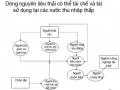 Prices of Recyclable Materials
 -
 Types of Literary Materials That Can Be Used in Teaching Vietnamese History Grade 10 in High Schools
Focusing on the four language skills
In the past, supplementary materials were developed with respect to grammar or pronunciation practice. Meanwhile, the IELTS examination centers on language skills. These are two different aspects (P1) | |
Length and level of difficulty | reading practice texts in books published in China are much longer. For example, an IELTS reading passage usually covers two pages of an A4 paper. Meanwhile, those from Chinese books are three pages in length… I eliminate such materials. (P7) |
Relevance to the IELTS examination | Firstly, in order to select supplementary materials, I have to examine the questions to see if they are relevant to the IELTS test. (P3) |
Quality of the material | First, those books should come from reputable publishers so that precise knowledge is guaranteed. (P2) |
Interesting materials | Thirdly is to consider whether the material captures learner interest or not (P1) |
Topics similar to those in main coursebooks | For example, if the topic of a lesson is “Daily Routine,” I will choose supplementary materials that match this topic. (P3) |
Relevance to real-life situations | Usually, I develop a new topic that is more relevant to real-life situations than the original one because I always focus on critical thinking ability. (P8) |
Materials' content | In terms of IELTS skills, if I find some reading passages suitable and adequate to use as supplementary materials, I will just employ them without designing anything. Especially in reading skills, I cannot create questions by myself. (P11) |
Materials' layout
It rather has a clear and intelligent layout. There are not any redundant languages. There are not many words, and there must be space for students to take notes (P8) | |
Adding more materials | For example, if exercises 1 and 2 can help students can do the main tasks effectively… However, if they still have difficulty in answering the main questions, I will add exercise 3 to help them… (P1) |
Eliminating inappropriate materials | I often shorten the supplementary materials as the supplementary materials at my language center are rather lengthy. For example, an activity is designed to conduct in 30- 45 minutes. However, I only have 15 minutes. As a result, I will leave out unnecessary parts and keep what is most crucial. (P12) |
Modifying existing materials | I often modify supplementary materials with respect to the timelines of events. Those events that both teachers and students know are included to motivate learners (P10) |
Appendix F: Examples of Interview Transcript
Sample Interview 1 (Part 1 - September 18, 2020)
I: When you mention the phrase "supplementary materials", what is the first thing that comes to your mind?
P1: I think these are materials to support the learner's learning. Supplementary materials will depend on the learner's needs. For example, if they lack vocabulary, they will need materials to improve their vocabulary. Or if they are weak in grammar, they will need materials to support this part.
I: How do supplementary materials help your IELTS teaching?
P1: Instead of studying with teachers, students can enrich their knowledge by using supplementary materials that suit their needs. They will find supplementary materials for the areas they are lacking.
I: So do you provide supplementary materials for students or do they have to find them themselves?
P1: Usually I do provide additional materials. However, because the center's time is limited, I only use those supplementary materials in my classroom when I have extra time. Students can study at home and if they have any questions, they can ask the teacher and the teacher is still willing to answer.
I: When you have free time like this, what is your purpose in using supplementary materials?
P1: The purpose of supplementary materials is to help students improve their skills or improve their vocabulary or grammar.
I: In your opinion, what sources should be used as supplementary materials for IELTS teaching?
P1: The source can be books or now online learning sites. I use books from Collin Publishing House such as Vocabulary for IELTS. It seems to be arranged by level and includes 3 books. Recently, I saw a new set called Mindset for IELTS. I have only consulted the lowest level in that set, which is the Foundation book. Most of the materials I provide come from books.
I: Think about supplementary materials in general, when you were a student, what experiences did you have with supplementary materials?
P1: When I was still in school, teachers mainly distributed outlines, but I don't know which book they got those outlines from. In general, there were few supplementary materials when I was in high school or college. Teachers rarely provided them, but only taught closely following the main curriculum.
I: Do your experiences with such materials influence how you select and design supplementary materials for the IELTS classes you teach?
P1: Because in the past, the outlines were often designed to focus on grammar or pronunciation, while IELTS focused on skills. Two completely different areas.
I: Have you ever taken any classes on developing English teaching materials?
P1: Yes. When I was studying for my master's degree, I took a course in curriculum development.
I: How do such courses influence your selection and design of IELTS supplementary materials?
P1: I think it has an impact. Because before, I only saw that if a document was good, it might be good for my students, but after I finished studying it, I saw that the document might be good for me but difficult for my students. That means it is not suitable for the level of the student. Maybe the advanced document is beyond the understanding of the student.
In my opinion, if you want to choose good supplementary materials, you have to first assess what level your students are at. And what they are lacking, then you can find materials that suit your students' needs.
I: Does the center where you teach provide supplementary materials for teachers and students to refer to?
P1: Yes.
I: Do the materials provided by the center meet your selection criteria?
P1: In my opinion, it is both suitable and not suitable. For example, I am teaching a class with an output of 3.0-4.0 IELTS. At my center, they choose the IELTS introduction book so that students can practice reading and vocabulary. But I feel that the reading part is more difficult than the level of the students in my class because the reading in that book is similar to the reading in the real exam. The difficulty of the vocabulary is also the same as the exam. When students do it at home, they feel discouraged because they do not understand many new vocabulary words.
I: For such difficult documents, do you replace them with other documents?
P1: I tell my students that if they want to study at home, they should look up the dictionary to do those exercises to improve their vocabulary. As for the reading, I have not yet found any supplementary materials that are suitable for the class I am teaching.
I: How do external factors such as school policies, teaching traditions among teachers in the center, or student factors affect your choice and design of IELTS?
P1: Actually, I have not met other IELTS teachers because my teaching shift only has one IELTS class. So I have not met my colleagues to consult what supplementary materials they choose for their classes. As for the students, most of them are students so they are quite busy with their studies, so they only do the supplementary materials provided by the center.
I: What are the important factors that you always think about when choosing a supplementary material for your IELTS class?
P1: In my opinion, when choosing a book, I will look at whether the publisher is reputable or not. Whether the material is of good quality or not first. Next, I will look at whether the material is suitable for my students' level or not. The third factor is to see whether the way the material is designed is attractive to students or not. Like the material that my center chose is IELTS introduction published by Macmillan. But it is designed in a very traditional style. Students are bored when looking at it. The images, illustrations, and the way the exercises are arranged to develop students' skills are all in a traditional style, so they are not attractive to students.
I: Do you often design your own supplementary materials for IELTS?
P1: Yes.
I: Can you tell me the processes or criteria for designing supplementary materials for IELTS test preparation?
P1: I think a standard hand-out should have activities arranged from easy to difficult and they should be consistent with each other, and develop a certain skill. For example, in reading skills, skills such as skimming or scanning are developed. The materials should be aimed at the teacher's purpose.
I design hand-outs according to my habits. For example, a topic I taught last week was “The Animal World”. When I design hand-outs, I try to find topics that are similar to what my students have learned and are related to what I have taught. First is the topic. Second is the vocabulary, which must be related to the topic “The Animal World”. If my hand-out focuses on reading skills, I will design the first exercise as easy as possible to attract students’ attention. It can be a game, which is best. Then I will do the vocabulary part, then the main part is the reading part and small exercises related to the reading. And finally, I can give students a question so they can discuss the topic or turn that question into an essay.
I: What do you usually do when the supplementary materials you choose have some limitations according to your own standards?
P1: In case my supplementary materials are too easy, I can improvise by increasing their difficulty. For example, I can make the questions more difficult so that students can think and answer. On the contrary, when the materials are too difficult, I will guide them instead of guiding them through the topic and teaching vocabulary, but if students still have difficulty, I will guide them.