
Meanwhile, Korean tourists spend an average of more than 739 USD per trip (an average of more than 216 USD/day/guest). Of which, room rental accounts for 37%, food and drink accounts for 20%, buying goods and souvenirs accounts for 9%, sightseeing accounts for 8%, and the rest is other expenses.
The increase in tourism spending in recent times is reasonable, because in the period 2014-2018, the economy was stable, people's income increased, the average number of days of stay increased, so tourists were more generous in spending on tourism.
For the package tour to Yen Island, the price is as follows: Children have ticket prices from 280,000 - 350,000 VND/person.
Adults have ticket prices from 450,000 - 560,000/person. The above price includes the following services:
• Transport vessel.
• Light breakfast on board (01 bun and 01 bottle of Sanna mineral water 330ml).
• Lunch at Hon Noi Restaurant .
• Port entrance fee.
• Travel insurance.
• VAT.
* Ticket price does not include:
• Recreational fishing in the waters of Yen Island .
• Pure bird's nest tea steamed with rock sugar (special price for tourists).
• Swimsuit rental service.
• Diving goggles, snorkel.
• Fresh water shower ticket.
• Kayak.
• Personal expenses incurred outside the program.
Tourists who come to visit Yen Island and want to enjoy all the services here have to pay extra. With an additional cost of about 100,000 - 300,000 VND/person, tourists can explore all the services available on Yen Island.
Surveying the opinions of tourists about satisfaction and intention to return when coming to Yen Island, the author obtained the following results:
Table 2.9. Survey of tourist satisfaction when visiting Yen Island
Are you satisfied with Yen Island tourist destination?
Quantity | Percentage | |
Completely dissatisfied | 0 | 0.0 |
Not satisfied | 14 | 14.0 |
Medium | 52 | 52.0 |
Quite satisfied | 26 | 26.0 |
Very satisfied | 8 | 8.0 |
Total | 100 | 100 |
Maybe you are interested!
-

 A Survey of Tourist Satisfaction Levels for
 -
 Evaluating Tourist Satisfaction with the Type of Ecotourism "Garden - River" in Tien Giang.
 -
 Customer Satisfaction Survey Results on International Payment Activities at Anz Bank Vietnam
 -
 Survey Results by Question Content (Based on the Summary Table of Tourist Feedback in the Multiple Choice Questions Section)
 -
 Survey Results on Qlnn Evaluation of Tourist Accommodation Services
(Source: Author's survey results, 2019) The number of tourists who answered at the average level accounted for the highest percentage with 52%, 26% of tourists were satisfied when coming to Yen Island and 8% of tourists were very satisfied. There were 14% of tourists who were not satisfied when traveling to Yen Island. According to tourists, currently, Yen Island tours are mainly for sightseeing and taking photos in the style of "riding a horse to see flowers", so they have not satisfied the needs of tourists. Therefore, when asked about their intention to return to Yen Island, up to 40% of tourists answered that they did not intend to return, 30% said they were unlikely to return, and only 20% said they were likely to return.
come back.
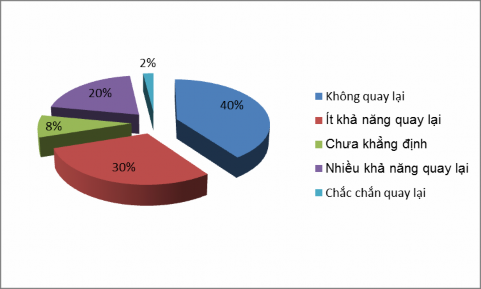
Chart 2.6. Survey of Tourists' Intention to Return to Yen Island
(Source: Author's survey results, 2019)
2.2.2. Results of the assessment of the current economic growth status of the tourism industry associated with promoting progress, social equity and preserving and promoting cultural values in Yen Island
2.2.2.1. The growth of tourism economy contributes to creating jobs, increasing income and reducing poverty for local people.
The province's tourism business activities in recent years have developed strongly, not only in quantity but also in quality: Khanh Hoa's tourism products have been gradually diversified, improved in quality and have high competitiveness compared to other coastal provinces in the Central region. The efficiency of the tourism industry has contributed positively to the overall economic development of the locality, strongly affecting the development of other economic sectors and especially the social efficiency from tourism activities. Tourism development will create more jobs for workers, especially local people. According to statistics of Khanh Hoa province, the number of direct workers in the tourism industry is increasing rapidly: In 2014, the number of workers in the tourism sector was only over 4,000 people, but by 2018, tourism activities were attracting about 65,000 workers, including 28,000 direct workers. Compared with the actual demand from 2015 to present, each year the demand for direct labor increases by
4,000 workers/year.
It is forecasted that by 2020, tourism activities in the province will need an additional 40,000 direct workers, an increase of 1.44 times compared to present. Correspondingly, each year will increase by 10,000 workers.
By 2020, Khanh Hoa province is forecasted to have about 100/140 registered tourism accommodation business projects put into operation, with a corresponding scale of over 30,000 rooms (average 300 rooms/project, mainly 3-5 stars). Thus, with the current coefficient of 1.05 workers/room, the whole province needs about 32,000 more direct workers in hotel accommodation activities, an increase of 1.28 times compared to the current number of workers. Each year, the labor market needs about 8,000 more workers for tourism accommodation activities. For workers in the tourism sector, In the tourism sector, the Department of Tourism forecasts that by 2020, Khanh Hoa will welcome about 8.5 million visitors.
visitors, including about 4 million international visitors. To serve this number of tourists, about 8,000 workers are needed, corresponding to an increase of about 1,300 workers per year. Thus, in the period 2017-2020, in the two sectors of accommodation and tourism alone, each year the local market needs to add about 10,000 workers. In addition, tourism growth also opens up job opportunities, increasing income for workers in a number of related industries (such as production and supply of agricultural products, souvenirs, handicrafts, etc.). When investing in new tourism projects, some businesses have committed to prioritizing the recruitment of local workers, supporting training costs and paying attention to recruiting workers whose land has been recovered. According to the report of the Department of Labor, Invalids and Social Affairs of Khanh Hoa province, in the past time, over 80% of enterprises and tourism businesses have participated and contributed at different levels to social work in the destination localities through activities such as supporting infrastructure construction, contributing to the fund for the poor, the education promotion fund, and sponsoring policy families in Khanh Hoa province.
For direct tourism on Yen Island, the demand for labor to serve tourism activities is limited but still increases every year. The number of workers directly working in the tourism industry on Yen Island in 2018 was 52 people.
In addition, the development of the tourism industry also contributes to businesses participating in and supporting local social activities. Every year, businesses in the province have carried out activities of offering incense and laying wreaths to commemorate and pay tribute to heroes and martyrs who sacrificed their lives in the struggle to protect and build the Fatherland. Through this gesture, they express their deep gratitude to generations of ancestors and those who have contributed to the country. Every year, the Khanh Hoa Provincial Business Association has visited and presented gifts to the Provincial Social Protection Center. Here, the delegation presented 250 gifts, with a total value of more than 30 million VND, and visited and encouraged people in difficult and lonely circumstances.
Surveying 50 businesses in the area with the question "Your business's participation and support for local social activities where the business operates in tourism" , the results show:
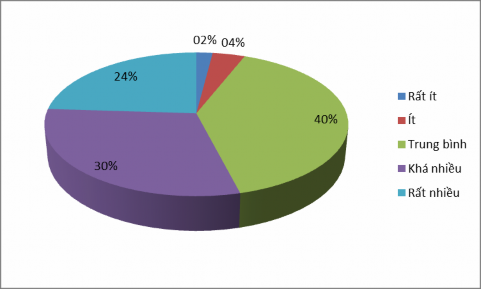
Figure 2.7. Survey of business participation in local social activities
(Source: Author's survey results, 2019) 24% of surveyed tourism businesses said that they participate in and support the province's social activities a lot; 30% of businesses participate in and support quite a lot;
40% participation, average support.
Thus, it can be seen that the contributions of the tourism industry in creating jobs, increasing income and reducing poverty in Khanh Hoa province in general and Yen Island in particular are very large.
2.2.2.2. Current status of attracting community participation and creating opportunities for the community to benefit from tourism development; the impact of tourism growth on social equity and social issues in Yen Island
The development of tourism in Khanh Hoa in general and Yen Island in particular in recent times has always been of interest to State agencies and encouraged local people to participate and benefit together. Hotels, restaurants, entertainment venues serving tourists, travel companies... in Khanh Hoa province are currently mainly private, local or calling for investment from outside the province. By the end of 2018, the whole province had 750 tourist accommodation establishments, 128 travel service businesses, 15,154 food and beverage establishments serving both tourism and meeting the daily needs of the people. All business establishments
The above mentioned tourism establishments are all owned by non-state economic sectors, in which most of the food and beverage establishments are established and organized by local people where the tourism activities take place to serve tourists.
In addition, in recent times, to attract tourists and develop sustainable tourism, Khanh Hoa province has focused on developing community tourism in traditional craft villages such as Lu Cam pottery village; Sedge mat weaving in Ngoc Hoi village; Traditional fishing production in Tri Nguyen, Vung Ngan and Bich Dam craft villages; Bird's nest farming and processing in Bich Dam village and Vinh Nguyen and Vinh Truong wards... In particular, the bird's nest farming village in Yen Island has been invested in by Khanh Hoa Salanganes Nest State-owned Company Limited to build Khanh Hoa Salanganes Nest village in an Asian style combined with tourism, including 10 households maintaining this profession on Yen Island.
However, attracting community participation in tourism activities still has limitations and shortcomings: Consulting local communities before promoting investment projects has not been focused on. According to the survey, more than 55% of people surveyed confirmed that they did not know about the investment policy in advance, and very little or almost never participated in giving opinions on tourism development plans. A few tourism projects have detailed planning or site implementation but investment is slow and the investment process affects the livelihoods and living environment of local communities, causing frustration among people. Households and community groups participating in tourism activities are mostly spontaneous, small-scale, unstable, with little guidance and training from authorities, so economic efficiency is not high and they do not contribute much to diversifying and improving the quality of tourism products. People's awareness of protecting tourism resources and the environment while participating in tourism activities is still limited. Some activities have negative impacts on tourism resources (degrading the quality of hot mineral water sources, causing harm to the aesthetics and ecology of tourist areas...) (Le Chi Cong, 2018).
To ensure security and social safety in tourism in Khanh Hoa province, every year the Provincial People's Committee has issued decisions and plans to implement the annual tourism program. In addition, at each stage, the Khanh Hoa Provincial People's Committee
have issued the project "Protecting national security, maintaining social order and safety in tourism business activities in the province". Therefore, in the past time, tourism activities have not affected too much the security situation, order and social safety in Yen Island in particular and Khanh Hoa province in general. The crime situation and social evils in tourist areas and spots have not had any unusual developments, causing more serious impacts on security and order than normal when there are no tourism activities.
2.2.2.3. Current status of tourism economic growth associated with the work of preserving and promoting local cultural values
Khanh Hoa is not only one of the provinces with many famous beautiful landscapes but also a place with a long-standing cultural tradition, with rare architectural works created by humans such as the legendary Ponagar Tower of over 1,000 years old, Dien Khanh ancient citadel, Communal Houses, Pagodas, Temples of Literature; scientific research facilities such as the Institute of Oceanography, Pasteur Institute Nha Trang associated with the memorial relics of the life and career of the scientist Alexandre Yersin, the bird's nest craft village with more than 700 years on Yen Island with the exploitation and protection of bird's nests very typical... All of these resources and cultural values have created a complex of extremely rich natural and humanistic tourism resources, unique to Khanh Hoa, which is attractive and appealing to tourists. Therefore, in the process of tourism development, Khanh Hoa province always agrees on the policy that economic growth of tourism must always be associated with the work of preserving and promoting local cultural values. However, the province's cultural development in recent years has not been properly promoted. Many traditional cultural values and forms are facing the risk of fading away (Vu Thi Phuong Hau, 2019).
The Science and Technology Council of Khanh Hoa province has just accepted the topic "Culture in the sustainable development of Khanh Hoa province in the period of 2016 - 2025, with a vision to 2030" by author Vu Thi Phuong Hau as the project manager, pointing out that: Currently, 39.2% of people surveyed know about singing Bai Choi, but only 1.3% know about singing Sac Bua, 6.8% know about singing Giao Duyen... Recently, the functional agencies in the province have had specific and practical activities to preserve and promote the values of Bai Choi.
preserving folk art forms such as: organizing competitions, art performances, bringing some forms into schools... Typically, with the folk art of Bài Chòi, some schools have implemented school theater programs and brought positive signals. However, the implementation is still too little, only once a year, not enough for students to understand, love and stick with this traditional art form. Meanwhile, the Bài Chòi artists are mostly old, the next generation is thin, leading to the risk of interruption in the process of transmitting traditional cultural values... Along with that, the system of cultural institutions in the province has not met the needs of creativity and cultural enjoyment of the people; the mobilization of social resources to participate in building and developing culture is still limited... The state of ideological, moral and lifestyle degradation of a part of the population has also negatively affected the cultural environment...
For Yen Island tourism, the preservation and development of culture here also has some very specific activities such as: a festival with the unique colors of Khanh Hoa - the Salanganes Nest Festival was honored to be included in the program of activities of the Sea Festival 2011 for the first time. Compared to other industries, exploiting bird nests is an extremely difficult and dangerous job but brings high economic benefits. Honoring traditional craft villages, the Salanganes Nest Festival has over time also become an indispensable unique cultural feature of Khanh Hoa. This is both the beginning and an important event for tourists as well as local people to better understand and be aware of preserving and protecting the traditional value of the salanganes nest profession of Yen Island in particular and Khanh Hoa province in general.
In addition, to promote and preserve the cultural value of the bird's nest industry, in the tour program of the Yen Island tours that Khanh Hoa State-owned Company Limited of Yen Sao is managing and the travel companies are exploiting, there are always activities of visiting and offering incense at the Yen Sao Temple in Khanh Hoa and learning about the history of the formation and development of the Yen Sao industry. Here, the tour guide will provide tourists with detailed information about the Yen Sao village, the Yen Sao temple as well as the exploitation and protection of the nests of the people on Yen Island from the past to the present.