
Chapter 1: THEORETICAL AND PRACTICAL BASIS OF TOURISM AND EXPLOITATION OF TOURISM POTENTIAL
1.1. Theoretical basis
1.1.1. Some issues about tourism
Maybe you are interested!
-
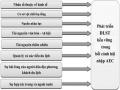
 Theoretical and Practical Basis for Sustainable Tourism Development
 -
 Theoretical Basis and Practical Experience on Sustainable Tourism Development of a Provincial Locality
 -
 Theoretical and practical basis for perfecting the law on intellectual property protection procedures at the People's Court of Vietnam today - 1
 -
 Theoretical and Practical Basis of Tourism and Agricultural Tourism Development
 -
 Theoretical and Practical Basis of Tourism and Humanistic Tourism Resources
1.1.1.1. Concept of tourism
Tourism has existed for a long time in human history. However, in each era, due to different circumstances (time, region), and from different research perspectives, each person has a different understanding of tourism. As a tourism expert has commented, "for tourism, there are as many definitions as there are researchers."
Since the establishment of the International Union of Official Travel Organizations (IUOTO) in 1925 in the Netherlands, the concept of tourism has always been discussed a lot with different concepts. Firstly, tourism is understood as the travel of individuals or groups of people leaving their place of residence for a short period of time to surrounding areas for recreation or medical treatment.
In 1994, the World Tourism Organization (UNWTO) gave the following definition: “Tourism is a set of diverse activities and services related to the temporary movement of people away from their usual residence for leisure, recreation, culture, health... and generally for reasons other than earning a living”. [13]
In June 2005, the Vietnam National Administration of Tourism issued the Tourism Law and introduced the concept: " Tourism is activities related to human trips outside their regular place of residence to meet the needs of sightseeing, learning, entertainment, and relaxation within a certain period of time". [3]
1.1.1.2. Functions of tourism
Tourism has a very diverse and complex relationship with most economic, social, cultural and ecological fields. Therefore, the function of tourism is also considered from many different perspectives.
- Economic function: Tourism is known as the "Golden Goose" because it is a business sector that plays a vital role in the economies of many countries as well as the global economy. Tourism has become a key economic sector in the world with increasing revenue. In 1995, revenue from tourism was 3,400 billion USD, contributing 10.9% of global revenue. In 2008, revenue from tourism in the world reached over 5,500 billion USD. Tourism is generating significant revenue for many countries. In developed tourism countries, foreign currency income from tourism accounts for 20% or more of the country's total foreign currency income.
On a general level, tourism activities have the effect of changing the balance of income and expenditure of the region and the country. International tourists bring foreign currency into the country of tourism, increasing the foreign currency revenue of the destination country. On the contrary, foreign currency expenditure will increase for countries with many people traveling abroad.
On the other hand, the economic function of tourism is related to the role of people as the main productive force of society. It contributes to the recovery of health as well as the ability to work and ensures the reproduction of the expanded labor force with clear economic efficiency. The economic function of tourism is also reflected in tourism services - a unique economic sector, affecting both the industry structure and the labor structure of many economic sectors.
Through the above analysis, we see that tourism has a positive effect on changing the economic face of the region. Many countries in the world consider tourism as a lifeline to revive their ailing and crippled economies.
However, in terms of tourism economics, there are also some negative impacts. The most obvious is local inflation or high commodity prices, sometimes beyond the reach of the economy.
spending by local people, especially those whose income is not related to tourism.
- Cultural, political and social functions : Tourism contributes to satisfying human needs, raising awareness, and broadening knowledge. Tourism also plays a role in preserving, restoring health and enhancing human vitality. To some extent, tourism has the effect of limiting diseases, prolonging life and working capacity for people. On the other hand, the tourism industry also creates more jobs for workers.
Tourism is a factor that enhances communication, expands social relations, and strengthens solidarity among nations. International tourism makes people living in different regions understand and come closer to each other, contributing to strengthening world peace. Thanks to tourism activities, people know how to appreciate the history, culture and traditions of countries, educate hospitality and responsibility towards tourists, create understanding and friendship between nations, and contribute to strengthening world peace.
Tourism also educates love for homeland and country, preserves and promotes national identity. Tourism makes people understand each other, and better understand the history, culture, customs and practices of the nation.
- Ecological function : Tourism creates a bond between people and the environment, bringing people to nature. On that basis, tourism helps people expand their understanding of nature, raise awareness of protecting, restoring and optimizing the surrounding natural environment, because the environment has a direct impact on human health and activities.
Tourism activities also contribute to investment in preserving and enhancing natural landscapes and ecological environments. Revenues from tourism are an important basis for investment in landscape improvement and environmental protection.
1.1.1.3. Types of tourism
a) Classification by purpose of trip
- Sightseeing tourism: Is a form of human activity to raise awareness in all aspects. This type of tourism satisfies the need to see beautiful landscapes, enjoy the joy of understanding people, countries, and products at the place of visit. Sightseeing tourism has a very large cognitive effect, the entertainment effect is invisible or has secondary meaning. The time of stay of visitors for this type is very short, usually lasting an hour, or a few minutes. The subjects of this type of tourism are often people with high culture such as teachers, scientists, historians, journalists, etc. The advantage of this type of tourism is that most of them are not affected by seasonality. This helps to balance the development of tourism.
- Recreational tourism: To change the environment, break away from daily work to free the body, relax the mind, and restore health. During the trip, the need for entertainment is an indispensable need of tourists. Therefore, in addition to the time for sightseeing and resting, it is necessary to have entertainment programs to relax the mind. The more social life develops, the more people's need for entertainment increases. Therefore, to meet this trend, it is necessary to pay attention to expanding the types and technical facilities serving entertainment such as tourist areas, entertainment areas, parks, etc.
- Sports tourism: There are many types of sports in tourism activities such as: hunting, mountain climbing, skiing... This type has two main types of customers: athletes who directly compete in the Olympics, World Cup... (active), fans who watch the competitions and cheer (passive). Sports tourism is one of the types that brings a huge source of income to the locality because it attracts a large number of tourists.
- Religious tourism: Is an old form of tourism. Aims to satisfy the special religious needs of people following different religions. Tourists take trips to worship or perform other religious activities.
- Study and research tourism: This type of tourism is becoming increasingly popular due to the need to combine theory with practice, learning while doing. One of the manifestations of this type is that students of majors such as geography, history, tourism, culture, environment, etc. are organized to go on research and practical learning trips.
- Business tourism: Includes people who attend conferences, seminars, or participate in meetings, negotiations, business, etc. Besides the main purpose of the trip is to go to work, they can take advantage of the time to relax, visit, and sightsee in their free time. In this type of tourism, customers are often those with high spending ability.
- Medical tourism: The main purpose of the trip is to treat and improve the health of tourists. The destinations are often resorts, medical treatment areas, areas with mineral water sources, fresh air, beautiful natural scenery, etc.
- Family visit tourism: This is a type of tourism combined with a trip to visit relatives, friends... This type of tourism is important to countries with many overseas Vietnamese living far from the homeland.
b) General classification of tourism.
- Cultural tourism “ is a form of tourism based on national cultural identity with community participation to preserve and promote traditional cultural values”. (Vietnam Tourism Law, 2005).[3]
Cultural tourism mainly relies on cultural products, traditional festivals, including religious customs... to attract local tourists and tourists from all over the world. For tourists who are interested in researching and exploring local culture and customs, cultural tourism is an opportunity to satisfy their needs. Most cultural tourism activities are closely linked to the locality - where many cultural festivals are preserved and there are unique community activities.
- Ecotourism "is a form of tourism based on nature, associated with local cultural identity with community participation for sustainable development" (Vietnam Tourism Law, 2005) [3]
Ecotourism is an activity that aims to satisfy tourists in learning about natural ecosystems and indigenous cultures. The locations for organizing this type of ecotourism are often areas with relatively pristine ecosystems, beautiful landscapes, and indigenous cultures that are almost completely preserved, such as national parks, biosphere reserves, nature reserves, villages, and cultural hamlets. This type of tourism is currently attracting the attention of most tourists who love nature and culture around the world. Although this type of tourism was born quite late, it has quickly become a promising type of tourism and is developing at a fairly fast pace, especially in reserves and national parks.
c) Classification by territory of operation
- Domestic tourism is all activities serving the needs of domestic tourists to rest, visit tourist attractions within their own country, and pay in local currency. This type of tourism develops in developing and underdeveloped countries. The reason is due to economic conditions.
- International tourism is a type of tourism in which the departure and destination points of tourists are in different countries. During the implementation of this type of tourism, foreign currency transactions will arise. International tourism is divided into:
+ Active international tourism (Inbound): Is a type of international tourism, welcoming and serving foreign tourists to travel, rest, and visit tourist attractions in the country of the tourism supply agency, also known as active tourism to receive guests and earn foreign currency.
+ Passive international tourism (Outbound): Is a type of tourism that serves and organizes domestic tourists to go abroad and costs a certain amount of foreign currency.
The development of this type of tourism is the basis for mutually beneficial cooperation in economic, cultural and social aspects between countries.
d) Classification by tourist location
- Beach tourism is a type of tourism associated with the sea. In addition to swimming, tourists also participate in many sea sports such as: jet skiing, parasailing, scuba diving... This type of tourism has a clear seasonal nature so it is often organized in the hot season with sea water and air temperatures above 20 0 C.
- Mountain tourism is a type of tourism associated with areas with high terrain. Tourist activities in mountainous areas are also very diverse such as: mountain climbing, cave exploration, or simply traveling to mountainous areas to immerse yourself in nature to relax, regain psychological balance...
- Urban tourism with destinations being large cities, famous administrative centers with national and international architectural works, especially large commercial areas for sightseeing and shopping.
- Rural tourism often takes place in rural areas - where the air is fresh, quiet, peaceful and open space. Therefore, this area is often attractive to urban people, especially large cities.
e) Classification by journey time
- Short-term tourism is a type of tourism that usually lasts less than a week, focusing on weekends. This type of tourism is suitable for tourists with little time.
- Long-term tourism is a type of tourism that is often associated with vacations lasting from several weeks to a year in locations far from the visitor's place of residence, both domestically and internationally.
f) Classification by means of tourism
- Bicycle tourism is a type of tourism that uses bicycles as the main means of transport, developed in areas with flat terrain and environmentally friendly people. Bicycle tourism is a popular type in developed countries, tourists can easily penetrate the lives of local residents. By this means, tourists can go to areas where roads are not yet developed.
- Car tourism is a popular and dominant form of tourism compared to other means of transport, cheap, easy to access tourist attractions.
- Air travel is the most advanced form of transportation, fully equipped with amenities, extremely high speed, long distance travel with little time but high price, high risk. However, today the number of tourists traveling by plane is still increasing significantly because it allows tourists to vacation in the most remote countries and regions, taking advantage of the weekend in the shortest travel time.
- Train travel is a popular form of travel for many tourists because of its low cost, allowing them to enjoy the scenery along the way, saving time because they can travel at night, but it is not proactive and must be combined with other means of transport...
- Cruise tourism is a type of tourism that has appeared for a long time. Nowadays, many cruise ships have full facilities such as dining rooms, bedrooms, bars, swimming pools, sports fields, etc., ensuring many types of services. However, this type of tourism is expensive and not suitable for people with health problems.
g) Classification by organizational form
- Organized group travel is a type of tourism with a pre-planned program, each member of the group knows their travel plans.
- Independent travel: Spontaneous travel where tourists organize their own trips according to their own preferences.
h) Classification according to the nature of tourist activities