
3.3 Research model on the impact of RRTK on bank business performance
3.3.1 Research model
The thesis has inherited the approach of (Growe et al., 2014) to build a model to assess the impact of RRTK on bank business performance to solve the research objectives. In addition, the study also relies on the model (Ferrouhi, 2014) to supplement the variables measuring bank RRTK to assess the different impacts of RRTK on bank business performance, in the case of Southeast Asian countries and Vietnam.
Model
In there :
h (2): P t = f(α, P t-1, LIQUIDITY RISKit , CONTROL it , u)
Dependent variables: P it (NIM, ROA, ROE) Independent variables include:
+ Lagged dependent variable: lag (P t-1 ), bank efficiency has mutual impact over time.
+ Liquidity risk variable LIQUIDITY RISK t : includes variables FGAP it (funding gap_ difference between credit and capital mobilization divided by total assets), NLTA it (Credit outstanding/Total assets), NLST it (Credit outstanding/Total short-term mobilized capital).
Control variables
+ Bank size (SIZE it ): Log (total assets)
+ Square of bank size (SIZE it ^2 ) : Log (total assets^2)
+ Liquid asset quality includes variables: LIA ( Liquid assets/total assets), LLR ( Liquidity reserve ratio/Total outstanding loans ) , LADS ( Liquid assets/Total short-term mobilized capital).
+ Capital structure (ETA it ): equity over total assets
+ Credit risk (LLP it ): Credit risk provision/ Net lending
Macro variables:
+ Economic growth (GDP it ): The real change in gross domestic product (GDP) by year for each country.
+ Money supply (M2 it) : increase in money supply of each country each year
+ Inflation (INF it ): CPI change rate for each country of each year
Dummy variables:
D_CRIS: Assessing the impact of RRTK on bank's business performance when there is a crisis factor. In which: α (intercept coefficient), i (bank), t (year), u (model residual)
13
(The impact of liquidity risk on banking performance in Southeast Asian countries)
Variable name | Definition/symbol | Measurement | Previous studies | Research results | Expected | Data Source | |
Dependent variable | |||||||
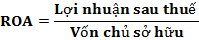
OPERATIONAL EFFICIENCY | ROA |
| Bassey and Moses (2015), Anbar and Alper (2011). Ferrouhi (2014), Arif and Nauman Anees (2012), Growe et al. (2014) | BankScope | |||
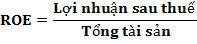
ROE |
| Bassey and Moses (2015), Ajibike and Aremu (2015), Ferrouhi (2014); Arif and Nauman Anees (2012); Growe et al., (2014); Anbar and Alper (2011). | BankScope | ||||
NIM |
| Shen et al . (2009), Naceur and Kandil (2009), Ferrouhi (2014), Arif and Nauman Anees (2012); Growe et al . (2014) | BankScope | ||||
Explanatory variables | |||||||
Variable name | Definition/symbol | Measurement | Previous studies | Result study | Expected | Data Source | |
Liquidity risk (LiquidityRisk) | FGAP funding gap | (Credit balance - capital mobilization) / total assets | Ferrouhi (2014); Lucchetta (2007); Saunders and Cornett (2006), Bunda and Desquilbet (2008); Shen et al. (2009) | (+) | BankScope | ||
NLTA | Credit balance/Total assets | Ayaydin and Karakaya (2014), Ferrouhi (2014), Growe et al . (2014); Anbar and Alper (2011) | (+) | BankScope | |||
NLST | Credit balance/(Customer deposits + short-term financing) | Munteanu (2012), Ferrouhi (2014), Growe et al. (2014); Anbar and Alper (2011); Ayaydin and Karakaya (2014) | (+) | BankScope | |||
Control variables _bank characteristics (Bank racteristics) | |||||||
Performance lag variable | Bank efficiency has an impact on each other over time. | lag (P t-1 ) | Ayaydin and Karakaya (2014); Lee and Hsieh (2013); Perera et al. (2013); Growe et al ., (2014) | (+) | BankScope | ||
Bank size = SIZE | Large scale increases market power, improves technological efficiency with low cost | Log (total assets) | Munteanu (2012), Lee and Hsieh (2013); Anbar and Alper (2011); Ferrouhi (2014); Growe et al . (2014) | (+) | BankScope | ||
Square of bank size = SIZE ^2 | Increasing returns to scale up to a point where efficiency diminishes returns | Log (total assets)^2 | Shen et al. (2009); Growe et al . (2014); Ayaydin and Karakaya (2014); Lee and Kim (2013) | (-/+) | BankScope | ||
LIA | (Liquid assets/ Total assets) | (Cash, CDs, bank deposits) other, short-term investments in the interbank market | Kosmidou et al. (2005), Poposka and Trpkoski (2013), Shen et al. (2009), Ferrouhi (2014); Growe et al . (2014); Anbar and Alper (2011); Ayaydin and Karakaya (2014) | (+) | BankScope | ||

Maybe you are interested!
-
 Model of the Impact of Credit Risk on the Business Performance of Commercial Banks
 -
 The Impact of Risk on Banking Business and on Socio-Economy
 -
 The impact of credit risk on business performance of Vietnamese commercial banks - 1
 -
 The impact of social capital on business performance - a case study of the Textile and Garment industry in the Southern region of Vietnam - 36
 -
 The impact of internal control on business performance of non-institutional enterprises listed on the Vietnamese stock market - 18

Table 1.2: SUMMARY TABLE OF VARIABLES USED IN EMPIRICAL RESEARCH OF MODEL 2
(Total Assets)/(Total Assets) | |||||||
LLR | Liquid Assets Ratio / Total Outstanding Credit | (Cash, CDs, other bank deposits, short-term investments in the interbank market)/ credit balance | Shen et al. (2009); Ferrouhi (2014); Growe et al., (2014); Anbar and Alper (2011); Ayaydin and Karakaya (2014) | (-) | BankScope | ||
LADS | Liquid assets/ Total short-term mobilized capital | Cash, CDs, other bank deposits, short-term investments in the interbank market / Total short-term mobilized funds | Almumani (2013), Ayaydin and Karakaya (2014), Ferrouhi (2014), Anbar and Alper (2011) | (-) | BankScope | ||
Capital Structure (ETA) | When capital levels are high, leverage and risk are lower. | Equity / Total Assets | Shen et al. (2009), Ferrouhi (2014); Growe et al . (2014); Anbar and Alper (2011); Ayaydin and Karakaya (2014) | (+) | BankScope | ||
Credit Risk (LLPT) | Problematic asset quality often reduces bank profitability. | Provision for credit losses/ Net lending | Ayaydin and Karakaya (2014); Shen et al. (2009); Trujillo-Ponce (2013); Growe et al. (2014) | (-) | BankScope | ||
Macro variables | |||||||
Economic growth (GDP) | During growth periods, banks reduce interest rates so demand for loans is high which allows banks to charge more for their services. | Real change in gross domestic product (GDP) year over year for each country. Log ((GDPt-GDPt-1)/ GDPt-1) | Shen et al. (2009); Anbar and Alper (2011); Ferrouhi (2014); Growe et al. (2014); Ayaydin and Karakaya (2014), | (+) | ADB | ||
M2 | Money supply | Log (Money Supply) | Dietrich and Wanzenried (2014) | (+) | ADB | ||
Inflation (INF) | With unpredictable inflation, costs can increase faster than revenues and profits will decrease | CPI change rate for each country for each year | Ayaydin and Karakaya ( 2014); Shen et al. (2009); Sufian and Chong (2008); Ferrouhi (2014); Growe and (2014); Anbar and Alper (2011) | (-) | ADB | ||
Dummy variable | |||||||
D_CRIS | Assessing the impact of RRTK on bank's business performance when there is a crisis factor | 1: crisis period (2008 -2010) 0: pre-crisis period (2005 - 2007) | Ferrouhi (2014), Sufian and Chong (2008); Growe et al . (2014); Ayaydin and Karakaya (2014), | ||||
Note: (-) negative correlation, (+) positive correlation, (-/+) nonlinear Source: Author's own synthesis
CHAPTER 4: RESEARCH RESULTS
4.1 Factors affecting RRTK
4.1.1 Descriptive statistics
Table 2.1: Descriptive statistics of variables, case study of Southeast Asian countries Table 4.2: Descriptive statistics of variables, case study of Vietnam
4.1.2 Correlation coefficient analysis
Table 4.3: Correlation between independent variables in the model of factors affecting bank liquidity, case study of Southeast Asian countries.
Table 4.4: Correlation between independent variables in the model of factors affecting bank liquidity risk, case study of Vietnam
4.1.3 Analysis and discussion of results, case studies of Southeast Asian countries.
To evaluate the factors affecting bank risk, the study used different regressions (Table 4.5). The study used F, LM, Hausman tests to select the appropriate model for analysis. The VIF ratios were all less than 20, so the model did not have multicollinearity. The P-values of F and LM tests were all less than 5% (<0.05), there was evidence to reject the hypotheses. The Hausman test showed that the p-value (Prob > F) of the model was less than 0.05 (Table 4.5), which showed that the FEM model was more suitable than the REM. The Wooldridge and Wald tests had a P-value (<0.05) showing that there was heteroscedasticity and autocorrelation in the FEM, which made the results of the regression coefficients ineffective. The author continues to use the SGMM method to estimate the model, this method will eliminate the problems of heteroscedasticity, autocorrelation or endogeneity, so the estimation results will be effective and stable. The final analysis results are based on the regression results according to the SGMM method. Sargan Test is used to test the over-identifying properties of the instrumental variables. The results show that the p-value coefficients are all greater than 0.05, concluding that the instrumental variables used in the SGMM model satisfy the over-identifying properties. In addition, the second-order autocorrelation test gives p-values greater than 0.05, concluding that the residuals of the SGMM model do not have the phenomenon of second-order autocorrelation. The instrumental variables used in the model all satisfy the two proposed tests. Thus, using the SGMM model with the lagged dependent variable as the instrumental variable has solved the endogeneity phenomenon in the model. The results found in the model are robust and fully analytical (Table 4.5).
16
Table 4.5 Factors affecting bank liquidity risk, case study of Southeast Asian countries (Appendix)
Dependent variable: Liquidity risk (FGAP, NLTA, NLST). Independent variables: SIZE - bank size; SIZE^2 - square of bank size; LIA - liquid asset quality; LLR - liquid asset quality, LADS - liquid asset quality; ETA - capital; LLP - credit risk; NIM - marginal interest income. Macroeconomic variables: GDP - GDP growth, M2 - money supply, INFL - inflation, d_cris - 2008 crisis dummy variable. Research period 2004-2016, Estimation methods OSL, FEM, REM and SGMM
Regression model (1): LIQUIDITYRISK t = f(α, LIQUIDITYRISK t-1, SIZE it , SIZE it ^2, LIA it , LLR it, LADS it ETA it , LLP it , NIM it GDP it , INF it , M2 it ,D_CRIS t , u)
Model | OLS | FEM | REM | SGMM | OLS | FEM | REM | SGMM | OLS | FEM | REM | SGMM |
Variable | FGAP | NLTA | NLST | |||||||||
L.fgap | 0.787*** | 0.518*** | 0.761*** | 0.396*** | ||||||||
[53.92] | [21.73] | [48.50] | [11.97] | |||||||||
L.nlta | 0.800*** | 0.551*** | 0.759*** | 0.374*** | ||||||||
[69.28] | [29.74] | [59.35] | [9.16] | |||||||||
L.nlst | 0.758*** | 0.378*** | 0.758*** | 0.253*** | ||||||||
[62.94] | [17.46] | [62.94] | [106.35] | |||||||||
size | 0.00455 | -0.0491*** | 0.00483 | -0.0276** | 0.521** | -2.487** | 0.494* | -2.375** | 2,677** | -0.815 | 2,677** | -12.18*** |
[1.38] | [-3.63] | [1.35] | [-2.10] | [2.05] | [-2.46] | [1.73] | [-2.54] | [2.21] | [-0.17] | [2.21] | [-9.53] | |
size2 | 0.0000966 | 0.00426*** | 0.0000805 | 0.00242** | 0.0713*** | 0.169** | 0.0682** | 0.164** | 0.261** | 0.0468 | 0.261** | 0.829*** |
[0.29] | [4.06] | [0.23] | [2.29] | [-2.75] | [2.15] | [-2.47] | [2.28] | [-2.10] | [0.13] | [-2.10] | [8.42] | |
fly | -0.00260*** | -0.00637*** | -0.00302*** | -0.0156*** | -0.0189 | -0.0699 | -0.0122 | -0.497*** | -0.549** | -0.528 | -0.549** | -0.975*** |
[3.97] | [5.97] | [4.32] | [15.09] | [-0.38] | [0.88] | [-0.22] | [5.32] | [2.31] | [1.41] | [2.31] | [5.65] | |
llr | 0.00000764*** | 0.00000787*** | 0.00000805*** | -0.0000116 | 0.00103*** | 0.00105*** | 0.00110*** | - 0.00121*** | 0.00158** | 0.00111 | 0.00158** | 0.00197*** |
[4.27] | [3.73] | [4.42] | [11.11] | [7.59] | [6.69] | [7.86] | [5.99] | [2.44] | [1.50] | [2.44] | [8.58] | |
lads | -0.000956*** | -0.00117*** | -0.000992*** | -0.00150 | -0.108*** | -0.130*** | -0.116*** | -0.154*** | -0.209*** | -0.0512 | -0.209*** | 0.0330 |
[-9.04] | [-8.53] | [-9.04] | [-13.43] | [-13.24] | [-12.81] | [-13.46] | [-14.75] | [-5.84] | [-1.08] | [-5.84] | [-3.43] | |
eta | 0.00165*** | 0.00228*** | 0.00184*** | 0.00955*** | -0.0387* | -0.194*** | -0.0532** | 0.266*** | 0.433*** | -0.315 | 0.433*** | 1,942*** |
[5.15] | [3.76] | [5.29] | [12.10] | [-1.65] | [-4.30] | [-1.99] | [4.33] | [3.71] | [-1.48] | [3.71] | [20.64] | |
llp | -0.000505*** | -0.000543*** | -0.000533*** | -0.00102*** | -0.0579*** | -0.0616*** | -0.0620*** | -0.108*** | - 0.0927*** | -0.0830*** | - 0.0927*** | -0.156*** |
[-7.99] | [-6.57] | [-8.16] | [-12.50] | [-12.11] | [-10.04] | [-12.37] | [-9.39] | [-4.19] | [-2.88] | [-4.19] | [-12.72] | |
nim | 0.00543*** | 0.0122*** | 0.00643*** | 0.00236*** | 0.443*** | 0.797*** | 0.554*** | 0.188*** | 0.489 | 1,484** | 0.489 | 0.676*** |
[5.69] | [6.12] | [6.22] | [1.14] | [6.04] | [5.28] | [6.69] | [0.95] | [1.47] | [2.17] | [1.47] | [3.50] | |
GDP | -0.000026 | -0.0000797 | -0.0000331 | 0.0000204 | -0.000921 | -0.00372 | -0.00132 | -0.00499 | 0.013 | -0.000881 | 0.013 | 0.00983*** |
[-0.46] | [-1.49] | [-0.60] | [-0.76] | [-0.21] | [-0.93] | [-0.31] | [-1.96] | [0.63] | [-0.05] | [0.63] | [3.77] | |
infl
0.000612 | -0.00159** | 0.000313 | -0.000292*** | 0.0349 | -0.0822 | 0.0128 | -0.0404** | -0.0143 | -0.158 | -0.0143 | 0.144*** | |
[1.05] | [-2.24] | [0.52] | [-0.76] | [0.78] | [-1.55] | [0.27] | [0.98] | [-0.07] | [-0.64] | [-0.07] | [2.88] | |
m2 | -0.00000296 | -5.06E-06 | -0.00000308 | -0.00000322*** | -0.000167 | -0.000249 | -0.000231 | -0.0000481 | - 0.0000777 | -0.000799 | -7.8E-05 | -0.0000712 |
[-1.57] | [-1.48] | [-1.53] | [-2.60] | [-1.15] | [-0.97] | [-1.43] | [0.41] | [-0.11] | [-0.67] | [-0.11] | [-0.35] | |
d_cris | 0.0130** | 0.0315*** | 0.0140*** | 0.0317*** | 0.986** | 2,203*** | 1,106*** | 1,646*** | 4.103** | 4,797*** | 4.103** | 0.789 |
[2.55] | [6.00] | [2.76] | [7.96] | [2.53] | [5.62] | [2.88] | [5.57] | [2.21] | [2.65] | [2.21] | [1.48] | |
_cons | -0.125*** | -0.146*** | -0.144*** | -0.267*** | 11.25*** | 31.53*** | 12.91*** | 38.14*** | 5,045 | 46.61*** | 5,045 | 55.03*** |
[-8.81] | [-5.25] | [-9.42] | [-10.21] | [10.81] | [14.76] | [11.28] | [13.12] | [1.20] | [5.04] | [1.20] | [20.09] | |
N | 1372 | 1372 | 1372 | 1194 | 1372 | 1372 | 1372 | 1194 | 1372 | 1372 | 1372 | 1194 |
R-sq | 0.852 | 0.519 | 0.907 | 0.646 | 0.8 | 0.23 | ||||||
Mean VIF | 3.6 | 3.59 | 3.47 | |||||||||
White's test | Ho: homoskedasticity chi2(116) = 240.50 Prob > chi2 = 0.0000 | Ho: homoskedasticity chi2(116) = 345.34 Prob > chi2 = 0.0000 | Ho: homoskedasticity chi2(116) = 1044.71 Prob > chi2 = 0.0000 | |||||||||
F-test | F test that all u_i=0: F(151, 1207) = 2.59 Prob > F = 0.0000 | F test that all u_i=0: F(151, 1207) = 3.09 Prob > F = 0.0000 | F test that all u_i=0: F(151, 1207) = 3.37 Prob > F = 0.0000 | |||||||||
Hausman test | Ho: difference in coefficients not systematic chi2(11) = (bB)'[(V_b-V_B)^(-1)](bB) = 210.78 Prob > chi2 = 0.0000 | Ho: difference in coefficients not systematic chi2(11) = (bB)'[(V_b-V_B)^(-1)](bB) = 293.90 Prob > chi2 = 0.0000 | Ho: difference in coefficients not systematic chi2(11) = (bB)'[(V_b-V_B)^(-1)](bB) = 456.56 Prob > chi2 = 0.0000 | |||||||||
Bresh- Pagan test | Test: Var(u) = 0 chibar2(01) = 3.45 Prob > chibar2 = 0.0316 | Test: Var(u) = 0 chibar2(01) = 8.28 Prob > chibar2 = 0.0020 | Test: Var(u) = 0 chibar2(01) = 0.00 Prob > chibar2 = 0.0000 | |||||||||
Sargan test | H0: overidentifying restrictions are valid chi2(65) = 86.63543 Prob > chi2 = 0.0378 | H0: overidentifying restrictions are valid chi2(65) = 87.68562 Prob > chi2 = 0.0336 | H0: overidentifying restrictions are valid chi2(65) = 87.1709 Prob > chi2 = 0.0347 | |||||||||
Arellano- Bond test | H0: no autocorrelation Prob > z = 0.7165 | H0: no autocorrelation Prob > z = 0.9076 | H0: no autocorrelation Prob > z = 0.2926 | |||||||||
Turning Point Size (%) | 299.60 | 1395.28 | 1550.29 | |||||||||
Note: The symbols (***), (**), (*) indicate statistical significance levels of 1%, 5%, 10% respectively. Turning points are calculated according to the formula similar to Ouyang and Rajan (2010) used to find the extreme threshold.
Table 4.6 : Factors affecting bank liquidity, case study of Southeast Asian countries
Variable name
Expected | Reality | ||||||
OLS | SGMM | ||||||
FGAP | NLTA | NLST | FGAP | NLTA | NLST | ||
liquidity risk t-1 | (+) | (+) | (+) | (+) | (+) | (+) | (+) |
SIZE | (-) | (+) | (-) | (-) | (-) | ||
SIZE ^2 | (+/-) | (-) | (-) | (+) | (+) | (+) | |
LIA | (-) | (-) | (-) | (-) | (-) | (-) | (-) |
LLR | (-) | (-) | (-) | (+) | |||
LADS | (-) | (+) | (+) | (-) | |||
ETA | (+) | (+) | (-) | (+) | (+) | (+) | (+) |
LLP | (+) | (-) | (-) | (-) | (-) | (-) | (-) |
NIM | (+) | (+) | (+) | (+) | (+) | (+) | |
GDP | (+) | (+) | |||||
M2 | (+) | (-) | |||||
INFL | (+) | (+) | (-) | (-) | (+) | ||
D_CRIS | (+) | (-) | (+) | (+) | |||
Source: Author's synthesis from research results
The research results of the above model show many remarkable contents. The impact of factors such as bank size, liquidity delay, quality of liquid assets, bank capital, interest income margin, financial crisis on liquidity risk, the case of Southeast Asian countries is consistent with the author's expectations. The impact of the bank size variable on liquidity risk is nonlinear and U-shaped, which shows that bank size is a buffer to limit risks when banks fall into liquidity shocks, but when the size increases to a certain point, it will increase liquidity risk. In addition, the study shows that banks face higher liquidity risk during the financial crisis.
4.1.4 Analysis and discussion of results, Vietnam case study
To answer the research question of which factors affect the RRTK of banks in the case study of Vietnam, the topic has implemented regression models from the data set of 26 Vietnamese banks in the period 2004-2016 with the following results:
Table 3: Factors affecting bank risk, case study of Vietnam (Appendix).
19
Dependent variable: Liquidity risk (FGAP, NLTA, NLST). Independent variables: SIZE - bank size; SIZE^2 - square of bank size; LIA - liquid asset quality; LLR - liquid asset quality, LADS - liquid asset quality; ETA - capital; LLP - credit risk; NIM - marginal interest income. Macroeconomic variables: GDP - GDP growth, M2 - money supply, INFL - inflation, d_cris - 2008 crisis dummy variable. Research period 2004-2016, Estimation methods OSL, FEM, REM and SGMM
Regression model (1): LIQUIDITYRISK t = f(α, LIQUIDITYRISK t-1, SIZE it , SIZE it ^2, LIA it , LLR it, LADS it ETA it , LLP it , NIM it GDP it , INF it , M2 it , D_CRIS t , u)
Model | OLS | FEM | REM | SGMM | OLS | FEM | REM | SGMM | OLS | FEM | REM | SGMM |
Variable | FGAP | NLTA | NLST | |||||||||
L.fgap | 0.396*** | 0.152*** | 0.351*** | 0.122 ** | ||||||||
[8.82] | [3.00] | [7.79] | [-1.34] | |||||||||
L.nlta | 0.444*** | 0.208*** | 0.410*** | -0.0107 | ||||||||
[9.72] | [3.98] | [8.99] | [-0.12] | |||||||||
L.nlst | 0.556*** | 0.281*** | 0.556*** | 0.109 | ||||||||
[12.31] | [4.56] | [12.31] | [0.84] | |||||||||
size | 0.369** | 0.291 | 0.388** | -0.306 | 37.38** | 27.95 | 38.04** | 74.91 | 53.89** | 63.42** | 53.89** | 76.26 |
[2.23] | [1.64] | [2.33] | [-0.94] | [2.35] | [1.62] | [2.38] | [1.51] | [2.45] | [2.46] | [2.45] | [0.69] | |
size2 | 1.175*** | 1.254*** | 1.254*** | 1,669 | 107.6*** | 116.2*** | 113.5*** | 152.6 | 95.91*** | 110.9** | 95.91*** | 50.23 |
[4.41] | [3.91] | [4.72] | [2.65] | [4.16] | [3.70] | [4.40] | [3.26] | [2.79] | [2.38] | [2.79] | [0.41] | |
fly | 0.00718*** | 0.00780*** | 0.00713*** | 0.0137 | 0.069 | -0.0962 | 0.029 | 0.533 | 0.334** | 0.441** | 0.334** | -1.497*** |
[6.27] | [5.48] | [5.96] | [6.68] | [0.67] | [-0.71] | [0.27] | [1.32] | [2.32] | [2.18] | [2.32] | [2.98] | |
llr | 0.000710*** | 0.000827*** | 0.000758*** | -0.000707*** | 0.0679*** | 0.0785*** | 0.0711*** | -0.121*** | 0.0727*** | 0.0965*** | 0.0727*** | -0.0922*** |
[5.66] | [5.87] | [6.07] | [3.85] | [5.64] | [5.68] | [5.92] | [3.56] | [4.48] | [4.75] | [4.48] | [1.18] | |
lads | 0.00227 | -0.000465 | 0.00148 | 0.00875 | 0.223 | -0.1 | 0.144 | 1,199 | 0.389 | 0.299 | 0.389 | 1,510*** |
[0.62] | [-0.09] | [0.38] | [3.72] | [0.63] | [-0.21] | [0.39] | [1.27] | [0.80] | [0.42] | [0.80] | [1.94] | |
eta | 0.0105 | -0.00719 | 0.00614 | 0.00787*** | 0.651 | -0.845 | 0.344 | 0.464*** | -0.0433 | -1.533 | -0.0433 | -0.958 |
[1.65] | [-0.94] | [0.89] | [-1.27] | [1.05] | [-1.13] | [0.52] | [0.36] | [-0.05] | [-1.37] | [-0.05] | [-0.39] | |
llp | -0.00742*** | -0.00793*** | -0.00787*** | -0.00644*** | -0.700*** | -0.752*** | -0.731*** | -1.097*** | -0.750*** | -0.913*** | -0.750*** | -0.808 |
[-7.44] | [-6.90] | [-7.86] | [-3.94] | [-7.24] | [-6.65] | [-7.53] | [-3.53] | [-5.82] | [-5.50] | [-5.82] | [-1.14] | |
nim | 0.00574 | 0.0149*** | 0.00733 | 0.0161*** | 0.419 | 1,321*** | 0.547 | 0.755 | 0.512 | 1,260* | 0.512 | 3.129*** |
[1.32] | [3.14] | [1.63] | [4.43] | [1.00] | [2.84] | [1.26] | [0.73] | [0.89] | [1.83] | [0.89] | [1.62] | |
GDP | 0.0058 | 0.0123* | 0.00545 | 0.0293*** | 0.64 | 1,198* | 0.619 | 2,424 | 0.913 | 1.15 | 0.913 | 2,786 |
Table 4.7: Factors affecting bank liquidity risk, Vietnam case study (Appendix)
[0.73] | [1.72] | [0.72] | [5.04] | [0.83] | [1.72] | [0.84] | [1.64] | [0.87] | [1.12] | [0.87] | [1.61] | |
infl | -0.000118 | -0.000101 | -0.000187 | 0.000494 | 0.00353 | -0.00465 | -0.00214 | -0.0366 | 0.105 | 0.0858 | 0.105 | 0.14 |
[-0.15] | [-0.16] | [-0.26] | [1.23] | [0.05] | [-0.07] | [-0.03] | [-0.70] | [1.04] | [0.91] | [1.04] | [1.58] | |
m2 | -2.92E-06 | -0.00000222 | -0.0000026 | - 0.00000332*** | -0.00027 | -0.00022 | -0.00025 | - 0.000727** | -0.00058 | -0.000503 | -0.00058 | - 0.000744*** |
[-0.93] | [-0.84] | [-0.88] | [-2.80] | [-0.88] | [-0.86] | [-0.86] | [-2.40] | [-1.38] | [-1.31] | [-1.38] | [-2.87] | |
d_cris | -0.00924 | -0.00714 | -0.00928 | -0.00716 | -0.158 | -0.451 | -0.243 | 0.0788 | 1,423 | 1.74 | 1,423 | 2,769 |
[-0.72] | [-0.64] | [-0.76] | [-0.77] | [-0.13] | [-0.42] | [-0.20] | [0.05] | [0.83] | [1.07] | [0.83] | [1.09] | |
_cons | -0.217*** | -0.320*** | -0.220*** | -0.552*** | 35.38*** | 50.21*** | 38.68*** | 43.47*** | 28.13*** | 46.12*** | 28.13*** | 21.33* |
[-3.35] | [-4.52] | [-3.41] | [-9.40] | [5.46] | [7.49] | [6.01] | [3.98] | [3.17] | [4.56] | [3.17] | [1.68] | |
N | 157 | 157 | 157 | 130 | 157 | 157 | 157 | 130 | 157 | 157 | 157 | 130 |
R-sq | 0.913 | 0.804 | 0.908 | 0.795 | 0.899 | 0.682 | ||||||
Mean VIF | 4.15 | 4.6 | 5.8 | |||||||||
White's test | Ho: homoskedasticity chi2(102) = 134.04 Prob > chi2 = 0.0183 | Ho: homoskedasticity chi2(102) = 134.52 Prob > chi2 = 0.0171 | Ho: homoskedasticity chi2(102) = 121.85 Prob > chi2 = 0.0877 | |||||||||
F-test | F test that all u_i=0: F(24, 119) = 4.47 Prob > F = 0.0000 | F test that all u_i=0: F(24, 119) = 4.27 Prob > F = 0.0000 | F test that all u_i=0: F(24, 119) = 2.86 Prob > F = 0.0001 | |||||||||
Hausman test | Ho: difference in coefficients not systematic chi2(12) = (bB)'[(V_b-V_B)^(-1)](bB) = 80.75 Prob > chi2 = 0.0000 | Ho: difference in coefficients not systematic chi2(12) = (bB)'[(V_b-V_B)^(-1)](bB) = 22.03 Prob > chi2 = 0.0372 | Ho: difference in coefficients not systematic chi2(11) = (bB)'[(V_b-V_B)^(-1)](bB) = 211 Prob > chi2 = 0.0000 | |||||||||
Bresh- Pagan test | Test: Var(u) = 0 chibar2(01) = 6.57 Prob > chibar2 = 0.0052 | Test: Var(u) = 0 chibar2(01) = 7.5 Prob > chibar2 = 0.0031 | Test: Var(u) = 0 chibar2(01) = 0.00 Prob > chibar2 = 1.000 | |||||||||
Sargan test | H0: overidentifying restrictions are valid chi2(57) = 12,071 Prob > chi2 = 1.0000 | H0: overidentifying restrictions are valid chi2(57) = 15,141 Prob > chi2 = 1.0000 | H0: overidentifying restrictions are valid chi2(57) = 11,682 Prob > chi2 = 1.0000 | |||||||||
Note: The symbols (***), (**), (*) indicate statistical significance levels of 1%, 5%, 10% respectively.
Considering both models of factors affecting RRTK, case studies of Southeast Asian countries and Vietnam follow table 4.8 below:
Table 4.8 : Factors affecting RRTK, case studies of Southeast Asian countries and Vietnam.
VARIABLE NAME
EXPECTED | REALITY | ||||||
SOUTHEAST ASIA | VIETNAM | ||||||
FGAP | NLTA | NLST | FGAP | NLTA | NLST | ||
lag (liquidity t-1 ) | (+) | (+) | (+) | (+) | (+) | ||
SIZE | (-) | (-) | (-) | (-) | |||
SIZE ^2 | (+/-) | (+) | (+) | (+) | |||
LIA | (-) | (-) | (-) | (-) | (-) | ||
LLR | (-) | (+) | (-) | (-) | (-) | ||
LADS | (-) | (-) | (+) | ||||
ETA | (+) | (+) | (+) | (+) | (+) | ||
LLP | (+) | (-) | (-) | (-) | (-) | ||
NIM | (+) | (+) | (+) | (+) | (+) | (+) | |
GDP | (+) | (+) | |||||
M2 | (+) | (-) | (-) | (-) | (-) | ||
INF | (+) | (-) | (-) | (+) | (-) | (-) | (-) |
D_CRIS | (+/-) | (+) | (+) | ||||
Source: author compiled from research results
In summary, considering both models of factors affecting RRTK, case studies of Southeast Asian countries and Vietnam, the regression results in the Southeast Asian case study model show that most of the explanatory variables in the regression models are statistically more significant than in the case of Vietnam. In particular, the main explanatory variables related to the lagged variable RRTK, bank size, quality of liquid assets, equity over total assets, credit risk, net interest income, GDP growth, money supply, and inflation are all statistically significant in many models. This is a remarkable result in empirical studies. This may be achieved because the topic has used different variable measurement methods and estimation methods, and therefore through the regression models, the topic can give some clear results on the expected correlation. Particularly for
In the case of Vietnam, the research results also did not find statistically significant evidence on the impact of bank size, GDP growth and financial crisis on RRTK.
4.2 Impact of RRTK on banking business performance
4.2.1 Descriptive statistics
Table 4.9: Descriptive statistics of variables, case studies of Southeast Asian countries in the model of RRTK impact on banking business performance.
Table 4.10: Descriptive statistics of variables, case study of Vietnam in the model of RRTK impact on banking business performance
4.2.2 Correlation coefficient analysis
Table 4.11: Correlation between independent variables in the model of RRTK impact on bank performance, case study of Southeast Asian countries.
Table 4.12: Correlation between independent variables in the model of impact of RRTK on bank performance, case study of Vietnam
4.2.3 Analysis and discussion of case study results of Southeast Asian countries
To assess the impact of liquidity risk on bank performance, the study used 12 different estimation models implemented for 3 scales of ROA, ROE and NIM, in which each model was estimated by OLS, REM, FEM, SGMM. Liquidity risk was implemented with three scales of Difference between credit and capital mobilization divided by total assets, Outstanding credit/Total assets, Outstanding credit/Total short-term capital mobilization. The results of the analysis of the impact of liquidity risk on bank performance, case study of Southeast Asian countries (Table 4.13) are as follows:
Table 4.13. Results of the impact of RRTK on bank business performance, case study of Southeast Asian countries.
Dependent variable: P (NIM, ROA, ROE) measures the efficiency of banking operations
Independent variables: P t-1 – lagged variable of banking business performance; LIQUIDITYRISK - Liquidity risk (FGAP, NLTA, NLST), CONTROL_Control variables include: SIZE - bank size; SIZE^2 – square of bank size; LIA- liquid asset quality; LLR - liquid asset quality, LADS - liquid asset quality; ETA – capital; LLP- credit risk; NIM - Marginal interest income. Macroeconomic variables: GDP - GDP growth, M2 - money supply, INFL - inflation, d_cris - 2008 crisis dummy variable. Research period 2004-2016, Estimation method
OSL, FEM, REM and SGMM. Regression model (2): P t = f(α, P t-1, LIQUIDITY RISK it , CONTROL it , u)
Model | OLS | FEM | REM | SGMM | OLS | FEM | REM | SGMM | OLS | FEM | REM | SGMM |
Variable | ROA | ROE | NIM | |||||||||
L.roa | 0.433*** | 0.101*** | 0.433*** | 0.114*** | ||||||||
[20.45] | [4.26] | [20.40] | [15.13] | |||||||||
L.roe | 0.115*** | 0.0169 | 0.115*** | 0.0394*** | ||||||||
[5.14] | [0.72] | [5.14] | [49.70] | |||||||||
L.nim | 0.836*** | 0.546*** | 0.806*** | 0.668*** | ||||||||
[80.34] | [27.93] | [69.44] | [32.38] | |||||||||
fgap | 3.391*** | 1,187 | 3.394*** | 1,392*** | 20.75 | -6.217 | 20.75 | -4.768 | 0.108 | 0.438 | 0.27 | 0.185 |
[4.27] | [1.46] | [4.28] | [5.48] | [1.37] | [-0.35] | [1.37] | [-1.10] | [0.21] | [0.80] | [0.52] | [0.68] | |
nlst | 0.00129 | -0.00161 | 0.00129 | 0.000841*** | -0.00797 | -0.000242 | -0.00797 | 0.0230*** | -0.000863* | -0.00196** | -0.00113** | 0.00106*** |
[1.61] | [-1.19] | [1.61] | [-3.39] | [-0.52] | [-0.01] | [-0.52] | [-4.08] | [-1.65] | [-2.14] | [-1.97] | [-4.21] | |
nlta | -0.0299*** | -0.0027 | -0.0299*** | -0.000409*** | -0.0891 | 0.0836 | -0.0891 | 0.0860* | 0.0101* | 0.0281*** | 0.0127** | 0.0299*** |
[-3.45] | [-0.27] | [-3.46] | [-0.11] | [-0.54] | [0.38] | [-0.54] | [-1.72] | [1.79] | [4.15] | [2.17] | [8.54] | |
fly | 0.0484*** | 0.0931*** | 0.0485*** | 0.0977*** | 0.508* | -0.135 | 0.508* | 0.510*** | 0.00864 | 0.0129 | 0.00796 | 0.0114*** |
[3.38] | [4.78] | [3.39] | [8.47] | [1.84] | [-0.32] | [1.84] | [-7.35] | [0.92] | [0.99] | [0.80] | [-1.01] | |
llr | -0.0000909*** | -0.000147*** | -0.0000909*** | -0.000138*** | -0.00140** | -0.001 | -0.00140** | -0.000291** | 0.00000555 | -1.62E-05 | 6.26E-07 | -0.0000102** |
[-2.83] | [-4.18] | [-2.83] | [-9.27] | [-2.25] | [-1.29] | [-2.25] | [-2.43] | [0.26] | [-0.69] | [0.03] | [1.29] | |
lads | 0.00351* | 0.00557** | 0.00352* | -0.00657*** | 0.0742* | 0.0505 | 0.0742* | 0.00984 | 0.00148 | 0.00145 | 0.00151 | -0.00112 |
[1.74] | [2.29] | [1.74] | [11.92] | [1.90] | [0.94] | [1.90] | [0.77] | [1.11] | [0.89] | [1.07] | [-1.34] | |
size | 0.308*** | -0.619*** | 0.309*** | 0.0696*** | 4,620*** | 2,874 | 4,620*** | 5.214*** | -0.0487 | -0.0281 | -0.0292 | 0.312*** |
[5.11] | [-2.76] | [5.11] | [-0.73] | [4.00] | [0.58] | [4.00] | [8.27] | [-1.24] | [-0.19] | [-0.67] | [2.92] | |
size2 | -0.0304*** | 0.0391** | -0.0304*** | -0.0177*** | -0.409*** | -0.285 | -0.409*** | -0.471*** | 0.0130*** | 0.00804 | 0.0110*** | -0.0167** |
[-4.96] | [2.24] | [-4.97] | [-0.24] | [-3.50] | [-0.74] | [-3.50] | [-9.55] | [3.28] | [0.69] | [2.61] | [-2.02] | |
eta | 0.0254*** | 0.0229* | 0.0254*** | 0.00425*** | -0.137 | 0.443* | -0.137 | 1,041*** | 0.0111* | 0.0253*** | 0.0148** | 0.0589*** |
[2.78] | [1.96] | [2.78] | [-0.65] | [-0.79] | [1.72] | [-0.79] | [22.19] | [1.87] | [3.23] | [2.39] | [9.68] | |
Table 4.13. Results of the impact of RRTK on banking business performance, case study of Southeast Asian countries (Appendix)