
4
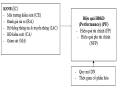
Groups of factors and implementation of research based on the K SNB framework according to COSO perspective. According to this perspective, the elements constituting the K SNB of listed enterprises on the Vietnamese stock market are divided into 5 components/contents of K SNB; and using the group of financial and non-financial indicators belonging to the HQ H DKD.
- Scope of Thesis Research:
+ Regarding space: The thesis was conducted at listed companies on the Vietnam Stock Exchange, divided by industry and territory. According to statistics in December 2021, there were 731 listed companies on the Vietnam Stock Exchange. Of which, the number of listed companies on the Vietnam Stock Exchange was 672. The author conducted a survey excluding listed companies. It is expected that the author will send at least 02 survey forms to each listed company. The author expects that the survey forms collected will reach >=45%, the rate of unqualified survey forms is 10%.
Maybe you are interested!
-
 Theoretical Basis of Risk and Risk Management in Foreign Exchange Trading of Joint Stock Commercial Banks
 -
 The impact of internal control on business performance of non-institutional enterprises listed on the Vietnamese stock market - 18
 -
 The impact of capital structure on business performance of joint stock companies listed on the Vietnamese stock market - 25
 -
 Theoretical Basis for the Impact of Liquidity
 -
 The impact of internal control on business performance of non-institutional enterprises listed on the Vietnamese stock market - 9
Based on the influencing factors presented in the research phase, the quantitative survey questionnaire was sent to the identified survey subjects in the following forms: (i) Directly, (ii) By mail, (iii) By email, (iv) Via Google docs,
(v) other. In which, focusing on listed companies on Vietnam's stock market are HNX and HOSE.

+ About time: time period to conduct the survey: from October 2018 to the current research time December 2021.
5. Contribution of the topic
- In theory:
+ The thesis has identified the characteristics of listed companies on the Vietnamese stock market, examined the factors of SNB affecting the business performance. From there, examined the impact of SNB on the business performance of listed companies.
+ Based on the COSO (2013) K SNB framework with the elements that make up K SNB such as: control environment, risk assessment, control activities, information and communication systems, and supervision. The study shows the relationship and direction of impact between the factors of K SNB on the business performance of listed enterprises on the Vietnamese stock market. The business performance of enterprises is reflected through financial and non-financial indicators.
+ The thesis also determines the relationship and direction of impact between non-TC indicators on business performance of enterprises.
- In practice:
The thesis surveys and analyzes the impact of SNB on business performance, the impact of SNB on financial performance, the impact of SNB on financial performance and its constituent factors.
of K SNB and the impact of K SNB on the business performance of listed companies on the Vietnamese stock market.
From there, the author evaluates the advantages and disadvantages of SNB that affect the business performance of listed enterprises on the Vietnamese stock market. The results are analyzed as a basis for proposing feasible viewpoints and solutions to improve SNB to help enterprises improve business performance.
6. Structure of the topic
The topic is structured into 5 chapters as follows: Chapter 1: Research overview
Chapter 2: Theoretical basis on the impact of internal control on business performance in enterprises
DN
Chapter 3: Research methods
Chapter 4: Research results
Chapter 5 : Discussion of research results and recommendations
CHAPTER 1: RESEARCH OVERVIEW
There are many studies that have mentioned the impact of internal control on business performance, specifically:
(i) Internal control to business operation management; (ii) Internal control to financial management; (iii) Internal control to financial management . Specifically:
1.1. Research on internal control system impact on business performance
Wang (2015) analyzed data from Chinese companies. This study confirmed that for companies, establishing a better K SNB system will improve K SNB's HQ. At the same time, when the company is in a state of growth and development, improving K SNB's HQ will lead to achieving better business results.
Srisawangwong & Ussahawanitchakit (2015) examined the “relationship between internal control and the achievement of operational goals in convenience food businesses in Thailand”. The results showed that businesses with an organizational structure appropriate to their size and business sector have effective operational performance. Good communication also increases operational performance. On the other hand, internal control helps businesses make optimal use of existing resources, save maximum costs and achieve set plans.
Wambugu (2014) researched the “impact of internal control on business performance of non-governmental organizations (NGOs) in Kenya”. The results showed that there is a positive relationship between internal control and business performance. Zipporah (2015) measured the “impact of internal control on business performance of enterprises in Nairobi (Kenya)”. By using secondary data from annual reports of 35 enterprises in the period (2013-2014), multiple regression analysis, the dependent variable is return on assets (ROA), the independent variables are 5 components of internal control. The results showed that 04 components: MTKS, GRR, DHKS, TTTT have a positive impact on ROA, while the GS factor has a negative impact on ROA.
Kinyua's (2016) study on "the relationship between internal control and operating performance in companies listed on the Nairobi Stock Exchange". Operating performance is measured by profitability. Using regression testing of the correlation between the impact of internal control factors such as: MTKS; OSH; Internal audit function; Risk management, corporate governance, Government policies on operating performance. The study proves that internal control affects operating performance, the above factors have an impact on ROA. However, limitations
The limitation of this study is that it has not yet examined the correlation between the IT factor and profitability.
Florio & Leoni (2017), a small-scale study of Italian companies, examined the relationship between the level of risk management system implementation of enterprises and their operational performance. A sample of 150 different managers was used, using multiple regression analysis. Operational performance was measured by return on assets (ROA) and operating performance on the capital market (Tobin's Q). The results showed that enterprises applying modern risk management levels will have better operational performance.
Research by Nguyen Thi Kim Anh (2019) on "The impact of internal control on business performance and compliance with regulations in enterprises under Vietnam Forestry Corporation". The research subjects are enterprises under VINAFOR, from 2015 to 2017. In which, the internal control component includes 5 factors. Business performance is measured by factors such as: ROA, ROS, ROE and profit growth rate. The compliance component includes two factors: compliance with financial accounting regulations; compliance with regulations on sustainable development. The author measured the impact of internal control with factors such as: Total assets, number of years of operation, debt/equity ratio, number of employees on business performance, education level on compliance with regulations. The results of internal control factors affect business performance and compliance with regulations.
1.2. Research on the impact of internal control on financial performance
Tseng's (2007) study used a sample of listed companies in the US stock market from August 2002 to February 2006 to analyze the relationship between K SNB and financial performance. This study showed that K SNB is measured through the announced weaknesses of the companies and market value is a measure of financial performance. Using the residual income model, the author demonstrated that companies with weak K SNB are companies with low market value. The limitation of the study is that the author used published samples of K SNB weaknesses of the companies, which may lead to systematic errors when the companies do not actually announce the potential weaknesses of K SNB.
Mawanda (2008) used correlation and regression analysis to examine the impact of SNB on financial performance. SNB is determined through the factors: MTKS; Internal audit; KS activities. Financial performance is measured through the group of solvency, accountability and reporting. KS variables in the model include government and local government policies, Ministry of Education. The results of the study indicate that SNB affects
8
Positive impact on financial management. The limitation of the study is that it only focuses on the study of internal control: MTKS; Internal audit; Control activities, but has not fully studied the components of internal control and the level of impact on financial management.
Muraleetharan (2010) used the chi-square test combined with regression analysis to determine the relationship between K SNB and HQTC. The study used a questionnaire survey with a sample of 181. The results demonstrated that K SNB has a positive impact on HQTC of enterprises. However, the study did not show the impact of two components of K SNB: MTKS and information system on HQTC.
Nyakundi (2014) examined “the impact of internal control on financial performance in small and medium enterprises in Kisumu, Kenya”. By collecting through questionnaires, secondary data through financial statements of enterprises. The study demonstrated that internal control has a significant impact on financial performance in small and medium enterprises.
Mary et al. (2014), demonstrated the positive impact of SNB on the financial performance of sugar companies in Kenya through correlation regression analysis. The results of the study showed that SNB explained 42.8% of the variation in business performance. SNB was measured through MTKS, RR, information systems and KS activities. The financial performance of the companies was measured through three indicators: unit cost; enterprise achieving target; profitability.
According to Zhou et al. (2016), K SNB has an impact on the HQ of firms in China's emerging market. The study was conducted in different stages of the business cycle. Although the impact of K SNB on HQ varies across stages, it has a positive and significant impact on the HQ of firms. According to this study, the HQ of K SNB is measured from 05 components of K SNB: MTKS; RR assessment; KS activities; monitoring; TTVTT. The HQ of firms is measured by profitability (ROA). The study also shows that K SNB has an impact on the ROA of firms. The limitation of the study is that it has not examined the impact of each component of K SNB on ROA.
Research by Ibrahim (2017) on “The Impact of K SNB System on HQTC: The Case of Health Organizations in the Northwestern Region of Ghana”. With a sample of 50 people in 5 large health organizations in the region, regression model. The results show that there is a positive relationship between KSNB and HQTC. In which, 3 factors of KSNB are: HĐKS; internal audit; GS have the most significant impact. From there, it is recommended that health organizations should invest in KSNB to increase the unit's HQTC.
9
According to Thuneibat et al. (2015), “the concern of joint stock companies is profit”, therefore, this study examined the suitability of internal control and the impact of internal control on profit in Saudi Arabian joint stock companies. The study used 120/160 joint stock companies listed on the Saudi stock exchange in 2011, 90 valid survey forms combined with financial statements. Financial performance indicators include: return on assets (ROA); earnings per share (EPS); profit margin (PM); return on equity (ROE). The results demonstrate that the suitability of internal control factors is very high, the factors of internal control have a significant and positive impact on ROA; ROE. The relationship between internal control and EPS and PM is statistically insignificant.
Chen's (2018) study was based on 81 listed food and beverage companies in China on the "influence between internal control, social responsibility, and financial performance". Data from companies from 2011 to 2015, company disclosure reports, asset safety, strategy, operations, and compliance levels. The results showed that the quality of internal control has a high impact on the financial performance of enterprises (measured by ROA ratio). On the other hand, Yang's (2020) study "with data from A-class heavy industry listed companies in China from 2009 to 2018" showed that the quality of internal control has a positive impact on financial performance and environmental protection investment activities of enterprises.
Odek & Okoth (2019) studied “ The impact of internal control on financial performance of distribution companies in Kenya”. Internal control includes control activities, risk assessment, information and communication with financial performance. The results showed that the components of internal control are related to profitability. Thus, the results showed that there is a positive influence between internal control and business performance of manufacturing companies in Kenya. However, the study was conducted on a sample of only 38 distributors. Therefore, the research results may not be representative of all distributors in Kenya.
Chu Thi Thu Thuy (2016) topic "Organizing production cost control with improving HQTC in small and medium enterprises in Vietnam". With a sample size of 158 questionnaires. The thesis identifies the characteristics of production cost control, the unique characteristics of small and medium enterprises that affect the organization and operation of production cost control in small and medium enterprises according to the constituent elements and cost elements.
Dang Thuy Anh (2017) researched on "Research on internal control in construction enterprises listed on the Vietnam Stock Exchange". With the help of Eviews and SPSS software. Sample
10
Research on 107 construction enterprises listed on the Vietnam Stock Exchange. The results clearly showed that the quality of internal control has an impact on profitability. However, the Board of Supervisors has no impact on the quality of internal control. The study also pointed out the limitations of internal control factors, thereby providing solutions to improve internal control in construction enterprises listed on the Vietnam Stock Exchange.
1.3. Research on internal control impact on non-financial performance
- K SNB affects the productivity of enterprises
Adagye (2015) pointed out that weak organizational culture in small businesses has an impact on employee productivity in achieving the company's goals. Theoretically, employee productivity depends on the performance of specific tasks according to Saeed et al. (2013). According to Muogbo (2013), factors affecting employee productivity include: employee attitudes, organizational culture, personal issues, job content, company reward policies, and employee rewards. Employees are human beings with emotions, needs, and desires that can influence their behavior. Attitudes and actions affect their employee productivity at work.
Arindam (2016) identified sixteen factors that lead to poor productivity in the workplace and four of the factors are directly related to the K SNB system. The factors include: 1) poor leadership from the management level affects their work and output. 2) lack of clear direction leads to disagreements. 3) lack of clarity in the division of authority and responsibility. 4) Ineffective corporate communication will hardly encourage employees to strive and develop.
- The impact of K SNB on employee satisfaction.
According to Ewa & Udoayang (2012) it was pointed out that when K SNB is strong, it will prevent fraudulent activities of employees. On the contrary, when KS has HQ, the performance of employees will be measured and monitored. In such a situation, fraudulent activities such as theft, embezzlement and insider trading are easily detected and corrected. Although NC is about employee satisfaction, it can be inferred that a satisfied employee will perform well.
In addition, Taradipa (2017) found that K SNB also pointed out that there is a positive and significant relationship on the productivity of Kendari bank employees. If MTKS is tight, it will contribute to creating a working atmosphere and encourage employees to work more effectively.
Research by Syafii et al. (2015), which demonstrated that management style has a positive and significant impact on labor productivity. In addition, Anggraini & Setiawan (2011) also found that management style has an impact on the relationship of employee engagement and performance. In this case, employees need leaders who are responsive and concerned about the welfare of employees. Employees in the enterprise need managers to create new satisfactions in the midst of daily routines in the office. To fulfill these requirements, enterprises provide rewards to excellent employees, and can also impose penalties for employees who violate the rules.
- Impact of K SNB on achieving business objectives
Salehi et al. (2013), conducted an investigation into the HQ of K SNB in the Iranian banking industry in 2011 and specifically referred to Mellat Bank. The study pointed out that “Internal control plays a very important role, bringing many benefits to the organization. In particular, the control environment, risk assessment, and ineffective control activities will give rise to many fraudulent and erroneous behaviors in banking operations. Good internal control is the optimal tool to prevent the rate of fraud and erroneous activities and ensure the operational efficiency of banks in Iran”.
Wang (2015) through analyzing data from Chinese companies also argued that for companies, establishing a good K SNB system is to improve the HQ of K SNB. At the same time, when the company is in a good growth state, improving K SNB will promote the achievement of better business HQ.
Srisawangwong & Ussahawanitchakit (2015), research on “the relationship between K SNB and achieving the contract target in convenience food businesses in Thailand”. The results show that the TC structure suitable to the size of the business and the type of business will make the business more effective. In addition, good communication information also increases business performance. On the other hand, K SNB also helps businesses effectively use existing resources; save costs and achieve the contract target.
Cheng et al. (2015) “examined the relationship between internal control and operating efficiency with a sample of companies from 2004 to 2011”. The results demonstrated that effective internal control will increase the operating efficiency of the unit. Specifically: (i) Saving enterprise resources; (ii) improving the quality of internal reports, operating efficiency will be better. The study also demonstrated that, for small enterprises, especially those with market capitalization ranging from $75 million to $250 million, internal control has a positive impact on the operating efficiency of enterprises.