
LIST OF TABLES
Page
Table 1.1. Some minerals containing TiO 2 in nature 16
Table 1.2. World ilmenite ore reserves in 2018 and 2019 16
Maybe you are interested!
-
 Study on synthesis of TiO2- Fe2O3/GNP materials from ilmenite and graphite ore to orient Cr(VI) transformation in defense industrial wastewater - 8
 -
 Study on synthesis of TiO2- Fe2O3/GNP materials from ilmenite and graphite ore to orient Cr(VI) transformation in defense industrial wastewater - 6
 -
 The impact of social capital on business performance - a case study of the Textile and Garment industry in the Southern region of Vietnam - 36
 -
 Testing the credit risk tolerance of Vietnamese commercial banks - Case study of Vietnam Joint Stock Commercial Bank for Industry and Trade - 21
 -
 Study on synthesis and characterization of MoS2/rGO catalyst modified with Mn and its application for photodegradation of rhodamine B in visible light region - 23
Table 1.3. Characteristics and composition of hazardous waste in primary explosives production technology 27
Table 1.4. Heavy metal pollution in pyrotechnics production technology
and fire powder, blasting tube 28
Table 1.5. Concentrations of pollutants in wastewater before treatment of factory 2 Z131 29
Table 1.6. Concentrations of pollutants in wastewater before treatment at the Explosives Factory/ Institute of Explosives and Propellants 30
Table 2.1. Sample table to investigate the influence of factors on the synthesis process of TiO 2 - Fe 2 O 3 composite materials54
Table 2.2. Sample table to investigate the influence of factors on the synthesis process of TiO 2 - Fe 2 O 3 /GNP composite materials 55
Table 2.3. Sample table to investigate the influence of factors on the photocatalytic conversion of Cr(VI) of TiO 2 - Fe 2 O 3 composite material65
Table 2.4. List of line adjustment levels 67
Table 3.1. TiO 2 crystal size at different hydrothermal times 80
Table 3.2. Effect of dissolution solution volume on average particle size of TFG0 81 composite material
Table 3.3. Elemental composition in TFG sample 0-8h 83
Table 3.4. Effect of GNP content on particle size of the material
2-oxide complex on GNP 87 base
Table 3.5. Effect of hydrothermal temperature on grain size 91
Table 3.6. Surface area of two hydrothermal TFG20 samples in different environments 95
Table 3.7. Effect of mixing factors on particle size 98
Table 3.8. List of basic conditions for fabrication of TiO 2 - Fe 2 O 3 /GNP composite material 124
Table 3.9. Data table for evaluating technological stability with different batch sizes 125
Table 3.10. Results of measuring wastewater samples before treatment of the pyrotechnics production line at factory 2, Z121 126
Table 3.11. Table of actual wastewater sample data of factory Z121 128
LIST OF DRAWINGS
Page
Figure 1.1. Main methods of graphene synthesis [54] 5
Figure 1.2. Structure of graphene nanoplate 6
Figure 1.3. Crystal structure of the adsorbed forms of TiO2 15
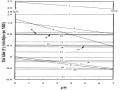
Figure 1.4. Simulation of the photoreduction process of Cr(VI) [34] 42
Figure 1.5. Positions of the conduction and valence bands of TiO2 (anatase) in comparison
with reduction potential of metal ions at different pH values [29] 43
Figure 2.1. Flow chart of GNP synthesis process 52
Figure 2.2. Flowchart of the synthesis process of precursor solution containing titanium and iron 52
Figure 2.3. Schematic diagram of synthesis of TiO2- Fe2O3 composite material 53
Figure 2.4. Schematic diagram of synthesis of TiO2- Fe2O3/GNP composite material 53
Figure 2.5. Raman transformation diagram 59
Figure 2.6. Types of adsorption - desorption isotherms 61
Figure 2.7. Determination of photocatalytic activity on photochemical testing equipment
................................................................ ................................................................ ......... 64
Figure 3.1. Image of graphite and GNP with the same weight of 0.1g 69
Figure 3.2. SEM images at 5,000 and 20,000 times magnification of the original graphite
(A and B) and the fabricated graphene nanoplatelets (C and D). 69
Figure 3.3. XRD patterns of the original graphite sample and the synthesized GNPs 70
Figure 3.4. Raman spectrum of GNP (large image) and of the magnified peak at 2683 cm-1 (small image) 71
Figure 3.5. EDX diagram of GNP material fabricated from graphite 72
Figure 3.6. XPS spectrum of synthesized GNP material 73
Figure 3.7. XPS spectrum of C 1s in GNP 73 material
Figure 3.8. Energy dispersive X-ray (EDX) spectrum of ilmenite 52% 74
Figure 3.9. XRD diagram of 52% ilmenite concentrate before and after 75% calcination
Figure 3.10. XRD pattern of the residue sample after dissolution 76
Figure 3.11. Sample of TiO2- Fe2O3 composite material (TFG0) 77
Figure 3.12. XRD patterns of hydrothermal TFG0 material in acidic (TFG0 (pH5)), neutral (TFG0 (pH7)) and alkaline (TFG0 (pH11)) environments 78
Figure 3.13. XRD patterns of Fe2O3 -TiO2 oxide composite samples with different hydrothermal times 79
Figure 3.14. SEM (a) and TEM (b) images of TFG0 82 composite material
Figure 3.15. Tauc-plot curve of sample TFG0 84
Figure 3.16. Sample of TiO2- Fe2O3/GNP 85 material
Figure 3.17. XRD patterns of TFG samples with different GNP contents 86
Figure 3.18. UV-DRS spectrum (a) and [F(R)hν]1/2 curve of TFG10 material (10 mg GNP) 88
Figure 3.19. UV-Vis DRS spectra of TFG composite samples with different GNP contents 88
Figure 3.20. Graph of the influence of GNP content on the Cr(VI) conversion capacity of TFG 89 material
Figure 3.21. XRD patterns of hydrothermal TFG20 samples at different temperatures 91
Figure 3.22. Diagram determining the influence of hydrothermal temperature on the Cr(VI) conversion capacity of TFG20 samples 93
Figure 3.23. XRD patterns of hydrothermal TFG20 samples in pH3, pH5, pH6, pH7 and pH11 environments 94
Figure 3.24. Comparison of band gap energy of hydrothermal TFG20 material in
different environments: pH11(a), pH7(b), pH5(c) 95
Figure 3.25. Comparison chart of Cr (VI) conversion capacity of hydrothermal TFG material in different environments 96
Figure 3.26. XRD spectrum of TFG composites with and without the presence of stirring element 97
Figure 3.27. Graph evaluating the influence of stirring factor on the Cr(VI) conversion capacity of TFG 98 material
Figure 3.28. Energy dispersive X-ray spectrum (EDX) of TFG20 100 material
Figure 3.29. XPS spectrum of TFG20-8h 100 composite material
Figure 3.30. XPS spectra of elements C1s (a), Fe2p (b), Ti2p (c) and O1s (.d) in TFG20-8h 101 composite material
Figure 3.31. FT-IR spectra of GNPs, Fe-Ti 2-component oxide mixtures and materials
TiO2- Fe2O3/GNP 103 composite
Figure 3.32. Raman spectrum of TFG20 and GNP 104 composites
Figure 3.33. SEM images of TFG20 composite materials with magnifications of 5,000 times (a) and 200,000 times (b) 105
Figure 3.34. TEM image (a) and HRTEM image (b) of TFG20 106 composite material
Figure 3.35. PL spectra of TFG20 and TFG0 107 materials
Figure 3.36. Adsorption isotherm curve of sample TFG 20-8h 108
Figure 3.37. TGA diagram of sample TFG 20-8h 109
Figure 3.38. Graph of pH effect on Cr(VI) 110 treatment capacity
Figure 3.39. Graph of the influence of initial Cr(VI) concentration on the conversion efficiency 111
Figure 3.40. Effect of initial concentration on the relationship - Ln(C/C0) and time 112
Figure 3.41. Graph of the influence of hole accepting agent on the photocatalytic conversion of Cr(VI) 113
Figure 3.42. Graph of the influence of TFG20 catalyst amount on the conversion capacity of Cr(VI) 115
Figure 3.43. Graph of the influence of light intensity on the ability to transform Cr(VI) 116
Figure 3.44. Graph of the influence of light wavelength on photocatalytic ability
Cr(VI) transformation effect of TiO2- Fe2O3/GNP composite material 117
Figure 3.45. Graph evaluating the efficiency of the photocatalytic conversion of Cr(VI) of the composite material TiO2- Fe2O3/GNP 118
Figure 3.46. Relationship -ln(Co/Ct) with time of photocatalytic process
Cr(VI) treatment of TiO2- Fe2O3/GNP composites 119
Figure 3.47. Simulation of photocatalytic mechanism of Cr(VI) conversion using materials
TiO2- Fe2O3/GNP 121 composite
Figure 3.48. Graph of Cr(VI) treatment efficiency evaluation after 5 reuses 122
Figure 3.49. Technological diagram for manufacturing TiO2- Fe2O3/GNP 123 oxide composite material Figure 3.50. Diagram for treating wastewater from explosives production using composite materials
TiO2- Fe2O3/GNP 128
INTRODUCTION
1. Urgency of the thesis topic
The development of industries, especially the chemical industry, has been causing pollution and damaging the living environment. Therefore, the treatment of environmental pollution is a matter of special concern on a global scale.
Meanwhile, defense explosives manufacturing facilities, due to their specific nature, use many types of hazardous chemicals in both inorganic and organic compounds such as aromatic organic compounds or heterocyclic nitramines containing one or more nitro radicals, organic solvents and heavy metals such as Pb, Cr, Hg, etc. These are highly toxic chemicals that cause cancer and even death if contaminated with high concentrations. During the use and cleaning of equipment and production tools, these chemicals have penetrated into wastewater sources, with concentrations exceeding the permissible level, requiring treatment measures before being discharged into the environment. Research and application of new science and technology to establish measures to control, analyze and treat hazardous waste generated from the activities of defense manufacturing facilities (especially explosive and flammable waste) has been and is being paid attention to and studied.
Graphene is a new two-dimensional (2D) material in the carbon material family [91], this material has outstanding properties such as high flexibility, mechanical strength, high electrical and thermal conductivity and a large surface area of 2600 m 2 /g [26]. Graphene nanoplatelets or graphene nanoplate (GNP) is a type of material in the graphene family, extracted from graphite by chemical methods, the extraction process does not use strong oxidizing agents so the surface has few defects and few steps (because it does not have to go through the intermediate step of forming GO), so the material has great potential for industrial-scale production, low cost and is more suitable for application in the field of environmental treatment.
Due to the characteristics of explosives production wastewater containing many toxic organic and inorganic components, the advanced oxidation method in general and the photocatalytic method in particular have many advantages. In addition to the ability to convert toxic organic substances into CO2 and H2O , photocatalytic materials also have the ability to convert heavy metal ions into lower toxicity forms. On the other hand, the photocatalytic process is a "green" treatment process because the photocatalytic materials are non-toxic materials, so the process will avoid chemical residues or the formation of
toxic by-products. Photocatalytic materials based on TiO 2 are popular photocatalytic materials that are widely used, however, due to the limitation of high band gap energy and only show activity in the ultraviolet region. To overcome this disadvantage, different methods are used, but the most common is doping with transition metals, the most common of which is Fe. Ilmenite (FeTiO 3 ) is a natural mixture of TiO 2 and Fe 2 O 3 , with large reserves in our country. If the above mixture can be utilized, a composite material based on TiO 2 with photocatalytic ability in the visible light region will be obtained.
Composite materials have long been of interest to scientists, technologists and managers in many different fields. The combination and supplementation to overcome the limitations of single materials in composite materials helps to increase the features, efficiency and diversity of properties and applications of this type of material. Vietnam is a country with many minerals such as coal, graphite, bauxite, ilmenite, rare earth ..., which are mainly exported in the form of raw materials with low value. Therefore, deep processing of mineral resources into high-quality products with good features and increased economic value is the policy of the Party and the State. The fabrication of composite materials based on TiO 2 oxide , Fe 2 O 3 and graphene nanoplatelets (GNP) from graphite and ilmenite will contribute to creating a direction of photocatalytic materials with strong photocatalytic activity in the visible light region, with the ability to be widely applied on an industrial scale. Research on the synthesis process of materials, determining the optimal parameters of the process and evaluating the ability of the materials to transform heavy metals will have practical and scientific significance, contributing to enriching and finding suitable treatment methods for wastewater from the production of defense explosives.
From the above scientific and practical requirements, the topic: "Research on synthesis of TiO 2 -Fe 2 O 3 /GNP materials from ilmenite and graphite ores to orient the transformation of Cr(VI) in defense industrial wastewater" is urgent.
2. Objectives of the thesis
- Synthesis of TiO 2 -Fe 2 O 3 /GNP composite materialsfrom ilmenite and graphite ore
- Testing and evaluating photocatalytic activity and Cr (VI) conversion ability in defense production wastewater.
3. Research objects and scope
- TiO 2 - Fe 2 O 3 /GNP composite material is synthesized from ilmenite ore and natural graphite.