
In each person's communication style, besides stable and difficult-to-change factors, there are also factors that change according to the communication situation, helping people have words, gestures, and behaviors appropriate to specific communication situations.
Thus, flexibility in communication style shows the skillfulness and flexibility of each person in communicating and behaving with others to help the communication process be effective.
4.2. Types of communication styles
a. Authoritarian communication style
Maybe you are interested!
-
 Soft skills - Master Pham Thi Cam Le Part 2 - 1
 -
 Soft skills education for students of Savannakhet Pedagogical College, Lao PDR - 2
 -
 Soft skills education for students of Savannakhet Pedagogical College, Lao PDR - 14
 -
 Summary of Soft Skills Classes Held at Bidv Bank in the Southeast Region
 -
 Theoretical Basis of Soft Skills Education for Pedagogical Students
“Authoritarian” style: Members participating in communication do not care about the individual characteristics of the communication object, leading to lack of goodwill, frequent conflicts and causing tension. The communicator does not create sympathy, has difficulty establishing cooperative relationships, and has difficulty winning the sympathy of the partner. The advantage of the authoritarian communication style is that it is effective in making temporary decisions and solving problems quickly. The disadvantage is that it loses freedom and democracy in communication, restrains human creativity, reduces education and persuasion.
b. Free communication style
“Free” style: Members participating in communication are too flexible, easily change goals, and follow the wishes of their communication partners. This style easily establishes relationships but also easily loses relationships, is not profound, lacks stance, and is anything goes.
Free style is a flexible, mobile, supple style that can easily change according to the object and communication situation.
The advantage of this style is that it promotes people's positivity and stimulates independent and creative thinking.
The downside is not being able to control one's own emotions, often being dependent or imitative, easily giving rise to excessive freedom.
c. Democratic communication style
“Democratic” style: Members participating in communication show enthusiasm, goodwill, and respect for the personality of the communication object. Members know how to listen, care, and easily establish good relationships based on understanding the feelings of each party.
The advantage of this method is to increase the creativity of the communication object, help people become more friendly, closer and understand each other better, creating good relationships at work.
The disadvantage of this approach is that too much democracy can lead to a departure from the interests of the collective.
People are friendly, close and understand each other better, creating good relationships at work.
We try to practice a “democratic” communication style but avoid being too democratic.
Chapter 2: Means of communication.
1. Language communication
Language is a system of symbols (sounds or writing) in the form of words containing certain meanings (symbolizing things, phenomena as well as their attributes and relationships) that are agreed upon and used by humans in the process of communication. In other words, language is a system of signals used for thinking and social communication. Language used in communication includes spoken language and written language. Using language in effective communication requires attention to a number of issues:
The content of language is conveyed to the communicator so that they understand our meaning. The content of language has two aspects, subjective and objective. The subjective aspect is that language is used to convey the individual's meaning, so it is necessary to make the communicator understand.
Understanding the meaning you want to convey is an important factor in reaching mutual understanding and sympathy. The objective aspect is shown in that words always have a definite meaning that does not depend on the individual's will, so it is necessary to use the correct words, appropriate to the circumstances and communication situations.
Pronunciation, voice, and speaking speed must ensure that the communication object can receive information in communication and can influence the communication object. Voice can first of all indicate the social group and origin of the speaker through the locality in the speaker's voice. Besides, voice also partly shows the personality traits, role, and social position of the speaker through the way of speaking, loud and soft tones, deep and deep tones, etc. Therefore, voice can also convey information about emotions and attitudes when communicating.
Linguistic style is expressed through speaking and writing style, that is, the way words are used to express ideas in communication. Linguistic style can be direct speech, polite speech, implicit speech, sarcastic speech. Using linguistic style requires each individual to be aware of the requirements of each style as well as skillfully use each style in different situations.
The basic language requirements that can be mentioned when wanting to practice communication skills are:
+ The voice must be loud, clear, easy to hear and if it reaches the level of being round, clear but expressive, then it really meets high requirements.
+ Pronunciation must be precise and show sympathy when speaking.
+ It is necessary to comply with the use of appropriate, clear and standard language, adapting to the communication environment.
+ Spoken language must ensure fluency, specific expression, easy to understand and create positive communication effects with the audience.
+ Pay attention to the requirements of speaking techniques in communication such as: explicit and implicit speech, understatement, exaggeration...
2. Non-verbal communication
In communication, non-verbal means used play a major role not only in conveying information but also in expressing the mood, emotions, feelings, attitudes, etc. of the communicating subject. Non-verbal means used frequently in communication include body language such as eyes, facial expressions, smiles, appearance, head movements, gestures, postures, physical contact, voice, communication settings such as distance, table and chair positions, etc.
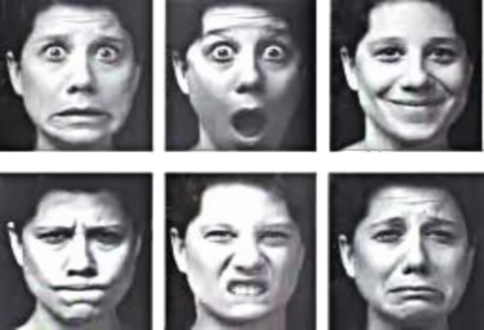
Facial expressions express human emotions. According to psychologists, facial expressions can express 6 emotions such as joy, sadness, surprise, anger, fear and disgust. In communication, facial expressions are often noticed. Facial expressions play an important role in creating an individual's image in the eyes of others. With a rich number of facial expressions, people can easily create an effect in communication if they know how to use the appropriate facial expressions. In daily communication or in office communication, friendly facial expressions are recommended. These are gentle, approachable facial expressions when you can gently smile with the combined movement of facial muscles...
Eyes are a means of non-verbal communication that can convey not only the mood, emotional state, and feelings of a person, but also receive sensory information from the outside environment. A person has as many looks as there are personalities. Therefore, knowing how to communicate through eyes will bring many effects in the communication process. There are a few requirements when communicating through eyes such as: always try to keep your eyes gentle and friendly, look directly into the eyes of the subject, use the top of the triangle from the middle of the eyebrows to the two eyes of the subject to create sympathy and of course avoid taboo eyes such as: prying eyes, scrutinizing eyes, cold eyes, contemptuous eyes... The simplest requirement when communicating through eyes is to look into the eyes of the subject, keep looking into each other's eyes as long as possible during the time of communication and limit "eye contact" in the wrong place during communication.
Sympathetic gaze (when pupils dilate) and anti-sympathetic gaze (when pupils constrict)
Smile is a non-verbal means of communication whose main function is to express human emotions and feelings. Smile also partly expresses the mood and personality of the person smiling and sometimes smile is also used as a sound signal to fill in the communication process. To correctly interpret the meaning of a smile, it is necessary to pay attention to observing both the eyes and the corners of the mouth of the smiling person. Normally, to create a communication effect, the A-shaped smile is a smile with a positive effect.
more extreme. This smile ensures requirements such as: bright, bright, with eye movement that we can call a smile with the eyes, with moderate expression of emotions through the teeth and gums as well as fresh movements of the entire face. In particular, this smile meets positive human emotions, that is, when people feel happy, surprised or happy, the mouth shape of the letter a and the sound a are often expressed very naturally and refreshingly. Psychological experiments have proven that when people smile at an object, the reaction we receive is certainly a very bright smile. Therefore, the Chinese proverb says: "Those who do not know how to smile should not open a shop". Of course, in each different situation, the smile must also be appropriate according to the principle of the right place - the right place and be practically adaptive.
Different types of smiles and the a-shaped smile
Appearance is considered a special form of non-verbal communication. Appearance includes body shape, walking style, clothing and behavior. Body shape often has a strong impact on the perceiver in communication, in which height is considered the most influential factor. A person's walking style also says a lot about them such as status, mood, culture, race as well as self-awareness. Clothing complements a person's appearance, including the combination of clothing styles, colors, and so on.
Fabric color, jewelry provide information about age, occupation, social position, class and aesthetic taste of people. Clothing is part of communication orientation and contributes to successful communication. In office communication, beautiful clothing is one of the attractive factors. To achieve this, it is necessary to ensure requirements such as: color coordination of clothes, ties or scarves must comply with the principle of "tone-to-tone" or contrast. In addition, requirements for jewelry, suitable decorative accessories are also extremely important requirements. On the other hand, in terms of image building, the agency's uniform and other related symbols will bring about equally unique effects.

Gestures are movements of the arms, legs and body. Gestures are often used to illustrate, emphasize, complement what is being said or can even replace words through signs in gestures. Gestures are also used by people to express emotions and attitudes. However, in many cases, gestures are personal habits. Regarding the skillful use of gestures, it is impossible not to analyze the effects of posture. Posture is expressed through the way an individual stands, sits, and walks in communication. Posture sometimes also has the characteristics of each culture. Usually in communication, posture shows attitude, social status as well as participates in managing direct communication situations. There are
There are some taboo gestures that communicators must follow, such as: pointing at the subject, holding a stick to point at the subject, snapping fingers frequently, clasping hands behind the back continuously while appearing in front of many people. In addition, there are some standard standing postures that communication researchers must follow, such as: standing with feet almost shoulder-width apart, standing at 10 o'clock or 2 o'clock with hands placed evenly in front of the stomach... Of course, these requirements can be
are tailored to each gender although the basic requirements are consistent.
Physical contact is expressed in many forms such as shaking hands, hugging, patting the shoulder, kissing the cheek, pushing, etc., and also depends a lot on the characteristics of each culture.
The first thing to mention is the handshake. This is a very common non-verbal social gesture. There are many different types of handshakes, but according to the basic international standard, the social handshake is still a one-handed handshake, usually using the right hand, the distance between the two people's bodies is about ¾ of an arm's length, the hand touches the other person's hand relatively deeply. In addition, when shaking hands, the hand should still support the other person's hand, the eyes should still look at the other person when shaking hands, and women are often given the right to initiate the handshake, and managers are given more initiative when shaking hands...
The appropriate social kiss is still a cheek-to-cheek kiss, and you absolutely must not use your lips to touch the other person's cheek, and shoulder-to-shoulder contact is only relative.
Distance between parties in communication:
This is also a factor that speaks of a rather special relationship in communication. The distance in communication with others also has a certain meaning. It can be analyzed specifically as follows:
+ Public distance (>3.5m) in contact with strangers
+ Social distance (>1m - <3.5m), suitable for contact in crowds gathered in groups
+ Intimate distance (>0.5m - <1m) is often seen at parties, at work, and with friends.
+ Private distance (0m - < 0.5m) in intimate, close relationships such as relatives, family, lovers.