
TT
Numbness exercise | Description of the exercise | Suggested exercises to organize the exercise | |||
Purpose | Prepare | The practices | |||
be agile and coordinate with your training partner | small, + Obstacles | + Model 2: When given a command, children take turns walking into the boxes arranged in a spiral to the center of the spiral. To increase the difficulty, teachers can ask children to put their hands on their hips and jump into each box.
Model 1. Model 2. | + The whole class does the exercise at the same time (one child after another) + Divide into groups and have separate requirements for each group (eg: group doing running exercises, group doing jumping exercises...) + Applicable in outdoor activities | ||
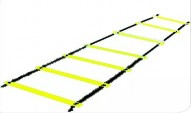
3 | Moving on the rope ladder | + Strengthen children's walking, running and jumping movements. + Increase dexterity and agility when participating in exercises. | + Rope ladder (can draw rope ladder model) + Sandbags, + Whistle. | - The teacher has the children stand in front of the starting line. When given the command, the children perform the normal movement of walking across the 3-7m long ladder, without their feet touching the ladder's limit line, to reach the finish line. The teacher can change the movement (jumping, crawling, etc.) or increase the length of the ladder to increase the difficulty of the exercise.
| Teachers can apply the following training methods: + Each child takes turns doing it. + Organize competitions between groups. + The whole class does the exercise at the same time (one child after another) + Divide into groups and have separate requirements for each group (eg: group doing running exercises, group doing jumping exercises...) + Applied in operations outdoor fun |


Maybe you are interested!
-
 Solutions for tourism development in Tien Lang - 10
zt2i3t4l5ee
zt2a3gstourism, tourism development
zt2a3ge
zc2o3n4t5e6n7ts
- District People's Committees and authorities of communes with tourist attractions should support, promote, and provide necessary information to people, helping them improve their knowledge about tourism. Raise tourism awareness for local people.
*
* *
Due to limited knowledge and research time, the thesis inevitably has shortcomings. Therefore, I look forward to receiving guidance from teachers, experts as well as your comments to make the thesis more complete.
Chapter III Conclusion
Through the issues presented in Chapter II, we can come to some conclusions:
Based on the strengths of available tourism resources, the types of tourism in Tien Lang that need to be promoted in the coming time are sightseeing and resort tourism, discovery tourism, weekend tourism. To improve the quality and diversify tourism products, Tien Lang district needs to combine with local cultural tourism resources, at the same time combine with surrounding areas, build rich tourism products. The strengths of Tien Lang tourism are eco-tourism and cultural tourism, so developing Tien Lang tourism must always go hand in hand with restoring and preserving types of cultural tourism resources. Some necessary measures to support and improve the efficiency of exploiting tourism resources in Tien Lang are: strengthening the construction of technical facilities and labor force serving tourism, actively promoting and advertising tourism, and expanding forms of capital mobilization for tourism development.
CONCLUDE
I Conclusion
1. Based on the results achieved within the framework of the thesis's needs, some basic conclusions can be drawn as follows:
Tien Lang is a locality with great potential for tourism development. The relatively abundant cultural tourism resources and ecological tourism resources have great appeal to tourists. Based on this potential, Tien Lang can build a unique tourism industry that is competitive enough with other localities within Hai Phong city and neighboring areas.
In recent years, the exploitation of the advantages of resources to develop tourism and build tourist routes in Tien Lang has not been commensurate with the available potential. In terms of quantity, many resource objects have not been brought into the purpose of tourism development. In terms of time, the regular service time has not been extended to attract more visitors. Infrastructure and technical facilities are still weak. The labor force is still thin and weak in terms of expertise. Tourism programs and routes have not been organized properly, the exploitation content is still monotonous, so it has not attracted many visitors. Although resources have not been mobilized much for tourism development, they are facing the risk of destruction and degradation.
2. Based on the results of investigation, analysis, synthesis, evaluation and selective absorption of research results of related topics, the thesis has proposed a number of necessary solutions to improve the efficiency of exploiting tourism resources in Tien Lang such as: promoting the restoration and conservation of tourism resources, focusing on investment and key exploitation of ecotourism resources, strengthening the construction of infrastructure and tourism workforce. Expanding forms of capital mobilization. In addition, the thesis has built a number of tourist routes of Hai Phong in which Tien Lang tourism resources play an important role.
Exploiting Tien Lang tourism resources for tourism development is currently facing many difficulties. The above measures, if applied synchronously, will likely bring new prospects for the local tourism industry, contributing to making Tien Lang tourism an important economic sector in the district's economic structure.
REFERENCES
1. Nhuan Ha, Trinh Minh Hien, Tran Phuong, Hai Phong - Historical and cultural relics, Hai Phong Publishing House, 1993
2. Hai Phong City History Council, Hai Phong Gazetteer, Hai Phong Publishing House, 1990.
3. Hai Phong City History Council, History of Tien Lang District Party Committee, Hai Phong Publishing House, 1990.
4. Hai Phong City History Council, University of Social Sciences and Humanities, VNU, Hai Phong Place Names Encyclopedia, Hai Phong Publishing House. 2001.
5. Law on Cultural Heritage and documents guiding its implementation, National Political Publishing House, Hanoi, 2003.
6. Tran Duc Thanh, Lecture on Tourism Geography, Faculty of Tourism, University of Social Sciences and Humanities, VNU, 2006
7. Hai Phong Center for Social Sciences and Humanities, Some typical cultural heritages of Hai Phong, Hai Phong Publishing House, 2001
8. Nguyen Ngoc Thao (editor-in-chief, Tourism Geography, Hai Phong Publishing House, two volumes (2001-2002)
9. Nguyen Minh Tue and group of authors, Hai Phong Tourism Geography, Ho Chi Minh City Publishing House, 1997.
10. Nguyen Thanh Son, Hai Phong Tourism Territory Organization, Associate Doctoral Thesis in Geological Geography, Hanoi, 1996.
11. Decision No. 2033/QD – UB on detailed planning of Tien Lang town, Hai Phong city until 2020.
12. Department of Culture, Information, Hai Phong Museum, Hai Phong relics
- National ranked scenic spot, Hai Phong Publishing House, 2005. 13. Tien Lang District People's Committee, Economic Development Planning -
Culture - Society of Tien Lang district to 2010.
14.Website www.HaiPhong.gov.vn
APPENDIX 1
List of national ranked monuments
STT
Name of the monument
Number, year of decisiondetermine
Location
1
Gam Temple
938 VH/QĐ04/08/1992
Cam Khe Village- Toan Thang commune
2
Doc Hau Temple
9381 VH/QĐ04/08/1992
Doc Hau Village –Toan Thang commune
3
Cuu Doi Communal House
3207 VH/QĐDecember 30, 1991
Zone II of townTien Lang
4
Ha Dai Temple
938 VH/QĐ04/08/1992
Ha Dai Village –Tien Thanh commune
APPENDIX II
STT
Name of the monument
Number, year of decision
Location
1
Phu Ke Pagoda Temple
178/QD-UBJanuary 28, 2005
Zone 1 - townTien Lang
2
Trung Lang Temple
178/QD-UBJanuary 28, 2005
Zone 4 – townTien Lang
3
Bao Khanh Pagoda
1900/QD-UBAugust 24, 2006
Nam Tu Village -Kien Thiet commune
4
Bach Da Pagoda
1792/QD-UB11/11/2002
Hung Thang Commune
5
Ngoc Dong Temple
177/QD-UBNovember 27, 2005
Tien Thanh Commune
6
Tomb of Minister TSNhu Van Lan
2848/QD-UBSeptember 19, 2003
Nam Tu Village -Kien Thiet commune
7
Canh Son Stone Temple
2160/QD-UBSeptember 19, 2003
Van Doi Commune –Doan Lap
8
Meiji Temple
2259/QD-UBSeptember 19, 2002
Toan Thang Commune
9
Tien Doi Noi Temple
477/QD-UBSeptember 19, 2005
Doan Lap Commune
10
Tu Doi Temple
177/QD-UBJanuary 28, 2005
Doan Lap Commune
11
Duyen Lao Temple
177/QD-UBJanuary 28, 2005
Tien Minh Commune
12
Dinh Xuan Uc Pagoda
177/QD-UBJanuary 28, 2005
Bac Hung Commune
13
Chu Khe Pagoda
177/QD-UBJanuary 28, 2005
Hung Thang Commune
14
Dong Dinh
2848/QD-UBNovember 21, 2002
Vinh Quang Commune
15
President's Memorial HouseTon Duc Thang
177/QD-UBJanuary 28, 2005
NT Quy Cao
Ha Dai Temple
Ben Vua Temple
Tien Lang hot spring
div.maincontent .p { color: black; font-family:"Times New Roman", serif; font-style: normal; font-weight: normal; text-decoration: none; font-size: 14pt; margin:0pt; } div.maincontent p { color: black; font-family:"Times New Roman", serif; font-style: normal; font-weight: normal; text-decoration: none; font-size: 14pt; margin:0pt; } div.maincontent .s1 { color: black; font-family:"Times New Roman", serif; font-style: normal; font-weight: normal; font-size: 16pt; } div.maincontent .s2 { color: black; font-family:"Times New Roman", serif; font-style: italic; font-weight: bold; text-decoration: none; font-size: 14pt; } div.maincontent .s3 { color: black; font-family:"Times New Roman", serif; font-style: italic; font-weight: normal; text-decoration: none; font-size: 14pt; } div.maincontent .s4 { color: black; font-family:"Times New Roman", serif; font-style: normal; font-weight: normal; font-size: 14pt; } div.maincontent .s5 { color: black; font-family:"Times New Roman", serif; font-style: normal; font-weight: bold; font-size: 14pt; } div.maincontent .s6 { color: black; font-family:"Times New Roman", serif; font-style: normal; font-weight: normal; text-decoration: none; font-size: 14pt; } div.maincontent .s7 { color: black; font-family:"Times New Roman", serif; font-style: normal; font-weight: bold; text-decoration: none; font-size: 14pt; } div.maincontent .s8 { color: black; font-family:"Times New Roman", serif; font-style: normal; font-weight: normal; text-decoration: none; font-size: 9pt; vertical-align: 6pt; } div.maincontent .s9 { color: black; font-family:"Times New Roman", serif; font-style: normal; font-weight: bold; text-decoration: none; font-size: 12pt; } div.maincontent .s11 { color: black; font-family:"Times New Roman", serif; font-style: normal; font-weight: normal; tex
Solutions for tourism development in Tien Lang - 10
zt2i3t4l5ee
zt2a3gstourism, tourism development
zt2a3ge
zc2o3n4t5e6n7ts
- District People's Committees and authorities of communes with tourist attractions should support, promote, and provide necessary information to people, helping them improve their knowledge about tourism. Raise tourism awareness for local people.
*
* *
Due to limited knowledge and research time, the thesis inevitably has shortcomings. Therefore, I look forward to receiving guidance from teachers, experts as well as your comments to make the thesis more complete.
Chapter III Conclusion
Through the issues presented in Chapter II, we can come to some conclusions:
Based on the strengths of available tourism resources, the types of tourism in Tien Lang that need to be promoted in the coming time are sightseeing and resort tourism, discovery tourism, weekend tourism. To improve the quality and diversify tourism products, Tien Lang district needs to combine with local cultural tourism resources, at the same time combine with surrounding areas, build rich tourism products. The strengths of Tien Lang tourism are eco-tourism and cultural tourism, so developing Tien Lang tourism must always go hand in hand with restoring and preserving types of cultural tourism resources. Some necessary measures to support and improve the efficiency of exploiting tourism resources in Tien Lang are: strengthening the construction of technical facilities and labor force serving tourism, actively promoting and advertising tourism, and expanding forms of capital mobilization for tourism development.
CONCLUDE
I Conclusion
1. Based on the results achieved within the framework of the thesis's needs, some basic conclusions can be drawn as follows:
Tien Lang is a locality with great potential for tourism development. The relatively abundant cultural tourism resources and ecological tourism resources have great appeal to tourists. Based on this potential, Tien Lang can build a unique tourism industry that is competitive enough with other localities within Hai Phong city and neighboring areas.
In recent years, the exploitation of the advantages of resources to develop tourism and build tourist routes in Tien Lang has not been commensurate with the available potential. In terms of quantity, many resource objects have not been brought into the purpose of tourism development. In terms of time, the regular service time has not been extended to attract more visitors. Infrastructure and technical facilities are still weak. The labor force is still thin and weak in terms of expertise. Tourism programs and routes have not been organized properly, the exploitation content is still monotonous, so it has not attracted many visitors. Although resources have not been mobilized much for tourism development, they are facing the risk of destruction and degradation.
2. Based on the results of investigation, analysis, synthesis, evaluation and selective absorption of research results of related topics, the thesis has proposed a number of necessary solutions to improve the efficiency of exploiting tourism resources in Tien Lang such as: promoting the restoration and conservation of tourism resources, focusing on investment and key exploitation of ecotourism resources, strengthening the construction of infrastructure and tourism workforce. Expanding forms of capital mobilization. In addition, the thesis has built a number of tourist routes of Hai Phong in which Tien Lang tourism resources play an important role.
Exploiting Tien Lang tourism resources for tourism development is currently facing many difficulties. The above measures, if applied synchronously, will likely bring new prospects for the local tourism industry, contributing to making Tien Lang tourism an important economic sector in the district's economic structure.
REFERENCES
1. Nhuan Ha, Trinh Minh Hien, Tran Phuong, Hai Phong - Historical and cultural relics, Hai Phong Publishing House, 1993
2. Hai Phong City History Council, Hai Phong Gazetteer, Hai Phong Publishing House, 1990.
3. Hai Phong City History Council, History of Tien Lang District Party Committee, Hai Phong Publishing House, 1990.
4. Hai Phong City History Council, University of Social Sciences and Humanities, VNU, Hai Phong Place Names Encyclopedia, Hai Phong Publishing House. 2001.
5. Law on Cultural Heritage and documents guiding its implementation, National Political Publishing House, Hanoi, 2003.
6. Tran Duc Thanh, Lecture on Tourism Geography, Faculty of Tourism, University of Social Sciences and Humanities, VNU, 2006
7. Hai Phong Center for Social Sciences and Humanities, Some typical cultural heritages of Hai Phong, Hai Phong Publishing House, 2001
8. Nguyen Ngoc Thao (editor-in-chief, Tourism Geography, Hai Phong Publishing House, two volumes (2001-2002)
9. Nguyen Minh Tue and group of authors, Hai Phong Tourism Geography, Ho Chi Minh City Publishing House, 1997.
10. Nguyen Thanh Son, Hai Phong Tourism Territory Organization, Associate Doctoral Thesis in Geological Geography, Hanoi, 1996.
11. Decision No. 2033/QD – UB on detailed planning of Tien Lang town, Hai Phong city until 2020.
12. Department of Culture, Information, Hai Phong Museum, Hai Phong relics
- National ranked scenic spot, Hai Phong Publishing House, 2005. 13. Tien Lang District People's Committee, Economic Development Planning -
Culture - Society of Tien Lang district to 2010.
14.Website www.HaiPhong.gov.vn
APPENDIX 1
List of national ranked monuments
STT
Name of the monument
Number, year of decisiondetermine
Location
1
Gam Temple
938 VH/QĐ04/08/1992
Cam Khe Village- Toan Thang commune
2
Doc Hau Temple
9381 VH/QĐ04/08/1992
Doc Hau Village –Toan Thang commune
3
Cuu Doi Communal House
3207 VH/QĐDecember 30, 1991
Zone II of townTien Lang
4
Ha Dai Temple
938 VH/QĐ04/08/1992
Ha Dai Village –Tien Thanh commune
APPENDIX II
STT
Name of the monument
Number, year of decision
Location
1
Phu Ke Pagoda Temple
178/QD-UBJanuary 28, 2005
Zone 1 - townTien Lang
2
Trung Lang Temple
178/QD-UBJanuary 28, 2005
Zone 4 – townTien Lang
3
Bao Khanh Pagoda
1900/QD-UBAugust 24, 2006
Nam Tu Village -Kien Thiet commune
4
Bach Da Pagoda
1792/QD-UB11/11/2002
Hung Thang Commune
5
Ngoc Dong Temple
177/QD-UBNovember 27, 2005
Tien Thanh Commune
6
Tomb of Minister TSNhu Van Lan
2848/QD-UBSeptember 19, 2003
Nam Tu Village -Kien Thiet commune
7
Canh Son Stone Temple
2160/QD-UBSeptember 19, 2003
Van Doi Commune –Doan Lap
8
Meiji Temple
2259/QD-UBSeptember 19, 2002
Toan Thang Commune
9
Tien Doi Noi Temple
477/QD-UBSeptember 19, 2005
Doan Lap Commune
10
Tu Doi Temple
177/QD-UBJanuary 28, 2005
Doan Lap Commune
11
Duyen Lao Temple
177/QD-UBJanuary 28, 2005
Tien Minh Commune
12
Dinh Xuan Uc Pagoda
177/QD-UBJanuary 28, 2005
Bac Hung Commune
13
Chu Khe Pagoda
177/QD-UBJanuary 28, 2005
Hung Thang Commune
14
Dong Dinh
2848/QD-UBNovember 21, 2002
Vinh Quang Commune
15
President's Memorial HouseTon Duc Thang
177/QD-UBJanuary 28, 2005
NT Quy Cao
Ha Dai Temple
Ben Vua Temple
Tien Lang hot spring
div.maincontent .p { color: black; font-family:"Times New Roman", serif; font-style: normal; font-weight: normal; text-decoration: none; font-size: 14pt; margin:0pt; } div.maincontent p { color: black; font-family:"Times New Roman", serif; font-style: normal; font-weight: normal; text-decoration: none; font-size: 14pt; margin:0pt; } div.maincontent .s1 { color: black; font-family:"Times New Roman", serif; font-style: normal; font-weight: normal; font-size: 16pt; } div.maincontent .s2 { color: black; font-family:"Times New Roman", serif; font-style: italic; font-weight: bold; text-decoration: none; font-size: 14pt; } div.maincontent .s3 { color: black; font-family:"Times New Roman", serif; font-style: italic; font-weight: normal; text-decoration: none; font-size: 14pt; } div.maincontent .s4 { color: black; font-family:"Times New Roman", serif; font-style: normal; font-weight: normal; font-size: 14pt; } div.maincontent .s5 { color: black; font-family:"Times New Roman", serif; font-style: normal; font-weight: bold; font-size: 14pt; } div.maincontent .s6 { color: black; font-family:"Times New Roman", serif; font-style: normal; font-weight: normal; text-decoration: none; font-size: 14pt; } div.maincontent .s7 { color: black; font-family:"Times New Roman", serif; font-style: normal; font-weight: bold; text-decoration: none; font-size: 14pt; } div.maincontent .s8 { color: black; font-family:"Times New Roman", serif; font-style: normal; font-weight: normal; text-decoration: none; font-size: 9pt; vertical-align: 6pt; } div.maincontent .s9 { color: black; font-family:"Times New Roman", serif; font-style: normal; font-weight: bold; text-decoration: none; font-size: 12pt; } div.maincontent .s11 { color: black; font-family:"Times New Roman", serif; font-style: normal; font-weight: normal; tex -
 Research and develop experiential activities for first graders in teaching rhymes - 8
 -
 Research on some solutions to improve the quality of human resources at Khanh An Preschool Education Equipment Production and Trading Company Limited - 1
 -
 Research on selecting speed strength development exercises for male Pencak Silat athletes Ministry of Public Security - 23
 -
 Research, develop and organize Team building activities in tourism associated with river environment for office staff and employees - 12
TT
Numbness exercise | Description of the exercise | Suggested exercises to organize the exercise | |||
Purpose | Prepare | The practices | |||
4 | Walk the path of perception | + Strengthen walking and running movements. + Increases sensation in the child's leg muscles. + Develop children's dexterity and motor coordination | + A3 cardboard with attached plastic, pebbles, straw, chicken feathers..., prickly carpet | - The teacher has the children line up at the starting line. When given the command, the children take turns walking (or running) on the cardboard pieces lined up in a row until they reach the finish line. - Teachers should change many models in practice sessions to create excitement for children when participating in exercises.
| Teachers can apply the following training methods: + Each child takes turns doing it. + Organize competitions between groups. + The whole class does the exercise at the same time (one child after another) + Applied in operations outdoor fun |
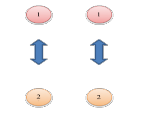
5 | Transposition | + Strengthen running movements, increase reflexes and agility in children. + Develop the ability to cooperate, and help your teammates | + Circle + Whistle, + chalk | - Method 1 (model 1): The teacher lets the children stand in circle number 1. When given the command, the children run into circle number 2, method 3. – 5m, any child who enters later will be arrested. - Method 2 (model 2): The teacher lets the children gather in the middle, drawing large circles around them. When the teacher gives the command, the children will run into the circle when the teacher points. Whoever comes in later is considered the loser.
Model 1. Model 2 | Teachers can apply the following training methods: + Organize competitions between groups. + The whole class does the exercise together. + Applicable in outdoor activities |



TT
Numbness exercise | Description of the exercise | Suggested exercises to organize the exercise | |||
Purpose | Prepare | The practices | |||
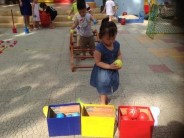
6 | Bring the ball home | + Strengthens children's walking and grasping skills. + Increase children's ability to coordinate movements and recognize colors. | + Ball (3 colors), + basket (3 colors), + 6 – 10 ring (or ladder) | - Children line up in front of the starting line. When given the signal, they take the ball from the basket and walk through the rings placed on the ground and put the ball into the basket with the correct color of the ball.
| Teachers can apply the following training methods: + Each child takes turns doing it. + Organize competitions between groups. + Applicable in outdoor activities |
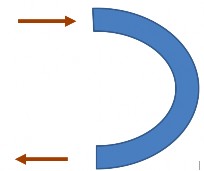
7 | Move in an arc pattern | + Develop dexterity, balance and agility in walking or running. | + 30 – 40cm wide arc model | - The teacher asks the children to stand at the starting line (one end of the arc) and perform the normal walking movement in a circular pattern until the finish line. When walking, the children must not step out of the pattern or touch the pattern's boundary line.
| Teachers can apply the following training methods: + Organize competitions between groups. + The whole class does the exercise at the same time (one child after another) + Divide into groups and have separate requirements for each group (eg: group doing running exercises, group doing jumping exercises...) + Applicable in outdoor activities |
TT
Numbness exercise | Description of the exercise | Suggested exercises to organize the exercise | |||
Purpose | Prepare | The practices | |||
8 | Relay | + Strengthen walking and running movements. + Develop speed and coordination in movement. | + Ball or sandbag, + Basket, + Whistle. | - The teacher lets 5-7 children participate, lining up 1-2m apart. When the signal is given, the first person in line takes the sandbag from the basket, then runs to give it to the second person, then passes it on to the last person in line and puts it in their basket. The group that finishes first is the winning team. | Teachers can apply the following training methods: + Organize competitions between groups. + Apply outdoor games |
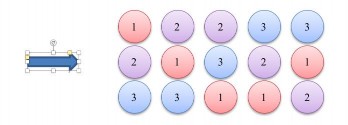
9 | Turn on standard cell | + Strengthen jumping movements, increase leg muscle strength and motor coordination ability. | + hoops (multi-colored), sandbags or balls (multi-colored), baskets (multi-colored) | - Children line up in front of the starting line. When given the signal, children hold the sandbag or ball, bounce into the box that matches the color of the sandbag or ball to reach the finish line and put the ball into the correct basket that matches the color of the ball or sandbag.
| Teachers can apply the following training methods: + Let each child do it in turn. + Organize competitions between groups. + The whole class does the exercise at the same time (one child after another) + Applied in operations outdoor fun |
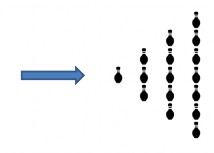
10 | Bowling with ball | + Develop strength of arm muscles and orientation ability in space | + 8-10 ping (can be replaced with plastic bottle), + Big ball | - The teacher asks the children to stand in front of the line 3-5m away from the ping position, holding the ball in their hands. The children roll the ball forward to knock down the pings. The child who knocks down the most pins wins. The teacher can increase or decrease the number of pins. The distance between the level line and the ping position is appropriate. | Teachers can apply the following training methods: + Let each child do it in turn. + Organize competitions between |
TT
Numbness exercise | Description of the exercise | Suggested exercises to organize the exercise | |||
Purpose | Prepare | The practices | |||
with the child's ability.
| children together or in groups. + The whole class does the exercise at the same time (one child after another) + Applicable in outdoor activities | ||||
11 | Who is good at soccer? | + Strengthens leg muscles, increases strength and dexterity of the legs. | + Ball, small goal (can place bottles as goal boundaries) | - Children stand in front of the ball, 3-5m away from the goal. When given the command, children kick the ball into the goal. Teachers can change the distance or kicking motion by rolling the ball or throwing the ball depending on the child's ability. | Teachers can apply the following training methods: + Let each child do it in turn. + Organize competitions between children or groups. + The whole class does the exercise at the same time (one child after another) + Applicable in outdoor activities |
12 | Toss the ball behind your head | + Strengthens arm muscles and spatial orientation. | + Large yard + Big ball | - The teacher asks the children to stand at the line, holding the ball with both hands. When given the command, the children toss the ball from front to back so that it falls into the designated area 2-3m from the line. When doing this, the teacher needs to ensure the children's safety and not let them stand in the area where the ball is tossed. | Teachers can apply the following training methods: + Let each child do it in turn. + Applied in operations outdoor fun |
TT
Numbness exercise | Description of the exercise | Suggested exercises to organize the exercise | |||
Purpose | Prepare | The practices | |||
13 | Roll the ball to the finish line | + Develop manual dexterity and spatial orientation. | + Ball, narrow lane 0.5 x 5m wide, ball basket. | - The teacher has the children stand in front of the starting line, holding a ball in their hands. When the signal is given, the children begin rolling the ball along a narrow path (model 1) to the finish line and drop the ball into the basket. The first child to drop the ball into the basket is the next child allowed to roll the ball. The teacher can use a zigzag path (model 2) to increase the difficulty. Model 1. Rolling the ball in a narrow path Model 2. Rolling the ball in a zigzag path | Teachers can apply the following training methods: + Let each child do it in turn. + Organize competitions between children or groups. + Applicable in outdoor activities or in functional rooms. |
14 | Don't drop the ball | + Develop manual dexterity and coordination of movements to keep children together. | + A4 cardboard, small ball (or sand bag). | - The teacher asks the children to stand in front of the starting line, holding the cardboard with both hands. When the teacher gives the command, he puts the ball on the cardboard and asks the children to walk to the basket 1-2m away to put the ball in the basket. For the group of young children (young kindergarten and middle kindergarten), the teacher can replace the ball with a sandbag to suit the children's athletic ability. | Teachers can apply the following training methods: + Let each child do it in turn. + Organize competitions between children or groups. + Applicable in outdoor activities or in class |
TT
Numbness exercise | Description of the exercise | Suggested exercises to organize the exercise | |||
Purpose | Prepare | The practices | |||
15 | Who throws the best? | + Develop strength of arm muscles, ability to coordinate movements and orientation in space. | + felt target, spiked throwing object. | - The teacher lets the children stand in front of the level line and perform the action of compressing the object into the target as close to the center as possible. Depending on the child's ability, the teacher will increase or decrease the distance between the level line and the target accordingly.
| Teachers can apply the following training methods: + Organize competitions between children or groups. + The whole class does the exercise at the same time (one child after another) + Applicable in outdoor activities or in class |
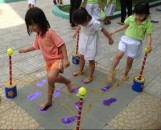
16 | Follow the leader | + Large yard, poles, footprint carpet. | - Method 1: The teacher has the children line up in a row, the first child in line walks while performing different walking styles (tiptoe walking, kneeling...) or hand movements (raise arms, spread arms out...) and the rest of the children in the line must follow. At a young age, the teacher can be the leader and the children will follow her. - Method 2: The teacher has the children line up in front of the footprint mat model. When the command is given, the children start to step into the footprints on the mat. carpet, the next child must step correctly on the footprints of the previous child, the child who steps wrong is considered the loser. The teacher can stretch the net to increase the difficulty Exercises for older children. | Teachers can apply the following training methods: + Organize competitions between groups. + The whole class does the exercise at the same time (one child after another) + Applicable in outdoor activities or in class | |
TT
Numbness exercise | Description of the exercise | Suggested exercises to organize the exercise | |||
Purpose | Prepare | The practices | |||
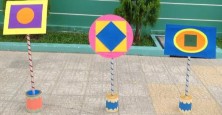
17 | Great driver | + Strengthen running, dexterity and develop speed in children. | + Large yard, + 4 – 10 piles | - The teacher has the children line up in front of the starting line, with the hand of the person behind them on the shoulder of the person in front. When the command is given, the children follow the line, keeping their hands on the shoulder of the person in front, and thread through the standard objects to reach the finish line. The teacher can change the distance, the number of standard objects, or change the movement (crawling in a row, creeping in a row...) to increase the difficulty of the exercise. | Teachers can apply the following training methods: + Each child takes turns doing it. + Organize competitions between groups. + The whole class does the exercise at the same time (one child after another) + Group and have separate requirements for each group. + Applied in operations outdoor play and classroom activities. |
18 | Hunter | + Develops strength of arm muscles, spatial orientation and motor coordination in children. | + 10 plastic bottles with animal stickers, + medium ball | - The teacher asks the children to stand at the level line, holding the ball, 3-5m away from the bottle position. The children roll the ball flat on the ground towards the plastic bottles so that when the bottle falls, they will collect it and put it in their team's basket. The teacher can increase the distance between the level line or the distance between the bottles to increase the difficulty of the exercise. | Teachers can apply the following training methods: + Organize competitions between children or groups. + The whole class does the exercise at the same time (one child after another) + Group and have separate requirements for each group. + Applied in operations outdoor play and classroom activities. |