
and clearly define the responsibilities of the departments and organizations in the commune for effective implementation.
First of all, it is necessary to establish a Steering Committee for the implementation of land use planning, with the Chairman of the Commune People's Committee as the head, the Vice Chairman of the Commune People's Committee in charge of the economic sector as the deputy head, relevant professional staff, mass organizations, and village chiefs as members. In the villages, production steering sub-committees should also be established, with the Village Chief as the head, the Deputy Head of the sub-committee as the deputy head, and the members of the sub-committee being representatives of the Party Cell Committee, village Front officials, village mass organization officials, and heads of residential groups.
The Steering Committee assigns responsibilities and assigns staff to research and make annual and 5-year production plans for each village based on the planning and directly participate in directing the implementation. Sectors and organizations in the commune, based on their functions and tasks, participate in directing and propagating to all people the State's policies and guidelines based on the planning.
Implement a good democratic mechanism so that people have the opportunity to participate from the planning stage, and take responsibility together, especially for the proposed transformation models, with the goal of guiding farmers to carry out their own agricultural and forestry production development process.
Maybe you are interested!
-
 Solutions for tourism development in Tien Lang - 10
zt2i3t4l5ee
zt2a3gstourism, tourism development
zt2a3ge
zc2o3n4t5e6n7ts
- District People's Committees and authorities of communes with tourist attractions should support, promote, and provide necessary information to people, helping them improve their knowledge about tourism. Raise tourism awareness for local people.
*
* *
Due to limited knowledge and research time, the thesis inevitably has shortcomings. Therefore, I look forward to receiving guidance from teachers, experts as well as your comments to make the thesis more complete.
Chapter III Conclusion
Through the issues presented in Chapter II, we can come to some conclusions:
Based on the strengths of available tourism resources, the types of tourism in Tien Lang that need to be promoted in the coming time are sightseeing and resort tourism, discovery tourism, weekend tourism. To improve the quality and diversify tourism products, Tien Lang district needs to combine with local cultural tourism resources, at the same time combine with surrounding areas, build rich tourism products. The strengths of Tien Lang tourism are eco-tourism and cultural tourism, so developing Tien Lang tourism must always go hand in hand with restoring and preserving types of cultural tourism resources. Some necessary measures to support and improve the efficiency of exploiting tourism resources in Tien Lang are: strengthening the construction of technical facilities and labor force serving tourism, actively promoting and advertising tourism, and expanding forms of capital mobilization for tourism development.
CONCLUDE
I Conclusion
1. Based on the results achieved within the framework of the thesis's needs, some basic conclusions can be drawn as follows:
Tien Lang is a locality with great potential for tourism development. The relatively abundant cultural tourism resources and ecological tourism resources have great appeal to tourists. Based on this potential, Tien Lang can build a unique tourism industry that is competitive enough with other localities within Hai Phong city and neighboring areas.
In recent years, the exploitation of the advantages of resources to develop tourism and build tourist routes in Tien Lang has not been commensurate with the available potential. In terms of quantity, many resource objects have not been brought into the purpose of tourism development. In terms of time, the regular service time has not been extended to attract more visitors. Infrastructure and technical facilities are still weak. The labor force is still thin and weak in terms of expertise. Tourism programs and routes have not been organized properly, the exploitation content is still monotonous, so it has not attracted many visitors. Although resources have not been mobilized much for tourism development, they are facing the risk of destruction and degradation.
2. Based on the results of investigation, analysis, synthesis, evaluation and selective absorption of research results of related topics, the thesis has proposed a number of necessary solutions to improve the efficiency of exploiting tourism resources in Tien Lang such as: promoting the restoration and conservation of tourism resources, focusing on investment and key exploitation of ecotourism resources, strengthening the construction of infrastructure and tourism workforce. Expanding forms of capital mobilization. In addition, the thesis has built a number of tourist routes of Hai Phong in which Tien Lang tourism resources play an important role.
Exploiting Tien Lang tourism resources for tourism development is currently facing many difficulties. The above measures, if applied synchronously, will likely bring new prospects for the local tourism industry, contributing to making Tien Lang tourism an important economic sector in the district's economic structure.
REFERENCES
1. Nhuan Ha, Trinh Minh Hien, Tran Phuong, Hai Phong - Historical and cultural relics, Hai Phong Publishing House, 1993
2. Hai Phong City History Council, Hai Phong Gazetteer, Hai Phong Publishing House, 1990.
3. Hai Phong City History Council, History of Tien Lang District Party Committee, Hai Phong Publishing House, 1990.
4. Hai Phong City History Council, University of Social Sciences and Humanities, VNU, Hai Phong Place Names Encyclopedia, Hai Phong Publishing House. 2001.
5. Law on Cultural Heritage and documents guiding its implementation, National Political Publishing House, Hanoi, 2003.
6. Tran Duc Thanh, Lecture on Tourism Geography, Faculty of Tourism, University of Social Sciences and Humanities, VNU, 2006
7. Hai Phong Center for Social Sciences and Humanities, Some typical cultural heritages of Hai Phong, Hai Phong Publishing House, 2001
8. Nguyen Ngoc Thao (editor-in-chief, Tourism Geography, Hai Phong Publishing House, two volumes (2001-2002)
9. Nguyen Minh Tue and group of authors, Hai Phong Tourism Geography, Ho Chi Minh City Publishing House, 1997.
10. Nguyen Thanh Son, Hai Phong Tourism Territory Organization, Associate Doctoral Thesis in Geological Geography, Hanoi, 1996.
11. Decision No. 2033/QD – UB on detailed planning of Tien Lang town, Hai Phong city until 2020.
12. Department of Culture, Information, Hai Phong Museum, Hai Phong relics
- National ranked scenic spot, Hai Phong Publishing House, 2005. 13. Tien Lang District People's Committee, Economic Development Planning -
Culture - Society of Tien Lang district to 2010.
14.Website www.HaiPhong.gov.vn
APPENDIX 1
List of national ranked monuments
STT
Name of the monument
Number, year of decisiondetermine
Location
1
Gam Temple
938 VH/QĐ04/08/1992
Cam Khe Village- Toan Thang commune
2
Doc Hau Temple
9381 VH/QĐ04/08/1992
Doc Hau Village –Toan Thang commune
3
Cuu Doi Communal House
3207 VH/QĐDecember 30, 1991
Zone II of townTien Lang
4
Ha Dai Temple
938 VH/QĐ04/08/1992
Ha Dai Village –Tien Thanh commune
APPENDIX II
STT
Name of the monument
Number, year of decision
Location
1
Phu Ke Pagoda Temple
178/QD-UBJanuary 28, 2005
Zone 1 - townTien Lang
2
Trung Lang Temple
178/QD-UBJanuary 28, 2005
Zone 4 – townTien Lang
3
Bao Khanh Pagoda
1900/QD-UBAugust 24, 2006
Nam Tu Village -Kien Thiet commune
4
Bach Da Pagoda
1792/QD-UB11/11/2002
Hung Thang Commune
5
Ngoc Dong Temple
177/QD-UBNovember 27, 2005
Tien Thanh Commune
6
Tomb of Minister TSNhu Van Lan
2848/QD-UBSeptember 19, 2003
Nam Tu Village -Kien Thiet commune
7
Canh Son Stone Temple
2160/QD-UBSeptember 19, 2003
Van Doi Commune –Doan Lap
8
Meiji Temple
2259/QD-UBSeptember 19, 2002
Toan Thang Commune
9
Tien Doi Noi Temple
477/QD-UBSeptember 19, 2005
Doan Lap Commune
10
Tu Doi Temple
177/QD-UBJanuary 28, 2005
Doan Lap Commune
11
Duyen Lao Temple
177/QD-UBJanuary 28, 2005
Tien Minh Commune
12
Dinh Xuan Uc Pagoda
177/QD-UBJanuary 28, 2005
Bac Hung Commune
13
Chu Khe Pagoda
177/QD-UBJanuary 28, 2005
Hung Thang Commune
14
Dong Dinh
2848/QD-UBNovember 21, 2002
Vinh Quang Commune
15
President's Memorial HouseTon Duc Thang
177/QD-UBJanuary 28, 2005
NT Quy Cao
Ha Dai Temple
Ben Vua Temple
Tien Lang hot spring
div.maincontent .p { color: black; font-family:"Times New Roman", serif; font-style: normal; font-weight: normal; text-decoration: none; font-size: 14pt; margin:0pt; } div.maincontent p { color: black; font-family:"Times New Roman", serif; font-style: normal; font-weight: normal; text-decoration: none; font-size: 14pt; margin:0pt; } div.maincontent .s1 { color: black; font-family:"Times New Roman", serif; font-style: normal; font-weight: normal; font-size: 16pt; } div.maincontent .s2 { color: black; font-family:"Times New Roman", serif; font-style: italic; font-weight: bold; text-decoration: none; font-size: 14pt; } div.maincontent .s3 { color: black; font-family:"Times New Roman", serif; font-style: italic; font-weight: normal; text-decoration: none; font-size: 14pt; } div.maincontent .s4 { color: black; font-family:"Times New Roman", serif; font-style: normal; font-weight: normal; font-size: 14pt; } div.maincontent .s5 { color: black; font-family:"Times New Roman", serif; font-style: normal; font-weight: bold; font-size: 14pt; } div.maincontent .s6 { color: black; font-family:"Times New Roman", serif; font-style: normal; font-weight: normal; text-decoration: none; font-size: 14pt; } div.maincontent .s7 { color: black; font-family:"Times New Roman", serif; font-style: normal; font-weight: bold; text-decoration: none; font-size: 14pt; } div.maincontent .s8 { color: black; font-family:"Times New Roman", serif; font-style: normal; font-weight: normal; text-decoration: none; font-size: 9pt; vertical-align: 6pt; } div.maincontent .s9 { color: black; font-family:"Times New Roman", serif; font-style: normal; font-weight: bold; text-decoration: none; font-size: 12pt; } div.maincontent .s11 { color: black; font-family:"Times New Roman", serif; font-style: normal; font-weight: normal; tex
Solutions for tourism development in Tien Lang - 10
zt2i3t4l5ee
zt2a3gstourism, tourism development
zt2a3ge
zc2o3n4t5e6n7ts
- District People's Committees and authorities of communes with tourist attractions should support, promote, and provide necessary information to people, helping them improve their knowledge about tourism. Raise tourism awareness for local people.
*
* *
Due to limited knowledge and research time, the thesis inevitably has shortcomings. Therefore, I look forward to receiving guidance from teachers, experts as well as your comments to make the thesis more complete.
Chapter III Conclusion
Through the issues presented in Chapter II, we can come to some conclusions:
Based on the strengths of available tourism resources, the types of tourism in Tien Lang that need to be promoted in the coming time are sightseeing and resort tourism, discovery tourism, weekend tourism. To improve the quality and diversify tourism products, Tien Lang district needs to combine with local cultural tourism resources, at the same time combine with surrounding areas, build rich tourism products. The strengths of Tien Lang tourism are eco-tourism and cultural tourism, so developing Tien Lang tourism must always go hand in hand with restoring and preserving types of cultural tourism resources. Some necessary measures to support and improve the efficiency of exploiting tourism resources in Tien Lang are: strengthening the construction of technical facilities and labor force serving tourism, actively promoting and advertising tourism, and expanding forms of capital mobilization for tourism development.
CONCLUDE
I Conclusion
1. Based on the results achieved within the framework of the thesis's needs, some basic conclusions can be drawn as follows:
Tien Lang is a locality with great potential for tourism development. The relatively abundant cultural tourism resources and ecological tourism resources have great appeal to tourists. Based on this potential, Tien Lang can build a unique tourism industry that is competitive enough with other localities within Hai Phong city and neighboring areas.
In recent years, the exploitation of the advantages of resources to develop tourism and build tourist routes in Tien Lang has not been commensurate with the available potential. In terms of quantity, many resource objects have not been brought into the purpose of tourism development. In terms of time, the regular service time has not been extended to attract more visitors. Infrastructure and technical facilities are still weak. The labor force is still thin and weak in terms of expertise. Tourism programs and routes have not been organized properly, the exploitation content is still monotonous, so it has not attracted many visitors. Although resources have not been mobilized much for tourism development, they are facing the risk of destruction and degradation.
2. Based on the results of investigation, analysis, synthesis, evaluation and selective absorption of research results of related topics, the thesis has proposed a number of necessary solutions to improve the efficiency of exploiting tourism resources in Tien Lang such as: promoting the restoration and conservation of tourism resources, focusing on investment and key exploitation of ecotourism resources, strengthening the construction of infrastructure and tourism workforce. Expanding forms of capital mobilization. In addition, the thesis has built a number of tourist routes of Hai Phong in which Tien Lang tourism resources play an important role.
Exploiting Tien Lang tourism resources for tourism development is currently facing many difficulties. The above measures, if applied synchronously, will likely bring new prospects for the local tourism industry, contributing to making Tien Lang tourism an important economic sector in the district's economic structure.
REFERENCES
1. Nhuan Ha, Trinh Minh Hien, Tran Phuong, Hai Phong - Historical and cultural relics, Hai Phong Publishing House, 1993
2. Hai Phong City History Council, Hai Phong Gazetteer, Hai Phong Publishing House, 1990.
3. Hai Phong City History Council, History of Tien Lang District Party Committee, Hai Phong Publishing House, 1990.
4. Hai Phong City History Council, University of Social Sciences and Humanities, VNU, Hai Phong Place Names Encyclopedia, Hai Phong Publishing House. 2001.
5. Law on Cultural Heritage and documents guiding its implementation, National Political Publishing House, Hanoi, 2003.
6. Tran Duc Thanh, Lecture on Tourism Geography, Faculty of Tourism, University of Social Sciences and Humanities, VNU, 2006
7. Hai Phong Center for Social Sciences and Humanities, Some typical cultural heritages of Hai Phong, Hai Phong Publishing House, 2001
8. Nguyen Ngoc Thao (editor-in-chief, Tourism Geography, Hai Phong Publishing House, two volumes (2001-2002)
9. Nguyen Minh Tue and group of authors, Hai Phong Tourism Geography, Ho Chi Minh City Publishing House, 1997.
10. Nguyen Thanh Son, Hai Phong Tourism Territory Organization, Associate Doctoral Thesis in Geological Geography, Hanoi, 1996.
11. Decision No. 2033/QD – UB on detailed planning of Tien Lang town, Hai Phong city until 2020.
12. Department of Culture, Information, Hai Phong Museum, Hai Phong relics
- National ranked scenic spot, Hai Phong Publishing House, 2005. 13. Tien Lang District People's Committee, Economic Development Planning -
Culture - Society of Tien Lang district to 2010.
14.Website www.HaiPhong.gov.vn
APPENDIX 1
List of national ranked monuments
STT
Name of the monument
Number, year of decisiondetermine
Location
1
Gam Temple
938 VH/QĐ04/08/1992
Cam Khe Village- Toan Thang commune
2
Doc Hau Temple
9381 VH/QĐ04/08/1992
Doc Hau Village –Toan Thang commune
3
Cuu Doi Communal House
3207 VH/QĐDecember 30, 1991
Zone II of townTien Lang
4
Ha Dai Temple
938 VH/QĐ04/08/1992
Ha Dai Village –Tien Thanh commune
APPENDIX II
STT
Name of the monument
Number, year of decision
Location
1
Phu Ke Pagoda Temple
178/QD-UBJanuary 28, 2005
Zone 1 - townTien Lang
2
Trung Lang Temple
178/QD-UBJanuary 28, 2005
Zone 4 – townTien Lang
3
Bao Khanh Pagoda
1900/QD-UBAugust 24, 2006
Nam Tu Village -Kien Thiet commune
4
Bach Da Pagoda
1792/QD-UB11/11/2002
Hung Thang Commune
5
Ngoc Dong Temple
177/QD-UBNovember 27, 2005
Tien Thanh Commune
6
Tomb of Minister TSNhu Van Lan
2848/QD-UBSeptember 19, 2003
Nam Tu Village -Kien Thiet commune
7
Canh Son Stone Temple
2160/QD-UBSeptember 19, 2003
Van Doi Commune –Doan Lap
8
Meiji Temple
2259/QD-UBSeptember 19, 2002
Toan Thang Commune
9
Tien Doi Noi Temple
477/QD-UBSeptember 19, 2005
Doan Lap Commune
10
Tu Doi Temple
177/QD-UBJanuary 28, 2005
Doan Lap Commune
11
Duyen Lao Temple
177/QD-UBJanuary 28, 2005
Tien Minh Commune
12
Dinh Xuan Uc Pagoda
177/QD-UBJanuary 28, 2005
Bac Hung Commune
13
Chu Khe Pagoda
177/QD-UBJanuary 28, 2005
Hung Thang Commune
14
Dong Dinh
2848/QD-UBNovember 21, 2002
Vinh Quang Commune
15
President's Memorial HouseTon Duc Thang
177/QD-UBJanuary 28, 2005
NT Quy Cao
Ha Dai Temple
Ben Vua Temple
Tien Lang hot spring
div.maincontent .p { color: black; font-family:"Times New Roman", serif; font-style: normal; font-weight: normal; text-decoration: none; font-size: 14pt; margin:0pt; } div.maincontent p { color: black; font-family:"Times New Roman", serif; font-style: normal; font-weight: normal; text-decoration: none; font-size: 14pt; margin:0pt; } div.maincontent .s1 { color: black; font-family:"Times New Roman", serif; font-style: normal; font-weight: normal; font-size: 16pt; } div.maincontent .s2 { color: black; font-family:"Times New Roman", serif; font-style: italic; font-weight: bold; text-decoration: none; font-size: 14pt; } div.maincontent .s3 { color: black; font-family:"Times New Roman", serif; font-style: italic; font-weight: normal; text-decoration: none; font-size: 14pt; } div.maincontent .s4 { color: black; font-family:"Times New Roman", serif; font-style: normal; font-weight: normal; font-size: 14pt; } div.maincontent .s5 { color: black; font-family:"Times New Roman", serif; font-style: normal; font-weight: bold; font-size: 14pt; } div.maincontent .s6 { color: black; font-family:"Times New Roman", serif; font-style: normal; font-weight: normal; text-decoration: none; font-size: 14pt; } div.maincontent .s7 { color: black; font-family:"Times New Roman", serif; font-style: normal; font-weight: bold; text-decoration: none; font-size: 14pt; } div.maincontent .s8 { color: black; font-family:"Times New Roman", serif; font-style: normal; font-weight: normal; text-decoration: none; font-size: 9pt; vertical-align: 6pt; } div.maincontent .s9 { color: black; font-family:"Times New Roman", serif; font-style: normal; font-weight: bold; text-decoration: none; font-size: 12pt; } div.maincontent .s11 { color: black; font-family:"Times New Roman", serif; font-style: normal; font-weight: normal; tex -
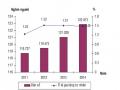 Divergence of Land Use Criteria in the Planning of Van Yen District in 2014 and Forecast for 2015 (Unit: %)
 -
 Regulations on Planning and Agricultural Land Use Plans
 -
 Law enforcement on planning and land use planning through practice in Son Tay town, Hanoi city - 14
 -
 Research on variety selection and technical measures for cultivating Zea mays l. corn on converted rice land in Long An and Dong Thap provinces - 1
The Commune People's Committee directs relevant departments and organizations to specify goals, make annual and 5-year plans and solutions suitable to specific local conditions as a basis for implementation.
CONCLUSIONS AND RECOMMENDATIONS
1. Conclusion
From the research results on the theoretical and practical basis of sustainable land use planning in Trung Ly commune, the topic comes to the following conclusions:
- Commune-level land use planning is part of the macro and micro land use planning system. Commune-level land use planning complies with current land policies and laws. Sustainable land use planning requires active participation of the people.
- The results of the theoretical research show that the correct policies of the Party and the State have had a clear effect in improving the efficiency of land management and use in the commune; however, in the implementation process, there are still some existing problems and limitations such as: some policies and sub-law documents are not clear, especially sub-law documents on land use planning and land allocation for agriculture and forestry at the commune and village levels; the land classification system, forest classification and forestry land have not been unified among sectors, leading to unrealistic reflection in the preparation of current status maps; criteria for land classification, data, and areas of land types between relevant sectors and agencies are not unified (Department of Natural Resources and Environment with Department of Agriculture and Rural Development).
- Through research on the current status and development trends in agricultural and forestry production, it is shown that there has been a clear change in shifting cultivation, wet rice cultivation, home garden systems, forest gardens and livestock farming. The work of managing, protecting and developing forest resources has received attention and investment, leading to improved productivity and forest quality. However, with a commune with a low level of education and limited financial resources, agricultural and forestry production needs to be further invested in for the commune to develop in the coming years .
- The results of the investigation, research and assessment of natural, economic and social conditions of Trung Ly commune show that the commune has underdeveloped infrastructure, relatively difficult natural conditions, strongly fragmented terrain and harsh weather and climate. People lack secondary occupations, and do not have capital and knowledge to develop production, but people are very industrious, hardworking, united and strive to eliminate hunger and reduce poverty.
poor. As a mountainous commune, it has the potential to develop forestry in the future.
- The results of the investigation into the current land use status of Trung Ly commune show that land has been managed and used relatively strictly, in compliance with current regulations of the State. The area of agricultural land is very small, accounting for only 1.06% of the total natural area; The area of forestry land is large but mainly natural forests with low reserves and vacant land being used by people for low-efficiency swidden production; The area of specialized land is still limited, not meeting the needs of the people; The area of unused land is still large, this is a strength and potential for the commune to invest in developing agricultural and forestry production.
- Based on the results of the investigation of the main land use models in the research area, the topic analyzed the economic efficiency and selected and proposed a group of crops and livestock for Trung Ly commune as follows: Forestry trees: Production forest tree species are: Xoan ta, Luong, Tre bat bo; Protective forest tree species: Sao den, Lat hoa and planting May nep trees under the forest canopy. Agricultural crops: Rice: Selected hybrid rice varieties of 2 lines and Khang dan rice; Flower crops: Main crops selected are Corn, Sweet potato, Peanut.... Fruit trees: Selected banana and plum trees. Livestock: Buffalo, Mong pig, Cow, Goat, Hybrid pig....
- From the results of analyzing natural conditions, socio-economic conditions, current land use status, analyzing the effectiveness of effective land use models in the research area, the project has conducted land use planning for the period 2013 - 2020, land use plan 2013 - 2015 and 2016 - 2020 for Trung Ly commune. On that basis, the project has proposed a number of support solutions on policy mechanisms, management organization, investment capital, science and technology, market and ecological environment to contribute to improving the effectiveness of land use, poverty reduction, step by step bringing Trung Ly commune to develop day by day.
2. Existence
Although there have been many efforts to achieve certain results, the topic still has the following shortcomings:
- Trung Ly is a mountainous commune bordering the border, with low educational level, underdeveloped infrastructure, complex terrain conditions, harsh climate and division into many different sub-regions, so sustainable land use planning is not very effective.
- Sustainable land use planning with the participation of local people at the commune level has not been fully studied. Therefore, the indigenous knowledge and experience of local people have not been fully exploited.
- Basic and in-depth research and investigation in the fields of cultivation, animal husbandry, agriculture and forestry, and the results of the investigation on land potential are still incomplete and there are no soil analysis results. There is no specific research on the environmental efficiency, but it is only based on the research results of some published authors.
- The quantitative nature of the materials used in the topic is still limited, so the evaluation cannot avoid shortcomings and problems that affect the research results. Some sustainable land use planning solutions proposed in the thesis are only directional and general; not detailed for each type of land, each industry, each field.
3. Recommendations
From the above limitations and shortcomings, in future studies we have the following recommendations:
- It is necessary to continue researching and perfecting the theoretical and practical basis of sustainable land use planning with the active participation of the people. The research results of the project can be implemented locally and applied to land use planning for some communes that do not have land use planning but have similar conditions in Muong Lat district, Thanh Hoa province.
- To improve the effectiveness of sustainable land use planning, it is necessary to have proper investment in infrastructure, capital and other resources as a basis for planning implementation, bringing Trung Ly commune to increasingly develop economically and socially.
- It is necessary to have reasonable credit policies, develop education and training, promote agricultural and forestry extension work, and apply new scientific and technical advances in production.
- To further improve the research results, it is necessary to conduct more in-depth research on land potential assessment and quantify the environmental efficiency of sustainable land use planning options./.
REFERENCES .
Vietnamese:
1. Ministry of Agriculture and Rural Development (1997), "Evaluation of the land and forest allocation method applied by the Song Da Social Forestry Project in two communes of Yen Chau and Tua Chua districts", Minutes of the national workshop on land use planning and forestry land allocation , pp. 83 - 97.
2. Ministry of Agriculture and Rural Development (2005), Decision 38/2005/QD-BNN dated July 6, 2005 on technical and economic norms for afforestation, forest protection, regeneration promotion and protection.
3. Ministry of Agriculture and Rural Development (2009), Circular 34/2009/TT-BNNPTNT dated June 10, 2009 on regulations on criteria for identifying and classifying forests.
4. Ministry of Agriculture and Rural Development (2009), Circular No. 54/2009/TT-BNNPTNT, dated August 21, 2009, guiding the implementation of the national criteria set on new rural areas.
5. The Ministry of Agriculture and Rural Development issued Circular No. 07/2010/TT-BNNPTNT, dated February 8, 2010, on guidance on planning for agricultural production development at the commune level according to the National New Rural Criteria .
6. Ministry of Natural Resources and Environment (2005), Circular No. 01/2005/TT-BTNMT on guiding a number of articles of Decree No. 181/2004/ND-CP.
7. Ministry of Natural Resources and Environment (2009), Circular No. 19/2009/TT-BTNMT detailing the preparation, adjustment and appraisal of land use planning and plans .
8. Nguyen Ngoc Binh (1996), Vietnam Forest Land , Agricultural Publishing House, Hanoi.
9. Tran Thanh Binh (1997), Regulations and policies on land use management , Training documents for social LNXH support project, Forestry University, Ha Tay.
10. Government (1993), Decree 64/CP on the allocation of agricultural land to households and individuals for stable and long-term use for agricultural purposes, issued on September 27, 1993 .
11. Government (1994), Decree 02/CP Regulations on the allocation of forestry land to organizations, individuals and households for forestry purposes issued on November 15, 1994.
12. Government (1995), Decree 01/CP on land allocation and use for agricultural, forestry and fishery production purposes in State-owned enterprises issued on January 4, 1995.
13. Government (1999), Decree 163/1999/ND-CP on Land allocation and lease of forestry land to organizations, individuals and households for stable and long-term use for forestry purposes, issued on November 16, 1999.
14. Government (2009), Decree No. 69/2009/ND-CP Additional regulations on land use planning, land prices, land recovery, compensation, and resettlement support.
15. Department of Agricultural and Forestry Extension (1998), Participatory Rural Appraisal (PRA) Method in Agricultural and Forestry Extension Activities, Agricultural Publishing House, Hanoi.
16. Forestry Department (1996), Contents, measures and procedures for implementing forestry land allocation in communes, Agricultural Publishing House, Hanoi.
17. Nguyen Phuc Cuong (2003), Research and proposal for forestry and agricultural land use planning in Tan Dong commune, Tran Yen district, Yen Bai province, Master's thesis in Forestry Science, Forestry University, Ha Tay.
18. Doan Diem (1997), Land use planning and forest management with people's participation, Workshop documents, University of Forestry, pp. 1-19.
19. Dinh Van De (1998), Research on some theoretical and practical bases of micro-level land use planning and implementation of agricultural and forestry land use planning, Minh Chau village, Chau Hanh commune, Quy Chau district, Nghe An province , Master's thesis in Forestry Science, Forestry University, Ha Tay.
20. FAO (1990), Farming system development (Farming system development, FAO, Rome, 1990) , Vietnamese translation, Agricultural Publishing House, Hanoi.
21. Tran Thanh Huyen (2010), Research on theoretical and practical basis as a basis for proposing sustainable land use planning solutions in Hoa Son commune, Luong Son district, Hoa Binh province, Master 's thesis in Forestry Science, Forestry University, Hanoi.
22. Ha Quang Khai (1995), Use and protection of land resources , Graduate teaching materials - University of Forestry.
23. Ha Quang Khai, Dang Van Phu (1997), Concept of land use system, Training document for social LNXH support project, Forestry University, Ha Tay.
24. Vu Van Me (1994), '' Some experiences in allocating forestry land in communes in Hoa Binh province '', GTZ/IIED/LUWG: The 2nd National Workshop on Land Use from September 22-23, 1994 , pp. 105-110.
25. Vu Van Me and CLaude Desloges (1996), Method of land use planning and forest land allocation with people's participation . Project GCP/VIE/020/ITA, Hanoi.
26. Vu Van Me (1997), “Methods of land use planning and forestry land allocation with people's participation ”, Proceedings of the national workshop on land use planning and forestry land allocation .
27. Nguyen Hai Nam (1998), “Some issues on land management activities of the Mountainous Rural Development Program”, Special information on the Vietnam - Sweden Mountainous Rural Development Program .
28. Nguyen Ba Ngai (2000), Research on scientific and practical basis for planning of forestry development at commune level in the central mountainous region of Northern Vietnam , PhD thesis in Agricultural Science, Forestry University, Ha Tay.
29. Nguyen Xuan Quat (1996), Integrated and sustainable land use , Agricultural Publishing House, Hanoi.
30. Nguyen Huu Tan (1999), Initial research on some theoretical and practical bases of sustainable land use planning at Nhu Xuan Forestry Enterprise, Nhu Thanh District, Thanh Hoa Province, Master's thesis in Forestry Science, Forestry University, Ha Tay.
31. Bui Quang Toan (1996), Stable agricultural land use planning in the midlands and mountainous areas of our country , Documents of the State-level seminar on topic 02-15-02 (the possibility of wasteland in Vietnam), Hanoi.
32. Bui Dinh Toai (1998), "Building village development plans with monitoring and evaluation involving people in rural development projects" , Special information on the Vietnam - Sweden Mountainous Rural Development Program (6), pp. 15-19.
33. Nguyen Van Tuan and Vu Van Me (1996), Some impacts after the pilot land allocation and forest allocation in Tu Ne commune, Tan Lac district and Hang Kia commune, Pa Co, Mai Chau district, Hoa Binh province , Project on innovation of forestry development strategy, Hanoi.
34. Dao The Tuan (1989), Agricultural Ecosystem, Science and Technology Publishing House, Hanoi.
35. Pham Chi Thanh, Tran Van Diem, Pham Tien Dung, Tran Duc Vien (1993), Agricultural system, Agricultural Publishing House.
36. Ly Van Trong, Nguyen Ba Ngai, Nguyen Nghia Bien, Tran Ngoc Binh (1997), Rural assessment methods, Training materials for social LNXH support project, Forestry University, Ha Tay.
37. General Department of Land Management (1991), Guidelines for commune-level land use planning, Circular No. 106-QHKT issued on April 15, 1991 , Hanoi.
38. General Department of Land Administration (1994), Draft orientation for national land use planning to the year 2000 and plan for allocating agricultural and forestry land with forests for other purposes , Hanoi.
39. Forestry University (1998), Summary of the first survey report on social LNXH, law and policy group, Forestry University, Ha Tay.