
Participation in and implementation of international treaties related to marine environmental protection and marine safety and security is one of the main solutions to overcome the current marine pollution situation, and is also an important task of international cooperation on marine environmental protection in Vietnam. Regarding environmental protection activities in loading and unloading and storing HNS cargo at seaports, there are two international conventions to which Vietnam is a full member: the International Convention for the Prevention of Pollution from Ships (Marpol 73/78 Convention) and the International Maritime Dangerous Goods Code (IMDG Code).
Table 1.7.
Regulations on pollution prevention for ports in receiving HNS cargo ships of Marpol 73/78
STT
Appendix Convention | Regulations for ports | Rules with the body management | Vietnam Day join | |
1 | Appendix 1: Prevention of Pollution by Oil | Ports must be equipped with facilities to receive residues and oil mixtures remaining from oil tankers and other ships to meet the needs of the ships without causing disruption. illegitimate ship | Control of ships while in port or offshore terminals to comply with oil pollution prevention requirements. | March 18, 1991 |
2 | Appendix 2: Prevention of pollution by bulk transport liquid toxic | Ports of discharge and loading must have suitable facilities to receive residues and mixtures containing toxic liquids discharged from ships without causing undue disruption to the ship. justifiable. | Control of ships while in port or offshore terminals to comply with requirements for the prevention of pollution from the carriage of bucket of toxic chemicals. | March 18, 1991 |
3 | Annex 3: Prevention of pollution by substances toxic be carried packaging | No regulations | Control of ships while in port to comply with the requirements for the prevention of pollution by hazardous substances carried in packaged form. | March 19, 2015 |
Maybe you are interested!
-
 The Role of Tam Dao National Park in Biodiversity Conservation and Environmental Protection in the Northern Delta Region and Vietnam
 -
 The Incompleteness of the Party and State's Viewpoints and Policies for Buddhism to Participate in Environmental Protection
 -
 Organizing Environmental Protection Activities and Hst
 -
 Evaluating the Development Potential of Ornamental Flower Craft Villages in Thu Duc District in the Direction of Tourism Associated with Environmental Protection
 -
 Some Indicators of Cbt Development Assessment Associated with Environmental Protection Awareness Mentioned by Scholars in the Study
STT
Appendix Convention | Regulations for ports | Rules with the body management | Vietnam Day join | |
4 | Appendix 4: Prevention of pollution by wastewater from ship | Ports and terminals must be equipped with sewage reception facilities that satisfy the needs of ships without causing disruption. ship without valid reason. | Testing and granting of International Certificate on prevention of pollution by wastewater for ships | March 19, 2015 |
5 | Appendix 5: Prevention of pollution by waste | Ports and terminals must be equipped with garbage reception facilities that satisfy the garbage disposal needs of ships without causing pollution. unreasonable train stoppage | Control of ships while in port to comply with requirements for the prevention of pollution by garbage ship waste | March 19, 2015 |
6 | Annex 6: Prevention of air pollution from ships go out | Encourage terminals to equip themselves with systems to control the discharge of volatile organic compounds from liquid cargo ships without causing unforeseen vessel stoppages. reasonable | Approve the terminal's volatile organic compound discharge control system where required. | March 19, 2015 |
The Convention for the Safety of Life at Sea is considered one of the most important international agreements relating to merchant ships. The first Convention in this field was adopted in 1914, amended and supplemented in 1929, 1948, 1960 until 1974 when a completely new Convention was adopted - the International Convention for the Safety of Life at Sea 1974 (SOLAS74), the SOLAS74 Convention came into force on 25/05/1980 and is regularly updated and supplemented by Resolutions.
Chapter VII of the Solas 74 Convention requires mandatory application of the IMDG code adopted by the IMO Maritime Safety Committee.
This chapter and the IMDG code apply to the carriage of dangerous goods in packaged form, solids in bulk, hazardous liquid chemicals in bulk and liquefied gases in bulk. The requirements for the carriage of dangerous goods by sea include a dangerous goods dossier, a loading book, and a dangerous goods incident report.
This Chapter also requires Member Governments to issue or cause to be issued specific guidance on the safe transport of dangerous goods including guidance on emergency response.
Chapter IX of the Solas 74 Convention requires mandatory application of the ISM Code and was approved by IMO Assembly resolution A.741(18) in November 1993.
This Chapter together with the ISM Code requires that a safety management system be established by the shipowner or any person having similar responsibility for the ship and that the safety management system be maintained and implemented to meet the requirements for safety and environmental protection.
The objectives of safety management are:
Safe practices in ship operations.
Protect and prevent pollution of the ecological environment. Ships and equipment are maintained in safe condition.
Have action procedures ready to respond to emergency situations.
"IMDG Code" (International Maritime Dangerous Goods Code) is a set of laws and regulations detailing dangerous goods and rules on packaging, labeling, stowage, segregation, loading, unloading, delivery, preservation, storage and transportation of dangerous goods by sea, to ensure the safety of people, means of transport, works and goods; along with the highest level of rationalization between the customs and requirements for transporting dangerous goods of different countries.
Based on the guidelines and regulations of the IMDG Code, the Member States of the Convention shall issue regulations for their ports regarding the types of goods transported through the port that are classified as dangerous goods in accordance with the laws of that Member.
Seaports directly apply the guidelines and regulations of the IMDG Code in the loading and storage of dangerous goods to ensure synchronization with ships in the transportation of goods through seaports and ensure safety for people, property and the environment of the seaport.
1.3.4.2. Regulations on environmental protection for seaports in Vietnamese law
Seaport activities are related to many fields, so they are subject to the provisions of many relevant legal documents. Regulations on environmental protection for seaports are stipulated in the following system of legal documents:
- Law on Environmental Protection 2020 and implementing documents;
- Vietnam Law of the Sea 2012 and documents guiding its implementation;
- Vietnam Maritime Code 2015 and implementing documents;
- Law on marine and island resources and environment 2015 and documents guiding its implementation;
- Law on Fire Prevention and Fighting 2001, amended and supplemented law 2013 and documents guiding its implementation;
- Law on Chemicals 2007 and the amended and supplemented law 2018 and documents guiding its implementation;
- Law on Water Resources 2012 and documents guiding its implementation.
- Law on Biodiversity 2018 and documents guiding its implementation.
Regulations on environmental protection for seaport operations in Vietnamese legal documents are consistent to a certain extent. Some requirements on environmental protection for seaports in Vietnamese legal documents are summarized as follows:
- Have sufficient documents on environmental protection, prevention and response to incidents for seaports approved by competent authorities according to regulations (Environmental impact assessment report or equivalent documents; Certificate of completion of environmental protection works; License to discharge wastewater into receiving sources; plan to respond to oil spills, chemicals, fires and explosions).
- Ensure adequate human resources, systems, facilities, and equipment to manage and treat waste generated in the port area.
- Ensure that there are sufficient means to receive and collect waste from ships operating at seaports for treatment in accordance with the provisions of the International Convention for the Prevention of Pollution from Ships, of which Vietnam is a member (MARPOL Convention).
- Have adequate fire prevention and fighting safety conditions, fire fighting plans; equipment and human resources for preventing and responding to oil and chemical spills according to regulations.
Chapter 1 summary:
Chapter 1 provides an overview of the assessment of environmental degradation risks from the process of storing and loading toxic chemicals at seaports, including: Analysis of concepts and relationships between terms related to the research problem: Hazard, Risk, Environmental degradation, Risk of environmental degradation, risk, risk assessment, risk assessment, risk criteria and assessment indicators...; methods and procedures for assessing degradation risks; Risk assessment, risk by criteria; Overview of domestic and foreign research works related to the research problem; Overview of research areas and activities of storing and loading chemicals at seaports. The overall research process has confirmed that the issue of risk assessment for storage and loading of toxic chemicals at seaports has also been studied extensively in the world, including studies on establishing criteria for assessing environmental risks for seaport activities. In Vietnam, the issue of assessing the risk of environmental degradation from the process of storing and loading toxic chemicals at seaports is new and has high practical significance when choosing the research area as the group of seaports in Northern Vietnam, where there are many large seaports and natural conditions of the region with high value in terms of environment, biodiversity, socio-economics, science and education.
CHAPTER 2. RESEARCH METHODS AND MATERIALS
2.1. Research object and scope
2.1.1. Research subjects
The research objects of the thesis include:
Risks of adverse environmental impacts from the loading and storage of toxic chemicals at seaports include: Risk of fire and explosion, Risk of oil spills, Risk of dispersion of toxic chemicals and combinations of these risks.
Hazardous chemicals transported by sea are regulated in the International Convention on Liability and Compensation for Damage in Relation to the Carriage of Dangerous and Noxious Goods by Sea (HNS Convention) and do not include radioactive substances. The list of HNS groups and regulations on the types of goods in each HNS group according to the HNS Convention are presented in Table 1.5.
2.1.2. Scope of research
* Spatial scope
The study was conducted within the scope of the Northern Vietnam seaport group (group 1) according to Decision No. 2376/QD-BGTVT dated July 29, 2016 of the Ministry of Transport on the Detailed Planning of the Northern Seaport Group (group 1) for the period up to 2020, with a vision to 2030. Including 4 seaports: Quang Ninh Port, Hai Phong Port, Thai Binh Port and Hai Thinh - Nam Dinh Port[70].
The scope of seaports includes land and port waters as prescribed in Article 4 of the 2015 Vietnam Maritime Code.
* Time range
The current status of cargo traffic at seaports was recorded from 2016 - 2020 and environmental risks were analyzed from 2011 - 2020.
* Content scope
The scope of this research topic includes the risks of environmental degradation related to toxic chemicals at seaports (loading, unloading, storage, internal transportation) including: Risk of fire and explosion, Risk of oil spill and Risk of chemical dispersion.
Toxic substances and solutions for environmental protection, prevention and response to incidents related to toxic chemicals at seaports.
2.2. Research method
2.2.1. Approach
The main approach in the thesis research is the System Approach. This approach is a way of looking at the world through the structure of the system, its hierarchy and its dynamics, which is a comprehensive and dynamic approach. When looking more closely at the environment of a system, it will be seen that it includes many systems interacting with the environment of many of those systems. If we consider a set of systems that interact with each other, then that set of systems can be considered a larger system. The interrelationship between the component systems (subsystem - parent - subsystem) plays a role in linking those components to form a block - a larger system[71].
In this study, the researcher studies and evaluates the storage and loading and unloading activities at seaports within the overall seaport environmental system including subsystems: Loading and unloading means; Transport means; storage, packaging, and retail goods systems; Technical infrastructure and Natural environment. The subsystems interact with each other in the system and are affected by different input factors such as types of goods, people, nature, technology, etc. Through analyzing and evaluating the interaction of each subsystem and influencing factors, general rules will be found that allow for the analysis and prediction of the input and output factors of the system under different conditions.
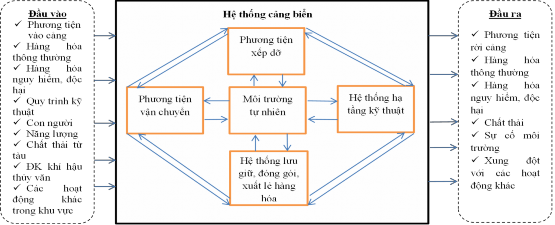
Figure 2.1. Port system structure and input and output factors according to the approach
near system
53
Port operations are development activities that bring economic and social benefits but have the risk of causing environmental damage. Therefore, the orientation of sustainable development is also the approach of the thesis topic. The goal of sustainable development is the harmony between the three pillars of Environment - Economy - Society in human development activities. The results of this study are all aimed at the goal of balancing economic benefits with the goal of protecting the environment as well as ensuring human health and safety.
The Dynamics-Response (DPSIR) model approach is also used for the thesis research. The DPSIR model is a model that describes the mutual relationship between Dynamics - D (socio-economic development, the root cause of environmental changes) - Pressure - P (direct sources of pollution and environmental degradation) - Current status - S (current status of environmental quality) - Impact - I (impact of environmental pollution on public health, socio-economic development activities and ecological environment)
– Response – R (environmental protection solutions).
The DPSIR Integrated Assessment Method developed by the European Environment Agency (EEA) in 1999 is a cognitive model used to identify, analyze and evaluate cause-effect relationships: causes of environmental problems, consequences and necessary response measures. The structure of the model includes indicators of natural - economic - social conditions of the study area [72].
Human socio-economic development activities (Driving force - D) are the underlying cause of environmental changes that create direct sources of emissions that pollute the environment and degrade the environment (Pressure - P). Current status and state of environmental quality (Status - S). Impact of environmental pollution on health, socio-economic development activities and ecological environment (Impact - I). Responses of the state and society to environmental protection (Response - R)[73].
In this study, the researcher applies a part of the DPSIR model to the process of assessing the risk of environmental degradation from the process of storing and loading toxic chemicals at seaports, in which the activities of trading goods by sea in general and the activities of storing and loading toxic chemicals at seaports in particular (D) are the causes of pressure on the environment due to waste or environmental incidents during operation (P) are the risks of environmental degradation. (S) is the current state of the environment in the seaport area. (I) is the analysis and assessment of the possibility of occurrence and