
1. Not contrary to national customs and traditions; not allowing superstitious activities to occur.
2. Do not take advantage of weddings, funerals and festivals to conduct activities that aim to divide national unity, causing disunity in communities, clans and families.”
In theory, as socio-economic conditions change, traditional customs and practices will gradually diminish due to the absorption of modern elements. However, a trend is emerging today: the revival of traditional customs and practices. Wedding ceremonies are organized with lavish meals, cultural activities that are costly and lengthy such as housewarming ceremonies, even naming ceremonies for children, birthday celebrations, and school sending parties... especially among the young generation, among cadres, and families with good economic conditions are pressing issues for local Party committees and authorities. In essence, this is the inertia of habits and the mentality of "wealth gives rise to courtesy" of a part of the population that is not suitable for the new life, causing waste or harm to people's health and personality. They are losing the traditions and good cultural identity of their nation.
Different aspects such as information and communication, economic and social development... are changing many aspects of social life. Therefore, the field of marriage in general and marriage ceremonies in particular cannot avoid that change. In the past few decades, the Tu Di people in particular and the Bo Y people and other ethnic groups living in Vietnam in general have gradually changed in many aspects following the general trend of society and development.
Maybe you are interested!
-

 Identify Rating Levels and Rating Scales
zt2i3t4l5ee
zt2a3gstourism,quan lan,quang ninh,ecology,ecotourism,minh chau,van don,geography,geographical basis,tourism development,science
zt2a3ge
zc2o3n4t5e6n7ts
of the islanders. Therefore, this indicator will be divided into two sub-indicators:
a1. Natural tourism attractiveness a2. Cultural tourism attractiveness
b. Tourist capacity
The two island communes in Quan Lan have different capacities to receive tourists. Minh Chau Commune is home to many standard hotels and resorts, attracting high-income domestic and international tourists. Meanwhile, Quan Lan Commune has many motels mainly built and operated by local people, so the scale and quality are not high, and will be suitable for ordinary tourists such as students.
c. Time of exploitation of Quan Lan Island Commune:
Quan Lan tourism is seasonal due to weather and climate conditions and festivals only take place on certain days of the year, specifically in spring. In Quan Lan commune, the period from April to June and from September to November is considered the best time to visit Quan Lan because the cultural tourism activities are mainly associated with festivals taking place during this time.
Minh Chau island commune:
Tourism exploitation time is all year round, because this is a place with a number of tourist attractions with diverse ecosystems such as Bai Tu Long National Park Research Center, Tram forest, Turtle Laying Beach, so besides coming to the beach for tourism and vacation in the summer, Minh Chau will attract research groups to come for tourism combined with research at other times of the year.
d. Sustainability
The sustainability of ecotourism sites in Quan Lan and Minh Chau communes depends on the sensitivity of the ecosystems to climate changes.
landscape. In general, these tourist destinations have a fairly high level of sustainability, because they are natural ecosystems, planned and protected. However, if a large number of tourists gather at certain times, it can exceed the carrying capacity and affect the sustainability of the environment (polluted beaches, damaged trees, animals moving away from their habitats, etc.), then the sustainability of the above ecosystems (natural ecosystems, human ecosystems) will also be affected and become less sustainable.
e. Location and accessibility
Both island communes have ports to take tourists to visit from Van Don wharf:
- Quan Lan – Van Don traffic route:
Phuc Thinh – Viet Anh high-speed boat and Quang Minh high-speed boat, depart at 8am and 2pm from Van Don to Quan Lan, and at 7am and 1pm from Quan Lan to Van Don. There are also wooden boats departing at 7am and 1pm.
- Van Don - Minh Chau traffic route:
Chung Huong high-speed train, Minh Chau train, morning 7:30 and afternoon 13:30 from Van Don to Minh Chau, morning 6:30 and afternoon 13:00 from Minh Chau to Van Don.
f. Infrastructure
Despite receiving investment attention, the issue of infrastructure and technical facilities for tourism on Quan Lan Island is still an issue that needs to be resolved because it has a direct impact on the implementation of ecotourism activities. The minimum conditions for serving tourists such as accommodation, electricity, water, communication, especially medical services, and security work need to be given top priority. Ecotourism spots in Minh Chau commune are assessed to have better infrastructure and technical facilities for tourism because there are quite complete and synchronous conditions for serving tourists, meeting many needs of domestic and foreign tourists.
3.2.1.4. Determine assessment levels and assessment scales
Corresponding to the levels of each criterion, the index is the score of those levels in the order of 4, 3, 2, 1 decreasing according to the standard of each level: very attractive (4), attractive (3), average (2), less attractive (1).
3.2.1.5. Determining the coefficients of the criteria
For the assessment of DLST in the two communes of Quan Lan and Minh Chau islands, the students added evaluation coefficients to show the importance of the criteria and indicators as follows:
Coefficient 3 with criteria: Attractiveness, Exploitation time. These are the 2 most important criteria for attracting tourists to tourism in general and eco-tourism in particular, so they have the highest coefficient.
Coefficient 2 with criteria: Capacity, Infrastructure, Location and accessibility . Because the assessment area is an island commune of Van Don district, the above criteria are selected by the author with appropriate coefficients at the average level.
Coefficient 1 with criteria: Sustainability. Quan Lan has natural and human-made ecotourism sites, with high biodiversity and little impact from local human factors. Most of the ecotourism sites are still wild, so they are highly sustainable.
3.2.1.6. Results of DLST assessment on Quan Lan island
a. Assessment of the potential for natural tourism development
For Minh Chau commune:
+ Natural tourism attractiveness is determined to be very attractive (4 points) and the most important coefficient (coefficient 3), so the score of the Attractiveness criterion is 4 x 3 = 12.
+ Capacity is determined as average (2 points) and the coefficient is quite important (coefficient 2), then the score of Capacity criterion is 2 x 2 = 4.
+ Exploitation time is long (4 points), the most important coefficient (coefficient 3) so the score of the Exploitation time criterion is 4 x 3 = 12.
+ Sustainability is determined as sustainable (4 points), the important coefficient is the average coefficient (coefficient 1), so the score of the Sustainability criterion is 4 x 1 = 4 points
+ Location and accessibility are determined to be quite favorable (2 points), the coefficient is quite important (coefficient 2), the criterion score is 2 x 2 = 4 points.
+ Infrastructure is assessed as good (3 points), the coefficient is quite important (coefficient 2), then the score of the Infrastructure criterion is 3 x 2 = 6 points.
The total score for evaluating DLST in Minh Chau commune according to 6 evaluation criteria is determined as: 12 + 4 + 12 + 4 + 4 + 6 = 42 points
Similar assessment for Quan Lan commune, we have the following table:
Table 3.3: Assessment of the potential for natural ecotourism development in Quan Lan and Minh Chau communes
Attractiveness of self-tourismof course
Capacity
Mining time
Sustainability
Location and accessibility
Infrastructure
Result
Point
DarkMulti
Point
DarkMulti
Point
DarkMulti
Point
DarkMulti
Point
DarkMulti
Point
DarkMulti
CommuneMinh Chau
12
12
4
8
12
12
4
4
4
8
6
8
42/52
Quan CommuneLan
6
12
6
8
9
12
4
4
4
8
4
8
33/52
b. Assessment of the potential for humanistic tourism development
For Quan Lan commune:
+ The attractiveness of human tourism is determined to be very attractive (4 points) and the most important coefficient (coefficient 3), so the score of the Attractiveness criterion is 4 x 3 = 12.
+ Capacity is determined to be large (3 points) and the coefficient is quite important (coefficient 2), then the score of the Capacity criterion is 3 x 2 = 6.
+ Mining time is average (3 points), the most important coefficient (coefficient 3) so the score of the Mining time criterion is 3 x 3 = 9.
+ Sustainability is determined as sustainable (4 points), the important coefficient is the average coefficient (coefficient 1), so the score of the Sustainability criterion is 4 x 1 = 4 points.
+ Location and accessibility are determined to be quite favorable (2 points), the coefficient is quite important (coefficient 2), the criterion score is 2 x 2 = 4 points.
+ Infrastructure is rated as average (2 points), the coefficient is quite important (coefficient 2), then the score of the Infrastructure criterion is 2 x 2 = 4 points.
The total score for evaluating DLST in Quan Lan commune according to 6 evaluation criteria is determined as: 12 + 6 + 6 + 4 + 4 + 4 = 36 points.
Similar assessment with Minh Chau commune we have the following table:
Table 3.4: Assessment of the potential for developing humanistic eco-tourism in Quan Lan and Minh Chau communes
Attractiveness of human tourismliterature
Capacity
Mining time
Sustainability
Location and accessibility
Infrastructure
Result
Point
DarkMulti
Point
DarkMulti
Point
DarkMulti
Point
DarkMulti
Point
DarkMulti
Point
DarkMulti
Quan CommuneLan
12
12
6
8
9
12
4
4
4
8
4
8
39/52
Minh CommuneChau
6
12
4
8
12
12
4
4
4
8
6
8
36/52
Basically, both Minh Chau and Quan Lan localities have quite favorable conditions for developing ecotourism. However, Quan Lan commune has more advantages to develop ecotourism in a humanistic direction, because this is an area with many famous historical relics such as Quan Lan Communal House, Quan Lan Pagoda, Temple worshiping the hero Tran Khanh Du, ... along with local festivals held annually such as the wind praying ceremony (March 15), Quan Lan festival (June 10-19); due to its location near the port and long exploitation time, the beaches in Quan Lan commune (especially Quan Lan beach) are no longer hygienic and clean to ensure the needs of tourists coming to relax and swim; this is also an area with many beautiful landscapes such as Got Beo wind pass, Ong Phong head, Voi Voi cave, but the ability to access these places is still very limited (dirt hill road, lots of gravel and rocks), especially during rainy and windy times; In addition, other natural resources such as mangrove forests and sea worms have not been really exploited for tourism purposes and ecotourism development. On the contrary, Minh Chau commune has more advantages in developing ecotourism in the direction of natural tourism, this is an area with diverse ecosystems such as at Rua De Beach, Bai Tu Long National Park Conservation Center...; Minh Chau beach is highly appreciated for its natural beauty and cleanliness, ranked in the top ten most beautiful beaches in Vietnam; Minh Chau commune is also home to Tram forest with a large area and a purity of up to 90%, suitable for building bridges through the forest (a very effective type of natural ecotourism currently applied by many countries) for tourists to sightsee, as well as for the purpose of studying and researching.
Figure 3.1: Thenmala Forest Bridge (India) Source: https://www.thenmalaecotourism.com/(August 21, 2019)
3.2.2. Using SWOT matrix to evaluate Quan Lan island tourism
General assessment of current tourism activities of Quan Lan island is shown through the following SWOT matrix:
Table 3.5: SWOT matrix evaluating tourism activities on Quan Lan island
Internal agent
Strengths- There is a lot of potential for tourism development, especially natural ecotourism and humanistic ecotourism.- The unskilled labor force is relatively abundant.- resource environmentunpolluted, still
Weaknesses- Poorly developed infrastructure, especially traffic routes to tourist destinations on the island.- The team of professional staff is still weak.- Tourism products in general
quite wild, originalintact
general and DLST in particularalone is monotonous.
External agents
Opportunity- Tourism is a key industry in the socio-economic development strategy of the province and Van Don economic zone.- Quan Lan was selected as a pilot area for eco-tourism development within the framework of the green growth project between Quang Ninh province and the Japanese organization JICA.- The flow of tourists and especially ecotourism in the world tends toincreasing
Challenge- Weather and climate change abnormally.- Competition in tourism products is increasingly fierce, especially with other localities in the province such as Ha Long, Mong Cai...- Awareness of tourists, especially domestic tourists, about ecotourism and nature conservation is not high.
Through summary analysis using SWOT matrix we see that:
To exploit strengths and take advantage of opportunities, it is necessary to:
- Diversify products and service types (build more tourism routes aimed at specific needs of tourists: experiential tourism immersed in nature, spiritual cultural tourism...)
- Effective exploitation of resources and differentiated products (natural resources and human resources)
div.maincontent .p { color: black; font-family:"Times New Roman", serif; font-style: normal; font-weight: normal; text-decoration: none; font-size: 14pt; margin:0pt; } div.maincontent p { color: black; font-family:"Times New Roman", serif; font-style: normal; font-weight: normal; text-decoration: none; font-size: 14pt; margin:0pt; } div.maincontent .s1 { color: black; font-family:"Times New Roman", serif; font-style: normal; font-weight: normal; text-decoration: none; font-size: 13pt; } div.maincontent .s2 { color: black; font-family:"Times New Roman", serif; font-style: normal; font-weight: normal; text-decoration: none; font-size: 13pt; } div.maincontent .s3 { color: #0D0D0D; font-family:"Times New Roman", serif; font-style: normal; font-weight: bold; text-decoration: none; font-size: 14pt; } div.maincontent .s4 { color: black; font-family:"Times New Roman", serif; font-style: italic; font-weight: normal; text-decoration: none; font-size: 14pt; } div.maincontent .s5 { color: black; font-family:"Times New Roman", serif; font-style: italic; font-weight: bold; text-decoration: none; font-size: 14pt; } div.maincontent .s6 { color: black; font-family:"Times New Roman", serif; font-style: italic; font-weight: normal; text-decoration: none; font-size: 14pt; vertical-align: -3pt; } div.maincontent .s7 { color: black; font-family:"Times New Roman", serif; font-style: italic; font-weight: normal; text-decoration: none; font-size: 14pt; vertical-align: -2pt; } div.maincontent .s8 { color: black; font-family:"Times New Roman", serif; font-style: italic; font-weight: normal; text-decoration: none; font-size: 14pt; vertical-align: -1pt; } div.maincontent .s9 { color: black; font-family:"Times New Roman", serif; font-style: normal; font-weight: normal; text-decoration: none; font-size: 14pt; } div.maincontent .s10 { color: black; font-family:"Times New Roman", serif; font-style: normal; font-weight: bold; text-decoration: none; font-size: 14pt; } div.maincontent .s11 { color: black; font-family:"Times New Roman", serif; font-style: normal; font-weight: normal; text-decoration: none; font-size: 14pt; } div.maincontent .s12 { color: black; font-family:Symbol, serif; font-style: normal; font-weight: normal; text-decoration: none; font-size: 14pt; } div.maincontent .s13 { color: black; font-family:Wingdings; font-style: normal; font-weight: normal; text-decoration: none; font-size: 14pt; } div.maincontent .s14 { color: black; font-family:"Times New Roman", serif; font-style: normal; font-weight: normal; text-decoration: none; font-size: 9pt; vertical-align: 5pt; } div.maincontent .s15 { color: black; font-family:"Times New Roman", serif; font-style: normal; font-weight: normal; text-decoration: none; font-size: 9pt; vertical-align: 5pt; } div.maincontent .s16 { color: black; font-family:Cambria, serif; font-style: italic; font-weight: normal; text-decoration: none; font-size: 14pt; } div.maincontent .s17 { color: #080808; font-family:"Times New Roman", serif; font-style: normal; font-weight: bold; text-decoration: none; font-size: 14pt; } div.maincontent .s18 { color: #080808; font-family:"Times New Roman", serif; font-style: normal; font-weight: normal; text-decoration: none; font-size: 14pt; } div.maincontent .s19 { color: black; font-family:"Times New Roman", serif; font-style: normal; font-weight: normal; text-decoration: none; font-size: 11pt; } div.maincontent .s20 { color: black; font-family:"Times New Roman", serif; font-style: normal; font-weight: normal; text-decoration: none; font-size: 10pt; } div.maincontent .s21 { color: black; font-family:"Times New Roman", serif; font-style: normal; font-weight: bold; text-decoration: none; font-size: 11pt; } div.maincontent .s22 { color: black; font-family:"Times New Roman", serif; font-style: normal; font-weight: normal; text-decoration: none; font-size: 11pt; } div.maincontent .s23 { color: black; font-family:"Times New Roman", serif; font-style: italic; font-weight: normal; text-decoration: none; font-size: 14pt; } div.maincontent .s24 { color: #212121; font-family:"Times New Roman", serif; font-style: normal; font-weight: normal; tex
Identify Rating Levels and Rating Scales
zt2i3t4l5ee
zt2a3gstourism,quan lan,quang ninh,ecology,ecotourism,minh chau,van don,geography,geographical basis,tourism development,science
zt2a3ge
zc2o3n4t5e6n7ts
of the islanders. Therefore, this indicator will be divided into two sub-indicators:
a1. Natural tourism attractiveness a2. Cultural tourism attractiveness
b. Tourist capacity
The two island communes in Quan Lan have different capacities to receive tourists. Minh Chau Commune is home to many standard hotels and resorts, attracting high-income domestic and international tourists. Meanwhile, Quan Lan Commune has many motels mainly built and operated by local people, so the scale and quality are not high, and will be suitable for ordinary tourists such as students.
c. Time of exploitation of Quan Lan Island Commune:
Quan Lan tourism is seasonal due to weather and climate conditions and festivals only take place on certain days of the year, specifically in spring. In Quan Lan commune, the period from April to June and from September to November is considered the best time to visit Quan Lan because the cultural tourism activities are mainly associated with festivals taking place during this time.
Minh Chau island commune:
Tourism exploitation time is all year round, because this is a place with a number of tourist attractions with diverse ecosystems such as Bai Tu Long National Park Research Center, Tram forest, Turtle Laying Beach, so besides coming to the beach for tourism and vacation in the summer, Minh Chau will attract research groups to come for tourism combined with research at other times of the year.
d. Sustainability
The sustainability of ecotourism sites in Quan Lan and Minh Chau communes depends on the sensitivity of the ecosystems to climate changes.
landscape. In general, these tourist destinations have a fairly high level of sustainability, because they are natural ecosystems, planned and protected. However, if a large number of tourists gather at certain times, it can exceed the carrying capacity and affect the sustainability of the environment (polluted beaches, damaged trees, animals moving away from their habitats, etc.), then the sustainability of the above ecosystems (natural ecosystems, human ecosystems) will also be affected and become less sustainable.
e. Location and accessibility
Both island communes have ports to take tourists to visit from Van Don wharf:
- Quan Lan – Van Don traffic route:
Phuc Thinh – Viet Anh high-speed boat and Quang Minh high-speed boat, depart at 8am and 2pm from Van Don to Quan Lan, and at 7am and 1pm from Quan Lan to Van Don. There are also wooden boats departing at 7am and 1pm.
- Van Don - Minh Chau traffic route:
Chung Huong high-speed train, Minh Chau train, morning 7:30 and afternoon 13:30 from Van Don to Minh Chau, morning 6:30 and afternoon 13:00 from Minh Chau to Van Don.
f. Infrastructure
Despite receiving investment attention, the issue of infrastructure and technical facilities for tourism on Quan Lan Island is still an issue that needs to be resolved because it has a direct impact on the implementation of ecotourism activities. The minimum conditions for serving tourists such as accommodation, electricity, water, communication, especially medical services, and security work need to be given top priority. Ecotourism spots in Minh Chau commune are assessed to have better infrastructure and technical facilities for tourism because there are quite complete and synchronous conditions for serving tourists, meeting many needs of domestic and foreign tourists.
3.2.1.4. Determine assessment levels and assessment scales
Corresponding to the levels of each criterion, the index is the score of those levels in the order of 4, 3, 2, 1 decreasing according to the standard of each level: very attractive (4), attractive (3), average (2), less attractive (1).
3.2.1.5. Determining the coefficients of the criteria
For the assessment of DLST in the two communes of Quan Lan and Minh Chau islands, the students added evaluation coefficients to show the importance of the criteria and indicators as follows:
Coefficient 3 with criteria: Attractiveness, Exploitation time. These are the 2 most important criteria for attracting tourists to tourism in general and eco-tourism in particular, so they have the highest coefficient.
Coefficient 2 with criteria: Capacity, Infrastructure, Location and accessibility . Because the assessment area is an island commune of Van Don district, the above criteria are selected by the author with appropriate coefficients at the average level.
Coefficient 1 with criteria: Sustainability. Quan Lan has natural and human-made ecotourism sites, with high biodiversity and little impact from local human factors. Most of the ecotourism sites are still wild, so they are highly sustainable.
3.2.1.6. Results of DLST assessment on Quan Lan island
a. Assessment of the potential for natural tourism development
For Minh Chau commune:
+ Natural tourism attractiveness is determined to be very attractive (4 points) and the most important coefficient (coefficient 3), so the score of the Attractiveness criterion is 4 x 3 = 12.
+ Capacity is determined as average (2 points) and the coefficient is quite important (coefficient 2), then the score of Capacity criterion is 2 x 2 = 4.
+ Exploitation time is long (4 points), the most important coefficient (coefficient 3) so the score of the Exploitation time criterion is 4 x 3 = 12.
+ Sustainability is determined as sustainable (4 points), the important coefficient is the average coefficient (coefficient 1), so the score of the Sustainability criterion is 4 x 1 = 4 points
+ Location and accessibility are determined to be quite favorable (2 points), the coefficient is quite important (coefficient 2), the criterion score is 2 x 2 = 4 points.
+ Infrastructure is assessed as good (3 points), the coefficient is quite important (coefficient 2), then the score of the Infrastructure criterion is 3 x 2 = 6 points.
The total score for evaluating DLST in Minh Chau commune according to 6 evaluation criteria is determined as: 12 + 4 + 12 + 4 + 4 + 6 = 42 points
Similar assessment for Quan Lan commune, we have the following table:
Table 3.3: Assessment of the potential for natural ecotourism development in Quan Lan and Minh Chau communes
Attractiveness of self-tourismof course
Capacity
Mining time
Sustainability
Location and accessibility
Infrastructure
Result
Point
DarkMulti
Point
DarkMulti
Point
DarkMulti
Point
DarkMulti
Point
DarkMulti
Point
DarkMulti
CommuneMinh Chau
12
12
4
8
12
12
4
4
4
8
6
8
42/52
Quan CommuneLan
6
12
6
8
9
12
4
4
4
8
4
8
33/52
b. Assessment of the potential for humanistic tourism development
For Quan Lan commune:
+ The attractiveness of human tourism is determined to be very attractive (4 points) and the most important coefficient (coefficient 3), so the score of the Attractiveness criterion is 4 x 3 = 12.
+ Capacity is determined to be large (3 points) and the coefficient is quite important (coefficient 2), then the score of the Capacity criterion is 3 x 2 = 6.
+ Mining time is average (3 points), the most important coefficient (coefficient 3) so the score of the Mining time criterion is 3 x 3 = 9.
+ Sustainability is determined as sustainable (4 points), the important coefficient is the average coefficient (coefficient 1), so the score of the Sustainability criterion is 4 x 1 = 4 points.
+ Location and accessibility are determined to be quite favorable (2 points), the coefficient is quite important (coefficient 2), the criterion score is 2 x 2 = 4 points.
+ Infrastructure is rated as average (2 points), the coefficient is quite important (coefficient 2), then the score of the Infrastructure criterion is 2 x 2 = 4 points.
The total score for evaluating DLST in Quan Lan commune according to 6 evaluation criteria is determined as: 12 + 6 + 6 + 4 + 4 + 4 = 36 points.
Similar assessment with Minh Chau commune we have the following table:
Table 3.4: Assessment of the potential for developing humanistic eco-tourism in Quan Lan and Minh Chau communes
Attractiveness of human tourismliterature
Capacity
Mining time
Sustainability
Location and accessibility
Infrastructure
Result
Point
DarkMulti
Point
DarkMulti
Point
DarkMulti
Point
DarkMulti
Point
DarkMulti
Point
DarkMulti
Quan CommuneLan
12
12
6
8
9
12
4
4
4
8
4
8
39/52
Minh CommuneChau
6
12
4
8
12
12
4
4
4
8
6
8
36/52
Basically, both Minh Chau and Quan Lan localities have quite favorable conditions for developing ecotourism. However, Quan Lan commune has more advantages to develop ecotourism in a humanistic direction, because this is an area with many famous historical relics such as Quan Lan Communal House, Quan Lan Pagoda, Temple worshiping the hero Tran Khanh Du, ... along with local festivals held annually such as the wind praying ceremony (March 15), Quan Lan festival (June 10-19); due to its location near the port and long exploitation time, the beaches in Quan Lan commune (especially Quan Lan beach) are no longer hygienic and clean to ensure the needs of tourists coming to relax and swim; this is also an area with many beautiful landscapes such as Got Beo wind pass, Ong Phong head, Voi Voi cave, but the ability to access these places is still very limited (dirt hill road, lots of gravel and rocks), especially during rainy and windy times; In addition, other natural resources such as mangrove forests and sea worms have not been really exploited for tourism purposes and ecotourism development. On the contrary, Minh Chau commune has more advantages in developing ecotourism in the direction of natural tourism, this is an area with diverse ecosystems such as at Rua De Beach, Bai Tu Long National Park Conservation Center...; Minh Chau beach is highly appreciated for its natural beauty and cleanliness, ranked in the top ten most beautiful beaches in Vietnam; Minh Chau commune is also home to Tram forest with a large area and a purity of up to 90%, suitable for building bridges through the forest (a very effective type of natural ecotourism currently applied by many countries) for tourists to sightsee, as well as for the purpose of studying and researching.
Figure 3.1: Thenmala Forest Bridge (India) Source: https://www.thenmalaecotourism.com/(August 21, 2019)
3.2.2. Using SWOT matrix to evaluate Quan Lan island tourism
General assessment of current tourism activities of Quan Lan island is shown through the following SWOT matrix:
Table 3.5: SWOT matrix evaluating tourism activities on Quan Lan island
Internal agent
Strengths- There is a lot of potential for tourism development, especially natural ecotourism and humanistic ecotourism.- The unskilled labor force is relatively abundant.- resource environmentunpolluted, still
Weaknesses- Poorly developed infrastructure, especially traffic routes to tourist destinations on the island.- The team of professional staff is still weak.- Tourism products in general
quite wild, originalintact
general and DLST in particularalone is monotonous.
External agents
Opportunity- Tourism is a key industry in the socio-economic development strategy of the province and Van Don economic zone.- Quan Lan was selected as a pilot area for eco-tourism development within the framework of the green growth project between Quang Ninh province and the Japanese organization JICA.- The flow of tourists and especially ecotourism in the world tends toincreasing
Challenge- Weather and climate change abnormally.- Competition in tourism products is increasingly fierce, especially with other localities in the province such as Ha Long, Mong Cai...- Awareness of tourists, especially domestic tourists, about ecotourism and nature conservation is not high.
Through summary analysis using SWOT matrix we see that:
To exploit strengths and take advantage of opportunities, it is necessary to:
- Diversify products and service types (build more tourism routes aimed at specific needs of tourists: experiential tourism immersed in nature, spiritual cultural tourism...)
- Effective exploitation of resources and differentiated products (natural resources and human resources)
div.maincontent .p { color: black; font-family:"Times New Roman", serif; font-style: normal; font-weight: normal; text-decoration: none; font-size: 14pt; margin:0pt; } div.maincontent p { color: black; font-family:"Times New Roman", serif; font-style: normal; font-weight: normal; text-decoration: none; font-size: 14pt; margin:0pt; } div.maincontent .s1 { color: black; font-family:"Times New Roman", serif; font-style: normal; font-weight: normal; text-decoration: none; font-size: 13pt; } div.maincontent .s2 { color: black; font-family:"Times New Roman", serif; font-style: normal; font-weight: normal; text-decoration: none; font-size: 13pt; } div.maincontent .s3 { color: #0D0D0D; font-family:"Times New Roman", serif; font-style: normal; font-weight: bold; text-decoration: none; font-size: 14pt; } div.maincontent .s4 { color: black; font-family:"Times New Roman", serif; font-style: italic; font-weight: normal; text-decoration: none; font-size: 14pt; } div.maincontent .s5 { color: black; font-family:"Times New Roman", serif; font-style: italic; font-weight: bold; text-decoration: none; font-size: 14pt; } div.maincontent .s6 { color: black; font-family:"Times New Roman", serif; font-style: italic; font-weight: normal; text-decoration: none; font-size: 14pt; vertical-align: -3pt; } div.maincontent .s7 { color: black; font-family:"Times New Roman", serif; font-style: italic; font-weight: normal; text-decoration: none; font-size: 14pt; vertical-align: -2pt; } div.maincontent .s8 { color: black; font-family:"Times New Roman", serif; font-style: italic; font-weight: normal; text-decoration: none; font-size: 14pt; vertical-align: -1pt; } div.maincontent .s9 { color: black; font-family:"Times New Roman", serif; font-style: normal; font-weight: normal; text-decoration: none; font-size: 14pt; } div.maincontent .s10 { color: black; font-family:"Times New Roman", serif; font-style: normal; font-weight: bold; text-decoration: none; font-size: 14pt; } div.maincontent .s11 { color: black; font-family:"Times New Roman", serif; font-style: normal; font-weight: normal; text-decoration: none; font-size: 14pt; } div.maincontent .s12 { color: black; font-family:Symbol, serif; font-style: normal; font-weight: normal; text-decoration: none; font-size: 14pt; } div.maincontent .s13 { color: black; font-family:Wingdings; font-style: normal; font-weight: normal; text-decoration: none; font-size: 14pt; } div.maincontent .s14 { color: black; font-family:"Times New Roman", serif; font-style: normal; font-weight: normal; text-decoration: none; font-size: 9pt; vertical-align: 5pt; } div.maincontent .s15 { color: black; font-family:"Times New Roman", serif; font-style: normal; font-weight: normal; text-decoration: none; font-size: 9pt; vertical-align: 5pt; } div.maincontent .s16 { color: black; font-family:Cambria, serif; font-style: italic; font-weight: normal; text-decoration: none; font-size: 14pt; } div.maincontent .s17 { color: #080808; font-family:"Times New Roman", serif; font-style: normal; font-weight: bold; text-decoration: none; font-size: 14pt; } div.maincontent .s18 { color: #080808; font-family:"Times New Roman", serif; font-style: normal; font-weight: normal; text-decoration: none; font-size: 14pt; } div.maincontent .s19 { color: black; font-family:"Times New Roman", serif; font-style: normal; font-weight: normal; text-decoration: none; font-size: 11pt; } div.maincontent .s20 { color: black; font-family:"Times New Roman", serif; font-style: normal; font-weight: normal; text-decoration: none; font-size: 10pt; } div.maincontent .s21 { color: black; font-family:"Times New Roman", serif; font-style: normal; font-weight: bold; text-decoration: none; font-size: 11pt; } div.maincontent .s22 { color: black; font-family:"Times New Roman", serif; font-style: normal; font-weight: normal; text-decoration: none; font-size: 11pt; } div.maincontent .s23 { color: black; font-family:"Times New Roman", serif; font-style: italic; font-weight: normal; text-decoration: none; font-size: 14pt; } div.maincontent .s24 { color: #212121; font-family:"Times New Roman", serif; font-style: normal; font-weight: normal; tex -
 Evaluating customer satisfaction with savings deposit services at National Citizen Commercial Joint Stock Bank NCB Tan Huong Transaction Office - 3
 -
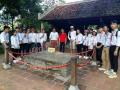 Students Participate in Exploring the Dragons at Ngoai Gate - National Treasures at the Temple of King Dinh Tien Hoang
 -
 Internal control of revenue and expenditure activities at the National Children's Hospital - 2
 -
 Standard Teaching Hour Norms of Lecturers at Khxhnv University - Hanoi National University According to Each Position
In the above context, the marriage rituals of the Tu Di people in Thanh Binh commune, Muong Khuong district, Lao Cai province have also been gradually shifting from traditional to modern models and this is also taking place on a large scale with all ethnic groups.
3.2. Some changes in the Tu Di marriage rituals
3.2.1. Changes in the concept of marriage
Since the revised Law on Marriage and Family in 2000 came into effect, along with the development of socio-economy, transportation and telecommunications systems, marriage with
Institutional adjustments of the law are popularized in remote, isolated, and especially difficult areas where ethnic minorities live. Therefore, the evils of early marriage and forced marriage have been gradually overcome and eliminated. Men and women of all ethnic groups have more freedom in love and marriage. Moreover, infrastructure, transportation, means of communication, and education are increasingly expanded, so the exchange between men and women of different ethnic groups is no longer isolated and prohibited as before. That is the condition for young men and women of all ethnic groups in general and the Tu Di people in particular to increase exchanges, make friends, and absorb the culture of other ethnic groups... leading to changes in concepts of marriage customs. Therefore, most of their marriages have a process and time to get to know and love each other.
First of all, the concept of "where parents put children, there they sit" has faded, replaced by the freedom of young couples to learn about each other and the respect of parents for their children's right to decide. Previously, due to the difficult living conditions of the Tu Di people, they had few opportunities to interact widely, and cultural and spiritual activities were limited. Therefore, young men and women had few opportunities to meet, confide in each other to find their life partners. They mainly met on holidays, New Year's; village festivals or at market days, helping their brothers and friends. Along with that was the custom of being discreet and reserved in expressing their feelings to the opposite sex, even when the two people had agreed to be with each other, they still kept it a secret, not wanting others to know, afraid of being teased. So when he wants to go out somewhere, the guy has to invite some friends to go with him, they almost never go out as a couple, only when both families really agree will the guy and the girl go out to everyone. Nowadays, Tu Di boys and girls are much freer and bolder than before, they choose for themselves a suitable life partner, only in some cases when they cannot find a wife themselves, their parents and siblings will go find one for them.
Besides, due to the propaganda of local authorities, especially the attention of departments such as Women's Union, Youth Union... to each household and individual, it has made people understand the Law on Marriage.
and Family has gradually improved, so the age of early marriage has decreased among the Tu Di people. On the other hand, nowadays, because young men and women of the Tu Di people have a higher level of education than before, they are aware that early marriage will greatly affect their future life.
Previously, the concept and principles of marriage of the Tu Di people only wanted to marry people of the same ethnicity, today this trend has gradually changed. Mixed ethnic marriage is a new trend in the development of marital relations among the Tu Di people, Thanh Binh commune with other ethnic groups in the area, this is a testament to the rapprochement of ethnic groups in the region. Mixed ethnic marriage can therefore be seen as one of the factors leading to certain changes in the traditional lifestyle of the Tu Di people here. In a mixed marriage, it is not only the harmony between two individuals of two different ethnic groups, but also reflects the harmony of two families, two ethnic communities. It must be affirmed that marriage is not only a private matter of two people, but also a major event for the whole family and community. Marriage has become a bond that tightens the love, attachment; solidarity between family members and the community. Therefore, mixed ethnic marriage has shown the solidarity between two families, two clans of two different ethnic groups. The cause of this new trend is due to the impact of exchange, integration, and intertwined living among ethnic groups. Currently, there have been many cases of Tu Di people in Thanh Binh commune in particular and in Muong Khuong district in general marrying Kinh people, Giay people... In today's society, when economic, cultural, and social activities are expanding and developing in an inter-regional and cross-regional trend, even across national borders, ethnic groups tend to get closer together, from which mixed marriage relationships are inevitable. Therefore, the cultural picture of ethnic groups is increasingly rich and diverse, including the marriage culture of Tu Di people in Thanh Binh commune, Muong Khuong district.
Besides, the concept of standards for a life partner has changed. Due to the changes in many aspects of social life, it has contributed significantly to the choice of
Choosing a life partner of young people. Previous standards such as being healthy, knowing how to take care of family life, having the ability to give birth... have gradually changed to new standards such as: having broad knowledge, having a level of education, working in state agencies or having a stable career... These are choices that show the change in the concept of marriage of young Tu Di.
It is worth noting that although there has been a change in the principle of intra-family marriage, the principle of extra-family marriage is the same as before and now, if people worship the same ancestor, they will absolutely never marry each other .
It can be said that since Doi Moi, in the marriage of the Tu Di people in Thanh Binh commune, Muong Khuong district, there have been significant changes in the concept, age of marriage, standards for choosing a wife or husband, and the principle of intra-ethnic marriage... Besides, the elements of ethnic cultural identity are still preserved, such as the principle of exogamy...
3.2.2. Changes in marriage rituals
Implementing the Law on Marriage and Family, with each wedding, maintaining traditional rituals means maintaining the cultural identity of the nation. Today, weddings are recognized by law, each individual is protected by law through being granted a marriage certificate by the State. It can be said that this is the fundamental difference between traditional marriage and modern marriage. Under the feudal regime, the marriage of children was usually in the form of traditional marriage under the recognition of the community, village, and hamlet. Gradually, the legal factors in marriage were gradually improved and seriously implemented and complied with by the people. According to statistics in Thanh Binh commune, 100% of married couples with a wife/husband or both husband and wife being Tu Di people went to the People's Committee of the commune to register their marriage before getting married. (PVS, male, 31 years old, cultural officer of Thanh Binh Commune People's Committee, 2017)
3.2.2.1. Pre-wedding stage
In the past, to get to the official wedding ceremony, the wedding had to go through many different steps, but today the wedding ceremony is greatly simplified. A normal wedding ceremony
Usually, the groom's family has to send a matchmaker to the bride's family three times instead of six times as before. The first time is after the boy and girl have agreed and want to get married, the boy's parents ask the matchmaker to go to the girl's family to ask if the girl's family agrees; the second time, the matchmaker will go to ask for the "six fate" chart recording the girl's date of birth so that the groom's family can compare her age to see if it is compatible with their son's age; the third time is to come to inform the girl's family and also to ask about the girl's requests for the wedding gifts so that the groom's family can prepare. Then comes the official wedding ceremony.
3.2.2.2. Stages in the wedding
The main rituals in the wedding ceremony have little change, most of them still follow the traditional customs of the past, however the rituals are shortened, most of them are performed by shamans. Most of the wedding ceremonies of the Tu Di people in the current period are organized according to the new lifestyle, the steps and time are much shorter than before.
In the past, the official wedding ceremony usually lasted for four days, but now it only lasts for two days. On the first day, the groom's family brings gifts to the bride's family, and on this day, the bride's family will invite guests to eat at their house. On the second day, the official wedding ceremony is held at the groom's family, and the groom's family invites guests. Everyone comes to eat, congratulate each other, and then go home to go to work.
The wedding gifts and dowry have also changed a lot compared to before. In the past, the bride's family often asked for a lot of dowry with the meaning of paying for the parents' upbringing and education. The wedding gifts included jewelry, clothes, fabric, food, money... but today the custom of asking for a dowry has become less burdensome than before: the amount of money paid to the bride's parents has been reduced, the groom's family had to prepare 12 sets of clothes for the bride in advance, but now it is converted into cash equivalent to 6 sets of clothes. However, compared to other ethnic groups in the region, the dowry the groom has to prepare when marrying a Tu Di bride is relatively large. According to a survey in Thanh Binh commune, Muong Khuong district, on average, for a wedding, the groom's family has to prepare a dowry equivalent to 50 million VND, including: pigs, wine, cash, jewelry and wedding gifts. From the above reality, currently in Muong Khuong district in general and the commune in particular, the bride price is about 50 million VND.
In Thanh Binh in particular, there is a phenomenon where young men, when choosing a wife, sometimes do not choose a Tu Di wife, because they cannot meet the amount of dowry required by the bride's family.
The way families organize wedding ceremonies has also changed a lot. Most weddings nowadays are no longer organized according to the traditional customs of the past but have switched to organizing wedding ceremonies similar to those of the Kinh people.
Nowadays, due to the influence of the ethnic groups living together, especially the neighboring Kinh people, they have opened specialized services for weddings, engagements... renting backdrops, bowls, chopsticks, tables and chairs and even speakers, TVs, MCs (program hosts). Therefore, recently, Tu Di weddings in Thanh Binh commune rarely have Pi Le trumpets like before, but instead have live music, speakers, amplifiers. It can be said that with the market economy, the lives of Tu Di people in general are increasingly improved and enhanced. However, besides that, the characteristics of ethnic cultural identity in weddings will certainly gradually fade away.
The bride and groom no longer ride horses to get married as before, but depending on the economic and transportation conditions of each family, they go on foot, by motorbike or by car. These changes are inevitable and progressive, showing the improvement of life in the Tu Di region.
The costumes worn on the wedding day today have changed quite a lot and clearly for the bride, groom and those attending the ceremony. If in the past the bride and groom wore traditional costumes, today in many weddings, when receiving guests, the bride and groom change to wearing dresses and suits. However, when performing the ceremony before the ancestors, the bride and groom are required to still wear traditional costumes.
Nowadays, the performance of ritual songs such as antiphonal singing, folk singing, love songs... by young men and women in Tu Di wedding ceremonies has decreased significantly, this is explained by many reasons. Firstly, currently there are very few Tu Di people who know how to antiphonal singing in rituals. Besides, because the time for organizing weddings is now shortened,
short, so singing in pairs and duets is difficult to do, or if it does happen, it is only for a short time, not all night like before.
In the past, whenever there was a wedding in the village, the whole village would attend, but today, families only send one or two representatives to attend the wedding, to bless the family and the couple. The custom of giving gifts on the wedding day such as giving scarves, shirts, skirts, and baskets like before has also decreased and is replaced by giving money. The money will be used to pay for the wedding. The general mentality of families today, when asked, is to want to receive money rather than gifts, because money is used to cover the work in the wedding and buy necessary items for the family. Through the above changes, it can be seen that the market economy has had a significant impact on the lives of the Tu Di people in Thanh Binh commune, Muong Khuong district in particular, and on other ethnic minorities in general. It has clearly penetrated every village, every aspect, and every field of life.
In the traditional wedding feast, there are only 8 typical dishes of the Tu Di people, but now the dishes in the wedding ceremony are much more diverse. In addition to some traditional dishes, there are also dishes of the Kinh people such as salads, stir-fried dishes... and even fruit desserts displayed on the table. Some wealthy families even slaughter buffaloes and cows for the wedding feast.
The changes in the Tu Di wedding ceremony are also a general trend of changes in the wedding customs of the ethnic minorities in the highlands in the region when cultural exchange activities between ethnic groups are becoming more popular. This change has helped the ethnic groups become closer to each other, some customs that are no longer suitable have been eliminated, replaced by elements that are suitable for the cultural life of the community. However, this change has changed and gradually lost many traditional cultural values of the Bo Y people, if the community does not have the awareness to preserve them.
3.2.2.3. Post-wedding period
The re-appearance ceremony is still kept the same as before. After 3 days the bride stays at her parents' house, the groom prepares a tray of food to ask someone to pick up the bride.
Thus, the change in the concept of marriage, the rituals before and during the wedding as well as the increase in the cases of multi-ethnic marriages of the Tu Di community in Thanh Binh commune has created increasingly open family relationships, clan relationships, and community relationships. This is one of the forms that the Tu Di people adapt to the process of exchange and economic, cultural, and social development of a border district and of the country in the current period.
3.3. Causes of change
According to the law, change is an attribute of culture, because it is always moving and constantly changing. In the field of marriage of the Tu Di people in Thanh Binh commune, Muong Khuong district in particular and of other ethnic groups in Vietnam in general, the cultural elements of marriage are also within that law. However, not all cultures move and develop in the same form, the same trend... On the contrary, the constant movement of change is always diverse, multi-dimensional, multi-level depending on the human, natural and social factors of each culture. The principles, forms and rituals in the marriage of the Tu Di people in Thanh Binh commune, Muong Khuong district are the same, until now they are still present and exist. However, they have also changed in many aspects to suit the constant changes of life, under the influence of many factors.
3.3.1. Impact of economic development
As a border district, Muong Khuong has favorable conditions for building and adjusting plans to suit the advanced development trend. The economy has developed quite well in the direction of commodity production, economic growth is relatively stable, the economic structure has gradually shifted positively in the right direction, the proportion of value of industrial and service sectors is increasing, most of the socio-economic indicators have reached and exceeded the set plan, in the district, a number of stable specialized production areas have been formed, people's lives have been improved, the difference in living standards of people between regions in the district has been gradually narrowed.