
Chapter 2
LOCATION, OBJECTS, SCOPE, CONTENT, PERSPECTIVES AND METHODS OF RESEARCH
2.1. Location and scope of research
National Park
Maybe you are interested!
-

 Research on assessing the impact of tourism activities on resources in Cat Ba National Park - Hai Phong - 1
 -
 Research on developing ecotourism associated with biodiversity conservation in Cat Ba National Park - Hai Phong - 2
 -
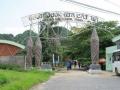 Cat Ba National Park (Source: Internet, Accessed June 15, 2018)
 -
 Research on assessing tourism potential with forest products in Ba Vi National Park, Ba Vi district, Hanoi city - 1
 -
 Assessing the current status of activities and proposing solutions for developing ecotourism associated with sustainable management of Cat Ba National Park - 6
Cat Ba
S

2.1.1. Location and research subjects.
Cat Ba National Park is located on the administrative boundaries of 6 communes and one town: Gia Luan, Phu Long, Hien Hao, Xuan Dam, Tran Chau, Viet Hai communes and Cat Ba town, about 45km east of Hai Phong city, 25km south of Ha Long city, with geographical coordinates:
From 20044' - 20055' North latitude
From 106054' - 107010' East longitude
Surrounding the above communes and the National Park are rivers and seas.
The North and Northeast border Ha Long Bay, separated by Lach Ngan and Lach Dau Xuoi of Quang Ninh.
To the West and Southwest are the Bach Dang River, Cam River and Hai Phong sea.
- Do Son.
The East and Southeast border Lan Ha Bay.
The research location is Cat Ba National Park, the buffer zone of Cat Ba National Park includes 1 inner buffer zone (belonging to Viet Hai commune) and outer buffer zones belonging to 5 communes and 1 town.
The geographical location of Cat Ba National Park is extremely
Convenient, only 45km from Hai Phong city, 150km from Hanoi capital and located next to Ha Long Bay - World Natural Heritage, close to Do Son tourist area.
Hai Phong City is the third largest urban area in the country, considered one pole of the dynamic economic development triangle: Hanoi - Hai Phong - Quang Ninh. Administratively, Cat Ba belongs to Cat Hai District - Hai Phong City, but in fact Cat Ba is attached to Ha Long Bay and is located at the gateway of the most important sea traffic route in the North.
Therefore, tourists from other places, especially cities in the North, will not spend too much time to enjoy nature tours at Cat Ba National Park. Coming to Cat Ba National Park, you have two options. Going by water with a speedboat from Ben Binh (Hai Phong) takes about 45 minutes. Going through Ha Long Bay with its majestic and beautiful natural landscape, this place is recognized by UNESCO as a world natural heritage, to Lan Ha Bay, although smaller, but has many limestone islands, interwoven close together, looking very majestic. If going by road, take a car from Hai Phong to Dinh Vu port, take a speedboat to Cat Hai wharf and then go through Cat Ba National Park by car on a 31 km long road (asphalt road).
Cat Ba National Park is relatively close to the capital Hanoi - where the most important international border gate in the North is located. In addition, 5km from the center of Hai Phong city is Cat Bi international airport, with plans for future expansion, which will be a great advantage for tourism development.
Cat Ba National Park is also the outcrop of the Cat Ba Archipelago World Biosphere Reserve, recognized by UNESCO in 2004. With these potential advantages, Cat Ba National Park has many opportunities to develop tourism not only domestically but also regionally and internationally.
To achieve the goal, the research object of the topic is: Types of resources that can be exploited to serve tourism development include natural resources (flora and fauna, landscapes, streams, lakes, bays, seas...) and types of human resources such as historical and cultural relics, temples, festivals, customs and practices,... Values that can be exploited to serve tourism development.
2.1.2. Research scope and research time.
- Research the relationship between ecotourism and conservation management of Cat Ba National Park and surrounding areas, along with policy institutions for ecotourism development and biodiversity conservation management.
- The project implementation period is from April 2013 to October 2013. The updated data is attempted to be as close to the research time as possible, with the desire to have the most recent and up-to-date data to provide realistic directions for the development of ecotourism in Cat Ba National Park.
2.2. Research content
a. Theoretical basis of ecotourism in national parks and nature reserves.
b. Characteristics of ecotourism resources in Cat Ba National Park. Biodiversity resources, economic living conditions of residents in buffer zone communes. The relationship between economic development and forest protection and biodiversity protection in the area.
c. Current status of tourism activities including organizational structure of Cat Ba National Park, human resources situation, facilities serving ecotourism activities (Accommodation, hotels, restaurants, entertainment areas, internal roads, other services...), tourism development needs.
d. Orientation for ecotourism development in Cat Ba National Park includes technical solutions (planning tourism facilities, attracting local communities to participate in tourism activities), and social solutions such as environmental education.
2.3. Research perspective
- Research and propose the development of ecotourism to support biodiversity conservation and sustainable development.
- Consider people as the center of conservation issues, develop ecotourism to improve livelihoods to support local communities.
2.4. Research methods
2.4.1 Methodology / Approach
* Ecosystem approach
The ecosystem approach places people and their use of natural resources squarely at the heart of decision-making. The ecosystem approach can therefore be used to find an appropriate balance between the protection and use of biodiversity in areas with multiple resource users and important natural values. It is therefore suitable for professionals and practitioners in agriculture, forestry, fisheries, conservation areas, urban planning and many other areas.
The ecosystem approach includes 12 basic principles [23]:
1. The goals of land, water and habitat management are a matter of social choice.
2. Management should be decentralized to the most appropriate and lowest level of management.
3. Ecosystem managers should consider the effects (actual or potential) of their activities on adjacent and other ecosystems.
4. Recognizing the benefits that can be achieved from management, it is necessary to constantly understand and manage ecosystems in an economic context.
5. The conservation of ecosystem structure and function, to maintain ecosystem services, should be considered a priority goal of the ecosystem approach.
6. Ecosystems should be managed within their functional scope.
7. The ecosystem approach should be implemented within an appropriate spatial and temporal scope.
8. The goals of ecosystem management should be set for the long term.
9. Management must realize that change is inevitable.
10. The ecosystem approach should seek an appropriate balance with the integration of biodiversity conservation and use.
11. The ecosystem approach should consider all relevant forms of information, including scientific knowledge, indigenous knowledge, innovation and practice.
12. The ecosystem approach should engage all stakeholders of a society and scientific knowledge.
Gill Shepherd has proposed five steps to effectively apply the ecosystem approach into practice [23].
Step A: Identify key stakeholders, demarcate the ecosystem, and establish relationships between them.
Step B: Describe the structural and functional characteristics of the ecosystem and develop a mechanism for ecosystem management and monitoring.
Step C: Identify the key economic issues affecting the ecosystem and its components.
Step D: Indicate the possible effects of the target ecosystem on neighboring ecosystems.
Step E: Set long-term goals and flexible ways to achieve them.
* Community-based natural resource management approach
Community-based nature management is a comprehensive strategy that addresses multifaceted issues affecting natural resources and the environment through the active and meaningful participation of local communities.
“Community-based” is a principle in which the users of a resource are also the managers of that resource. This distinguishes it from other natural resource management strategies that are highly centralized or do not involve the communities that directly depend on the resource.
Community-based resource management is also a process through which local communities are empowered politically and economically so that they can gain reasonable control and legitimate access to natural resources. This approach is now widely applied to manage resources flexibly and balance the relationship between people and resource management.
+ Principles of community-based natural resource management
- Empower local communities.
- Ensure fairness.
- Ecological rationality and sustainable development.
- Respect traditional/indigenous knowledge.
- Gender equality.
+ Elements of community-based natural resource management.
- Improve access to resources.
- Human resource development.
- Environmental protection.
- Sustainable livelihood development.
+ The community-based natural resource management cycle includes:
- Planning.
- Implement the plan.
- Monitoring.
- Evaluate.
* System approach in natural resource management
The systems approach emphasizes identifying and describing the relationships between the elements that make up the system and their interactions. A system is a collection of interacting components, where a change in one component leads to a change in another, which in turn leads to a change in a third component… and thus can change the entire system. Any interaction within a system is both causal and regulatory.
control. In general, the systems approach is to look at the world through its system structure, hierarchy and dynamics; it is a dynamic and comprehensive approach. This approach is the most dialectical way to deal with environmental and development issues – soft and semi-soft systems. Systems analysis and synthesis, modeling and simulation are specific methods and tools used in the systems approach [22].
The systems approach to natural resource management considers natural resources as part of the natural system. Their existence, movement and transformation are governed by natural factors, and at the same time they are strongly governed by socio-economic factors.
* Concept of tourism resources:
“Tourism resources are natural landscapes, historical relics, revolutionary relics, human values, creative labor works that can be used to satisfy tourism needs, and are basic factors to form tourist spots and tourist areas to create tourist attraction” [5].
Thus, tourism resources are considered as the premise for tourism development. And in reality, the more diverse and unique the tourism resources are, the higher the attractiveness and effectiveness of tourism.
* Viewpoints on evaluating ecotourism resources:
This is an activity carried out after investigating tourism resources, in order to comment and assess the value of tourism resources according to a number of selected resource standards. Therefore, the assessment of tourism resources must follow the following principles:[11]
* Principle of objective reality: Tourism resources exist as expressions of their value to humans, depending on the tourism resources themselves and the level of human development and exploitation. When evaluating, it is necessary to start from the reality of resources and the level of development and exploitation of the area.
* Principle of scientific conformity: Must be consistent with scientific standards. It is necessary to provide tourists with accurate and educational knowledge, and to apply theory and multi-faceted knowledge to explain and scientifically evaluate the core contents of ecotourism resources.
* Comprehensive system principle: Tourism resources are diverse and therefore have many aspects, many rankings, many forms and many contents that determine
Value and utility of tourism resources. When evaluating tourism resources, it is necessary to consider synthesis, conduct a comprehensive and complete systematic assessment.
* Principle of high generalization: When evaluating tourism resources, regardless of whether it is a qualitative or quantitative assessment, the comments or conclusions must be clear, concise and highly generalize the value, uses and unique features of the tourism resources so that viewers can immediately understand.
* Principle of trying to quantify: When evaluating, we need to try our best to reduce subjectivity, try to evaluate in a systematic and comprehensive way. Therefore, we need to try to evaluate quantitatively or semi-quantitatively, using numbers to evaluate and compare.
2.4.2. Research method
a. Method of collecting and synthesizing documents (conducted before entering the field phase): these are documents, data, reports related to the research area such as documents on Ecotourism and biodiversity conservation in the country and abroad, documents related to the research area. These documents are collected before conducting field research.
After collecting data, conduct statistics, analyze and process the data to synthesize general information, select typical models, and lessons learned to have an overview before going to the field to serve the next research steps of the topic.
b. Field research methods: are traditional research methods that play an important role. The process of implementing field research methods is mainly based on:
- Quick assessment of Ecotourism resources.
- Assess the current socio-economic status of the region
- Field trips along the route - survey and evaluate the current status of tourism resources: species/ habitats/ landscapes...
This method was carried out after having general analysis and assessment of tourism resources in Cat Ba National Park. Specifically, the author conducted a field survey to evaluate potential routes. Using cameras to record the current status of the forest, valuable landscapes, the appearance of living species, etc.
c. Using the interview method with interview questionnaires (32 questionnaires):
The author has created a 2-page interview form for domestic and foreign tourists, focusing on questions about understanding and perception of ecotourism, tourism needs and expectations of the region, development potential...
Take advantage of the time when visitors stop to rest on the route, rest at tourist attractions, explain the purpose of the interview, distribute the questionnaire, translate the questions into English for foreign visitors. Visitors can choose and quickly fill in the answers according to the interview form. The in-depth interview forms are compiled by opinion group and majority for analysis.
d. Using in-depth interview method: some important subjects including commune and district level officials and combined with consultation with Cat Ba National Park officials and local people will be a useful information channel.
Use simple, practical questions that focus on perceived value, tourism potential, impacts of tourism on the community, ability to participate... to synthesize the assessment.
e. Expert consultation method . Consult with people with deep expertise and broad knowledge who have been working in the field of ecotourism and biodiversity conservation.
g. Mapping method: Using administrative maps, maps of current land use and forest status and combining field results : Using Mapinfo software, GPS... to determine the location of tourist routes in the research area.
h. SWOT analysis (strengths, weaknesses, opportunities and threats analysis).
Strengths and weaknesses focus on internal factors, while opportunities and threats reflect the external environment that affects an organization, community, or activity. This includes socio-cultural, political, economic, environmental, technological, and other aspects. SWOT analysis can complement other tools including stakeholder and institutional analysis.
- Strengths (S): The positive points of the group, activity or area.
- Weaknesses (W): Negative points of the group, activity or area.
- Opportunities (O): Favorable factors in the environment
- Threats (T): Unfavorable factors in the environment Purpose: