
Can Tho University. 2: 129 - 136.
28. Tourism Department, Department of Culture, Sports and Tourism of Dien Bien province (2020). Statistics of accommodation establishments in Dien Bien province in 2020.
29. National Assembly (2017). Law on Tourism No. 09/2017/QH14 issued on June 19, 2017. Hanoi.
30. Department of Culture, Sports and Tourism of Dien Bien province (2020). Statistics of training courses in the period 2014 - 2019.
31. General Statistics Office (2019). Press release on socio-economic situation in the fourth quarter and year 2019.
Maybe you are interested!
-
 Impact of tourism on the cultural and social life of Thai people in Mai Chau - Hoa Binh and development solutions Case study of 4 villages: Lac village, Pom Coong village, Van village, Nhot village - 1
 -
 Impact of tourism on the cultural and social life of Thai people in Mai Chau - Hoa Binh and development solutions Case study of 4 villages: Lac village, Pom Coong village, Van village, Nhot village - 18
 -
 Group of Indicators Showing the Impact of Tourism Development on Livelihood Resources
 -
 The Impact of Tourism on Socio-Economic Development, Economic Restructuring and International Economic Integration
 -
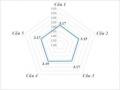 Assessing the Impact of Factors on Tourism Development in Thua Thien Hue
32. People's Committee of Dien Bien province (2017). Master plan for tourism development in Dien Bien province to 2025, vision to 2030.
33. People's Committee of Dien Bien province (2018). Report No. 359/BC-UBND dated November 30, 2018. Report on the implementation of the socio-economic development plan, ensuring national defense and security in 2018; Socio-economic development plan, ensuring national defense and security in 2019, Dien Bien province.
34. Dien Bien Provincial People's Committee (2019). Report No. 250/BC-UBND dated August 26, 2019. Report on socio-economic development impacts and site clearance and resettlement plans when implementing the Dien Bien Airport Renovation and Upgrade Project.
35. People's Committee of Dien Bien province (2019). Report No. 357/BC-UBND dated December 2, 2019. Report on the implementation of the socio-economic development plan, ensuring national defense and security in 2019; Socio-economic development plan, ensuring national defense and security in 2020, Dien Bien province.
36. People's Committee of Dien Bien province (2019). Decision No. 158/QD-UBND dated February 26, 2018. Decision approving the results of the review of poor and near-poor households in 2018 in Dien Bien province.
37. People's Committee of Dien Bien province (2020). Overview of Dien Bien. Accessed from http://www.dienbien.gov.vn/portal/Pages/Tong-quan-ve-Dien-Bien.aspx on March 15, 2020.
38. Mekong Development Research Institute (2013). Impact assessment report of the Central Highlands poverty reduction project.
39. Vo Thi Thu Ngoc (2018). Tourism economy towards sustainable development in Thua Thien Hue province. PhD thesis, Ho Chi Minh National Academy of Politics.
40. Vo Van Tuan & Le Canh Dung (2015). The impact of resources on livelihood diversification of farming households in the Mekong Delta. Journal of Agriculture and Rural Development. 2. 3 - 10.
41. Vu Duc Minh (1999). Overview of tourism. Education Publishing House, Hanoi.
42. Vu Thi Hoai Thu (2013). Sustainable livelihoods in the coastal areas of the Red River Delta in the context of climate change: A case study in Nam Dinh province. PhD thesis, National Economics University , Hanoi.
English:
43. Adger WN (1999). Social vulnerability to climate change and extremes in coastal Vietnam. World Development. 27: 249 – 269.
44. Adiyia B., Vanneste D. & VanRompaey A. (2017). The poverty alleviation potential of tourism employment as an off-farm activity on the local livelihoods surrounding Kibale National Park, western Uganda. Tourism and Hospitality Research. 17(1): 34–51.
45. Ahebwa WM (2012). Tourism, livelihoods and biodiversity conservation: an assessment of tourism related policy interventions at Bwindi Impenetrable National Park (BINP), Uganda. Retrieved from: https://library.wur.nl/WebQuery/wurpubs/fulltext/210558 (Original Work Published 2012).
46. Angelika K. (2009). Approach to community development, Youth Empowerment partnership program/YEPP.
47. Anjali A., Govind G., Binford MW & Southworth J. (2009). Tourism, forest conversion, and land transformations the Angkor basin, Cambodia. Applied Geography. 29(2): 212–223.
48. Anton Van R., Thi Thu Huong Hoang, Patrick M., Gerard G., Kim Chi Vu, An Thinh Nguyen, Luc H. & Veerle V. (2020). Impact of tourism development on the local livelihoods and land cover change in the Northern Vietnamese highlands.
49. Atik M., Altan T. & Artar M. (2010). Land use changes in relation to coastal tourism developments in Turkish Mediterranean. Polish Journal of Environmental Studies. 19(1): 21–33.
50. Babbie E. (1992). The practice of social research (6th ed.). Belmont, CA: Wadsworth.
51. Ballantyne R., Packer J. & Hughes K. (2009). Tourists' support for conservation messages and sustainable management practices in wildlife tourism experiences. Tourism Management. 30(5): 658–664.
52. Bilal J., Haleem F., Huma J., Bartolomeo M., Murad K. & Shaukat A. (2017). Energy efficient hierarchical clustering approaches in wireless sensor networks: a survey. Wireless communications and mobile computing . Retrieved from https://www.hindawi.com/journals/wcmc/2017/6457942/.
53. Bixia C., Zhenmian Q., Nisikawa U. & Koji N. (2018). Tourism's Impacts on Rural Livelihood in the Sustainability of an Aging Community in Japan. Sustainability, MDPI, Open Access Journal. 10(8): 1-17.
54. CARE International in Vietnam (2013). Report on Livelihoods Approach Adaptation to Climate Change.
55. Chambers R. & Conway G. (1991). Sustainable Rural Livelihoods: Practical Concepts for the 21st Century. Retrieved February 3. From http://www.smallstock.info/reference/IDS/dp296.pdf.
56. Cheema MJM & Bastiaanssen WGM (2010). Land use and land cover classification in the irrigated Indus Basin using growth phenology information from satellite data to support water management analysis. Agricultural Water Management, Elsevier. 97(10): 1541-1552.
57. Chicco C. & Gianfranco K. (2012). Overview and performance assessment of the clustering methods for electrical load pattern grouping." Energy, Elsevier. 42(1): 68-80.
58. Christian WE, Alex W., Christine MP, Rebecca KZ, Maya AT, Linda M.
W. & James R.M. (2019). "Wastewater technopolitics. on the southern coast of Belize," Economic Anthropology, Wiley Blackwell. 6(2): 277-290.
59. Cooper C. (2008). Tourism: Principles and practices. London: Pearson Education.
60. Davis D., Allen J. & Cosenza R.M. (1988). Segmenting local residents by their attitudes, interests, and opinions toward tourism. Journal of Travel Research. 27 (2): 2-8.
61. DeFord DR, Pauls K. & Scott D. (2019). Spectral clustering methods for multiplex networks, Physics A: Statistical Mechanics. and its Applications, Elsevier. 533(C).
62. DFID (1999). Sustainable Livelihoods Guidance Sheets. http://www.nssd.net/references/SustLiveli/DFIDapproach.htm#Guidance.
63. Dietrich K., Jan P. & Popp A. & Lotze-Campen H. (2013). "Reducing the loss of information and gaining accuracy with clustering methods in a global land-use model," Ecological Modeling, Elsevier. 263(C): 233-243.
64. Doğan ZH (1989). Forms of adjustment: Sociocultural impacts of tourism. Annals of Tourism Research. 16(1): 216-236.
65. Dong R., Yu L. & Liu G. (2008). Impact of tourism development on land-cover change in a matriarchal community in the Lugu Lake area. International Journal of Sustainable Development and World Ecology. 15:28–35.
66. Downing T.E., Butterfield R., Cohen S., Huq S. & Moss R. (2001). Climate Change Vulnerability: Linking Impacts and Adaptation. UNEP. Nairobi.
67. Dressler WH & Fabinyi M. (2011). Farmer gone fish'n? Swidden decline and the rise of grouper fishing on Palawan Island, the Philippines. Journal of Agrarian Change. 11(4): 536-555. doi: 10.1111/j.1471-0366.2011.00309.
68. Ellis F. (1993). Peasants Economics. Farm Households and Agrarian Devolopment, 2nd Edition . Cambridge University Press.
69. Ellis F. (2000). Rural livelihoods and diversity in developing countries. Oxford
University Press.
70. Elodie D., Julie L. & Sabates-Wheeler R. (2010). "Poverty, Livelihoods and War Legacies: the Case of Post-War Rural Kosovo," Research Working Papers 37, MICROCON - A Micro Level Analysis of Violent Conflict.
71. Elske E. & Janssens T. (2018). The Effects of Tourism on Agricultural Sustainable Livelihoods In Bukit Lawang and Timbang Jaya Indonesia,Wageningen University. https://edepot.wur.nl/460569.
72. Fenco Shawinigan Engineering, Ltd. (1994). Baseline study – Coastal zone planning and management, North Sulawesi, Indonesia. Final Report, Vol. 2: Main Report. Halifax: Fenco Shawinigan Engineering, Ltd.
73. Fujun S. (2009). Tourism and the sustainable livelihoods approach: Application within the Chinese context, Lincoln University.
74. Gilliland Ted E., Sanchirico, James N., Taylor K. & J. Edward (2016). Tourism, Natural Resource Use and Livelihoods in Developing Countries: A Bioeconomic General Equilibrium Approach, 2016 Annual Meeting, July 31-August 2, Boston, Massachusetts 236214, Agricultural and Applied Economics. Association.
75. González BD & Bertran SA (2013). Assessing farmers' vulnerability to climate change: a case study in Karnataka, India.
76. Hahn MB, Riederer AM & Foster SO (2009). ―The Livelihood Vulnerability Index: A pragmatic approach to assess risks from climate variability and change - A case study in Mozambique‖, Global Environmental Change 19 (2009). 74 – 88.
77. Henry Mm aduabuchi Ijeomah (2012). Impact of tourism on livelihood of communities adjoining Ecodestinations in Plateau State, Nigeria. CULTUR, ano 06 ‐ nº03 ‐ Ago/2012.56 – 71. https://www.researchgate.net/publication/234025637 Impact_of_tourism_on_livelihood_of_communities_adjoining_ecodestinations_in
_Plateau_State_Nigeria.
78. Himamowa B. (1975). The Obergurgl model: A microcosm of economic growth in relation to limited ecological resources. Nature and Resources 11 (2): 10-21.
79. Holloway J.C. & Taylor N. (2006). The business of tourism. London: Pearson Education.
80. Hussein K. (2002). Livelihoods approahces compared: A multi-agency review of current practice. Working Pape., Overseas Development studies. London, UK.
81. I. Scoones (1998). Sustainable rural livelihood: A framework for analysis, Working Paper 72, Institute of Development Studies. UK.
82. Inge de Boer (2012). Tourism as alternative livelihood: Grassroots perspectives and experiences on the livelihood impacts on local community members around Honda Bay (Puerto Princesa) Palawan, Philippines. Wageningen University. https://edepot.wur.nl/222213.
83. Jafari J. (1989). Sociocultural dimensions of tourism. An English language literature review. In J. Bystrazanowski and G. Beck (Eds.), Tourism as a factor of change: A sociocultural study (pp.17-60). Vienna, Austria: European Coordination Center for Research and Documentation in Social Systems.
84. Job H. & Paesler F. (2013). Links between nature-based tourism, protected areas, poverty alleviation and crises—The example of Wasini Island (Kenya). Journal of Outdoor Recreation and Tourism. 1(2): 18–28.
85. Karin M. & Jurgens VZ (2002). The impacts of tourism investment on rural communities: Three case studies in South Africa, Development Southern Africa, Taylor & Francis Journals. 19(1): 83-103.
86. Khima NB, Suneet N., Jatinder K., Ashutosh S. & Amit SC (2014). Eco-tourism: A Sustainable Livelihood Option for Mountainous Communities in Uttarkashi, Uttarakhand, India, Journal of Studies in Dynamics. and Change (JSDC), ISSN: 2348-7038, JSDC Lokkatha Debate on Developmentol. 1(8): 320-327.
87. King B., Pizam A. & Milman A. (1993). Social impacts of tourism: Host perceptions. Annals of Tourism Research. 20(4): 650-665.
88. Lankford SV, Chen JSY & Chen W. (1994). Tourism's impacts in the Penghu National Scenic Area, Taiwan. Tourism Management. 15(3): 222-227.
89. Lasse Krantz (2001). The sustainable livelihood approach to poverty reduction. Sida.https://www.sida.se/contentassets/bd474c210163447c9a7963d77c64148a/the
-sustainable-livelihood-approach-to-poverty-reduction_2656.pdf.
90. Laura K. & Matilda P., Martin PU & Martin RJ (2018). "Upland Livelihoods between Local Land and Global Labor Market Dependencies: Evidence from Northern Chin State, Myanmar," Sustainability, MDPI, Open Access Journal, vol. 10(10): 1-27.
91. Lorenzo GB (2011). Development and Growth Paradigms, FAO. http://www.fao.org/docs./up/easypol/882/defining_development_paradigms_102en.pdf
92. Mathieson A. & Wall G. (1982). Tourism: Economic, Physical and Social Impacts, Longman, Essex (England).
93. Mbaiwa J. (2011). Changes on traditional livelihood activities and life styles caused by tourism development in the Okavango Delta, Botswana. Tourism Management, 32: 1050–1060.
94. Michaud J. & Turner S. (2006). Contending visions of a hill-station in Vietnam. Annals of Tourism Research. 33(3). 785–808. https://doi.org/10.1016/j.annal s.2006.02.003.
95. Mieczyslaw P. & Jaroslaw B. (2016). "The Use of Clustering Methods and Machine Learning Algorithms in the Trading Enterprise for Customer Segmentation," Managing Innovation and Diversity in Knowledge Society Through Turbulent Time: Proceedings of the MakeLearn and TIIM Joint International Conference 2016. ToKnowPress.
96. Mill RC & Morrison AM (1992). The Tourism System. Englewood Cliffs.
97. Mingming S., Yehong S., Qingwen M. & Wenjun J. (2018). A Community Livelihood Approach to Agricultural Heritage System Conservation and Tourism Development: Xuanhua Grape Garden Urban Agricultural Heritage Site, Hebei Province of China, Sustainability, MDPI, Open Access Journal. 10(2): 1-14.
98. Mitchell J. (2012). Value chain approaches to assess the impact of tourism on low-income households in developing countries. Journal of Sustainable Tourism, 20(3): 457–475.
99. Mitri K. & Matti P. & Hannu S. (2018). "Recursive Clustering Methods for Network Analysis," Discussion Papers 118, Aboa Center for Economics.
100. Mukherjee L. & Abir L. (2017). Impact of tourism in coastal areas: Need of sustainable tourism strategy. http://www.coast alwik i.org/wiki/Impac t_of_touri sm_in_coast al_areas :_Need_of_susta inabl e_touri sm_strat egy.
101. Obua J. & Harding DM (1997). Environmental impact of ecotourism in Kibale National Park, Uganda. Journal of Sustainable Tourism. 5(3): 213–223.
102. Oxfam (2002). Learning about livelihood-Insights from Southern Africa. Periperi Publication, South Africa .
103. Øystein JN, Rayamajhib S., Uberhuagac P., Meilbya H. & Smith-Halla C. (2013). Quantifying rural livelihood strategies in developing countries using an activity choice approach. Agricultural Economics. 44(2013): 57–71.
104. Pearce DG (1981). Tourist development. Essex, UK: Longman Group Limited.
105. Peng W., Zheng H., Brian E., Li C. & Wang F. (2017). Household Livelihood Strategic Choices, Impact Factors, and Environmental Consequences in Miyun Reservoir Watershed, China. Sustainability . 9(175): 1-12.
106. Rasekhi S., Karimi S. & Mohammadi S. (2016). Environmental impacts of tourism, A case study of selected developing and developed countries. The Journal
of Tourism Planning and Development. 5(16): 71–94.
107. Renaud L. (2010). Community-based tourism as a sustainable solution to maximize impacts locally? The Tsiseb Conservancy case, Namibia, Development Southern Africa, Taylor & Francis Journals. 27(5): 757-772.
108. Rezaur RM (2016). The socio-economic importance of tourism and its impact on the livelihood in South Asia Case Rangamati, Bangladesh. Bachelor`s Thesis. Centria University Of Applied Sciences. https://www.theseus.fi/bitstream/handle/10024/116404/Rezaur_Rhaman.pdf?sequence=1&isAllowed=y
109. Richards G. & Hall D. (Eds.) (2003). Tourism and sustainable community development (Vol. 7). Psychology Press. doi: 10.4324/9780203464915.
110. Rick de Satgé, H. Ailsa, M. Dan, N. Leah and W. Penny (2002). Learning about livelihoods Insights from southern Africa. Oxfam Publishing. UK
111. Romy G. (2010). Improving the Net Benefits from Tourism for People Living in Remote Northern Australia, Sustainability, MDPI, Open Access Journal. 2(7): 1-22.
112. Rui S., Jianing M., Shu C. & Xiao G. (2019). Classifying Livelihood Strategies Adopting the Activity Choice Approach in Rural China. Sustainability. 11. doi:10.3390/issue11113019.
113. Ruiying Z., Jianchao X. & Nan Z. (2015). The Research on Peasant Sustainable Livelihood Models in Rural Tourism Areas Under Urbanization — A Case from Jixian, Tianjin, Chinese Journal of Urban and Environmental Studies (CJUES), World Scientific Publishing Co. Pte. Ltd. 3(01): 1-14.
114. Ryan C. (1999). Some dimensions of Maori involvement in tourism. In M. Robinson and P. Boniface (Eds.), Tourism and cultural conflicts (pp.229-267). Oxon, UK: CABI Publishing, CAB INTERNATIONAL.
115. Sattar R., Wang S., Tahir M. & Cadwell C. (2017). Assessment of Smallholder Farmers Vulnerability Due to Climate Change in Arid Areas of Pakistan. Applied Ecology and Environmental Research. 15.(4): 291–312.
116. Schott J., Kalatas T., Nercissians E., Barkmann J. & Shelia V. (2016). The impact of protected areas on local livelihoods in the South Caucasus, IAMO Discussion Papers 234108, Institute of Agricultural Development in Transition Economies (IAMO).
117. Seiler C. & Backhaus N. (2014). Tourismus im UNESCO Weltnaturerbe: Einkommen steigen, Disparitäten bleiben im philippinischen Puerto-Princesa Subterranean River National Park, Zeitschrift für Tourismuswissenschaft, De Gruyter. 6(2): 213-218.
118. Shera W. & Matsuoka J. (1992). Evaluating the impact of resort development on a Hawaiian Island: Implications for social impact assessment policy and procedures. Environmental Impact Assessment Review. 12 (4): 349-362.
119. Smith RA (1992). Conflicting trends of beach resort development: A Malaysian case. Coastal Management. 20 (2): 167-187.
120. Soltani A., Angelsen A., Eid T., Naieni M. & Shamekhi T. (2012). Poverty, sustainability, and housing livelihood strategies in Zagros, Iran. Ecol.Econ. 70: 60-70.
121. Soussan J., Blaikie P., Springate-Baginsk IO & Chadwick M. (2001). Understanding livelihood processes and dynamics. Livelihood- policy relationships in South Asia Working Paper 1 from http://www.york.ac.uk/inst/sei/prp/pdfdocs./1_livelihoods.pdf.
122. Sullivan K., de Silva L., White AT & Wijeratne M. (1995). Environmental guidelines for coastal tourism development in Sri Lanka. Colombo, Sri Lanka: Coastal Resources Management Project and Coastal Conservation Development.
123. Teresa Chang-Hung TT (2006). Tourism as a Livelihood Strategy in Indigenous Communities: Case Studies from Taiwan. Waterloo, Ontario Canada. https://citeseerx.ist.psu.edu/viewdoc/download?doi=10.1.1.66.4416&rep=rep1&ty pe=pdf.
124. Thi Thu Huong Hoang & Anton Van R. & Patrick M. & Gerard G. & Kim Chi Vu & An Thinh Nguyen & Luc H. & Veerle V. (2020). "Impact of tourism development on the local livelihoods and land cover change in the Northern Vietnamese highlands," Environment, Development and Sustainability: A Multidisciplinary Approach to the Theory and Practice of Sustainable Development, Springer. 22(2): 1371-1395, February.
125. Thomas A. (2004). The Study of Development. Paper prepared for DSA Annual Conference,6 November, Church House, London.
126. Tiwari H. (2014). Impact of Tourism on livelihoods. Atna, J Tour Stud. 9(1): 29-38.
127. Tomankova H. (2018). The Impact of Tourism Development on Traditional Livelihoods in the Sasak Community on Lombok, Indonesia. University of Helsinki, Faculty of Social Sciences, Department of Political and Economic Studies, http://urn.fi/URN:NBN:fi:hulib-201807022911.
128. Truong VD, Hall CM & Garry T. (2014). Tourism and poverty alleviation: Perceptions and experiences of poor people in Sapa, Vietnam. Journal of Sustainable Tourism. https ://doi. org/10.1080/09669 582.2013.87101 9.
129. UNDP (2007). Human Development Report 2007/2008, NewYork, USA.
130. United Nations (1963). Recommendations on International Travel and Tourism, United Nations Conference on International Travel and Tourism, Rome, Italy,