
garden. Corn is usually planted around the second lunar month. Corn is grown as a long-term corn, there are two types of corn: waxy corn and regular corn. Regular corn produces large cobs but is not as fragrant, sticky, and sweet as waxy corn. Due to these characteristics, regular corn is used to raise livestock, poultry, or make wine; while waxy corn is used as food for people to cook porridge, add rice, add sticky rice, cook corn sweet soup, make corn cakes, and pop corn.
Cassava ( man slan ): is an important food crop after corn. It is grown quite commonly because it has the characteristics of being readily available and easy to grow. You only need a stem about 20cm long to be able to plant a cassava root without much care. Cassava tubers are widely used for raising livestock and poultry, processing food such as making cakes, adding rice to food, and making wine. Cassava is often grown in fields around March and harvested in February of the following year. Cassava
grown here has the characteristic of very large, soft, delicious tubers.
Taro ( Phuong C ): planted in December and harvested before Thanh Minh festival to avoid rotting due to waterlogging . There are three types of taro: Chinese taro ( Phuong Nong ) has large tubers, brown skin, light purple inside, fragrant smell. White taro ( Phuong Thao ) has long, small tubers, light yellow skin, white inside. Fragrant taro ( Phuong Hom ) has small, round tubers, brown skin, white inside, fragrant. Taro has high starch content used to make food, taro is also processed into a specialty, the famous " Khau nhuc " dish of the Tay people.
Maybe you are interested!
-
 Using Traditional Formulas to Understand the Question Pattern
 -
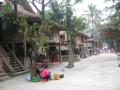 Some Pictures of the Transformation of Traditional Culture of Thai People in Mai Chau
 -
 Comparison of Activity-Based Costing and Traditional Costing
 -
 Directions for Promoting Traditional Ethical Values for Building a New Lifestyle for Students in the Current Context of Globalization
 -
 Summary of Ranking Results of Vietnam's Import Market of Traditional Goods
Sweet potatoes ( man bung ): are only a secondary food of the Tay people, grown in sandy soil by the stream. Sweet potatoes are planted on vines in December and the tubers are harvested in April. When harvesting, people will clean them all.
soil, store in a cool, dry place to prevent the potatoes from growing mushy. Sweet potatoes come in two varieties: purple and white.

Food plants
Food plants are very rich because the natural conditions here are very diverse, suitable for each type of plant with different characteristics. In the places where the Tay people live, they often grow food plants with the purpose of self-sufficiency for their meals, commonly the following types:
Mustard greens ( Phắc Cát ): include many varieties of mustard greens, Chinese cabbage, Chinese cabbage, and watercress. There are many types such as bitter, sweet, cold, and hot. They are grown in gardens, on fields, and along streams.
Morning glory ( phac bung ): often grown in muddy fields, small, green plants, a familiar food of the Tay people.
Rau lang ( phac man ): harvested for young shoots, has a sweet and astringent taste, used to boil and dip in soy sauce, stir-fry with garlic. This is a vegetable with a special taste and is used quite a lot in the Tay community.
Rau bao ( phac bao ): used to grow wild in fields, but later
are grown in the garden. Vegetables can be eaten from January to February.
Yes. Rau bao has a sweet and bitter taste and is very refreshing. There are two types of purple rau bao that are sweeter than white rau bao.
Gourd ( co bầu ): This is a traditional crop of the Tay people. It is a fruit tree, in addition to being used as food, the ripe gourd is used as a gourd.
elastic and contains seeds.
Red pumpkin ( phắc đen ) is used for its fruit and shoots as food. Green pumpkin ( phắc moong ) is a vine with sweet fruit.
Luffa ( buop ): bitter gourd ( mac khang ) has a bitter, aromatic taste; fragrant gourd, white gourd ( mac buop ) is very cool, aromatic, used for stir-frying or cooking soup.
Melons: cucumber ( qua mu ), du gang ( theng) , cantaloupe ( qua ) are grown in gardens, on fields, used as food or refreshment.
Beans: green beans ( thua kheo ), soybeans (thua xang ), black beans ( thua
These beans are processed into many different dishes , high in protein and vitamins necessary for the human body, easy to preserve and easy to process .
Peanuts ( thua din): grown in many places on soft soil along rivers or in gardens. Peanut tubers are used as food for humans, young leaves are used to feed pigs and buffaloes, peanut shells are used for cooking. There are two varieties of peanuts, red and white, red peanuts are grown more because they are more delicious.
Sesame : There are two types of sesame : black sesame and white sesame. Small seeds, contain a lot of vegetable oil used as filling for cakes and sesame salt.
+ Livestock products
The Tay people in Cho Don have a very developed livestock farming profession, with a long tradition , including small-scale livestock and poultry farming at home.
Livestock
Buffaloes and cows are raised mainly for agricultural purposes. Usually, only buffaloes and cows that die from disease or are killed for eating on a family's restricted land are slaughtered for food .
Horses ( ma ) and goats ( b ) are raised less, only a few families raise these two types of livestock. Horses and goats are often raised in families with people who practice shamanism, sorcerers... The Tay people have the custom of releasing goats into areas with many leeches because when leeches suck the goat's blood, it will not be digested and will die.
Pigs ( mu ) are the most commonly raised species, most families raise about one or two pigs for slaughter during Tet and for sale. Pig breeds in
These are pigs raised free range or fed with natural foods such as banana stems, sweet potato leaves, rice bran, anchovies and a little growth promoter powder. This type of pig has delicious meat, lean meat, less fat, and is firmer than pigs raised entirely on growth promoter powder.
Poultry
Chicken ( Cay ) is an animal that every Tay family has because it is closely associated with their lives. This is a source of reserve food, an indispensable dish during holidays and Tet, and is also often used to visit people who have just given birth. Free-range chickens will hunt for insects themselves, so the meat is firmer than industrial chickens. The Tay people here have chicken breeds such as Mo flower chicken ( Cay Lai Vai ), Ri chicken (Cay Khuang Luong ), White chicken ( Cay Khuang Khao ), Black chicken (Cay
Chickens are also a source of eggs for humans to eat every day.
Ducks are raised along streams, in harvested fields or in ponds. Because raising ducks requires a large area and must be
Because ducks live near water sources, they are mainly raised in villages. Duck meat is a must-have dish on the 15th day of the 7th lunar month . Like chickens, ducks are also a source of eggs for people to eat every day.
Aquaculture
The Tay people have a profession of aquaculture, focusing mainly on fish. Fish are raised in fields and ponds, ponds are often stocked with grass carp, common carp, silver carp, tilapia... Each type of farmed fish has different characteristics in terms of weight and meat quality, so they are used in preparing different dishes. Grass carp and common carp have thick meat, few bones; bighead carp has moderately thick meat; silver carp and perch have thin meat, many bones... In aquaculture with long-standing ponds, in addition to farmed fish, there are also some types of natural fish imported into the farmed fish such as banana fish, snakehead fish ( pia lai ), catfish ( pia duc ), and other aquatic species such as eel (pia lay ), crab ( pu ), snail ( hoi ), shrimp ( cung )...
* Food sources exploited from nature
+ Food crops
The core of the Bang tree (co pang ): belongs to the hook tree family, has a straight, tall trunk, and large leaves. The Bang tree trunk has a white, spongy core that produces a lot of starch used to make cakes or mix with rice, and is also a very good ingredient for making wine.
The core of the knife tree ( co tao ): belongs to the periwinkle family, has less starch and more fiber than the core of the sago tree. Knife flour is used to make dumplings or steam rice.
Brown root (strawberry) , pickled root ( pau ): is a bitter, light yellow root that grows in clusters underground. Used to prepare some foods such as rice filling, making cakes.
Chinese yam ( man dong ): similar to yam, deep underground. Has a cold taste, used as medicine and boiled and eaten like potatoes, very cool.
+Food sources
Bamboo shoots ( may ) have many types such as bamboo shoots (may lia) , bamboo shoots ( may muoi), bamboo shoots ( may pau ), bamboo shoots ( may phang )... They are processed into many attractive dishes.
Fern fern grows on wet rice fields. It is a common vegetable in the meals of every Tay family.
Rau bo ( phac tram ) grows in flooded fields and has a sweet, cool taste. There is a Tay idiom: "dong nua nan, ban nua ma, na phjac tram" (the forest has deer meat, the village has dog meat, the fields have rau bo).
Wild banana flowers ( pi cuoi ) have two types: red banana flowers ( pi cuoi deng ) and moldy banana flowers ( pi khe ), which are specialties of the mountains and forests.
Bitter vegetables ( phjac da) grow abundantly in the forest. They taste bitter but are sweet when swallowed. Bitter vegetables are used to make soup and have a cooling effect and are very good for sobering up.
Gotu kola (Phjac khen) grows on the edge of rice fields and has a fragrant, sweet and bitter taste.
to cook soup or dip tamarind to eat raw. It is a very good diuretic for people with kidney disease.
Mushrooms (tops) such as shiitake mushrooms (tops hom ), ground mushrooms ( tops din ), straw mushrooms (tops nhu) , wood ear mushrooms (tops mai )... Grow on rotten tree trunks or in damp soil. Mushrooms are very nutritious and have a very special flavor.
There are also spices to enhance the flavor of dishes such as ginger (khinh ), turmeric ( ghe) , basil ( phac hom ), chives ( phac lep ), green onions (phac hammer ), Vietnamese coriander ( phac lieu ), chili ( mac phat )...
+ Wild animals
Wild animals are the objects of hunting and trapping by the Tay people in Cho Don, in order to exploit natural resources for their livelihood.
Animals include: deer ( nán ), monkeys ( lính ), bamboo rats ( uẩn ), wild boars ( mu đông ), porcupines, squirrels, weasels...
Reptiles include: turtles, snakes , pythons ...
Bird species include: pheasant, jungle fowl , lapwing, turtledove ...
These animals are not only a source of food for preparing national specialties, but also valuable medicines used to treat diseases.
Types of insects:
Bees (then ): There are bees and honey bees. Bee pupae, old bees, especially
Honey and beeswax are valuable nutritional specialties and are also raw materials for preparing delicious and unique dishes of the Tay people.
Ant eggs (ray ): are the eggs of a species of black ant that nests high up in the sky. Ant eggs are a special dish, often used as filling for cakes wrapped in young fig leaves.
Bamboo shoot caterpillar and tree stem worm: are the pupae of a hard insect, dry roasted to make porridge for children to eat, very good, or used to soak in wine to nourish the body.
Some other types of insects such as grasshoppers , crickets , moles ... are types of insects that can be used as food.
2.1.2. Food processing and preservation methods
* How to prepare
The way of preparing food and drinks is both a technique and an art. The traditional method of preparing food of the Tay people in Cho Don is similar to that of other ethnic groups: cooking with fire, cooking without fire and combining the two methods. However, through these methods, they create something unique for Tay dishes.
+ Processing with fire
The Tay people mainly use fire to prepare food. The Tay people in Cho Don use fire to prepare food, with specific methods as follows:
Frying (chen ) is a method of using hot fat in a cast iron pan to cook food. Frying is a very popular method among the Tay people here because it is simple and fried food suits the community's preferences.
As presented in Chapter I , the Tay people in Cho Don like to eat foods with more or less fat to increase the body's ability to retain heat in the cold climate of Cho Don in particular and the mountainous areas in general.
Stir-frying ( slicing ) as well as frying is a popular way of preparing food. Stir-frying requires careful adjustment of heat and seasoning to suit taste.
Grilling ( pỉnh ) is a simple way of cooking that is suitable for the natural conditions of mountainous areas. Because dry firewood is readily available in nature and it is suitable for less long distance travel.
It is not convenient to bring food, some wild fruits or some potatoes, cassava… can become a meal at this time.
Lam (lam ) is to put food into young bamboo tubes and put them on the fire to cook the food. Making lam dishes is simple and very delicious because it has the aroma of the food and the taste of young bamboo. The method is also very easy, just put food and water into the bamboo tube, cover the mouth of the tube with fresh leaves and place it on the fire until the bamboo bark burns and it is cooked.
Cooking ( hung, hang ) dishes is a daily task of the Tay people.
The people cook rice and soup in all their normal meals. Their way of cooking soup is to put a little fat in to heat it up, then add the food, add the spices, stir well, cover it until it softens, add enough water, continue to cover it and
boil until thoroughly cooked.
Steaming is a cooking method that uses a steamer (tray ) placed on a large cast iron pot or pan filled with cold water and placed on the stove to cook. The steamer is a large, cylindrical wooden stick that is hollowed out and dried. The inside is about 20cm from the bottom.
Place a bamboo grill, spread a piece of loofah on top to hold the food in it. Cooking food requires even heat and quite a long time.
Roasting ( chao ) is one of the ways to prepare dishes from wild game meat. The way of the Tay people in Cho Don is to boil fat in a pan and then put the meat in and roast it until cooked. When roasting, pay attention to keep the heat low to ensure
doneness and avoid burning food.
Boiling is used to make meat, vegetables, tubers, and cakes. The method is very simple, just put the food in the pot, add enough water to cover and boil until done.
Roast ( khua ) on a pan or cast iron pot. When roasting, stir evenly and over a steady heat. The Tay people often roast grains to make cake fillings or to eat, or roast wild game meat.
+ Processing without fire
Normally, the Tay people in Cho Don mainly eat dishes prepared with fire. Dishes without fire and dishes that combine fire and air
Fire-fired side dishes are side dishes on the dinner table. This type of cooking has the following methods:
Sourcing ( de-sour ) is the process of fermenting food to create sour dishes. Each type of food has a different way of fermenting, but in general
There is a taboo that when a woman is "on her period" do not touch her.
that prevents the food from spoiling.
Making salad ( all salads ) is also a very delicious way to make food, but it is not popular in the Tay region. The way to make salad here is the same as in other places, mixing food with spices, vinegar, lemon juice, then mixing well, then adding herbs depending on taste. The Tay also make vegetable salad by combining the cooking method with fire and without fire. People boil the vegetables first and then take them out.
Let cool then mix with spices, lemon juice, crushed roasted peanuts.
Making salad: is a way of preparing raw food, depending on the dish, people prepare it in different specific ways. Meat and fish are thinly sliced, mixed with lemon juice and kneaded until “cooked”, then add a little fish sauce, salt and herbs.
The Tay community here also has raw dishes. These dishes are often made from vegetables grown in the garden or wild vegetables.
Blood pudding ( full of blood ) is a dish eaten during the New Year or on special occasions such as housewarming, meeting friends... The blood used to make blood pudding is the first blood that flows out of the animal. People collect that blood in a large bowl with a little salt and then use a mon tree trunk to beat it.
All prevent the blood from coagulating. The blood pudding filling is made from minced and roasted lungs of the animal with salt. The filling is scooped into a small bowl to cool, then the beaten blood is poured over the filling and waited for it to coagulate.
Nem thinh: is a mixture of pork, wine and cooked sticky rice flour. After mixing well, the nem is wrapped similarly to the type of nem without thinh.
* How to preserve food
Living conditions in the mountains far from the market, there are times when the weather is harsh and it is impossible to go out or sometimes there is too much food at the same time...so the Tay people have the habit of preserving food to eat gradually.