
suitable for seafood to grow. That means salt-loving organisms can live well; on the contrary, freshwater-loving organisms cannot live here.
o Brackish water : Often found in estuaries, which people often call “ tea-mixing water” , which is a mixture of salt water and fresh water. Salt concentration can range from 1 g/l to 15-12 g/l. Because of the influence of the tide, the organisms here are very rich and are a place where salt-loving and freshwater species intersect, rich in benthic organisms, plankton, and shrimp and fish species. These organisms are called organisms belonging to the broad salt group ( Euryhaline ).
o Alum water : Contains many sulfate salts, many H + ions , Al 3+ (> 50 ppm), Fe 2+ (> 10 ppm), SO 4 2- (> 50 ppm) these are toxic ions, so the alum water ecological environment has made few living species
ability to survive except for the Pangasius, the Amphibian, the Catfish, the Mouth and some other aquatic animals such as the Goby, the Perch, the Snakehead fish, etc.
Maybe you are interested!
-
 Identify Rating Levels and Rating Scales
zt2i3t4l5ee
zt2a3gstourism,quan lan,quang ninh,ecology,ecotourism,minh chau,van don,geography,geographical basis,tourism development,science
zt2a3ge
zc2o3n4t5e6n7ts
of the islanders. Therefore, this indicator will be divided into two sub-indicators:
a1. Natural tourism attractiveness a2. Cultural tourism attractiveness
b. Tourist capacity
The two island communes in Quan Lan have different capacities to receive tourists. Minh Chau Commune is home to many standard hotels and resorts, attracting high-income domestic and international tourists. Meanwhile, Quan Lan Commune has many motels mainly built and operated by local people, so the scale and quality are not high, and will be suitable for ordinary tourists such as students.
c. Time of exploitation of Quan Lan Island Commune:
Quan Lan tourism is seasonal due to weather and climate conditions and festivals only take place on certain days of the year, specifically in spring. In Quan Lan commune, the period from April to June and from September to November is considered the best time to visit Quan Lan because the cultural tourism activities are mainly associated with festivals taking place during this time.
Minh Chau island commune:
Tourism exploitation time is all year round, because this is a place with a number of tourist attractions with diverse ecosystems such as Bai Tu Long National Park Research Center, Tram forest, Turtle Laying Beach, so besides coming to the beach for tourism and vacation in the summer, Minh Chau will attract research groups to come for tourism combined with research at other times of the year.
d. Sustainability
The sustainability of ecotourism sites in Quan Lan and Minh Chau communes depends on the sensitivity of the ecosystems to climate changes.
landscape. In general, these tourist destinations have a fairly high level of sustainability, because they are natural ecosystems, planned and protected. However, if a large number of tourists gather at certain times, it can exceed the carrying capacity and affect the sustainability of the environment (polluted beaches, damaged trees, animals moving away from their habitats, etc.), then the sustainability of the above ecosystems (natural ecosystems, human ecosystems) will also be affected and become less sustainable.
e. Location and accessibility
Both island communes have ports to take tourists to visit from Van Don wharf:
- Quan Lan – Van Don traffic route:
Phuc Thinh – Viet Anh high-speed boat and Quang Minh high-speed boat, depart at 8am and 2pm from Van Don to Quan Lan, and at 7am and 1pm from Quan Lan to Van Don. There are also wooden boats departing at 7am and 1pm.
- Van Don - Minh Chau traffic route:
Chung Huong high-speed train, Minh Chau train, morning 7:30 and afternoon 13:30 from Van Don to Minh Chau, morning 6:30 and afternoon 13:00 from Minh Chau to Van Don.
f. Infrastructure
Despite receiving investment attention, the issue of infrastructure and technical facilities for tourism on Quan Lan Island is still an issue that needs to be resolved because it has a direct impact on the implementation of ecotourism activities. The minimum conditions for serving tourists such as accommodation, electricity, water, communication, especially medical services, and security work need to be given top priority. Ecotourism spots in Minh Chau commune are assessed to have better infrastructure and technical facilities for tourism because there are quite complete and synchronous conditions for serving tourists, meeting many needs of domestic and foreign tourists.
3.2.1.4. Determine assessment levels and assessment scales
Corresponding to the levels of each criterion, the index is the score of those levels in the order of 4, 3, 2, 1 decreasing according to the standard of each level: very attractive (4), attractive (3), average (2), less attractive (1).
3.2.1.5. Determining the coefficients of the criteria
For the assessment of DLST in the two communes of Quan Lan and Minh Chau islands, the students added evaluation coefficients to show the importance of the criteria and indicators as follows:
Coefficient 3 with criteria: Attractiveness, Exploitation time. These are the 2 most important criteria for attracting tourists to tourism in general and eco-tourism in particular, so they have the highest coefficient.
Coefficient 2 with criteria: Capacity, Infrastructure, Location and accessibility . Because the assessment area is an island commune of Van Don district, the above criteria are selected by the author with appropriate coefficients at the average level.
Coefficient 1 with criteria: Sustainability. Quan Lan has natural and human-made ecotourism sites, with high biodiversity and little impact from local human factors. Most of the ecotourism sites are still wild, so they are highly sustainable.
3.2.1.6. Results of DLST assessment on Quan Lan island
a. Assessment of the potential for natural tourism development
For Minh Chau commune:
+ Natural tourism attractiveness is determined to be very attractive (4 points) and the most important coefficient (coefficient 3), so the score of the Attractiveness criterion is 4 x 3 = 12.
+ Capacity is determined as average (2 points) and the coefficient is quite important (coefficient 2), then the score of Capacity criterion is 2 x 2 = 4.
+ Exploitation time is long (4 points), the most important coefficient (coefficient 3) so the score of the Exploitation time criterion is 4 x 3 = 12.
+ Sustainability is determined as sustainable (4 points), the important coefficient is the average coefficient (coefficient 1), so the score of the Sustainability criterion is 4 x 1 = 4 points
+ Location and accessibility are determined to be quite favorable (2 points), the coefficient is quite important (coefficient 2), the criterion score is 2 x 2 = 4 points.
+ Infrastructure is assessed as good (3 points), the coefficient is quite important (coefficient 2), then the score of the Infrastructure criterion is 3 x 2 = 6 points.
The total score for evaluating DLST in Minh Chau commune according to 6 evaluation criteria is determined as: 12 + 4 + 12 + 4 + 4 + 6 = 42 points
Similar assessment for Quan Lan commune, we have the following table:
Table 3.3: Assessment of the potential for natural ecotourism development in Quan Lan and Minh Chau communes
Attractiveness of self-tourismof course
Capacity
Mining time
Sustainability
Location and accessibility
Infrastructure
Result
Point
DarkMulti
Point
DarkMulti
Point
DarkMulti
Point
DarkMulti
Point
DarkMulti
Point
DarkMulti
CommuneMinh Chau
12
12
4
8
12
12
4
4
4
8
6
8
42/52
Quan CommuneLan
6
12
6
8
9
12
4
4
4
8
4
8
33/52
b. Assessment of the potential for humanistic tourism development
For Quan Lan commune:
+ The attractiveness of human tourism is determined to be very attractive (4 points) and the most important coefficient (coefficient 3), so the score of the Attractiveness criterion is 4 x 3 = 12.
+ Capacity is determined to be large (3 points) and the coefficient is quite important (coefficient 2), then the score of the Capacity criterion is 3 x 2 = 6.
+ Mining time is average (3 points), the most important coefficient (coefficient 3) so the score of the Mining time criterion is 3 x 3 = 9.
+ Sustainability is determined as sustainable (4 points), the important coefficient is the average coefficient (coefficient 1), so the score of the Sustainability criterion is 4 x 1 = 4 points.
+ Location and accessibility are determined to be quite favorable (2 points), the coefficient is quite important (coefficient 2), the criterion score is 2 x 2 = 4 points.
+ Infrastructure is rated as average (2 points), the coefficient is quite important (coefficient 2), then the score of the Infrastructure criterion is 2 x 2 = 4 points.
The total score for evaluating DLST in Quan Lan commune according to 6 evaluation criteria is determined as: 12 + 6 + 6 + 4 + 4 + 4 = 36 points.
Similar assessment with Minh Chau commune we have the following table:
Table 3.4: Assessment of the potential for developing humanistic eco-tourism in Quan Lan and Minh Chau communes
Attractiveness of human tourismliterature
Capacity
Mining time
Sustainability
Location and accessibility
Infrastructure
Result
Point
DarkMulti
Point
DarkMulti
Point
DarkMulti
Point
DarkMulti
Point
DarkMulti
Point
DarkMulti
Quan CommuneLan
12
12
6
8
9
12
4
4
4
8
4
8
39/52
Minh CommuneChau
6
12
4
8
12
12
4
4
4
8
6
8
36/52
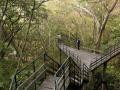
Basically, both Minh Chau and Quan Lan localities have quite favorable conditions for developing ecotourism. However, Quan Lan commune has more advantages to develop ecotourism in a humanistic direction, because this is an area with many famous historical relics such as Quan Lan Communal House, Quan Lan Pagoda, Temple worshiping the hero Tran Khanh Du, ... along with local festivals held annually such as the wind praying ceremony (March 15), Quan Lan festival (June 10-19); due to its location near the port and long exploitation time, the beaches in Quan Lan commune (especially Quan Lan beach) are no longer hygienic and clean to ensure the needs of tourists coming to relax and swim; this is also an area with many beautiful landscapes such as Got Beo wind pass, Ong Phong head, Voi Voi cave, but the ability to access these places is still very limited (dirt hill road, lots of gravel and rocks), especially during rainy and windy times; In addition, other natural resources such as mangrove forests and sea worms have not been really exploited for tourism purposes and ecotourism development. On the contrary, Minh Chau commune has more advantages in developing ecotourism in the direction of natural tourism, this is an area with diverse ecosystems such as at Rua De Beach, Bai Tu Long National Park Conservation Center...; Minh Chau beach is highly appreciated for its natural beauty and cleanliness, ranked in the top ten most beautiful beaches in Vietnam; Minh Chau commune is also home to Tram forest with a large area and a purity of up to 90%, suitable for building bridges through the forest (a very effective type of natural ecotourism currently applied by many countries) for tourists to sightsee, as well as for the purpose of studying and researching.
Figure 3.1: Thenmala Forest Bridge (India) Source: https://www.thenmalaecotourism.com/(August 21, 2019)
3.2.2. Using SWOT matrix to evaluate Quan Lan island tourism
General assessment of current tourism activities of Quan Lan island is shown through the following SWOT matrix:
Table 3.5: SWOT matrix evaluating tourism activities on Quan Lan island
Internal agent
Strengths- There is a lot of potential for tourism development, especially natural ecotourism and humanistic ecotourism.- The unskilled labor force is relatively abundant.- resource environmentunpolluted, still
Weaknesses- Poorly developed infrastructure, especially traffic routes to tourist destinations on the island.- The team of professional staff is still weak.- Tourism products in general
quite wild, originalintact
general and DLST in particularalone is monotonous.
External agents
Opportunity- Tourism is a key industry in the socio-economic development strategy of the province and Van Don economic zone.- Quan Lan was selected as a pilot area for eco-tourism development within the framework of the green growth project between Quang Ninh province and the Japanese organization JICA.- The flow of tourists and especially ecotourism in the world tends toincreasing
Challenge- Weather and climate change abnormally.- Competition in tourism products is increasingly fierce, especially with other localities in the province such as Ha Long, Mong Cai...- Awareness of tourists, especially domestic tourists, about ecotourism and nature conservation is not high.
Through summary analysis using SWOT matrix we see that:
To exploit strengths and take advantage of opportunities, it is necessary to:
- Diversify products and service types (build more tourism routes aimed at specific needs of tourists: experiential tourism immersed in nature, spiritual cultural tourism...)
- Effective exploitation of resources and differentiated products (natural resources and human resources)
div.maincontent .p { color: black; font-family:"Times New Roman", serif; font-style: normal; font-weight: normal; text-decoration: none; font-size: 14pt; margin:0pt; } div.maincontent p { color: black; font-family:"Times New Roman", serif; font-style: normal; font-weight: normal; text-decoration: none; font-size: 14pt; margin:0pt; } div.maincontent .s1 { color: black; font-family:"Times New Roman", serif; font-style: normal; font-weight: normal; text-decoration: none; font-size: 13pt; } div.maincontent .s2 { color: black; font-family:"Times New Roman", serif; font-style: normal; font-weight: normal; text-decoration: none; font-size: 13pt; } div.maincontent .s3 { color: #0D0D0D; font-family:"Times New Roman", serif; font-style: normal; font-weight: bold; text-decoration: none; font-size: 14pt; } div.maincontent .s4 { color: black; font-family:"Times New Roman", serif; font-style: italic; font-weight: normal; text-decoration: none; font-size: 14pt; } div.maincontent .s5 { color: black; font-family:"Times New Roman", serif; font-style: italic; font-weight: bold; text-decoration: none; font-size: 14pt; } div.maincontent .s6 { color: black; font-family:"Times New Roman", serif; font-style: italic; font-weight: normal; text-decoration: none; font-size: 14pt; vertical-align: -3pt; } div.maincontent .s7 { color: black; font-family:"Times New Roman", serif; font-style: italic; font-weight: normal; text-decoration: none; font-size: 14pt; vertical-align: -2pt; } div.maincontent .s8 { color: black; font-family:"Times New Roman", serif; font-style: italic; font-weight: normal; text-decoration: none; font-size: 14pt; vertical-align: -1pt; } div.maincontent .s9 { color: black; font-family:"Times New Roman", serif; font-style: normal; font-weight: normal; text-decoration: none; font-size: 14pt; } div.maincontent .s10 { color: black; font-family:"Times New Roman", serif; font-style: normal; font-weight: bold; text-decoration: none; font-size: 14pt; } div.maincontent .s11 { color: black; font-family:"Times New Roman", serif; font-style: normal; font-weight: normal; text-decoration: none; font-size: 14pt; } div.maincontent .s12 { color: black; font-family:Symbol, serif; font-style: normal; font-weight: normal; text-decoration: none; font-size: 14pt; } div.maincontent .s13 { color: black; font-family:Wingdings; font-style: normal; font-weight: normal; text-decoration: none; font-size: 14pt; } div.maincontent .s14 { color: black; font-family:"Times New Roman", serif; font-style: normal; font-weight: normal; text-decoration: none; font-size: 9pt; vertical-align: 5pt; } div.maincontent .s15 { color: black; font-family:"Times New Roman", serif; font-style: normal; font-weight: normal; text-decoration: none; font-size: 9pt; vertical-align: 5pt; } div.maincontent .s16 { color: black; font-family:Cambria, serif; font-style: italic; font-weight: normal; text-decoration: none; font-size: 14pt; } div.maincontent .s17 { color: #080808; font-family:"Times New Roman", serif; font-style: normal; font-weight: bold; text-decoration: none; font-size: 14pt; } div.maincontent .s18 { color: #080808; font-family:"Times New Roman", serif; font-style: normal; font-weight: normal; text-decoration: none; font-size: 14pt; } div.maincontent .s19 { color: black; font-family:"Times New Roman", serif; font-style: normal; font-weight: normal; text-decoration: none; font-size: 11pt; } div.maincontent .s20 { color: black; font-family:"Times New Roman", serif; font-style: normal; font-weight: normal; text-decoration: none; font-size: 10pt; } div.maincontent .s21 { color: black; font-family:"Times New Roman", serif; font-style: normal; font-weight: bold; text-decoration: none; font-size: 11pt; } div.maincontent .s22 { color: black; font-family:"Times New Roman", serif; font-style: normal; font-weight: normal; text-decoration: none; font-size: 11pt; } div.maincontent .s23 { color: black; font-family:"Times New Roman", serif; font-style: italic; font-weight: normal; text-decoration: none; font-size: 14pt; } div.maincontent .s24 { color: #212121; font-family:"Times New Roman", serif; font-style: normal; font-weight: normal; tex
Identify Rating Levels and Rating Scales
zt2i3t4l5ee
zt2a3gstourism,quan lan,quang ninh,ecology,ecotourism,minh chau,van don,geography,geographical basis,tourism development,science
zt2a3ge
zc2o3n4t5e6n7ts
of the islanders. Therefore, this indicator will be divided into two sub-indicators:
a1. Natural tourism attractiveness a2. Cultural tourism attractiveness
b. Tourist capacity
The two island communes in Quan Lan have different capacities to receive tourists. Minh Chau Commune is home to many standard hotels and resorts, attracting high-income domestic and international tourists. Meanwhile, Quan Lan Commune has many motels mainly built and operated by local people, so the scale and quality are not high, and will be suitable for ordinary tourists such as students.
c. Time of exploitation of Quan Lan Island Commune:
Quan Lan tourism is seasonal due to weather and climate conditions and festivals only take place on certain days of the year, specifically in spring. In Quan Lan commune, the period from April to June and from September to November is considered the best time to visit Quan Lan because the cultural tourism activities are mainly associated with festivals taking place during this time.
Minh Chau island commune:
Tourism exploitation time is all year round, because this is a place with a number of tourist attractions with diverse ecosystems such as Bai Tu Long National Park Research Center, Tram forest, Turtle Laying Beach, so besides coming to the beach for tourism and vacation in the summer, Minh Chau will attract research groups to come for tourism combined with research at other times of the year.
d. Sustainability
The sustainability of ecotourism sites in Quan Lan and Minh Chau communes depends on the sensitivity of the ecosystems to climate changes.
landscape. In general, these tourist destinations have a fairly high level of sustainability, because they are natural ecosystems, planned and protected. However, if a large number of tourists gather at certain times, it can exceed the carrying capacity and affect the sustainability of the environment (polluted beaches, damaged trees, animals moving away from their habitats, etc.), then the sustainability of the above ecosystems (natural ecosystems, human ecosystems) will also be affected and become less sustainable.
e. Location and accessibility
Both island communes have ports to take tourists to visit from Van Don wharf:
- Quan Lan – Van Don traffic route:
Phuc Thinh – Viet Anh high-speed boat and Quang Minh high-speed boat, depart at 8am and 2pm from Van Don to Quan Lan, and at 7am and 1pm from Quan Lan to Van Don. There are also wooden boats departing at 7am and 1pm.
- Van Don - Minh Chau traffic route:
Chung Huong high-speed train, Minh Chau train, morning 7:30 and afternoon 13:30 from Van Don to Minh Chau, morning 6:30 and afternoon 13:00 from Minh Chau to Van Don.
f. Infrastructure
Despite receiving investment attention, the issue of infrastructure and technical facilities for tourism on Quan Lan Island is still an issue that needs to be resolved because it has a direct impact on the implementation of ecotourism activities. The minimum conditions for serving tourists such as accommodation, electricity, water, communication, especially medical services, and security work need to be given top priority. Ecotourism spots in Minh Chau commune are assessed to have better infrastructure and technical facilities for tourism because there are quite complete and synchronous conditions for serving tourists, meeting many needs of domestic and foreign tourists.
3.2.1.4. Determine assessment levels and assessment scales
Corresponding to the levels of each criterion, the index is the score of those levels in the order of 4, 3, 2, 1 decreasing according to the standard of each level: very attractive (4), attractive (3), average (2), less attractive (1).
3.2.1.5. Determining the coefficients of the criteria
For the assessment of DLST in the two communes of Quan Lan and Minh Chau islands, the students added evaluation coefficients to show the importance of the criteria and indicators as follows:
Coefficient 3 with criteria: Attractiveness, Exploitation time. These are the 2 most important criteria for attracting tourists to tourism in general and eco-tourism in particular, so they have the highest coefficient.
Coefficient 2 with criteria: Capacity, Infrastructure, Location and accessibility . Because the assessment area is an island commune of Van Don district, the above criteria are selected by the author with appropriate coefficients at the average level.
Coefficient 1 with criteria: Sustainability. Quan Lan has natural and human-made ecotourism sites, with high biodiversity and little impact from local human factors. Most of the ecotourism sites are still wild, so they are highly sustainable.
3.2.1.6. Results of DLST assessment on Quan Lan island
a. Assessment of the potential for natural tourism development
For Minh Chau commune:
+ Natural tourism attractiveness is determined to be very attractive (4 points) and the most important coefficient (coefficient 3), so the score of the Attractiveness criterion is 4 x 3 = 12.
+ Capacity is determined as average (2 points) and the coefficient is quite important (coefficient 2), then the score of Capacity criterion is 2 x 2 = 4.
+ Exploitation time is long (4 points), the most important coefficient (coefficient 3) so the score of the Exploitation time criterion is 4 x 3 = 12.
+ Sustainability is determined as sustainable (4 points), the important coefficient is the average coefficient (coefficient 1), so the score of the Sustainability criterion is 4 x 1 = 4 points
+ Location and accessibility are determined to be quite favorable (2 points), the coefficient is quite important (coefficient 2), the criterion score is 2 x 2 = 4 points.
+ Infrastructure is assessed as good (3 points), the coefficient is quite important (coefficient 2), then the score of the Infrastructure criterion is 3 x 2 = 6 points.
The total score for evaluating DLST in Minh Chau commune according to 6 evaluation criteria is determined as: 12 + 4 + 12 + 4 + 4 + 6 = 42 points
Similar assessment for Quan Lan commune, we have the following table:
Table 3.3: Assessment of the potential for natural ecotourism development in Quan Lan and Minh Chau communes
Attractiveness of self-tourismof course
Capacity
Mining time
Sustainability
Location and accessibility
Infrastructure
Result
Point
DarkMulti
Point
DarkMulti
Point
DarkMulti
Point
DarkMulti
Point
DarkMulti
Point
DarkMulti
CommuneMinh Chau
12
12
4
8
12
12
4
4
4
8
6
8
42/52
Quan CommuneLan
6
12
6
8
9
12
4
4
4
8
4
8
33/52
b. Assessment of the potential for humanistic tourism development
For Quan Lan commune:
+ The attractiveness of human tourism is determined to be very attractive (4 points) and the most important coefficient (coefficient 3), so the score of the Attractiveness criterion is 4 x 3 = 12.
+ Capacity is determined to be large (3 points) and the coefficient is quite important (coefficient 2), then the score of the Capacity criterion is 3 x 2 = 6.
+ Mining time is average (3 points), the most important coefficient (coefficient 3) so the score of the Mining time criterion is 3 x 3 = 9.
+ Sustainability is determined as sustainable (4 points), the important coefficient is the average coefficient (coefficient 1), so the score of the Sustainability criterion is 4 x 1 = 4 points.
+ Location and accessibility are determined to be quite favorable (2 points), the coefficient is quite important (coefficient 2), the criterion score is 2 x 2 = 4 points.
+ Infrastructure is rated as average (2 points), the coefficient is quite important (coefficient 2), then the score of the Infrastructure criterion is 2 x 2 = 4 points.
The total score for evaluating DLST in Quan Lan commune according to 6 evaluation criteria is determined as: 12 + 6 + 6 + 4 + 4 + 4 = 36 points.
Similar assessment with Minh Chau commune we have the following table:
Table 3.4: Assessment of the potential for developing humanistic eco-tourism in Quan Lan and Minh Chau communes
Attractiveness of human tourismliterature
Capacity
Mining time
Sustainability
Location and accessibility
Infrastructure
Result
Point
DarkMulti
Point
DarkMulti
Point
DarkMulti
Point
DarkMulti
Point
DarkMulti
Point
DarkMulti
Quan CommuneLan
12
12
6
8
9
12
4
4
4
8
4
8
39/52
Minh CommuneChau
6
12
4
8
12
12
4
4
4
8
6
8
36/52
Basically, both Minh Chau and Quan Lan localities have quite favorable conditions for developing ecotourism. However, Quan Lan commune has more advantages to develop ecotourism in a humanistic direction, because this is an area with many famous historical relics such as Quan Lan Communal House, Quan Lan Pagoda, Temple worshiping the hero Tran Khanh Du, ... along with local festivals held annually such as the wind praying ceremony (March 15), Quan Lan festival (June 10-19); due to its location near the port and long exploitation time, the beaches in Quan Lan commune (especially Quan Lan beach) are no longer hygienic and clean to ensure the needs of tourists coming to relax and swim; this is also an area with many beautiful landscapes such as Got Beo wind pass, Ong Phong head, Voi Voi cave, but the ability to access these places is still very limited (dirt hill road, lots of gravel and rocks), especially during rainy and windy times; In addition, other natural resources such as mangrove forests and sea worms have not been really exploited for tourism purposes and ecotourism development. On the contrary, Minh Chau commune has more advantages in developing ecotourism in the direction of natural tourism, this is an area with diverse ecosystems such as at Rua De Beach, Bai Tu Long National Park Conservation Center...; Minh Chau beach is highly appreciated for its natural beauty and cleanliness, ranked in the top ten most beautiful beaches in Vietnam; Minh Chau commune is also home to Tram forest with a large area and a purity of up to 90%, suitable for building bridges through the forest (a very effective type of natural ecotourism currently applied by many countries) for tourists to sightsee, as well as for the purpose of studying and researching.
Figure 3.1: Thenmala Forest Bridge (India) Source: https://www.thenmalaecotourism.com/(August 21, 2019)
3.2.2. Using SWOT matrix to evaluate Quan Lan island tourism
General assessment of current tourism activities of Quan Lan island is shown through the following SWOT matrix:
Table 3.5: SWOT matrix evaluating tourism activities on Quan Lan island
Internal agent
Strengths- There is a lot of potential for tourism development, especially natural ecotourism and humanistic ecotourism.- The unskilled labor force is relatively abundant.- resource environmentunpolluted, still
Weaknesses- Poorly developed infrastructure, especially traffic routes to tourist destinations on the island.- The team of professional staff is still weak.- Tourism products in general
quite wild, originalintact
general and DLST in particularalone is monotonous.
External agents
Opportunity- Tourism is a key industry in the socio-economic development strategy of the province and Van Don economic zone.- Quan Lan was selected as a pilot area for eco-tourism development within the framework of the green growth project between Quang Ninh province and the Japanese organization JICA.- The flow of tourists and especially ecotourism in the world tends toincreasing
Challenge- Weather and climate change abnormally.- Competition in tourism products is increasingly fierce, especially with other localities in the province such as Ha Long, Mong Cai...- Awareness of tourists, especially domestic tourists, about ecotourism and nature conservation is not high.
Through summary analysis using SWOT matrix we see that:
To exploit strengths and take advantage of opportunities, it is necessary to:
- Diversify products and service types (build more tourism routes aimed at specific needs of tourists: experiential tourism immersed in nature, spiritual cultural tourism...)
- Effective exploitation of resources and differentiated products (natural resources and human resources)
div.maincontent .p { color: black; font-family:"Times New Roman", serif; font-style: normal; font-weight: normal; text-decoration: none; font-size: 14pt; margin:0pt; } div.maincontent p { color: black; font-family:"Times New Roman", serif; font-style: normal; font-weight: normal; text-decoration: none; font-size: 14pt; margin:0pt; } div.maincontent .s1 { color: black; font-family:"Times New Roman", serif; font-style: normal; font-weight: normal; text-decoration: none; font-size: 13pt; } div.maincontent .s2 { color: black; font-family:"Times New Roman", serif; font-style: normal; font-weight: normal; text-decoration: none; font-size: 13pt; } div.maincontent .s3 { color: #0D0D0D; font-family:"Times New Roman", serif; font-style: normal; font-weight: bold; text-decoration: none; font-size: 14pt; } div.maincontent .s4 { color: black; font-family:"Times New Roman", serif; font-style: italic; font-weight: normal; text-decoration: none; font-size: 14pt; } div.maincontent .s5 { color: black; font-family:"Times New Roman", serif; font-style: italic; font-weight: bold; text-decoration: none; font-size: 14pt; } div.maincontent .s6 { color: black; font-family:"Times New Roman", serif; font-style: italic; font-weight: normal; text-decoration: none; font-size: 14pt; vertical-align: -3pt; } div.maincontent .s7 { color: black; font-family:"Times New Roman", serif; font-style: italic; font-weight: normal; text-decoration: none; font-size: 14pt; vertical-align: -2pt; } div.maincontent .s8 { color: black; font-family:"Times New Roman", serif; font-style: italic; font-weight: normal; text-decoration: none; font-size: 14pt; vertical-align: -1pt; } div.maincontent .s9 { color: black; font-family:"Times New Roman", serif; font-style: normal; font-weight: normal; text-decoration: none; font-size: 14pt; } div.maincontent .s10 { color: black; font-family:"Times New Roman", serif; font-style: normal; font-weight: bold; text-decoration: none; font-size: 14pt; } div.maincontent .s11 { color: black; font-family:"Times New Roman", serif; font-style: normal; font-weight: normal; text-decoration: none; font-size: 14pt; } div.maincontent .s12 { color: black; font-family:Symbol, serif; font-style: normal; font-weight: normal; text-decoration: none; font-size: 14pt; } div.maincontent .s13 { color: black; font-family:Wingdings; font-style: normal; font-weight: normal; text-decoration: none; font-size: 14pt; } div.maincontent .s14 { color: black; font-family:"Times New Roman", serif; font-style: normal; font-weight: normal; text-decoration: none; font-size: 9pt; vertical-align: 5pt; } div.maincontent .s15 { color: black; font-family:"Times New Roman", serif; font-style: normal; font-weight: normal; text-decoration: none; font-size: 9pt; vertical-align: 5pt; } div.maincontent .s16 { color: black; font-family:Cambria, serif; font-style: italic; font-weight: normal; text-decoration: none; font-size: 14pt; } div.maincontent .s17 { color: #080808; font-family:"Times New Roman", serif; font-style: normal; font-weight: bold; text-decoration: none; font-size: 14pt; } div.maincontent .s18 { color: #080808; font-family:"Times New Roman", serif; font-style: normal; font-weight: normal; text-decoration: none; font-size: 14pt; } div.maincontent .s19 { color: black; font-family:"Times New Roman", serif; font-style: normal; font-weight: normal; text-decoration: none; font-size: 11pt; } div.maincontent .s20 { color: black; font-family:"Times New Roman", serif; font-style: normal; font-weight: normal; text-decoration: none; font-size: 10pt; } div.maincontent .s21 { color: black; font-family:"Times New Roman", serif; font-style: normal; font-weight: bold; text-decoration: none; font-size: 11pt; } div.maincontent .s22 { color: black; font-family:"Times New Roman", serif; font-style: normal; font-weight: normal; text-decoration: none; font-size: 11pt; } div.maincontent .s23 { color: black; font-family:"Times New Roman", serif; font-style: italic; font-weight: normal; text-decoration: none; font-size: 14pt; } div.maincontent .s24 { color: #212121; font-family:"Times New Roman", serif; font-style: normal; font-weight: normal; tex -
 Ecotourism in Can Tho City - Current situation and solutions - 2
 -
 Conditions for Ecotourism Development
 -
 Assessing the current status, potential and proposing orientation for ecotourism development in the Song Tranh Hydropower Reservoir area, Bac Tra My district - 7
 -
 Bank credit for ecotourism development in Kien Giang province - 14
- Effect of pH : pH is an indirect indicator of the content of alkaline or acidic substances present in the water environment. However, pH also affects the physiological, distribution and biochemical characteristics of organisms, most clearly for crustaceans. In addition, each fish species also has a certain pH limit, for example, carp at pH 6 - 7, perch, goby, snakehead fish, and catfish can withstand water pH = 4.5.
1.4.2.6. Effects of abiotic factors in the soil environment on organisms
As we know, soil is a complete environment. There is a process of development, with all the inorganic and organic components. Regarding the inorganic components: there is water in the soil, soil structure, soil composition, soil particle size, nutrients, toxins... The biological components include animals that live completely in the soil such as bacteria, fungi, protozoans, roundworms, earthworms, mollusks, carnivores, spiders, beetles... or animals that live half underground and half above ground such as ants, termites, snakes, mice, birds... The soil environment also has a great influence on the terrestrial biota; its influence is shown through the following factors:
a. Moisture and water in the soil
Plants absorb water from the soil through forms of water called soil water , capillarity water and gravity water . Water in
Soil affects plants through soil moisture. People have introduced the concept of " wilting moisture" which is the type of moisture at which plants have permanently wilted. This wilting moisture depends on many factors including the mechanical composition of the soil, the organic composition and especially for each type of plant with different wilting moisture. For example, the wilting moisture of sandy soil is lower than that of clay soil and lower than that of peat soil, the moisture of the same plant for acid sulfate soil is higher than that of neutral soil. The wilting moisture of rice is also different from the wilting moisture of corn, meaning that for each different plant, the water moisture requirement is different.
For animals, water and soil moisture also play a very important role. Some animals that live in the soil or live part-time in the soil need a certain amount of humidity. For example, termites need the humidity in the soil to be above 50% relative humidity; if it is lower, they have to dig deep, sometimes up to 12 m, which we often see in the degraded red basalt mountains in Bao Loc. Earthworms need the humidity in the soil to be around 90 - 95%; if the humidity is too low, they will die or dig deeper, or be forced to hibernate ( Estivation ) in their round cocoons. On the contrary, if the humidity is too high, meaning it is too saturated with water, the worms will leave or die. The same goes for frogs, toads, and snakes.
b. Effects of soil mechanical composition and structure on organisms:
Mechanical composition is the ratio of grain levels, sand, silt and clay in the soil ( see also "Soil Ecology" - Le Huy Ba, 1998 ). Structure is the type of cohesion that creates the spatial shape of the soil. Soil structure and mechanical composition have a direct impact on the activity of plant roots, on the problem of aeration, supply and release of food, drainage and water infiltration... For example, soil with a lot of clay, low water absorption, good water retention, suitable for growing rice. Sandy soil is easy to drain, suitable for growing crops, beans, poorly drained soil with a lot of organic matter easily creates conditions for anaerobic bacteria to operate.
Soil with a lot of mineral sand, if the temperature is about 30 - 35 0 C, humidity 75 - 80% will create good conditions for aerobic microorganisms to operate and the process of mineralizing organic matter from waste will happen faster.
c. Soil aeration affects organisms
Air permeability is expressed through porosity (percentage of voids in the soil). The higher the porosity, the greater the air permeability and therefore affects the metabolism of organisms in the soil. Animals living in the soil are greatly affected by this air permeability. In contrast to porosity, people have introduced the concept of compactness . The higher the compactness, the lower the air permeability.
leading to a lack of oxygen; in this case, a lack of oxygen in the soil is a limiting factor for soil animals and plant roots find it difficult to grow and develop. CO2 is also a limiting factor for some animals, but termites can tolerate high concentrations of CO2 . In the case of a lack of oxygen but a lot of CO2 , some protozoans switch to the phenomenon of living anaerobic ( Semiaerobic ).
d. Effects of pH and chemical composition, toxic substances of soil on organisms
We know that different organisms have different nutritional needs, pH levels and tolerance to toxins. Most plants need a lot of N, P, K, some Na, S, Ca, Mg, and some trace elements such as Cu, Co, B, Zn, Ti, ... Although organisms do not need many trace elements, they are still limiting elements when organisms lack them. For example, Nang Thom Cho Dao rice will lose its fragrance when grown in places other than Cho Dao, My Le Commune, Can Guoc, Long An. Our many years of research results (Le Huy Ba and collaborators, 1994 - 1998) have demonstrated that the role of trace elements such as Co, Mo is very important in creating the quality of rice grains. Because, in those places, there may be a lack of necessary trace elements. Likewise, Hung Yen longan will have poor quality when grown in other lands.
It is also important to remember that trace elements are essential for plants in certain environments. But if they are in anaerobic, flooded, swampy environments with lots of semi-decomposed organic matter and at a concentration 10-15 times higher, they become a limiting factor not only for plants but also for animals such as clams, mussels, shrimp, fish under the name of " heavy metal toxicity" . The results of our many years of research (Le Huy Ba and collaborators 1999) on polluted land in Nha Be from wastewater from Ho Chi Minh City have shown that heavy metals from wastewater move, form complexes with organic matter in water, settle, accumulate in rice plants, in insects, in water spinach and have created concentrations that are toxic to organisms.
Toxic substances in soil are elements that are very limited to living organisms, for example toxic ions Al 3+ , Fe 2+ , SO 4 2- in acid sulfate soil, Na + , Ca 2+ in saline soil, H 2 S, CH 4, H + in long-term flooded soil will affect not only animals and plants but also humans living on the ground. For example, some animals such as ducks and pigs living in acid sulfate areas are susceptible to osteomalacia, weak legs and beaks because toxic substances, especially Al 3+, penetrate the skin, food and drinking water, hindering the absorption of Calcium, which is already lacking in the environment here.
In fact, considering the influence of soil environmental factors is considering the combined influence of soil elements and components on organisms. Not only with the
Different soil groups have different flora; even within a soil group with different soil types, there are different flora ecosystems. For example, within the acid sulfate soil group, from slightly acidic, moderately acidic, to highly acidic and potentially inland acidic soils, there are also very clear changes.
1.4.2.7. Impact of environmental geography
Environmental geography also plays a very important role in the distribution of plant ecosystems. According to latitude, people can also divide the types of macrobiomes. On the same latitude, people divide the zones according to altitude, which are successively expressed in vegetation types depending on altitude and decreasing temperature.
For example, in the tropical belt in the highlands there are:
From 0 - 1,200 m: tropical plant ecosystem
From 1,200 - 1,800 m: subtropical plant ecosystem
From 1,800 - 3,600 m: temperate plant ecosystem
From 3,600 - 5,400 m: high mountain temperate plant ecosystem.
In the same terrain, but on the windward side, the windward side of the mountain and the leeward side of the mountain have different plant ecosystems. Because the windward side receives more rain, plants and organisms grow better than the leeward side (dry, hot, plants are less developed and animals are also less abundant). The Western Truong Son and Eastern Truong Son regions of the North Central region are typical, the phenomenon of Lao wind, the Southwest monsoon when blowing from Laos to Vietnam meets the Truong Son range, causing a lot of rain on the Lao side, but when passing through the Eastern Truong Son, the wind is less, does not carry moisture, making it dry and hot. Therefore, the ecosystems on the two sides of the Eastern and Western Truong Son are also different due to this " The sunny side has a lot of rain, the rainy side turns" .
1.4.2.8. Combined effects of physical factors on the ecological environment
When analyzing, people put forward many factors to consider the effects of physical environmental factors on organisms. But in reality, these separate effects rarely stand alone but are the sum of the effects of many factors at the same time. However, depending on the time and place, there are factors that are not dominant. The sum of factors will create positive or negative effects on organisms. The dependence of the ecosystem on geographical regions according to latitude, climate, and temperature creates
The macrobiomes range from tropical forests to arctic moss meadows. Going from left to right as humidity increases, the ecosystems change from hot dry deserts to hot humid tropical rainforests.
1.4.2.9. Adaptability of organisms to environmental conditions
For living organisms to survive and develop in certain environmental conditions, no matter how harsh they are, they must have a certain level of adaptability. For example, trees living in the forest have a root system that can keep the tree standing in the mangrove environment, roots to accumulate and distribute fresh water, thick leaves, glossy leaf surfaces to prevent water evaporation and filter fresh water, especially the trunk has a special structure, capable of filtering salt water into fresh water to supply living organisms, has a large osmotic pressure for transport (sometimes up to 12 atm). Or for Giraffes, in the process of living and finding food in the Savane forest, every day the lower tree layers are gradually lost, so their necks must gradually change and lengthen, over many generations to become today's Giraffes, those that are unable to stretch their necks will become extinct. Just as the adaptation of Sadittaria to live in different environments on moist soil in shallow and deep water, their body morphology also changes to suit wet, semi-submerged or completely submerged conditions.
1.4.2.10. The impact of physical environmental conditions on humans
Regarding the interaction between humans and the environment, we will consider both aspects: the influence of environmental conditions on human physiological characteristics, and at the same time study the opposite influence of humans on the environment. Even while considering each factor affecting the environment or humans, we still consider both aspects of two-way influence.
a. The impact of the natural environment on humans
Interaction of light and sunlight with the human body : solar radiation contains many ultraviolet rays, some of which are blocked in the ozone layer. The remaining amount will shine directly on the ground. In low doses, these rays have the ability to kill bacteria or are necessary for the body to synthesize vitamin D; this substance is necessary to metabolize and assimilate calcium, providing bone-building components for the body. When radiation stimulates our skin, the body will create self-defense reactions to produce Melanin. Melanin is a substance found in special Melanocite cells located in the deep layer of the epidermis. Melanin production means pigment production. But if ultraviolet rays exceed the level, it will cause sunburn or sunburn. It is believed that white-skinned people are susceptible to sunburn and even cancer.
skin more, if lacking Melanin they will have osteoporosis for adults or rickets for children. On the contrary, for hot tropical regions there is a process of protection against excess ultraviolet due to the Melanin membrane; therefore, some people say " black people walk under the shade of their skin" .
In cases of excess UV rays, such as when the ozone layer is depleted, the amount of UV rays increases greatly, causing skin cancer and blindness as seen in the southern regions of Argentina. In mild cases, sunlight can cause “ prickly heat ” (Miliaria), or can cause cataracts.
Obviously, light is essential for human activities. It is one of the three factors that determine human survival. However, if there is too much light and bright sunlight, it will be a limiting factor for growth and development.
Interaction with temperature: temperature is essential for humans, providing direct heat energy for activities. Humans are also very sensitive to temperature changes within a few degrees. In fact, at first, a normal physiological reaction occurs, if it is sunny, peripheral radiation increases, if it is cold, that radiation decreases through skin regulation, causing blood vessels under the skin to dilate, increasing or decreasing heat loss. Human adaptation to external temperature is expressed in the fact that: the relative area of the body increases in hot countries and decreases in cold countries. As for body size, the opposite is true: in cold countries, the body tends to be larger than in hot countries. Residents of hot countries (Africa) have a relatively long (smooth) stature, relatively narrow shoulders and hips, and a relatively wide rib cage. On the contrary, residents of the continent and cold countries have bodies that develop more in width and thickness. Research results on Vietnamese people show that their bodies are not as long (smooth) as Africans, nor as developed in width and thickness as Europeans, but their indicators are relatively close to those of Indians.
In cases where the body is not able to adapt, it will become dehydrated due to heat. Dehydration means losing 20-30 g of NaCl/day. When exercising in hot weather, the heart rate must increase to increase oxygen transport to the muscles. If it is too hot, it will lead to disorders such as edema, dehydration, exhaustion, cramps due to salt loss, heart failure, etc.
In case of low environmental temperature (cold), for a long time, it will cause frostbite, reduce the body's resistance, and make it susceptible to disease. If it is suddenly cold, it is even easier to catch a "cold".
Interaction with humidity : We humans also adapt to a certain air humidity. If the humidity exceeds the allowable humidity of about 90% in temperate conditions, the ability of the nasal mucosa to regulate will be limited and we will feel stuffy, heavy, and have difficulty breathing.
On the other hand, too high humidity will also create opportunities for many pathogenic bacteria to develop, indirectly affecting human health.
If the humidity is too low (below 30%) it will cause dry nasal mucosa and even nosebleeds.
Interaction with high air pressure (Compressed air) : In conditions of high air pressure, people have to breathe air under high pressure. Therefore, it can cause a phenomenon called " decompression sickness" . The cause of the disease is due to the compressed gas mixture dissolving in the blood of the body. Thanks to the exchange area in the alveoli, the blood is saturated very quickly, the dissolved gas remaining in the tissues is exchanged in the blood. For example, the amount of oxygen when combined with Hemoglobin or dissolved gas in the plasma is completely used, but at a high pressure, oxygen becomes toxic in two aspects:
After breathing oxygen for many hours, lung tissue is stimulated.
Hyperbaric oxygen has convulsive properties when the specific pressure of oxygen is greater than 2 kg/cm2 .
b. The effect of altitude on humans
The higher the altitude, the lower the oxygen concentration, lack of oxygen can cause suffocation and from there give rise to respiratory and cardiovascular diseases... Because at altitudes below 3,000 m, the climate is not much different from that on the ground, but at altitudes above 3,000 m, it depends on the geographical latitude. From there, it also has a certain interaction with people living at certain altitudes and creates its own adaptation. For example, people in the high mountains of the Andes have a wider chest and especially the front is deeper than the back, to facilitate the activity of the lungs. People in the high mountains of Tibet have a faster breathing rate and heart rate than the average person.
c. Impact of noise on human health
Noise is all the sounds that are not adapted, causing discomfort to humans . The manifestation of the impact of noise through frequency (Hz) and pressure (unit is barie = 1bin/cm 2 = 10 -6 atm/cm 2 ). Noise is dangerous in terms of intensity and frequency, time, purity, spectrum, surprise and combination with vibration.
The threshold of pain at the maximum hearing level is 10 4 ERG/cm 2 /s, which is 10 13 times higher than the minimum level . If the noise is strong, it causes discomfort and even deafness. Normally, noise can cause dizziness, nausea, and even fainting. It can affect the nerve endings, affect the vestibular system, and cause dizziness. According to D. Rhor, 1969, noise also has psychological effects, causing discomfort, anxiety, frustration, irritability, fear, obsession, loss of concentration, insomnia, and confusion. Noise also causes general fatigue, weakness, and anemia. Autonomic nervous system disorders, increased respiration, and changes in blood pressure.
d. Impact of vibration on human health
Vibration is also one of the environmental factors. The harmful effects of vibration cause:
- Damage to bones and joints.
- Vascular disorders.
- Damage to the nerve muscles….