
million USD. The main investment areas are hotels, restaurants, resorts, entertainment areas, golf courses...
- Foreign direct investment capital: there are 15 tourism investment projects from foreign direct investment capital with a total capital of 931.54 million USD.
Ninth, on tourism promotion
Cat Ba tourism promotion activities have been interested in many diverse forms.
- Building new tourism products and creating tourism brands
The basic types of tourism in Cat Ba that have been selected and focused on investment and development in recent times are marine eco-tourism combined with resort and sports tourism; community tourism; conference, seminar and cultural and festival tourism.
- About tourism promotion methods
Follow the traditional method: publish brochures, posters, tour guides, video discs, travel guides, tourist maps… in many languages;
Maintain and upgrade tourism website, promote on domestic and international mass media.
With the aim of exploiting tourism potential, Cat Ba tourism contributes greatly to the development of Hai Phong tourism, is extremely important to promote the development of Hai Phong tourism. In 2011, tourists to Hai Phong reached 4,172,000 (including 558,000 international visitors), of which tourists to Cat Ba were 1,203,000 (including 310,000 international visitors). In 2015, tourists to Hai Phong reached
4,500,000 arrivals (568,000 international visitors), of which tourists to Cat Ba are
1,324,000 arrivals (including 340,000 international arrivals).
According to statistics, the number of tourists coming to Cat Ba accounts for about 30% of the total number of tourists coming to Hai Phong city, but the number of international visitors coming to Cat Ba every year accounts for over 60% of the total number of international visitors coming to Hai Phong. In order for Hai Phong tourism to reach the international level, Hai Phong city tourism needs to put Cat Ba tourism in the center.
Besides, with its natural location, Cat Ba is also a bridge between the two cities of Hai Phong - Quang Ninh and is one of the three major tourist centers of the region, Cat Ba.
- Do Son - Ha Long.
Table 2.2. Economic structure of Cat Hai district in the period 2009-2015 (%)
Content
Year 2009 | Year 2011 | Year 2013 | Year 2014 | Year 2015 | |
Proportion of tourism and service industry | 63.4 | 64 | 66 | 67 | 68.4 |
Industry - construction proportion | 13.2 | 13 | 16 | 17 | 16.8 |
Proportion of agricultural sector | 23.4 | 23 | 18 | 16 | 14.8 |
Maybe you are interested!
-
 Solutions for tourism development in Tien Lang - 10
zt2i3t4l5ee
zt2a3gstourism, tourism development
zt2a3ge
zc2o3n4t5e6n7ts
- District People's Committees and authorities of communes with tourist attractions should support, promote, and provide necessary information to people, helping them improve their knowledge about tourism. Raise tourism awareness for local people.
*
* *
Due to limited knowledge and research time, the thesis inevitably has shortcomings. Therefore, I look forward to receiving guidance from teachers, experts as well as your comments to make the thesis more complete.
Chapter III Conclusion
Through the issues presented in Chapter II, we can come to some conclusions:
Based on the strengths of available tourism resources, the types of tourism in Tien Lang that need to be promoted in the coming time are sightseeing and resort tourism, discovery tourism, weekend tourism. To improve the quality and diversify tourism products, Tien Lang district needs to combine with local cultural tourism resources, at the same time combine with surrounding areas, build rich tourism products. The strengths of Tien Lang tourism are eco-tourism and cultural tourism, so developing Tien Lang tourism must always go hand in hand with restoring and preserving types of cultural tourism resources. Some necessary measures to support and improve the efficiency of exploiting tourism resources in Tien Lang are: strengthening the construction of technical facilities and labor force serving tourism, actively promoting and advertising tourism, and expanding forms of capital mobilization for tourism development.
CONCLUDE
I Conclusion
1. Based on the results achieved within the framework of the thesis's needs, some basic conclusions can be drawn as follows:
Tien Lang is a locality with great potential for tourism development. The relatively abundant cultural tourism resources and ecological tourism resources have great appeal to tourists. Based on this potential, Tien Lang can build a unique tourism industry that is competitive enough with other localities within Hai Phong city and neighboring areas.
In recent years, the exploitation of the advantages of resources to develop tourism and build tourist routes in Tien Lang has not been commensurate with the available potential. In terms of quantity, many resource objects have not been brought into the purpose of tourism development. In terms of time, the regular service time has not been extended to attract more visitors. Infrastructure and technical facilities are still weak. The labor force is still thin and weak in terms of expertise. Tourism programs and routes have not been organized properly, the exploitation content is still monotonous, so it has not attracted many visitors. Although resources have not been mobilized much for tourism development, they are facing the risk of destruction and degradation.
2. Based on the results of investigation, analysis, synthesis, evaluation and selective absorption of research results of related topics, the thesis has proposed a number of necessary solutions to improve the efficiency of exploiting tourism resources in Tien Lang such as: promoting the restoration and conservation of tourism resources, focusing on investment and key exploitation of ecotourism resources, strengthening the construction of infrastructure and tourism workforce. Expanding forms of capital mobilization. In addition, the thesis has built a number of tourist routes of Hai Phong in which Tien Lang tourism resources play an important role.
Exploiting Tien Lang tourism resources for tourism development is currently facing many difficulties. The above measures, if applied synchronously, will likely bring new prospects for the local tourism industry, contributing to making Tien Lang tourism an important economic sector in the district's economic structure.
REFERENCES
1. Nhuan Ha, Trinh Minh Hien, Tran Phuong, Hai Phong - Historical and cultural relics, Hai Phong Publishing House, 1993
2. Hai Phong City History Council, Hai Phong Gazetteer, Hai Phong Publishing House, 1990.
3. Hai Phong City History Council, History of Tien Lang District Party Committee, Hai Phong Publishing House, 1990.
4. Hai Phong City History Council, University of Social Sciences and Humanities, VNU, Hai Phong Place Names Encyclopedia, Hai Phong Publishing House. 2001.
5. Law on Cultural Heritage and documents guiding its implementation, National Political Publishing House, Hanoi, 2003.
6. Tran Duc Thanh, Lecture on Tourism Geography, Faculty of Tourism, University of Social Sciences and Humanities, VNU, 2006
7. Hai Phong Center for Social Sciences and Humanities, Some typical cultural heritages of Hai Phong, Hai Phong Publishing House, 2001
8. Nguyen Ngoc Thao (editor-in-chief, Tourism Geography, Hai Phong Publishing House, two volumes (2001-2002)
9. Nguyen Minh Tue and group of authors, Hai Phong Tourism Geography, Ho Chi Minh City Publishing House, 1997.
10. Nguyen Thanh Son, Hai Phong Tourism Territory Organization, Associate Doctoral Thesis in Geological Geography, Hanoi, 1996.
11. Decision No. 2033/QD – UB on detailed planning of Tien Lang town, Hai Phong city until 2020.
12. Department of Culture, Information, Hai Phong Museum, Hai Phong relics
- National ranked scenic spot, Hai Phong Publishing House, 2005. 13. Tien Lang District People's Committee, Economic Development Planning -
Culture - Society of Tien Lang district to 2010.
14.Website www.HaiPhong.gov.vn
APPENDIX 1
List of national ranked monuments
STT
Name of the monument
Number, year of decisiondetermine
Location
1
Gam Temple
938 VH/QĐ04/08/1992
Cam Khe Village- Toan Thang commune
2
Doc Hau Temple
9381 VH/QĐ04/08/1992
Doc Hau Village –Toan Thang commune
3
Cuu Doi Communal House
3207 VH/QĐDecember 30, 1991
Zone II of townTien Lang
4
Ha Dai Temple
938 VH/QĐ04/08/1992
Ha Dai Village –Tien Thanh commune
APPENDIX II
STT
Name of the monument
Number, year of decision
Location
1
Phu Ke Pagoda Temple
178/QD-UBJanuary 28, 2005
Zone 1 - townTien Lang
2
Trung Lang Temple
178/QD-UBJanuary 28, 2005
Zone 4 – townTien Lang
3
Bao Khanh Pagoda
1900/QD-UBAugust 24, 2006
Nam Tu Village -Kien Thiet commune
4
Bach Da Pagoda
1792/QD-UB11/11/2002
Hung Thang Commune
5
Ngoc Dong Temple
177/QD-UBNovember 27, 2005
Tien Thanh Commune
6
Tomb of Minister TSNhu Van Lan
2848/QD-UBSeptember 19, 2003
Nam Tu Village -Kien Thiet commune
7
Canh Son Stone Temple
2160/QD-UBSeptember 19, 2003
Van Doi Commune –Doan Lap
8
Meiji Temple
2259/QD-UBSeptember 19, 2002
Toan Thang Commune
9
Tien Doi Noi Temple
477/QD-UBSeptember 19, 2005
Doan Lap Commune
10
Tu Doi Temple
177/QD-UBJanuary 28, 2005
Doan Lap Commune
11
Duyen Lao Temple
177/QD-UBJanuary 28, 2005
Tien Minh Commune
12
Dinh Xuan Uc Pagoda
177/QD-UBJanuary 28, 2005
Bac Hung Commune
13
Chu Khe Pagoda
177/QD-UBJanuary 28, 2005
Hung Thang Commune
14
Dong Dinh
2848/QD-UBNovember 21, 2002
Vinh Quang Commune
15
President's Memorial HouseTon Duc Thang
177/QD-UBJanuary 28, 2005
NT Quy Cao
Ha Dai Temple
Ben Vua Temple
Tien Lang hot spring
div.maincontent .p { color: black; font-family:"Times New Roman", serif; font-style: normal; font-weight: normal; text-decoration: none; font-size: 14pt; margin:0pt; } div.maincontent p { color: black; font-family:"Times New Roman", serif; font-style: normal; font-weight: normal; text-decoration: none; font-size: 14pt; margin:0pt; } div.maincontent .s1 { color: black; font-family:"Times New Roman", serif; font-style: normal; font-weight: normal; font-size: 16pt; } div.maincontent .s2 { color: black; font-family:"Times New Roman", serif; font-style: italic; font-weight: bold; text-decoration: none; font-size: 14pt; } div.maincontent .s3 { color: black; font-family:"Times New Roman", serif; font-style: italic; font-weight: normal; text-decoration: none; font-size: 14pt; } div.maincontent .s4 { color: black; font-family:"Times New Roman", serif; font-style: normal; font-weight: normal; font-size: 14pt; } div.maincontent .s5 { color: black; font-family:"Times New Roman", serif; font-style: normal; font-weight: bold; font-size: 14pt; } div.maincontent .s6 { color: black; font-family:"Times New Roman", serif; font-style: normal; font-weight: normal; text-decoration: none; font-size: 14pt; } div.maincontent .s7 { color: black; font-family:"Times New Roman", serif; font-style: normal; font-weight: bold; text-decoration: none; font-size: 14pt; } div.maincontent .s8 { color: black; font-family:"Times New Roman", serif; font-style: normal; font-weight: normal; text-decoration: none; font-size: 9pt; vertical-align: 6pt; } div.maincontent .s9 { color: black; font-family:"Times New Roman", serif; font-style: normal; font-weight: bold; text-decoration: none; font-size: 12pt; } div.maincontent .s11 { color: black; font-family:"Times New Roman", serif; font-style: normal; font-weight: normal; tex
Solutions for tourism development in Tien Lang - 10
zt2i3t4l5ee
zt2a3gstourism, tourism development
zt2a3ge
zc2o3n4t5e6n7ts
- District People's Committees and authorities of communes with tourist attractions should support, promote, and provide necessary information to people, helping them improve their knowledge about tourism. Raise tourism awareness for local people.
*
* *
Due to limited knowledge and research time, the thesis inevitably has shortcomings. Therefore, I look forward to receiving guidance from teachers, experts as well as your comments to make the thesis more complete.
Chapter III Conclusion
Through the issues presented in Chapter II, we can come to some conclusions:
Based on the strengths of available tourism resources, the types of tourism in Tien Lang that need to be promoted in the coming time are sightseeing and resort tourism, discovery tourism, weekend tourism. To improve the quality and diversify tourism products, Tien Lang district needs to combine with local cultural tourism resources, at the same time combine with surrounding areas, build rich tourism products. The strengths of Tien Lang tourism are eco-tourism and cultural tourism, so developing Tien Lang tourism must always go hand in hand with restoring and preserving types of cultural tourism resources. Some necessary measures to support and improve the efficiency of exploiting tourism resources in Tien Lang are: strengthening the construction of technical facilities and labor force serving tourism, actively promoting and advertising tourism, and expanding forms of capital mobilization for tourism development.
CONCLUDE
I Conclusion
1. Based on the results achieved within the framework of the thesis's needs, some basic conclusions can be drawn as follows:
Tien Lang is a locality with great potential for tourism development. The relatively abundant cultural tourism resources and ecological tourism resources have great appeal to tourists. Based on this potential, Tien Lang can build a unique tourism industry that is competitive enough with other localities within Hai Phong city and neighboring areas.
In recent years, the exploitation of the advantages of resources to develop tourism and build tourist routes in Tien Lang has not been commensurate with the available potential. In terms of quantity, many resource objects have not been brought into the purpose of tourism development. In terms of time, the regular service time has not been extended to attract more visitors. Infrastructure and technical facilities are still weak. The labor force is still thin and weak in terms of expertise. Tourism programs and routes have not been organized properly, the exploitation content is still monotonous, so it has not attracted many visitors. Although resources have not been mobilized much for tourism development, they are facing the risk of destruction and degradation.
2. Based on the results of investigation, analysis, synthesis, evaluation and selective absorption of research results of related topics, the thesis has proposed a number of necessary solutions to improve the efficiency of exploiting tourism resources in Tien Lang such as: promoting the restoration and conservation of tourism resources, focusing on investment and key exploitation of ecotourism resources, strengthening the construction of infrastructure and tourism workforce. Expanding forms of capital mobilization. In addition, the thesis has built a number of tourist routes of Hai Phong in which Tien Lang tourism resources play an important role.
Exploiting Tien Lang tourism resources for tourism development is currently facing many difficulties. The above measures, if applied synchronously, will likely bring new prospects for the local tourism industry, contributing to making Tien Lang tourism an important economic sector in the district's economic structure.
REFERENCES
1. Nhuan Ha, Trinh Minh Hien, Tran Phuong, Hai Phong - Historical and cultural relics, Hai Phong Publishing House, 1993
2. Hai Phong City History Council, Hai Phong Gazetteer, Hai Phong Publishing House, 1990.
3. Hai Phong City History Council, History of Tien Lang District Party Committee, Hai Phong Publishing House, 1990.
4. Hai Phong City History Council, University of Social Sciences and Humanities, VNU, Hai Phong Place Names Encyclopedia, Hai Phong Publishing House. 2001.
5. Law on Cultural Heritage and documents guiding its implementation, National Political Publishing House, Hanoi, 2003.
6. Tran Duc Thanh, Lecture on Tourism Geography, Faculty of Tourism, University of Social Sciences and Humanities, VNU, 2006
7. Hai Phong Center for Social Sciences and Humanities, Some typical cultural heritages of Hai Phong, Hai Phong Publishing House, 2001
8. Nguyen Ngoc Thao (editor-in-chief, Tourism Geography, Hai Phong Publishing House, two volumes (2001-2002)
9. Nguyen Minh Tue and group of authors, Hai Phong Tourism Geography, Ho Chi Minh City Publishing House, 1997.
10. Nguyen Thanh Son, Hai Phong Tourism Territory Organization, Associate Doctoral Thesis in Geological Geography, Hanoi, 1996.
11. Decision No. 2033/QD – UB on detailed planning of Tien Lang town, Hai Phong city until 2020.
12. Department of Culture, Information, Hai Phong Museum, Hai Phong relics
- National ranked scenic spot, Hai Phong Publishing House, 2005. 13. Tien Lang District People's Committee, Economic Development Planning -
Culture - Society of Tien Lang district to 2010.
14.Website www.HaiPhong.gov.vn
APPENDIX 1
List of national ranked monuments
STT
Name of the monument
Number, year of decisiondetermine
Location
1
Gam Temple
938 VH/QĐ04/08/1992
Cam Khe Village- Toan Thang commune
2
Doc Hau Temple
9381 VH/QĐ04/08/1992
Doc Hau Village –Toan Thang commune
3
Cuu Doi Communal House
3207 VH/QĐDecember 30, 1991
Zone II of townTien Lang
4
Ha Dai Temple
938 VH/QĐ04/08/1992
Ha Dai Village –Tien Thanh commune
APPENDIX II
STT
Name of the monument
Number, year of decision
Location
1
Phu Ke Pagoda Temple
178/QD-UBJanuary 28, 2005
Zone 1 - townTien Lang
2
Trung Lang Temple
178/QD-UBJanuary 28, 2005
Zone 4 – townTien Lang
3
Bao Khanh Pagoda
1900/QD-UBAugust 24, 2006
Nam Tu Village -Kien Thiet commune
4
Bach Da Pagoda
1792/QD-UB11/11/2002
Hung Thang Commune
5
Ngoc Dong Temple
177/QD-UBNovember 27, 2005
Tien Thanh Commune
6
Tomb of Minister TSNhu Van Lan
2848/QD-UBSeptember 19, 2003
Nam Tu Village -Kien Thiet commune
7
Canh Son Stone Temple
2160/QD-UBSeptember 19, 2003
Van Doi Commune –Doan Lap
8
Meiji Temple
2259/QD-UBSeptember 19, 2002
Toan Thang Commune
9
Tien Doi Noi Temple
477/QD-UBSeptember 19, 2005
Doan Lap Commune
10
Tu Doi Temple
177/QD-UBJanuary 28, 2005
Doan Lap Commune
11
Duyen Lao Temple
177/QD-UBJanuary 28, 2005
Tien Minh Commune
12
Dinh Xuan Uc Pagoda
177/QD-UBJanuary 28, 2005
Bac Hung Commune
13
Chu Khe Pagoda
177/QD-UBJanuary 28, 2005
Hung Thang Commune
14
Dong Dinh
2848/QD-UBNovember 21, 2002
Vinh Quang Commune
15
President's Memorial HouseTon Duc Thang
177/QD-UBJanuary 28, 2005
NT Quy Cao
Ha Dai Temple
Ben Vua Temple
Tien Lang hot spring
div.maincontent .p { color: black; font-family:"Times New Roman", serif; font-style: normal; font-weight: normal; text-decoration: none; font-size: 14pt; margin:0pt; } div.maincontent p { color: black; font-family:"Times New Roman", serif; font-style: normal; font-weight: normal; text-decoration: none; font-size: 14pt; margin:0pt; } div.maincontent .s1 { color: black; font-family:"Times New Roman", serif; font-style: normal; font-weight: normal; font-size: 16pt; } div.maincontent .s2 { color: black; font-family:"Times New Roman", serif; font-style: italic; font-weight: bold; text-decoration: none; font-size: 14pt; } div.maincontent .s3 { color: black; font-family:"Times New Roman", serif; font-style: italic; font-weight: normal; text-decoration: none; font-size: 14pt; } div.maincontent .s4 { color: black; font-family:"Times New Roman", serif; font-style: normal; font-weight: normal; font-size: 14pt; } div.maincontent .s5 { color: black; font-family:"Times New Roman", serif; font-style: normal; font-weight: bold; font-size: 14pt; } div.maincontent .s6 { color: black; font-family:"Times New Roman", serif; font-style: normal; font-weight: normal; text-decoration: none; font-size: 14pt; } div.maincontent .s7 { color: black; font-family:"Times New Roman", serif; font-style: normal; font-weight: bold; text-decoration: none; font-size: 14pt; } div.maincontent .s8 { color: black; font-family:"Times New Roman", serif; font-style: normal; font-weight: normal; text-decoration: none; font-size: 9pt; vertical-align: 6pt; } div.maincontent .s9 { color: black; font-family:"Times New Roman", serif; font-style: normal; font-weight: bold; text-decoration: none; font-size: 12pt; } div.maincontent .s11 { color: black; font-family:"Times New Roman", serif; font-style: normal; font-weight: normal; tex -
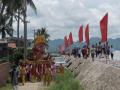 Xa Ma Procession Festival in Hoang Chau Commune, Cat Hai District - current exploitation status and development solutions to serve local tourism - 11
 -
 Xa Ma Procession Festival in Hoang Chau Commune, Cat Hai District - current exploitation status and development solutions to serve local tourism - 13
 -
 Situation of Tourism Development Based on Marine Culture in Cat Ba Island District
 -
 Overview of Marine Culture Associated with Tourism in Cat Hai Island District, Hai Phong
Source: Cat Hai District Statistics Office
Tourism is the central economic sector of Cat Hai district, increasingly accounting for a large proportion of the socio-economic structure of Cat Hai district. Tourism contributes greatly to the total product value of the economic structure of Cat Hai district.
Through statistical table 2.2, it can be seen that: The proportion of tourism industry has been increasing steadily over the years. In 2009, the proportion of tourism industry was 63.4%, and by 2015, the proportion of tourism industry accounted for 68.4% of the district's economic structure. The proportion of tourism industry contributed an average of 65.7% to the district's economic structure.
Agriculture 19%
Industry, construction 15%
Travel - services
66%
Chart 2.2. Average GDP proportion of economic sectors in Cat Hai district in the period 2009 - 2015
Tourism as a central economic sector has an impact on promoting the development of other economic sectors of Cat Hai district, especially the exploitation, aquaculture and agriculture sectors. Tourism development attracts more and more tourists to the area.
Cat Ba, thereby requiring additional food sources to meet consumer demand.
58
of tourists. To meet the demand for food for tourism, the seafood exploitation and farming and agriculture industries have also developed. The output for agricultural and seafood products is guaranteed. Agricultural and fishery products such as seafood and agricultural products are purchased by restaurants and hotels in the area as raw materials for processing dishes to serve tourists.
Besides the needs for food and accommodation, the needs for entertainment, recreation, sports, communication, and medical services are also the needs of the majority of tourists, thus promoting the development of entertainment, recreation, sports, and medical activities.
Cat Ba Heritage Archipelago - World Biosphere Reserve - Special national scenic and monument with rich, attractive natural tourism resources, special global values are loved by many domestic and foreign tourists. In the period of 2009 - 2015, Cat Ba tourism has made positive developments on the path to becoming a national eco-tourism center and towards international after 2017.
Table 2.3: Statistics on Cat Ba tourism business results
period 2009 - 2015
TT
Target | Unit of measure | Implementation over the years | |||||
Year 2009 | 2011 | 2013 | 2014 | 2015 | |||
1. | Total number of visitors | L/k | 1,005,000 | 1,126,500 | 1,203,000 | 1,335,000 | 1,324,000 |
1.1 | International guests | L/k | 286,200 | 303,500 | 310,000 | 320,500 | 340,400 |
1.2 | Domestic guests | L/k | 718,800 | 823,000 | 893,000 | 1,014,500 | 983,600 |
2. | Total revenue from DL-DV | Billion VND | 335.4 | 369.8 | 541.0 | 590.7 | 587.9 |
3 | Growth rate number of visitors | % | 132.2% | 112% | 106.8% | 111% | 99.17% |
4 | Proportion of tourism production value in economic structure | % | 63.4% | 64% | 66% | 67% | 68.4% |
Source: Cat Hai District Statistics Office
In 2009, Cat Ba tourism reached the milestone of welcoming one million tourists in one year. Marking a step forward in Cat Ba tourism development. From 2009 to 2015, Cat Ba tourism welcomed over one million tourists each year, including
On average, 26.17% are international tourists. Service tourism contributes 59%.
large in the total production value according to the economic structure of Cat Hai district.
Table 2.4. Statistics on the number of tourists to Hai Phong city in the period 2009 - 2015
TT
Target | Unit calculate | Implementation over the years | |||||
Year 2009 | 2011 | 2013 | 2014 | 2015 | |||
1. | Total views guest | L/k | 4,003,000 | 4,075,000 | 4,228,000 | 4,500,000 | 4,921,000 |
1.1 | International guests | L/k | 593,000 | 546,000 | 564,000 | 568,000 | 568,000 |
1.2 | Domestic guests | L/k | 3,410,000 | 3,529,000 | 3,664,000 | 3,932,000 | 4,353,000 |
Source: Hai Phong City Electronic Information Portal
- Cat Ba tourism is increasingly affirming its position as the central economic sector of Cat Hai district.
Cat Ba archipelago with its special global values of biodiversity, aesthetics, geological structure, geomorphology and archaeological sites... is widely known by domestic and international tourists as one of the most attractive eco-tourism centers of the country and internationally.
Since 2009, Cat Ba tourism has welcomed over one million tourists each year, of which an average of 26% are international visitors. Revenue from tourism and service activities averages 484.9 billion VND. The tourism and service industry contributes an average of 66.6% to the total production value of Cat Hai district. The proportion of the tourism and service industry in the economic structure of Cat Hai district has increased from 63.4% in 2009 to 68.4% in 2015.
Tourism has contributed greatly to the budget revenue of Cat Hai district. The budget revenue from tourism is higher year after year. On average, each year, the budget revenue from tourism reaches over 27,122 million VND, of which over 17,199 million VND is from non-state tax revenue. In 2015, the budget revenue from tourism reached 41,243 million VND, equal to 50% of the budget revenue plan of Cat Hai district in 2015. The encouraging thing is that the budget revenue from tourism is a stable source of revenue.
high. Revenue from tourism has made an important contribution to regulating the budget.
Spending on investment in economic development projects, traffic infrastructure, engineering and spending on cultural and social careers of Cat Hai district.
Table 2.5. Statistics of budget revenue from tourism in the period 2009 - 2015
Million Dong
Number
TT
Target | Implementation over the years | |||||
2009 | 2011 | 2013 | 2014 | 2015 | ||
1 | Non-state tax collection | 8,636 | 10,854 | 18,883 | 19,359 | 28,267 |
2 | Tax collection from tourism | 3,454 | 4,342 | 6.609 | 6,776 | 7,076 |
3 | Admission fee | 983 | 2,635 | 3,795 | 3,887 | |
4 | Total | 14,099 | 18,189 | 30,138 | 31,942 | 41,243 |
Source: Cat Hai District Finance and Planning Department
Tourism development has promoted the development of agriculture, fisheries, industry and handicrafts. Agricultural and fishery products are produced and consumed more conveniently.
Investment projects in tourism infrastructure have contributed to changing the appearance and landscape of the district, while serving both tourism development and the livelihood of the people in Cat Ba town. Tourism has created revenue for the budget, profits for businesses and income for local people. Tourism has contributed to gradually improving and enhancing the quality of life of people on Cat Ba island.
2.3.1.2. Attention has been paid to the goal of protecting the environment and restoring historical and cultural relics.
Tourism is the central economic sector of Cat Ba Island in particular and Cat Hai District in general. Developing sustainable tourism in Cat Ba is both the goal and the driving force for socio-economic development of Cat Hai District. Developing tourism associated with the conservation of natural resources, protection and restoration of historical and cultural relics is the responsibility of the authorities and people of communes and towns on Cat Ba Island. This is a strong point in the tourism development policy in the area. In fact, building a tourism development policy but associated with environmental protection and restoration of historical relics is a very difficult requirement.
With the potential and advantages of developing ecotourism, in recent years, tourism development in Cat Ba Island has been closely linked to environmental protection activities and the preservation and promotion of historical and cultural relics. The awareness of authorities at all levels and the community about the values of Cat Ba Archipelago and the significance of environmental protection in Cat Ba Archipelago in the community has been increasingly raised. Environmental protection is considered the top criterion in implementing investment projects in the area; all investment and business projects in Cat Ba Island must have an environmental impact assessment report approved by competent authorities. Cat Hai district authorities have a policy of not accepting industrial development projects in Cat Ba town. Forest protection, ecosystem protection and aquatic resources have been effectively implemented with specific actions such as: continuing to reduce 50% of the number of aquaculture cages in Lan Ha Bay because they cause environmental pollution; reforestation; demolish the dike surrounding the lagoon and aquaculture lake in the mangrove forest area of Phu Long commune to restore and restore the natural environment; organize district-level competitions to learn about the value of natural resources of Cat Ba archipelago; organize a day for the whole people to join hands for a green, clean and beautiful Cat Ba archipelago; implement projects to protect coastal aquatic resources.
Along with protecting natural resources, activities to protect and restore historical and cultural relics have also been effectively implemented. Continue to protect and put into operation historical and cultural relics to serve visitors and tourists such as: Ben Beo archaeological site, Than Cong fortress, Quan Y cave... Complete the procedures and documents and propose the state and Hai Phong city to rank many valuable historical relics such as: Uncle Ho's historical and cultural relic visiting the fishing village, Cai Beo archaeological relic, Special national relic - Cat Ba archipelago scenic spot... In particular, the nomination dossier to recognize Cat Ba as a world natural heritage has been completed and is being considered by the Government to send to UNESCO at the appropriate time.
2.3.1.3. Policy objectives for sustainable tourism development in Cat Ba Tourist Area
She has been closely associated with cultural development, job creation, and improving the material and spiritual life of the people.
The development of Cat Ba tourism is a favorable condition for cultural development, job creation and improvement of the material and spiritual life of the people. Every year, the tourism industry attracts over 3,500 workers, in peak months there are up to 5,000 workers working in the Cat Ba tourism sector. In addition, tourism also has an impact on promoting the development of other economic sectors and occupations, thereby creating more jobs and income for the people.
Tourism development is a favorable condition to expand the cultural exchange of the ethnic groups in the country and the cultures of countries around the world through tourists. Tourism development is also a condition for the local community to access many advanced scientific achievements and progressive cultural values of countries and ethnic groups around the world through tourists coming to Cat Ba.
On the other hand, due to the requirements of tourism development and many technical infrastructure projects invested in to serve tourism, at the same time serve the people. Cultural, artistic, medical and educational services also have conditions to improve and enhance. Developing Cat Ba tourism is a condition to organize and enhance the scale of festivals associated with organizing tourism events. On Cat Ba Island, Cat Hai District, the Fishing Village Festival is often organized in conjunction with the tourism opening event on the occasion of March 31 to April 1 every year.
2.3.1.4. Tourism development also aims to contribute to strengthening international cooperation and integration as set out in the policy's objectives.
Tourism development has contributed to strengthening international cooperation and integration. International exchange and cooperation activities are carried out through the activities of non-governmental organizations, countries and territories within the framework of international cooperation on issues related to tourism development and protection of natural resource values of Cat Ba Archipelago. Cat Ba Archipelago with its unique global natural resource values has attracted the attention of many international organizations, media organizations, news agencies and newspapers.
domestic and international have contributed to promoting the international cooperation process of Cat Hai island district in particular and Hai Phong city in general. Internationally, Cat Ba archipelago is considered a symbol of Hai Phong city. On the other hand, tourism development is an important condition to attract the attention and sympathy of the international community for Vietnam's international issues, including the support of the international community for protecting the sovereignty of the Cat Ba archipelago.
Besides, tourism is the most effective way to develop people-to-people foreign affairs activities. Through tourism, local people have contact, dialogue, and exchange with international tourists, thereby enhancing understanding and mutual friendship between the Vietnamese people and international friends. The hospitality and friendliness of Cat Ba residents and the staff working in Cat Ba tourism contribute to creating good impressions and feelings of each international visitor towards Hai Phong City and the country.
Table 2.6 Summary table of satisfaction survey
for Cat Ba tourism services (%)
Service
Very funny heart | Satisfied | Not happy heart | Very not satisfied | Opinion other | |
All go | 40 | 56.66 | 2 | 1 | 0.33 |
Scenery | 58.66 | 38.33 | 2 | 0.66 | 0.33 |
Environment | 51.33 | 40.66 | 6.66 | 1 | 0.33 |
Souvenirs | 11.66 | 57 | 25.33 | 3 | 3 |
Traffic | 22.66 | 64 | 10.33 | 2.33 | 0.667 |
Entertainment and sports services | 32.33 | 54 | 9 | 2.33 | 2.33 |
Dish | 31 | 57.33 | 9.33 | 2.33 | 0 |
Bedroom | 33 | 60.66 | 4.66 | 0.66 | 1 |
Quality of staff | 35.66 | 55.33 | 6.66 | 2.33 | 0 |
Tours | 30.33 | 58.66 | 8 | 1 | 2 |
Security environment | 41.33 | 56 | 2.33 | 0 | 0.333 |
Friendliness of the residents | 42.66 | 53 | 3.33 | 0.33 | 0.66 |
*Source: Author