
large state-owned enterprises operating in the monopoly sector (such as PetroVietnam, VNPT, EVN, etc.) to protect smaller enterprises and consumers. Therefore, it is necessary to expand the authority of the Competition Management Department to handle cases; organizationally, the Competition Management Department belongs to the Ministry of Industry and Trade, but when making decisions, it should be completely independent, not an agency assisting the Minister of Industry and Trade in state management of competition.
1.2.4 Strengthening international cooperation
The Vietnam Competition Authority needs to strengthen cooperation with international competition authorities to exchange information related to cross-border economic concentration. With the increasing trend of cross-border economic concentration, international cooperation between competition authorities is very important. Currently, there are many multinational corporations operating in Vietnam and have a relatively large market position, so through international cooperation, the Competition Authority can be more proactive in monitoring the economic concentration activities of this group of enterprises.
In addition, other relevant state management agencies need to have close coordination in controlling economic concentration. In order for state management of business registration and control of economic concentration to be effective, it is necessary to establish a coordination mechanism between the competition management agency and the business registration agency and specialized state management agencies. Currently, only Article 38 of Decree 116/2005/ND-CP regulates this issue by the responsibility of the competition management agency in sending a response to the notification of economic concentration to the business registration agency. As for the Law on Enterprises, although the principles in controlling economic concentration according to the Law on Competition have been initially used, in the procedures for business registration, mergers, capital and share transfers, there are no appropriate provisions for the effective connection between the procedures for notifying economic concentration and the corresponding procedures. In principle, in cases where notification is required under the Competition Law, an enterprise may only carry out economic concentration after receiving a written response from the competition authority confirming that the case is not prohibited. In that case, in the business registration dossier,
Enterprises, merger and consolidation dossiers, etc. need additional written responses from the competition management agency. However, the provisions in the Enterprise Law and Decree 88/2006/ND-CP of the Government dated August 29, 2006 on business registration do not stipulate this. The above situation certainly makes the coordination between relevant agencies even looser. At that time, the control of economic concentration is difficult to bring high efficiency. There needs to be an information channel to exchange databases related to business information, which must be reported to the competent authorities between the competition management agency and specialized agencies such as the General Statistics Office, the Ministry of Finance, the State Securities Commission, the State Bank, and industry regulatory agencies. Local business registration agencies (Departments of Planning and Investment) also noted that businesses carrying out procedures to change their business registration must comply with the provisions of the law on competition to avoid cases where businesses continue to proceed but will be forced to implement sanctions at a very high level (can be fined up to 10% of total revenue of the fiscal year before the violation and along with additional remedial measures).
Maybe you are interested!
-
 Economic group model - operations of Vietnam Oil and Gas Group in the period 2006 - 2008 and development trends - 1
 -
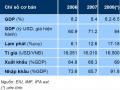 Outstanding Issues of Vietnam's Economic Situation in Early 2008:
 -
 Solutions for tourism development in Tien Lang - 10
zt2i3t4l5ee
zt2a3gstourism, tourism development
zt2a3ge
zc2o3n4t5e6n7ts
- District People's Committees and authorities of communes with tourist attractions should support, promote, and provide necessary information to people, helping them improve their knowledge about tourism. Raise tourism awareness for local people.
*
* *
Due to limited knowledge and research time, the thesis inevitably has shortcomings. Therefore, I look forward to receiving guidance from teachers, experts as well as your comments to make the thesis more complete.
Chapter III Conclusion
Through the issues presented in Chapter II, we can come to some conclusions:
Based on the strengths of available tourism resources, the types of tourism in Tien Lang that need to be promoted in the coming time are sightseeing and resort tourism, discovery tourism, weekend tourism. To improve the quality and diversify tourism products, Tien Lang district needs to combine with local cultural tourism resources, at the same time combine with surrounding areas, build rich tourism products. The strengths of Tien Lang tourism are eco-tourism and cultural tourism, so developing Tien Lang tourism must always go hand in hand with restoring and preserving types of cultural tourism resources. Some necessary measures to support and improve the efficiency of exploiting tourism resources in Tien Lang are: strengthening the construction of technical facilities and labor force serving tourism, actively promoting and advertising tourism, and expanding forms of capital mobilization for tourism development.
CONCLUDE
I Conclusion
1. Based on the results achieved within the framework of the thesis's needs, some basic conclusions can be drawn as follows:
Tien Lang is a locality with great potential for tourism development. The relatively abundant cultural tourism resources and ecological tourism resources have great appeal to tourists. Based on this potential, Tien Lang can build a unique tourism industry that is competitive enough with other localities within Hai Phong city and neighboring areas.
In recent years, the exploitation of the advantages of resources to develop tourism and build tourist routes in Tien Lang has not been commensurate with the available potential. In terms of quantity, many resource objects have not been brought into the purpose of tourism development. In terms of time, the regular service time has not been extended to attract more visitors. Infrastructure and technical facilities are still weak. The labor force is still thin and weak in terms of expertise. Tourism programs and routes have not been organized properly, the exploitation content is still monotonous, so it has not attracted many visitors. Although resources have not been mobilized much for tourism development, they are facing the risk of destruction and degradation.
2. Based on the results of investigation, analysis, synthesis, evaluation and selective absorption of research results of related topics, the thesis has proposed a number of necessary solutions to improve the efficiency of exploiting tourism resources in Tien Lang such as: promoting the restoration and conservation of tourism resources, focusing on investment and key exploitation of ecotourism resources, strengthening the construction of infrastructure and tourism workforce. Expanding forms of capital mobilization. In addition, the thesis has built a number of tourist routes of Hai Phong in which Tien Lang tourism resources play an important role.
Exploiting Tien Lang tourism resources for tourism development is currently facing many difficulties. The above measures, if applied synchronously, will likely bring new prospects for the local tourism industry, contributing to making Tien Lang tourism an important economic sector in the district's economic structure.
REFERENCES
1. Nhuan Ha, Trinh Minh Hien, Tran Phuong, Hai Phong - Historical and cultural relics, Hai Phong Publishing House, 1993
2. Hai Phong City History Council, Hai Phong Gazetteer, Hai Phong Publishing House, 1990.
3. Hai Phong City History Council, History of Tien Lang District Party Committee, Hai Phong Publishing House, 1990.
4. Hai Phong City History Council, University of Social Sciences and Humanities, VNU, Hai Phong Place Names Encyclopedia, Hai Phong Publishing House. 2001.
5. Law on Cultural Heritage and documents guiding its implementation, National Political Publishing House, Hanoi, 2003.
6. Tran Duc Thanh, Lecture on Tourism Geography, Faculty of Tourism, University of Social Sciences and Humanities, VNU, 2006
7. Hai Phong Center for Social Sciences and Humanities, Some typical cultural heritages of Hai Phong, Hai Phong Publishing House, 2001
8. Nguyen Ngoc Thao (editor-in-chief, Tourism Geography, Hai Phong Publishing House, two volumes (2001-2002)
9. Nguyen Minh Tue and group of authors, Hai Phong Tourism Geography, Ho Chi Minh City Publishing House, 1997.
10. Nguyen Thanh Son, Hai Phong Tourism Territory Organization, Associate Doctoral Thesis in Geological Geography, Hanoi, 1996.
11. Decision No. 2033/QD – UB on detailed planning of Tien Lang town, Hai Phong city until 2020.
12. Department of Culture, Information, Hai Phong Museum, Hai Phong relics
- National ranked scenic spot, Hai Phong Publishing House, 2005. 13. Tien Lang District People's Committee, Economic Development Planning -
Culture - Society of Tien Lang district to 2010.
14.Website www.HaiPhong.gov.vn
APPENDIX 1
List of national ranked monuments
STT
Name of the monument
Number, year of decisiondetermine
Location
1
Gam Temple
938 VH/QĐ04/08/1992
Cam Khe Village- Toan Thang commune
2
Doc Hau Temple
9381 VH/QĐ04/08/1992
Doc Hau Village –Toan Thang commune
3
Cuu Doi Communal House
3207 VH/QĐDecember 30, 1991
Zone II of townTien Lang
4
Ha Dai Temple
938 VH/QĐ04/08/1992
Ha Dai Village –Tien Thanh commune
APPENDIX II
STT
Name of the monument
Number, year of decision
Location
1
Phu Ke Pagoda Temple
178/QD-UBJanuary 28, 2005
Zone 1 - townTien Lang
2
Trung Lang Temple
178/QD-UBJanuary 28, 2005
Zone 4 – townTien Lang
3
Bao Khanh Pagoda
1900/QD-UBAugust 24, 2006
Nam Tu Village -Kien Thiet commune
4
Bach Da Pagoda
1792/QD-UB11/11/2002
Hung Thang Commune
5
Ngoc Dong Temple
177/QD-UBNovember 27, 2005
Tien Thanh Commune
6
Tomb of Minister TSNhu Van Lan
2848/QD-UBSeptember 19, 2003
Nam Tu Village -Kien Thiet commune
7
Canh Son Stone Temple
2160/QD-UBSeptember 19, 2003
Van Doi Commune –Doan Lap
8
Meiji Temple
2259/QD-UBSeptember 19, 2002
Toan Thang Commune
9
Tien Doi Noi Temple
477/QD-UBSeptember 19, 2005
Doan Lap Commune
10
Tu Doi Temple
177/QD-UBJanuary 28, 2005
Doan Lap Commune
11
Duyen Lao Temple
177/QD-UBJanuary 28, 2005
Tien Minh Commune
12
Dinh Xuan Uc Pagoda
177/QD-UBJanuary 28, 2005
Bac Hung Commune
13
Chu Khe Pagoda
177/QD-UBJanuary 28, 2005
Hung Thang Commune
14
Dong Dinh
2848/QD-UBNovember 21, 2002
Vinh Quang Commune
15
President's Memorial HouseTon Duc Thang
177/QD-UBJanuary 28, 2005
NT Quy Cao
Ha Dai Temple
Ben Vua Temple
Tien Lang hot spring
div.maincontent .p { color: black; font-family:"Times New Roman", serif; font-style: normal; font-weight: normal; text-decoration: none; font-size: 14pt; margin:0pt; } div.maincontent p { color: black; font-family:"Times New Roman", serif; font-style: normal; font-weight: normal; text-decoration: none; font-size: 14pt; margin:0pt; } div.maincontent .s1 { color: black; font-family:"Times New Roman", serif; font-style: normal; font-weight: normal; font-size: 16pt; } div.maincontent .s2 { color: black; font-family:"Times New Roman", serif; font-style: italic; font-weight: bold; text-decoration: none; font-size: 14pt; } div.maincontent .s3 { color: black; font-family:"Times New Roman", serif; font-style: italic; font-weight: normal; text-decoration: none; font-size: 14pt; } div.maincontent .s4 { color: black; font-family:"Times New Roman", serif; font-style: normal; font-weight: normal; font-size: 14pt; } div.maincontent .s5 { color: black; font-family:"Times New Roman", serif; font-style: normal; font-weight: bold; font-size: 14pt; } div.maincontent .s6 { color: black; font-family:"Times New Roman", serif; font-style: normal; font-weight: normal; text-decoration: none; font-size: 14pt; } div.maincontent .s7 { color: black; font-family:"Times New Roman", serif; font-style: normal; font-weight: bold; text-decoration: none; font-size: 14pt; } div.maincontent .s8 { color: black; font-family:"Times New Roman", serif; font-style: normal; font-weight: normal; text-decoration: none; font-size: 9pt; vertical-align: 6pt; } div.maincontent .s9 { color: black; font-family:"Times New Roman", serif; font-style: normal; font-weight: bold; text-decoration: none; font-size: 12pt; } div.maincontent .s11 { color: black; font-family:"Times New Roman", serif; font-style: normal; font-weight: normal; tex
Solutions for tourism development in Tien Lang - 10
zt2i3t4l5ee
zt2a3gstourism, tourism development
zt2a3ge
zc2o3n4t5e6n7ts
- District People's Committees and authorities of communes with tourist attractions should support, promote, and provide necessary information to people, helping them improve their knowledge about tourism. Raise tourism awareness for local people.
*
* *
Due to limited knowledge and research time, the thesis inevitably has shortcomings. Therefore, I look forward to receiving guidance from teachers, experts as well as your comments to make the thesis more complete.
Chapter III Conclusion
Through the issues presented in Chapter II, we can come to some conclusions:
Based on the strengths of available tourism resources, the types of tourism in Tien Lang that need to be promoted in the coming time are sightseeing and resort tourism, discovery tourism, weekend tourism. To improve the quality and diversify tourism products, Tien Lang district needs to combine with local cultural tourism resources, at the same time combine with surrounding areas, build rich tourism products. The strengths of Tien Lang tourism are eco-tourism and cultural tourism, so developing Tien Lang tourism must always go hand in hand with restoring and preserving types of cultural tourism resources. Some necessary measures to support and improve the efficiency of exploiting tourism resources in Tien Lang are: strengthening the construction of technical facilities and labor force serving tourism, actively promoting and advertising tourism, and expanding forms of capital mobilization for tourism development.
CONCLUDE
I Conclusion
1. Based on the results achieved within the framework of the thesis's needs, some basic conclusions can be drawn as follows:
Tien Lang is a locality with great potential for tourism development. The relatively abundant cultural tourism resources and ecological tourism resources have great appeal to tourists. Based on this potential, Tien Lang can build a unique tourism industry that is competitive enough with other localities within Hai Phong city and neighboring areas.
In recent years, the exploitation of the advantages of resources to develop tourism and build tourist routes in Tien Lang has not been commensurate with the available potential. In terms of quantity, many resource objects have not been brought into the purpose of tourism development. In terms of time, the regular service time has not been extended to attract more visitors. Infrastructure and technical facilities are still weak. The labor force is still thin and weak in terms of expertise. Tourism programs and routes have not been organized properly, the exploitation content is still monotonous, so it has not attracted many visitors. Although resources have not been mobilized much for tourism development, they are facing the risk of destruction and degradation.
2. Based on the results of investigation, analysis, synthesis, evaluation and selective absorption of research results of related topics, the thesis has proposed a number of necessary solutions to improve the efficiency of exploiting tourism resources in Tien Lang such as: promoting the restoration and conservation of tourism resources, focusing on investment and key exploitation of ecotourism resources, strengthening the construction of infrastructure and tourism workforce. Expanding forms of capital mobilization. In addition, the thesis has built a number of tourist routes of Hai Phong in which Tien Lang tourism resources play an important role.
Exploiting Tien Lang tourism resources for tourism development is currently facing many difficulties. The above measures, if applied synchronously, will likely bring new prospects for the local tourism industry, contributing to making Tien Lang tourism an important economic sector in the district's economic structure.
REFERENCES
1. Nhuan Ha, Trinh Minh Hien, Tran Phuong, Hai Phong - Historical and cultural relics, Hai Phong Publishing House, 1993
2. Hai Phong City History Council, Hai Phong Gazetteer, Hai Phong Publishing House, 1990.
3. Hai Phong City History Council, History of Tien Lang District Party Committee, Hai Phong Publishing House, 1990.
4. Hai Phong City History Council, University of Social Sciences and Humanities, VNU, Hai Phong Place Names Encyclopedia, Hai Phong Publishing House. 2001.
5. Law on Cultural Heritage and documents guiding its implementation, National Political Publishing House, Hanoi, 2003.
6. Tran Duc Thanh, Lecture on Tourism Geography, Faculty of Tourism, University of Social Sciences and Humanities, VNU, 2006
7. Hai Phong Center for Social Sciences and Humanities, Some typical cultural heritages of Hai Phong, Hai Phong Publishing House, 2001
8. Nguyen Ngoc Thao (editor-in-chief, Tourism Geography, Hai Phong Publishing House, two volumes (2001-2002)
9. Nguyen Minh Tue and group of authors, Hai Phong Tourism Geography, Ho Chi Minh City Publishing House, 1997.
10. Nguyen Thanh Son, Hai Phong Tourism Territory Organization, Associate Doctoral Thesis in Geological Geography, Hanoi, 1996.
11. Decision No. 2033/QD – UB on detailed planning of Tien Lang town, Hai Phong city until 2020.
12. Department of Culture, Information, Hai Phong Museum, Hai Phong relics
- National ranked scenic spot, Hai Phong Publishing House, 2005. 13. Tien Lang District People's Committee, Economic Development Planning -
Culture - Society of Tien Lang district to 2010.
14.Website www.HaiPhong.gov.vn
APPENDIX 1
List of national ranked monuments
STT
Name of the monument
Number, year of decisiondetermine
Location
1
Gam Temple
938 VH/QĐ04/08/1992
Cam Khe Village- Toan Thang commune
2
Doc Hau Temple
9381 VH/QĐ04/08/1992
Doc Hau Village –Toan Thang commune
3
Cuu Doi Communal House
3207 VH/QĐDecember 30, 1991
Zone II of townTien Lang
4
Ha Dai Temple
938 VH/QĐ04/08/1992
Ha Dai Village –Tien Thanh commune
APPENDIX II
STT
Name of the monument
Number, year of decision
Location
1
Phu Ke Pagoda Temple
178/QD-UBJanuary 28, 2005
Zone 1 - townTien Lang
2
Trung Lang Temple
178/QD-UBJanuary 28, 2005
Zone 4 – townTien Lang
3
Bao Khanh Pagoda
1900/QD-UBAugust 24, 2006
Nam Tu Village -Kien Thiet commune
4
Bach Da Pagoda
1792/QD-UB11/11/2002
Hung Thang Commune
5
Ngoc Dong Temple
177/QD-UBNovember 27, 2005
Tien Thanh Commune
6
Tomb of Minister TSNhu Van Lan
2848/QD-UBSeptember 19, 2003
Nam Tu Village -Kien Thiet commune
7
Canh Son Stone Temple
2160/QD-UBSeptember 19, 2003
Van Doi Commune –Doan Lap
8
Meiji Temple
2259/QD-UBSeptember 19, 2002
Toan Thang Commune
9
Tien Doi Noi Temple
477/QD-UBSeptember 19, 2005
Doan Lap Commune
10
Tu Doi Temple
177/QD-UBJanuary 28, 2005
Doan Lap Commune
11
Duyen Lao Temple
177/QD-UBJanuary 28, 2005
Tien Minh Commune
12
Dinh Xuan Uc Pagoda
177/QD-UBJanuary 28, 2005
Bac Hung Commune
13
Chu Khe Pagoda
177/QD-UBJanuary 28, 2005
Hung Thang Commune
14
Dong Dinh
2848/QD-UBNovember 21, 2002
Vinh Quang Commune
15
President's Memorial HouseTon Duc Thang
177/QD-UBJanuary 28, 2005
NT Quy Cao
Ha Dai Temple
Ben Vua Temple
Tien Lang hot spring
div.maincontent .p { color: black; font-family:"Times New Roman", serif; font-style: normal; font-weight: normal; text-decoration: none; font-size: 14pt; margin:0pt; } div.maincontent p { color: black; font-family:"Times New Roman", serif; font-style: normal; font-weight: normal; text-decoration: none; font-size: 14pt; margin:0pt; } div.maincontent .s1 { color: black; font-family:"Times New Roman", serif; font-style: normal; font-weight: normal; font-size: 16pt; } div.maincontent .s2 { color: black; font-family:"Times New Roman", serif; font-style: italic; font-weight: bold; text-decoration: none; font-size: 14pt; } div.maincontent .s3 { color: black; font-family:"Times New Roman", serif; font-style: italic; font-weight: normal; text-decoration: none; font-size: 14pt; } div.maincontent .s4 { color: black; font-family:"Times New Roman", serif; font-style: normal; font-weight: normal; font-size: 14pt; } div.maincontent .s5 { color: black; font-family:"Times New Roman", serif; font-style: normal; font-weight: bold; font-size: 14pt; } div.maincontent .s6 { color: black; font-family:"Times New Roman", serif; font-style: normal; font-weight: normal; text-decoration: none; font-size: 14pt; } div.maincontent .s7 { color: black; font-family:"Times New Roman", serif; font-style: normal; font-weight: bold; text-decoration: none; font-size: 14pt; } div.maincontent .s8 { color: black; font-family:"Times New Roman", serif; font-style: normal; font-weight: normal; text-decoration: none; font-size: 9pt; vertical-align: 6pt; } div.maincontent .s9 { color: black; font-family:"Times New Roman", serif; font-style: normal; font-weight: bold; text-decoration: none; font-size: 12pt; } div.maincontent .s11 { color: black; font-family:"Times New Roman", serif; font-style: normal; font-weight: normal; tex -
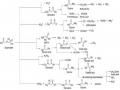 Effect of Initial Glyphosate Concentration on Processability of Electrochemical Fenton Process
 -
 Some Theories on Industrial Development in Key Economic Regions
2. Recommendations for businesses
In principle, the implementation of economic concentration is the right of enterprises. From an economic perspective, this is the right to freedom of business that is recognized and protected by law. It is very difficult for an enterprise to grow immediately because they will have to accept fierce competition both domestically and internationally. Economic concentration is one of the effective ways to help enterprises improve their competitiveness, restructure the management system and organizational apparatus, so it should be considered by enterprises as one of the long-term development strategies. Enterprises need to make efforts to find and negotiate with truly capable partners for mutual development.
Although the Competition Law of countries in general and of Vietnam in particular does not eliminate economic concentration from the market, it is still necessary to control economic concentration activities to avoid the risk of enterprises forming a dominant market position or monopoly, affecting competition. Therefore, enterprises themselves need to strictly comply with the regulations on concentration.
economic concentration, must not go beyond the provisions of the law; at the same time, the level of sanctions for these violations is also very large (including fines in cash calculated based on revenue and other remedial measures). Enterprises should research and prepare full information as required by law, consult with competent authorities before conducting economic concentration (especially regarding notification procedures, exemption procedures, market shares of participating enterprises, etc.) and cooperate with the investigation agency when an incident occurs that affects the competitive environment.
Enterprises need to build channels to control information and transparency in business activities in general and economic concentration activities in particular. Because in economic concentration activities, information on prices, brands, markets, market shares, governance, etc. is very necessary for the participating parties. If information is not controlled and transparent, it can cause a lot of damage to the parties, and at the same time greatly affect other markets such as goods, securities, and banking. Because, like other markets, the economic concentration market operates in a chain reaction, if a large economic concentration fails or has fraudulent elements, the consequences for the economy are very large because the stocks, bonds, business activities, investments, etc. of that enterprise in particular and related enterprises may be affected.
The economic concentration market is a market that requires the participation and consultation of many experts with in-depth experience in different fields such as law, finance, branding... Therefore, there needs to be training programs to have a good team of experts, brokers, consultants for both buyers and sellers, and at the same time, the best information providers about the market. Only then can economic concentration in Vietnam operate better and more professionally 25 .
25 Competition Management Department - Ministry of Industry and Trade, Report on economic concentration in Vietnam: Current status and forecast , Hanoi, January 2009.
CONCLUDE
Economic concentration in Vietnam has been quite active in recent times and tends to develop as a strategy for normal business organization innovation of enterprises. Forms of economic concentration mainly include mergers, consolidations, acquisitions, joint ventures between enterprises and other forms as prescribed by law, in which mergers and acquisitions are the most commonly used. As a very strong trend in the world, economic concentration on the one hand brings efficiency, enhances competitiveness for participating enterprises, on the other hand can distort the competitive environment, and create imbalances in the market. The problem is how to promote the positive aspects of these activities and limit their negative impacts.
The process of trade globalization, increased competition arising from economic liberalization, market opening and increased technology investment costs are the reasons that make economic concentration an objective phenomenon due to the development needs of enterprises. Increasingly, enterprises
They are not only concerned with direct competition but also with the means by which they can ensure their superiority. In this competition, economic concentration allows to shorten the time, enhance the network effect and thereby accelerate the investment turnover.
The current context of international economic integration requires lawmakers to both exercise the function of controlling economic concentration and at the same time create conditions for enterprises to operate in a transparent, fair and competitive environment; comply with Vietnam's international commitments according to the principle of both protecting the effective competitive structure of the market and not infringing on the freedom of enterprises to innovate their business organization forms.
Studying the current situation and trends of economic concentration activities in Vietnam, and at the same time proposing some solutions to further strengthen the control of economic concentration are all the contents that the thesis wants to aim for. Referring to international practical experiences to flexibly apply them to the case of Vietnam is really important in finding solutions to both enhance the competitiveness of domestic enterprises, adapt to rapid changes from the pressure of integration into the World Trade Organization WTO, and ensure effective implementation of regulations on economic concentration control.
LIST OF REFERENCES
A. Vietnamese documents
1) Doan Trung Kien (2008), Competition law in Vietnam in the process of trade liberalization, Journal of Law, No. 10, Hanoi Law University.
2) Bui Thanh Lam (2008), Conditions for building and developing the market for business mergers and acquisitions in Vietnam, Journal of Law , No. 4, Hanoi Law University.
3) Dinh Thi My Loan (2008), Economic concentration under the provisions of Competition Law , Conference documents.
4) Pham Duy Nghia (2004), Economic Law Monograph , Hanoi National University Publishing House.
5) Tang Van Nghia (project leader) (2007), Some issues arising in the implementation of the Competition Law , State and Law Journal , No. 7 (231), Hanoi.
6) Tang Van Nghia (2007), Issues and solutions for effective implementation of the Competition Law in practice , Ministry-level scientific research project, Hanoi.
7) Tang Van Nghia (2008), Learning materials for Competition Law , Foreign Trade University - Faculty of Business Administration, Hanoi.
8) Phan Thao Nguyen (2007), Some theories on economic and commercial groups , Information and Communication Technology Magazine .
9) Nguyen Ngoc Son (2006) , Controlling economic concentration under competition law and issues in Vietnam, Journal of Legislative Studies, No. 7, Office of the National Assembly.
10 ) Le Viet Thai (2005), Research topic on economic concentration behavior. Topic: Competition institutions in Vietnam under the conditions of market economy development , Institute of Trade Research.
11) Nguyen Nhu Y (editor) (1998), Vietnamese Dictionary , Culture and Information Publishing House, Hanoi.
12) Competition Management Department - Ministry of Industry and Trade (2009), Report on economic concentration in Vietnam: Current status and forecast , Hanoi.
13) Competition Management Department - Ministry of Industry and Trade (2007), Controlling economic concentration - International experience and practice in Vietnam , National Political Publishing House, Hanoi.
14) Hanoi Law University (2006), Commercial Law Textbook , volume 1, People's Police Publishing House, Hanoi.
15) Hanoi Law University (2006), Journal of Law, Competition Law Special Issue, No. 6
16) Vietnam Economic Times (2009), Establishing new economic groups: no specific regulations on ownership, No. 113
17) National Committee for International Economic Cooperation (2005), Competition Law Policy and Practice of the French Republic , Volume 1, National Political Publishing House, Hanoi.
18) Central Institute for Economic Management. Information and Documentation Center,
Vietnam Economic Group: Current status and development trends.
B. English documents
19) C uts HRC ( 2008), Competition Law in Vietnam: A Toolkit, Hanoi
20) Michael Craig, 50 Best & Worst Business Deals of All Time
21)Berin Mihai, Economic concentration in the context of the world economic globalization, University of Oradea, Faculty of Economic Sciences, Romania.
C. Some websites:
- www.vcad.gov.vn (Website of the Competition Management Department)
- www.mof.gov.vn (website of Ministry of Finance)
- www.mofa.gov.vn (website of Ministry of Foreign Affairs)
- www.vibonline.com.vn (Vietnam Business Forum)
- www.vhdn.vn (Vietnam Business Culture Electronic Newspaper)
- www.vnmedia.vn (Managing agency: Vietnam Posts and Telecommunications Group)
- www.vnexpress.net
- www.vneconomy.vn
- www.muabancongty.com
- www.sanmuabandoanhnghiep.com
- www.tinnhanhchungkhoan.vn
- www.atpvietnam.com
- www.saga.vn
- Brand Merger: www.lantabrand.com
- www.nguoidaibieu.com.vn (Managing agency: Office of the National Assembly)
- Annual periodic reports on M&A of global data firm Thomson (at website www.thomson.com), auditing firm Pricewater house Coopers' (website: www.pwc.com)