
Natural tourism resources
Natural tourism resources in Hai Phong are formed by a combination of geological, topographic, climatic, oceanographic factors and diverse flora and fauna distributed concentratedly in the coastal strip of Do Son and Cat Ba, and also distributed in the limestone area of Trang Kenh - Thuy Nguyen.
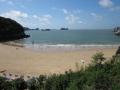
Cat Ba is the largest and most unique island among the 1996 islands of Ha Long Bay. The island still preserves a primeval tropical forest, rare flora and fauna still exist here such as the white-headed langur listed in the world red book, with up to 745 species of higher plants. Not only that, Cat Ba also has a system of caves, lagoons, and bays that attract tourists such as Trung Trang Cave, Hung Son Cave, Lan Ha Bay, ... Cat Ba has up to 139 mini beaches located between the limestone mountains with the submerged Karster terrain structure, the coral ecosystem of Cat Ba is an endemic resource in the world natural heritage complex of Ha Long Bay. Cat Ba was also recognized by UNESCO as a world biosphere reserve in 2004.
The terrain of Do Son is likened to a dragon looking towards the pearl Hon Dau. This is a peninsula with forests and hills stretching out to the sea for 5 km. With 3 beaches with hills and pine forests, quiet and airy, Do Son has hundreds of accommodation facilities serving tourists with many different travel needs.
Some other natural resources that can be exploited for tourism purposes include the Elephant Mountain eco-tourism area (An Lao ), the Thien Van forest area (Kien An), the Tien Lang hot mineral spring area, the Gia River area and Trang Kenh (Thuy Nguyen).
Human tourism resources
Human tourism resources in Hai Phong are relatively rich and highly attractive, concentrated mainly in the inner city and surrounding areas.
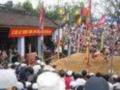
Do Son with its unique buffalo fighting festival - one of the 15 typical festivals of the country. Kien Thuy - the sacred land that gave birth to the Mac Dynasty with 65 years of reigning over the country. Here, the project to develop Duong Kinh area of the Mac Dynasty was completed on May 13, 2005 on the occasion of the 50th anniversary of the liberation of Hai Phong. Thuy Nguyen - the land associated with the heroic history of the nation during the long years of building and defending the country. Many relics have become the desire to visit of tourists and researchers such as Tran Quoc Bao Temple, Dong Ly Communal House, Kien Bai Communal House, ... And Vinh Bao - the land of spiritual land and talented people, the birthplace of outstanding talented people: Nguyen Cong Hue
– the founder of the Dong Minh statue carving profession, Dao Cong Chinh – the first Vietnamese health practitioner, Hoa Duy Thanh, a martial arts expert who helped Hung Dao Vuong defeat the Yuan army on the Bach Dang River. However, the most prominent among these outstanding children is Trang Trinh Nguyen Binh Khiem – a man with character and talent who has become a legend so that people have worshiped him for 600 years without a single day of incense burning. Coming here, visitors will be able to admire the moss-covered tiled roofs, the magical curves of the Nhan Muc and An Quy communal houses, etc. They are not only valuable in terms of history but also unique works of architectural art. An Lao with Elephant Mountain reflecting on the Lach Tray River is not only a famous place but also associated with the legend of the Mac Dynasty, Phan Ba Vanh, Cu Binh's army, and the Elephant Mountain guerrilla team.
The inner city area has a central strip, the Opera House built during the French colonial period, a very typical flower shop, Hang Kenh communal house, Nghe temple, Du Hang pagoda, etc., which are all attractive tourist attractions. Thien Van Kien An hill area with the largest hydrometeorological station in Southeast Asia, has a telescope to observe the universe. Hai An district area with historical and cultural relics ranked at the national level: Ha Lung temple, Va pagoda, Phu Xa temple, etc. and the traditional Dang Hai flower village.
However, it is impossible not to mention an equally important component that in the future will become a resource that attracts the most attention from tourists, which is the system of museums in the city: Hai Phong Museum (1959), Navy Museum (1975), Military Region 3 Museum (1969). Museums are a special cultural institution, to protect and promote national cultural heritage, and are an indispensable field of scientific activity of any modern state in the world. Thanks to museums, our current society and future generations can study the history of the country's natural world, the history of the struggle to transform nature, the history of the struggle to build and defend the country of the nation, of the locality, of the region.
It can be said that with such rich and diverse natural and human tourism resources, Hai Phong has many favorable conditions for the overall development of tourism in the whole city.
2.4. Current status of exploiting Hai Phong Museum's activities for tourism
2.4.1. Advantages and results achieved
Hai Phong Museum with 50 years of construction and development - the earliest provincial and municipal museum in our country, has the natural fortune of "managing" a very rich and prosperous land in terms of archeology and history, the underground and underground water always bring unexpected scientific discoveries. During the development process, the museum has contributed to the research of a part of the natural history and some stages of social history of Hai Phong, contributing to scientific education and traditional education for the people.
Hai Phong Museum is a massive, sturdy, and beautiful building, one of the most beautiful in the city, located on a spacious, square plot of land in the central area, at the intersection of Dien Bien Phu and Dinh Tien Hoang avenues (66 Dien Bien Phu - main gate; 11 Dinh Tien Hoang - side gate), among the most beautiful streets of the old Western quarter. This building was originally the headquarters of the bank.
French – Chinese, the bank with the name Chatered Bank, the choice of this location, to serve the political and cultural requirements of a new institution is satisfactory. With the professional eyes of financial and economic experts, the banking industry can easily see the immediate and long-term value of these valuable fixed assets.
List of visitors to Hai Phong Museum from 2000 - 2008
STT
Year | Number of people | |
1 | 2000 | 32513 |
2 | 2001 | 33121 |
3 | 2002 | 33352 |
4 | 2003 | 35775 |
5 | 2004 | 34292 |
6 | 2005 | 35300 |
7 | 2006 | 38655 |
8 | 2007 | 38650 |
9 | 2008 | 40600 |
Maybe you are interested!
-
 Solutions for tourism development in Tien Lang - 10
zt2i3t4l5ee
zt2a3gstourism, tourism development
zt2a3ge
zc2o3n4t5e6n7ts
- District People's Committees and authorities of communes with tourist attractions should support, promote, and provide necessary information to people, helping them improve their knowledge about tourism. Raise tourism awareness for local people.
*
* *
Due to limited knowledge and research time, the thesis inevitably has shortcomings. Therefore, I look forward to receiving guidance from teachers, experts as well as your comments to make the thesis more complete.
Chapter III Conclusion
Through the issues presented in Chapter II, we can come to some conclusions:
Based on the strengths of available tourism resources, the types of tourism in Tien Lang that need to be promoted in the coming time are sightseeing and resort tourism, discovery tourism, weekend tourism. To improve the quality and diversify tourism products, Tien Lang district needs to combine with local cultural tourism resources, at the same time combine with surrounding areas, build rich tourism products. The strengths of Tien Lang tourism are eco-tourism and cultural tourism, so developing Tien Lang tourism must always go hand in hand with restoring and preserving types of cultural tourism resources. Some necessary measures to support and improve the efficiency of exploiting tourism resources in Tien Lang are: strengthening the construction of technical facilities and labor force serving tourism, actively promoting and advertising tourism, and expanding forms of capital mobilization for tourism development.
CONCLUDE
I Conclusion
1. Based on the results achieved within the framework of the thesis's needs, some basic conclusions can be drawn as follows:
Tien Lang is a locality with great potential for tourism development. The relatively abundant cultural tourism resources and ecological tourism resources have great appeal to tourists. Based on this potential, Tien Lang can build a unique tourism industry that is competitive enough with other localities within Hai Phong city and neighboring areas.
In recent years, the exploitation of the advantages of resources to develop tourism and build tourist routes in Tien Lang has not been commensurate with the available potential. In terms of quantity, many resource objects have not been brought into the purpose of tourism development. In terms of time, the regular service time has not been extended to attract more visitors. Infrastructure and technical facilities are still weak. The labor force is still thin and weak in terms of expertise. Tourism programs and routes have not been organized properly, the exploitation content is still monotonous, so it has not attracted many visitors. Although resources have not been mobilized much for tourism development, they are facing the risk of destruction and degradation.
2. Based on the results of investigation, analysis, synthesis, evaluation and selective absorption of research results of related topics, the thesis has proposed a number of necessary solutions to improve the efficiency of exploiting tourism resources in Tien Lang such as: promoting the restoration and conservation of tourism resources, focusing on investment and key exploitation of ecotourism resources, strengthening the construction of infrastructure and tourism workforce. Expanding forms of capital mobilization. In addition, the thesis has built a number of tourist routes of Hai Phong in which Tien Lang tourism resources play an important role.
Exploiting Tien Lang tourism resources for tourism development is currently facing many difficulties. The above measures, if applied synchronously, will likely bring new prospects for the local tourism industry, contributing to making Tien Lang tourism an important economic sector in the district's economic structure.
REFERENCES
1. Nhuan Ha, Trinh Minh Hien, Tran Phuong, Hai Phong - Historical and cultural relics, Hai Phong Publishing House, 1993
2. Hai Phong City History Council, Hai Phong Gazetteer, Hai Phong Publishing House, 1990.
3. Hai Phong City History Council, History of Tien Lang District Party Committee, Hai Phong Publishing House, 1990.
4. Hai Phong City History Council, University of Social Sciences and Humanities, VNU, Hai Phong Place Names Encyclopedia, Hai Phong Publishing House. 2001.
5. Law on Cultural Heritage and documents guiding its implementation, National Political Publishing House, Hanoi, 2003.
6. Tran Duc Thanh, Lecture on Tourism Geography, Faculty of Tourism, University of Social Sciences and Humanities, VNU, 2006
7. Hai Phong Center for Social Sciences and Humanities, Some typical cultural heritages of Hai Phong, Hai Phong Publishing House, 2001
8. Nguyen Ngoc Thao (editor-in-chief, Tourism Geography, Hai Phong Publishing House, two volumes (2001-2002)
9. Nguyen Minh Tue and group of authors, Hai Phong Tourism Geography, Ho Chi Minh City Publishing House, 1997.
10. Nguyen Thanh Son, Hai Phong Tourism Territory Organization, Associate Doctoral Thesis in Geological Geography, Hanoi, 1996.
11. Decision No. 2033/QD – UB on detailed planning of Tien Lang town, Hai Phong city until 2020.
12. Department of Culture, Information, Hai Phong Museum, Hai Phong relics
- National ranked scenic spot, Hai Phong Publishing House, 2005. 13. Tien Lang District People's Committee, Economic Development Planning -
Culture - Society of Tien Lang district to 2010.
14.Website www.HaiPhong.gov.vn
APPENDIX 1
List of national ranked monuments
STT
Name of the monument
Number, year of decisiondetermine
Location
1
Gam Temple
938 VH/QĐ04/08/1992
Cam Khe Village- Toan Thang commune
2
Doc Hau Temple
9381 VH/QĐ04/08/1992
Doc Hau Village –Toan Thang commune
3
Cuu Doi Communal House
3207 VH/QĐDecember 30, 1991
Zone II of townTien Lang
4
Ha Dai Temple
938 VH/QĐ04/08/1992
Ha Dai Village –Tien Thanh commune
APPENDIX II
STT
Name of the monument
Number, year of decision
Location
1
Phu Ke Pagoda Temple
178/QD-UBJanuary 28, 2005
Zone 1 - townTien Lang
2
Trung Lang Temple
178/QD-UBJanuary 28, 2005
Zone 4 – townTien Lang
3
Bao Khanh Pagoda
1900/QD-UBAugust 24, 2006
Nam Tu Village -Kien Thiet commune
4
Bach Da Pagoda
1792/QD-UB11/11/2002
Hung Thang Commune
5
Ngoc Dong Temple
177/QD-UBNovember 27, 2005
Tien Thanh Commune
6
Tomb of Minister TSNhu Van Lan
2848/QD-UBSeptember 19, 2003
Nam Tu Village -Kien Thiet commune
7
Canh Son Stone Temple
2160/QD-UBSeptember 19, 2003
Van Doi Commune –Doan Lap
8
Meiji Temple
2259/QD-UBSeptember 19, 2002
Toan Thang Commune
9
Tien Doi Noi Temple
477/QD-UBSeptember 19, 2005
Doan Lap Commune
10
Tu Doi Temple
177/QD-UBJanuary 28, 2005
Doan Lap Commune
11
Duyen Lao Temple
177/QD-UBJanuary 28, 2005
Tien Minh Commune
12
Dinh Xuan Uc Pagoda
177/QD-UBJanuary 28, 2005
Bac Hung Commune
13
Chu Khe Pagoda
177/QD-UBJanuary 28, 2005
Hung Thang Commune
14
Dong Dinh
2848/QD-UBNovember 21, 2002
Vinh Quang Commune
15
President's Memorial HouseTon Duc Thang
177/QD-UBJanuary 28, 2005
NT Quy Cao
Ha Dai Temple
Ben Vua Temple
Tien Lang hot spring
div.maincontent .p { color: black; font-family:"Times New Roman", serif; font-style: normal; font-weight: normal; text-decoration: none; font-size: 14pt; margin:0pt; } div.maincontent p { color: black; font-family:"Times New Roman", serif; font-style: normal; font-weight: normal; text-decoration: none; font-size: 14pt; margin:0pt; } div.maincontent .s1 { color: black; font-family:"Times New Roman", serif; font-style: normal; font-weight: normal; font-size: 16pt; } div.maincontent .s2 { color: black; font-family:"Times New Roman", serif; font-style: italic; font-weight: bold; text-decoration: none; font-size: 14pt; } div.maincontent .s3 { color: black; font-family:"Times New Roman", serif; font-style: italic; font-weight: normal; text-decoration: none; font-size: 14pt; } div.maincontent .s4 { color: black; font-family:"Times New Roman", serif; font-style: normal; font-weight: normal; font-size: 14pt; } div.maincontent .s5 { color: black; font-family:"Times New Roman", serif; font-style: normal; font-weight: bold; font-size: 14pt; } div.maincontent .s6 { color: black; font-family:"Times New Roman", serif; font-style: normal; font-weight: normal; text-decoration: none; font-size: 14pt; } div.maincontent .s7 { color: black; font-family:"Times New Roman", serif; font-style: normal; font-weight: bold; text-decoration: none; font-size: 14pt; } div.maincontent .s8 { color: black; font-family:"Times New Roman", serif; font-style: normal; font-weight: normal; text-decoration: none; font-size: 9pt; vertical-align: 6pt; } div.maincontent .s9 { color: black; font-family:"Times New Roman", serif; font-style: normal; font-weight: bold; text-decoration: none; font-size: 12pt; } div.maincontent .s11 { color: black; font-family:"Times New Roman", serif; font-style: normal; font-weight: normal; tex
Solutions for tourism development in Tien Lang - 10
zt2i3t4l5ee
zt2a3gstourism, tourism development
zt2a3ge
zc2o3n4t5e6n7ts
- District People's Committees and authorities of communes with tourist attractions should support, promote, and provide necessary information to people, helping them improve their knowledge about tourism. Raise tourism awareness for local people.
*
* *
Due to limited knowledge and research time, the thesis inevitably has shortcomings. Therefore, I look forward to receiving guidance from teachers, experts as well as your comments to make the thesis more complete.
Chapter III Conclusion
Through the issues presented in Chapter II, we can come to some conclusions:
Based on the strengths of available tourism resources, the types of tourism in Tien Lang that need to be promoted in the coming time are sightseeing and resort tourism, discovery tourism, weekend tourism. To improve the quality and diversify tourism products, Tien Lang district needs to combine with local cultural tourism resources, at the same time combine with surrounding areas, build rich tourism products. The strengths of Tien Lang tourism are eco-tourism and cultural tourism, so developing Tien Lang tourism must always go hand in hand with restoring and preserving types of cultural tourism resources. Some necessary measures to support and improve the efficiency of exploiting tourism resources in Tien Lang are: strengthening the construction of technical facilities and labor force serving tourism, actively promoting and advertising tourism, and expanding forms of capital mobilization for tourism development.
CONCLUDE
I Conclusion
1. Based on the results achieved within the framework of the thesis's needs, some basic conclusions can be drawn as follows:
Tien Lang is a locality with great potential for tourism development. The relatively abundant cultural tourism resources and ecological tourism resources have great appeal to tourists. Based on this potential, Tien Lang can build a unique tourism industry that is competitive enough with other localities within Hai Phong city and neighboring areas.
In recent years, the exploitation of the advantages of resources to develop tourism and build tourist routes in Tien Lang has not been commensurate with the available potential. In terms of quantity, many resource objects have not been brought into the purpose of tourism development. In terms of time, the regular service time has not been extended to attract more visitors. Infrastructure and technical facilities are still weak. The labor force is still thin and weak in terms of expertise. Tourism programs and routes have not been organized properly, the exploitation content is still monotonous, so it has not attracted many visitors. Although resources have not been mobilized much for tourism development, they are facing the risk of destruction and degradation.
2. Based on the results of investigation, analysis, synthesis, evaluation and selective absorption of research results of related topics, the thesis has proposed a number of necessary solutions to improve the efficiency of exploiting tourism resources in Tien Lang such as: promoting the restoration and conservation of tourism resources, focusing on investment and key exploitation of ecotourism resources, strengthening the construction of infrastructure and tourism workforce. Expanding forms of capital mobilization. In addition, the thesis has built a number of tourist routes of Hai Phong in which Tien Lang tourism resources play an important role.
Exploiting Tien Lang tourism resources for tourism development is currently facing many difficulties. The above measures, if applied synchronously, will likely bring new prospects for the local tourism industry, contributing to making Tien Lang tourism an important economic sector in the district's economic structure.
REFERENCES
1. Nhuan Ha, Trinh Minh Hien, Tran Phuong, Hai Phong - Historical and cultural relics, Hai Phong Publishing House, 1993
2. Hai Phong City History Council, Hai Phong Gazetteer, Hai Phong Publishing House, 1990.
3. Hai Phong City History Council, History of Tien Lang District Party Committee, Hai Phong Publishing House, 1990.
4. Hai Phong City History Council, University of Social Sciences and Humanities, VNU, Hai Phong Place Names Encyclopedia, Hai Phong Publishing House. 2001.
5. Law on Cultural Heritage and documents guiding its implementation, National Political Publishing House, Hanoi, 2003.
6. Tran Duc Thanh, Lecture on Tourism Geography, Faculty of Tourism, University of Social Sciences and Humanities, VNU, 2006
7. Hai Phong Center for Social Sciences and Humanities, Some typical cultural heritages of Hai Phong, Hai Phong Publishing House, 2001
8. Nguyen Ngoc Thao (editor-in-chief, Tourism Geography, Hai Phong Publishing House, two volumes (2001-2002)
9. Nguyen Minh Tue and group of authors, Hai Phong Tourism Geography, Ho Chi Minh City Publishing House, 1997.
10. Nguyen Thanh Son, Hai Phong Tourism Territory Organization, Associate Doctoral Thesis in Geological Geography, Hanoi, 1996.
11. Decision No. 2033/QD – UB on detailed planning of Tien Lang town, Hai Phong city until 2020.
12. Department of Culture, Information, Hai Phong Museum, Hai Phong relics
- National ranked scenic spot, Hai Phong Publishing House, 2005. 13. Tien Lang District People's Committee, Economic Development Planning -
Culture - Society of Tien Lang district to 2010.
14.Website www.HaiPhong.gov.vn
APPENDIX 1
List of national ranked monuments
STT
Name of the monument
Number, year of decisiondetermine
Location
1
Gam Temple
938 VH/QĐ04/08/1992
Cam Khe Village- Toan Thang commune
2
Doc Hau Temple
9381 VH/QĐ04/08/1992
Doc Hau Village –Toan Thang commune
3
Cuu Doi Communal House
3207 VH/QĐDecember 30, 1991
Zone II of townTien Lang
4
Ha Dai Temple
938 VH/QĐ04/08/1992
Ha Dai Village –Tien Thanh commune
APPENDIX II
STT
Name of the monument
Number, year of decision
Location
1
Phu Ke Pagoda Temple
178/QD-UBJanuary 28, 2005
Zone 1 - townTien Lang
2
Trung Lang Temple
178/QD-UBJanuary 28, 2005
Zone 4 – townTien Lang
3
Bao Khanh Pagoda
1900/QD-UBAugust 24, 2006
Nam Tu Village -Kien Thiet commune
4
Bach Da Pagoda
1792/QD-UB11/11/2002
Hung Thang Commune
5
Ngoc Dong Temple
177/QD-UBNovember 27, 2005
Tien Thanh Commune
6
Tomb of Minister TSNhu Van Lan
2848/QD-UBSeptember 19, 2003
Nam Tu Village -Kien Thiet commune
7
Canh Son Stone Temple
2160/QD-UBSeptember 19, 2003
Van Doi Commune –Doan Lap
8
Meiji Temple
2259/QD-UBSeptember 19, 2002
Toan Thang Commune
9
Tien Doi Noi Temple
477/QD-UBSeptember 19, 2005
Doan Lap Commune
10
Tu Doi Temple
177/QD-UBJanuary 28, 2005
Doan Lap Commune
11
Duyen Lao Temple
177/QD-UBJanuary 28, 2005
Tien Minh Commune
12
Dinh Xuan Uc Pagoda
177/QD-UBJanuary 28, 2005
Bac Hung Commune
13
Chu Khe Pagoda
177/QD-UBJanuary 28, 2005
Hung Thang Commune
14
Dong Dinh
2848/QD-UBNovember 21, 2002
Vinh Quang Commune
15
President's Memorial HouseTon Duc Thang
177/QD-UBJanuary 28, 2005
NT Quy Cao
Ha Dai Temple
Ben Vua Temple
Tien Lang hot spring
div.maincontent .p { color: black; font-family:"Times New Roman", serif; font-style: normal; font-weight: normal; text-decoration: none; font-size: 14pt; margin:0pt; } div.maincontent p { color: black; font-family:"Times New Roman", serif; font-style: normal; font-weight: normal; text-decoration: none; font-size: 14pt; margin:0pt; } div.maincontent .s1 { color: black; font-family:"Times New Roman", serif; font-style: normal; font-weight: normal; font-size: 16pt; } div.maincontent .s2 { color: black; font-family:"Times New Roman", serif; font-style: italic; font-weight: bold; text-decoration: none; font-size: 14pt; } div.maincontent .s3 { color: black; font-family:"Times New Roman", serif; font-style: italic; font-weight: normal; text-decoration: none; font-size: 14pt; } div.maincontent .s4 { color: black; font-family:"Times New Roman", serif; font-style: normal; font-weight: normal; font-size: 14pt; } div.maincontent .s5 { color: black; font-family:"Times New Roman", serif; font-style: normal; font-weight: bold; font-size: 14pt; } div.maincontent .s6 { color: black; font-family:"Times New Roman", serif; font-style: normal; font-weight: normal; text-decoration: none; font-size: 14pt; } div.maincontent .s7 { color: black; font-family:"Times New Roman", serif; font-style: normal; font-weight: bold; text-decoration: none; font-size: 14pt; } div.maincontent .s8 { color: black; font-family:"Times New Roman", serif; font-style: normal; font-weight: normal; text-decoration: none; font-size: 9pt; vertical-align: 6pt; } div.maincontent .s9 { color: black; font-family:"Times New Roman", serif; font-style: normal; font-weight: bold; text-decoration: none; font-size: 12pt; } div.maincontent .s11 { color: black; font-family:"Times New Roman", serif; font-style: normal; font-weight: normal; tex -
 Current Status of Mother-to-Child HBV Transmission in Pregnant Women with Chronic HBV Visiting and Managing Pregnancy at Hai Phong Obstetrics and Gynecology Hospital in 2017-
 -
 Sightseeing Tour Contents at Hai Phong Museum
 -
 Assessment of the current status of compensation, support and resettlement when the state acquires land in some projects in Hong Bang district, Hai Phong city - 1
 -
 Current status, potential and solutions for developing team building tourism in Hai Phong - 13
On average, Hai Phong Museum welcomes about 34,275 visitors each year, of which about 70% are students; 10% are researchers, and 20% are itinerant visitors.
In general, the number of visitors to the museum has not increased significantly. In recent years, the number of mobile tourists has decreased, the reason is that the city tourism has not built a tour, including the Hai Phong Museum. Currently, the Department of Culture, Sports and Tourism of the city has been building a project to open inner-city tours and country tours, the first destination of which is the Hai Phong Museum.
Since its establishment, Hai Phong Museum has repeatedly supplemented, adjusted and upgraded the quality of its display system. Especially in the period of 1975 - 1979 - 1984, the museum focused on overcoming the imbalance.
The exhibition is a contrast between three parts: Nature, Social History before the August Revolution in 1945 and Social History from 1946 to the present. The result of this exhibition was evaluated by the "Conference to summarize experiences in building provincial and municipal museums nationwide" in September 1979 as a model museum for provinces to learn from.
Over nearly 50 years, Hai Phong Museum has constantly strived to improve, making an important contribution to serving the city's politics - culture - society, introducing to the people of Hai Phong, other provinces and international delegations the traditions and cultural identity of the land and people of Hai Phong; contributing to the process of building and developing the city in many aspects, including making a great contribution to the development of the city's tourism.
Recently, the project "Renovation, upgrading and innovation of the Hai Phong Museum's display system" with 9 display themes was evaluated as an excellent scientific project, but currently due to limited funding, only one theme has been implemented, 9 themes including:
Topic 1: Nature and natural resources of Hai Phong.
Topic 2: Hai Phong from prehistoric times to the Bach Dang victory in 1945.
938.
Topic 3: Hai Phong from the 10th to the 14th century.
Topic 4: Hai Phong - the country's seaport city (1874, 1888, 1930). Topic 5: Patriotic and revolutionary movements in Hai Phong from the end of the century
19 to August Revolution 1945.
Topic 6: Hai Phong 30 years of resistance against foreign invaders, building and defending the Fatherland under the leadership of the Party (1945 - 1975).
Topic 7: Hai Phong City during the period of national reunification and innovation (1975 to present).
Topic 8: Traditional cultural identity of Hai Phong.
Topic 9: Hai Phong in the hearts of friends around the world.
Hopefully in the future, with innovation in all aspects, Hai Phong Museum will increasingly contribute to the economic, cultural and social development of the city as well as the tourism industry of Hai Phong and the whole country.
2.4.2. Limitations
In addition to the above advantages, Hai Phong Museum still has some shortcomings that need to be promptly overcome to meet the development needs. In developed countries, museum institutions are very interested in investing in construction, because they are a vivid archive of artifacts and documents that help visitors to each country learn more about the historical, human, cultural and economic characteristics of the land they set foot on. However, in Vietnam in general and Hai Phong in particular, museum activities have not been focused on. This is shown through museum activities that are always in a state of "taking advantage" or "multi-functional testing", not fully exploiting the inherent real value, which is most evident at Hai Phong Museum and the two museums of the Navy and Military Region 3 located in the city.
Although according to museum statistics, the number of visitors increases significantly every year, and some museums even make a profit, it seems that most of the tourism programs of travel companies do not include museums because they do not see this meaningful resource. Therefore, it leads to a situation where there is a lot of potential but it is not fully exploited.
The following is the survey results table of 100 students from middle schools, high schools, universities and colleges.
in Hai Phong city. Although these opinions cannot be fully evaluated, they also contribute to showing a small part of the exploitation status and the necessary desires of a type of education that is no longer new in some countries in the world as well as some big cities in our country but is very necessary for today's young generation.
Content
Yes (people) | No (person) | |
. Have ever participated in a tour program that included a museum . Ever visited a museum (number of times) . Purpose of visiting the museum . Have you ever read information about the museum on the Internet or any mass media? .Considering that museums are a great potential for tourism development Museums in Hai Phong city have not yet played their role in developing tourism in the city. . Want to participate in Conservation activities - Museum . It is necessary to promote museum activities to suit the current socio-economic situation. There should be a museum department in some universities, colleges and vocational high schools in Hai Phong. Room | 20 20 (2) Visit 25 100 90 40 100 100 | 80 80 75 0 10 60 0 0 |
The table above shows that everyone, including the youth, needs to know about history, because “History is the witness of the times, the torch of truth, the vitality of memory and the transmitter of the past” (M. Ciceo). At first glance, it seems that they are indifferent to museums, but after all, what activities have museums done to attract them and show how necessary their museums are for them? The people surveyed want to have a museum department right in this city because they think it is necessary and they see this potential. Hopefully in the future, these small wishes will be fulfilled.
Below are specific manifestations of the shortcomings of Hai Phong Museum:
The museum is "sleeping"
Hai Phong Museum is one of the museums with the most artifacts in the country. However, for a long time, the artifacts preserved here have not been able to promote their value, which is most clearly shown through the poor display system, with little change and creativity. The number of visitors is therefore also low. The number of students coming to learn and collect documents is also not high. This reality directly affects the museum's revenue. From there, there is no funding for upgrading and preserving artifacts, making Hai Phong Museum seem to be "sleeping" in the bustling atmosphere of the city during the opening period.
Along with the existing antiques and relics of Hai Phong Museum, the number of national treasures has not really promoted their true value and is not known to many people. Even the classification and arrangement of these artifacts is unscientific in the degraded warehouse system, and the collection of artifacts has not received much attention. According to experts, this is an important task that has decisive significance for the research and promotion of the value of each museum. To have reasonable displays, it is necessary to focus on organizing the collection of artifacts, but this work in Hai Phong has been "sleeping" in the past. Funding for this work is still lacking. Therefore, there have not been any scientific collections of artifacts that attract the attention of people and tourists.
Not enough necessary elements of a museum institution
Each cultural institution needs its own appropriate architecture. For museums, the architecture needs to be even more distinctive. A museum is a structure that includes a display system, an open artifact warehouse, preservation rooms that meet technical requirements, a security system, an outdoor exhibition area, a service area, etc. Hai Phong Museum lacks all of these elements. The museum headquarters used to be a French-Chinese bank building. Therefore, although the museum has a large area, the warehouse system is too narrow, not suitable for preservation and storage. The warehouse system is cramped, degraded, and does not have an area for display suitable for each topic. This reality, in contrast to the massive number of artifacts that many museums in the country have,