
Chapter III
RESEARCH RESULTS
3.1. Assessment of current status of air pollution sources in the coal industry
Dust is generated in almost all stages of mining technology. Dust affects the external environment mainly in the stages of transportation, screening, processing and consumption of coal. In the technological stages, coal transportation is the stage that creates the most dust and has the widest range of influence. Next are the screening and consumption stages. The dust composition in the Quang Ninh coal area has its own characteristics compared to other places. According to the investigation results, the silica content in 1m3 of dust in the mine area is as follows: in dust
coal: 8.5 3mg accounts for 3.6 13.5% of total dust; in stone dust: 20 2mg occupies 12
26% of total dust [8].
Table 3.1 presents some dust measurement results when machines are working as well as at some working positions in open-pit mines.
Table 3.1. Dust generation levels of coal mining activities [3]
Active form
Forms of operation | Dust concentration (mg/m 3 ) | |
Loading | - When the EKG-5A excavator operates at a capacity of 175 m3/h. - When the EKG-5A excavator does not work. | 205.0 18.5 |
Blasting | - With 200 kg of explosives (measured at a distance of 30 - 40m) creates a cloud 200m high. - 1 ton of soil and rock creates 27 - 170g of dust. | 800-5,000 |
Transport by car | - When the car passes. - When the car frequency is highest | 120 2,257 |
Disposal | - When the car dumps waste. - When the spread is stable | 1,340 38 |
Coal screening | - In Cua Ong coal processing factory. - Area surrounding the factory. | 108.7 90 - 127 |
Maybe you are interested!
-
 Assessment of the current status and changes in the water environment of Cua Luc Bay and proposed solutions to reduce pollution - 2
 -
 Assessment of the Current Status of the Policy on Developing Female Human Resources in the People's Public Security Force
 -
 Assessment of the Current Status of Access to Bank Credit Capital of Small and Medium Enterprises in Thai Nguyen Area in the Period of 2013 - 2018
 -
 Assessment of the current status of groundwater resources in the inner city of Hanoi - 2
 -
 Assessment of the current status of compensation, support and resettlement when the state acquires land in some projects in Hong Bang district, Hai Phong city - 1
(Source: Mining Experimental Center)
3.1.1. Excavation, blasting
According to statistics, when mining 1,000 tons of coal in underground mines, 11-12 kg of dust is created, while in open-pit mines, this level is twice as high. In open-pit mines, the dust concentration around excavators when working is up to 400 mg/m 3 , when blasting 1 m 3 of soil and rock with explosives, 0.027-0.17 kg of dust is created.
The total volume of waste rock and soil from open-pit coal mines by region and by period from 2010 to 2015 is very large, as shown in Table 3.2 below:
Table 3.2. Total volume of waste rock and soil from open-pit coal mines [25]
Area name
Volume of waste rock and soil | |||
Total | 2010 | 2011-2015 | |
Total | 4,337,799 | 602,523 | 829,589 |
Cam Pha | 3,947,970 | 537,873 | 515,200 |
Hon Gai | 389,829 | 64,650 | 314,389 |
Source: [25]
The entire volume of waste rock and soil is being and will be dumped at the dumping sites in the Left Bank of Coc Sau, Bang Nau construction site, Quang Loi, Khe Cham (Cam Pha area); Ha Tu mine, Nui Beo, Ha Lam, 917 mine, Ha Rang mine and Tan Lap mine (Ha Long city area).
Table 3.3. Statistics of the amount of waste rock and soil due to blasting activities at some mines
STT
Mine name | Location | Area of rock and soil to be removed (km 2 ) | Amount of explosives used (Tons/year) | Amount of soil and rock discharged by blasting (10 3 m 3 ) | Amount of dust generated (tons/year) | |
1 | Cao Son Mine | Cam Pha | 6 | 135,285 – 185,259 | 406,090 | 46314.75 |
2 | Six Pile Mine | Cam Pha | 4 | 130,500 – 170,298 | 656,028 | 42574.5 |
3 | Nui Beo Mine | Cam Pha | 6.7 | 98,823 – 138,620 | 107,255 | 34655 |
(Source: Investigation by student Vu Xuan Lich)
The amount of dust generated during the blasting and coal mining phase is quite large in a year, however, the dust generated by blasting is only high immediately, then spreads into the air, reaching a height of 100 - 150m. This spread depends more or less on the wind strength and terrain where the blasting takes place, but most of it settles after half an hour. Therefore, the impact of dust on the surrounding air environment is only immediate, with a narrow range, within the vicinity of the mine site, within a radius of 150-300m. Residential areas near the mine site will be affected by dust generated by blasting if the blasting area is located on high terrain, facing north or northeast winds in winter.
According to “Environmental Management of the Mining and Energy Industry of Russia”: when exploding 1kg of explosives, it will create 0.043 – 0.25 kg of dust, so the amount of dust generated at Cao Son Mine is 4,817.25 – 46,314.75 kg/year, Coc Sau Mine is 5,611.5 – 42,574.5 kg/year, Nui Beo Mine is 4,249.39 – 34,655 kg/year.
3.1.2. Coal screening
Raw coal from the mine is transported to the raw coal warehouse at the screening areas, then screened and classified at the screening areas. The process of unloading raw coal onto the screening conveyor and the dry screening process will generate a significant amount of dust. According to the calculation results, the dust load generated during the screening stage is 903,000 kg/year. Meanwhile, the operating area of the screening stage is smaller and is where many workers are concentrated, so the dust generated during this stage will have a great impact on workers, the air environment around the production area, and the vegetation in the area. On the other hand, most of the coal storage areas of the mine do not have roofs, so dust is easily dispersed in dry weather and when coal is loaded.
Currently, in the key coal production area, there are two large screening clusters: Nam Cau Trang Coal Screening Plant - Hon Gai Coal Screening Company in Hong Ha Ward - Ha Long City and Cua Ong Screening Company in Cua Ong Ward - Cam Pha City.
Table 3.4. Some coal preparation plants in Ha Long and Cam Pha areas
STT
Name | Address | Capacity (tons/year) | |
1 | Coal preparation plant White Bridge South | Hong Ha Ward – Ha Noi City Long | 3 million |
2 | Cua Coal Selection Company Grandfather | Cua Ong Ward – City Cam Pha | 12 – 14 million |
(Source: Investigation by student Vu Xuan Lich)
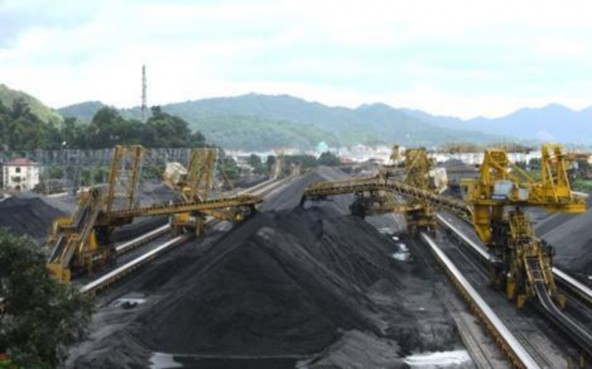
Figure 3.1: Production line of Cua Ong coal preparation plant |
a. Nam Cau Trang Coal Preparation Plant
Nam Cau Trang Coal Preparation Plant - Hon Gai Coal Company under Vietnam National Coal - Mineral Industries Group was put into operation in 1996 in Hong Ha Ward - Ha Long City with an initial design capacity of 2 million tons/year. Since 2008, the plant's capacity has been increased to 3 million tons/year. Nam Cau Trang Coal Preparation Plant is a place that generates a lot of dust for the surrounding area. Dust is generated during the process of transporting coal from Ha Tu and Nui Beo mines to the area.
screening. Internal roads, screening areas, and coal storage areas all generate dust.
To reduce the impact of dust on the surrounding air environment, Vietnam National Coal and Mineral Industries Group has taken investment measures to minimize the impacts of the factory. The company installed a conveyor system to transport and divide finished coal into a warehouse system, which has reduced the transportation route and reduced dust and noise in the production area. The most important thing is to implement a comprehensive project to thoroughly handle dust pollution and flooding in residential areas around the Nam Cau Trang coal processing plant (a unit under Decision 64) with an implementation value of nearly 7 billion VND. The implemented items include: Renovating and upgrading nearly 2 km of coal transportation road; Dredging and building embankments of nearly 900 m of the northern drainage ditch; building a misting system to suppress dust, including 5 stations with 257 misting columns to suppress dust for the entire internal coal transportation route. In addition, the misting system and watering system operate continuously in the factory 24/24 hours/day, along with
7,000 m2 of trees, ornamental plants and raising 500 pigeons... creating the landscape,
attractive and friendly ecological environment… More specifically, the company has also successfully built a green belt surrounding the Nam Cau Trang Screening Plant.b. Cua Ong Coal Selection Company
Dust generated during the stages of screening, loading, transporting coal, and transporting and dumping soil and rock is calculated according to the pollution coefficient according to the WHO rapid assessment method and the output of coal and soil and rock as follows:
Table 3.5. Dust emissions from Cua Ong Coal Preparation Company
(When there is no control solution)
STT
Sources of generation | Dust load (kg/ton) | |
1 | Dry screening | 0.21 |
2 | Transport, loading and unloading | 0.17 |
3 | Dumping of soil and rock | 0.134 |
4 | Fuel usage | 0.28 |
TOTAL | 0.794 |
(Source: Cua Ong Coal Processing Plant)
The amount of dust generated during the screening process of coal preparation plants I and II is not large. However, due to the small open area, the impact of dust on air quality is concentrated in the screening area and directly affects the health of workers.
Screening Plant III operates using dry screening technology, so the amount of dust generated in the screening area is very large. Currently, Screening Plant III has been installed with misting equipment to suppress dust, so the amount of dust emitted into the surrounding air has been significantly reduced. Coal Screening Plant III is designed near the sea, with the impact of wind, dust is widely dispersed. However, because the plant is located far from residential areas, the impact from the screening area of the plant on the residential area is almost negligible, but mainly affects the health of workers working in the plant.
The process of transporting raw coal to the screening plant also causes a lot of dust. When transported to the plant, raw coal is dumped into raw coal spills to be fed to the screening plants. Activities such as scraping coal and dumping coal at coal spills also generate dust, but the scope of impact is smaller than the transportation process. The impact of dust on the air environment of this area is local.
The coal after screening is transported to warehouses before being transported for sale. A large amount of dust is generated due to the process of dumping coal from wagons into the warehouse and unloading coal from the warehouse for sale. The coal warehouses of screening plants I and II are located near traffic routes and residential areas, so they will greatly affect the surrounding air environment and people's health, especially when there is a strong northeast wind.
The selected ash from screening plants I and II is in a moist state, so the possibility of dust generation is small and insignificant. The selected ash from Coal Screening Plant III is in a dry state, transported to the disposal site mainly by dump trucks and running along the coast, so there is no dust generation to residential areas.
3.1.3. Transportation of waste rock and products
The route for transporting waste rock and soil from the quarry to the dumping sites is an internal mine road, with no residents. Therefore, the impact of dust generated by activities
Transport activities do not affect residents, but only increase the dust content in the air environment along the route, causing local air pollution.
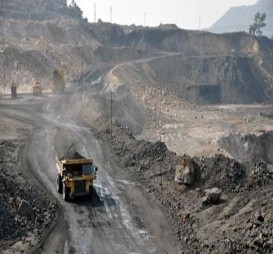
The process of transporting products from mines to screening plants as well as to coal ports is a major source of dust. The routes transporting raw coal from mines to places pass through residential areas and have large transport distances, so the impact area is large, affecting public health and causing loss of aesthetics of the area. However, the scope of dust impact from the routes also depends a lot on the climatic conditions of the area, this impact will be greater in the dry season, when there are strong winds.
According to research works, the dust emission capacity of coal mining auxiliary activities is calculated as follows:
Table 3.6. Dust emission potential of some activities
Type of activity
Operating characteristics | Emission level (mg/m 3 ) | |
Transport by car | + When the car passes by + When the spread is stable | 2257 120 |
Disposal | + When the car has been dumped + When the spread is stable | 1340 38 |
(Source: Tran Yem, PhD Thesis in Geography, Hanoi 2001)
To assess the impact of dust on coal transport routes through residential areas, I quickly assessed by surveying 10 households in Zone 6, Hong Ha Ward, Ha Long City, located on the coal transport route of mines in Ha Long City to Nam Cau Trang coal port. Through the survey, 100% of the households interviewed showed that the impact of coal dust on family life is very large: houses and trees are often covered with dust, people in the area often suffer from respiratory diseases such as rhinitis and sinusitis. Families often have to close their doors to avoid noise and dust entering the house.
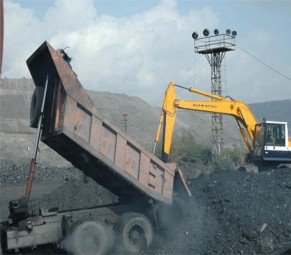
| |
Figure 3.2: Coal loading activities at Cao Son coal mine | Figure 3.3: Coal transportation activities in Cao Son mine internal road |
3.1.4. Dumping at landfills
Table 3.7. Some typical landfills
STT
Name of the dump | Location | Volume of earth and rock dumped (million m3 / year) | Time dump | |
I | Cao Son Mine | |||
1 | Khe Cham III | Cam Pha | 9 | End 2011 |
2 | Khe Cham 14 Seam Cluster | Cam Pha | 6 | End 2012 |
3 | Dong Cao Son | Cam Pha | 62 | End 2012 |
4 | North Brown | Cam Pha | 673.5 | Begin 2013 |
5 | Temporary dumping site in the East High Mountain | Cam Pha | 12.5 | End 2013 |
STT | Name of the dump | Location | Volume of earth and rock dumped (million m3 / year) | Time dump |