
*Determine the importance of variables in the model:
The components in the model include: teaching staff, office staff work in the school, training programs, school reputation, student access to services, and understanding of students. These are the components that have important impacts on student satisfaction. The order of importance of each component depends on the absolute value of the standardized regression coefficient. The component with the larger absolute value has a greater impact on satisfaction. Therefore, in this model we see that student satisfaction is most influenced by the composition of the teaching staff (beta = 0.340), the second most important is the training program component (beta = 0.302), the third component is the work of office staff (beta = 0.182), the fourth is the reputation of the school (beta = 0.171), the fifth is the component of caring and understanding students (beta = 0.149) and the sixth is the component of student access to services (beta = 0.090).
The results of the regression coefficient analysis show that the model does not violate the multicollinearity phenomenon because the variance inflation factor (VIF) of the independent variables is less than 2. The results of the regression coefficient analysis show that the Sig. value of all independent variables is less than 0.05. Therefore, it can be said that all independent variables are significant in the model and have a positive impact on student satisfaction (because the regression coefficients are all positive).
*Building a linear regression equation
The regression equation has the following form:
HL = B 0 + B 1 NV i + B 1 GV i + B 1 DT i + B 1 TC i + B 1 CTDT i + B 1 QT i + e i
Based on coefficient B, we have the following regression equation:
HL = 0.221 + 0.149NV i + 0.283GV i + 0.143DT i + 0.075TC i + 0.251CTDT i + 0.126QT i + e i
4.4.5 Testing research hypotheses
This model explains 84% of the variation in the satisfaction variable (HL) due to the independent variables in the model, the remaining 16% of the variation is explained by other variables outside the model. The model shows that the independent variables all have a positive (directed) effect on the level of student satisfaction with a confidence level of 95%.
Table 4.18. Summary results of hypothesis testing
Hypothesis | Significance level (Sig.) | Results | |
H1 | Teaching staff positively affects student satisfaction | 0.000 | Accept |
H2 | Office worker job positively affects student satisfaction | 0.000 | Accept |
H3 | Training program positively affects student satisfaction | 0.000 | Accept |
H4 | School reputation positively affects student satisfaction. | 0.004 | Accept |
H5 | Student service accessibility positively affects student satisfaction. | 0.000 | Accept |
H6 | Empathic concern for students positively affects student satisfaction | 0.000 | Accept |
Maybe you are interested!
-

 Building a Research Model of Factors Affecting Agribank's Brand Value
 -
 Building a Scale and Research Model of Factors Affecting Customers' Decision to Choose a Bank to Deposit Savings at
 -
 Research Model and Research Methodology to Analyze the Impact of Bad Debt on Bank Efficiency
 -
 Research on selecting a model to evaluate resources and original gold reserves in Phuoc Son area - Quang Nam - 1
 -
 Research Model of the Impact of Bond Investment Activities on Business Results of Commercial Banks
*Research model calibration
Student satisfaction
Office worker work 0.182
Personal characteristics
Teaching staff 0.340
School reputation 0.171
Student access to services 0.090
Training program 0.302
Understanding and care 0.149
Figure 4.4. Calibrated research model on the impact of training service quality on student satisfaction at SaigonACT school
In the model, the author will adjust one component in the components that make up the quality of training services, which is the training program component. Specifically, the variable CTDT4 (The school's training program creates more interest in learning for students) in the school's training program component will be removed.
4.4.6 By finding violations of necessary assumptions in linear regression
*Assuming linear relationship
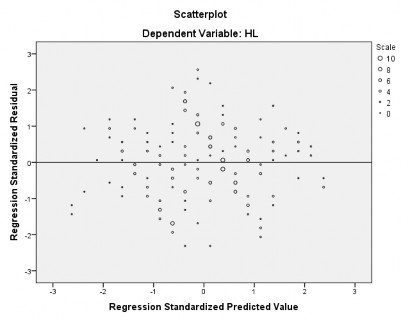
Figure 4.5. Linear relationship test results (Source: author's calculation)
From the above graph, it is shown that the linearity assumption is satisfied because their residuals are randomly scattered in a region around the line passing through the zero-ordinate axis and do not form any shape. This shows that the test results of the linearity relationship assumptions are appropriate, accepting the calibrated research model.
*The variance of the residuals is constant
Hypothesis H 0 : The correlation coefficient of the population is 0
Table 4.19. Results of the test for constant variance of residuals
Correlations
HL | ABSCUARE | |||
Spearman rho method | Satisfied | Correlation coefficient | 1,000 | ,407 |
Sig. (2-tailed) | 0.000 | |||
Overall - N | 287 | |||
ABSCUARE | Correlation coefficient | ,407 | 1,000 | |
Sig. (2-tailed) | 0.000 | |||
Overall - N | 287 | 287 | ||
(Source: author's calculation)
The test results demonstrate that there is not enough evidence to reject the null hypothesis H0 , which means that the variance of the error is constant.
*Normal distribution of residuals
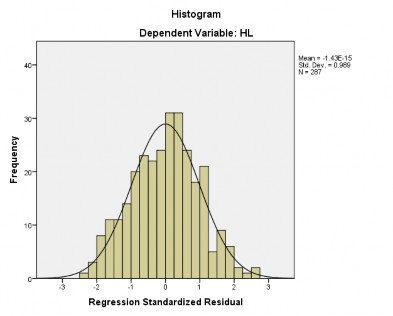
Figure 4.6. Normal distribution results of residuals
(Source: author's calculation)
From the histogram it can be seen that there is a normal distribution curve superimposed on the histogram, it would be unreasonable to expect that the observed residuals have a completely normal distribution, as there is always a sampling bias, the results from the histogram show that the residuals are approximately normal since the mean value Mean = 0 and the standard deviation Std.Dev = 0.989 or it can be said to be close to 1, from which it can be concluded that the normal distribution hypothesis is not violated.
*Independence of residuals
Hypothesis H 0 : The overall correlation coefficient of the residuals is 0
Table 4.20. Results of testing the independence of residuals
Model
R | R2 | R2 adjustment | Estimated standard deviation | Durbin Watson Statistics | |
1 | 0.917 (a) | 0.842 | 0.843 | 0.24308703 | 1,909 |
(Source: author's calculation)
From the Durbin Watson result it is very low (d = 1.909) meaning that the residuals close together are positively correlated.
*Multicollinearity phenomenon
Hypothesis H 0 : independent variables are not correlated with each other
From the test results in Table 4.17, it can be seen that the model does not violate the multicollinearity phenomenon because the variance inflation factor (VIF) of the independent variables is less than 2, so there is enough basis to reject the hypothesis H0 , which means that the independent variables are closely correlated with each other.
4.5 Test the difference in the level of assessment of training service quality components affecting student satisfaction according to personal characteristics.
In this study, the author uses Independent Samples T-test and One-Way ANOVA analysis to investigate the level of satisfaction with the quality of training services of students by faculty, gender and course. The research problem here is whether the level of importance of student satisfaction is different between students of faculties, genders and academic years. We hypothesize:
H 0 : The level of student satisfaction with the quality of training services (according to different faculties, different genders, different academic years) is the same. This means that there is no difference in the level of student satisfaction with the quality of training services. In this analysis, the coefficient of interest is the sig coefficient. If the sig coefficient. ≤ 0.05 (with a significance level of 95%), then reject the hypothesis H 0 , meaning there is a difference in the assessment results of the subjects on the importance of the factors. If Sig > 0.05, then accept the hypothesis H 0.
63
4.5.1 Testing for gender differences
Table 4.21. Results of testing for gender differences
Independent Samples Test
Levene's Homogeneity of Variance Test | Homogeneity of means test (t-test) | |||||||||
(a) Homogenous variance | (b) Heterogeneous variance | |||||||||
F | Sig. | T | Df | Sig. (2-tailed) | Mean deviation | Standard deviation | 95% confidence interval | |||
Lower | Higher | |||||||||
NV | A | 3,526 | ,061 | ,100 | 285 | ,920 | ,00975610 | ,09707802 | -,18132476 | ,20083696 |
B | ,094 | 130,883 | ,925 | ,00975610 | ,10378641 | -,19555988 | ,21507208 | |||
GV | A | ,011 | ,915 | ,667 | 285 | ,505 | ,06341463 | ,09506861 | -,12371107 | ,25054033 |
B | ,675 | 152,922 | ,501 | ,06341463 | ,09399509 | -,12228191 | ,24911118 | |||
DT | A | ,402 | ,526 | -,289 | 285 | ,773 | -,02731707 | ,09460107 | -,21352250 | ,15888836 |
B | -,300 | 162,486 | ,764 | -,02731707 | ,09098886 | -,20699017 | ,15235603 | |||
TC | A | ,126 | ,723 | ,474 | 285 | ,636 | ,04512195 | ,09519969 | -,14226176 | ,23250566 |
B | ,479 | 152,924 | ,632 | ,04512195 | ,09412395 | -,14082915 | ,23107305 | |||
CTDT | A | ,130 | ,718 | ,308 | 285 | ,758 | ,02926829 | ,09502753 | -,15777655 | ,21631314 |
B | ,306 | 147,155 | ,760 | ,02926829 | ,09568135 | -,15981874 | ,21835532 | |||
QT | A | ,089 | ,766 | 1,254 | 285 | ,211 | ,11707317 | ,09335045 | -,06667063 | ,30081697 |
B | 1,259 | 150,386 | ,210 | ,11707317 | ,09302335 | -,06672832 | ,30087467 | |||
HL | A | 1,058 | ,304 | ,205 | 285 | ,837 | ,01626016 | ,07914119 | -,13951524 | ,17203556 |
B | ,212 | 158,987 | ,833 | ,01626016 | ,07686455 | -,13554712 | ,16806744 | |||
(Source: author's calculation)
From the T-test results, it shows that all Sig. values in the Levene test of all components are greater than 0.05, so we use the t-test results in the Equal variances assumed section. Seeing that all Sig. values are greater than 0.05, it can be said that there is no difference in the evaluation of the components of training service quality affecting satisfaction by gender.
Table 4.22. Mean values by gender
Report – Report
Sex | NV | GV | DT | TC | CTDT | QT | HL | |
Male | Medium | 3,543 | 3,496 | 3,551 | 3,315 | 3,553 | 3,561 | 3,813 |
N | 291 | 287 | 291 | 272 | 291 | 292 | 313 | |
Female | Medium | 3,533 | 3,433 | 3,579 | 3,270 | 3,524 | 3,444 | 3,797 |
N | 724 | 704 | 734 | 670 | 722 | 706 | 778 | |
Total | Medium | 3,536 | 3,451 | 3,571 | 3,283 | 3,532 | 3,477 | 3,801 |
N | 1015 | 990 | 1025 | 942 | 1014 | 998 | 1091 | |
(Source: author's calculation)
Table 4.22. above shows that there is not much difference in the assessment of training service quality between men and women.
4.5.2 Testing for differences by subject area
Table 4.23. Testing results by major
Test for homogeneity of group variances
(Test of Homogeneity of Variances)
Levene Statistics | df1 | df2 | Sig. | |
NV | ,803 | 3 | 283 | ,493 |
GV | ,534 | 3 | 283 | ,659 |
DT | ,881 | 3 | 283 | ,451 |
TC | ,558 | 3 | 283 | ,643 |
CTDT | ,106 | 3 | 283 | ,956 |
QT | ,625 | 3 | 283 | ,599 |
HL | ,534 | 3 | 283 | ,659 |
(Source: author's calculation)
Through table 4.23. we see that with the significance level Sig. of the independent variables all greater than 0.05, it can be said that the variance of the 4 groups of majors in assessing the importance of the components is not different and is not statistically significant. Therefore, the author did not conduct ANOVA analysis to learn more about this personal characteristic.
4.5.3 Testing the difference in the number of years of study of students Table 4.24. Testing results according to the number of years of study
Test for homogeneity of group variances
(Test of Homogeneity of Variances)
Levene Statistics | df1 | df2 | Sig. | |
NV | ,288 | 2 | 284 | ,750 |
GV | ,054 | 2 | 284 | ,947 |
DT | ,865 | 2 | 284 | ,422 |
TC | 3,150 | 2 | 284 | ,044 |
CTDT | ,117 | 2 | 284 | ,889 |
QT | 1,389 | 2 | 284 | ,251 |
HL | 2,913 | 2 | 284 | ,056 |
(Source: author's calculation)
Through table 4.24. we see that the significance level Sig. of the independent variables is almost all greater than 0.05, it can be said that the variance of the 3 groups of years of study (K7, K8, K9) of students in assessing the importance of the components is not different and not statistically significant. Only the component of student service access is the opposite. Therefore, the author included this factor in ANOVA analysis to study specifically.
Table 4.25. Results of variance test according to number of years studied
Analysis of variance – ANOVA
TC | Sum of squares | Df | Mean square | F | Sig. |
Between groups | 1,634 | 2 | 0.817 | 1,549 | 0.214 |
In groups | 149,773 | 284 | 0.527 | ||
Total | 151,406 | 286 |
(Source: author's calculation)