
[Article 2 – Can Tho Newspaper]
Improving the quality of policy credit for community prosperity
Lesson 2: Right target, reduce risk
08/08/2017 - 21:05
Maybe you are interested!
-
 Working skills of journalists about banking in electronic newspapers today - 19
 -
 Skills for Working with Text Channels and Combining Image Channels
 -
 According to you, which electronic service distribution channel has the most development potential in Vietnam today: ATM, Pos, Internet Banking, Mobile Banking?
 -
 Comparison of Traditional Banking Services and Electronic Banking Services
 -
 Improving the Quality of Electronic Banking Services
From policy credit capital, many effective business models have been born, creating conditions for poor and near-poor households to stabilize their lives. In addition, to improve the efficiency of using loan capital, localities have gradually consolidated and promoted the role of Savings and Loan Groups, mass organizations, etc.
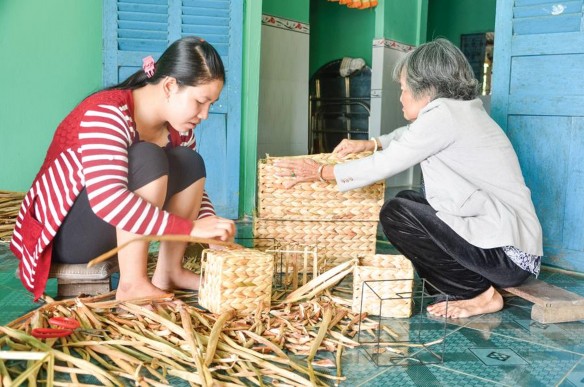
Appendix photo 7.2: The water hyacinth weaving profession in Long Tri commune, Long My town, Hau Giang province helps increase income for many local households. Photo: Contributor
Spreading effective models
Ms. Tran Ngoc Bich in Binh Duong area, Long Hoa ward, Binh Thuy district, Can Tho city is one of the members of the Women's Union who received support to borrow capital from the Transaction Office of the Bank for Social Policies (BSP) in Binh Thuy district to invest in production and livestock farming.
Ms. Tran Ngoc Bich said: “My family has been making incense for nearly 7-8 years now. But this job is very unstable and the income is not worth much. Previously, to have investment capital, I had to borrow from outside with very high interest rates, so the money I made was only enough to pay the interest and could not be saved.
Through the introduction and evaluation of the Women's Union of Long Hoa Ward, I was given a loan of 30 million VND by the Social Policy Bank. Thanks to this money, I was able to pay off my external debt and invest in buying raw materials to make processed incense, and at the same time develop a chicken farming model."
Currently, Ms. Bich’s family’s flock of more than 300 chickens are ready to be sold. According to her estimate, with the current price, this flock of chickens can bring in about 30 million VND for the family. In addition, she also maintains the incense making business to have daily income, accumulate and save money to repay the loan to the Social Policy Bank and develop more chicken farms.
In Can Tho City, from 2012-2016, policy credit capital has helped nearly
45,000 households have escaped poverty and become rich; created jobs for nearly 140,000 workers; helped nearly 13,500 students borrow money to cover their study expenses; and more than
37,000 households have had clean water and sanitation facilities built; 439 houses built for poor households.
Policy credit capital has contributed to maintaining rice paper making villages, growing clean vegetables in Thot Not district, ornamental flower growing clubs in Binh Thuy district... Mr. Le Thanh Thi, Vice Chairman of Long Hoa Ward People's Committee, Binh Thuy District, Can Tho City, said: The whole ward currently has 1,314 households borrowing capital from the Binh Thuy District Social Policy Bank branch, with a total outstanding debt of over 29.8 billion VND.
Households borrow capital mainly for small businesses, livestock farming, growing vegetables, ornamental flowers, and buying machinery for production. Thanks to the effective and appropriate use of loans, many poor and near-poor households have the conditions to develop their family economy.
After 5 years of implementing the "Project to strengthen and improve the quality of policy credit activities in the Southwest region", the quality of policy credit in the provinces and cities in the region has had many positive changes, promoting higher efficiency.
Mr. Ngo Minh Chien, Chairman of the Farmers' Association of Ca Mau province, shared: "As a member of the Board of Directors of the Bank for Social Policies, the Farmers' Association of the province has done a good job of inspection and supervision; linking the activities of the Bank for Social Policies with the socio-economic development activities of the locality so that policy credit capital can be effectively promoted and risks can be limited."
"Agricultural, fishery, forestry and industrial extension activities, combined with training and transfer of scientific and technical advances to borrowers, are regularly implemented. As a result, many borrowers have used loans to invest and developed effective business models that are suitable to local production conditions."
Effective business models using policy capital in Ca Mau province include: blood cockle farming model in Dam Doi district, Cai Nuoc district; commercial crab farming model in Phu Tan district, green-legged shrimp farming in Thoi Binh district; goat farming in Cai Nuoc district, Thoi Binh district; striped snakehead fish farming in Tran Van Thoi district; growing water fern in Cai Nuoc district...
There are also other models such as: shrimp and crab farming combined with intensive farming, improved extensive farming, planting many trees and many animals for short-term use and long-term use... These models are widely implemented by households with loans, members of the Farmers' Association and achieve high economic efficiency.
Improve capital efficiency
At the time of implementing the “Project to strengthen and improve the quality of policy credit activities in the Southwest region”, the entire Mekong Delta region had 41,852 Savings and Loan Groups. Through strengthening and improving the quality, by December 31, 2016, the entire region had 39,593 Savings and Loan Groups.
Savings and Loans, reduced by 2,259 Groups compared to the initial implementation of the Project. Including
29,135 Groups were classified as good, accounting for 73.5%, an increase of 13,208 Groups compared to the time the Consolidation Project began.
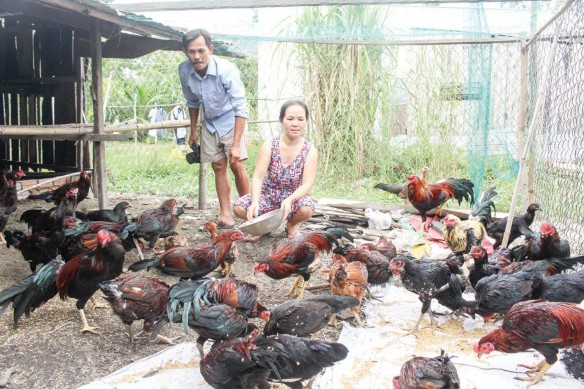
Appendix photo 7.3: Thanks to a loan of 30 million VND from the Vietnam Bank for Social Policies, Ms. Tran Ngoc Bich in Binh Thuy district, Can Tho city invested in breeding stock and chicken coops to raise chickens, developing the family economy. Photo: M. HUYEN
The Savings and Loan Group of Ben Tri Hamlet, Tap Son Commune, Tra Cu District, Tra Vinh Province, with 50 members, is one of the most effective groups in the Mekong Delta. During its operation, the Group always holds timely meetings to consider lending capital, encourages savings, and earns good interest every month.
From overdue debt initially accounting for 4.3% of total outstanding debt, the Group now has no overdue debt. Preferential credit capital is used by borrowers for the right purpose, achieving high results. In the Group, 28 poor households have borrowed capital to do business effectively and escape poverty.
Ms. Kim Thi Thu Ha, Head of the Savings and Loan Group of Ben Tri Hamlet, shared: "Not only accompanying the group members in the process of using policy capital, the Savings and Loan Group of Ben Tri Hamlet also focuses on the work of checking and handling overdue debts.
timely, urge households in the Group to repay principal and interest on time. At the same time, request the bank to extend the loan term for households that are still in difficulty and unable to repay the debt, and provide seasonal loans for households that are in the middle of production and business, and households that are doing well and need to borrow capital to reproduce and do business.
In recent times, associations have played an important role in supporting the VBSP in implementing policy credit programs to borrowers as well as monitoring the use of loans for the right purposes.
Ms. Pham Thi Thanh Thao, Chairwoman of the Women's Union of Ben Tre province, said: "The outstanding loans for poor households and other policy beneficiaries entrusted by the Women's Union of the province always lead in quantity and quality compared to socio-political organizations entrusted by the VBSP with outstanding loans accounting for 45.88% of the total outstanding loans entrusted."
According to Ms. Pham Thi Thanh Thao, the number of Savings and Loan Groups with good ratings has increased and maintained at 90%. Policy credit capital has helped many poor and near-poor women's households in the province increase their income, improve their quality of life and escape poverty.
Mr. Duong Quyet Thang, General Director of the Social Policy Bank, affirmed: “In the past time, the coordination between entrusted socio-political organizations, Savings and Loan Groups, and Hamlet Chiefs in evaluating loans has been carried out publicly and democratically; enhancing the responsibility of management, supervision, and use of loan capital. Borrowers have changed their awareness, borrowing and repaying, complying with regulations on paying interest and depositing savings periodically every month, and repaying loans when due."
"The addition of the Chairman of the People's Committee at the commune level to the membership of the Board of Directors of the Vietnam Bank for Social Policies has enhanced the responsibility of local authorities in managing policy credit capital sources; consolidated and improved the quality of policy credit activities at the commune level, contributing to the implementation of local poverty reduction goals."
Article and photos: MINH HUYEN
(To be continued)
[Article 3 – Can Tho Newspaper]
Improving the quality of policy credit for community prosperity
Lesson 3: Uneven credit quality
08/09/2017 - 22:37
The Mekong Delta is a key food production region of the country, strongly developing the marine economy, exploitation and aquaculture. This is also a region with potential and strengths for developing the energy industry, food industry, tourism, etc. However, according to the multidimensional poverty standard for the period 2016-2020, the rate of poor and near-poor households in the region is still high and was 8.46% in 2016, with a large number of re-poverty. Therefore, policy credit for poor households in the Southwest region will certainly face many difficulties and challenges, requiring the participation of the State, the Vietnam Bank for Social Policies (VBSP), local authorities and the efforts of the borrowers themselves.
There are still many difficulties and limitations.
According to the assessment of the VBSP, in general, the coordination between agricultural, forestry, fishery extension activities, technical support, technology transfer, product consumption of state organizations, public service units, enterprises, socio-political organizations with policy credit activities in some places has not been linked.
This has led to a number of poor people using loans ineffectively and not escaping poverty sustainably. In addition, some borrowers have not complied with the repayment of loans and interest to the bank.
In some localities, the rate of overdue debt and debt restructuring is still high, the rate of debt collection is low. Some credit programs have potential risks leading to an increase in overdue debt such as: The program of lending for deferred home purchase in the Mekong Delta, lending to poor households to build houses, lending to
Loans for poor households and policy beneficiaries to work abroad for a limited period of time, loans for ethnic minorities in particular difficulty.
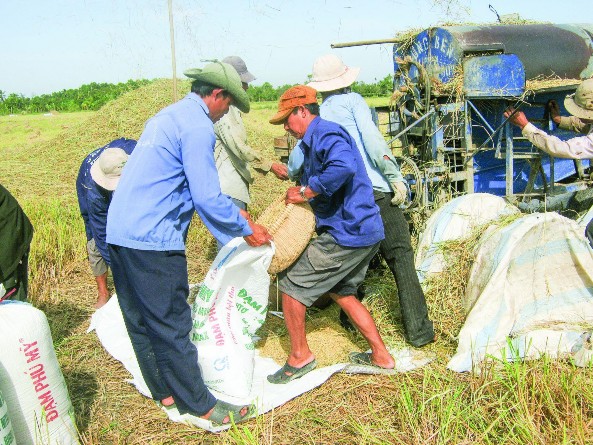
Appendix photo 7.4: Rice farmers in the Mekong Delta are always at risk due to the impact of climate change affecting productivity and profits. Photo: M. HUYEN
In recent times, lending trust activities in the Southwest region of socio-political organizations have encountered many difficulties and challenges.
Ms. Pham Thi Thanh Thao, Chairwoman of the Women's Union of Ben Tre province, shared: Credit quality is not uniform at some facilities, many borrowers leave the locality, some union facilities have not fully participated in transaction sessions. A part of poor households borrowing capital are still sluggish and have the mindset of relying on state subsidies.
In addition, the loan capital has not met the actual needs of the locality. For example, the loan limit for the clean water and rural environmental sanitation program
is still low, only 6 million VND/1 project/household, so it is not enough to equip tools to store rainwater and fresh water to prevent drought and salinity in the dry season...
The Savings and Loan Group is an extension of the People's Credit Fund in evaluating loans for the right subjects, checking and supervising the use of loans for the right purposes.
However, the inspection and supervision of the entrusted activities of these Groups in some localities has not been carried out regularly. Some places have not actively and proactively coordinated with the VBSP in handling and recovering bad debts and implementing the entrusted stages.
Especially the post-lending inspection, urging borrowers to repay debts and interest. Some members of the Group do not attend all meetings, do not understand the new policies on preferential credit, so the implementation is sometimes confusing and entangled in performing the assigned tasks.
Currently, resources to implement policy credit programs are limited compared to the actual needs of the poor and policy subjects.
According to Mr. Duong Quyet Thang, General Director of the Vietnam Bank for Social Policies, the state budget's provision of additional charter capital and capital for policy credit programs is not timely.
Therefore, it has more or less affected the balance of capital allocation for lending to poor households and other policy beneficiaries in the Southwest region. Capital from local budgets of some provinces in the Southwest region allocated for lending to poor households, near-poor households and other policy beneficiaries in the area is still limited, with an average of only 72 billion VND per locality in the region, while the national average is nearly 127 billion VND per locality.
Vulnerable borrowers
Thanks to the policy credit program, many poor and near-poor households in the Mekong Delta have preferential capital to invest in production.