
2.5 times higher than in 2000. Domestic tourism growth rate reached 10.2%/year in the period 2000 - 2010.
Regarding the structure of visitors by market and purpose of travel, the Chinese market accounts for the highest proportion, followed by visitors from Korea, the United States, Japan, Taiwan, Australia, etc. Regarding the purpose of coming to Vietnam, the number of visitors traveling to Vietnam accounts for more than 40%, followed by commercial reasons 24%, visiting relatives 22% and other purposes 14%. International tourists come to Vietnam mainly by air 60%, followed by road 32% and waterway 8%.
b. Revenue
Due to the rapid growth of the number of tourists, tourism revenue also increased rapidly. In 2000, revenue reached 17.4 trillion VND, then in 2005 it increased to 30 trillion VND and in 2009, due to the impact of the flu epidemic and the global economic crisis, the number of tourists decreased, however, the Vietnamese tourism industry had timely solutions, revenue still increased to 68 trillion VND. By 2010, tourism revenue reached 96 trillion VND.
c. Accommodation
In recent years, the number of accommodation establishments has increased rapidly based on the renovation of old establishments and the construction of new establishments in the direction of professionalization. The rapid increase is reflected in both aspects: quantity and quality. In terms of quantity, from 3,267 hotels in 2000, it increased to 3,810 hotels in 2005 and reached 12,000 hotels in 2010 with a total of 235,000 rooms. By the end of 2010, the country had 391 hotels meeting the standard of over 3 stars (46 5-star hotels; 110 4-star hotels; 235 3-star hotels) with a total of 41,611 rooms.
Accommodation facilities in our country are currently concentrated mainly in major tourist centers such as Ho Chi Minh City, Hanoi, Da Nang, Ha Long, Nha Trang, Da Lat. In particular, Ho Chi Minh City and Hanoi are the two leading cities in the country in terms of the number of 5-star hotels. The leading 5-star hotels include: Sofitel Plaza Hanoi, Melia Hanoi, Rex Hotel (Ho Chi Minh City), Majestic (Ho Chi Minh City), Sunrise (Nha Trang), Furama (Da Nang)...
In addition to accommodation facilities, entertainment facilities in our country have been developed and put into operation to meet the needs of a large number of tourists. Typical examples include: Suoi Tien, Dam Sen, Thao Cam Vien, Ky Hoa tourist area (Ho Chi Minh City); West Lake Water Park, Thac Da tourist area, Thien Son - Suoi Nga, Bao Son Paradise (Hanoi). Besides Hanoi and Ho Chi Minh City, some other localities are also promoting the development of entertainment and sports facilities to attract tourists.
d. Human resources for tourism
Over the years, the labor force in our country's tourism industry has continuously increased in quantity and gradually improved in quality.
In terms of quantity, the number of workers (direct and indirect) generally tends to increase, however the growth rate of these two groups is uneven.
Table 1.1. Number of tourism workers in Vietnam's tourism industry
Year
2000 | 2005 | 2008 | |
Direct labor | 22,594 | 165,397 | 269,096 |
Indirect labor | 1,984 | 112,537 | 244,970 |
Total | 24,578 | 277,934 | 514,030 |
Maybe you are interested!
-
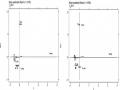
 Scatter Plot of Moran's I Local Index of Tourism Revenue in the North Central and South Central Coast Regions in 2012 and 2019
 -
 Identify Rating Levels and Rating Scales
zt2i3t4l5ee
zt2a3gstourism,quan lan,quang ninh,ecology,ecotourism,minh chau,van don,geography,geographical basis,tourism development,science
zt2a3ge
zc2o3n4t5e6n7ts
of the islanders. Therefore, this indicator will be divided into two sub-indicators:
a1. Natural tourism attractiveness a2. Cultural tourism attractiveness
b. Tourist capacity
The two island communes in Quan Lan have different capacities to receive tourists. Minh Chau Commune is home to many standard hotels and resorts, attracting high-income domestic and international tourists. Meanwhile, Quan Lan Commune has many motels mainly built and operated by local people, so the scale and quality are not high, and will be suitable for ordinary tourists such as students.
c. Time of exploitation of Quan Lan Island Commune:
Quan Lan tourism is seasonal due to weather and climate conditions and festivals only take place on certain days of the year, specifically in spring. In Quan Lan commune, the period from April to June and from September to November is considered the best time to visit Quan Lan because the cultural tourism activities are mainly associated with festivals taking place during this time.
Minh Chau island commune:
Tourism exploitation time is all year round, because this is a place with a number of tourist attractions with diverse ecosystems such as Bai Tu Long National Park Research Center, Tram forest, Turtle Laying Beach, so besides coming to the beach for tourism and vacation in the summer, Minh Chau will attract research groups to come for tourism combined with research at other times of the year.
d. Sustainability
The sustainability of ecotourism sites in Quan Lan and Minh Chau communes depends on the sensitivity of the ecosystems to climate changes.
landscape. In general, these tourist destinations have a fairly high level of sustainability, because they are natural ecosystems, planned and protected. However, if a large number of tourists gather at certain times, it can exceed the carrying capacity and affect the sustainability of the environment (polluted beaches, damaged trees, animals moving away from their habitats, etc.), then the sustainability of the above ecosystems (natural ecosystems, human ecosystems) will also be affected and become less sustainable.
e. Location and accessibility
Both island communes have ports to take tourists to visit from Van Don wharf:
- Quan Lan – Van Don traffic route:
Phuc Thinh – Viet Anh high-speed boat and Quang Minh high-speed boat, depart at 8am and 2pm from Van Don to Quan Lan, and at 7am and 1pm from Quan Lan to Van Don. There are also wooden boats departing at 7am and 1pm.
- Van Don - Minh Chau traffic route:
Chung Huong high-speed train, Minh Chau train, morning 7:30 and afternoon 13:30 from Van Don to Minh Chau, morning 6:30 and afternoon 13:00 from Minh Chau to Van Don.
f. Infrastructure
Despite receiving investment attention, the issue of infrastructure and technical facilities for tourism on Quan Lan Island is still an issue that needs to be resolved because it has a direct impact on the implementation of ecotourism activities. The minimum conditions for serving tourists such as accommodation, electricity, water, communication, especially medical services, and security work need to be given top priority. Ecotourism spots in Minh Chau commune are assessed to have better infrastructure and technical facilities for tourism because there are quite complete and synchronous conditions for serving tourists, meeting many needs of domestic and foreign tourists.
3.2.1.4. Determine assessment levels and assessment scales
Corresponding to the levels of each criterion, the index is the score of those levels in the order of 4, 3, 2, 1 decreasing according to the standard of each level: very attractive (4), attractive (3), average (2), less attractive (1).
3.2.1.5. Determining the coefficients of the criteria
For the assessment of DLST in the two communes of Quan Lan and Minh Chau islands, the students added evaluation coefficients to show the importance of the criteria and indicators as follows:
Coefficient 3 with criteria: Attractiveness, Exploitation time. These are the 2 most important criteria for attracting tourists to tourism in general and eco-tourism in particular, so they have the highest coefficient.
Coefficient 2 with criteria: Capacity, Infrastructure, Location and accessibility . Because the assessment area is an island commune of Van Don district, the above criteria are selected by the author with appropriate coefficients at the average level.
Coefficient 1 with criteria: Sustainability. Quan Lan has natural and human-made ecotourism sites, with high biodiversity and little impact from local human factors. Most of the ecotourism sites are still wild, so they are highly sustainable.
3.2.1.6. Results of DLST assessment on Quan Lan island
a. Assessment of the potential for natural tourism development
For Minh Chau commune:
+ Natural tourism attractiveness is determined to be very attractive (4 points) and the most important coefficient (coefficient 3), so the score of the Attractiveness criterion is 4 x 3 = 12.
+ Capacity is determined as average (2 points) and the coefficient is quite important (coefficient 2), then the score of Capacity criterion is 2 x 2 = 4.
+ Exploitation time is long (4 points), the most important coefficient (coefficient 3) so the score of the Exploitation time criterion is 4 x 3 = 12.
+ Sustainability is determined as sustainable (4 points), the important coefficient is the average coefficient (coefficient 1), so the score of the Sustainability criterion is 4 x 1 = 4 points
+ Location and accessibility are determined to be quite favorable (2 points), the coefficient is quite important (coefficient 2), the criterion score is 2 x 2 = 4 points.
+ Infrastructure is assessed as good (3 points), the coefficient is quite important (coefficient 2), then the score of the Infrastructure criterion is 3 x 2 = 6 points.
The total score for evaluating DLST in Minh Chau commune according to 6 evaluation criteria is determined as: 12 + 4 + 12 + 4 + 4 + 6 = 42 points
Similar assessment for Quan Lan commune, we have the following table:
Table 3.3: Assessment of the potential for natural ecotourism development in Quan Lan and Minh Chau communes
Attractiveness of self-tourismof course
Capacity
Mining time
Sustainability
Location and accessibility
Infrastructure
Result
Point
DarkMulti
Point
DarkMulti
Point
DarkMulti
Point
DarkMulti
Point
DarkMulti
Point
DarkMulti
CommuneMinh Chau
12
12
4
8
12
12
4
4
4
8
6
8
42/52
Quan CommuneLan
6
12
6
8
9
12
4
4
4
8
4
8
33/52
b. Assessment of the potential for humanistic tourism development
For Quan Lan commune:
+ The attractiveness of human tourism is determined to be very attractive (4 points) and the most important coefficient (coefficient 3), so the score of the Attractiveness criterion is 4 x 3 = 12.
+ Capacity is determined to be large (3 points) and the coefficient is quite important (coefficient 2), then the score of the Capacity criterion is 3 x 2 = 6.
+ Mining time is average (3 points), the most important coefficient (coefficient 3) so the score of the Mining time criterion is 3 x 3 = 9.
+ Sustainability is determined as sustainable (4 points), the important coefficient is the average coefficient (coefficient 1), so the score of the Sustainability criterion is 4 x 1 = 4 points.
+ Location and accessibility are determined to be quite favorable (2 points), the coefficient is quite important (coefficient 2), the criterion score is 2 x 2 = 4 points.
+ Infrastructure is rated as average (2 points), the coefficient is quite important (coefficient 2), then the score of the Infrastructure criterion is 2 x 2 = 4 points.
The total score for evaluating DLST in Quan Lan commune according to 6 evaluation criteria is determined as: 12 + 6 + 6 + 4 + 4 + 4 = 36 points.
Similar assessment with Minh Chau commune we have the following table:
Table 3.4: Assessment of the potential for developing humanistic eco-tourism in Quan Lan and Minh Chau communes
Attractiveness of human tourismliterature
Capacity
Mining time
Sustainability
Location and accessibility
Infrastructure
Result
Point
DarkMulti
Point
DarkMulti
Point
DarkMulti
Point
DarkMulti
Point
DarkMulti
Point
DarkMulti
Quan CommuneLan
12
12
6
8
9
12
4
4
4
8
4
8
39/52
Minh CommuneChau
6
12
4
8
12
12
4
4
4
8
6
8
36/52
Basically, both Minh Chau and Quan Lan localities have quite favorable conditions for developing ecotourism. However, Quan Lan commune has more advantages to develop ecotourism in a humanistic direction, because this is an area with many famous historical relics such as Quan Lan Communal House, Quan Lan Pagoda, Temple worshiping the hero Tran Khanh Du, ... along with local festivals held annually such as the wind praying ceremony (March 15), Quan Lan festival (June 10-19); due to its location near the port and long exploitation time, the beaches in Quan Lan commune (especially Quan Lan beach) are no longer hygienic and clean to ensure the needs of tourists coming to relax and swim; this is also an area with many beautiful landscapes such as Got Beo wind pass, Ong Phong head, Voi Voi cave, but the ability to access these places is still very limited (dirt hill road, lots of gravel and rocks), especially during rainy and windy times; In addition, other natural resources such as mangrove forests and sea worms have not been really exploited for tourism purposes and ecotourism development. On the contrary, Minh Chau commune has more advantages in developing ecotourism in the direction of natural tourism, this is an area with diverse ecosystems such as at Rua De Beach, Bai Tu Long National Park Conservation Center...; Minh Chau beach is highly appreciated for its natural beauty and cleanliness, ranked in the top ten most beautiful beaches in Vietnam; Minh Chau commune is also home to Tram forest with a large area and a purity of up to 90%, suitable for building bridges through the forest (a very effective type of natural ecotourism currently applied by many countries) for tourists to sightsee, as well as for the purpose of studying and researching.
Figure 3.1: Thenmala Forest Bridge (India) Source: https://www.thenmalaecotourism.com/(August 21, 2019)
3.2.2. Using SWOT matrix to evaluate Quan Lan island tourism
General assessment of current tourism activities of Quan Lan island is shown through the following SWOT matrix:
Table 3.5: SWOT matrix evaluating tourism activities on Quan Lan island
Internal agent
Strengths- There is a lot of potential for tourism development, especially natural ecotourism and humanistic ecotourism.- The unskilled labor force is relatively abundant.- resource environmentunpolluted, still
Weaknesses- Poorly developed infrastructure, especially traffic routes to tourist destinations on the island.- The team of professional staff is still weak.- Tourism products in general
quite wild, originalintact
general and DLST in particularalone is monotonous.
External agents
Opportunity- Tourism is a key industry in the socio-economic development strategy of the province and Van Don economic zone.- Quan Lan was selected as a pilot area for eco-tourism development within the framework of the green growth project between Quang Ninh province and the Japanese organization JICA.- The flow of tourists and especially ecotourism in the world tends toincreasing
Challenge- Weather and climate change abnormally.- Competition in tourism products is increasingly fierce, especially with other localities in the province such as Ha Long, Mong Cai...- Awareness of tourists, especially domestic tourists, about ecotourism and nature conservation is not high.
Through summary analysis using SWOT matrix we see that:
To exploit strengths and take advantage of opportunities, it is necessary to:
- Diversify products and service types (build more tourism routes aimed at specific needs of tourists: experiential tourism immersed in nature, spiritual cultural tourism...)
- Effective exploitation of resources and differentiated products (natural resources and human resources)
div.maincontent .p { color: black; font-family:"Times New Roman", serif; font-style: normal; font-weight: normal; text-decoration: none; font-size: 14pt; margin:0pt; } div.maincontent p { color: black; font-family:"Times New Roman", serif; font-style: normal; font-weight: normal; text-decoration: none; font-size: 14pt; margin:0pt; } div.maincontent .s1 { color: black; font-family:"Times New Roman", serif; font-style: normal; font-weight: normal; text-decoration: none; font-size: 13pt; } div.maincontent .s2 { color: black; font-family:"Times New Roman", serif; font-style: normal; font-weight: normal; text-decoration: none; font-size: 13pt; } div.maincontent .s3 { color: #0D0D0D; font-family:"Times New Roman", serif; font-style: normal; font-weight: bold; text-decoration: none; font-size: 14pt; } div.maincontent .s4 { color: black; font-family:"Times New Roman", serif; font-style: italic; font-weight: normal; text-decoration: none; font-size: 14pt; } div.maincontent .s5 { color: black; font-family:"Times New Roman", serif; font-style: italic; font-weight: bold; text-decoration: none; font-size: 14pt; } div.maincontent .s6 { color: black; font-family:"Times New Roman", serif; font-style: italic; font-weight: normal; text-decoration: none; font-size: 14pt; vertical-align: -3pt; } div.maincontent .s7 { color: black; font-family:"Times New Roman", serif; font-style: italic; font-weight: normal; text-decoration: none; font-size: 14pt; vertical-align: -2pt; } div.maincontent .s8 { color: black; font-family:"Times New Roman", serif; font-style: italic; font-weight: normal; text-decoration: none; font-size: 14pt; vertical-align: -1pt; } div.maincontent .s9 { color: black; font-family:"Times New Roman", serif; font-style: normal; font-weight: normal; text-decoration: none; font-size: 14pt; } div.maincontent .s10 { color: black; font-family:"Times New Roman", serif; font-style: normal; font-weight: bold; text-decoration: none; font-size: 14pt; } div.maincontent .s11 { color: black; font-family:"Times New Roman", serif; font-style: normal; font-weight: normal; text-decoration: none; font-size: 14pt; } div.maincontent .s12 { color: black; font-family:Symbol, serif; font-style: normal; font-weight: normal; text-decoration: none; font-size: 14pt; } div.maincontent .s13 { color: black; font-family:Wingdings; font-style: normal; font-weight: normal; text-decoration: none; font-size: 14pt; } div.maincontent .s14 { color: black; font-family:"Times New Roman", serif; font-style: normal; font-weight: normal; text-decoration: none; font-size: 9pt; vertical-align: 5pt; } div.maincontent .s15 { color: black; font-family:"Times New Roman", serif; font-style: normal; font-weight: normal; text-decoration: none; font-size: 9pt; vertical-align: 5pt; } div.maincontent .s16 { color: black; font-family:Cambria, serif; font-style: italic; font-weight: normal; text-decoration: none; font-size: 14pt; } div.maincontent .s17 { color: #080808; font-family:"Times New Roman", serif; font-style: normal; font-weight: bold; text-decoration: none; font-size: 14pt; } div.maincontent .s18 { color: #080808; font-family:"Times New Roman", serif; font-style: normal; font-weight: normal; text-decoration: none; font-size: 14pt; } div.maincontent .s19 { color: black; font-family:"Times New Roman", serif; font-style: normal; font-weight: normal; text-decoration: none; font-size: 11pt; } div.maincontent .s20 { color: black; font-family:"Times New Roman", serif; font-style: normal; font-weight: normal; text-decoration: none; font-size: 10pt; } div.maincontent .s21 { color: black; font-family:"Times New Roman", serif; font-style: normal; font-weight: bold; text-decoration: none; font-size: 11pt; } div.maincontent .s22 { color: black; font-family:"Times New Roman", serif; font-style: normal; font-weight: normal; text-decoration: none; font-size: 11pt; } div.maincontent .s23 { color: black; font-family:"Times New Roman", serif; font-style: italic; font-weight: normal; text-decoration: none; font-size: 14pt; } div.maincontent .s24 { color: #212121; font-family:"Times New Roman", serif; font-style: normal; font-weight: normal; tex
Identify Rating Levels and Rating Scales
zt2i3t4l5ee
zt2a3gstourism,quan lan,quang ninh,ecology,ecotourism,minh chau,van don,geography,geographical basis,tourism development,science
zt2a3ge
zc2o3n4t5e6n7ts
of the islanders. Therefore, this indicator will be divided into two sub-indicators:
a1. Natural tourism attractiveness a2. Cultural tourism attractiveness
b. Tourist capacity
The two island communes in Quan Lan have different capacities to receive tourists. Minh Chau Commune is home to many standard hotels and resorts, attracting high-income domestic and international tourists. Meanwhile, Quan Lan Commune has many motels mainly built and operated by local people, so the scale and quality are not high, and will be suitable for ordinary tourists such as students.
c. Time of exploitation of Quan Lan Island Commune:
Quan Lan tourism is seasonal due to weather and climate conditions and festivals only take place on certain days of the year, specifically in spring. In Quan Lan commune, the period from April to June and from September to November is considered the best time to visit Quan Lan because the cultural tourism activities are mainly associated with festivals taking place during this time.
Minh Chau island commune:
Tourism exploitation time is all year round, because this is a place with a number of tourist attractions with diverse ecosystems such as Bai Tu Long National Park Research Center, Tram forest, Turtle Laying Beach, so besides coming to the beach for tourism and vacation in the summer, Minh Chau will attract research groups to come for tourism combined with research at other times of the year.
d. Sustainability
The sustainability of ecotourism sites in Quan Lan and Minh Chau communes depends on the sensitivity of the ecosystems to climate changes.
landscape. In general, these tourist destinations have a fairly high level of sustainability, because they are natural ecosystems, planned and protected. However, if a large number of tourists gather at certain times, it can exceed the carrying capacity and affect the sustainability of the environment (polluted beaches, damaged trees, animals moving away from their habitats, etc.), then the sustainability of the above ecosystems (natural ecosystems, human ecosystems) will also be affected and become less sustainable.
e. Location and accessibility
Both island communes have ports to take tourists to visit from Van Don wharf:
- Quan Lan – Van Don traffic route:
Phuc Thinh – Viet Anh high-speed boat and Quang Minh high-speed boat, depart at 8am and 2pm from Van Don to Quan Lan, and at 7am and 1pm from Quan Lan to Van Don. There are also wooden boats departing at 7am and 1pm.
- Van Don - Minh Chau traffic route:
Chung Huong high-speed train, Minh Chau train, morning 7:30 and afternoon 13:30 from Van Don to Minh Chau, morning 6:30 and afternoon 13:00 from Minh Chau to Van Don.
f. Infrastructure
Despite receiving investment attention, the issue of infrastructure and technical facilities for tourism on Quan Lan Island is still an issue that needs to be resolved because it has a direct impact on the implementation of ecotourism activities. The minimum conditions for serving tourists such as accommodation, electricity, water, communication, especially medical services, and security work need to be given top priority. Ecotourism spots in Minh Chau commune are assessed to have better infrastructure and technical facilities for tourism because there are quite complete and synchronous conditions for serving tourists, meeting many needs of domestic and foreign tourists.
3.2.1.4. Determine assessment levels and assessment scales
Corresponding to the levels of each criterion, the index is the score of those levels in the order of 4, 3, 2, 1 decreasing according to the standard of each level: very attractive (4), attractive (3), average (2), less attractive (1).
3.2.1.5. Determining the coefficients of the criteria
For the assessment of DLST in the two communes of Quan Lan and Minh Chau islands, the students added evaluation coefficients to show the importance of the criteria and indicators as follows:
Coefficient 3 with criteria: Attractiveness, Exploitation time. These are the 2 most important criteria for attracting tourists to tourism in general and eco-tourism in particular, so they have the highest coefficient.
Coefficient 2 with criteria: Capacity, Infrastructure, Location and accessibility . Because the assessment area is an island commune of Van Don district, the above criteria are selected by the author with appropriate coefficients at the average level.
Coefficient 1 with criteria: Sustainability. Quan Lan has natural and human-made ecotourism sites, with high biodiversity and little impact from local human factors. Most of the ecotourism sites are still wild, so they are highly sustainable.
3.2.1.6. Results of DLST assessment on Quan Lan island
a. Assessment of the potential for natural tourism development
For Minh Chau commune:
+ Natural tourism attractiveness is determined to be very attractive (4 points) and the most important coefficient (coefficient 3), so the score of the Attractiveness criterion is 4 x 3 = 12.
+ Capacity is determined as average (2 points) and the coefficient is quite important (coefficient 2), then the score of Capacity criterion is 2 x 2 = 4.
+ Exploitation time is long (4 points), the most important coefficient (coefficient 3) so the score of the Exploitation time criterion is 4 x 3 = 12.
+ Sustainability is determined as sustainable (4 points), the important coefficient is the average coefficient (coefficient 1), so the score of the Sustainability criterion is 4 x 1 = 4 points
+ Location and accessibility are determined to be quite favorable (2 points), the coefficient is quite important (coefficient 2), the criterion score is 2 x 2 = 4 points.
+ Infrastructure is assessed as good (3 points), the coefficient is quite important (coefficient 2), then the score of the Infrastructure criterion is 3 x 2 = 6 points.
The total score for evaluating DLST in Minh Chau commune according to 6 evaluation criteria is determined as: 12 + 4 + 12 + 4 + 4 + 6 = 42 points
Similar assessment for Quan Lan commune, we have the following table:
Table 3.3: Assessment of the potential for natural ecotourism development in Quan Lan and Minh Chau communes
Attractiveness of self-tourismof course
Capacity
Mining time
Sustainability
Location and accessibility
Infrastructure
Result
Point
DarkMulti
Point
DarkMulti
Point
DarkMulti
Point
DarkMulti
Point
DarkMulti
Point
DarkMulti
CommuneMinh Chau
12
12
4
8
12
12
4
4
4
8
6
8
42/52
Quan CommuneLan
6
12
6
8
9
12
4
4
4
8
4
8
33/52
b. Assessment of the potential for humanistic tourism development
For Quan Lan commune:
+ The attractiveness of human tourism is determined to be very attractive (4 points) and the most important coefficient (coefficient 3), so the score of the Attractiveness criterion is 4 x 3 = 12.
+ Capacity is determined to be large (3 points) and the coefficient is quite important (coefficient 2), then the score of the Capacity criterion is 3 x 2 = 6.
+ Mining time is average (3 points), the most important coefficient (coefficient 3) so the score of the Mining time criterion is 3 x 3 = 9.
+ Sustainability is determined as sustainable (4 points), the important coefficient is the average coefficient (coefficient 1), so the score of the Sustainability criterion is 4 x 1 = 4 points.
+ Location and accessibility are determined to be quite favorable (2 points), the coefficient is quite important (coefficient 2), the criterion score is 2 x 2 = 4 points.
+ Infrastructure is rated as average (2 points), the coefficient is quite important (coefficient 2), then the score of the Infrastructure criterion is 2 x 2 = 4 points.
The total score for evaluating DLST in Quan Lan commune according to 6 evaluation criteria is determined as: 12 + 6 + 6 + 4 + 4 + 4 = 36 points.
Similar assessment with Minh Chau commune we have the following table:
Table 3.4: Assessment of the potential for developing humanistic eco-tourism in Quan Lan and Minh Chau communes
Attractiveness of human tourismliterature
Capacity
Mining time
Sustainability
Location and accessibility
Infrastructure
Result
Point
DarkMulti
Point
DarkMulti
Point
DarkMulti
Point
DarkMulti
Point
DarkMulti
Point
DarkMulti
Quan CommuneLan
12
12
6
8
9
12
4
4
4
8
4
8
39/52
Minh CommuneChau
6
12
4
8
12
12
4
4
4
8
6
8
36/52
Basically, both Minh Chau and Quan Lan localities have quite favorable conditions for developing ecotourism. However, Quan Lan commune has more advantages to develop ecotourism in a humanistic direction, because this is an area with many famous historical relics such as Quan Lan Communal House, Quan Lan Pagoda, Temple worshiping the hero Tran Khanh Du, ... along with local festivals held annually such as the wind praying ceremony (March 15), Quan Lan festival (June 10-19); due to its location near the port and long exploitation time, the beaches in Quan Lan commune (especially Quan Lan beach) are no longer hygienic and clean to ensure the needs of tourists coming to relax and swim; this is also an area with many beautiful landscapes such as Got Beo wind pass, Ong Phong head, Voi Voi cave, but the ability to access these places is still very limited (dirt hill road, lots of gravel and rocks), especially during rainy and windy times; In addition, other natural resources such as mangrove forests and sea worms have not been really exploited for tourism purposes and ecotourism development. On the contrary, Minh Chau commune has more advantages in developing ecotourism in the direction of natural tourism, this is an area with diverse ecosystems such as at Rua De Beach, Bai Tu Long National Park Conservation Center...; Minh Chau beach is highly appreciated for its natural beauty and cleanliness, ranked in the top ten most beautiful beaches in Vietnam; Minh Chau commune is also home to Tram forest with a large area and a purity of up to 90%, suitable for building bridges through the forest (a very effective type of natural ecotourism currently applied by many countries) for tourists to sightsee, as well as for the purpose of studying and researching.
Figure 3.1: Thenmala Forest Bridge (India) Source: https://www.thenmalaecotourism.com/(August 21, 2019)
3.2.2. Using SWOT matrix to evaluate Quan Lan island tourism
General assessment of current tourism activities of Quan Lan island is shown through the following SWOT matrix:
Table 3.5: SWOT matrix evaluating tourism activities on Quan Lan island
Internal agent
Strengths- There is a lot of potential for tourism development, especially natural ecotourism and humanistic ecotourism.- The unskilled labor force is relatively abundant.- resource environmentunpolluted, still
Weaknesses- Poorly developed infrastructure, especially traffic routes to tourist destinations on the island.- The team of professional staff is still weak.- Tourism products in general
quite wild, originalintact
general and DLST in particularalone is monotonous.
External agents
Opportunity- Tourism is a key industry in the socio-economic development strategy of the province and Van Don economic zone.- Quan Lan was selected as a pilot area for eco-tourism development within the framework of the green growth project between Quang Ninh province and the Japanese organization JICA.- The flow of tourists and especially ecotourism in the world tends toincreasing
Challenge- Weather and climate change abnormally.- Competition in tourism products is increasingly fierce, especially with other localities in the province such as Ha Long, Mong Cai...- Awareness of tourists, especially domestic tourists, about ecotourism and nature conservation is not high.
Through summary analysis using SWOT matrix we see that:
To exploit strengths and take advantage of opportunities, it is necessary to:
- Diversify products and service types (build more tourism routes aimed at specific needs of tourists: experiential tourism immersed in nature, spiritual cultural tourism...)
- Effective exploitation of resources and differentiated products (natural resources and human resources)
div.maincontent .p { color: black; font-family:"Times New Roman", serif; font-style: normal; font-weight: normal; text-decoration: none; font-size: 14pt; margin:0pt; } div.maincontent p { color: black; font-family:"Times New Roman", serif; font-style: normal; font-weight: normal; text-decoration: none; font-size: 14pt; margin:0pt; } div.maincontent .s1 { color: black; font-family:"Times New Roman", serif; font-style: normal; font-weight: normal; text-decoration: none; font-size: 13pt; } div.maincontent .s2 { color: black; font-family:"Times New Roman", serif; font-style: normal; font-weight: normal; text-decoration: none; font-size: 13pt; } div.maincontent .s3 { color: #0D0D0D; font-family:"Times New Roman", serif; font-style: normal; font-weight: bold; text-decoration: none; font-size: 14pt; } div.maincontent .s4 { color: black; font-family:"Times New Roman", serif; font-style: italic; font-weight: normal; text-decoration: none; font-size: 14pt; } div.maincontent .s5 { color: black; font-family:"Times New Roman", serif; font-style: italic; font-weight: bold; text-decoration: none; font-size: 14pt; } div.maincontent .s6 { color: black; font-family:"Times New Roman", serif; font-style: italic; font-weight: normal; text-decoration: none; font-size: 14pt; vertical-align: -3pt; } div.maincontent .s7 { color: black; font-family:"Times New Roman", serif; font-style: italic; font-weight: normal; text-decoration: none; font-size: 14pt; vertical-align: -2pt; } div.maincontent .s8 { color: black; font-family:"Times New Roman", serif; font-style: italic; font-weight: normal; text-decoration: none; font-size: 14pt; vertical-align: -1pt; } div.maincontent .s9 { color: black; font-family:"Times New Roman", serif; font-style: normal; font-weight: normal; text-decoration: none; font-size: 14pt; } div.maincontent .s10 { color: black; font-family:"Times New Roman", serif; font-style: normal; font-weight: bold; text-decoration: none; font-size: 14pt; } div.maincontent .s11 { color: black; font-family:"Times New Roman", serif; font-style: normal; font-weight: normal; text-decoration: none; font-size: 14pt; } div.maincontent .s12 { color: black; font-family:Symbol, serif; font-style: normal; font-weight: normal; text-decoration: none; font-size: 14pt; } div.maincontent .s13 { color: black; font-family:Wingdings; font-style: normal; font-weight: normal; text-decoration: none; font-size: 14pt; } div.maincontent .s14 { color: black; font-family:"Times New Roman", serif; font-style: normal; font-weight: normal; text-decoration: none; font-size: 9pt; vertical-align: 5pt; } div.maincontent .s15 { color: black; font-family:"Times New Roman", serif; font-style: normal; font-weight: normal; text-decoration: none; font-size: 9pt; vertical-align: 5pt; } div.maincontent .s16 { color: black; font-family:Cambria, serif; font-style: italic; font-weight: normal; text-decoration: none; font-size: 14pt; } div.maincontent .s17 { color: #080808; font-family:"Times New Roman", serif; font-style: normal; font-weight: bold; text-decoration: none; font-size: 14pt; } div.maincontent .s18 { color: #080808; font-family:"Times New Roman", serif; font-style: normal; font-weight: normal; text-decoration: none; font-size: 14pt; } div.maincontent .s19 { color: black; font-family:"Times New Roman", serif; font-style: normal; font-weight: normal; text-decoration: none; font-size: 11pt; } div.maincontent .s20 { color: black; font-family:"Times New Roman", serif; font-style: normal; font-weight: normal; text-decoration: none; font-size: 10pt; } div.maincontent .s21 { color: black; font-family:"Times New Roman", serif; font-style: normal; font-weight: bold; text-decoration: none; font-size: 11pt; } div.maincontent .s22 { color: black; font-family:"Times New Roman", serif; font-style: normal; font-weight: normal; text-decoration: none; font-size: 11pt; } div.maincontent .s23 { color: black; font-family:"Times New Roman", serif; font-style: italic; font-weight: normal; text-decoration: none; font-size: 14pt; } div.maincontent .s24 { color: #212121; font-family:"Times New Roman", serif; font-style: normal; font-weight: normal; tex -
 Solutions for sustainable tourism development in the Central Highlands - 23
 -
 Some Solutions for Human Resource Development in the Tourism Industry of the Central Highlands and Central Highlands Region:
 -
 Mechanism, Policy and Investment Environment for Sustainable Tourism Development in the Central Highlands
(Source: Vietnam Tourism Geography – Page 200)
In terms of quality, the number of workers with university and college degrees has increased and formed a core team serving the tourism industry. However, this number of workers only accounts for a small proportion of the total number of workers in the industry. In our country's tourism industry, there are still many limitations such as not meeting the demand in both quantity and quality. The rate of untrained workers is still large (more than 50% in 2009), foreign language proficiency and professional capacity are still inadequate. In particular, workers in the industry still lack industrial style and are not really attached to the profession, except for workers in some large tourist centers.
e. Promotion, advertising, and development of tourism products
The achievements have opened up new opportunities for Vietnam tourism. The image of Vietnam tourism has affirmed its unique features with the imprint of some tourist cities very strong in the hearts of tourists: "Hanoi - the renaissance city of Southeast Asia", "Ho Chi Minh City - a charming blend of the past and present", "Nha Trang - Vietnam's tropical sea". Besides exploiting natural and cultural values to create traditional tourism products (sightseeing and resort tourism, cultural - historical tourism, sea and mountain tourism, medical tourism...), many new types of tourism: community tourism, eco-tourism, craft village tourism have not only been invested in and developed but also received active support from a number of countries and organizations such as the European Union (EU), the Asian Development Bank (ADB). The Association of Canadian Universities and Colleges (ACCC)... contributing to poverty reduction in a number of localities.
Tourism activities in our country have made new developments, contributing to changing the face of the country, creating more jobs, increasing income, eliminating hunger and reducing poverty; contributing to economic restructuring, promoting exports, developing handicrafts; promoting transportation, culture, information and exchanges between regions in the country and internationally. The socio-economic benefits that tourism brings are the driving force for investment for the sustainable development of the industry. New opportunities are opening up for Vietnamese tourism with many good opportunities to promote and stimulate tourism, promising to achieve more achievements in the coming time.
1.2.2. Tourism activities in the North Central region
The North Central tourist region includes 6 provinces: Thanh Hoa, Nghe An, Ha Tinh, Quang Binh, Quang Tri, Thua Thien Hue associated with the key economic zone of the Central region and the East-West tourist corridor. The total area of the region is 51.5 thousand km 2 , with a population of 10,092 thousand people, population density of 196 people/km 2 . The north of the region borders Ninh Binh province, the south borders Da Nang province, the west borders Laos and the east is the East Sea.
The unique and diverse natural conditions and resources of this land, which has endured many challenges through historical changes, have created for the North Central Coast tourism region a rich tourism potential, with high value in attracting tourists and developing all types of tourism from sightseeing, vacationing, swimming to sports and research.
With a long territory and narrow corridor, with both mountains in the West (Truong Son range) and sea in the East (East Sea) with a length of 670km, the tourism resources of the North Central region are rich and diverse, such as mountains, caves, mineral water, national park ecosystems, lagoons and especially sea tourism. Along with the rich history of the nation, the North Central region is one of the important cultural centers of Vietnam, home to 3 world cultural heritages: the Complex of Hue Monuments, Hue Royal Court Music, Ho Dynasty Citadel, 1 world natural heritage Phong Nha - Ke Bang, 1 world biosphere reserve (Western Nghe An) and more than 550 cultural - historical relics ranked nationally, ranking 2nd out of 7 economic regions of the country (after the Red River Delta), accounting for 16% of the total number of nationally ranked relics in the country (2010).
The North Central region is also the birthplace of many famous cultural figures and politicians, and is home to a community of 25 ethnic minorities in Vietnam, typically Thai, Muong, Chut, Pa Co, Co Tu, Ta Oi, Bru - Van Kieu... with very unique cultural identities expressed through festivals, crafts, historical and cultural relics, architectural art, folk cultural treasures, cuisine... the system of revolutionary relics associated with the two resistance wars of the nation... is an extremely valuable humanistic tourism resource for tourism activities.
The North Central region has more than 1,200km of border with the Lao PDR with a system of important international and main border gates. In addition to the border gate system, there are border economic zones and border markets, which are great potential for developing border tourism.
Outstanding tourism resources of the whole region include:
- Heritage system (natural and cultural), revolutionary historical relics
-Natural landscape associated with the Northern Truong Son range
-National park and lagoon ecosystems
-Sea, island
-Cultural identity of ethnic minorities along the western part of the region
-Border with international border gates, border markets.
Notable resource sites include: Sam Son, Ho Dynasty Citadel (Thanh Hoa); Kim Lien, Cua Lo (Nghe An); Dong Loc Intersection, Nguyen Du Memorial, Thien Cam (Ha Tinh), Phong Nha - Ke Bang (Quang Binh), Anti-American War Relics, Con Co Island in Quang Tri; Hue Ancient Capital, Lang Co - Canh Duong, Bach Ma (Thua Thien Hue)...
Grasping the potential of the region, in recent years, the North Central provinces have continuously invested in building new and upgrading infrastructure and technical facilities to promote tourism development. Most notably is the transport infrastructure. Up to now, the region's transport network includes National Highway 1, Thong Nhat Railway and cross-roads such as National Highways 7, 8, 9. Ho Chi Minh Road not only has historical significance but also plays an important role in linking and promoting economic development exchanges between provinces in the region, especially with great tourism value. Through the above main national highways, the North Central region also connects and exchanges with Laos through a system of important border gates and border economic zones such as Na Meo (Thanh Hoa), Nam Can (Nghe An), Cau Treo (Ha Tinh), Cha Lo (Quang Binh), Lao Bao (Quang Tri). The whole region has 3 airports: Vinh airport (Nghe An), Dong Hoi (Quang Binh), Phu Bai (Thua Thien Hue), of which Phu Bai is an international airport. The airports in the region are being upgraded to better serve the connection between the region and the country's economic centers (Hanoi, Da Nang, Ho Chi Minh City). In addition, the electricity, water and telecommunication systems are being invested in and renovated to effectively serve socio-economic activities in general and tourism in particular.
Table 1.2: Tourists to the North Central region in the period 2000 - 2010
Unit of measure | 2000 | 2005 | 2007 | 2008 | 2009 | 2010 | |
Tourists | Thousand people | 1796.6 | 4347.2 | 6282.8 | 7139.6 | 7589.7 | 9650.1 |
International guests Compared to the whole country | Thousand people % | 245.6 6.0 | 480.8 5.6 | 832.6 7.1 | 979.7 7.5 | 824.9 6.1 | 731.4 5.0 |
Domestic guests Compared to the whole country | Thousand people % | 1550.4 8.3 | 3866.4 9.6 | 5450.2 9.9 | 6159.9 10.2 | 6764.8 10.0 | 8918.4 12.2 |
(Source: General Department of Tourism) The tourism industry of the region has developed strongly in recent years. In 2000, the whole region only welcomed 1.8 million visitors (international visitors accounted for 13.7%), but by 2010 it had reached 9.6 million visitors (international visitors accounted for 7.3%). Growth rate
The annual average of tourists in the period 2000 - 2010 reached 15%.
The number of accommodation establishments has also increased rapidly along with the increase in tourists to the region. In 2000, the region had 508 accommodation establishments, accounting for 13.6% of the total number of accommodation establishments in the country. In 2005, the number increased to 882 establishments, and by the end of 2010, the whole region had 1,587 establishments with 34,251 rooms, accounting for 13.1% of the total number of accommodation establishments in the country. The whole region has one 5-star hotel, the Imperial Hotel (Hue City). The number of 3 to 5-star hotels still accounts for a small proportion of the hotel system in the whole region.
With the growth of tourist sources, tourism revenue also increased. In 2000, tourism revenue of the whole region reached 507.5 billion VND, in 2005 it increased to 1,318.8 billion VND and in 2010 it increased to 3,864 billion VND, accounting for 3.8% of the country's revenue.
Chart 1.3: Tourism revenue in the North Central region in the period 2000 - 2010
Billion VND
3864
2940.5
3260.8
1765.6
1318.8
507.3
5000
4000
3000
2000
1000
0
2000 2005 2007 2008 2009 2010
( Source: General Department of Tourism)
Year
Tourism development creates many jobs for the entire region's workforce, thanks to which the labor force in the tourism industry tends to increase rapidly over the years. If in 2000, the number of direct laborers in the regional tourism industry reached 8,650 people, by the end of 2010, the total labor force in the region was 29,240, 3.4 times higher than in 2000, accounting for 6.1% of the laborers working in the tourism industry nationwide.
Table 1.3. Number of employees in the tourism industry of the North Central region in the period 2000 - 2010
Unit | 2000 | 2005 | 2007 | 2008 | 2009 | 2010 | |
Labor | People | 8650 | 17040 | 21733 | 23419 | 26075 | 29240 |
Compared to the whole country | % | 9.2 | 6.2 | 5.6 | 5.5 | 5.9 | 6.1 |
(Source: General Department of Tourism)
The typical tourism products of the region are:
- Visit and study world cultural heritages (Phong Nha - Ke Bang, Hue Monuments Complex, Hue Royal Court Music).
- Visit and study traditional cultural heritages: cultural heritage of the Nguyen Dynasty in Hue.
- Beach and lagoon tourism, cultural and festival tourism
- Beach vacation (Lang Co beach - Cang Duong, Thien Cam beach, Cua Lo beach)
- Border and border gate tourism
- Visit and study the ecosystem at national parks such as: Ben En National Park, Pu Mat National Park, Vu Quang National Park, Phong Nha - Ke Bang National Park, Bach Ma National Park.
- Visit and study relics of the anti-American resistance period: Ho Chi Minh trail (legendary road).
- Cultural heritage of ethnic minorities in mountainous districts
By 2020, the North Central tourism region is expected to welcome more than 13 million visitors (3 million international visitors) with total tourism revenue reaching 1,820 million USD. Regional tourism is mainly concentrated in key areas:
- Southern Nghe An – Northern Ha Tinh is connected with Cua Lo, Kim Lien, Dong Loc, Cau Treo border gate, Hong mountain – Lam river…
- Quang Binh - Quang Tri is associated with Phong Nha - Ke Bang, Cua Tung - Cua Viet, Con Co island, Lao Bao border gate and the anti-American war relic system.
- Thua Thien - Hue is associated with the cultural heritage system of the ancient capital of Hue and the natural landscapes of Lang Co - Canh Duong, Bach Ma, Tam Giang...
In general, the North Central region is an ideal land for tourism development with rich natural conditions and unique cultural values. In the coming years, there needs to be a campaign to promote the brand, impress domestic and foreign tourists with tourism products. At the same time, there needs to be a long-term and large-scale plan for human resource training, providing a team of qualified tourism service staff who understand the characteristics of the region. Focus on completing the infrastructure and technical facilities to serve tourists at tourist attractions. And basically, it is necessary to create connections between localities, preserve natural ecosystems as well as human ecosystems combined with effective exploitation to create unique tourism products.