
Electricite du France International (EDFI) is a subsidiary of French Electricity Company (EDF) with 56.25% capital contribution, Sumitomo Corporation is a subsidiary of Sumitomo Group with 28.125% capital contribution and Tokyo Electric Power Co. International (TEPCO) is a subsidiary of Tokyo Electric Power Company (TEPCO) with 15.625% capital contribution.
The project is located at the Phu My power plant complex in Ba Ria - Vung Tau province, 70 km southeast of Ho Chi Minh City. The project will operate under a BOT contract for 20 years. All electricity from the project will be sold to Vietnam Electricity (EVN) under a 20-year power offtake contract and gas will be supplied by Vietnam Oil and Gas Corporation (Petro Vietnam: PV) under a gas supply contract also for the same 20 years. Gas will be brought from the Nam Con Son gas field through a nearly 400 km pipeline system that has been installed. Electricity from the project will be transmitted through a 500 kV transmission line system that has been built.
The project will sell electricity to EVN at 4.1 US cents/Kwh (including project purchase fee from PV) during the project's operation.
Financial structure
The total investment capital of the project is 480 million USD (including 80 million USD of contingency capital), of which the loan capital is 340 million USD (including 40 million USD of contingency capital) and the equity capital from private initiators is 140 million USD (including 40 million USD of contingency capital). The debt to equity ratio is 75:25 based on the project cost (excluding contingency costs).
The loan sources include: a USD 75 million loan guaranteed by the International Development Association (IDA) for partial risk (PRG); a USD 25 million loan guaranteed by ADB for political risks to the private sector (Private Political Risk – PRI), a USD 50 million loan from ADB; a USD 150 million loan from the Japan Bank for International Cooperation (JBIC) and a USD 40 million loan from Propaco (the financial institution of the French Development Agency).
100
The $100 million loan, guaranteed by ADB and IDA, is a commercial loan from ANZ Investment Bank, Société Générale and Sumitomo Muitsui Banking Corporation. The loan has a term of 16 years with a grace period of 2 years.
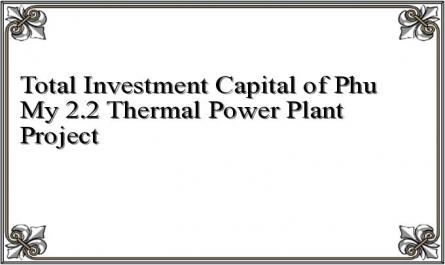
Table 2.6: Total investment capital of Phu My 2.2 thermal power plant project
Financial plan (million USD)
Loan capital | IDA Guaranteed Loan | 75 |
ADB Guaranteed Loan | 25 | |
Loan from ADB | 50 | |
Loan from JBIC | 150 | |
Loan from Propaco | 40 | |
Total loan | 340 | |
Equity | 140 | |
Total investment | 480 |
Maybe you are interested!
-
 Environmental impact assessment of Thanh Minh industrial cluster infrastructure investment project, Phu Tho town, Phu Tho Province - 2
 -
 Increasing capital mobilization from individual customers of commercial banks - Case study of Vietnam Joint Stock Commercial Bank for Investment and Development, Phu Tho Branch - 1
 -
 Domestic Research on Project Investment Management Using State Budget Capital.
 -
 Environmental impact assessment of Thanh Minh industrial cluster infrastructure investment project, Phu Tho town, Phu Tho province - 1
 -
 Solutions for tourism development in Tien Lang - 10
zt2i3t4l5ee
zt2a3gstourism, tourism development
zt2a3ge
zc2o3n4t5e6n7ts
- District People's Committees and authorities of communes with tourist attractions should support, promote, and provide necessary information to people, helping them improve their knowledge about tourism. Raise tourism awareness for local people.
*
* *
Due to limited knowledge and research time, the thesis inevitably has shortcomings. Therefore, I look forward to receiving guidance from teachers, experts as well as your comments to make the thesis more complete.
Chapter III Conclusion
Through the issues presented in Chapter II, we can come to some conclusions:
Based on the strengths of available tourism resources, the types of tourism in Tien Lang that need to be promoted in the coming time are sightseeing and resort tourism, discovery tourism, weekend tourism. To improve the quality and diversify tourism products, Tien Lang district needs to combine with local cultural tourism resources, at the same time combine with surrounding areas, build rich tourism products. The strengths of Tien Lang tourism are eco-tourism and cultural tourism, so developing Tien Lang tourism must always go hand in hand with restoring and preserving types of cultural tourism resources. Some necessary measures to support and improve the efficiency of exploiting tourism resources in Tien Lang are: strengthening the construction of technical facilities and labor force serving tourism, actively promoting and advertising tourism, and expanding forms of capital mobilization for tourism development.
CONCLUDE
I Conclusion
1. Based on the results achieved within the framework of the thesis's needs, some basic conclusions can be drawn as follows:
Tien Lang is a locality with great potential for tourism development. The relatively abundant cultural tourism resources and ecological tourism resources have great appeal to tourists. Based on this potential, Tien Lang can build a unique tourism industry that is competitive enough with other localities within Hai Phong city and neighboring areas.
In recent years, the exploitation of the advantages of resources to develop tourism and build tourist routes in Tien Lang has not been commensurate with the available potential. In terms of quantity, many resource objects have not been brought into the purpose of tourism development. In terms of time, the regular service time has not been extended to attract more visitors. Infrastructure and technical facilities are still weak. The labor force is still thin and weak in terms of expertise. Tourism programs and routes have not been organized properly, the exploitation content is still monotonous, so it has not attracted many visitors. Although resources have not been mobilized much for tourism development, they are facing the risk of destruction and degradation.
2. Based on the results of investigation, analysis, synthesis, evaluation and selective absorption of research results of related topics, the thesis has proposed a number of necessary solutions to improve the efficiency of exploiting tourism resources in Tien Lang such as: promoting the restoration and conservation of tourism resources, focusing on investment and key exploitation of ecotourism resources, strengthening the construction of infrastructure and tourism workforce. Expanding forms of capital mobilization. In addition, the thesis has built a number of tourist routes of Hai Phong in which Tien Lang tourism resources play an important role.
Exploiting Tien Lang tourism resources for tourism development is currently facing many difficulties. The above measures, if applied synchronously, will likely bring new prospects for the local tourism industry, contributing to making Tien Lang tourism an important economic sector in the district's economic structure.
REFERENCES
1. Nhuan Ha, Trinh Minh Hien, Tran Phuong, Hai Phong - Historical and cultural relics, Hai Phong Publishing House, 1993
2. Hai Phong City History Council, Hai Phong Gazetteer, Hai Phong Publishing House, 1990.
3. Hai Phong City History Council, History of Tien Lang District Party Committee, Hai Phong Publishing House, 1990.
4. Hai Phong City History Council, University of Social Sciences and Humanities, VNU, Hai Phong Place Names Encyclopedia, Hai Phong Publishing House. 2001.
5. Law on Cultural Heritage and documents guiding its implementation, National Political Publishing House, Hanoi, 2003.
6. Tran Duc Thanh, Lecture on Tourism Geography, Faculty of Tourism, University of Social Sciences and Humanities, VNU, 2006
7. Hai Phong Center for Social Sciences and Humanities, Some typical cultural heritages of Hai Phong, Hai Phong Publishing House, 2001
8. Nguyen Ngoc Thao (editor-in-chief, Tourism Geography, Hai Phong Publishing House, two volumes (2001-2002)
9. Nguyen Minh Tue and group of authors, Hai Phong Tourism Geography, Ho Chi Minh City Publishing House, 1997.
10. Nguyen Thanh Son, Hai Phong Tourism Territory Organization, Associate Doctoral Thesis in Geological Geography, Hanoi, 1996.
11. Decision No. 2033/QD – UB on detailed planning of Tien Lang town, Hai Phong city until 2020.
12. Department of Culture, Information, Hai Phong Museum, Hai Phong relics
- National ranked scenic spot, Hai Phong Publishing House, 2005. 13. Tien Lang District People's Committee, Economic Development Planning -
Culture - Society of Tien Lang district to 2010.
14.Website www.HaiPhong.gov.vn
APPENDIX 1
List of national ranked monuments
STT
Name of the monument
Number, year of decisiondetermine
Location
1
Gam Temple
938 VH/QĐ04/08/1992
Cam Khe Village- Toan Thang commune
2
Doc Hau Temple
9381 VH/QĐ04/08/1992
Doc Hau Village –Toan Thang commune
3
Cuu Doi Communal House
3207 VH/QĐDecember 30, 1991
Zone II of townTien Lang
4
Ha Dai Temple
938 VH/QĐ04/08/1992
Ha Dai Village –Tien Thanh commune
APPENDIX II
STT
Name of the monument
Number, year of decision
Location
1
Phu Ke Pagoda Temple
178/QD-UBJanuary 28, 2005
Zone 1 - townTien Lang
2
Trung Lang Temple
178/QD-UBJanuary 28, 2005
Zone 4 – townTien Lang
3
Bao Khanh Pagoda
1900/QD-UBAugust 24, 2006
Nam Tu Village -Kien Thiet commune
4
Bach Da Pagoda
1792/QD-UB11/11/2002
Hung Thang Commune
5
Ngoc Dong Temple
177/QD-UBNovember 27, 2005
Tien Thanh Commune
6
Tomb of Minister TSNhu Van Lan
2848/QD-UBSeptember 19, 2003
Nam Tu Village -Kien Thiet commune
7
Canh Son Stone Temple
2160/QD-UBSeptember 19, 2003
Van Doi Commune –Doan Lap
8
Meiji Temple
2259/QD-UBSeptember 19, 2002
Toan Thang Commune
9
Tien Doi Noi Temple
477/QD-UBSeptember 19, 2005
Doan Lap Commune
10
Tu Doi Temple
177/QD-UBJanuary 28, 2005
Doan Lap Commune
11
Duyen Lao Temple
177/QD-UBJanuary 28, 2005
Tien Minh Commune
12
Dinh Xuan Uc Pagoda
177/QD-UBJanuary 28, 2005
Bac Hung Commune
13
Chu Khe Pagoda
177/QD-UBJanuary 28, 2005
Hung Thang Commune
14
Dong Dinh
2848/QD-UBNovember 21, 2002
Vinh Quang Commune
15
President's Memorial HouseTon Duc Thang
177/QD-UBJanuary 28, 2005
NT Quy Cao
Ha Dai Temple
Ben Vua Temple
Tien Lang hot spring
div.maincontent .p { color: black; font-family:"Times New Roman", serif; font-style: normal; font-weight: normal; text-decoration: none; font-size: 14pt; margin:0pt; } div.maincontent p { color: black; font-family:"Times New Roman", serif; font-style: normal; font-weight: normal; text-decoration: none; font-size: 14pt; margin:0pt; } div.maincontent .s1 { color: black; font-family:"Times New Roman", serif; font-style: normal; font-weight: normal; font-size: 16pt; } div.maincontent .s2 { color: black; font-family:"Times New Roman", serif; font-style: italic; font-weight: bold; text-decoration: none; font-size: 14pt; } div.maincontent .s3 { color: black; font-family:"Times New Roman", serif; font-style: italic; font-weight: normal; text-decoration: none; font-size: 14pt; } div.maincontent .s4 { color: black; font-family:"Times New Roman", serif; font-style: normal; font-weight: normal; font-size: 14pt; } div.maincontent .s5 { color: black; font-family:"Times New Roman", serif; font-style: normal; font-weight: bold; font-size: 14pt; } div.maincontent .s6 { color: black; font-family:"Times New Roman", serif; font-style: normal; font-weight: normal; text-decoration: none; font-size: 14pt; } div.maincontent .s7 { color: black; font-family:"Times New Roman", serif; font-style: normal; font-weight: bold; text-decoration: none; font-size: 14pt; } div.maincontent .s8 { color: black; font-family:"Times New Roman", serif; font-style: normal; font-weight: normal; text-decoration: none; font-size: 9pt; vertical-align: 6pt; } div.maincontent .s9 { color: black; font-family:"Times New Roman", serif; font-style: normal; font-weight: bold; text-decoration: none; font-size: 12pt; } div.maincontent .s11 { color: black; font-family:"Times New Roman", serif; font-style: normal; font-weight: normal; tex
Solutions for tourism development in Tien Lang - 10
zt2i3t4l5ee
zt2a3gstourism, tourism development
zt2a3ge
zc2o3n4t5e6n7ts
- District People's Committees and authorities of communes with tourist attractions should support, promote, and provide necessary information to people, helping them improve their knowledge about tourism. Raise tourism awareness for local people.
*
* *
Due to limited knowledge and research time, the thesis inevitably has shortcomings. Therefore, I look forward to receiving guidance from teachers, experts as well as your comments to make the thesis more complete.
Chapter III Conclusion
Through the issues presented in Chapter II, we can come to some conclusions:
Based on the strengths of available tourism resources, the types of tourism in Tien Lang that need to be promoted in the coming time are sightseeing and resort tourism, discovery tourism, weekend tourism. To improve the quality and diversify tourism products, Tien Lang district needs to combine with local cultural tourism resources, at the same time combine with surrounding areas, build rich tourism products. The strengths of Tien Lang tourism are eco-tourism and cultural tourism, so developing Tien Lang tourism must always go hand in hand with restoring and preserving types of cultural tourism resources. Some necessary measures to support and improve the efficiency of exploiting tourism resources in Tien Lang are: strengthening the construction of technical facilities and labor force serving tourism, actively promoting and advertising tourism, and expanding forms of capital mobilization for tourism development.
CONCLUDE
I Conclusion
1. Based on the results achieved within the framework of the thesis's needs, some basic conclusions can be drawn as follows:
Tien Lang is a locality with great potential for tourism development. The relatively abundant cultural tourism resources and ecological tourism resources have great appeal to tourists. Based on this potential, Tien Lang can build a unique tourism industry that is competitive enough with other localities within Hai Phong city and neighboring areas.
In recent years, the exploitation of the advantages of resources to develop tourism and build tourist routes in Tien Lang has not been commensurate with the available potential. In terms of quantity, many resource objects have not been brought into the purpose of tourism development. In terms of time, the regular service time has not been extended to attract more visitors. Infrastructure and technical facilities are still weak. The labor force is still thin and weak in terms of expertise. Tourism programs and routes have not been organized properly, the exploitation content is still monotonous, so it has not attracted many visitors. Although resources have not been mobilized much for tourism development, they are facing the risk of destruction and degradation.
2. Based on the results of investigation, analysis, synthesis, evaluation and selective absorption of research results of related topics, the thesis has proposed a number of necessary solutions to improve the efficiency of exploiting tourism resources in Tien Lang such as: promoting the restoration and conservation of tourism resources, focusing on investment and key exploitation of ecotourism resources, strengthening the construction of infrastructure and tourism workforce. Expanding forms of capital mobilization. In addition, the thesis has built a number of tourist routes of Hai Phong in which Tien Lang tourism resources play an important role.
Exploiting Tien Lang tourism resources for tourism development is currently facing many difficulties. The above measures, if applied synchronously, will likely bring new prospects for the local tourism industry, contributing to making Tien Lang tourism an important economic sector in the district's economic structure.
REFERENCES
1. Nhuan Ha, Trinh Minh Hien, Tran Phuong, Hai Phong - Historical and cultural relics, Hai Phong Publishing House, 1993
2. Hai Phong City History Council, Hai Phong Gazetteer, Hai Phong Publishing House, 1990.
3. Hai Phong City History Council, History of Tien Lang District Party Committee, Hai Phong Publishing House, 1990.
4. Hai Phong City History Council, University of Social Sciences and Humanities, VNU, Hai Phong Place Names Encyclopedia, Hai Phong Publishing House. 2001.
5. Law on Cultural Heritage and documents guiding its implementation, National Political Publishing House, Hanoi, 2003.
6. Tran Duc Thanh, Lecture on Tourism Geography, Faculty of Tourism, University of Social Sciences and Humanities, VNU, 2006
7. Hai Phong Center for Social Sciences and Humanities, Some typical cultural heritages of Hai Phong, Hai Phong Publishing House, 2001
8. Nguyen Ngoc Thao (editor-in-chief, Tourism Geography, Hai Phong Publishing House, two volumes (2001-2002)
9. Nguyen Minh Tue and group of authors, Hai Phong Tourism Geography, Ho Chi Minh City Publishing House, 1997.
10. Nguyen Thanh Son, Hai Phong Tourism Territory Organization, Associate Doctoral Thesis in Geological Geography, Hanoi, 1996.
11. Decision No. 2033/QD – UB on detailed planning of Tien Lang town, Hai Phong city until 2020.
12. Department of Culture, Information, Hai Phong Museum, Hai Phong relics
- National ranked scenic spot, Hai Phong Publishing House, 2005. 13. Tien Lang District People's Committee, Economic Development Planning -
Culture - Society of Tien Lang district to 2010.
14.Website www.HaiPhong.gov.vn
APPENDIX 1
List of national ranked monuments
STT
Name of the monument
Number, year of decisiondetermine
Location
1
Gam Temple
938 VH/QĐ04/08/1992
Cam Khe Village- Toan Thang commune
2
Doc Hau Temple
9381 VH/QĐ04/08/1992
Doc Hau Village –Toan Thang commune
3
Cuu Doi Communal House
3207 VH/QĐDecember 30, 1991
Zone II of townTien Lang
4
Ha Dai Temple
938 VH/QĐ04/08/1992
Ha Dai Village –Tien Thanh commune
APPENDIX II
STT
Name of the monument
Number, year of decision
Location
1
Phu Ke Pagoda Temple
178/QD-UBJanuary 28, 2005
Zone 1 - townTien Lang
2
Trung Lang Temple
178/QD-UBJanuary 28, 2005
Zone 4 – townTien Lang
3
Bao Khanh Pagoda
1900/QD-UBAugust 24, 2006
Nam Tu Village -Kien Thiet commune
4
Bach Da Pagoda
1792/QD-UB11/11/2002
Hung Thang Commune
5
Ngoc Dong Temple
177/QD-UBNovember 27, 2005
Tien Thanh Commune
6
Tomb of Minister TSNhu Van Lan
2848/QD-UBSeptember 19, 2003
Nam Tu Village -Kien Thiet commune
7
Canh Son Stone Temple
2160/QD-UBSeptember 19, 2003
Van Doi Commune –Doan Lap
8
Meiji Temple
2259/QD-UBSeptember 19, 2002
Toan Thang Commune
9
Tien Doi Noi Temple
477/QD-UBSeptember 19, 2005
Doan Lap Commune
10
Tu Doi Temple
177/QD-UBJanuary 28, 2005
Doan Lap Commune
11
Duyen Lao Temple
177/QD-UBJanuary 28, 2005
Tien Minh Commune
12
Dinh Xuan Uc Pagoda
177/QD-UBJanuary 28, 2005
Bac Hung Commune
13
Chu Khe Pagoda
177/QD-UBJanuary 28, 2005
Hung Thang Commune
14
Dong Dinh
2848/QD-UBNovember 21, 2002
Vinh Quang Commune
15
President's Memorial HouseTon Duc Thang
177/QD-UBJanuary 28, 2005
NT Quy Cao
Ha Dai Temple
Ben Vua Temple
Tien Lang hot spring
div.maincontent .p { color: black; font-family:"Times New Roman", serif; font-style: normal; font-weight: normal; text-decoration: none; font-size: 14pt; margin:0pt; } div.maincontent p { color: black; font-family:"Times New Roman", serif; font-style: normal; font-weight: normal; text-decoration: none; font-size: 14pt; margin:0pt; } div.maincontent .s1 { color: black; font-family:"Times New Roman", serif; font-style: normal; font-weight: normal; font-size: 16pt; } div.maincontent .s2 { color: black; font-family:"Times New Roman", serif; font-style: italic; font-weight: bold; text-decoration: none; font-size: 14pt; } div.maincontent .s3 { color: black; font-family:"Times New Roman", serif; font-style: italic; font-weight: normal; text-decoration: none; font-size: 14pt; } div.maincontent .s4 { color: black; font-family:"Times New Roman", serif; font-style: normal; font-weight: normal; font-size: 14pt; } div.maincontent .s5 { color: black; font-family:"Times New Roman", serif; font-style: normal; font-weight: bold; font-size: 14pt; } div.maincontent .s6 { color: black; font-family:"Times New Roman", serif; font-style: normal; font-weight: normal; text-decoration: none; font-size: 14pt; } div.maincontent .s7 { color: black; font-family:"Times New Roman", serif; font-style: normal; font-weight: bold; text-decoration: none; font-size: 14pt; } div.maincontent .s8 { color: black; font-family:"Times New Roman", serif; font-style: normal; font-weight: normal; text-decoration: none; font-size: 9pt; vertical-align: 6pt; } div.maincontent .s9 { color: black; font-family:"Times New Roman", serif; font-style: normal; font-weight: bold; text-decoration: none; font-size: 12pt; } div.maincontent .s11 { color: black; font-family:"Times New Roman", serif; font-style: normal; font-weight: normal; tex
Source: Project finance and Guarantees [60] Related contracts
Based on the investment license granted by the Ministry of Planning and Investment, MECO has signed contracts with Vietnamese partners including:
- The BOT contract signed between MECO and the Ministry of Industry defines the rights and responsibilities of the parties. Under this contract, the Ministry of Industry allows MECO to construct, own and operate the power plant. MECO will transfer ownership of the power plant to the Ministry of Industry after the project has been operational for 20 years;
- Power supply agreement (PPA) signed between MECO and EVN under which MECO will sell electricity to EVN for a period of 20 years;
- The Gas Supply Agreement (GSA) signed between MECO and Vietnam Oil and Gas Corporation (PV) stipulates that PV will supply all the gas needed by the project and stipulates the minimum amount of gas to be purchased from MECO within a period of 20 years. The project is expected to use about 850 million m3 of gas.
101
m3 /year. Gas prices are paid in VND and increase at a rate of 2%/year ;
- Water Supply Agreement (WSA) signed between MECO and Ba Ria - Vung Tau Province Water Supply Company, according to which the project will be provided with clean water and a roadmap for increasing water prices;
- The Land Lease Agreement (LLA) signed between MECO and the Infrastructure Development and Construction Company of Ba Ria - Vung Tau province determines the leased land area, land rental price and MECO will be granted a Certificate of Land Use Rights;
- The Government guarantee is signed between the Ministry of Planning and Investment representing the Government to guarantee the responsibilities and obligations under the signed contracts of Vietnamese partners with MECO, including payment obligations under BOT, PPA, GSA, WSA and LLA contracts. The Government also guarantees the foreign exchange supply for the project, allowing the project to open an account abroad.
In addition to the above contracts, the initiators and DNDA also signed the following contracts:
- The EPC contract was signed between MECO and EDF-CNET, the construction division of EDF. The contract stipulates the fixed cost and the handover date of the power plant;
- Maintenance contract between MECO, EDF and TEPCO under which EDF and TEPCO will support MECO with project operations and maintenance services;
- Long-term service contract signed between MECO and GE International, a major equipment supplier. GE will provide technical support until the first major overhaul in 6 years.
Partial Risk Guarantee of the International Development Association (IDA)
IDA's Partial Risk Guarantee (PRD) covers commercial banks against the risk of principal and interest payments due to the government's failure to fulfill its obligations.
payments under BOT contracts or government guarantees. The main risks covered by IDA include:
- Breach of contract: The Government breached its payment obligations under the BOT contract and government guarantees related to EVN's power purchase, PV's gas supply, etc.;
- Foreign exchange issues related to the government's commitment to guarantee foreign exchange for project debt payments;
- Risk of political system collapse and changes in laws in Vietnam adversely affecting the project and nationalization.
The guarantee agreement with the lending commercial banks defines the type of risk that IDA covers and the mechanism of the guarantee. IDA enters into a project agreement with MECO under which the company agrees to meet the World Bank’s environmental and other requirements. IDA requires a guarantee fee of 0.75% per year on the outstanding balance of the guarantee. At the same time, IDA and the government enter into an indemnity agreement under which the government guarantees to IDA any payments made by IDA under the guarantee agreement.
Project structure
The structure of Phu My 2.2 Thermal Power Plant project is shown in Figure
2.1. From the structure of this project, it is possible to see the following participants and the characteristics of this grant:
- The borrower is Mekong Energy Company Limited (MECO) and not the initiators;
- The initiators are those who support the project in the form of contributing equity capital to establish DNDA (MECO), providing technical support and receiving benefits such as providing equipment, design and construction, and providing maintenance services;
- The loan is co-financed by a multinational financial institution and overseas commercial banks.
- Commercial loans are guaranteed against political risks by IDA under the WB and ADB while loans from development organizations such as ADB, JBIC and Propaco do not require guarantees;
- Contracts that bind responsibilities include: Contract for gas supply for the project from PV, Contract for long-term land lease and clean water supply from agencies under the People's Committee of Ba Ria - Vung Tau province; Contract for electricity consumption from EVN, Contracts for construction, support and provision of technical services from corporations and companies of the initiators, foreign exchange guarantee commitment from the State Bank of Vietnam.
Assessing the success of the funding for the Phu My 2.2 Thermal Power Plant project.
From the practice of negotiating contract structure, guarantee structure, choosing ownership structure and TTDA structure for Phu My 2.2 Thermal Power Plant Project, we can draw lessons from the successful implementation of a TTDA by the participating parties, which is considered a typical success story for TTDA in Vietnam, as follows:
The first is the choice of DNDA ownership structure.
From the figure 2.1 above, it can be seen that DNDA is Mekong Energy Company Limited, established from the capital contribution of 3 owners: French International Electric Power Company (EDF) contributing 56.25% of capital, Japanese International Electric Power Company (TEPCO) contributing 15.625% of capital and Sumitomo Company of Sumitomo Group of Japan contributing 18.125% of capital. These are famous power companies and corporations in the world with a lot of experience in building and operating power plants in the host countries. Thanks to the experience in designing and operating power plants along with abundant financial capacity, the project implementation process took place on schedule and achieved the quality according to the original design. In other words, the
104
EDFI
TEPCO
Sumitomo
56.25%
15.625%
28.125%
Figure 2.1: Phu My 2.2 project structure
Technical Support
Equity contribution
EDF & TEPCO
EDF
JBIC
Propaco
150 million USD
140 million USD
Company Limited
The oranges
contract
Design & Construction
Equipment supply
COFIVA,
Sumitomo
40 million
Energy
Technical service
ADB
Commercial Loans
USD
50 million USD
Debt 340 million USD
Mekong - MECO Ltd.
Purchase Contract Share
Gas supply
technique
General Electric
(SG, ANZ,
Sumitomo Mitsui)
100 million
USD
electricity
CS HT
Land and
water
Petro Vietnam
BR-VT People's Committee
75 million USD
25 million USD
Risk insurance
Electricity Corporation
Swap Guarantee
WB ADB
politics
Vietnam (EVN)
money
State Bank of Vietnam
Source: Project finance and Guarantees [60]
105
Choosing investors with strong financial potential and reputable construction contractors and equipment suppliers has helped sponsoring banks significantly limit risks that may occur during the construction phase of the project.
The second is the selection of the financing structure for the Phu My 2.2 Thermal Power Plant Project.
Also from Figure 2.1. above, it can be seen that the financing structure chosen by the parties for the Phu My 2.2 Thermal Power Plant Project is a co-financing structure between development organizations and commercial banks. Specifically, the Phu My 2.2 Thermal Power Plant Project was co-financed by the Asian Development Bank (ADB), the Japan Bank for International Cooperation (JBIC), the French Development Agency (Propaco), and commercial banks including: ANZ Investment Bank, Société Générale and Sumitomo Muitsui Banking Corporation. As mentioned in section 1.3.7.5 of chapter 1 on the co-financing structure with the WB and development banks, one of the advantages for commercial banks when participating in co-financing with development banks is to be assured of political risks and the issue of debt repayment pressure from development banks. On the other hand, development banks are also well-known organizations and have a lot of experience in arranging funding for many projects in many countries around the world. In other words, the participation of development banks in co-financing for investment projects in developing countries will lead to an increase in the success rate of many TTDA projects.
Third is the issue of structuring contracts.
To ensure the success of the project construction and operation process, the participating parties must sign a series of input and output contracts for the project, including: Construction contract signed between MECO and TEPCO and Equipment supply contract with EDF, Gas supply contract for the project from PV, Long-term land lease contract and clean water supply from agencies under the People's Committee of Ba Ria - Vung Tau province; Electricity offtake contract from EVN, support and provision of technical services (repair, maintenance, repair, spare parts replacement,
106
etc.) from the corporations and parent companies of the project initiators. It can be said that these are necessary and important contracts to ensure the full supply of input factors for the construction and operation of the project. On the other hand, EVN also guarantees to purchase all electricity output to ensure that the project generates enough cash flow to repay the financing banks.
Fourth is the issue of guaranteeing funding banks.
To provide necessary guarantees to the investor (owner of the DNDA), the Government of Vietnam guarantees the responsibilities and contractual obligations of the Vietnamese partners with MECO, including payment obligations under the BOT, PPA, GSA, WSA and LLA contracts. The Government also guarantees the foreign exchange supply for the project, allowing the project to open accounts abroad. The commercial loans of commercial banks are guaranteed by IDA under the World Bank and ADB for political risks, including the government's breach of payment obligations under the BOT contract and government guarantees related to the offtake of electricity by EVN, the supply of gas by PV, foreign exchange commitments, changes in Vietnamese laws that adversely affect the project and nationalization. However, the Government of Vietnam must sign with IDA a contract to indemnify any payments made by IDA under the guarantee contract with commercial banks.
2.3.4.2. Phu My Bridge BOT Project
If the Phu My 2.2 Thermal Power Plant Project is considered one of the typical successes that the TTDA method brings to Vietnam, on the contrary, the Phu My Bridge BOT Project in Ho Chi Minh City is considered one of the typical failures of applying the TTDA method in Vietnam. From this project, the main contents can be summarized as follows [39]:
Necessity of the project
Phu My Bridge Project is a project to build a bridge over the Saigon River with the aim of completing the belt road according to the socio-economic development plan.