
6. Structure of the topic
This topic is also structured into three main parts, including: introduction, content and conclusion. In which, the main content of the topic is divided into 03 chapters, respectively:
- Chapter 1: Some theoretical issues about the company and the responsibility of the parent company.
- Chapter 2: Inadequacies of the parent company - subsidiary model and regulations of countries on the responsibility of parent companies.
Maybe you are interested!
-
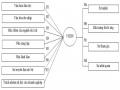
 Corporate Social Responsibility (Csr) Has Positive Impact on Building and Developing Corporate Culture
 -
 The relationship between social responsibility, green marketing strategy, corporate reputation and business performance - Research on tourism and travel businesses in Ho Chi Minh City - 24
 -
 Factors Affecting Corporate Social Responsibility
 -
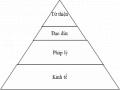 Corporate Social Responsibility Content of Travel Agencies
 -
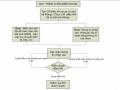 Current Status of Corporate Social Responsibility Activities at Vib International Bank
- Chapter 3: Some recommendations on improving the law on the responsibility of parent companies for the actions of subsidiaries and notes for groups of companies and related entities.
CHAPTER 1
SOME THEORETICAL ISSUES ON COMPANIES AND RESPONSIBILITIES OF PARENT COMPANIES
1.1. Theory of the firm and the emergence of corporate groups
1.1.1. Legal status and limited liability
Discussing the responsibility of the parent company for the actions of its subsidiaries, it is necessary to understand two basic principles in the theory of companies: "legal personality" and "limited liability". These are perhaps the fundamental theories of companies that the laws of most countries in the world today recognize and the history of corporate law or corporate law of every country is closely linked to these two basic principles.
In the early days of corporate history, people with similar business needs gathered together, organized business together, and shared the benefits and risks of common business activities. The company they established at this time was like a mechanism to help the operation and division of profits among the capital contributors easily and conveniently. Individuals participating in the establishment of the company still had to bear unlimited responsibility for the obligations of the company because there was no separation of subjects between the company and the founder of the company. Along with the development of the economy, business gradually became more complicated and risky, causing company owners to gradually become more hesitant and cautious when deciding to establish a company and invest capital in business. In order to promote investment for economic growth, lawmakers have come up with a solution to overcome this fear of investors, which is to create a mechanism to protect investors from the risks they may encounter in the transactions of the company in which they contribute capital. That mechanism is to allow investors not to bear unlimited responsibility for the company's activities. Accordingly, the investor's liability for the company's debts is limited to the amount of capital contributed, when the capital is fully contributed, the investor does not have to bear any additional responsibility for the company's activities. To ensure this limited liability, the company has been considered by lawmakers as an independent entity from the person who contributed capital to establish it, which in legal science is called "status".
“legal entity”, a corporate veil that protects the people behind the company.
In the Anglo-American legal system, the case of Salomon v. Salomon & Co. Ltd in 1897 in England is considered a milestone that opened a period of flexible and thorough application of the principle of independent legal entity for companies. Salomon & Co. Ltd was established by shoemaker Salo . mon with most of his assets and the company's business activities were also carried out by Mr. Salomon himself. However, the court affirmed that Salomon was an independent entity, separate from its founder . Therefore , the company was the only entity that had to bear responsibility for the company's creditors while Mr. Salomon did not have to bear responsibility . This precedent affirms two basic contents that were later inherited and applied by courts under the common law system as well as the laws of countries under the civil law system: First, a company is a legal entity that exists independently and separately from the people who founded the company, therefore, it has its own legal rights and obligations (which is the legal entity status ) ; Second, the responsibility of the company owner is limited to the capital that he has invested in the company (limited liability).
To better understand “legal status” and “limited liability” before going into the main issues, this essay will devote a part of the content below to exploring the legal origins of these two concepts.
1.1.2. Limited liability and the meaning of limited liability
Limited liability is a privilege mechanism that the law has given to investors to remove their concerns when deciding to contribute capital to a company and conduct business activities. Limited liability here is the responsibility of the person behind the company, not the responsibility of the company. The company is of course responsible for all its assets for business risks, while the capital contributors only lose the amount of money they have invested in the company if the company makes a loss.
Up to now, limited liability seems to have become a fundamental theory in legal science and is widely recognized in Vietnam. Indeed, right from the 1990 Law on Companies, and later to the generations of Enterprise Law on
The following continue to affirm this principle. Specifically, the Enterprise Law 2020 mentions this principle as follows:
- Members of a limited liability company with two or more members “are responsible for the debts and other property obligations of the enterprise within the scope of the capital contributed to the enterprise” 2
- Members of the board of members of a limited liability company “are responsible for the debts and other financial obligations of the company within the scope of the capital contributed to the company” 3
- The owner of a single-member limited liability company “is responsible for the debts and other property obligations of the company within the scope of the company's charter capital” 4
- Shareholders of a joint stock company “ are only responsible for the debts and other financial obligations of the enterprise within the scope of the capital contributed to the enterprise” 5
- For a partnership, “a capital contributor is an organization or individual and is only responsible for the company's debts within the scope of the capital committed to contribute to the company” 6 and a capital contributor has the obligation to “Be responsible for the company's debts and other financial obligations within the scope of the capital committed to contribute” 7 .
The provisions of Vietnamese law on the principle of limited liability have certainly been built on the basis of inheritance from advanced legislative systems in the world. However, determining the origin of the formation of the limited liability mechanism has never been easy for researchers. According to the authors J. Mickletwait and A. Woolridge of the book "The Company - A short History of a revolutionary idea" published by The modern library of New York in 2003, signs of the formation of a company were recorded from about 3,000 years BC, from
2 Clause 1 Article 46 Enterprise Law 2020
3 Clause 1 Article 50 Enterprise Law 2020
4 Clause 1 Article 74 Enterprise Law 2020
5 Point c Clause 1 Article 111 Law on Enterprises 2020
6 Point c Clause 1 Article 177 Law on Enterprises 2020
7 Point a Clause 2 Article 187 Law on Enterprises 2020
.
.
.
.
.
Assyrians, Phoenicians and Greeks 8 . But it was not until ancient Roman times that
Limited liability was first developed in co . rpo . ra or c . ol . l . eg . ia (“company” in Latin). The development of limited liability then went hand in hand with the emergence and strong expansion of joint stock companies in the United States and throughout Europe 9 . However, in England, limited liability was initially applied only to the international business sector. It was not until 1441 that the mechanism of limited liability was more fully granted to a few cases in this country. Meanwhile, in the United States, the mechanism of limited liability was widely applied and helped the US States attract a lot of investment capital to develop production. Faced with the development of the US economy, Britain could not continue to stay out of the game, so it enacted the Limited Liability Act in 1855 to widely apply the limited liability mechanism to promote economic development. In some other European countries such as France, the regulation on limited liability was behind the US and the UK when the limited liability company law was not born until 1863.
However, even when countries had legal institutions of limited liability, the full concept of this principle was still much debated. As the introduction to legal personality and limited liability in the essay mentioned, it was not until the case of Salomon v. Salomon & Co. in 1897, decided by the House of Lords of England, that the concept of limited liability was solidified. This case was later considered a landmark case and the foundation of modern corporate law.
Economically, the limited liability mechanism is an effective mechanism to encourage investment and promote the economy. In addition to the ability to attract social resources into economic activities, the limited liability mechanism has created a transfer of financial risks from investors to the company's creditors. When investors contribute capital to the company, they are willing to accept the risk of that amount of money, while partners or creditors when dealing with the company clearly identify the company as their debtor.
8 Nguyen Ngoc Bich, Nguyen Dinh Cung (2009), Company, capital, management and disputes, Tri Thuc Publishing House, Ho Chi Minh, page 32 to page 37
9 Ngo Huy Cuong (2013), Commercial Law Textbook - General and Merchants, Hanoi National University Publishing House, page 157
and thus have the motivation to monitor the company's operations more closely. The efficiency of business operations is thus more assured.
On the other hand, when dozens or hundreds of people can contribute capital to a company but only a few of them actually participate in the operation and management of the company, there will be investors who will be in a situation where their assets are at the disposal and use of others . The limited liability mechanism at this time is meant as a fair guarantee among investors, so that those who are not or cannot directly participate in the operation of the company will only have to bear the risk of the company's decisions within the scope of the amount of money they have invested in it. That is when the company becomes separate from the investors and becomes a screen to protect the investors behind it.
1.2. Group of companies
1.2.1. The emergence of corporate groups
The history of the world economy has shown that the two basic principles of legal personality and limited liability in corporate legal science have helped the world economy to develop rapidly. These two principles have also contributed to promoting the emergence of corporate groups and their gradual popularity in the world. Because, when the economy develops, the need to expand production and business to maximize benefits while ensuring risk control within the scope of what they have spent is what every investor desires.
Logically, as an independent entity with full capacity to participate in economic relations, companies themselves can also become investors. Therefore, the laws of countries have allowed companies to use their own assets to establish or contribute capital, buy shares of other companies. In the United States, New Jersey was the first state to grant this right to companies in 1889 10 . After that, other states also added this provision to their corporate laws. Since then, investors have taken full advantage of the limited liability mechanism to expand their business. They use the companies they established to establish
10 Nguyen Thi Phuong Thao (2021), “Applying the mechanism of “piercing the corporate veil” to groups of companies – experience from the UK, the US and recommendations for Vietnam”, State and Law Magazine No. 1/2021, page 46.
Other companies and groups of companies began to be formed. At this time, the principle of limited liability showed its legal significance more clearly than ever. Limited liability applied not only to individual investors but also to companies as members, shareholders or owners of capital of other companies in the group of companies.
It can be said that corporate groups are the most thorough, flexible and smooth application of the theories of legal status and limited liability. It is limited liability and legal status together with the need to accumulate production that have created the trend of forming and developing corporate groups, turning it into a "phenomenon of the 20th century" 11 . Entering the 21st century, corporate groups are increasingly developing stronger with cross-border investment and share purchase. Many parent companies, subsidiaries, and member companies around the world form multinational corporate groups. In which, companies that own shares, capital contributions or controlling rights over other companies become "parent companies" and controlled companies become "subsidiaries".
1.2.2. Concept and characteristics of corporate group
1.2.2.1. Concept
Before the emergence of the corporate group model and its role in the development of world economies, many countries have built legal institutions to generalize the corporate group model as well as to regulate the relationship between members of the corporate group, especially the relationship between parent companies and subsidiaries.
The concept of “group of companies” is most often mentioned in companies’ laws or tax laws. Some countries define “group of companies” very simply. For example, the Companies Act 2014 of Ireland defines “a group of companies as a parent company and one or more of its subsidiaries” 12 . Or according to the Companies Act of Finland, “ a group of companies is formed when there is a company
11 Ho, Virginia Harper (2012), Theories of corporate groups: corporate identity reconceived, Seton Hall
L. Rev. 42: page 879.
12 Section 3, Article 8, Part 1 of the Companies Act 2014 of Ireland. Electronic version available at: https://www.irishstatutebook.ie/eli/2014/act/38/section/8/enacted/en/html, accessed: 15/11/2021
limited liability company that has a dominant influence over another domestic or foreign organization” 13
In the Republic of South Africa, the Companies Act 2011, as amended, refers to “a group of companies as a parent company and all its subsidiaries” 14 , along with definitions of the concepts of “parent company” and “subsidiary company” . Meanwhile, the Income Tax Act 1962 of the same country has a more comprehensive definition of a group of companies. Accordingly, a group of companies means a collection of two or more companies in which one company (“controlling company”) directly or indirectly holds shares in at least one other company (“controlled company”); at the same time, the controlling shareholding ratio is prescribed by this law as 70% of the total shares of the controlled company 15 .
In Vietnam, the concept of a corporate group first appeared in the 2005 Enterprise Law. Specifically, Clause 1, Article 146 of the 2005 Enterprise Law defines “A corporate group is a collection of companies that have a long-term relationship with each other in terms of economic interests, technology, market and other business services” . However, this definition is still very flawed when it does not mention the nature of the relationship between companies in a corporate group, which must first of all be a relationship of ownership of capital and assets of each other. From there, there is a relationship of economic interests as well as other relationships within the corporate group.
When the 2014 Enterprise Law replaced the 2005 Enterprise Law, Vietnamese lawmakers overcame this shortcoming by calling economic groups and general corporations “groups of companies related to each other through ownership of shares, capital contributions or other connections” 16 . This concept more accurately reflects the nature and basis for the formation of corporate groups and therefore continues to be valuable today, and is therefore retained in the 2020 Enterprise Law.
13 Seppo Penttilä (2009), Tax Aspects of Groups of Companies – Finnish Experiences , Stockholm Institute for Scandianvian Law, page 4
14 The Companies Act 2008, as amended in 2011 of the Republic of South Africa (electronic version available at website: https://www.justice.gov.za/legislation/acts/2008-071amended.pdf, accessed date: 15/11/2021 )
15 South African Revenue Service, 2020, Explanatory Note No. 75 to the Income Tax Act No. 58 of 1962 (Electronic version available at: https://www.sars.gov.za/wp-content/uploads/Legal/Notes/LAPD-IntR-IN-2013-08-IN75-Exclusion-of-Certain-Companies-and-Shares-from-Group-of-Companies-s41.pdf, access date: November 15, 2021 )
16 Clause 1 Article 188 Law on Enterprises 2014.