
On the other hand, the time to build real estate is long, from the stage of finding information about land, completing transfer procedures, applying for construction permits, designing, constructing, handing over ... so even if the market has a very large demand, in a short time the supply cannot meet it in time. In the long term, the supply will only increase to a limited extent because land is scarce while demand is always increasing.
1.2.2.7. The real estate market is closely related to the financial market.
main
Real estate is a special commodity with high value, so real estate transactions are very important.
Real estate often has a huge demand for capital. Therefore, to have capital to trade in the real estate market, it must be related to a similar amount of capital in the financial market in different forms of transfer. That shows that without a healthy and stable capital market, there cannot be a stable and healthy real estate market.
Maybe you are interested!
-

 Development Orientation of Vietnam's Real Estate Market
 -
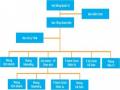 Characteristics of the Real Estate Market at the Present Time
 -
 Real Estate Market Lacks Professionalism and Complicated Procedures
 -
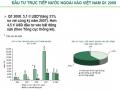 Forecasting the Development of the Real Estate Market
 -
 Developing the real estate business market of FLC Group Joint Stock Company - 7
When the real estate market is in crisis, it will lead to stagnant capital and bad debts of banks will increase, leading to financial crisis. Conversely, financial crisis will also strongly affect the real estate market. These two markets have a close relationship with each other in the economy.
1.2.2.8. Real estate transactions require professional, highly qualified consultants.

The real estate market is a difficult market to grasp. Therefore, when participating in the market, it is necessary to have careful calculations and at the same time, need to consult with professional brokers, so that risks and losses can be avoided. These experts have been trained, have expertise, experience in understanding the market and have practice certificates.
Real estate market classification
Based on the type of real estate transaction
- Real estate market: is the earliest type of transaction along with the birth of land ownership. This market is growing stronger and stronger.
- Real estate rental market: The lessor transfers the right of use to the lessee. Each party must fulfill its obligations and responsibilities according to the signed contract .
- Real estate market used as collateral
- Real estate market used as joint venture capital
- Real estate market used as insurance
Based on property type
- Housing market
- Land market
- Office market
- Commercial real estate market
- Industrial real estate market
- Special real estate market
2. Factors affecting the development of the real estate market
2.1. Economic development
Economic development is one of the important driving forces to promote the development of the real estate market. The economic development of a country increases the demand for land use for various construction purposes such as the demand for production and business facilities, infrastructure, roads, hospitals, entertainment areas, commercial centers, etc.
The proportion of agriculture tends to decrease and the proportion of industry and services increases. This is an inevitable trend today. This structural shift causes the land area currently used for agricultural purposes to be converted to industrial and commercial purposes ... This is reflected in the growing number of commercial, economic, tourist and entertainment areas, increasing real estate transactions and promoting the development of the real estate market.
Furthermore, when the economy develops, science and technology in general and construction technology in particular also develop, creating factors that directly impact the creation of new real estate, suitable for the requirements of the product.
production, trade, services as well as life. That process, on the one hand, creates new goods, on the other hand, it is also the process of transforming old real estate into new goods that are more suitable for production, business and people's lives. However, the innovation cycle of real estate may be much slower than other common goods, but this is also one of the important factors promoting transactions, exchanges, and real estate sales to increase as the economy develops.
On the other hand, economic development and scientific development have created higher labor productivity, increasing people's real income. That also creates factors that increase the demand for real estate, so transactions in the market will also increase.
2.2. Population growth
Population growth will increase the demand for real estate, first of all the demand for housing. The population is increasing in both size and quantity while land fund is limited. This makes the real estate market more vibrant and also pushes up real estate prices, especially in big cities and urban areas.
As the population increases, the labor force also increases, inevitably leading to the need to expand the scale of production and business, meeting the demand for goods and jobs for the people. However, the land area for industry is not much, forcing the conversion of land from agriculture, creating great pressure on housing and land for production and business.
Population growth will simultaneously lead to increased demand for social activities, services, commerce, hospitals, schools, roads, cultural activities, sports, entertainment... These demands are all causes of increased demand for real estate, especially the demand for land for roads, construction of schools, hospitals, parks, commercial centers... All of these have directly and indirectly promoted the real estate market to expand and develop.
2.3 . Legal factors
The legal system of a country regulates issues of land ownership and use, regulates the rights to buy, sell, rent and lease, mortgage real estate, etc. , guides the stages of real estate transactions, and regulates taxes related to real estate. Therefore, the law is an indispensable factor in the formation and development of the real estate market.
According to the regulations of the Vietnamese State, land is the property of the entire people but is managed by the State, organizations and individuals only have the right to use. The 1987 Land Law stipulates that " the buying and selling, encroachment on land, and land rent collection in any form are strictly prohibited ". Thus, at that time, the law did not allow trading in land use rights (real estate). By 1993, the transfer of land use rights was further specified. In Clause 2, Article 3 of the 1993 Land Law stipulates: " Households and individuals assigned land by the State have the right to convert, transfer, lease, inherit, and mortgage land use rights ". These rights can only be exercised during the land allocation period.
Thus, the Vietnamese real estate market began to be officially recognized and developed strongly. The Land Law was amended many times in 1998, 2001, 2003 and recently in 2006, adding a number of real estate rights such as sub-leasing or capital contribution with land use rights. In addition, the 2006 Real Estate Business Law was issued to facilitate real estate businesses with a more complete legal framework.
Together with the provisions of the Land Law, taxes in the land sector will form a unified entity to help the State manage land, promote the development of the official real estate market, regulate the supply and demand of real estate in the market, on that basis, make the real estate market develop. Those taxes are land and housing tax, resource tax, agricultural land use tax, land use right transfer tax, etc.
Thus, it can be said that the real estate legal system has created an increasingly complete legal corridor, creating conditions for the real estate market to operate and develop.
2.4. State economic policy, planning and land use plans
The economic policy, planning and land use plan of the State are also factors affecting the real estate market. A country planning and forming key economic zones such as industrial parks, export processing zones, etc. will lead to a series of other real estate needs such as the need for bridges, roads, ports , etc., public works such as parks, commercial areas, shopping malls, entertainment areas , etc. That will attract domestic and foreign investment capital. Localities base on the State's master plan to conduct land planning in their localities.
Investment incentive policies and favorable conditions for production and business establishments have increased the demand for real estate. In addition, the Government and authorities at all levels have also issued housing policies in general and housing policies for the poor, low-income earners, and social policy beneficiaries . These policies also partly affect the supply and demand for housing and residential land.
The government can also allow domestic and foreign organizations and individuals to invest in construction, infrastructure business, building houses for sale or rent ... The expansion of the participants in the real estate market also affects the development of the market.
Land use planning and planning is the planning of land use purposes for each region and each locality. That can change the nature and purpose of land use in that area as well as neighboring areas. This is also a factor affecting the supply and demand of land in particular, and real estate in general.
Our country is in the process of industrialization, so it is inevitable to be urbanized. The number of cities is increasing, the population and population density there are increasing, leading to a series of problems such as increased housing demand, increased living, working and resting needs. The urbanization process is not
Not only does it increase the number of real estate transactions in major cities, but it also changes the real estate structure.
2.5. Customs, traditions and tastes
In other markets such as the common goods market, the labor market or the capital market, the influence of customs, traditions and tastes is usually not large, but for the real estate market, this is an important influence. It can be said that customs, traditions and tastes are humanistic factors of the real estate market.
The customary factor directly affects the transactions of buying, selling, leasing, and mortgaging in the real estate market, accelerating or limiting transactions in aspects such as ensuring trust between buyers and sellers, leasing and renting parties , etc. On the other hand, it affects the use of means and forms of payment. That affects the speed and accuracy of the payment process.
In Vietnam, for a long time, according to customs and practices in some regions, real estate transactions only require handwritten documents, and in some regions, only documents certified by the People's Committee of the commune (ward) where the resident resides are required. Meanwhile, in some countries, the habit of invoices and documents in transactions is indispensable, so any real estate buyer must check all documents before proceeding with the transaction and the transaction must also be in accordance with the provisions of law.
Tastes also affect the real estate market mainly in terms of tastes in housing and land. Not only that, whether the architecture, design, and interior match the tastes of buyers or not is also an important factor. Therefore, in order to develop the real estate market, it is necessary to understand the tastes of the people.
3. Indicators reflecting the development of the real estate market
3.1. Number of transactions in the real estate market in a unit of time
Whether a market is developed or not is shown by the number of transactions on that market increasing or not over time. This indicator can be calculated by the number of transactions or the number of trading sessions. Currently, the main transactions on the market are:
Real estate transactions:
This is the activity of buying and selling land use rights and housing ownership. This transaction is the earliest transaction among all types of transactions. Historically, the buying and selling and exchanging of land appeared almost simultaneously with the appearance of private ownership of means of production and private ownership of land.
Up to now, when the market economy is developing, the buying and selling and exchanging of real estate has not only become popular but also contains regional and global factors. Real estate transactions are not only conducted directly between buyers and sellers but real estate is also bought and sold through real estate brokerage companies. That has made the number of real estate transactions constantly increase.
Real estate leasing and rental transactions:
Real estate is often valuable, so not everyone has the money to buy it. In addition, the procedures and documents for buying and selling real estate are quite complicated. That is why leasing and rental transactions are becoming more and more popular to meet people's needs.
Real estate leasing and rental transactions in the early days also started from people with idle real estate to people in need of real estate for rent. But as the economy developed, many companies separated to specialize in real estate leasing, mainly houses, offices, parking spaces ...
Like other services, real estate rental prices are formed by the relationship between supply and demand for rental real estate. Real estate rental and leasing transactions can be conducted directly between the real estate owner.
real estate for rent and people who need to rent real estate or through real estate brokerage intermediaries. Real estate leasing and rental transactions have enriched and diversified the real estate market.
Joint venture capital contribution transactions using land use rights and other real estate:
This is a new type of transaction in the market, but it reflects the speed of economic development. Because when cooperating internationally, developing countries like Vietnam can use land and fixed assets to contribute capital. This is an advantage to attract foreign investment capital.
3.2. Development of real estate market participants
As the real estate market develops, more entities will participate in the market. The entities participating in the market include:
Individual:
Individuals are the subjects with the highest participation rate in the real estate market. Individuals who own real estate participate in the market as sellers, lessors, joint venture investors , etc. In addition, those who have the need to use real estate for living or business purposes will participate in the market as buyers, lessees, joint venture investors , etc.
Economic organization:
These organizations participate in the market as buyers or sellers, joint venture investors or joint venture capital recipients... Factories, businesses, and manufacturing facilities that want to expand their production scale or business location will buy back or lease, receive capital to do real estate business. At the same time, there are also businesses that own real estate that want to sell or lease to diversify real estate on the market.
State:
The state participates in the real estate market with many functions.