
Colonial inspection was very strict. Therefore, with this subject, the level of laughter was mainly at the satirical and ironic level, having to "fight the enemy" in a lower position than it .
We need to add that: according to survey table 2.1, the works that directly satirized French colonialism before the August Revolution in 1945 were not published much. However, scattered in many works, we encounter Tu Mo's rebellious thoughts and fierce opposition to colonialism. In particular, there are many articles before the revolution, after the Japanese coup against France, which have or have not been published in newspapers, have not been printed in the three volumes of Upstream Water, later collected into Upstream Water - Ngoai Tap , and directly criticized the Protectorate colonialism! We do not include these works (7 works) in statistical table 2.1, but will use them as evidence for this research section.
The complete works of Tu Mo that we used when researching this topic had many lines and verses that were cut out by “Lady Kiem”. Those were lines of poetry that “offended” the motherland of Great France, otherwise they would have escaped censorship. The fact that Tu Mo was happy to send Lady Kiem back to France also implicitly satirized the excessive strictness of the colonialists to “cover up the evil”:
Hand holding a rough blue pencil, ready to cross out and erase, Eyes wearing curious white glasses, just scrutinizing and looking for mistakes.
The writing is straightforward, but she plays tricks and twists the meaning. The truth is naked, but she covers it up and forbids anyone from knowing.
( Farewell to Mrs. Kiem )
Condemning the unreasonable taxes that people had to bear, and speaking frankly about the nominal nature of democratic freedom in Annam, Tu Mo expressed his anti-colonial ideology, sometimes with bitter laughter:
Freedom and democracy are at a disadvantage
But better than others… high taxes!
( Pay personal tax )
Wise and creative, using the form of "A letter about the people's petition", through the words of Skinny Lady in Bac Ha urging Tu Mo to speak up, Tu Mo made people see that the French colonialists were performing a political farce:
Now France sent a committee to represent us, but why is Mr. Tu still silent?
All the people and soldiers were chirping like birds,
The people's petition, exposed the liver, heart, intestines, kidneys, and lungs. They organized the Indochina Congress.
To group including North, Central and South domination.
( With Mr. Tu Mo )
The colonialist nature of exploitation and fake democracy and freedom was exposed by Tu Mo through a childish game: seeing his mother coming home from the market to share the cakes, the child "whimpered and demanded the biggest share, the best piece". The colonialist is the FATHER, eating everything:
The cake is for his father to eat.
(Reply to Skinny Lady)
We believe that to make public a work that mocks colonialism and passes censorship, such insinuations are already bold!
It was only after the Japanese coup against the French (March 19, 1945) that Tu Mo was able to freely criticize the colonialists. The most gleeful was the Protectorate Funeral Oration: “ The West is extremely… humiliated, your soul has returned/ Our country is liberated, my heart is elated ”. After that, poems such as the Song of the Flared Lagoon were made public:
It is no wonder that the West is cunning, Freedom is only in statues and things.
Statue of Bon Be - the first Governor General of Indochina: Stop ridiculing each other.
Destroy the coffin, bring bronze to cast bullets.
Tu Mo exposed the colonialists' Freedom, Equality, and Fraternity in the poem of the same name:
How sacred the slogans are, They only display them to cover up greed.
But it's hard to fool the world...
With his intelligent, unique and sharp laughter, Tu Mo unmasked the colonialists, the weak feudalists and warned the Vietnamese traitors who followed the West. The nature of “protection, enlightenment, civilization”, “freedom, equality, and charity” was to implement the policy of keeping people ignorant to make it easier to rule, weakening the Vietnamese race with alcohol, opium and vices of debauchery, oppressing and exploiting the people to the point of “the ragged loincloth becoming even more ragged”. Tu Mo denounced the deceitful political tricks behind the “protection” and “civilization” of the French colonialists.
In short, before the August Revolution in 1945, Tu Mo's satirical poetry had a correct direction, standing on the side of the people. Depending on the target, his poetry had a suitable level of laughter, attracting and gathering public opinion. However, Tu Mo also revealed some limitations in vision, for example, he had not yet recognized the true face of Japanese fascism, had not yet attacked this target, it was not until later that Tu Mo revealed his thoughts to that target. In addition, with some new things in society, Tu Mo expressed his laughter not quite to the right target. For example, allowing women to study and become lawyers, the fact that "women are also allowed to enter the mandarin office" ( Cô... Trạng, Quan Đàn Bà ) - today we see these as normal and encouraging things. Besides, sometimes his laughter is not very appropriate, like Nguyen Van To's mockery of "hair bun and lice" which is influenced by the cheerful, frivolous and petty bourgeois ideology.
2.2.2. The subject of laughter in Tu Mo's poetry after the August Revolution in 1945
The social situation in Vietnam after the August Revolution in 1945 was very new: the country was independent and free, we built literature and art following the Party's guidelines.
Literature is also considered a weapon of revolutionary struggle. During the thirty years of resistance against French colonialism and American imperialism, Vietnamese literature focused on carrying out political tasks, encouraging fighting spirit and reaching out to the masses. The 1943 Vietnamese Cultural Outline set out three mottos: national, scientific and popular. Since the national resistance war, Tu Mo has carried a backpack throughout the nation's struggle, serving the resistance as a soldier on the ideological and cultural front. Compared to before the revolution, our poet has matured a lot, understood and overcome the limitations in his ideology. Poet Xuan Dieu assessed: "Thirteen volumes of poetry, eight cheo, tuong, and drama plays... Tu Mo is the poet who wrote the most during the resistance war" [6, 203]. The subject of laughter in Tu Mo's poetry also changed with the times. Not “ Laughing out loud, to pour out from my heart/ The resentments that seemed to suffocate me ” ( Looking back, laughing at myself ), Tu Mo’s laughter was also sharper and stronger. The poems that pointed sharp points at the enemy formed the collections of Smiles of Resistance, Smiles of Righteousness, and Pen; the heroic examples of the people were gathered in Endless Hero… Truly a “pen that never knows fatigue”, worthy of being “an old warrior of the literary world” [6, 204]. Van Tan evaluated each of Tu Mo’s satirical poems as a spiritual arrow that had the effect of disintegrating the enemy and inspiring the people.
We examine the subject of laughter in Tu Mo's poetry during this period in the following poetry collections: Resistance Smile (1952) , Righteous Smile (1958) , and Pen Stroke (1962) . We chose these three poetry collections because they represent Tu Mo's creative periods, clearly expressing the poet's thoughts and artistic style; we also do not examine all of his post-revolutionary poetry collections within the framework of this thesis.
Total number of poems
French Colonialism and American Empire | Traitors and puppet government | Bao Dai, Vinh Thuy | French generals, American presidents | Ngo Dinh Diem and his gang | The puppet presidents, General Cao Ky | Praising the resistance spirit of the people people | International fighting spirit | |
NCKC 112 ( 36.6%) | 47 (41.5%) | 13 (11.5%) | 13 ( 11.5%) | 13( 11.5% ) | 4 (4%) | 0 | 20 (18%) | 2 (2%) |
NCCN: 74 (24%) | 20 (27%) | 21 (28.5%) | 0 | 0 | 29 (39%) | 0 | 4 (5.5%) | 0 |
DB: 120 (39.4%) | 66 (55%) | 6 (5%) | 0 | 19 (15.5%) | 2 (2%) | 15 (12.5%) | 12 (10%) | 0 |
3 episodes: 306 (100%) | 133 (43%) | 40 (13.5%) | 13 (4%) | 32 (10.5%) | 35 (11%) | 15 (5%) | 36 (12%) | 2 (1%) |
Maybe you are interested!
-
 Tran Than Tu's School of Poetry, According to Phuong Dinh's Rhyme, Part 1 (Tran Than Tu's School of Poetry, According to Phuong Dinh's Rhyme, Part 1)
 -
 Learning the art of Han Mac Tu's poetry - 13
 -
 Learning the art of Han Mac Tu's poetry - 2
 -
 Truong Tuu's prose in the process of Vietnamese literature in the early 20th - 20th centuries
 -
 The Concept of Feminist Consciousness in Vietnamese Women's Poetry from 1986 to Present
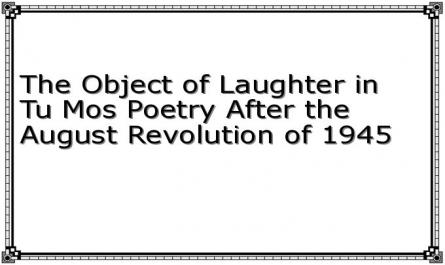
Table 2.2. Statistics of the number of works in each laughter subject in " Resistance Smile" (NCKC), "Righteous Smile" (NCCN), "Pen Strike" (DB) by Tu Mo.
Statistical table 2.2 provides a lot of interesting information about the subject of laughter in Tu Mo's poetry from 1945 to 1975. During this time, Tu Mo's pen was liberated by the revolution and resistance, so he wrote promptly, wrote a lot and wrote well, "Tu Mo's best collection must be The Smile of Resistance " [6, 208]. We affirm that, after the August Revolution in 1945, the subject of laughter in Tu Mo's poetry was more focused and specific, often directed at the enemies of the revolution, while at the same time encouraging the people's spirit of resistance. In the ten years from 1952 to 1962, Tu Mo had 133 poems (accounting for about 43% of the total number of works) criticizing French colonialism and American imperialism, each poem directly and fiercely criticizing. The satirist's position before this object was equal and moreover, the poet and the whole nation stubbornly standing on the side of justice were in a much higher position, no longer secretly insulting, but insulting, attacking directly, even teaching the invaders! Along with determining the object of such concentrated laughter, was the strategic "choosing of points to attack the enemy": to let the laughter make the army and people satisfied, happy, Tu
Mo kept "catching" the enemy leader and "fighting". Tu Mo found a rich source of topics and inspiration for satirical writing right in the political and current events of the enemy. Therefore, after the Revolution until 1952, there were 36 articles (accounting for 33.5% of the total number of works) criticizing Bao Dai, Vinh Thuy, the puppet government, French generals and the US President; from then until 1958, there were 29 articles (accounting for 39% of the total number of works) criticizing Ngo Dinh Diem and his gang; then in 1962, there were 36 articles (accounting for 30% of the total number of works) criticizing the puppet Diem - Thieu - Ky - Huong and the US Presidents and generals. It can be said that Tu Mo wrote a very interesting chronicle of the evil events and the failure of the dirty war of aggression of France in Indochina and of the US in Vietnam. In addition, the level of direct attack on each individual not only shows the proud posture of the person laughing, clearly depicts the miserable posture of the person being laughed at, but also speaks of Tu Mo's steadfast stance and the common will of the whole nation to wholeheartedly follow Uncle Ho, to fight for independence and freedom to the end. We would like to emphasize this statement, based on the research on Tu Mo's poetry by Professor Ha Minh Duc: after the August Revolution of 1945, the main enemy was not directly around us but on the opposing front line. Tu Mo could not observe the enemy every day and every hour and hit them with harsh words through verses lacking specific content and emotional images. Therefore, the satirical themes and objects of the works of this period showed a suitable creative method in a serious artist: Tu Mo worked hard to grasp current events, observed and researched the truth and falsehood and the enemy's arguments at each time, and used the power of art to convey to readers his own deep hatred for the enemy.
Based on statistical table 2.2, we divide the laughter into three basic groups as follows: first , the colonial and imperial generals and soldiers; second , the Vietnamese traitors and puppets; third , the internal laughter.
2.2.2.1. Colonialism, imperialism and generals and soldiers
Regarding colonialism and imperialism, Tu Mo always knew how to grasp the contradictions within the enemy and expose those contradictions to reveal the true nature of the reactionary colonialists and imperialists.
In general, in the eyes of satirists, French colonialists and American imperialists both have a flexible tongue that specializes in bragging and a stubborn ambition to invade. Therefore, many of Tu Mo's poems have to shout " Turn off the tongues of the propaganda bandits ", " Turn off the tongues of the colonialists ", " Shut up the mouths of those who brag ",... Sometimes they see a swarm of fireflies, hear bamboo exploding, mistakenly think it is the Viet Minh so they "wrongly" attack, so they spread the propaganda as " Two glorious victories of the French bandits ". Many of the colonialists' defeats were propagandized as... great victories, making Tu Mo indignant:
It lost miserably.
Still bragging!
Father of the Salang general
Die like straw still say not lose!
( Twisting the tongues of the propaganda bandits )
Despite the fact that France was in dire straits and poverty after World War II, and the French people opposed the war, the colonialists still went begging ( begging the United States for wheat ) to feed their ambitions of invasion. Tu Mo denounced the treacherous relationship between the starving colonialists of France and the imperialist United States that was trying to delay the Marshall aid program, and warned with an assessment that sounded like a curse: “ Prolonging the war/ Until the reality/ The motherland is in dire straits” ( Drowning, grabbing foam ).
Tu Mo attacked the colonialists in many other aspects. That was the trick of “ Deceitful and deceitful propaganda ” ( Not castrating ) about the Viet Minh, accusing the Viet Minh of…castrating prisoners of war; that was the art of skillful lip-talking, losing and having to withdraw troops wherever they were, then there it was “ Now the mission is over ” ( Mission is over ); that was the trick of the protectorate officials extorting money in a certain village, afraid of the army
The guerrillas were afraid of tigers so they shot randomly, destroying people's houses. They also told the Council: " The bullet money will be given to the village/ As for the shooting fee, the officials will not ask for it." Tu Mo mocked and satirized the American imperialists as well as the French colonialists, both of whom were talented at bragging by comparing their words with reality. The US declared that after a week they would occupy Korea, while the French boasted that they would pacify Vietnam in a month. But the truth was, the US in Korea: " Unexpectedly, fighting endlessly/ Just losing and losing"; the French in Vietnam: " Five years! Fighting forever/ Failure upon failure" ( Shutting up those boastful mouths ).
Regarding the American Empire, Tu Mo denounced them as arms dealers who got rich from the blood and bones of humanity, using dollars to rob other countries:
Hand holding out a billion dollars,
To make a peace bait, the hand raises the stick of the international lotus pond,
Show your teeth to scare the old man...
( Bring it home and eat it together )
America uses aid to conveniently monopolize the economies of other countries, and they are cursed by the people of the world:
All over the world, people curse America as a greedy army,
The gang of dogs sell gold to the country, Sell blood and bones as a way to get rich,
So wherever they go, people scream "go home"!
( Bring money to buy curses )
Tu Mo did not hesitate to use the harshest words against this dollar empire. Like many other poems, the poet calls the enemy “dog” – among the people, this is a derogatory way of saying that associates the person one hates with an animal that eats dirty food, bites carelessly, and barks indiscriminately. On the occasion of Nixon’s trip to South America, when the people threw tomatoes and rotten eggs at him, Tu Mo cursed directly: “Go away, American dog!”