
3
Characteristics of each commercial bank | ||||
Market competition | LERNER | Lerner =P i,t −MC i,t P i,t | - | |
Diversify income | INC | non-interest income total operating income | - | |
3 | Macroeconomic conditions | |||
GDP growth rate | GRO | GDP t − GDP t−1 GDP t−1 | + | |
Inflation rate | INF | CPI t − CPI t−1 CPI t−1 CPI t : consumer price index year t CPI t−1 : consumer price index year t-1 | - | |
5 | Institutional quality | INS | =(INS1+ INS2+ INS3+ INS4+ INS5+ INS1)/6 | |
MP_Δi1 x INS | - | |||
Maybe you are interested!
-

 The impact of monetary policy on financial stability of Vietnamese commercial banks through risk tolerance - 22
 -
 Impact of monetary policy on insolvency risk at Vietnamese Commercial Banks - 1
 -
 The impact of monetary policy on financial stability of Vietnamese commercial banks through risk tolerance - 21
 -
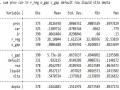 Correlation Coefficient Matrix Model Impact of Monetary Policy, Prov to Car
 -
 Evaluating Vietnam's Monetary Policy Management Process

Interaction variable between institutional quality and monetary policy
MP_Δi2 x INS | - | ||
Δ 𝐶𝑅 𝑡 x INS | - | ||
FXI 𝑡 x INS | + | ||
𝑆𝑀 𝑡 x INS | + | ||
Voice and accountability | INS1 | Worldwide Governance Indicators - WGI | |
Political stability and no violence | INS2 | Worldwide Governance Indicators - WGI | |
Government effectiveness | INS3 | Worldwide Governance Indicators – WGI |
Quality of regulations | INS4 | Worldwide Governance Indicators – WGI |
Rule of law | INS5 | Worldwide Governance Indicators – WGI |
Control corruption | INS6 | Worldwide Governance Indicators – WGI |
Source: author's research
*Explanation of the formula for calculating the Lerner index:
The Lerner index, proposed by Lerner, AP (1934), indicates the competitiveness of a bank by considering the ratio between marginal cost and price. For a perfectly competitive environment, the selling price is equal to marginal cost, while for a bank with market power, the selling price is greater than marginal cost. Therefore, to measure competitiveness, the Lerner index is a method that is quite popularly used in the world, considering the difference between selling price and marginal cost.
Lerner =P i,t −MC i,t
P i,t
(1)
In there:
- i is bank representative, t is time;
- P is the output price, calculated as total revenue over total assets;
- MC is the bank's marginal cost, which is not directly observable. MC is estimated based on the total cost function and is estimated in a two-step sequence, specifically:
Step 1: Take the natural logarithm of the total cost function:
2
LnTC it = 𝛼 0 + 𝛼 1 LnQ it + 1 𝛼 2 (LnQ it ) 2 + 𝛼 3 Lnw 1it + 𝛼 4 Lnw 2it + 𝛼 5 Lnw 3it +
𝛼 6 LnQ it Lnw 1it + 𝛼 7 LnQ it Lnw 2it + 𝛼 8 LnQ it Lnw 3it + 𝛼 9 Lnw 1it Lnw 2it +
𝛼 10 Lnw 1it Lnw 3it + 𝛼 11 Lnw 3it Lnw 2it + 1 𝛼 12 (Lnw 1it ) 2 + 1 𝛼 13 (Lnw 2it ) 2 + 1 𝛼 14
2 2 2
(Lnw 3it ) 2 + 𝛼 15 T + 1 𝛼 16 (T) 2 + 1 𝛼 17 .T LnQ it +. 𝛼 18 T Lnw 1it +. 𝛼 19 T Lnw 2it +. 𝛼 20 T
2 2
Lnw 3it + ε
With: TC is total cost (including interest cost and non-interest cost); Q is total assets ; three input prices include: w 1 is deposit cost, w 2 is physical cost and w 3 is labor cost ; T is variable reflecting technological change, ε is random error.
Step 2: After estimating the total cost function, the marginal cost is determined by taking the first derivative from equation (2) and is estimated as follows:
MC it =𝜕𝑇𝐶 𝑖𝑡= (𝛼 1 +𝛼 2 LnQ it +𝛼 6 Lnw 1it +𝛼 7 Lnw 2it +𝛼 8 Lnw 3it +𝛼 17 𝑇) 𝑇𝐶 𝑖𝑡
𝜕𝑄 𝑖𝑡
𝑄 𝑖𝑡
The Lerner index ranges from 0 to 1. A smaller Lerner index (closer to 0) indicates lower competitiveness. Conversely, a larger Lerner index (closer to 1) indicates greater competitiveness.
When perfect competition exists, the selling price is equal to marginal cost, so this index will have a value of 0. When the price is greater than marginal cost, the Lerner index will be greater than 0 and in the range between 0 and 1. The closer the index is to 1, the higher the monopoly power of the bank, the bank has greater competitiveness than other commercial banks.
*Explanation of the formula for calculating the institutional quality index:
Currently, there are two sets of indicators measuring institutional quality in the world: International Country Guide – ICRG and Worldwide Governance Indicators – WGI. Depending on the research conditions, researchers can choose one of the two sets of indicators to apply. This study applies the method of calculating the institutional quality index by taking the average of six component indicators in Worldwide Governance Indicators – WGI based on the research of some previous authors such as Al-Marhubi (2004), BjornKsov (2006), Easterly and Levine (2002)…
3.1.3. Estimation method
Panel data estimation methods such as Fixed effect (FE, FD, LSDV) or Random effects are mainly used to estimate linear static panel data models. With this model, the existence of problems such as autocorrelation of errors, as well as the dynamic nature of the model represented by the lagged dependent variables (endogenous variable problem) will bias the estimation results. Panel data models that have these problems are called linear dynamic panel models. Linear dynamic panel models can be estimated by the GMM method. Specifically, this study performs regression models using the System GMM– SGMM method of Arellano & Bond (1991). This method is commonly used in estimating linear dynamic panel data or panel data that have endogeneity, heteroscedasticity and autocorrelation.
The SGMM method is built to estimate panel data with the following outstanding features:
- Panel data with small T, large N (lots of observations with few time points)
- There is a linear relationship between the dependent variable and the explanatory variables.
- Dynamic models with one or both sides of the equation containing a delay variable
- The independent variables are not strictly exogenous, meaning they may be correlated with the residuals (current or previous) or have endogenous variables in the model.
- There is a problem of heteroscedasticity or autocorrelation in idiosyncratic disturbances.
- Fixed individual effects
- There is heteroscedasticity and autocorrelation within each subject (but no autocorrelation between subjects)
The SGMM method is suitable for this study because the panel data has a small T, large N (30 banks), meaning there are few time points but many observations. In addition, there is a linear relationship between the dependent variable and the explanatory variables. The dynamic model with one or both sides of the equation contains a lagged variable. (At this time, static panel estimates do not allow creating representative variables from the variables in the model itself). The independent variables are not strictly exogenous, meaning they are correlated with the residuals; or there is an endogenous variable in the model. There are separate fixed effects and heteroscedasticity or autocorrelation of the errors.
In SGMM estimation, the system of equations is estimated in its original form. The SGMM method can solve two important econometric problems: (i) since past values can determine the current value of the dependent variable, SGMM allows us to use the lagged dependent variable in the equation to explore the dynamics of the data; (ii) since the explanatory variables may not be completely exogenous, by using SGMM we can overcome the endogeneity problem when using lagged variables as instrumental variables.
The reliability tests of the model performed by the author include:
Testing for autocorrelation of residuals: According to Arellano & Bond (1991), GMM estimation requires first-order correlation and no second-order correlation of residuals. Therefore, when testing the hypothesis H 0 : no first-order correlation ( AR(1) test) and no second-order correlation of residuals (AR(2) test), we reject H 0 in AR(1) test and accept H 0 in AR(2) test, then the model meets the requirements.
Testing the suitability of the model and representative variables: Similar to other models, the suitability of the model can be done through the F test. The F test will test the statistical significance of the estimated coefficients of the explanatory variables with the hypothesis H 0 : all estimated coefficients in the equation are equal to 0, so for the model to be suitable, the hypothesis H 0 must be rejected . In addition, the Sargan/Hansen test is also used to test the hypothesis H 0 : the instrumental variables are suitable. When accepting the hypothesis H 0, it means that the instrumental variables used in the model are suitable .
3.2. Research data
The study uses panel data for 30 commercial banks in Vietnam: Nam A Commercial Joint Stock Bank; Orient Commercial Joint Stock Bank; Military Commercial Joint Stock Bank; International Commercial Joint Stock Bank; National Commercial Joint Stock Bank; Saigon Commercial Joint Stock Bank; Saigon Industrial and Commercial Joint Stock Bank; Saigon - Hanoi Commercial Joint Stock Bank; Saigon Thuong Tin Commercial Joint Stock Bank; Tien Phong Commercial Joint Stock Bank; Viet A Commercial Joint Stock Bank; Vietnam Prosperity Joint Stock Bank; Vietnam Thuong Tin Commercial Joint Stock Bank; Petrolimex Commercial Joint Stock Bank; Export-Import Commercial Joint Stock Bank; Ho Chi Minh City Development Joint Stock Commercial Bank; Vietnam Joint Stock Commercial Bank for Industry and Trade; Vietnam Joint Stock Commercial Bank for Investment and Development; Vietnam Joint Stock Commercial Bank for Foreign Trade; Asia Commercial Joint Stock Bank; An Binh Commercial Joint Stock Bank; Bao Viet Commercial Joint Stock Bank; Bac A Commercial Joint Stock Bank; Lien Viet Post Joint Stock Commercial Bank; Vietnam Public Joint Stock Commercial Bank; Dong A Commercial Joint Stock Bank; Southeast Asia Commercial Joint Stock Bank; Maritime Commercial Joint Stock Bank; Kien Long Commercial Joint Stock Bank; Techcombank; in the period 2008-2017.
According to the statistics of the State Bank at December 31, 2017, the number of commercial banks is 44 banks including State-owned commercial banks, joint-stock commercial banks, 100% foreign-owned banks and joint-venture banks. However, some banks do not have enough data during the research period, so to ensure the balance of the data table, the author selected 30 commercial banks with full data as presented above. In addition, according to the data of the State Bank at December 31, 2017, the total assets of 44 commercial banks are
8,719,726 billion VND. Meanwhile, the total assets of 30 commercial banks used by the author at December 31, 2017 were 6,131,649 billion VND, accounting for 70% of the total assets of commercial banks. Thus, the 30 commercial banks selected by the author ensure representation of commercial banks in Vietnam.
The data used to measure bank risk and the characteristics of each bank are taken from the annual financial statements in the period 2008 - 2017 of the banks through the official website of the bank, website cafef.vn.
Macro data on economic growth and inflation rate of Vietnam in the period of 2008 - 2017 were taken from the website of General Statistics Office of Vietnam, Worldbank. Data on public governance was also collected from a reliable source, the Worldbank's Worldwide Governance Indicators (WGI).