
(Integrated application toolset,
v
business support and customer service. The eCRM system enables marketing, sales and service functions to be integrated and synchronized with each other.
eCRM Strategy
Customer-centric strategy
(Strategy, goals, plans, programs on customers, marketing, sales, etc.)
Logistics block | eCRM operations Manage business operations ERP/ERM System Management Legal Supply Chain Management goods | closed | …) | eCRM analysis Business performance management Data warehouse |
Transaction block | Sales Marketing Services client | that processor | embed., v. | Specialized data warehouse Specialized data warehouse about customers and products |
Office | Sales Field mobile service | Qu | Applications Manage vertical campaigns for automated marketing dynamic | |
Customer Interaction | Conference Call Center Email Fax/Mail Direct Online eCRM collaboration Managing business coordination | |||
Maybe you are interested!
-

 Customer relationship management in competitive strategy and lessons for Vietnamese enterprises - 13
 -
 The Relationship Between Quality, Customer Service and Marketing
 -
 Customer relationship management at Vietnam Joint Stock Commercial Bank for Investment and Development - Ha Long branch - 12
 -
 The Relationship Between Service Quality and Customer Satisfaction:
 -
 Overview of Customer Relationship Management for Hotels
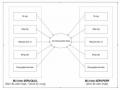
Figure 1.2. eCRM structure in the enterprise
Source: According to Viljoen et al. Marketing automation: Automate the collection of detailed information about
customers; automate and manage marketing strategies; manage customer interactions; evaluate the effectiveness of marketing strategies, etc.
Sales Automation: Order tracking, sales volume analysis, sales cycle analysis, lead management, etc.
Automate customer care and support activities: Automate and manage customer care activities, automatically respond to customer complaints, track additional services, analyze and evaluate customer care and support results.
Analytical eCRM: Focuses on analyzing customer data for strategic and tactical purposes. Analytical eCRM includes:
Customer Analytics : Analyze customer metrics such as value, satisfaction, loyalty, leads, customer behavior and needs, etc.
Marketing analysis : Effectiveness of marketing campaigns, transaction channels, effectiveness of customer care services, support, communication, etc.
Financial performance analysis : analysis to optimize business policies, analysis of financial performance of activities to build and maintain customer relationships.
Collaborative eCRM: Using technology to coordinate, manage connections and interactions between customers, businesses and business partners in the customer lifecycle. Collaborative eCRM uses all customer-facing tools such as direct contact, email, fax, social media, telephone, internet, etc. to effectively contact customers to provide direct services to customers. Collaborative eCRM also aims to establish cooperative networks with businesses, such as branch/agent networks, electronic networks, social networks, etc.
1.1.1.5. The underlying technologies of electronic customer relationship management
According to Microstrategy (2000), there are 5 main technologies that work together to create the technological foundation of the eCRM system: "Customer data warehouse; Data analysis; Personalization; Communication; Transactions" Microstrategy (2000) . Without the above 5 technologies, eCRM is not flexible and scalable to suit the business practices of the enterprise.
| ||||||
Data warehouse | Data Analysis | Personalization | Media | Transaction | ||
Information | Interactive design fit | Personalize for each customer | Approach to suit each client | Conditions of interaction favorable | Transaction | |

Figure 1.3. Platform technology in eCRM
Source: According to research results of Microstrategy
- Customer data warehouse: Consolidate data of all customers across all transaction channels, inside and outside the business to get comprehensive customer data.
- Data analysis: A business's customer data is often big data, requiring good data analysis and mining technologies to obtain useful information to serve the construction of the business's strategic business campaigns and evaluate the success of those campaigns.
- Personalization: Personalize the entire customer experience, configuring a consistent set of messages and delivering them to each customer.
- Communication: Electronic communication technologies and social media in eCRM are used to automatically provide information to customers.
- Transactions: Developing modern transaction channels to facilitate customer interaction and enhance customer experience.
1.1.2. Electronic customer relationship management solution for commercial banks
1.1.2.1. Commercial bank
There are many different concepts of commercial banks, but the concepts are all based on a common characteristic: commercial banks receive deposits from customers to use for lending, payment and other business services with the aim of making profit.
“ Financial intermediary organizations are an integral part of the financial system in a market economy, with the function of directing capital from those who are capable of supplying capital to those who need capital in order to create conditions for investment in socio-economic development. Commercial banks are the largest part of the financial intermediary system ” (To Ngoc Hung (2009)).
Commercial banks have some characteristics that are different from other organizations and businesses in the following main characteristics:
Firstly, commercial banks are a special type of enterprise with monetary business activities. This is a special field because it is directly related to all industries, directly affecting all aspects of life, economy and society. In addition, the monetary sector is a sensitive field, so it requires caution in management to avoid negative impacts on the economy and society. This characteristic requires eCRM solutions for commercial banks to have their own characteristics such as managing all customer information but needing to ensure safety and confidentiality in accordance with the requirements of the law specifically for the banking industry. At the same time, eCRM solutions need to provide maximum support to provide valuable added information to help banks.
in operations and management.
Second, the operations of commercial banks are closely linked to payment systems. Commercial banks provide many payment instruments such as checks, collection orders, payment orders, cards, etc., acting as payment intermediaries between related parties when performing transactions related to goods and services. This feature of commercial banks helps customers save a lot of costs and time, ensuring safe payments, thereby promoting the circulation of goods, speeding up payment and capital circulation, thereby contributing to economic development. This feature affects the need for eCRM solutions for commercial banks to be connected to the payment systems of commercial banks. Customer payment activities at commercial banks are often carried out through CoreBanking systems, card systems, inter-bank electronic payment systems, international payment systems, etc. Therefore, eCRM solutions for commercial banks must have the mandatory requirement of being flexibly connected to these payment systems.
Third, commercial banks are large-scale enterprises with diverse products and services and a wide range of operations . Commercial banks are large-scale enterprises in terms of both equity and total assets. The number of products and services of commercial banks is very diverse, the branch network and scope of operations are often very large and geographically dispersed. This characteristic leads to the fact that the number of customers of commercial banks is often very large, diverse in customer types, and one customer can use many different bank products and services. This requires the eCRM solution for commercial banks to be able to manage comprehensive data of a large number of customers and be flexible in different customer groups. The eCRM solution for commercial banks needs to provide standardized information for each customer group and at the same time, need to provide personalized information suitable for each customer in each product and service. On the other hand, commercial banks often develop new banking products and services, requiring eCRM solutions to support customer group information suitable for those products and services.
Fourth, the operations of commercial banks always contain many risks and are subject to strict control and supervision by the legal system . Risks in the operations of commercial banks are diverse, at a high level, accumulate quickly and spread easily, including specific types of risks such as credit risk, liquidity risk, interest rate risk, foreign exchange risk, capital availability risk, ethical risk, etc. Therefore, the operations of commercial banks are subject to strict control and supervision by the legal system. This characteristic requires eCRM solutions for commercial banks to support monitoring information, warnings and risk prevention for banks.
1.1.2.2. Electronic customer relationship management solution architecture for commercial banks
The current development strategy of commercial banks is towards safe, effective and sustainable development, with IT as the core, on the basis of technology and modernization.
Overall modernization of business products and management applications. With increasingly complete and modern technology solutions; telecommunications platform; modern equipment; policy infrastructure supported by state management agencies such as payment systems, tax systems, customs, etc., creating conditions for the inevitable development trend of electronic banking (E-banking) today and in the future. In which, Mobile Banking is identified as a strategic channel, while Internet Banking still retains its importance. With a modernly designed banking information system architecture, it creates synchronous connectivity between E-banking channels. Products are fully provided on all channels (products provided at the transaction counter are also provided on Internet Banking, Mobile Banking, etc.).
Previously, domestic banks mainly implemented a product-oriented business model. However, today, bank products and services are increasingly developing in a customer-oriented direction: banks sell products that customers need. That is the trend of developing customer-centric products and services. At that time, the eCRM solution plays an important role in the overall architecture of the banking information system (Figure 1.4).
According to Han-Yuh (2007), eCRM architecture in commercial banks usually consists of 4 main blocks: " Customer interaction management; Internal management; Customer data management; IT management " (Figure 1.5).
Customer interaction management: Customer interaction management is the management of transaction channels aimed at customer value. Banks have many electronic transaction channels to increase customer contact points and enhance customer experience with bank products and services. With the development of technology applications, customer behavior is affected by many factors and is easily changed, so banks are required to diversify transaction channels to facilitate contact with customers, improve customer experience, and give customers resources that they can use when making purchasing decisions. With modern multi-channel transactions that are well managed, it will contribute to enhancing the image of the bank.
29
TRADING CHANNEL
Banking information systems
Business
Other banking services
Branch/Transaction Office
Utility system
Service Process Marketing Process
eCRM
Risky Debt
Credit card
Ledger
ATM system
Form Management
Electronic signature
….
Compliance process
Sales Process
Partner Services
Campaign
Marketing
Decision support
Relationship Management
Administration
Resources
Cheat
Products and services
Corporate Banking Services
Retail Banking
Pay
Process models
Business process management
CLIENT
Partner
case
Operating …
Call Center
CHANNEL
Request and service management
External service port
ESB ORGANIZATION SERVICE CHANNEL
Banking industry standards
Internet Banking
FIT
Service warehouse
Technology platform: language, data…
Customer Analysis
Bank vision
Data Integration
and information services
Data Management
Text data
External data
Mobile Banking
row
Data Mining for Predictive Analytics and Analytics
P T a n c h a n d h a n d P a n d ...
unstructured
Demographic Credit Index
…
DATA WAREHOUSE
Information infrastructure
Figure 1.4. Banking information system architecture
Source: IBM Banking Industry Framework
Multi-channel information system : CTI (Computer Telephone Integration), ACD (Automatic Call Distributor), VOIP, etc…
Intermediate systems: Core Banking system, interbank electronic payment system, website system, etc. | Database management, storage, processing and analysis technology: Data Cleaning, Data Warehouse, Data Mart, Data Mining, Web Warehouse, Web Mining, etc… | |
HTML, XML, JAVA, Intelligent Agent… | ||
Technical Support Department | ||
Interactive Channel
- Branch
- ATM
-Internet Banking
-Home Banking
-Phone Banking
-Mobile Banking
- PDA
- Kiosk
-…
System Front-office back-office system
Database
Customer analysis
- Automatic sales
- Marketing automation
- Service and support
customer support
- …
- ERP, SCM…
- Accountant
- Human resources
- Credit
- Capital mobilization
- Knowledge management
- Legal
- …
Data:
- Collection
- Storage
- Filter
- Segment
- Extract
- Query
-…
Client:
-Value of goods
guest
-Loyalty
- The difference
- Balance analysis
- Interaction type
- Behavior
-…
Customer interaction channel management
Customer-centric culture with the goal of enhancing customer value
Customer data management
Internal management
Information technology management
Client
Call Center
Figure 1.5. eCRM architecture in commercial banks
Source: According to research results of Han-Yuh
Internal management: With a customer-centric strategy, eCRM requires the participation of all departments of the bank from front-office (transaction officers, credit, customer care, marketing, etc.) to back-office (accounting, control, etc.). Front-office systems (sales, marketing, customer service, etc.) and back-office
(enterprise resource management, supply chain management, knowledge management, human resource management, core banking, inter-bank payments, legal affairs, etc.) must be managed in a unified manner, business processes need to be designed appropriately, with coordination processes between specialized systems to aim towards the common goal of customers.
Customer data management: Customer data is the foundation of the eCRM system. Customer data needs to fully cover all:
- Customer information: demographics, psychology, behavior, habits of using electronic media, finance, occupation, etc.
- Information about transactions with the bank: transaction accounts with the bank, transaction history with the bank, relationship with the bank, electronic channels for transactions with the bank, number of transactions, transaction frequency, transaction value, etc.
- Information on bank customer ratings: credit rating, customer scoring, customer reviews, etc.
- Information on customer satisfaction: complaints and status of complaint resolution with customers, information promoting products and services on media, etc.
- Information about customers interested in banking products and services: history of searching for banking services, history of accessing banking websites, history of viewing banking products and services, etc.
Customer data in eCRM is organized, arranged, and stored scientifically with features such as aggregation, storage, filtering, segmentation, extraction, querying, etc., making it easy to exploit during operations.
In addition, another important feature in eCRM customer data management is the analysis function. eCRM supports customer data analysis on customer value, customer loyalty, customer differentiation, customer relationships, customer interaction patterns with banks, customer habits, etc. to provide valuable information for operations, marketing, customer care departments, etc. such as market segmentation, identifying potential customers, identifying factors affecting customer loyalty, etc.
IT Management: IT plays an essential role in the eCRM architecture at banks, ensuring the system operates smoothly, connects to customers in real time and provides maximum support for the bank's development goals and strategies. IT Management in eCRM includes:
- Manage customer transaction channels such as call center, ATM, Internet Banking, Mobile Banking, SMS Banking, etc.; Infrastructure connecting transaction channels, etc.