
INDEX
Chapter Page
Cover page
Maybe you are interested!
-
 Study on the diversity and toxicity of Bacillus thuringiensis var. kurstaki bacteria on leaf-eating insects harmful to vegetables in Vietnam - 31
 -
 Study on chemical composition, toxicity and some biological effects supporting the treatment of gastric and duodenal ulcers of Sanchezia nobilis Hook.F. leaves - 2
 -
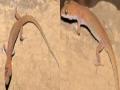 Study on species diversity and genetic relationships of the family Gekkonidae in some limestone mountain areas in the Lao People's Democratic Republic - 22
 -
 Studies on Vegetation, Plant Diversity and Medicinal Plants in Cao Bang and the Study Area
 -
 Study on species diversity and genetic relationships of the family Gekkonidae in some limestone mountain areas in the Lao People's Democratic Republic - 20
Commitment i
Thanks ii
Summary iii
Summary v
Table of Contents vii
List of symbols and abbreviations xiv
List of tables xvi
List of figures and graphs xxi
INTRODUCTION 1
1. Urgency 1
2. Research objective 3
3. Research object and scope 3
3.1 Research subjects 3
3.2 Scope of research 3
4. Scientific and practical significance of the research topic 4
4.1 Scientific significance 4
4.2 Practical significance 4
4.3 New contributions of research 4
Chapter 1 DOCUMENT OVERVIEW 5
1.1 Distribution and population diversity of Bacillus thuringiensis 5 bacteria
1.1.1 Classification of Bacillus thuringiensis 6 bacteria
1.1.2 Morphological and biochemical characteristics of Bacillus thuringiensis 6 bacteria
1.1.3 Domestic and foreign studies on distribution and genetic diversity
of Bacillus thuringiensis 8
1.2 Insect toxins of Bacillus thuringiensis 12
1.2.1 Classification of toxins of Bacillus thuringiensis bacteria 12
1.2.2 Cry gene of Bacillus thuringiensis 13
1.2.3 Cyt genes of Bacillus thuringiensis 17 bacteria
1.2.4 VIP protein of Bacillus thuringiensis 17 bacteria
1.2.5 Mechanism of action of Bacillus thuringiensis on insects 19
1.2.6 Research on Bacillus thuringiensis at home and abroad 20
1.2.6.1 Research on cry 20 gene
1.2.6.2 Research on UV resistance 21
1.2.7 Factors affecting bacterial biomass multiplication process
Bacillus thuringiensis 22
1.3 Application of Bacillus thuringiensis bacteria in agricultural production .24
1.3.1 Plant protection products from Bacillus thuringiensis 25
1.3.2 Transgenic plants with Bacillus thuringiensis 28 bacteria
Chapter 2 RESEARCH METHODS 30
2.1 Research content 30
2.1.1 Distribution of Bacillus thuringiensis bacteria and population diversity
Bacillus thuringiensis var. kurstaki from provinces and cities in Vietnam 30
2.1.2 Toxicity assessment of strains of Bacillus thuringiensis var. kurstaki
on leaf-eating caterpillar 30
2.1.2.1 Evaluation of the lethality of strains of Bacillus thuringiensis var.
kurstaki on Lepidoptera leaf-eating caterpillar 30
2.1.2.2 Selection of UV - resistant and
Optimizing production conditions of VBt 30
2.1.2.3 Evaluation of the effectiveness of VBt in controlling leaf-eating insects under greenhouse and field conditions 30
2.2 Time and location 31
2.2.1 Time 31
2.2.2 Location 31
2.3 Research materials 31
2.3.1 Experimental chemicals 31
2.3.2 Deep Source 32
2.4 Research methods 32
2.4.1 Distribution of Bacillus thuringiensis and bacterial selection
Bacillus thuringiensis var. kurstaki in soil from 32 provinces and cities
2.4.1.1 Soil sample collection method 32
2.4.1.2 Method of naming soil samples and bacterial strains (sample code) 33
2.4.1.3 Method of preparing soil sample isolation medium 33
2.4.1.4 Isolation of bacterial samples 33
2.4.1.5 Identification of Bacillus thuringiensis bacteria by biochemical testing ...34
2.4.1.6 Method of increasing biomass of Bacillus thuringiensis bacteria 35
2.4.1.7 Method of preserving Bacillus thuringiensis 35 bacteria strain
2.4.2 Amplification of 16S-rDNA sequences and cry genes of Bacillus thuringiensis var. kurstaki 36 strains
2.4.2.1 DNA extraction 36
2.4.2.2 PCR 36
2.4.2.3 Agarose gel electrophoresis and reading PCR product results 37
2.4.3 Determination of the presence of vip3a protein of Bacillus thuringiensis bacteria
type 37
2.4.3.1 PCR to detect vip3a gene 37
2.4.3.2 Method for isolation of Vip3a 38 protein
2.4.4 Toxicity assessment of Bacillus thuringiensis var. isolates .
kurstak i silkworm ( Plutella xylostella ), armyworm ( Spodoptera litura ), worm
Spodoptera exigua under laboratory conditions 39
2.4.5 Determination of LC 50 and LT 50 values of Bacillus thuringiensis strains
type : 40
2.4.5.1 Determination of LC 50 value40
2.4.5.2 Determining the value of LT 5040
2.4.6 Selection of UV-resistant Bacillus thuringiensis var. kusrtaki strain 41
2.4.6.1 Investigation of UV resistance of Bacillus thuringiensis var. kusrtaki strains at two wavelengths of 254 nm and 365 nm 41
2.4.6.2 Evaluation of the lethal effect of UV-resistant Bacillus thuringiensis var. kurstak i strains under laboratory conditions 41
2.4.7 Optimizing fermentation conditions of Bacillus thuringiensis bacteria
variety 42
2.4.7.1 Determining the appropriate nutritional environment for bacterial biomass 42
2.4.7.2 Survey of conditions for bacterial biomass Bacillus thuringiensis var.
season 43
2.4.7.3 Optimizing factors affecting the ability to increase bacterial biomass by experimental planning method 43
2.4.7.4 Evaluation of the lethal effect of the combination of bacterial strains on worms
Bacillus thuringiensis var. kurstaki 44
2.4.7.5 Survey on storage temperature of VBt 45 preparation
2.4.8 Investigation of the ability to increase the growth of Bacillus thuringiensis var. kurstaki
with 2 liter BioFlo 120 45 automatic fermentation system
2.4.9 Evaluation of the toxicity of VBt on diamondback moth ( Plutella xylostella) , armyworm ( Spodoptera litura) , and smooth green caterpillar ( Spodoptera exigua) in greenhouse conditions 46
2.4.10 Evaluation of toxicity of VBt preparation on diamondback moth in the field 47
2.5 Data processing and analysis 47
Chapter 3 RESEARCH RESULTS 49
3.1 Distribution of Bacillus thuringiensis bacteria and selection of Bacillus thuringiensis var. kurstaki bacteria in soil in provinces and cities of Vietnam 49
3.1.1 Distribution of Bacillus thuringiensis 49
3.1.2 Identification of Bacillus thuringiensis strains by testing
Biochemistry 51
3.2 Determination of the presence of cry gene in Bacillus thuringiensis var.
season 56
3.3 Determination of the presence of vip3a gene in Bacillus thuringiensis var.
kurtaki 65
3.4 The ability to kill diamondback moth ( Plutella xylostella ), armyworm ( Spodoptera litura ), and green armyworm ( Spodoptera exigua ) of the isolated strains of Bacillus thuringiensis var. kurstaki 66
3.5 LC 50 and LT 50 values of Bacillus thuringiensis var. kurstaki strains against diamondback moth, armyworm, and smooth green caterpillar under laboratory conditions 72
3.5.1 LC 50 and LT 50 values of Bacillus thuringiensis var.
kurstaki for silkworm 72
3.5.2 LC 50 and LT 50 values of Bacillus thuringiensis var.
kurstaki for cavity 74
3.5.3 LC 50 and LT 50 values of Bacillus thuringiensis var.
kurstaki for green caterpillar 76
3.6 Select UV-resistant Bacillus thuringiensis var. kurstaki strain .. 78
3.6.1 UV resistance of Bacillus thuringiensis var. kurstaki strains at 254 nm and 365 nm wavelengths 78
3.6.2 The lethal effect of Bacillus thuringiensis strains on insects
var. kurstaki is UV resistant under room conditions.
Experiment 82
3.7 Optimization of fermentation conditions of Bacillus thuringiensis var.
kurtaki 85
3.7.1 Effect of nutritional environment on bacterial biomass 85
3.7.1.1 Effect of fermentation time on bacterial biomass 86
3.7.1.2 Effect of pH on bacterial biomass 86
3.7.1.3 Effect of temperature on bacterial biomass 87
3.7.2 Optimization of factors affecting the biomass of Bacillus thuringiensis var. kurstaki by experimental planning method .88
3.7.3 Effectiveness of killing insects when combining two strains of bacteria Bacillus thuringiensis var. kurstaki 92
3.7.4 Effect of storage temperature conditions on VBt 94 preparation
3.8 Bacterial proliferation using the 2 liter BioFlo 120 automatic fermentation system.. 95
3.9 Effectiveness of VBt on silkworms, armyworms and green worms
Smooth leather in greenhouse conditions 97
3.10 Effectiveness of VBt preparation on diamondback moth in the field 100
General Discussion 103
CONCLUSION AND RECOMMENDATIONS 107
1. Conclusion 107
2. Proposal 108
LIST OF REFERENCES 109
LIST OF AUTHOR'S WORKS 131
APPENDIX 1. 1
Bergey's bacterial identification scheme 1
Classification diagram of Bacillus spp. 2 bacteria
DNA extraction 3
Vi-Bt ® 32000WP 4 Insecticide
Images of Thesis implementation activities 5
APPENDIX 2. Sequencing of cry 14 genes
APPENDIX 3. Experimental data 21
APPENDIX 4. Statistical analysis 40
APPENDIX 5. Sampling location data 69
LIST OF ABBREVIATIONS
Abbreviation Meaning
ATCC American Type Culture Collection Bp Base pair – Base pair
Bt Bacillus thuringiensis (B. thuringiensis)
Btk Bacillus thuringiensis var. kurstaki
BIOTEC National Center for Genetic Engineering and Biotechnology Plant Protection
Biotechnology
CTV Collaborator
Cry Crystal
CV Coefficient of variation – coefficient of variation
Cytolitic Cyt
DNA Deoxyribonucleic acid
Control
ELISA Enzyme – Linked Immunosorbent Assay
FAO Food and Agriculture Organization – Food and Agriculture Organization
GSXL Hours after processing
LC 50 Lethal concentration – Concentration that kills 50% of individuals
LT 50 Lethal time – Time to kill 50% of individuals NCBI National Center Biotechnology Information NSXL Day after treatment
NSP Day after spraying
NT Solution
IPM Integrated Pest Management – Integrated Pest Management