
- Give specific reminders (name, work to do), give students limited choices.
- Use logical consequences (will be discussed below)
- Establish rules or schedules that teachers will regularly spend time with students.
With this type of behavior that aims to demonstrate power, GVCN should:
- Stay calm, withdraw from the argument or conflict, do not "go to war" to let the student cool down.
Maybe you are interested!
-
 Raising Awareness for Educational Forces Inside and Outside the School on Building Organizational Culture and Managing Organizational Culture Building
 -
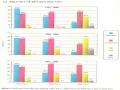 Evaluation of Measures for Managing Organization and Coordination of Educational Forces Inside and Outside the School.
 -
 Content of Managing Educational Activities on Life Values and Life Skills in High Schools
 -
 Psychological and Social Skills Education Activities, Creating a Friendly and Healthy Educational Environment
 -
 Measures to Mobilize Educational Forces to Invest in Facilities and Purchase Equipment by Principals of Secondary Schools in Quang Yen Town
- Use steps to encourage student cooperation (understand student feelings, show that you understand those feelings, share your feelings about the situation, discuss together to prevent similar problems in the future).
- Help students see that they can use power and authority in positive ways. Homeroom teachers need to know that engaging in power struggles or giving in only makes students want more “power.”
- Decide what you will do, not what you will make students do.
- Make rules or plans that teachers will regularly spend time with students.
With this type of retaliatory behavior, the homeroom teacher should:
- Be patient. Get out of the vicious cycle of "retaliation". Avoid using forms of punishment for students.
- Maintain a normal mentality while waiting for the student to cool down.
- Encourage cooperation and build trust from students.
- Talk privately with students to solve difficulties.
- Use encouragement skills to show students that they are loved and respected.
- Make rules or plans that teachers will regularly spend time with students.
With this type of behavior that shows inappropriateness, the homeroom teacher should:
- Do not criticize or disparage students.
- Spend time training and tutoring students, especially in studying.
- Break down tasks into small pieces, starting with the easy ones so that students can achieve initial success.
- Use encouragement skills, focus on students' strengths and assets.
- Show no pity, no surrender.
- Spend time regularly with students and help them.
1.2.3.7. Skills in coordinating educational forces in educating students
a. Coordinate with school forces to comprehensively educate students.
Coordinate school leadership.
The specific working relationship between the class teacher and the principal and school leaders is specifically shown as follows:
- Receive policies, plans and directions for each specific activity from school leaders and the education council.
- Develop a plan and direct the implementation of the plan to suit the situation of the homeroom class. During the process of developing and implementing the plan, if there are any difficulties or unexpected situations that cannot or are not within the authority to handle, it is necessary to promptly report to the Principal and the Education Council to get opinions, instructions, supplements, adjustments to the plan or changes in methods and forms of organizing activities, taking advantage of the spiritual and material support of superiors.
- Report the performance of the homeroom teacher periodically or suddenly.
- Recommend school leaders to reward or discipline students.
- Propose to school leaders about content, form and request favorable conditions in terms of environment, facilities, equipment... to carry out the activities of the homeroom class.
- Responsible for handling all incidents that occur in the class. In case a student violates discipline outside of school, but the cause is from within the school, it is still considered a class incident. In case a student violates discipline outside of school and the cause is not from within the school, although it is not considered a class incident, when discovered, the homeroom teacher must be responsible for resolving and reporting to the school board, and is responsible for providing complete and accurate information.
Verify student information when requested and coordinate with school leaders to resolve serious incidents.
- Responsible for approving the weekly plan every Monday morning with the School Leader, recording all columns and necessary information in the homeroom book. Before the 25th of each month, the homeroom teacher is responsible for writing a report on the homeroom work and submitting it to the School Leader.
- Responsible for organizing and managing the assets of the class he/she is in charge of and is responsible to the school for any damage or loss of assets after receiving the handover. At the end of the semester and school year, the school will take inventory of the classroom facilities. If there is any damage or loss, the school will require the homeroom teacher to deduct from the class fund to compensate for the repair and purchase costs.
- Reflect the wishes of students' families regarding their agreement or disagreement with the school's policies and regulations in educational activities for the Principal to consider, answer or amend to suit reality.
Coordinate with subject teachers in the class you are in charge of
Coordination is carried out through the following tasks:
- Closely contact with subject teachers to grasp the learning situation of each student in the subject. Thanks to specific information from subject teachers, homeroom teachers have a more comprehensive, specific, and clear picture of each student, in order to have measures to influence, support, and help...
- Share with subject teachers about the characteristics of the class and each student so that subject teachers can have appropriate approaches and help and find ways to educate students not only through how to handle situations during class but also through subject content and teaching organization.
- Unify requirements for students in the homeroom class during the teaching process in class as well as requirements for completing self-study tasks at home. Coordinate with subject teachers to guide students in organizing self-study activities to continuously improve the learning quality of students in their class.
- Discuss with subject teachers about gifted students as well as students having difficulty in learning the subject to have a plan for nurturing and tutoring to ensure a personal approach and ensure teaching strategies are suitable for students' strategies to maximize learner development.
- Discuss with subject teachers how to teach students how to self-study, subject learning methods that are suitable with scientific logic. View teachers' grades and comments on students' tests or learning products.
- Coordinate with subject teachers to organize extracurricular activities to consolidate knowledge, serve teaching activities, and at the same time create opportunities for students to exchange and learn practical knowledge.
The combination between homeroom teachers and subject teachers has a special meaning in contributing to discovering students' talents and interests, thereby promptly discovering and nurturing those talents to help them develop their abilities more completely.
Coordinate with Youth Union and Team organizations
The main function of the Ho Chi Minh Communist Youth Union and the Ho Chi Minh Young Pioneers' Team is to assist schools in managing and educating students in ethics, discipline, and lifestyle. Bringing students into social activities. The activities demonstrating the educational function of the Youth Union and the Young Pioneers' Team in schools are as follows:
- Launch weekly, monthly, and stage competitions (movements based on holiday themes) between classes to create a competitive environment.
- Manage student discipline activities such as: Going to school on time, entering and leaving class, checking homework, mid-class exercise, student duty, monitoring student discipline and behavior.
- Direct the implementation of surface activities in emulation campaigns.
- Organize extracurricular activities according to competition stages on major holidays (November 20; December 22; March 26...). The main organization method is collective activities on a school-wide scale, in the form of rallies and organizing playgrounds with educational content.
- The Team is also assigned to coordinate with the homeroom teacher to participate in organizing extracurricular educational activities related to the monthly activity theme.
Coordinate with other forces in the school to effectively educate students
The homeroom teacher also needs to coordinate with other teachers in the school (library, medical, office, security...) to educate students in the homeroom class. The homeroom teacher needs to coordinate with these forces to understand students objectively and have timely educational impacts on them, as well as create a friendly, cultural environment.
- Coordination between homeroom teachers and homeroom teachers of the same grade: Homeroom teachers of the same grade are established into a homeroom group, with a group leader in charge and monthly meetings as members of the group. Each homeroom teacher needs to perform the following tasks:
+ Discuss and agree with group members on the content, plan, methods, and progress of homeroom activities corresponding to specific times of the school year plan.
+ Report on the activities of the homeroom class in terms of education, propose and request help, coordinate with classes in the same grade for some tasks to create movements and promote the strength of the class community.
+ Exchange successful or failed experiences and selected initiatives during your time as a homeroom teacher with colleagues to share and help each other, creating an environment of empathy and shared responsibility for students.
b. Cooperate with families to educate students
Collaboration with parents is considered one of the core tasks of homeroom teachers for many theoretical and practical reasons. How to organize coordination with parents:
- Establish parent organizations in the class, specifically the class parent association, at the first parent meeting of the school year.
- Organize a class parent meeting at the beginning of the school year with the following contents: Exchange between the homeroom teacher and all parents of the class. Notification to parents
about the curriculum, the school and class activity plan during the school year, how to evaluate students. Develop some general regulations on the activities of the Parents' Association as well as the methods and means used to closely coordinate between homeroom teachers and parents, and between parents themselves.
- Organize a class parent meeting at the end of the first semester with the following contents: Summarize the general learning and striving situation of students in the class and analyze some cases of students that need attention. Announce the learning results of each student, the school and class's activity plan in the next semester. Listen to the parent representative report on the activities of the parent association. Organize a general discussion in the conference on some measures to improve students' achievements and training in the coming time.
- Organize a meeting for all parents to summarize the school year with the following contents: Summarize the learning situation and general efforts of students in the class, give comments, evaluate and classify the academic performance and conduct of students. Listen to the student representative report on the activities of the association. Guide families to manage the review and rest activities of students during the summer vacation of local students.
c. Homeroom teachers with other social forces
Community forces include: Representatives of local authorities, departments, branches, and organizations such as the Youth Union, Women's Union, Fatherland Front, Veterans Association, etc.
GVCN's community coordination content includes:
- Create conditions to implement comprehensive educational activities for students, especially practical activities such as: Applying learned knowledge to practice, production, community life, implementing environmental improvement projects, public service activities such as gratitude, propaganda to prevent social evils, learning traditional crafts, protecting relics and environmental resources.
- Responsible for building a healthy educational environment, free of social evils such as theft, gambling, drug addiction, prostitution, and cultural circulation.
toxic products... have a system of cultural, informational activities, sports, clubs, cultural houses, bookcases... to meet the spiritual life and cultural enjoyment needs of the people in general, and students in particular.
- Participate in giving advice to parents who are interested in educating their children.
- Timely reflect the learning and moral situation of local students to the school and the homeroom teacher.
- Social forces can directly participate in the educational process in schools, specifically: Introducing students to local traditional history. Disseminating production experience, traditional local occupations mainly managed by artisans. The police participate in education to prevent social evils in schools. Participate in evaluating students' learning and training results.
- Establish a fund to encourage learning and talent, mobilize many benefactors and social organizations to help and support. Develop learning promotion associations in clans and villages so that the commune can encourage excellent students and support students in difficult circumstances.
The above coordination contents show the two-way dialectical relationship between school and society: Society is responsible for creating a good educational environment for students, while schools also contribute to improving the social environment, thereby perfecting students' personalities.
1.2.4. Fostering CNL skills in a modern educational environment for class teachers
1.2.4.1. Concept of fostering CNL skills in modern educational environment for class teachers
Fostering CNL skills in a modern educational environment for class teachers is a purposeful and planned process to form, supplement, and develop CNL skills to meet practical requirements and improve the effectiveness of CNL work of class teachers.
1.2.4.2. Elements of CNL skills training activities in modern educational environment for class teachers
Training content: building a system of CNL skills catalog to meet practical requirements, building a training plan.
Forms of training: concentrated, self-training and exchange.
Training participants: Competent managers, teachers, and experts.
Influencing factors: Environment, facilities, awareness, and qualifications of participants.
1.3. Managing the training activities for homeroom teachers in a modern educational environment for secondary school teachers
1.3.1. Concept of managing activities to foster classroom management skills in a modern educational environment for teachers
Managing the activities of fostering CNL skills in a modern educational environment for homeroom teachers by principals is the process of planning, organizing, directing, coordinating and checking to have a directional impact of managers on homeroom teachers, in supplementing and enhancing CNL skills of homeroom teachers to meet the requirements of CNL work.
1.3.2. Process of managing the training activities for homeroom teachers in a modern educational environment for secondary school teachers
1.3.2.1. Planning for training organization
Based on the survey of the current status of CNL skills, based on the school year's tasks and the tasks of the homeroom teacher, the principal develops a plan to manage training activities for skills in working as a homeroom teacher in a modern educational environment, and deploys it to all teachers in the school.
The key issue is: Identifying planning goals to foster weak and necessary CNL skills, focusing on the following 5 basic skills:
- Skills in building and using student profiles.
- Skills to organize students' self-management activities.
- Counseling and advising skills for students.