
The development of consumer lending increases business opportunities for businesses. Because of support and encouragement, customer needs will become more and more diverse, so manufacturers have the basis to make the right production and business decisions, in accordance with customer needs, helping production and business activities to develop more and more sustainably.
1.2. Quality of unsecured personal consumer loans of commercial banks.
1.2.1. Concept of loan quality and quality of unsecured personal consumer loans of commercial banks.
According to the General Vietnamese Dictionary (2020), quality is the sum of basic properties and attributes of a thing (event) ... that makes this thing (event) distinct from other things (events).
Maybe you are interested!
-

 Solutions to improve the quality of consumer lending activities at Vietnam Prosperity Joint Stock Commercial Bank - 2
 -
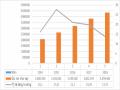 Current Status of Credit Quality at Vietnamese Joint Stock Commercial Banks
 -
 Consumer lending quality at Vietnam Prosperity Joint Stock Commercial Bank - Northern Consumer Lending Center - 10
 -
 Credit risk management for personal loans at Nam A Commercial Joint Stock Bank - Quang Ninh Branch - 13
 -
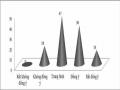 Evaluation of consumer lending quality at Joint Stock Commercial Bank for Foreign Trade of Vietnam, Hue Branch - 5
According to ISO (9000:2015), quality is the degree to which a set of inherent characteristics fulfills requirements.
Loan quality is a comprehensive economic indicator, reflecting the level of adaptation of commercial banks to changes in the external environment, demonstrating the strength of banks in the process of competition for survival and development.

From the banking perspective: The quality of consumer lending is reflected in the creation of profits from lending capital to customers, helping banks cover related costs and promptly meet customer needs.
From the customer's perspective: Loan quality represents loans that promptly and fully meet customers' capital needs with reasonable and competitive interest rates. Loans help customers satisfy their consumption needs and improve their lives.
From the economic perspective: Loan quality is reflected in the financial situation, satisfaction level of people and other economic components in society.
In this thesis, the quality of lending is based on the bank's perspective. Specifically: the quality of non-asset personal consumer loans is an indicator reflecting the results of non-asset personal consumer loans of the bank, which is evaluated through 3 criteria: increased scale, guaranteed income and low risk . Thus, banks with good quality are customers with scale growth, high income, low bad debt and overdue debt ratios and are active over the years of operation.
1.2.2. The importance of improving the quality of unsecured personal consumer loans of commercial banks.
As a high-risk product but with great benefits, loan quality assessment is extremely important for banks, borrowers and the economy as a whole.
- For customers:
Through lending, customers can satisfy their personal needs in urgent cases and the available capital is not enough to cover the expenses. Customers are given loans even without needing to mortgage assets and prove the origin of the assets. From there, the lending procedure is shortened.
- For banks:
Lending activities help banks expand their relationships with customers, develop products and bring great economic benefits. Through the lending process, banks better understand the needs of customers, thereby improving products that are more suitable for the interests of the bank and the interests of customers.
- For the economy:
Unsecured personal loans stimulate consumer demand, creating favorable conditions for different entities in society to have access to
get their own benefits, help the money flow smoothly and develop the domestic economy.
1.2.3. Indicators for assessing the quality of unsecured personal consumer loans of commercial banks
Similar to other consumer loan products, to evaluate the quality of unsecured consumer loans of commercial banks, it is necessary to evaluate and calculate related indicators including:
a, Indicators reflecting scale
- Indicator reflects the number of customers
To evaluate the scale of a bank's operations, the number of customers plays an extremely important role. By evaluating the rate of customer growth, it shows the reputation and trust of customers in the loan products that the bank is implementing, and at the same time shows the effectiveness in developing products at the bank. The absolute customer growth value is calculated by: Total number of customers using the year (t) - Total number of customers using the year (t-1)
- Indicator reflecting outstanding loans
Consumer loan balance is the amount of money that a customer owes to the bank at a given point in time. This indicator is often used in conjunction with loan sales to reflect the lending expansion of a bank.
The indicator reflects the absolute growth of outstanding loans . The value of absolute outstanding loan growth = Total outstanding loans of the year (t) - Total outstanding loans of the year (t-1) in terms of the amount of outstanding loans between this year and the previous year. This indicator increases, meaning that the amount of money that customers are borrowing from the bank over the years has increased, possibly lending activities have been expanded.
The indicator reflects the relative growth of outstanding loans: Relative growth value of outstanding loans = Absolute growth value of outstanding loans x 100%)/ Total outstanding loans of the year (t-1). This indicator reflects the growth rate of outstanding loans. If this indicator is high and increasing, it proves that CVTD activities have a high growth rate and are expanding.
Indicator reflecting the proportion of outstanding loans: CVTD proportion = (Total outstanding loans x 100%)/Total outstanding loans of lending activities
- Indicators reflecting loan sales
Loan turnover is the total amount of consumer loans that banks lend in a given period, usually calculated by fiscal year. If we combine loan turnover over many periods, we will partly see the trend of lending activities.
The indicator reflects the absolute growth rate of loan sales : = loans in year (t) - loans in year (t-1). This indicator shows how much this year's loan sales increased compared to last year in absolute terms. When this indicator increases, it means that the total amount of money that the bank provides to consumer loans also increases, thereby showing that the bank's lending activities are expanding.
Indicators reflecting relative loan sales growth :
Relative sales growth value = (Absolute sales growth value x 100%)/ Total annual sales (t-1) This indicator reflects the growth rate of consumer loans. When this indicator increases, it means that the growth rate of consumer loans increases faster.
The indicator reflects the growth in proportion. Proportion of loan sales
= (Total loan turnover x 100%)/ Total loan turnover This indicator shows how much of the bank's total loan turnover is from consumer lending. The higher this indicator is, the more important consumer lending plays a role in the bank's business operations.
b, Income reflection indicator
- Net Interest Margin (NIM)
This indicator shows how much net interest income is generated for every 100 dong of profitable assets invested during the period. The higher this indicator, the more efficient the use of profitable assets.
NIM= (Net interest income/Average earning assets)/100%
- Net investment income (NII)
Net investment income (NII) is the income received (before taxes) from investment assets such as bonds, stocks, mutual funds, loans and other investments (less related expenses). The personal tax rate on net investment income depends on whether it is interest income, dividend income or capital gains.
c, Risk reflection indicators
Rate of customers with overdue debt : Number of customers with overdue debt = Number of customers with overdue debt/ Total number of customers with outstanding debt. This indicator shows whether the lending risk is concentrated on a few customers or dispersed to find the cause of the problem.
Overdue debt ratio : Overdue debt ratio = Overdue debt balance/ Total debt balance. The higher this ratio is, the more capital is stagnant and the risk of capital loss increases.
Bad debt ratio : Bad debt ratio = Total bad debt balance / Total debt balance. Bad debt is debt ranked from group 3-5 in the bank's balance sheet. Like the overdue debt ratio, the higher this ratio, the greater the risk the bank faces, requiring the guarantee of lending principles. Any economic organization to be established and put into operation must be based on certain principles. Commercial banks are special economic organizations, their activities have a profound impact on the economic, political and social situation of the country. Therefore,
Commercial banks' operations are subject to very close supervision and management by the State and each form of operation will have different principles.
1.3. Factors affecting the quality of unsecured personal consumer loans at commercial banks
1.3.1 Factors within the bank
In the sense of subjective factors, bank-related factors play a decisive role in expanding consumer lending activities. These are factors that banks can adjust and overcome. They include the following factors:
- Bank lending policies for individual customers
Lending policy is understood as the guidelines and policies to ensure that lending activities are on the right track, related to expanding or narrowing credit. Credit policy includes loan limits, terms, lending interest rates, fees and types of lending products. A correct lending policy will attract many customers, ensuring the ability to make profits from lending activities. Therefore, any bank that wants to develop needs to have a reasonable lending policy that is suitable for reality.
For individual customers, if the bank's lending policy is open and does not require strict requirements, customers will easily accept loans from that bank. Moreover, if the lending limit and interest rate are diverse and suitable to the needs of customers, the bank will attract more customers than other banks.
In the context of increasingly fierce competition as today, choosing a reasonable lending policy, competitive enough with rival banks is very important. If this can be done, it will create a great advantage in bank lending, creating opportunities to expand scale and achieve expected business profits.
- Loan process
The lending process is a collection of basic contents, operations, and steps in the lending and debt collection process to ensure credit capital safety. It includes steps starting from loan preparation, disbursement, checking the use of capital during the lending process until debt recovery.
The lending process needs to be strictly guaranteed in terms of law, but also needs to be flexible for each different customer. Banks can apply many professional measures to limit credit risks but still ensure speed and convenience for customers, avoiding rigidity and complexity in processing loan applications. This will make customers feel comfortable and create satisfaction when borrowing from the bank.
Individual customers often pay attention to the time of processing documents, the appraisal and disbursement of loans quickly or not. If customers feel that the loan application is too complicated, the time to process information from customers is slow and prolonged, then customers will definitely choose to borrow from another bank. For this reason, the issue of simplifying loan procedures while still ensuring full legality of the loan has been researched, discussed and proposed by my bank with some innovative solutions; to improve the quality of customer service quickly and effectively.
- Human resources to provide loan services to customers (professional qualifications, moral qualities...)
This is an extremely important factor affecting the quality of personal loans of the bank. Especially for individual customers when borrowing capital from the bank, customers pay great attention to the staff. The quality of the bank staff is a decisive factor in the success or failure of the bank's business activities in general and personal loan activities in particular. Although modern science and technology
Modernization has opened up opportunities for automation in many fields, but the human factor still plays a decisive role, especially in banking credit activities which are very complex and related to many issues.
Staff must have sufficient professional capacity to serve customers in order to satisfy their needs.
The quality of staff here does not simply refer to professional qualifications but also includes conscience, ethics, style, labor discipline, etc. Good staff quality is expressed in dynamism and creativity in work, with a high sense of organization and discipline. In particular, loan officers need to have ethics and a sense of responsibility for their work. Officers who do not have professional ethics and do not comply with the law will certainly affect not only customers but also the bank and the officer himself.
Therefore, banks should regularly improve the quality of human resources, regularly train and develop professional skills for staff to meet customer needs. From there, improve the quality of customer service of the bank in general and the quality of lending to individual customers in particular.
- Customer service facilities
Banking technology and technical equipment are also factors that affect the quality of personal loans, especially in today's era of rapid scientific and technological development. A bank using modern technology equipped with high-quality technical means will facilitate the simplification of procedures, shorten transaction time, and bring optimal convenience to loan customers. That is the premise for banks to attract more customers and expand credit. The support of technical means