
CHAPTER 1.
OVERVIEW OF FOREST RESOURCE OWNERSHIP REGIME
IN VIETNAM
1.1 Some concepts
1.1.1 Concept of forest and forest resources
Maybe you are interested!
-
 Ownership regime for forest resources in Vietnam - 1
 -
 Identify Rating Levels and Rating Scales
zt2i3t4l5ee
zt2a3gstourism,quan lan,quang ninh,ecology,ecotourism,minh chau,van don,geography,geographical basis,tourism development,science
zt2a3ge
zc2o3n4t5e6n7ts
of the islanders. Therefore, this indicator will be divided into two sub-indicators:
a1. Natural tourism attractiveness a2. Cultural tourism attractiveness
b. Tourist capacity
The two island communes in Quan Lan have different capacities to receive tourists. Minh Chau Commune is home to many standard hotels and resorts, attracting high-income domestic and international tourists. Meanwhile, Quan Lan Commune has many motels mainly built and operated by local people, so the scale and quality are not high, and will be suitable for ordinary tourists such as students.
c. Time of exploitation of Quan Lan Island Commune:
Quan Lan tourism is seasonal due to weather and climate conditions and festivals only take place on certain days of the year, specifically in spring. In Quan Lan commune, the period from April to June and from September to November is considered the best time to visit Quan Lan because the cultural tourism activities are mainly associated with festivals taking place during this time.
Minh Chau island commune:
Tourism exploitation time is all year round, because this is a place with a number of tourist attractions with diverse ecosystems such as Bai Tu Long National Park Research Center, Tram forest, Turtle Laying Beach, so besides coming to the beach for tourism and vacation in the summer, Minh Chau will attract research groups to come for tourism combined with research at other times of the year.
d. Sustainability
The sustainability of ecotourism sites in Quan Lan and Minh Chau communes depends on the sensitivity of the ecosystems to climate changes.
landscape. In general, these tourist destinations have a fairly high level of sustainability, because they are natural ecosystems, planned and protected. However, if a large number of tourists gather at certain times, it can exceed the carrying capacity and affect the sustainability of the environment (polluted beaches, damaged trees, animals moving away from their habitats, etc.), then the sustainability of the above ecosystems (natural ecosystems, human ecosystems) will also be affected and become less sustainable.
e. Location and accessibility
Both island communes have ports to take tourists to visit from Van Don wharf:
- Quan Lan – Van Don traffic route:
Phuc Thinh – Viet Anh high-speed boat and Quang Minh high-speed boat, depart at 8am and 2pm from Van Don to Quan Lan, and at 7am and 1pm from Quan Lan to Van Don. There are also wooden boats departing at 7am and 1pm.
- Van Don - Minh Chau traffic route:
Chung Huong high-speed train, Minh Chau train, morning 7:30 and afternoon 13:30 from Van Don to Minh Chau, morning 6:30 and afternoon 13:00 from Minh Chau to Van Don.
f. Infrastructure
Despite receiving investment attention, the issue of infrastructure and technical facilities for tourism on Quan Lan Island is still an issue that needs to be resolved because it has a direct impact on the implementation of ecotourism activities. The minimum conditions for serving tourists such as accommodation, electricity, water, communication, especially medical services, and security work need to be given top priority. Ecotourism spots in Minh Chau commune are assessed to have better infrastructure and technical facilities for tourism because there are quite complete and synchronous conditions for serving tourists, meeting many needs of domestic and foreign tourists.
3.2.1.4. Determine assessment levels and assessment scales
Corresponding to the levels of each criterion, the index is the score of those levels in the order of 4, 3, 2, 1 decreasing according to the standard of each level: very attractive (4), attractive (3), average (2), less attractive (1).
3.2.1.5. Determining the coefficients of the criteria
For the assessment of DLST in the two communes of Quan Lan and Minh Chau islands, the students added evaluation coefficients to show the importance of the criteria and indicators as follows:
Coefficient 3 with criteria: Attractiveness, Exploitation time. These are the 2 most important criteria for attracting tourists to tourism in general and eco-tourism in particular, so they have the highest coefficient.
Coefficient 2 with criteria: Capacity, Infrastructure, Location and accessibility . Because the assessment area is an island commune of Van Don district, the above criteria are selected by the author with appropriate coefficients at the average level.
Coefficient 1 with criteria: Sustainability. Quan Lan has natural and human-made ecotourism sites, with high biodiversity and little impact from local human factors. Most of the ecotourism sites are still wild, so they are highly sustainable.
3.2.1.6. Results of DLST assessment on Quan Lan island
a. Assessment of the potential for natural tourism development
For Minh Chau commune:
+ Natural tourism attractiveness is determined to be very attractive (4 points) and the most important coefficient (coefficient 3), so the score of the Attractiveness criterion is 4 x 3 = 12.
+ Capacity is determined as average (2 points) and the coefficient is quite important (coefficient 2), then the score of Capacity criterion is 2 x 2 = 4.
+ Exploitation time is long (4 points), the most important coefficient (coefficient 3) so the score of the Exploitation time criterion is 4 x 3 = 12.
+ Sustainability is determined as sustainable (4 points), the important coefficient is the average coefficient (coefficient 1), so the score of the Sustainability criterion is 4 x 1 = 4 points
+ Location and accessibility are determined to be quite favorable (2 points), the coefficient is quite important (coefficient 2), the criterion score is 2 x 2 = 4 points.
+ Infrastructure is assessed as good (3 points), the coefficient is quite important (coefficient 2), then the score of the Infrastructure criterion is 3 x 2 = 6 points.
The total score for evaluating DLST in Minh Chau commune according to 6 evaluation criteria is determined as: 12 + 4 + 12 + 4 + 4 + 6 = 42 points
Similar assessment for Quan Lan commune, we have the following table:
Table 3.3: Assessment of the potential for natural ecotourism development in Quan Lan and Minh Chau communes
Attractiveness of self-tourismof course
Capacity
Mining time
Sustainability
Location and accessibility
Infrastructure
Result
Point
DarkMulti
Point
DarkMulti
Point
DarkMulti
Point
DarkMulti
Point
DarkMulti
Point
DarkMulti
CommuneMinh Chau
12
12
4
8
12
12
4
4
4
8
6
8
42/52
Quan CommuneLan
6
12
6
8
9
12
4
4
4
8
4
8
33/52
b. Assessment of the potential for humanistic tourism development
For Quan Lan commune:
+ The attractiveness of human tourism is determined to be very attractive (4 points) and the most important coefficient (coefficient 3), so the score of the Attractiveness criterion is 4 x 3 = 12.
+ Capacity is determined to be large (3 points) and the coefficient is quite important (coefficient 2), then the score of the Capacity criterion is 3 x 2 = 6.
+ Mining time is average (3 points), the most important coefficient (coefficient 3) so the score of the Mining time criterion is 3 x 3 = 9.
+ Sustainability is determined as sustainable (4 points), the important coefficient is the average coefficient (coefficient 1), so the score of the Sustainability criterion is 4 x 1 = 4 points.
+ Location and accessibility are determined to be quite favorable (2 points), the coefficient is quite important (coefficient 2), the criterion score is 2 x 2 = 4 points.
+ Infrastructure is rated as average (2 points), the coefficient is quite important (coefficient 2), then the score of the Infrastructure criterion is 2 x 2 = 4 points.
The total score for evaluating DLST in Quan Lan commune according to 6 evaluation criteria is determined as: 12 + 6 + 6 + 4 + 4 + 4 = 36 points.
Similar assessment with Minh Chau commune we have the following table:
Table 3.4: Assessment of the potential for developing humanistic eco-tourism in Quan Lan and Minh Chau communes
Attractiveness of human tourismliterature
Capacity
Mining time
Sustainability
Location and accessibility
Infrastructure
Result
Point
DarkMulti
Point
DarkMulti
Point
DarkMulti
Point
DarkMulti
Point
DarkMulti
Point
DarkMulti
Quan CommuneLan
12
12
6
8
9
12
4
4
4
8
4
8
39/52
Minh CommuneChau
6
12
4
8
12
12
4
4
4
8
6
8
36/52
Basically, both Minh Chau and Quan Lan localities have quite favorable conditions for developing ecotourism. However, Quan Lan commune has more advantages to develop ecotourism in a humanistic direction, because this is an area with many famous historical relics such as Quan Lan Communal House, Quan Lan Pagoda, Temple worshiping the hero Tran Khanh Du, ... along with local festivals held annually such as the wind praying ceremony (March 15), Quan Lan festival (June 10-19); due to its location near the port and long exploitation time, the beaches in Quan Lan commune (especially Quan Lan beach) are no longer hygienic and clean to ensure the needs of tourists coming to relax and swim; this is also an area with many beautiful landscapes such as Got Beo wind pass, Ong Phong head, Voi Voi cave, but the ability to access these places is still very limited (dirt hill road, lots of gravel and rocks), especially during rainy and windy times; In addition, other natural resources such as mangrove forests and sea worms have not been really exploited for tourism purposes and ecotourism development. On the contrary, Minh Chau commune has more advantages in developing ecotourism in the direction of natural tourism, this is an area with diverse ecosystems such as at Rua De Beach, Bai Tu Long National Park Conservation Center...; Minh Chau beach is highly appreciated for its natural beauty and cleanliness, ranked in the top ten most beautiful beaches in Vietnam; Minh Chau commune is also home to Tram forest with a large area and a purity of up to 90%, suitable for building bridges through the forest (a very effective type of natural ecotourism currently applied by many countries) for tourists to sightsee, as well as for the purpose of studying and researching.
Figure 3.1: Thenmala Forest Bridge (India) Source: https://www.thenmalaecotourism.com/(August 21, 2019)
3.2.2. Using SWOT matrix to evaluate Quan Lan island tourism
General assessment of current tourism activities of Quan Lan island is shown through the following SWOT matrix:
Table 3.5: SWOT matrix evaluating tourism activities on Quan Lan island
Internal agent
Strengths- There is a lot of potential for tourism development, especially natural ecotourism and humanistic ecotourism.- The unskilled labor force is relatively abundant.- resource environmentunpolluted, still
Weaknesses- Poorly developed infrastructure, especially traffic routes to tourist destinations on the island.- The team of professional staff is still weak.- Tourism products in general
quite wild, originalintact
general and DLST in particularalone is monotonous.
External agents
Opportunity- Tourism is a key industry in the socio-economic development strategy of the province and Van Don economic zone.- Quan Lan was selected as a pilot area for eco-tourism development within the framework of the green growth project between Quang Ninh province and the Japanese organization JICA.- The flow of tourists and especially ecotourism in the world tends toincreasing
Challenge- Weather and climate change abnormally.- Competition in tourism products is increasingly fierce, especially with other localities in the province such as Ha Long, Mong Cai...- Awareness of tourists, especially domestic tourists, about ecotourism and nature conservation is not high.
Through summary analysis using SWOT matrix we see that:
To exploit strengths and take advantage of opportunities, it is necessary to:
- Diversify products and service types (build more tourism routes aimed at specific needs of tourists: experiential tourism immersed in nature, spiritual cultural tourism...)
- Effective exploitation of resources and differentiated products (natural resources and human resources)
div.maincontent .p { color: black; font-family:"Times New Roman", serif; font-style: normal; font-weight: normal; text-decoration: none; font-size: 14pt; margin:0pt; } div.maincontent p { color: black; font-family:"Times New Roman", serif; font-style: normal; font-weight: normal; text-decoration: none; font-size: 14pt; margin:0pt; } div.maincontent .s1 { color: black; font-family:"Times New Roman", serif; font-style: normal; font-weight: normal; text-decoration: none; font-size: 13pt; } div.maincontent .s2 { color: black; font-family:"Times New Roman", serif; font-style: normal; font-weight: normal; text-decoration: none; font-size: 13pt; } div.maincontent .s3 { color: #0D0D0D; font-family:"Times New Roman", serif; font-style: normal; font-weight: bold; text-decoration: none; font-size: 14pt; } div.maincontent .s4 { color: black; font-family:"Times New Roman", serif; font-style: italic; font-weight: normal; text-decoration: none; font-size: 14pt; } div.maincontent .s5 { color: black; font-family:"Times New Roman", serif; font-style: italic; font-weight: bold; text-decoration: none; font-size: 14pt; } div.maincontent .s6 { color: black; font-family:"Times New Roman", serif; font-style: italic; font-weight: normal; text-decoration: none; font-size: 14pt; vertical-align: -3pt; } div.maincontent .s7 { color: black; font-family:"Times New Roman", serif; font-style: italic; font-weight: normal; text-decoration: none; font-size: 14pt; vertical-align: -2pt; } div.maincontent .s8 { color: black; font-family:"Times New Roman", serif; font-style: italic; font-weight: normal; text-decoration: none; font-size: 14pt; vertical-align: -1pt; } div.maincontent .s9 { color: black; font-family:"Times New Roman", serif; font-style: normal; font-weight: normal; text-decoration: none; font-size: 14pt; } div.maincontent .s10 { color: black; font-family:"Times New Roman", serif; font-style: normal; font-weight: bold; text-decoration: none; font-size: 14pt; } div.maincontent .s11 { color: black; font-family:"Times New Roman", serif; font-style: normal; font-weight: normal; text-decoration: none; font-size: 14pt; } div.maincontent .s12 { color: black; font-family:Symbol, serif; font-style: normal; font-weight: normal; text-decoration: none; font-size: 14pt; } div.maincontent .s13 { color: black; font-family:Wingdings; font-style: normal; font-weight: normal; text-decoration: none; font-size: 14pt; } div.maincontent .s14 { color: black; font-family:"Times New Roman", serif; font-style: normal; font-weight: normal; text-decoration: none; font-size: 9pt; vertical-align: 5pt; } div.maincontent .s15 { color: black; font-family:"Times New Roman", serif; font-style: normal; font-weight: normal; text-decoration: none; font-size: 9pt; vertical-align: 5pt; } div.maincontent .s16 { color: black; font-family:Cambria, serif; font-style: italic; font-weight: normal; text-decoration: none; font-size: 14pt; } div.maincontent .s17 { color: #080808; font-family:"Times New Roman", serif; font-style: normal; font-weight: bold; text-decoration: none; font-size: 14pt; } div.maincontent .s18 { color: #080808; font-family:"Times New Roman", serif; font-style: normal; font-weight: normal; text-decoration: none; font-size: 14pt; } div.maincontent .s19 { color: black; font-family:"Times New Roman", serif; font-style: normal; font-weight: normal; text-decoration: none; font-size: 11pt; } div.maincontent .s20 { color: black; font-family:"Times New Roman", serif; font-style: normal; font-weight: normal; text-decoration: none; font-size: 10pt; } div.maincontent .s21 { color: black; font-family:"Times New Roman", serif; font-style: normal; font-weight: bold; text-decoration: none; font-size: 11pt; } div.maincontent .s22 { color: black; font-family:"Times New Roman", serif; font-style: normal; font-weight: normal; text-decoration: none; font-size: 11pt; } div.maincontent .s23 { color: black; font-family:"Times New Roman", serif; font-style: italic; font-weight: normal; text-decoration: none; font-size: 14pt; } div.maincontent .s24 { color: #212121; font-family:"Times New Roman", serif; font-style: normal; font-weight: normal; tex
Identify Rating Levels and Rating Scales
zt2i3t4l5ee
zt2a3gstourism,quan lan,quang ninh,ecology,ecotourism,minh chau,van don,geography,geographical basis,tourism development,science
zt2a3ge
zc2o3n4t5e6n7ts
of the islanders. Therefore, this indicator will be divided into two sub-indicators:
a1. Natural tourism attractiveness a2. Cultural tourism attractiveness
b. Tourist capacity
The two island communes in Quan Lan have different capacities to receive tourists. Minh Chau Commune is home to many standard hotels and resorts, attracting high-income domestic and international tourists. Meanwhile, Quan Lan Commune has many motels mainly built and operated by local people, so the scale and quality are not high, and will be suitable for ordinary tourists such as students.
c. Time of exploitation of Quan Lan Island Commune:
Quan Lan tourism is seasonal due to weather and climate conditions and festivals only take place on certain days of the year, specifically in spring. In Quan Lan commune, the period from April to June and from September to November is considered the best time to visit Quan Lan because the cultural tourism activities are mainly associated with festivals taking place during this time.
Minh Chau island commune:
Tourism exploitation time is all year round, because this is a place with a number of tourist attractions with diverse ecosystems such as Bai Tu Long National Park Research Center, Tram forest, Turtle Laying Beach, so besides coming to the beach for tourism and vacation in the summer, Minh Chau will attract research groups to come for tourism combined with research at other times of the year.
d. Sustainability
The sustainability of ecotourism sites in Quan Lan and Minh Chau communes depends on the sensitivity of the ecosystems to climate changes.
landscape. In general, these tourist destinations have a fairly high level of sustainability, because they are natural ecosystems, planned and protected. However, if a large number of tourists gather at certain times, it can exceed the carrying capacity and affect the sustainability of the environment (polluted beaches, damaged trees, animals moving away from their habitats, etc.), then the sustainability of the above ecosystems (natural ecosystems, human ecosystems) will also be affected and become less sustainable.
e. Location and accessibility
Both island communes have ports to take tourists to visit from Van Don wharf:
- Quan Lan – Van Don traffic route:
Phuc Thinh – Viet Anh high-speed boat and Quang Minh high-speed boat, depart at 8am and 2pm from Van Don to Quan Lan, and at 7am and 1pm from Quan Lan to Van Don. There are also wooden boats departing at 7am and 1pm.
- Van Don - Minh Chau traffic route:
Chung Huong high-speed train, Minh Chau train, morning 7:30 and afternoon 13:30 from Van Don to Minh Chau, morning 6:30 and afternoon 13:00 from Minh Chau to Van Don.
f. Infrastructure
Despite receiving investment attention, the issue of infrastructure and technical facilities for tourism on Quan Lan Island is still an issue that needs to be resolved because it has a direct impact on the implementation of ecotourism activities. The minimum conditions for serving tourists such as accommodation, electricity, water, communication, especially medical services, and security work need to be given top priority. Ecotourism spots in Minh Chau commune are assessed to have better infrastructure and technical facilities for tourism because there are quite complete and synchronous conditions for serving tourists, meeting many needs of domestic and foreign tourists.
3.2.1.4. Determine assessment levels and assessment scales
Corresponding to the levels of each criterion, the index is the score of those levels in the order of 4, 3, 2, 1 decreasing according to the standard of each level: very attractive (4), attractive (3), average (2), less attractive (1).
3.2.1.5. Determining the coefficients of the criteria
For the assessment of DLST in the two communes of Quan Lan and Minh Chau islands, the students added evaluation coefficients to show the importance of the criteria and indicators as follows:
Coefficient 3 with criteria: Attractiveness, Exploitation time. These are the 2 most important criteria for attracting tourists to tourism in general and eco-tourism in particular, so they have the highest coefficient.
Coefficient 2 with criteria: Capacity, Infrastructure, Location and accessibility . Because the assessment area is an island commune of Van Don district, the above criteria are selected by the author with appropriate coefficients at the average level.
Coefficient 1 with criteria: Sustainability. Quan Lan has natural and human-made ecotourism sites, with high biodiversity and little impact from local human factors. Most of the ecotourism sites are still wild, so they are highly sustainable.
3.2.1.6. Results of DLST assessment on Quan Lan island
a. Assessment of the potential for natural tourism development
For Minh Chau commune:
+ Natural tourism attractiveness is determined to be very attractive (4 points) and the most important coefficient (coefficient 3), so the score of the Attractiveness criterion is 4 x 3 = 12.
+ Capacity is determined as average (2 points) and the coefficient is quite important (coefficient 2), then the score of Capacity criterion is 2 x 2 = 4.
+ Exploitation time is long (4 points), the most important coefficient (coefficient 3) so the score of the Exploitation time criterion is 4 x 3 = 12.
+ Sustainability is determined as sustainable (4 points), the important coefficient is the average coefficient (coefficient 1), so the score of the Sustainability criterion is 4 x 1 = 4 points
+ Location and accessibility are determined to be quite favorable (2 points), the coefficient is quite important (coefficient 2), the criterion score is 2 x 2 = 4 points.
+ Infrastructure is assessed as good (3 points), the coefficient is quite important (coefficient 2), then the score of the Infrastructure criterion is 3 x 2 = 6 points.
The total score for evaluating DLST in Minh Chau commune according to 6 evaluation criteria is determined as: 12 + 4 + 12 + 4 + 4 + 6 = 42 points
Similar assessment for Quan Lan commune, we have the following table:
Table 3.3: Assessment of the potential for natural ecotourism development in Quan Lan and Minh Chau communes
Attractiveness of self-tourismof course
Capacity
Mining time
Sustainability
Location and accessibility
Infrastructure
Result
Point
DarkMulti
Point
DarkMulti
Point
DarkMulti
Point
DarkMulti
Point
DarkMulti
Point
DarkMulti
CommuneMinh Chau
12
12
4
8
12
12
4
4
4
8
6
8
42/52
Quan CommuneLan
6
12
6
8
9
12
4
4
4
8
4
8
33/52
b. Assessment of the potential for humanistic tourism development
For Quan Lan commune:
+ The attractiveness of human tourism is determined to be very attractive (4 points) and the most important coefficient (coefficient 3), so the score of the Attractiveness criterion is 4 x 3 = 12.
+ Capacity is determined to be large (3 points) and the coefficient is quite important (coefficient 2), then the score of the Capacity criterion is 3 x 2 = 6.
+ Mining time is average (3 points), the most important coefficient (coefficient 3) so the score of the Mining time criterion is 3 x 3 = 9.
+ Sustainability is determined as sustainable (4 points), the important coefficient is the average coefficient (coefficient 1), so the score of the Sustainability criterion is 4 x 1 = 4 points.
+ Location and accessibility are determined to be quite favorable (2 points), the coefficient is quite important (coefficient 2), the criterion score is 2 x 2 = 4 points.
+ Infrastructure is rated as average (2 points), the coefficient is quite important (coefficient 2), then the score of the Infrastructure criterion is 2 x 2 = 4 points.
The total score for evaluating DLST in Quan Lan commune according to 6 evaluation criteria is determined as: 12 + 6 + 6 + 4 + 4 + 4 = 36 points.
Similar assessment with Minh Chau commune we have the following table:
Table 3.4: Assessment of the potential for developing humanistic eco-tourism in Quan Lan and Minh Chau communes
Attractiveness of human tourismliterature
Capacity
Mining time
Sustainability
Location and accessibility
Infrastructure
Result
Point
DarkMulti
Point
DarkMulti
Point
DarkMulti
Point
DarkMulti
Point
DarkMulti
Point
DarkMulti
Quan CommuneLan
12
12
6
8
9
12
4
4
4
8
4
8
39/52
Minh CommuneChau
6
12
4
8
12
12
4
4
4
8
6
8
36/52
Basically, both Minh Chau and Quan Lan localities have quite favorable conditions for developing ecotourism. However, Quan Lan commune has more advantages to develop ecotourism in a humanistic direction, because this is an area with many famous historical relics such as Quan Lan Communal House, Quan Lan Pagoda, Temple worshiping the hero Tran Khanh Du, ... along with local festivals held annually such as the wind praying ceremony (March 15), Quan Lan festival (June 10-19); due to its location near the port and long exploitation time, the beaches in Quan Lan commune (especially Quan Lan beach) are no longer hygienic and clean to ensure the needs of tourists coming to relax and swim; this is also an area with many beautiful landscapes such as Got Beo wind pass, Ong Phong head, Voi Voi cave, but the ability to access these places is still very limited (dirt hill road, lots of gravel and rocks), especially during rainy and windy times; In addition, other natural resources such as mangrove forests and sea worms have not been really exploited for tourism purposes and ecotourism development. On the contrary, Minh Chau commune has more advantages in developing ecotourism in the direction of natural tourism, this is an area with diverse ecosystems such as at Rua De Beach, Bai Tu Long National Park Conservation Center...; Minh Chau beach is highly appreciated for its natural beauty and cleanliness, ranked in the top ten most beautiful beaches in Vietnam; Minh Chau commune is also home to Tram forest with a large area and a purity of up to 90%, suitable for building bridges through the forest (a very effective type of natural ecotourism currently applied by many countries) for tourists to sightsee, as well as for the purpose of studying and researching.
Figure 3.1: Thenmala Forest Bridge (India) Source: https://www.thenmalaecotourism.com/(August 21, 2019)
3.2.2. Using SWOT matrix to evaluate Quan Lan island tourism
General assessment of current tourism activities of Quan Lan island is shown through the following SWOT matrix:
Table 3.5: SWOT matrix evaluating tourism activities on Quan Lan island
Internal agent
Strengths- There is a lot of potential for tourism development, especially natural ecotourism and humanistic ecotourism.- The unskilled labor force is relatively abundant.- resource environmentunpolluted, still
Weaknesses- Poorly developed infrastructure, especially traffic routes to tourist destinations on the island.- The team of professional staff is still weak.- Tourism products in general
quite wild, originalintact
general and DLST in particularalone is monotonous.
External agents
Opportunity- Tourism is a key industry in the socio-economic development strategy of the province and Van Don economic zone.- Quan Lan was selected as a pilot area for eco-tourism development within the framework of the green growth project between Quang Ninh province and the Japanese organization JICA.- The flow of tourists and especially ecotourism in the world tends toincreasing
Challenge- Weather and climate change abnormally.- Competition in tourism products is increasingly fierce, especially with other localities in the province such as Ha Long, Mong Cai...- Awareness of tourists, especially domestic tourists, about ecotourism and nature conservation is not high.
Through summary analysis using SWOT matrix we see that:
To exploit strengths and take advantage of opportunities, it is necessary to:
- Diversify products and service types (build more tourism routes aimed at specific needs of tourists: experiential tourism immersed in nature, spiritual cultural tourism...)
- Effective exploitation of resources and differentiated products (natural resources and human resources)
div.maincontent .p { color: black; font-family:"Times New Roman", serif; font-style: normal; font-weight: normal; text-decoration: none; font-size: 14pt; margin:0pt; } div.maincontent p { color: black; font-family:"Times New Roman", serif; font-style: normal; font-weight: normal; text-decoration: none; font-size: 14pt; margin:0pt; } div.maincontent .s1 { color: black; font-family:"Times New Roman", serif; font-style: normal; font-weight: normal; text-decoration: none; font-size: 13pt; } div.maincontent .s2 { color: black; font-family:"Times New Roman", serif; font-style: normal; font-weight: normal; text-decoration: none; font-size: 13pt; } div.maincontent .s3 { color: #0D0D0D; font-family:"Times New Roman", serif; font-style: normal; font-weight: bold; text-decoration: none; font-size: 14pt; } div.maincontent .s4 { color: black; font-family:"Times New Roman", serif; font-style: italic; font-weight: normal; text-decoration: none; font-size: 14pt; } div.maincontent .s5 { color: black; font-family:"Times New Roman", serif; font-style: italic; font-weight: bold; text-decoration: none; font-size: 14pt; } div.maincontent .s6 { color: black; font-family:"Times New Roman", serif; font-style: italic; font-weight: normal; text-decoration: none; font-size: 14pt; vertical-align: -3pt; } div.maincontent .s7 { color: black; font-family:"Times New Roman", serif; font-style: italic; font-weight: normal; text-decoration: none; font-size: 14pt; vertical-align: -2pt; } div.maincontent .s8 { color: black; font-family:"Times New Roman", serif; font-style: italic; font-weight: normal; text-decoration: none; font-size: 14pt; vertical-align: -1pt; } div.maincontent .s9 { color: black; font-family:"Times New Roman", serif; font-style: normal; font-weight: normal; text-decoration: none; font-size: 14pt; } div.maincontent .s10 { color: black; font-family:"Times New Roman", serif; font-style: normal; font-weight: bold; text-decoration: none; font-size: 14pt; } div.maincontent .s11 { color: black; font-family:"Times New Roman", serif; font-style: normal; font-weight: normal; text-decoration: none; font-size: 14pt; } div.maincontent .s12 { color: black; font-family:Symbol, serif; font-style: normal; font-weight: normal; text-decoration: none; font-size: 14pt; } div.maincontent .s13 { color: black; font-family:Wingdings; font-style: normal; font-weight: normal; text-decoration: none; font-size: 14pt; } div.maincontent .s14 { color: black; font-family:"Times New Roman", serif; font-style: normal; font-weight: normal; text-decoration: none; font-size: 9pt; vertical-align: 5pt; } div.maincontent .s15 { color: black; font-family:"Times New Roman", serif; font-style: normal; font-weight: normal; text-decoration: none; font-size: 9pt; vertical-align: 5pt; } div.maincontent .s16 { color: black; font-family:Cambria, serif; font-style: italic; font-weight: normal; text-decoration: none; font-size: 14pt; } div.maincontent .s17 { color: #080808; font-family:"Times New Roman", serif; font-style: normal; font-weight: bold; text-decoration: none; font-size: 14pt; } div.maincontent .s18 { color: #080808; font-family:"Times New Roman", serif; font-style: normal; font-weight: normal; text-decoration: none; font-size: 14pt; } div.maincontent .s19 { color: black; font-family:"Times New Roman", serif; font-style: normal; font-weight: normal; text-decoration: none; font-size: 11pt; } div.maincontent .s20 { color: black; font-family:"Times New Roman", serif; font-style: normal; font-weight: normal; text-decoration: none; font-size: 10pt; } div.maincontent .s21 { color: black; font-family:"Times New Roman", serif; font-style: normal; font-weight: bold; text-decoration: none; font-size: 11pt; } div.maincontent .s22 { color: black; font-family:"Times New Roman", serif; font-style: normal; font-weight: normal; text-decoration: none; font-size: 11pt; } div.maincontent .s23 { color: black; font-family:"Times New Roman", serif; font-style: italic; font-weight: normal; text-decoration: none; font-size: 14pt; } div.maincontent .s24 { color: #212121; font-family:"Times New Roman", serif; font-style: normal; font-weight: normal; tex -
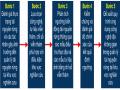 Research on the Current Characteristics of Forest Resources and Factors Affecting Forest Resources Management in the National Park Area
 -
 Current Status of Soc Son Protective Forest Resources for Tourism Purposes
 -
 Human Ecological Pyramid for Studying the Impact of Local Buffer Zone Communities on Forest Resources
1.1.1.1 Concept of forest
According to the Food and Agriculture Organization of the United Nations (FAO):
Forest is a land area larger than 0.5 ha with canopy cover of over 10%, minimum average tree height must reach 5m, forest includes natural forest and planted forest 1 .
This concept combines factors such as tree density, tree height, forest land use and ecological function to create a concept of forest that tends to list forest characteristics to easily determine whether an area of trees is actually forest or not.
According to Clause 1, Article 3 of the Law on Forest Protection and Development 2004 (Law on Forest Protection and Development) of Vietnam, "A forest is an ecosystem including a population of forest plants, forest animals, forest microorganisms, forest land and other environmental factors, in which trees, bamboo or typical flora are the main components of the forest canopy cover.
from 0.1 and up.". Thus, according to Vietnamese law, forests are determined based on three criteria 2 :
(1) An ecosystem with main components being perennial trees, coconut trees, bamboo with an average height of 5m or more (in the case of newly planted forests or coastal mangrove forests, the tree height is regulated to be lower but must ensure a density of 1000 trees/ha or more), capable of providing forest products, protecting the environment, and conserving biodiversity.
(2) The canopy cover (forest canopy cover) is the main component of the forest and must be from 0.1 or more. The canopy cover is understood as the degree of coverage of the forest canopy over the forest land, expressed as the tenth ratio between the forest land area shaded by the forest canopy and the forest land area 3 .
(3) The minimum contiguous forest area is from 0.5 ha or more or a forest strip with a minimum width of 20 meters and with 3 or more rows of trees. For agricultural ecosystems, the aquaculture area has perennial trees.
1 http://www.fao.org/docrep/005/y4171e/y4171e10.htm, accessed 03/06/2015
2 Article 3 of Circular No. 34/2009/TT-BNNPTNT of the Ministry of Agriculture and Rural Development (MARD) dated June 10, 2009 regulating criteria for identifying and classifying forests (Circular 34/2009/TT-BNNPTNT)
3 Clause 2 Article 3 Law on Forest Protection
Wood, bamboo, coconut, areas with trees but not falling into one of the two above cases are not considered forests but only scattered trees.
In addition to the similarities between the Vietnamese concept of forest and the FAO concept of forest in terms of the regulation that the canopy cover must be from 0.1 (10%) or more, the average height of forest trees or the minimum area that a forest must achieve, Vietnamese law stipulates more specifically the elements that constitute a forest (what is the main vegetation component in the forest, what is the tree density, the land area that is forest land must be continuous...) and is more comprehensive when determining areas that do not meet the basic conditions of coverage or a minimum area of 0.5 ha but are forests because of their future development (newly planted forests, forest tree strips), biological characteristics of each plant species (for example, coastal mangrove forests usually only have an average height of 3m). The concept of forest under Vietnamese law not only provides a clear definition of forest but also serves as a basis for distinguishing forests from areas with other vegetation that are not forests.
Regarding forest classification, the Law on Forest Protection and Development divides forests into three types based on their main purpose of use: protection forests (PF), special-use forests (SUF) and production forests (PSF). At the same time, combined with the origin of formation, these three types of forests can be natural forests or planted forests. Accordingly, 4 :
Protection forests: are forests built and developed for the purpose of protecting and regulating water resources, protecting land, preventing soil erosion, limiting natural disasters, regulating climate, ensuring ecological balance and environmental security. Protection forests include 4 types: upstream protection forests; windbreak and sandbreak forests; wave-blocking and sea-encroachment protection forests; environmental protection forests.
Special-use forests: are mainly used for nature conservation, national forest ecosystem standard samples, forest biological gene sources, scientific research, protection of historical - cultural relics and scenic spots, serving tourism, combined with protection, contributing to environmental protection. Special-use forests include: national parks, nature reserves, landscape protection areas, scientific experimental research forests.
Production forests: are forests used mainly for the production and trading of timber and non-timber forest products and combined with protection and environmental protection. Production forests include planted forests, natural forests and seed forests.
To serve the work of forest investigation, inventory, statistics, forest protection and development planning, forest resource management and development of forestry programs and projects on June 10, 2009, the Ministry of Agriculture and Rural Development (MARD)
4 Article 4 Law on Forest Protection and Development
has issued Circular 34/2009/TT-BNNPTNT stipulating criteria for identifying and classifying forests (Circular 34/2009/TT-BNNPTNT). Accordingly, in addition to the criteria for purpose of use, forests can also be classified based on origin, reserves, tree species or site conditions 5 . According to the site conditions criteria, forests in our country include soil mountain forests, rocky mountain forests, flooded forests, and forests on sandy soil. According to the tree species criteria, there are timber forests, bamboo forests, areca and coconut forests, and mixed timber and bamboo forests. Based on reserves
quantity, distinguish between very rich forests, rich forests, average forests, poor forests, forests with no reserves. If based on the origin of formation, forests are divided into two types 6 :
Natural forest: is a forest available in nature or restored by natural regeneration.
Planted forest: is a forest formed by human planting.
According to the most recently published statistics , by the end of 2013, Vietnam had about 13.95 million hectares of forest. Of which, natural forests accounted for about 10.4 million hectares, the rest were planted forests (3.55 million hectares). If classified by function, about 2.1 million hectares were special-use forests, about 4.67 million hectares were protected forests and production forests accounted for 7.18 million hectares. Of the total 10.4 million hectares of natural forests, protected forests and special-use forests accounted for 57.6%, the rest (42.4%) were production forests. Up to now, the whole country has about 3.55 million hectares of planted forests, of which the area of planted forests is production forests of about 2.65 million hectares (74.65% of the total area of planted forests); the rest (25.35%) is the area of planted forests is protected forests and special-use forests. In recent years, the area of planted forests has increased relatively rapidly, at a rate of about 150,000 - 200,000 ha/year 8 . This is the basis for increasing the volume and quality of forests in the future for our country.
Although there are many criteria for forest division, when studying the ownership regime for forest resources, we are interested in the types of forests classified based on two criteria, which are the origin of formation and the purpose of use. Because the State's forest resource management and protection activities such as establishing forests, planning, forest development plans, forest allocation, and forest leasing are all based on the results of forest classification as protected areas, special-use forests, or production forests. The State's decision to allocate and lease forests to appropriate entities is also based on the purpose of use of each type of forest, and is also the basis for considering the recognition of forest use rights and production forests ownership rights as planted forests. In addition, classifying forests into protected areas, special-use forests, and production forests will be convenient.
5 Chapter II Circular 34/2009/TT-BNNPTNT
6 Article 5 Circular 34/2009/TT-BNNPTNT
7 Decision 3322/QD-BNN-TCLN of the Minister of Agriculture and Rural Development dated July 28, 2014 announcing the national forest status in 2013 (Decision 3322/QD-BNN-TCLN)
8 To Xuan Phuc & Tran Huu Nghi (2014), Report on land and forest allocation in the context of forestry sector restructuring: Opportunities for forest development and improving livelihoods in highland areas , Hue, p.12
for the regulation of the legal rights and obligations of each type of forest owner for each specific type of forest. It can be seen that the origin and purpose of use of each type of forest determines the form of ownership for that forest and the method of exercising the ownership rights of the forest owner.
1.1.1.2 Concept of forest resources
Forest resources are a type of renewable, finite natural resource that includes forest plants, forest animals and natural elements related to forests (forest landscape, microorganisms, soil, etc.) 9 .
As mentioned, forest resources are made up of many extremely rich and diverse natural components. Among them are millions of species of animals, plants and microorganisms, whose lives are closely related to each other, forming a diverse biological community. Unlike air, wind or solar energy which are unlimited resources, forest resources have a certain limit in reserves, which will gradually decrease with human exploitation and use. However, forests are a type of resource that can be regenerated, restored, and even improved in quality and reserves through the process of natural regeneration or replanting by humans if they receive reasonable management and conservation.
As we know, forest resources play a particularly important role in human life. First of all, the forest ecosystem provides forest products (timber and non-timber forest products) to serve the consumption needs of all social classes; is a source of raw materials for industrial production, agriculture, basic construction sectors; provides valuable medicinal herbs to serve the needs of treating diseases and improving human health; provides food, raw materials for food processing... Forest resources, especially forests, contribute to regulating water flow, preventing soil erosion and degradation, preventing sedimentation of rivers, lakes and dams, minimizing floods, limiting droughts, preserving large hydropower sources for hydroelectric plants, cleaning the air, and regulating the climate. In addition, forests are also the subject of research in many scientific fields, especially biosphere reserves that preserve rare genetic resources. Thus, forest resources have great value for the economic development of each country, contributing to ecological balance and environmental protection.
Compared to many countries in the world, Vietnam is considered a country with a large forest area, ranked 45th out of 192 countries and territories 10 . Therefore, the potential for exploiting and developing forest resources in our country is very large. After the wars
9 Nguyen Thanh Huyen (2013), Law on management and protection of forest resources in Vietnam, National Political Publishing House, p.14
10 Calculations using information from The World Factbook 2011, https:// www.cia.gov/library/publications/the-world-factbook/geos/vm.html, accessed July 8, 2015
Forestry development strategy through stages, currently forest cover has reached 40% 11 , wood reserves - one of the most important forest resources is 813.3 million m 3 (natural forests account for 94%, planted forests 6%) and about 8.5 billion bamboo trees. The average wood reserve of natural forests is 76.5 m 3 /ha and planted forests is 40.6 m 3 /ha. Wood is mainly concentrated in 3 regions: the Central Highlands accounts for 33.8%, the North Central Coast 23% and the South Central Coast 17.4% of the total reserve 12 . Regarding forest biodiversity, Vietnam
Vietnam is considered one of the countries in Southeast Asia rich in biodiversity with a rich forest flora. Up to now, 10,484 species of vascular plants, about 800 species of mosses and 600 species of fungi have been recorded. According to the prediction of botanists, the number of vascular plant species will be at least 12,000 species, of which about 2,300 species have been used by people as a source of food, medicine, animal feed, wood, essential oils and many other raw materials. Like plants, the forest fauna of Vietnam is not only rich in species composition but also has many unique features, representing Southeast Asia with 275 species of mammals, 828 species of birds, 180 species of reptiles, 80 species of frogs, of which more than 100 species and subspecies of birds and 78 species and subspecies of mammals are endemic.
high practical value 13 .
1.1.2 Concept of forest owner
Forest owners are organizations, households, and individuals to whom the State allocates forests, leases forests, allocates land for forest planting, leases land for forest planting, recognizes forest use rights, recognizes ownership rights of production forests as planted forests; and receives forest transfers from other forest owners .
According to the law, forest owners include 7 groups of subjects, which are :
RPH Management Board, RDD Management Board
Domestic households and individuals
Economic organization
Foreign organizations and individuals investing in Vietnam
Vietnamese people residing abroad investing in Vietnam
People's armed forces
Organize scientific research and technology development, training and vocational training in forestry.
11 Decision 3322/QD-BNN-TCLN
12 Decision No. 18/2007/QD-TTg dated February 5, 2007 of the Prime Minister approving the Vietnam Forestry Development Strategy for the period 2006-2020 (Decision 18/2007/QD-TTg)
13 Phung My Trung, "What do you know about the biodiversity of Vietnam's forests?", http://www.vncreatures.net/event06.php, accessed July 8, 2015
14 Clause 4 Article 3 Law on Forest Protection
15 Article 5 Law on Forest Protection and Development
It can be seen that the State encourages economic organizations, households and individuals to access and exploit forest resources when it stipulates that forest owner groups include many components in society, does not limit domestic or foreign forest owners and does not stipulate that State management agencies are one of the forest owners.
In principle, the State (representing the entire population) will act as the absolute owner of the forest. In addition, there are subjects whose ownership of RSX as planted forests is recognized by the State - relative owners of the forest. Accordingly, the concept of "forest owner" stipulated in Article 3 of the Law on Forest Protection includes both subjects who have relative ownership of RSX as planted forests and those who do not have forest ownership but are only allocated forests, leased forests, allocated land for forest planting, leased land for forest planting by the State; receiving the transfer of forest use rights from other forest owners. Thus, the concepts of "forest owner" and "forest owner" are not identical.
Each type of forest owner has its own characteristics, rights and obligations depending on the type of forest they are assigned or leased according to the provisions of the Law on Forest Protection and Development. The conditions to become a forest owner for each type of subject also have many differences, but first of all, they must belong to one of the groups of subjects mentioned above (except for the Management Board of Forest Protection and Development established after the allocation of Forest Protection and Development); next, they must be considered by a competent State agency, granted a decision on forest allocation, forest lease, land allocation, land lease for forest planting based on the forestry investment project approved according to the law on investment (for foreign organizations and individuals, Vietnamese people residing abroad), the living area in the locality with forests (usually applied to households and individuals) or the need to use for business purposes (for economic organizations), research (for scientific research organizations), security and defense reasons (for people's armed forces units). Upon completion of the necessary procedures, they will become forest owners and be recognized for their forest use rights or ownership of planted forests.
1.2 Basis for establishing the regime of public ownership of forest resources in Vietnam
1.2.1 Theoretical basis
Forests are a valuable resource for each country in particular and the world in general, an important part of the ecological environment, of great value, especially for the economy. Forests contain at least 80% of the world's biodiversity, contributing to the lives of more than 1.6 billion people. Forests and forest products are a source of economic growth and create formal and informal jobs for about 50 million people. The value of forest products traded globally reaches 270
billion US dollars. Of which, forests in developing countries account for over 20% 16 . For a mountainous country like Vietnam, the role of forests is present not only in the economic sector (forestry contributed 5.9% to the GDP structure in 2013 and has an increasing trend 17 ) but also in daily life, cultural life, and spirituality. Unlike mineral resources, forests are renewable resources and are also often negatively impacted by humans. According to the investigation results of the World Wide Fund for Nature (WWF), each year about 119.6 million hectares to 149 million hectares of forest worldwide are destroyed18 . If we do a small calculation with the current 4 billion hectares of global forest, in less than 40 years the forest will be completely wiped out, followed by a series of consequences such as climate change, pollution, poverty, and disease. Moreover, we all know that the speed of forest recovery is always slower than the speed of forest degradation. Once the natural forest resources are exhausted, there is almost no chance of recovery.
In order to manage, protect and develop forest resources well, countries pay special attention to the issue of forest ownership as expressed in legal documents and Vietnam is no exception. Currently, there are two forest ownership regimes in the world: public ownership (state ownership, collective ownership) and private ownership (private ownership) under many different ownership models. The most common model is to recognize many forms of ownership in countries with the largest forest areas in the world such as the US, Canada, Brazil, Argentina, China, Australia, India, Vietnam... all stipulate that forests are owned by the State and privately. For example, the US has 56.3% of its forest area under private ownership, Sweden has only 20.2% of its forest under state ownership,... In addition, there is a model that only recognizes the form of state ownership of forests as the only form of ownership such as in the Russian Federation, Indonesia, Myanmar, the Republic of Korea, etc.
Central Africa 19 .
As a country in the socialist system, Vietnam recognizes natural resources, including forest resources, as means of production under the common ownership of the whole society. Marxism has pointed out that the goal and nature of socialism is to abolish private ownership and establish public ownership of means of production, where everyone enjoys them equally, along with that.
16 https://openknowledge.worldbank.org/bitstream/handle/10986/6455/446400PUB0Fore101OFFICIAL
0USE0ONLY1.pdf?sequence=1, accessed June 5, 2015
17 Do Huong, "Forestry sector's GDP can reach 6%", http://baodientu.chinhphu.vn/Hoat-dong-Bo-nganh/GDP-nganh-Lam-nghiep-co-the-dat-6/214260.vgp, accessed June 5, 2015
18 https:// www.worldwildlife.org/threats/deforestation, accessed 6/6/2015.
19 Appendix 2 - Statistics on forest ownership in two forms of 24 out of 30 countries with the largest forest areas in the world - Andy White & Alejandra Martin (2002), Who owns the world's forest?- Forest tenure and public forests in transition, USA, pp.5 (Appendix 2)
The ability to control society according to a general plan 20. Vietnam builds socialism based on the study and creative application of the theoretical foundation of Marxism-Leninism, so the establishment of a public ownership regime of the means of production and a state ownership regime of forest resources is suitable in terms of theory. After a long development process, up to the present stage, the state ownership regime in our country in general has still affirmed its inevitable trend in the cause of perfecting a state of the people, by the people, for the people with a socialist-oriented market economy, in which the state economy plays a leading role, requiring to be based on the foundation of a public ownership regime of the means of production including a state ownership regime of forest resources.
Forest resources, like other natural resources, in tangible or intangible forms, such as water resources, land, minerals, air, cultural and historical relics, etc., are the common property of the entire people, created over many generations. Therefore, establishing a regime of common ownership of forest resources is to affirm the rights of each citizen to decide, exploit, use, develop and protect forest resources according to a democratic mechanism; contributing to ensuring that social relations operate on the basis of common ownership, but under specific forms of ownership institutionalized by laws and policies of the State. The regime of common ownership of forest resources also creates conditions for communities to participate in deciding, exploiting, using and benefiting from forests, while ensuring that all people supervise the management, planning, exploitation and development of resources by authorities at all levels.
In short, stemming from the importance of forest resources to the social life of each country; stemming from the political and economic characteristics of a socialist country with the principle that all wealth belongs to the people, all individuals have the right to access the means of production equally, the regime of public ownership is a mandatory and inevitable requirement.
1.2.2 Legal basis
The regime of public ownership of forest resources is stipulated in the supreme law of the State of Vietnam, the 2013 Constitution affirms:
Land, water resources, mineral resources, marine and air resources, other natural resources and assets invested by the State,
20 Do The Tung, "The basic viewpoint of C. Marx on ownership and its application to the documents of the 11th Party Congress", http://www.tapchicongsan.org.vn/Home/Quan-triet-thuc-hien-nghi-quyet-dai-hoi-dang- XI/Noi-dung-co-ban-van-kien/2011/12442/Quan-diem-co-ban-cua-C-Mac-ve-so-huu-va-viec.aspx, accessed June 5, 2015.