
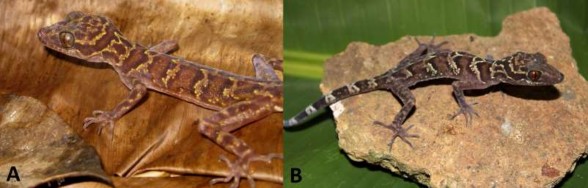
Figure 3.3. New species Cyrtodactylus ngoiensis . A: Male specimen (IEBR 4548); B: Female specimen (IEBR A.2013.110). Photo source: A. Teynié and TQ Nguyen.
Maybe you are interested!
-
 Study on natural regeneration characteristics of Lim xet tree species Peltophorum tonkinensis A.Chev in Lam Binh district, Tuyen Quang province - 13
 -
 Building a Strength Development Training Plan for 15-16 Year Old Male Weightlifters of the National Youth Team
 -
 Research on building a model of high-level male badminton athletes through biological, pedagogical and psychological values - 2
 -
 Research on building a model of high-level male badminton athletes through biological, pedagogical and psychological values - 1
 -
 Study on natural regeneration characteristics of Lim xet tree species Peltophorum tonkinensis A.Chev in Lam Binh district, Tuyen Quang province - 11
4). Dixonius lao leaf-footed lizard Nguyen, Sitthivong, Ngo, Luu, Nguyen, Le & Ziegler, 2020.
Specimens obtained: 03 specimens, 01 adult male specimen, 01 adult female specimen, and 01 semi-adult female specimen. Size: SVL: 35.8-55.4 mm; TaL: 46.9-69.0 mm.
Morphological characteristics: Head with slightly brownish olive spots; ventral surface pale beige to uniform white as well as belly and throat; upper surface grey with dark grey spots; upper surface of fingers and toes uniform pale grey; upper surface of tail pale brownish grey, with light spots evenly distributed along the tail.
Ecological characteristics: The new species was found between 20:00 and 21:00 on the ground in the forest or on cliffs about 0.3 m above the ground. The surrounding habitat is secondary limestone forest. Relative humidity ranges from 58% to 70% and air temperature is 25-26 o C. Located in Tha Khek district, Kham Muon province.
The new species closely resembles D. minhlei , but can be distinguished by the arrangement of the raised scales on the back, the number of horizontal plates under the fourth toe, and a different color pattern. In addition, Dixonius lao is separated from D. minhlei by about 730 km in the Vinh Cuu Nature Reserve, Dong Nai Province, southern Vietnam. Other previous descriptions from Thailand indicate that it is closely related.
closest to the new species based on genetic distance and phylogenetic relationships. In phylogenetic analyses, the new species was shown to be the sister taxon to two undescribed taxa from Thailand but differed by at least 8.6% in genetic distance based on analysis of the mitochondrial gene ND2.
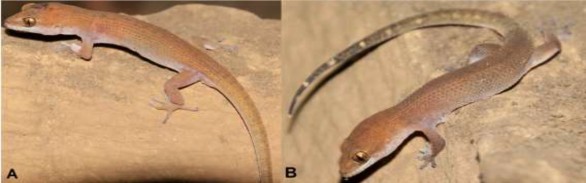
Figure 3.4. New species specimen Dixonius lao A: Male specimen (VNUF R.2016.2); B: Female specimen (IEBR A.2019.6). Photo source: LQ Vinh
5). Dixonius somchanhae Leaf-footed Lizard Nguyen, Luu, Sitthivong, Ngo, Nguyen, Le & Ziegler, 2021.
Specimens obtained: 03 specimens, 01 adult male specimen and 01 adult female specimen and 01 subadult female specimen. Size: SVL: 35.5-47.1 mm; TaL: 35.0-62.7 mm; 19-21 rows of raised scales on the back; 23-26 rows of raised scales on the belly; 7 or 8 upper labial scales; 5 or 6 lower labial scales; 5 or 6 pre-ventral perforated scales in males and absent in females, no perforated scales on thighs.
Morphological characteristics: Dorsal surface with irregular dark and light blotches; head dark and blotchy; a light brown mid-dorsal stripe and a stripe running from the nose over the eye ending above the ear; irregularly arranged light spots from head to tail; ventral surface from light beige to white to the throat; dorsal surface of tail light grayish brown with cream-colored streaks (Figure 3.5).
Ecological characteristics: The new species was found at night, from 19:00 to 22:00, the orchid area has large rocks floating on each other. The surrounding habitat is secondary forest consisting of trees and small shrubs, the air temperature
is 29-33 o C. In the area of Ban Huaysorn-Huaysua, Na Sai Thong district, Vientiane, Laos.
The new species can be distinguished from all other species, in phylogenetic analysis, The species was recovered as the sister taxon of D. siamensis , occurring in Laos, Thailand and Vietnam. Genetically, the two species are genetically distinct by nearly 9.4% based on the mitochondrial ND2 gene. This is the 12th known species in the genus Dixonius and the second Dixonius species described from Laos.
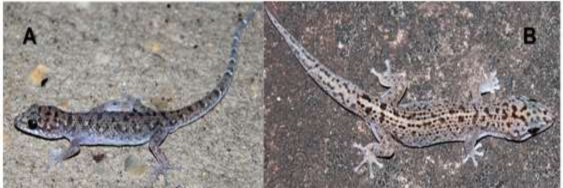
Figure 3.5. New species Dixonius somchanhae A: Type male specimen (VNUF R.2020.3); B: Male specimen (VNUF R.2020.2). Photo source: LQ Vinh.
6). Khunkham GeckoGekko khunkhamensis Sitthivong, Lo, Nguyen, Le, Ngo, Khotpathoom, Ziegler & Luu, 2021.
Specimens obtained: 03 specimens, 01 adult male specimen, 01 adult female specimen and 01 subadult female specimen. Size: SVL: 69.7-75.2 mm; TaL: 69.7-88.4 mm; no raised scales on the back; number of ventral scales 42-45; horizontal scales under the first toe 13-14, on the fourth toe 14-15; webbed fingers and toes; no pre-cloacal perforated scales in females.
Morphological characteristics: The dorsal surface of the body has five dark gray bands, becoming uneven behind. The head is covered with small scales; the snout is blunt; the eyes are covered by a third eyelid; the eardrum is round, shallow, smaller than the eye diameter; the body is light gray, interspersed with uneven light black bands from the head to the tip of the tail. Along the two
The flanks have distinct rows of light gray scales. The large scales on the body are pale yellow, the pupils are dark with small vertical black lines (Figure 3.6).
Ecological characteristics: Specimens of the new species were collected at night from 19:10 to 20:30, on cliffs and cave entrances, 0.5 to 2.0 m above ground, at altitudes from 172 to 320 m. The surrounding habitat is secondary forest consisting of small trees and shrubs. Humidity is approximately 60-70% and air temperature ranges from 22-26 o C. Located in Khun Kham district, Kham Muon province.
The new species of Gekko japonicus has been characterized morphologically and molecularly. Morphologically, it can be distinguished from the remaining congeners by a combination of characters. Phylogenetically, Gekko khunkhamensis is placed in a clade with five species from Laos, including G. aaronbaueri , G. bonkowskii, G. nadenensis, G. sengchanthavongi, G. thakhekensis , and a species also known from Vietnam, G. scientiadventura . All species are known from central Laos. This area borders Quang Binh province, Vietnam, where G. scientiadventura was discovered. The new species differs from its congeners by at least 13% in genetic distance based on analysis of a segment of the mitochondrial ND2 gene.
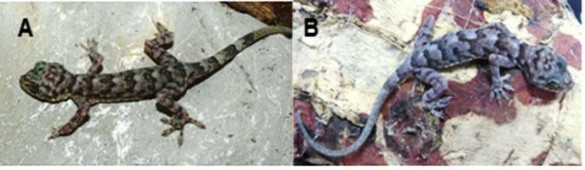
Figure 3.6. New species Gekko khunkhamensis (A) Male specimen; (B) Female specimen.
Photo source: Saly Sitthivong
3.1.2. New records for the province
1) Wayakonei Cyrtodactylus wayakonei Nguyen, Kingsada, Rosler, Auer & Ziegler, 2010.
This species was first described in Luang Nam Tha Province, Northern Laos in 2010, and in 2011, it was reported in Yunnan Province, China. In this study, Cyrtodactylus wayakonei was found in Na Mo District, Udomxay Province, Northern Laos, about 75 km from the original description point of the species to the new encounter point in a straight line. The new specimen has sequence concordance results with the original description; also consistent with the morphological results such as: Body length 77.9-89.6 mm, tail length 82.7-85.3 mm, 7 or 8 upper lip scales; 7-9 lower lip scales, smooth scales, 18-20 rows of dorsal tubercles, slightly developed ventral margins with large tubercles, 32-33 ventral scales, 93-97 body scales, longitudinal body scales from chin scale to vent 152-156, 6 perforated scales on vent in males and 7 in females, no perforated scales on thighs, 18-20 transverse scales on fourth toe, 18-21 transverse scales on fourth toe, 1/2 expanded subcaudal scales, flat, smooth caudal tubercles, head and back with reticulated pattern. Color of living specimens: dorsal surface grayish brown with dark purple-brown spots and reticulated bands; tubercles beige to yellow; dorsal surface of tail grayish black with beige pattern (Figure 3.7).
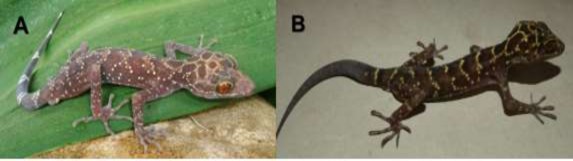
Figure 3.7. (A) Original description form (IEBR A.2010.01); (B) New record form (VNUF R.2021.50). Image source: TQ Nguyen and Saly Sitthivong.
2) Hemiphyllodactylus kizirianii Nguyen, Botov, Le, Nophaseud, Zug, Bonkowski & Ziegler, 2014.
Originally described in Luang Prabang province, Northern Laos in 2014, in this study, the Flat Gecko Hemiphyllodactylus kiziriani was found in Namo district, Udomxay province, Northern Laos, from the original description point of the species to the new encounter point, about 125 km in a straight line. The new specimen has self-sequence results consistent with the original description; also consistent with the morphological results such as: Body length 31.2-43.5 mm, tail length 29.4-38.9 mm, long snout, large eyes, upper lip scales 8-10, lower lip scales 8-9, smooth scales, no tubercles on the back, slightly developed margins on both sides of the abdomen with large tubercles, 11-14 abdominal scales, perforated scales on the vent in males 13-15 and 8-12 perforated scales in females, no perforated scales on the thighs, 1/1 tubercles on both sides of the tail base; Horizontal scales on fourth toe 4/4-4/5, horizontal scales on fourth toe 4/4-5/5, subcaudal scales expanded, tail flattened, smooth. Coloration of living specimen: upper surface of head and body yellowish gray, two dark brown plates originating from the posterior corner of the eye on each side, upper plate extending to neck but not forming a ring, lower plate connecting with dark dorsal stripe, extending along flank to base of tail; on neck there is a dark brown band, neck and back with a row of light spots on vertebrae, two rows of narrow dark brown bands running along the dorsal surface but not connecting each other, upper surface of limbs gray with dark bars, upper and lower lips with dark bars, distinct dorsal mark with dark brown spot in the middle, surrounded by a U-shaped arm, base of tail with dark band, creating a dark gray tail (figure 3.8).
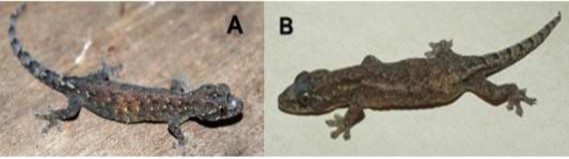
Figure 3.8. (A) Original description form (IEBR A.2014.3); (B) New record form (VNUF R.2021.52). Image source: TQ Nguyen and Saly Sitthivong.
3.1.3. Morphological characteristics of gecko species whose species names have not been identified
In this study, 07 species have been recorded that have not been identified and are in the molecular biological analysis stage. The morphological characteristics of the species are as follows:
1). Cyrtodactylus sp.1 finger lizard
This species was collected in Muong Phuong district, Vientiane province, a total of 02 adult specimens, both female, the encounter point was a cliff with the following morphological characteristics: Body length SVL = 65.1-72.8 mm, tail length TaL = 70.5-82.1 mm, upper lip scales 9-10, lower lip scales 8-10, scales surrounding the chin plate 5-6, row of convex tubercles on the body 16-18, row of scales surrounding the body 137-144, belly scales 43-44, horizontal scales under the fourth hand 15-17, horizontal scales under the fourth foot 16-17, no perforated scales above the vent, scales under the tail do not expand, head covered with small scales; blunt snout; eyes covered by the third eyelid; round, shallow eardrum, smaller than eye diameter. On the back there are yellow rings alternating with gray rings, these rings have irregular shapes. There are small black dots distributed unevenly from the head down to the tip of the tail and on the limbs. The bumps on the body are gray and evenly distributed. There is a white stripe across the eyes running from the nose to the end of the chin, the belly is gray (Figure 3.9).
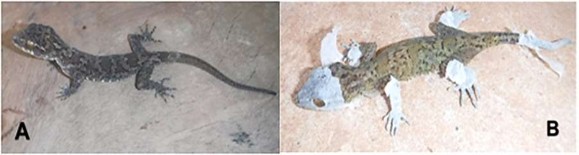
Figure 3.9. Unidentified species Cyrtodactylus sp.1 (A) Female specimen morphology; (B) Female specimen molting. Photo source: Saly Sitthivong.
Cyrtodactylus sp.1 has morphological characteristics similar to Cyrtodactylus interdigitalis , but this species has the difference that the tail has spikes and no
twisted and found on cliffs, while Cyrtodactylus interdigitalis is often found on trees. However, due to the lack of comparison of genetic differences, the exact species identification has not been made yet.
2). Cyrtodactylus sp.2 finger lizard
The specimen was recorded and collected in Khun Kham district, Kham Muon province, Central Laos, a total of 04 adult specimens, 01 male and 03 females, the encounter point was a cliff and 01 specimen was on a tree, with some morphological characteristics such as: body length SVL = 58.1-73.2 mm, tail length TaL = 92.2-103.8 mm, lower lip scales 9/9, upper lip scales 11/12, scales surrounding the chin plate 5-7, row of convex tubers on the body 20-22, row of scales surrounding the body 101-105, belly scales 41-42, horizontal scales under the fourth hand 18-20, horizontal scales under the fourth foot 21-22, the number of perforated scales on the vent in males is 46, not in females, the scales under the tail are expanded, the head is covered with small scales; the snout is blunt; the eyes are covered by the third eyelid; The eardrum is round, shallow, smaller than the eye diameter; The body has 5 dark brown rings alternating with 4 gray rings, evenly distributed on the body to the tip of the tail, the dark brown ring on the back of the neck is U-shaped to the back of the chin running horizontally across the eyes to the nose very clearly, small black dots on the head. On the body there are large white bumps that stand out compared to the other scales, from the head to the tip of the tail there are light black dots distributed unevenly. Between the dark brown and gray rings there are small black rings, the belly is light gray. The tail is long and round and gradually tapers down to the tip of the tail (Figure 3.10).
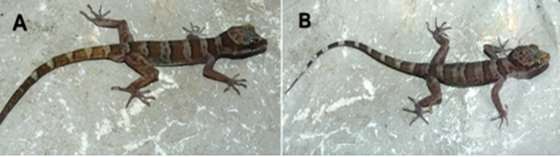
Figure 3.10. Unidentified species Cyrtodactylus sp.2 (A) Male specimen morphology; (B) Female specimen morphology. Photo source: Saly Sitthivong.