
Thus, with just a very simple plan, Tran Thu Do won the throne for his Tran family. The Tran family passed the throne for 175 years (1225-1400) and was one of the great dynasties in Vietnamese history.
When talking about Vietnamese cultural customs, the tour guide has the opportunity to explain
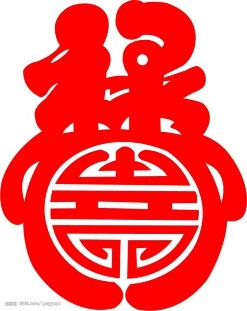
THE LEGEND OF THE TWO WORDS “DOUBLE HAPPINESS”. The story begins like this:
Maybe you are interested!
-
 Organization of Poetry Form, Tone, Language in Nguyen Duy's Poetry
 -
 The relationship between travel motivation, destination image and destination choice - A case study of Binh Dinh province tourism destination - 1
 -
 Solutions for Security and Travel Safety
 -
 Business Performance of the Company in the Period 2009–2011 Table 2.1. Business Results of Viet Holiday Travel Company
 -
 Some measures to help students in the first grades of primary school use mathematical language effectively - 14
In Vietnam as well as in China, the two words “Song Hy” have long been used as a symbol to represent the happiness of couples. Normally, if asked the meaning of the two words Song Hy, in general, everyone can immediately say: Song means two, Hy means happy; Song Hy means two families are happy, at a wedding, both families are happy, that’s right, who would have any more questions. But with tour guides, it is better to explain more deeply, that is what is called “having the hand of a tour guide”. Tradition
Legend has it that at the age of 20, Wang Anshi 1 (1021-1086), an outstanding legislator of the Song Dynasty (China), stopped at the town of Ma on his way to the imperial examination.
Then he went out for a walk and happened to see a parallel sentence on the lantern at the house of the Ma family's grandfather:
"The horse sails, the horse runs away, the horse sails and stops."
Meaning: "The lantern pulls the army, the army pulls the lantern, the lantern goes out, the army stops moving"
The second part was still waiting for someone to answer. After Wang Anshi finished reading it, he clapped his hands and said, "That's easy." The official's family heard it and rushed in to report to the official. Before the official could ask who said it, Wang Anshi had already gone into the examination hall.
The next day, when Wang Anshi submitted his book, he was highly praised by the chief examiner and was immediately invited to take an oral exam. The chief examiner pointed to the tiger flag hanging in front of the court and said:
"Flying tiger flag, flag flying tiger, flag curling tiger hidden body"
1 … Wang Anshi was one of the great Confucian scholars of China during the Song Dynasty. He was also one of the few bold and great reformers of China at that time. Since the reign of Song Renzong (1023 – 1064), Wang Anshi had continuously submitted letters requesting reforms. During the reign of Song Yingzong (1064 – 1067), Wang Anshi was given the position of prime minister. From here, his strong reform ideas were quickly implemented by the power base he was assigned to hold. Wang Anshi implemented a series of reforms with names such as: Thanh Mieu, Mien Dich, Thi Dich, Quan Du, Bao Giap, Bao Ma … history collectively calls all of these reforms Wang Anshi’s New Law .
Meaning: " Flag flies tiger, tiger flies flag, flag rolls tiger hides itself".
Wang Anshi immediately took the couplet from the official's house and gave it to him. The chief examiner saw that he had responded quickly and skillfully, and kept praising him. After finishing the exam, Wang Anshi returned to the Ma family's house. The Ma family recognized him and invited him to meet the official. The official invited him to respond, and he immediately took the couplet: "Flying tiger flag, flag flies tiger, flag rolls tiger hides body" to respond.
The mandarin saw that the match was both appropriate and appropriate, so he married his daughter to Wang Anshi and chose an auspicious day for the wedding ceremony.
It turns out that the couplet “The lantern pulls the army…” was proposed by Miss Ma to choose a husband.
On the wedding day, the court also announced good news: Lord Vuong passed the exam and was invited to the capital to attend the banquet. Vuong An Thach was happy to have his wife and happy to have the court announce his passing (Joyful joy), so he took a pen and wrote the words "Double Happiness" on paper and pasted it on the door, then recited:
"Skillful combination will create Double Happiness, Flying Tiger, Lamp, Horse to form a good relationship".
Since then, the word "Double Happiness" has been passed down to this day.
It's just a happy story between the two families on their wedding day, but if the tour guide tells this story, the origin of the two words "Double Happiness" will surely be enjoyed by many people.
Speaking of this, sometimes visitors want to ask for more details about Wang Anshi. The tour guide has prepared backup details so he can provide more information: "Wang Anshi is one of the great Confucian scholars of the Song Dynasty. He is also one of the few bold and great reformers of China at that time. Since the reign of Song Renzong (1023 - 1064), Wang Anshi has continuously submitted letters requesting reforms. During the reign of Song Yingzong (1064-1067), Wang Anshi was given the position of prime minister. From here, his strong reform ideas were quickly implemented by the power base he was assigned to hold. Wang Anshi implemented a series of reforms with names such as: Thanh Mieu, Immunity, Thi Dich, Quan Du, Bao Giap, Bao Ma... History calls all of these reforms Wang Anshi's New Laws"
3. Conclusion.
Usually talk about the general value, and the value for tourism activities of the tourist attraction. It is better to get some opinions from domestic and foreign tourists to evaluate the tourist attraction. Through those tourist attractions, the tour guide wants to convey to the tourists what main content. Here, it is necessary to clarify once again the purpose of the tour, the content of the information and propaganda.
advertising for future tours and tour guide messages, invitations, and thanks.
All of the above content must be carefully prepared, and the documents provided must ensure accuracy.
REVIEW QUESTIONS
Question 1: Brief introduction about Thomas Cook Travel Company?
Question 2: Brief introduction about Macopolo Company?
Question 3: What is the fundamental difference in the concept of tourism and regular sightseeing?
Question 4: Why do we need to create a tourism presentation?
Question 5: What should tour guides do to have documents to serve as tour guides?
Question 6: What are the basic principles for writing a travel description?
Question 7: Structure of a travel presentation?
Question 8: What is the main content of the travel presentation?
Chapter II. EXPLANATION METHOD (15 periods)
Target:
After completing this chapter, students should understand and be able to:
- Master the skills of presenting a travel presentation.
- Use effective support tools to serve the presentation.
Focus:
Students know how to perform tour explanations in the role of a tour guide.
Lesson 1. EXPLANATION SKILLS (05 periods)
I. PRESENTATION SKILLS
1. Language and use of tone:
Language is the only means of communication, language is extremely important for tour guides. Through language, guides and tourists can have a perception, a feeling during the tour.
Therefore, when making a presentation, tour guides should try to exploit the maximum to use both languages at the same time (spoken language, expressive language). To do that, tour guides must rely on the content, circumstances, visitors, and service objects to choose the language and means of communication with the highest results.
When speaking, you need to harmonize the sound system, practice breathing properly, maintain a natural, comfortable state, know how to skillfully use the volume, sometimes low, sometimes high, suitable to the content and context of the presentation, creating an attraction for the listener without fear of boredom of the presentation content.
Pay attention to pronunciation, must present naturally, not cliched, empty to make guests feel the tour guide is like a radio.
Voice is clear, decisive, but graceful, not melodious, especially when relaying narration. Avoid stuttering, especially when speaking with rhymes like L becomes N or vice versa.
The speed of communication should be appropriate to the reception of the introduction. Do not speak too fast or too slow, making the listener bored. Use precise, common, easy-to-understand words. Do not use slang or vague terms that may be confusing or misunderstanding for visitors.
Always stick to the content you present.
2. Choose a place to present.
While preparing to explain and introduce to tourists at tourist attractions, tour guides need to know how to choose a suitable position. That place must be a place where the guide can easily observe and can fully hear the opinions of the tourists.
That place must be where all members of the tour group can clearly hear and see their tour guide.
That place does not affect any activities of staff in the tourist area, does not affect other groups of guests.
3. Voice.
Spoken language is widely used in general communication, and especially for the professional activities of tour guides, spoken language is the most used language. To express or to recognize the attitude, feelings, and perceptions of tour guides towards tourists and vice versa, people often pay attention to two factors: tone and language. Tone and voice are the means of transmission, language is the object of transmission.
Both factors are equally important, but to understand the tour guide's explanation, tourists often pay attention to how the tour guide speaks.
Through the words of the tour guide, his state and soul are integrated with the content of the explanation. We have a saying "Leave it as a piece of land, put it away as a Buddha", so if left as usual, the stone in Phan Thiet is just a stone, but when they know how to "breathe soul" into the stone, the stone suddenly becomes a very sacred "Mr. Dia". Through the guide, the person who breathed soul into the stone, for a long time "Mr. Dia Stone" in Phan Thiet has become a stop for tourists. Thus, by the voice integrated with the content of the explanation, the tour guide has attracted tourists to immerse themselves in the circumstances of the story.
Voices that are most inspiring, attractive, and appealing to listeners are those that are clear, gentle, coherent, slow, pure, and warm.
Depending on the content of the explanation and the speaker's emotions, the melody can be melodious, high and low, deep and deep, pulling the listener into the same mood and emotions as the tour guide.
For example : Tourists visiting Uncle Ho's hometown, when the tour guides at the site introduced him to his house associated with his childhood. With his Nghe accent, the speaker captivated the listeners, sometimes even unable to hold back their tears. Or at the Dong Loc T-junction tourist site in Ha Tinh, when the tour guide talked about the female youth volunteers who sacrificed themselves for their mission. They left at an innocent age, with very small dreams. When reading the verses about the youth volunteer squad looking for Ms. Cuc, almost all the tourists cried. That is enough to know how effective the tour guide's voice is at conveying emotion.
Language is a clear and consistent expression of the content of the presentation, so through the language expressed by the tour guide, the listener can understand more about the content of the presentation, including understanding more about the tour guide's professional capacity.
4. Know when to stop.
While giving a presentation, the tour guide needs to observe the guests to know their attitudes, and needs to know when to stop to avoid further problems.
A good ending to a presentation will create a good impression, admiration, and nostalgia in visitors, so to end the presentation
The tour guide should summarize the main points of the presentation, ask for feedback from the guests, and hope that good things will flourish and develop after the tour.
5. Questioning techniques.
While explaining, the tour guide should find and ask questions to the guests. Asking questions to the guests is not intended to probe the guests' knowledge but only to attract their attention. Or it is a reasonable way to transition the explanation content.
Once the question is asked, the tour guide should find a way to answer it himself. The answer should be just a form of further explanation.
6. Control your personal mood
While explaining, the tour guide needs to observe and guess whether the guest is happy or sad; interested in listening or not. Depending on the guest's receptive mood, adjust the explanation content accordingly.
II. METHODS OF USING SUPPORT TOOLS:
1. Microphone and how to use it
a. Common types of microphones:
Typically tour guides may use several types of microphones:
Microphones built into the car. If the car has a seat reserved for the tour guide, this type is already mounted on the microphone stand. The tour guide only needs to open the microphone and use it to introduce the presentation. In case there is no fixed seat, the tour guide can hold the microphone in his hand and explain like other commonly used microphones.
- Microphone has seconds.
- Wireless microphone.
- Battery speaker.
- Lapel microphone.
b. Structure of a microphone:
Normally, a microphone has 3 parts; the tail of the microphone has a three-pin pin to plug into the body of the microphone, if the tail of the microphone has a wire, the wire also has a jack to plug into the amplifier.
The body is usually arranged with a switch. There is an adjustment button on the switch; this button is usually divided into three levels. If it is at the middle level, the microphone is in the off mode. If you want to turn on the microphone to speak, push this button up; that is the button for the presenter. The sound emitted is suitable for the tour guide's voice. If you pull the button down to the bottom of the microphone in music mode, it means it is for the singer. The tour guide or if it is a battery-powered microphone, there is where the battery is installed for the microphone to operate; the sound pickup part and the microphone protective membrane.
c. How to use the microphone:
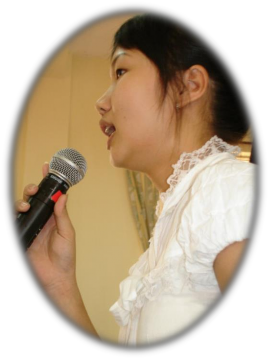
Using the microphone in a clumsy or unfamiliar way will make the tour guide confused, or the volume is too loud, creating a howling, distorted sound that is difficult to hear. Therefore, when speaking into the microphone, you need to speak more softly than usual, avoid breathing hard, creating a sigh that is very uncomfortable for the listener. Often due to lack of experience, each time before using the microphone, the tour guide often makes the mistake of opening the microphone and tapping on the microphone, even blowing into the microphone, creating unpleasant sounds for the listener. By doing so, it also makes tourists understand that the person using the microphone in front of them is not a professional microphone user, but the guide