
Be recognized by the community, partners and customers for sustainability and continuous development in the market.
With what has been shared, implemented and is being done, management levels (State, Ministries, Sectors, professional management agencies, ...) and enterprises need to be more determined and consistent in building actions for CSR in the current business context. In particular, small and micro enterprises also need to access information about the environment, public health and safety, and integrate CSR into the strategic direction of production and business. When most enterprises have to integrate CSR content into their business strategy, considering it a core task that must be carried out in parallel with their business, it can be considered a success and the success of e-commerce activities is inevitable when other factors remain unchanged.
4.2.2. Orientation
In the context of the changing business environment, each country and each enterprise need to make changes to adapt. With the aim of constantly improving the social responsibility of enterprises in business. There needs to be orientations with the goal to be achieved that each Vietnamese enterprise has a sense of responsibility in business, this responsibility always accompanies every production and business process and is carried out in accordance with international standards to facilitate e-commerce activities. First of all, this section focuses on two basic issues: (1) Assessment to determine the points that have been achieved and performed well in the past. (2) In addition, enterprises themselves and all levels assess the weak and lacking points so that there are timely supplementary measures to overcome so that in the coming time we can achieve the standards of CSR.
4.2.2.1 . Important points to focus on to promote social responsibility in commercial business
Maybe you are interested!
-

 Solutions for tourism development in Tien Lang - 10
zt2i3t4l5ee
zt2a3gstourism, tourism development
zt2a3ge
zc2o3n4t5e6n7ts
- District People's Committees and authorities of communes with tourist attractions should support, promote, and provide necessary information to people, helping them improve their knowledge about tourism. Raise tourism awareness for local people.
*
* *
Due to limited knowledge and research time, the thesis inevitably has shortcomings. Therefore, I look forward to receiving guidance from teachers, experts as well as your comments to make the thesis more complete.
Chapter III Conclusion
Through the issues presented in Chapter II, we can come to some conclusions:
Based on the strengths of available tourism resources, the types of tourism in Tien Lang that need to be promoted in the coming time are sightseeing and resort tourism, discovery tourism, weekend tourism. To improve the quality and diversify tourism products, Tien Lang district needs to combine with local cultural tourism resources, at the same time combine with surrounding areas, build rich tourism products. The strengths of Tien Lang tourism are eco-tourism and cultural tourism, so developing Tien Lang tourism must always go hand in hand with restoring and preserving types of cultural tourism resources. Some necessary measures to support and improve the efficiency of exploiting tourism resources in Tien Lang are: strengthening the construction of technical facilities and labor force serving tourism, actively promoting and advertising tourism, and expanding forms of capital mobilization for tourism development.
CONCLUDE
I Conclusion
1. Based on the results achieved within the framework of the thesis's needs, some basic conclusions can be drawn as follows:
Tien Lang is a locality with great potential for tourism development. The relatively abundant cultural tourism resources and ecological tourism resources have great appeal to tourists. Based on this potential, Tien Lang can build a unique tourism industry that is competitive enough with other localities within Hai Phong city and neighboring areas.
In recent years, the exploitation of the advantages of resources to develop tourism and build tourist routes in Tien Lang has not been commensurate with the available potential. In terms of quantity, many resource objects have not been brought into the purpose of tourism development. In terms of time, the regular service time has not been extended to attract more visitors. Infrastructure and technical facilities are still weak. The labor force is still thin and weak in terms of expertise. Tourism programs and routes have not been organized properly, the exploitation content is still monotonous, so it has not attracted many visitors. Although resources have not been mobilized much for tourism development, they are facing the risk of destruction and degradation.
2. Based on the results of investigation, analysis, synthesis, evaluation and selective absorption of research results of related topics, the thesis has proposed a number of necessary solutions to improve the efficiency of exploiting tourism resources in Tien Lang such as: promoting the restoration and conservation of tourism resources, focusing on investment and key exploitation of ecotourism resources, strengthening the construction of infrastructure and tourism workforce. Expanding forms of capital mobilization. In addition, the thesis has built a number of tourist routes of Hai Phong in which Tien Lang tourism resources play an important role.
Exploiting Tien Lang tourism resources for tourism development is currently facing many difficulties. The above measures, if applied synchronously, will likely bring new prospects for the local tourism industry, contributing to making Tien Lang tourism an important economic sector in the district's economic structure.
REFERENCES
1. Nhuan Ha, Trinh Minh Hien, Tran Phuong, Hai Phong - Historical and cultural relics, Hai Phong Publishing House, 1993
2. Hai Phong City History Council, Hai Phong Gazetteer, Hai Phong Publishing House, 1990.
3. Hai Phong City History Council, History of Tien Lang District Party Committee, Hai Phong Publishing House, 1990.
4. Hai Phong City History Council, University of Social Sciences and Humanities, VNU, Hai Phong Place Names Encyclopedia, Hai Phong Publishing House. 2001.
5. Law on Cultural Heritage and documents guiding its implementation, National Political Publishing House, Hanoi, 2003.
6. Tran Duc Thanh, Lecture on Tourism Geography, Faculty of Tourism, University of Social Sciences and Humanities, VNU, 2006
7. Hai Phong Center for Social Sciences and Humanities, Some typical cultural heritages of Hai Phong, Hai Phong Publishing House, 2001
8. Nguyen Ngoc Thao (editor-in-chief, Tourism Geography, Hai Phong Publishing House, two volumes (2001-2002)
9. Nguyen Minh Tue and group of authors, Hai Phong Tourism Geography, Ho Chi Minh City Publishing House, 1997.
10. Nguyen Thanh Son, Hai Phong Tourism Territory Organization, Associate Doctoral Thesis in Geological Geography, Hanoi, 1996.
11. Decision No. 2033/QD – UB on detailed planning of Tien Lang town, Hai Phong city until 2020.
12. Department of Culture, Information, Hai Phong Museum, Hai Phong relics
- National ranked scenic spot, Hai Phong Publishing House, 2005. 13. Tien Lang District People's Committee, Economic Development Planning -
Culture - Society of Tien Lang district to 2010.
14.Website www.HaiPhong.gov.vn
APPENDIX 1
List of national ranked monuments
STT
Name of the monument
Number, year of decisiondetermine
Location
1
Gam Temple
938 VH/QĐ04/08/1992
Cam Khe Village- Toan Thang commune
2
Doc Hau Temple
9381 VH/QĐ04/08/1992
Doc Hau Village –Toan Thang commune
3
Cuu Doi Communal House
3207 VH/QĐDecember 30, 1991
Zone II of townTien Lang
4
Ha Dai Temple
938 VH/QĐ04/08/1992
Ha Dai Village –Tien Thanh commune
APPENDIX II
STT
Name of the monument
Number, year of decision
Location
1
Phu Ke Pagoda Temple
178/QD-UBJanuary 28, 2005
Zone 1 - townTien Lang
2
Trung Lang Temple
178/QD-UBJanuary 28, 2005
Zone 4 – townTien Lang
3
Bao Khanh Pagoda
1900/QD-UBAugust 24, 2006
Nam Tu Village -Kien Thiet commune
4
Bach Da Pagoda
1792/QD-UB11/11/2002
Hung Thang Commune
5
Ngoc Dong Temple
177/QD-UBNovember 27, 2005
Tien Thanh Commune
6
Tomb of Minister TSNhu Van Lan
2848/QD-UBSeptember 19, 2003
Nam Tu Village -Kien Thiet commune
7
Canh Son Stone Temple
2160/QD-UBSeptember 19, 2003
Van Doi Commune –Doan Lap
8
Meiji Temple
2259/QD-UBSeptember 19, 2002
Toan Thang Commune
9
Tien Doi Noi Temple
477/QD-UBSeptember 19, 2005
Doan Lap Commune
10
Tu Doi Temple
177/QD-UBJanuary 28, 2005
Doan Lap Commune
11
Duyen Lao Temple
177/QD-UBJanuary 28, 2005
Tien Minh Commune
12
Dinh Xuan Uc Pagoda
177/QD-UBJanuary 28, 2005
Bac Hung Commune
13
Chu Khe Pagoda
177/QD-UBJanuary 28, 2005
Hung Thang Commune
14
Dong Dinh
2848/QD-UBNovember 21, 2002
Vinh Quang Commune
15
President's Memorial HouseTon Duc Thang
177/QD-UBJanuary 28, 2005
NT Quy Cao
Ha Dai Temple
Ben Vua Temple
Tien Lang hot spring
div.maincontent .p { color: black; font-family:"Times New Roman", serif; font-style: normal; font-weight: normal; text-decoration: none; font-size: 14pt; margin:0pt; } div.maincontent p { color: black; font-family:"Times New Roman", serif; font-style: normal; font-weight: normal; text-decoration: none; font-size: 14pt; margin:0pt; } div.maincontent .s1 { color: black; font-family:"Times New Roman", serif; font-style: normal; font-weight: normal; font-size: 16pt; } div.maincontent .s2 { color: black; font-family:"Times New Roman", serif; font-style: italic; font-weight: bold; text-decoration: none; font-size: 14pt; } div.maincontent .s3 { color: black; font-family:"Times New Roman", serif; font-style: italic; font-weight: normal; text-decoration: none; font-size: 14pt; } div.maincontent .s4 { color: black; font-family:"Times New Roman", serif; font-style: normal; font-weight: normal; font-size: 14pt; } div.maincontent .s5 { color: black; font-family:"Times New Roman", serif; font-style: normal; font-weight: bold; font-size: 14pt; } div.maincontent .s6 { color: black; font-family:"Times New Roman", serif; font-style: normal; font-weight: normal; text-decoration: none; font-size: 14pt; } div.maincontent .s7 { color: black; font-family:"Times New Roman", serif; font-style: normal; font-weight: bold; text-decoration: none; font-size: 14pt; } div.maincontent .s8 { color: black; font-family:"Times New Roman", serif; font-style: normal; font-weight: normal; text-decoration: none; font-size: 9pt; vertical-align: 6pt; } div.maincontent .s9 { color: black; font-family:"Times New Roman", serif; font-style: normal; font-weight: bold; text-decoration: none; font-size: 12pt; } div.maincontent .s11 { color: black; font-family:"Times New Roman", serif; font-style: normal; font-weight: normal; tex
Solutions for tourism development in Tien Lang - 10
zt2i3t4l5ee
zt2a3gstourism, tourism development
zt2a3ge
zc2o3n4t5e6n7ts
- District People's Committees and authorities of communes with tourist attractions should support, promote, and provide necessary information to people, helping them improve their knowledge about tourism. Raise tourism awareness for local people.
*
* *
Due to limited knowledge and research time, the thesis inevitably has shortcomings. Therefore, I look forward to receiving guidance from teachers, experts as well as your comments to make the thesis more complete.
Chapter III Conclusion
Through the issues presented in Chapter II, we can come to some conclusions:
Based on the strengths of available tourism resources, the types of tourism in Tien Lang that need to be promoted in the coming time are sightseeing and resort tourism, discovery tourism, weekend tourism. To improve the quality and diversify tourism products, Tien Lang district needs to combine with local cultural tourism resources, at the same time combine with surrounding areas, build rich tourism products. The strengths of Tien Lang tourism are eco-tourism and cultural tourism, so developing Tien Lang tourism must always go hand in hand with restoring and preserving types of cultural tourism resources. Some necessary measures to support and improve the efficiency of exploiting tourism resources in Tien Lang are: strengthening the construction of technical facilities and labor force serving tourism, actively promoting and advertising tourism, and expanding forms of capital mobilization for tourism development.
CONCLUDE
I Conclusion
1. Based on the results achieved within the framework of the thesis's needs, some basic conclusions can be drawn as follows:
Tien Lang is a locality with great potential for tourism development. The relatively abundant cultural tourism resources and ecological tourism resources have great appeal to tourists. Based on this potential, Tien Lang can build a unique tourism industry that is competitive enough with other localities within Hai Phong city and neighboring areas.
In recent years, the exploitation of the advantages of resources to develop tourism and build tourist routes in Tien Lang has not been commensurate with the available potential. In terms of quantity, many resource objects have not been brought into the purpose of tourism development. In terms of time, the regular service time has not been extended to attract more visitors. Infrastructure and technical facilities are still weak. The labor force is still thin and weak in terms of expertise. Tourism programs and routes have not been organized properly, the exploitation content is still monotonous, so it has not attracted many visitors. Although resources have not been mobilized much for tourism development, they are facing the risk of destruction and degradation.
2. Based on the results of investigation, analysis, synthesis, evaluation and selective absorption of research results of related topics, the thesis has proposed a number of necessary solutions to improve the efficiency of exploiting tourism resources in Tien Lang such as: promoting the restoration and conservation of tourism resources, focusing on investment and key exploitation of ecotourism resources, strengthening the construction of infrastructure and tourism workforce. Expanding forms of capital mobilization. In addition, the thesis has built a number of tourist routes of Hai Phong in which Tien Lang tourism resources play an important role.
Exploiting Tien Lang tourism resources for tourism development is currently facing many difficulties. The above measures, if applied synchronously, will likely bring new prospects for the local tourism industry, contributing to making Tien Lang tourism an important economic sector in the district's economic structure.
REFERENCES
1. Nhuan Ha, Trinh Minh Hien, Tran Phuong, Hai Phong - Historical and cultural relics, Hai Phong Publishing House, 1993
2. Hai Phong City History Council, Hai Phong Gazetteer, Hai Phong Publishing House, 1990.
3. Hai Phong City History Council, History of Tien Lang District Party Committee, Hai Phong Publishing House, 1990.
4. Hai Phong City History Council, University of Social Sciences and Humanities, VNU, Hai Phong Place Names Encyclopedia, Hai Phong Publishing House. 2001.
5. Law on Cultural Heritage and documents guiding its implementation, National Political Publishing House, Hanoi, 2003.
6. Tran Duc Thanh, Lecture on Tourism Geography, Faculty of Tourism, University of Social Sciences and Humanities, VNU, 2006
7. Hai Phong Center for Social Sciences and Humanities, Some typical cultural heritages of Hai Phong, Hai Phong Publishing House, 2001
8. Nguyen Ngoc Thao (editor-in-chief, Tourism Geography, Hai Phong Publishing House, two volumes (2001-2002)
9. Nguyen Minh Tue and group of authors, Hai Phong Tourism Geography, Ho Chi Minh City Publishing House, 1997.
10. Nguyen Thanh Son, Hai Phong Tourism Territory Organization, Associate Doctoral Thesis in Geological Geography, Hanoi, 1996.
11. Decision No. 2033/QD – UB on detailed planning of Tien Lang town, Hai Phong city until 2020.
12. Department of Culture, Information, Hai Phong Museum, Hai Phong relics
- National ranked scenic spot, Hai Phong Publishing House, 2005. 13. Tien Lang District People's Committee, Economic Development Planning -
Culture - Society of Tien Lang district to 2010.
14.Website www.HaiPhong.gov.vn
APPENDIX 1
List of national ranked monuments
STT
Name of the monument
Number, year of decisiondetermine
Location
1
Gam Temple
938 VH/QĐ04/08/1992
Cam Khe Village- Toan Thang commune
2
Doc Hau Temple
9381 VH/QĐ04/08/1992
Doc Hau Village –Toan Thang commune
3
Cuu Doi Communal House
3207 VH/QĐDecember 30, 1991
Zone II of townTien Lang
4
Ha Dai Temple
938 VH/QĐ04/08/1992
Ha Dai Village –Tien Thanh commune
APPENDIX II
STT
Name of the monument
Number, year of decision
Location
1
Phu Ke Pagoda Temple
178/QD-UBJanuary 28, 2005
Zone 1 - townTien Lang
2
Trung Lang Temple
178/QD-UBJanuary 28, 2005
Zone 4 – townTien Lang
3
Bao Khanh Pagoda
1900/QD-UBAugust 24, 2006
Nam Tu Village -Kien Thiet commune
4
Bach Da Pagoda
1792/QD-UB11/11/2002
Hung Thang Commune
5
Ngoc Dong Temple
177/QD-UBNovember 27, 2005
Tien Thanh Commune
6
Tomb of Minister TSNhu Van Lan
2848/QD-UBSeptember 19, 2003
Nam Tu Village -Kien Thiet commune
7
Canh Son Stone Temple
2160/QD-UBSeptember 19, 2003
Van Doi Commune –Doan Lap
8
Meiji Temple
2259/QD-UBSeptember 19, 2002
Toan Thang Commune
9
Tien Doi Noi Temple
477/QD-UBSeptember 19, 2005
Doan Lap Commune
10
Tu Doi Temple
177/QD-UBJanuary 28, 2005
Doan Lap Commune
11
Duyen Lao Temple
177/QD-UBJanuary 28, 2005
Tien Minh Commune
12
Dinh Xuan Uc Pagoda
177/QD-UBJanuary 28, 2005
Bac Hung Commune
13
Chu Khe Pagoda
177/QD-UBJanuary 28, 2005
Hung Thang Commune
14
Dong Dinh
2848/QD-UBNovember 21, 2002
Vinh Quang Commune
15
President's Memorial HouseTon Duc Thang
177/QD-UBJanuary 28, 2005
NT Quy Cao
Ha Dai Temple
Ben Vua Temple
Tien Lang hot spring
div.maincontent .p { color: black; font-family:"Times New Roman", serif; font-style: normal; font-weight: normal; text-decoration: none; font-size: 14pt; margin:0pt; } div.maincontent p { color: black; font-family:"Times New Roman", serif; font-style: normal; font-weight: normal; text-decoration: none; font-size: 14pt; margin:0pt; } div.maincontent .s1 { color: black; font-family:"Times New Roman", serif; font-style: normal; font-weight: normal; font-size: 16pt; } div.maincontent .s2 { color: black; font-family:"Times New Roman", serif; font-style: italic; font-weight: bold; text-decoration: none; font-size: 14pt; } div.maincontent .s3 { color: black; font-family:"Times New Roman", serif; font-style: italic; font-weight: normal; text-decoration: none; font-size: 14pt; } div.maincontent .s4 { color: black; font-family:"Times New Roman", serif; font-style: normal; font-weight: normal; font-size: 14pt; } div.maincontent .s5 { color: black; font-family:"Times New Roman", serif; font-style: normal; font-weight: bold; font-size: 14pt; } div.maincontent .s6 { color: black; font-family:"Times New Roman", serif; font-style: normal; font-weight: normal; text-decoration: none; font-size: 14pt; } div.maincontent .s7 { color: black; font-family:"Times New Roman", serif; font-style: normal; font-weight: bold; text-decoration: none; font-size: 14pt; } div.maincontent .s8 { color: black; font-family:"Times New Roman", serif; font-style: normal; font-weight: normal; text-decoration: none; font-size: 9pt; vertical-align: 6pt; } div.maincontent .s9 { color: black; font-family:"Times New Roman", serif; font-style: normal; font-weight: bold; text-decoration: none; font-size: 12pt; } div.maincontent .s11 { color: black; font-family:"Times New Roman", serif; font-style: normal; font-weight: normal; tex -
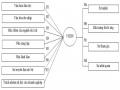 Corporate Social Responsibility (Csr) Has Positive Impact on Building and Developing Corporate Culture
 -
 Enhancing the social responsibility of Vietnamese enterprises in commercial business activities - 1
 -
 Research on the relationship between social responsibility, brand value and financial performance of joint stock commercial banks in the Mekong Delta - 24
 -
 Archie Carroll's Pyramid of Social Responsibility
Although in chapter 3 we see that the average score of the CSR scale criteria in Vietnam we have achieved is not high. Reaching above average level, there are still many low contents reaching above 3.0 compared to the standard score of 5.0. But besides that, in general, we also have achieved points showing that the process of implementing CSR in Vietnam needs to change step by step in both content and implementation method . In the past, the part showing business ethics values,
The entrepreneurial spirit of Vietnamese enterprises through charitable support for the community due to natural disasters, epidemics, floods, gratitude, activities for local communities with community health and education support programs. This is reflected in the following contents:

Continuously build, improve and strengthen the implementation of codes of conduct (Code of Conduct CoC): Currently, the development and implementation of codes of conduct for enterprises has only been implemented and applied in a number of large corporations and enterprises in Vietnam. And in response to market requirements for countries importing goods from Vietnam, enterprises are required to build and implement step by step in a more systematic manner in a number of industries such as footwear, electronics, wood, paper, milk. Vinamilk, TH milk, Viettel, FPT, ... are among the pioneering corporations in Vietnam in implementing codes of conduct, contributing to certain successes in commercial business activities. These are also very practical examples in the Vietnamese market for other enterprises to learn and gain experience. The set of standards on rules usually includes basic contents such as: Labor policies, environment, consumers, corporate governance, transparent information, equal rights in human treatment and community development.
In the coming period, any enterprise may have to build its own code of conduct (CoC). Perhaps this is a mandatory task that enterprises need to strictly implement, annually reporting to the Government's CSR monitoring council and reporting to the competent management agency.
Expanding activities to organize enterprises to participate in awards, promoting enterprises that fulfill social responsibilities in business.
Vietnamese enterprises are actively improving their management systems to achieve safe production according to standards (ISO 9000, ISO 14000, etc.). Currently, there are awards for enterprises that meet ISO standards. We need to promote this movement to become a movement with broader and more practical meaning, not simply an award to honor in name only. We need to honor ethical businesses that have made positive contributions to the sustainable development of the community. Enterprises with achievements need to be promoted.
spacious. From there, it contributes to spreading responsible business behavior, towards good and sustainable values, achieving ethical standards, highly responsible behavior and in accordance with international practices, which will contribute to increasing competitiveness in the market, creating advantages in trading in the international market, increasing the reputation of Vietnamese product brands.
CSR Award Organization: This award has been implemented by Vietnam since 2005 with members from many fields and different business sizes. The good news is that Vietnam has had CSR award activities, we have felt and mentioned the CSR issue in production and business. However, the scale and level of dissemination are still limited, many businesses do not know about the award, some businesses only do it for the sake of having an award as a collection to beautify their titles, not starting from reality which is the most important root and foundation. In the coming time, it is necessary to aim for the award to have the participation of more prestigious subjects, more relevant subjects such as corporations, prestigious international organizations, multinational corporations with experience in CSR such as Toyota, Samsung, Honda, along with research experts, non-governmental organizations, civil communities. Aiming for awards with increasingly higher scale and quality, closer to reality and substance, helping to bring CSR into the daily operations of enterprises. The awards will spread the spirit of implementing CSR in business activities.
Strengthening the integration of social responsibility activities in business activities
Some Vietnamese enterprises consider CSR as a passive solution, a self-regulating mechanism due to the changing business environment, enterprises must follow to ensure ethical, legal and international standards. Currently, it is necessary to create convergence points by leading enterprises in different fields to be able to share experiences and learn from each other. Having interactive learning and sharing to create cohesion, creating overall strength will contribute to greater success in the international business market. In each field, there will be typical enterprises, dedicated to CSR programs, business ethics, and responsible business. From there, it contributes to promoting enterprises to increase the integration of activities, contents and principles of CSR into each stage of business operations, penetrating into each work.
The production and business stages of enterprises, aiming to increase the level of prestige with domestic and international society and markets through the CSR index. Enterprises comply with the CSR provisions in the FTAs that we have committed to. That must be recorded in the enterprise strategy, that is something all enterprises should and must do. When an enterprise has registered and conducted business, it must conduct responsible business, ethical business that is being promoted in the world, ethical business and culture. Only then can the economy, society and business develop sustainably.
4.2.2.2. Orientation to overcome limitations
Although some achievements have been made, there are still certain limitations. In the coming period, we need to have directions to overcome each of those limitations to gradually turn CSR into opportunities for Vietnamese enterprises to overcome market barriers.
Orientation to overcome due to enterprise scale: Currently, up to 95% of Vietnamese enterprises are SMEs, leading to limited capital and human resources. Therefore, it is necessary to mobilize investment capital from the State, ministries and people, and mobilize capital from internal resources. The State increases financial support for small and medium enterprises, mobilizes foreign investment sources, and non-governmental organizations towards solving labor and environmental issues. Help small enterprises access investment capital more easily.
Orientation to overcome the lack of human resources: Currently, the human resource problem of Vietnamese SMEs is still limited in terms of expertise, skills and attitudes. Especially in the field of CSR, this is a new content for this type of enterprise, the majority of Vietnamese SMEs are not interested in it, so there is no specialized department to implement CSR. Therefore, in the coming period, Vietnam needs to have a policy to invest funds to train, advise, guide, and convey information related to CSR to Vietnamese SMEs. Every quarter and every year, open training programs, introduce the meaningful role of CSR for the business results of enterprises and sustainable development. The scale of the number of leadership teams in Vietnamese SMEs is very large, because the number of this type of enterprise accounts for a high proportion of the total number of Vietnamese enterprises, they have a strong impact on the country's business activities. Therefore, management agencies need to build a plan to focus on training and fostering the workforce and all levels of labor and management at Vietnamese SMEs. When businesses clearly understand the problem, they will promote their internal strength.
then the results achieved will be higher and more sustainable.
Orientation to overcome challenges in law enforcement and code of conduct: Currently, the number of enterprises with code of conduct is still low, the problem of PH enforcement is still limited in honesty and strictness. Therefore, the orientation in the coming period needs to call for mandatory direction towards enterprises to build a code of conduct for their enterprises regardless of the type of enterprise or scale. When there is a code of conduct, there must be transparent and strict enforcement measures, clear rewards and punishments.
Orientation to overcome the community awareness factor: Currently, the awareness of community responsibility, social responsibility, as well as understanding of one's rights in the community is still quite limited, consumers do not clearly understand their rights, environmental awareness is not high. Therefore, it is necessary to have communication and training measures to equip knowledge about social responsibility for many subjects to access the issue on many information channels, so that everyone can access it more easily.
The solution is a matter of social dialogue for the common good : Increasing transparency of information and finance, accountability of business activities, increasing dialogue to share the desired benefits among relevant parties. Relevant parties together create a social responsibility banquet to share benefits and responsibilities. This will help businesses understand the minds of all parties, making it easier and more effective to give directions.
Orientation to overcome the role of associations: Currently, there are some associations operating actively, besides that, some HHs are not working effectively. So the orientation for the next phase of development needs to strengthen the activities of associations. The State can provide funding at a certain level and introduce experts and consultants to help associations promote their role further in the next phase.
4.2.3. Objectives of enhancing corporate social responsibility in commercial business
In current trade agreements, such as the CPTPP and EVFTA, there are sections that mention social responsibility related to responsibility towards workers (Chapter 19).
of CPTPP), environmental responsibility (Chapter 20 of the CPTPP Agreement) and related to sustainable trade in Chapter 13 of the EVFTA draft also mentioned that Vietnam and the EU and enterprises on both sides must comply with the production and business must always be associated with sustainable development, in which many related parties require the parties to be responsible for implementation. As in Article 13.4 related to labor, Articles 13.5 to 13.8 related to the environment, use of resources. If enterprises do not comply with these provisions, exporting goods will face great difficulties. Therefore, the goal in the coming period, according to the author's point of view, needs to be implemented, which is:
- Implementing propaganda in the coming years must reach 100% of enterprises, from small and medium enterprises, to access CSR in the coming time: strengthening and mobilizing communication channels on CSR content to senior leaders of enterprises to employees, all members are capable of implementing and have an understanding of CSR. When 100% of enterprises have access to basic CSR issues. Especially small and medium enterprises access CSR content, it will create a practical movement on CSR, implementing CSR in enterprises will be easier: Managers will implement decisively, strictly and fully the provisions that have been decided in trade agreements with the highest spirit. Strengthening the dissemination of knowledge to all businessmen, enterprises clearly understand the requirements and important provisions in the agreement. Strengthening information to all levels of management of all enterprises to have knowledge about CSR, understand and access the provisions required in trade agreements on social responsibility.
- Following the Japanese method is to strengthen dialogue between parties (customers, communities, Government, partners, investors, etc.) and organize roundtable conferences on CSR between parties to grasp the wishes of the parties, to help the parties better understand CSR and understand the wishes and aspirations of the parties, especially to understand the needs and expectations of the market for CSR. Establish a network, a community to share and cooperate with the contributions of many stakeholders, together towards the goal of sustainable development and increased competitiveness in e-commerce. The parties cooperating together will promote the implementation of CSR more effectively, creating new advantages for Vietnamese enterprises.
- Increase legal measures and regulations requiring businesses to seriously implement CSR, thereby contributing to raising the average score of the scales from 4.5 - 5.0: Gradually helping businesses access through communication and dialogue, then understanding the decisions related to CSR will make implementation easier. We combine "hard power" measures through the mandatory system of laws and "soft power" through encouraging and motivating implementation, gradually increasing the rate of businesses accessing CSR, gradually achieving the set goals.
- Building a project aimed at all grassroots, middle and senior leaders in enterprises to have access to certain contents on CSR as well as access to important contents related to CSR in current trade agreements. From there, all business administrators clearly recognize the importance of CSR in their trade agreements. Enterprises that want to promote business must implement CSR, build a business strategy in parallel with the CSR strategy in the enterprise.
4.3. Solutions and recommendations to improve corporate social responsibility in business
Through the above research and analysis, the author offers a number of solutions and recommendations to enhance corporate social responsibility in business activities in general and commercial business activities in particular for Vietnamese enterprises.
4.3.1. Solution
To improve the quality of CSR implementation of Vietnamese enterprises today, to increase the average score in implementing social responsibility criteria in the four pillars of CSR. Especially on the issue of environmental responsibility, responsibility to employees, the score is still low. One of the solutions to improve CSR capacity in Vietnam today is to call on businesses to increasingly participate in BSCI, so the following solutions are proposed to build a unified process content. In the coming time, we will continue to implement the criteria specified in the BSCI standard set (Business Social Compliance Initiative - Standard set for assessing compliance with social responsibility in business) which was born in 2003. This standard set was proposed by the Foreign Trade Association (FTA), built with the aim of establishing a common forum for codes of conduct and monitoring systems in Europe on corporate social responsibility. In the current context, production and trade create a supply chain, a value chain contributed by many businesses, many countries and territories to produce a certain product or service. For example, to produce cars, computers, phones, etc., it requires the connection of many countries (Japan, Korea, China, the US, Vietnam, etc.) to contribute to the production of different components to form a global supply chain, a value chain. Therefore, the ultimate goal of BSCI is to improve working conditions in the global supply chain worldwide in compliance with technical standards and other standards in a unified manner that meets international standards.
To achieve the goals of the standards in the Business Social Compliance Standards (BSCI), businesses need to make a commitment to regularly participate and maintain