
STT
Author | PP estimate quantity | Secondary variable belong | toxic set up | Result | |
income and non-interest income ratio, logarithm of total assets, average growth rate of total assets, equity/total assets ratio, loan balance/total assets ratio , GDP. | more profit from non-traditional activities, specifically securities trading. | ||||
7 | Goddard, McKillop & Wilson (2008) | - Using descriptive statistics and cross-sectional regression methods. | - Bank performance (ROA, ROE) - Risk-adjusted returns (RAR ROA , RAR ROE ) | - Ratio of non-interest income to total NONSH income - Debt to Asset Ratio LA - Log of total assets - Financial ratio net worth | - Small credit institutions should avoid diversifying and defining themselves as simply deposit-taking and lending institutions, while credit organization |
Maybe you are interested!
-

 Results of Testing Cronbach's Alpha Coefficient of Independent Variable
 -
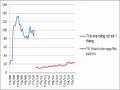 Profitability of Long-Term Investment Activities
 -
 Perform Factor Analysis (Efa) for Independent Variables
 -
 Study on botanical characteristics, chemical composition and acetylcholinesterase enzyme inhibitory effects of two species Piper thomsonii (C. DC.) Hook. f. var. thomsonii and Piper hymenophyllum Miq., Piperaceae family - 24
 -
 State management of independent auditing in Vietnam - 1
STT
Author | PP estimate quantity | Secondary variable belong | toxic set up | Result | |
on total assets KA | large credit institutions should consider seizing large opportunities beyond accepting deposits and lending. In other words, credit institutions of different sizes cannot implement a diversification strategy. alike. | ||||
8 | Thi Canh Nguyen et al (2015) | - Linear regression combined with descriptive statistics of variables - Using OLS regression model, FEM and SGMM model (System Generalized | - Bank risk (measured by ADZ coefficient = log(Z- Score) - The higher this coefficient, the lower the possibility of bankruptcy) | - Non-interest income, non-interest income ratio, logarithm of total assets, economic growth rate, debt/total assets ratio, total capital ratio | - Banks with high non-interest income have lower risk than banks whose main income is interest. - Study finds no impact of scale |
STT
Author | PP estimate quantity | Secondary variable belong | toxic set up | Result | |
method of moments ) | CSH/ total capital | total assets and economic growth rate on the profitability of the system Commercial Bank. | |||
9 | Husni Ali Khrawish (2011) | - Ordinary least squares (OLS) method on panel data | - Bank performance (ROA, ROE) | - Log of total assets, total debt/total assets, equity/total assets, outstanding loans/total assets, NIM ratio, GDP, INF. | - ROE and ROA are both positively correlated with size, capital structure, NIM, and negatively correlated with GDP growth, interest rate inflationary. |
10 | Alper and Anbar (2011) | - FEM, REM regression combined with Hausman test | - Bank performance (ROA, ROE) | - Size, liquidity, deposits, capital adequacy ratio, net interest income, surplus credit | - Variables such as scale, credit balance, GDP, and inflation affect the performance of the Bank. row. |
STT
Author | PP estimate quantity | Secondary variable belong | toxic set up | Result | |
use, GDP, INF | |||||
11 | Ghana/Samuel Siaw (2013) | - Random effects GLS regression based on Hausman tests - Regression analysis using ordinary least squares (OLS) method | - Liquidity risk (LR= Liquid assets/ Total assets) | - Bank size (SIZE). - Return on assets (ROA). - Liquidity reserve ratio (LRA). - Owner's Equity (OWN) - Inflation (INF) | - The results show that SIZE and INF have a positive and statistically significant relationship with liquidity risk. - RLA is negatively related to liquidity risk. |
Figure 2.5: Summary of previous studies
CHAPTER 2 SUMMARY
Chapter 2 presents related theories and the operating situation of the banking system in Vietnam. It also systematizes empirical studies as well as research results on the impact of non-traditional income and other factors on the profitability and risk of banks. This will be the foundation for the author to propose a research model in chapter 3.
CHAPTER 3: RESEARCH METHODOLOGY
3.1 Research implementation process.
Identify research problems.
Research objectives.
Theoretical basis and previous studies.
Set up research model.
Collect and process data using Stata software
Descriptive statistics
Linear regression of variables in the model.
Review and evaluate research results.
Figure 3.1: Research process diagram
3.2 Description of the research sample
To determine the impact of non-traditional income on the profitability and risk of banks in Vietnam, the study used data from financial statements and annual reports of Vietnamese commercial banks in the period from 2005 to 2013. For macroeconomic variables, the study used data from the websites www.worldbank.org and http://www.vnba.org.vn/ . The research sample includes 40 banks with 280 observations.
3.3 Research methods.
3.3.1 Presentation and descriptive statistics of data.
The data are presented in the form of descriptive statistics tables, each variable is described through contents such as variable name, sample number, mean, standard deviation, skew, kurtosis, minimum value and maximum value.
3.3.2 Examine the correlation pairs between independent variables.
The survey of correlation pairs between independent variables is done by setting up a correlation coefficient matrix to find pairs of variables with high correlation coefficients. If the correlation coefficient is less than 0.5, there is no multicollinearity phenomenon or vice versa.
3.3.3 Analysis of panel data regression models.
After performing descriptive statistics on the data, in order to make a preliminary assessment of the data as well as the direction of the impact of the independent variable on the dependent variable, the data set will be used to run regression with 2 basic models:
Fixed Effects Regression Model (FE): Further development from Pooling OLS, including differences in companies and considering the correlation between the model residuals and independent variables.
Random Effects Regression Model (RE): Similar to the FE model in terms of differences between businesses, but there is no relationship between the residuals and the independent variables of the model.
3.3.4 Hausman test
To consider and choose the appropriate model between Fixed Effects (FE) and Random Effects (RE), the author uses the Hausman test. This is a test to help choose whether to use the FE model or the RE model. The Hausman test also examines whether there is autocorrelation between the independent variable and the residual. The Hausman test is a hypothesis test.
H0: residuals and independent variables are not correlated H1: residuals and independent variables are correlated
If the value (Prob>chi2) < 0.05, we reject the hypothesis H0, then the residual and the independent variable are correlated, so choosing the FE model will explain better. Conversely,
again, if the value (Prob>chi2) > 0.05 then we accept the hypothesis H0, the residual and the independent variable are not correlated, the RE model should be used in this case.
3.3.5 Test for multicollinearity.
High correlation coefficient between independent variables: When the correlation coefficient between independent variables is greater than 0.8, the problem of multicollinearity becomes serious.
VIF (variance inflation factor) is an indicator used to test for multicollinearity. If VIF > 10, multicollinearity will occur.
If multicollinearity is detected in the model, it can be fixed by collecting more data or taking new samples; removing independent variables; using first-order differences.
In addition, the study uses the Wald test to test for heteroscedasticity; the Wooldrdge test to test for autocorrelation. From the above three tests, if the use of one of the two FE and RE models is not appropriate, the study will use the FGLS model (efficient generalized least squares model).
3.4 Proposed research model
Based on the methodologies presented in chapter two and inheriting the research methods of previous research groups, especially inheriting the research model of the group of authors Syafri (2012) and Husni Ali Khrawish (2011), the topic builds an econometric model to study the impact of non-traditional income on the profitability and risk of banks in Vietnam. The study will build two econometric models to examine the impact of non-traditional income.
In the first model, the dependent variable is the profitability of the Bank (measured by the return on assets ROA and the return on equity ROE). The second model has the dependent variable as the risk of the Bank (measured by the standard deviation of the return on assets SDROA and the standard deviation of the return on equity SDROE) and the independent variables in the two models are: non-interest income, Bank size, interest income margin, debt to total assets ratio, equity to total assets ratio, operating expense to income ratio CIR and economic growth GDP.
Model 2:
Profitability (ROA,
ROE)/ Risk
GDP economic growth
LTA Loans to Total Assets
Equity to Total Assets ETA
NIM Net Interest Margin
Cost to Income Ratio CIR
Bank Size SIZE
Non-Interest Income/ Non-Traditional Income
Figure 3.2: Estimation model
Y= ßo + ß 1 NON+ ß 2 SIZE + ß 3 NIM + ß 4 LTA + ß 5 ETA + ß 6 CIR +ß 7 GDP +εi
In there:
β0 : intercept coefficient.
β1, β2, β3, β4, β5, β6, β7: are unknown parameters of the model.
: model error
3.5 Description of variables in the model.
Dependent variable:
Y1: Bank's profitability is measured by two indexes: ROA and ROE
ROA: Net profit (NPAT)/Average total assets ROE: Net profit/Average total equity
Y2 : Bank risk is measured by SDROA (Standard deviation of return on total assets) and SDROE (Standard deviation of return on equity)
Independent variable
NON (Non interest income) – Non-traditional income (or non-interest income): According to Elsas (2010), income diversification increases profitability thanks to high profit margins from non-interest activities. This reduces pressure on banks in credit risk provisioning and bad debt control.