
In particular, actively research to launch new products and services with superior features and utilities to replace existing products. Thanks to that, commercial banks can create and maintain their competitive advantages, meet customer requirements, retain old customers and attract new customers.
1.2.2.4. Competition through distribution system
Organizing product consumption activities is the final stage of the business process. Organizing product consumption is a form of non-price competition that attracts attention and attracts customers.
Maybe you are interested!
-

 Qualitative Indicators for Assessing Business Competitiveness
 -
 Indicators for Assessing the Sustainable Development of Commercial Banks
 -
 Goffi G's Model for Assessing Tourism Destination Competitiveness and Sustainability
 -
 Indicators for Assessing the Quality of Short-Term Credit Activities of Banks
 -
 Models and Theories for Assessing Competitiveness
Distribution channels are a direct means of bringing bank products and services to customers, while helping banks accurately and promptly grasp customer needs, thereby proactively improving and perfecting products and services, creating favorable conditions in providing products and services to customers.
In the past, commercial banks often strongly developed their branch networks to expand market share and put pressure on competitors. However, recently, modern distribution channels with advantages in many aspects are gradually becoming the common trend of choice. Including:
+ Fully automated branches: The characteristic of this distribution channel is that it is completely performed by machines under the control of electronic devices.
+ Branch with few employees: This type of branch has an important position in the banking system, especially for mobile branches. Its advantages are low cost and flexible operation.
+ Electronic banking (E_Banking): This form of distribution is carried out via telephone or computer. It provides customers with many conveniences, saves costs and time, and operates anytime, anywhere. Transactions carried out through electronic transactions include: Point of sale payment machines, automatic teller machines (ATMs), telephone banking (Tel_Banking)...
+ Online banking: Divided into 2 types: Internal network banking and Internet banking.
1.2.3. Indicators for assessing the competitiveness of the Commercial Banking system
According to the CAMELS banking evaluation system and Michael Porter's theory of competitiveness, assessing the competitiveness of an industry, specifically here assessing the commercial banking system, not only includes focusing on the internal and existing resources of banks, on the operational indicators, position, and reputation of that bank, but also depends on many other factors such as: competitors, substitute products, the bank's ability to adapt to market changes... Thus, the system of indicators to assess the competitiveness of the banking system will include two parts: Indicators reflecting resources and indicators reflecting the competitiveness of commercial banks.
1.2.3.1. Indicators reflecting the resources of Commercial Banks
a. Financial resources
There are many indicators reflecting the financial resources of commercial banks, but the indicators that reflect and directly impact the competitiveness of commercial banks include the following indicators:
(1) Equity
The Owner's Capital of a commercial bank is the total capital owned by the bank owner, members of joint venture partners or shareholders in the bank, and management fees paid by affiliated units.
Owner's equity consists of two parts: initial owner's equity and owner's equity formed during operations.
Initial equity capital for joint stock commercial banks is capital contributed by shareholders through the purchase of shares or stocks including common shares and preferred shares. This capital level must be guaranteed to be at least equal to the legal capital.
Equity capital formed during operations (additional equity capital) is due to additional shares issued or additional State budget allocation during operations, due to the transfer of a portion of accumulated profits, reserve funds, investment funds, additional charter capital, and issuance of long-term debt.
On the balance sheet of a commercial bank, equity includes basic items: charter capital, undistributed profits and funds. In which, charter capital is the capital recorded in the bank's charter, accounting for the largest proportion of equity capital and is very important in the business activities of a commercial bank.
In the event of a bank going bankrupt or ceasing operations, the debt obligations will be paid in the following order: customer deposits, obligations to the Government and employees, and finally to the owners. The larger the size of the equity, the more secure depositors and lenders feel about the bank (other things being equal). Therefore, equity is considered the basis for creating trust for customers.
At the same time, equity also shows the financial capacity and operational capacity of a bank. Equity affects the scale of business network expansion as well as the scale of operations of commercial banks: capital mobilization capacity, credit expansion capacity, services, financial investment capacity, and technological equipment level.
Most of the equity capital of commercial banks does not generate direct profits, they are given priority to finance the construction of headquarters, working facilities, and technology investment. The remaining equity capital participates in the business process of the bank. Although equity capital only participates in banking business activities with a small proportion compared to the total assets of the bank, equity capital directly affects the activities of the bank related to the safety of banking activities such as the ability to mobilize capital, lending activities, and investment of the bank. Large equity capital allows banks to establish subsidiaries, participate in investment activities, joint ventures with strategic partners, contribute capital to companies, and can take over other banks.
Regulations related to the safety of international banking operations (Basel 1, 2, 3) stipulate that banks are only allowed to lend to a maximum of one customer/a group of customers at a certain ratio compared to equity capital. Based on international regulations and the economic practices of a country, countries have issued specific regulations to limit commercial banks from focusing too much on lending to
a group of customers, to avoid unfortunate risks that may occur to the bank when customers are unable to pay.
With such important meanings, it can be said that a bank with a large level of equity is a factor that ensures the bank's safe operation, and at the same time demonstrates the financial strength of the bank itself.
(2) Group of indicators on asset size and growth
Banks trade in currency in the form of mobilizing, lending and providing payment services. Therefore, the balance sheet of commercial banks has its own characteristics that are different from other production and business enterprises. This special characteristic is that commercial banks often manage a large amount of assets much larger than their capital and the assets of commercial banks are mostly financial assets.
Assets include profitable assets and non-profitable assets, reflecting the process of using capital for the purposes of ensuring safety and seeking profits of commercial banks. The scale, structure and quality of assets will determine the existence and development of commercial banks. When talking about the growth of total assets, it means the scale of credit and investment activities. Asset quality is a synthetic indicator that shows the financial sustainability and management capacity of a commercial bank. Assessment of the scale and quality of assets is shown through the following indicators: growth rate of total assets, diversification of assets, total outstanding debt, growth rate of outstanding debt, ratio of outstanding debt to total assets, overdue debt ratio, bad debt ratio, loan security situation, etc.
In addition to credit activities, investment activities also contribute to increasing the total assets of the bank. Investments on the balance sheet include items: trading securities, investment securities and long-term investment capital. Investment activities are evaluated through criteria such as: scale, growth rate, securities depreciation reserve ratio, etc.
The Bank's Liabilities are the monetary obligations of that bank to its depositors and creditors up to a certain point in time. An important item of a commercial bank shown on the Liabilities side of a commercial bank is the Owner's Equity section. Liabilities reflect all sources of formation of assets, regardless of the monetary obligations of the bank to its creditors with the obligation
The bank's obligations to its owners. In addition to equity (accounting for only a certain proportion, usually 10% of total assets), liabilities are formed from the bank's deposit mobilization and borrowing activities in the financial markets in the previous period. When the scale of capital mobilization increases, the total asset scale will increase, the quality of capital is reflected in the total capital that the bank mobilizes at low cost, high stability and has a reasonable structure, meeting the requirements for lending and investment. Improving the quality of capital can be understood as activities related to providing credit, investment and liquidity needs with capital sources suitable in terms of maturity and interest rates. This requires banks to consider risks and the stability of capital sources to be able to invest in long-term projects as well as the difference between the cost of borrowing and the profit that can be obtained when investing capital in credit and securities... Indicators to evaluate the scale and quality of capital sources such as: total capital sources, capital growth rate, capital source structure...
To sustainably increase total assets, it is necessary to study the correlation between asset structure and capital sources. Through this correlation, we can evaluate the optimality of asset-capital structure, the bank's ability to respond to unusual phenomena of the business environment and meet the public's withdrawal requests. Effective coordination will help the bank maximize income while closely controlling risks.
(3) High and stable profitability
Profitability reflects the performance, evaluates the business efficiency and development level of a commercial bank. From the perspective of a commercial bank, a commercial bank with high profitability will have high accumulation capacity, will have the conditions to equip and invest in technology, thereby improving the quality of services to attract customers. On the other hand, from the perspective of investors, depositors will decide to transact when they see that the commercial bank can be safe because it can compensate for risks, thereby creating conditions for growth in total assets.
According to international practice, people often measure the profitability of commercial banks by quantitative indicators: Absolute value of after-tax profit, profit growth rate, profit structure (indicating how profit is formed).
from which source) and especially the indicators of return on equity (ROE), return on total assets (ROA), net interest margin (NIM)...
Return on Assets (ROA)
ROA = 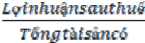 x 100
x 100
Return on assets (ROA) shows the ability of the unit to use its assets to generate profits. The higher the ROA, the more it shows the management ability of the bank's Board of Directors in using the bank's assets in activities that can generate profits. However, if the ROA is too high, it is not a good sign for banks because in that situation, the bank is falling into a high-risk situation because expected profits and risks have a positive relationship.
Return on Equity (ROE)
Return on equity shows how much profit a bank's equity will bring in over a given period of time (usually 1 year).
ROE =  x 100
x 100
In other words, ROE evaluates the benefits that shareholders (bank owners) get from the capital invested. The higher this ratio, the more effective the bank's use of capital in investment and lending. Bank managers always want to increase ROE to satisfy shareholders through many measures such as: effective risk control, limiting bad loans, etc.
The indicators ROA and ROE are often of interest to managers and investors and are used when evaluating the performance of a bank. They show the ability and time to recover the owner's investment capital. The higher the efficiency of capital and asset use of a bank, the more the bank can increase its capital scale and financial capacity.
(4) Ensuring safety in business operations
Business performance and financial capacity of a commercial bank
reflected in the quality of earning assets, management and control capabilities.
risks in credit activities, capital quality, but also expressed through the ability to ensure safety in the business activities of that bank, specifically:
- Ensuring liquidity: A bank's liquidity is its ability to be ready to pay, pay customers and compensate for losses when risks occur in business operations. This is a basic standard to evaluate the quality and safety in the operation of a bank.
Liquidity risk occurs when commercial banks cannot meet lending and investment needs or cannot meet customers' payment capacity. This risk comes from the difference in capital mobilization and capital use terms, using short-term capital for medium and long-term loans, not balancing the investment capital recovery period with the payment period, while customers' payment needs cannot be delayed. If commercial banks fall into this situation and cannot handle it promptly, it will be very dangerous, causing customers to lose confidence, leading to massive withdrawals, making the bank's liquidity situation worse, possibly leading to bank bankruptcy. A bank's payment capacity is shown through quantitative indicators such as: immediate payment capacity, quick payment capacity, payment ratio... According to international practice, if the liquidity ratio reaches about 30%, it is considered safe, ensuring that the bank can meet the demand for withdrawals and immediate payments in large quantities.
- Ability to compensate when risks occur: Risk is the possibility of unexpected losses occurring during business operations, causing damage to the bank.
Risk compensation capacity is the financial ability to compensate for losses when risks occur. Commercial banks make risk provisions in operating expenses by setting aside provisions for the value of assets that are potentially irrecoverable. Provisions are different in each country, but risk provisions are set aside from expenses or from after-tax profits or by both of the following methods:
- Provision for risks in operating expenses on the part of the bank's assets that are likely to be unrecoverable.
- Set up financial reserve fund from after-tax profit.
- In addition, commercial banks are allowed to set aside provisions for securities price reduction and include them in expenses according to regulations.
If bad debt increases, the risk provision also increases to cover the risk, which means that the financial profitability allows it to be used to cover possible losses. Conversely, if bad debt increases but the provision is not enough to cover it, it means that the financial situation is bad and the ability to cover it by expenses is limited.
The level of risk provision is calculated
Risk reserve level =  x 100
x 100
b, Human resources
Human resources are an important resource of any organization. In commercial banks, human resources play an important role, however, assessing the quality of human resources is not simple because many indicators expressed through financial capacity simultaneously demonstrate the quality of human resources of the bank. For example, the indicators ROA, ROE, in addition to being directly related to the financial capacity of commercial banks, also demonstrate the quality of resources of commercial banks.
Evaluate the management and operational capacity of human factors in commercial banks through the following criteria:
- Model of a modern bank;
- Structure, qualifications, implementation of the leadership apparatus, of the main labor force, high professional qualifications;
- The ability of the regulatory mechanism to respond to market developments;
- The operating mechanism of a modern bank (asset and liability management, non-credit service management, accounting and treasury management, human resource management, etc. )
1.2.3.2. Indicators reflecting the capacity of the commercial banking system
Evaluating the ability to maintain and create competitive advantages of commercial banks is extremely complicated. The complexity is reflected in the fact that it is not only related to the structure and level of human resources but also related to many qualitative indicators, with no clear right or wrong answer. In the current trend, assessments